Blog ComparisonsPendo Pricing 2026: Is It Worth It?
Pendo Pricing 2026: Is It Worth It?
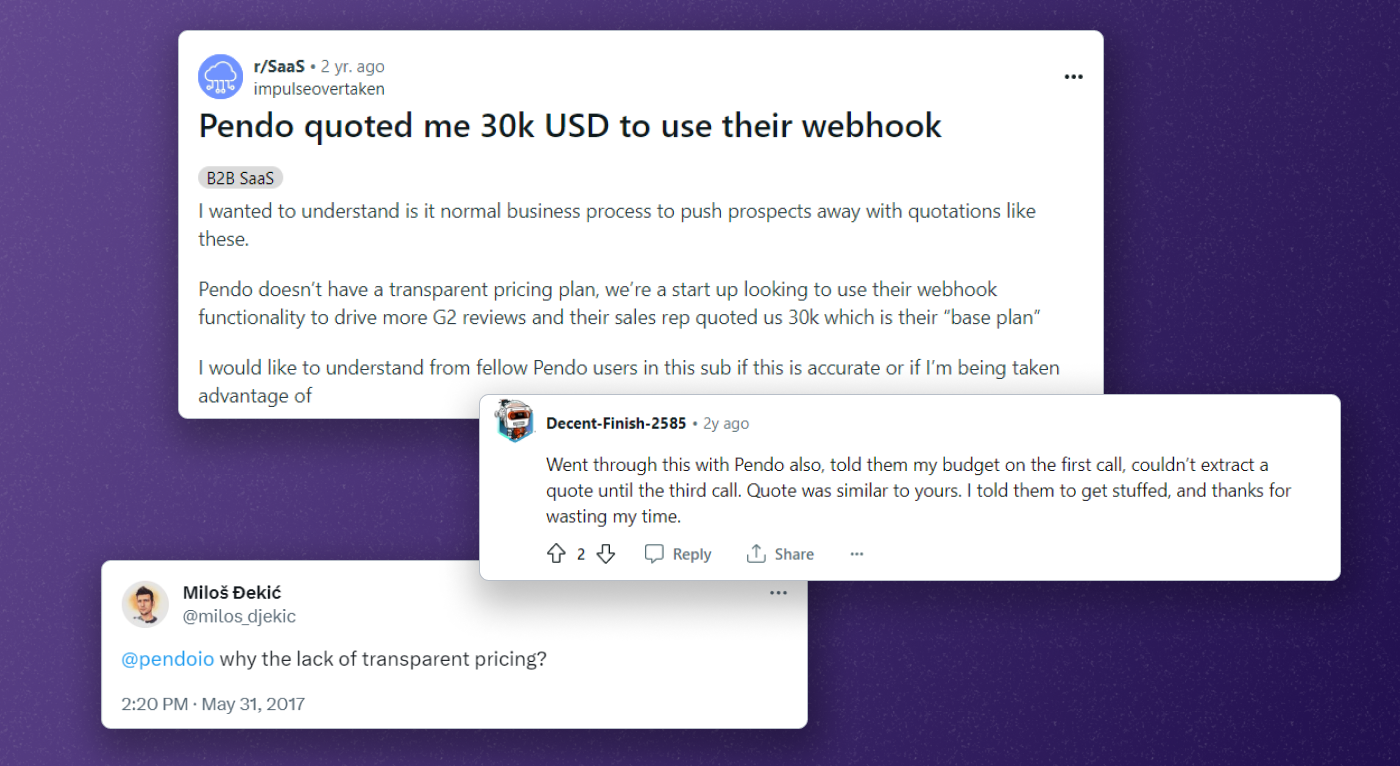
Can't find Pendo's pricing, or is the quote too crisp? In this post, we'll reveal some actual quotes people have received and discuss whether Pendo's pricing is a good deal for your use case or not!


Want to find out if Pendo is a good fit for your company but can't find the prices or the quote you received is mind-boggling? You wouldn't be the only one.
Pendo's "Downright simple user-based pricing" means you must go through their lengthy sales process to even get a quote. 😆
Not today, though. We have done some digging, and in this post, we'll break down what you can expect from Pendo's pricing and whether it's really worth your money! 👇
✨ Looking for a modern & affordable Pendo alternative? Check out Featurebase →
Key takeaways: Pendo pricing in 2026
If you just want the short version, Pendo is usually a better fit for enterprise teams, while its opaque pricing makes it hard to justify for most startups and SMBs.
| Pendo pricing summary | |
|---|---|
| Pricing model | Custom quote based on MAUs and plan tier |
| Paid plans | Base, Core, and Ultimate (all custom-priced) |
| Free plan | Yes, up to 500 MAUs |
| Public paid pricing | No |
| Estimated paid pricing | Avg ~$47k/year, commonly $15k-$142k depending on scale |
| Free trial | Yes, 30-day full-platform trial |
| Best for | Mid-market and enterprise teams |
| Poor fit for | Startups and SMBs with tight budgets |
| Main issue | Expensive, opaque pricing with paid add-ons |
| Verdict | Worth considering for enterprises, hard to justify for most smaller teams |
What is Pendo?

Pendo is a product experience platform that helps SaaS companies gather insights into user behavior, onboarding, product adoption, customer satisfaction, and more.
It's mainly targeted towards enterprises and basically helps them understand how users interact with their platforms, combining product analytics, in-app guides, and feedback tools in one place.
Pendo pricing in 2026
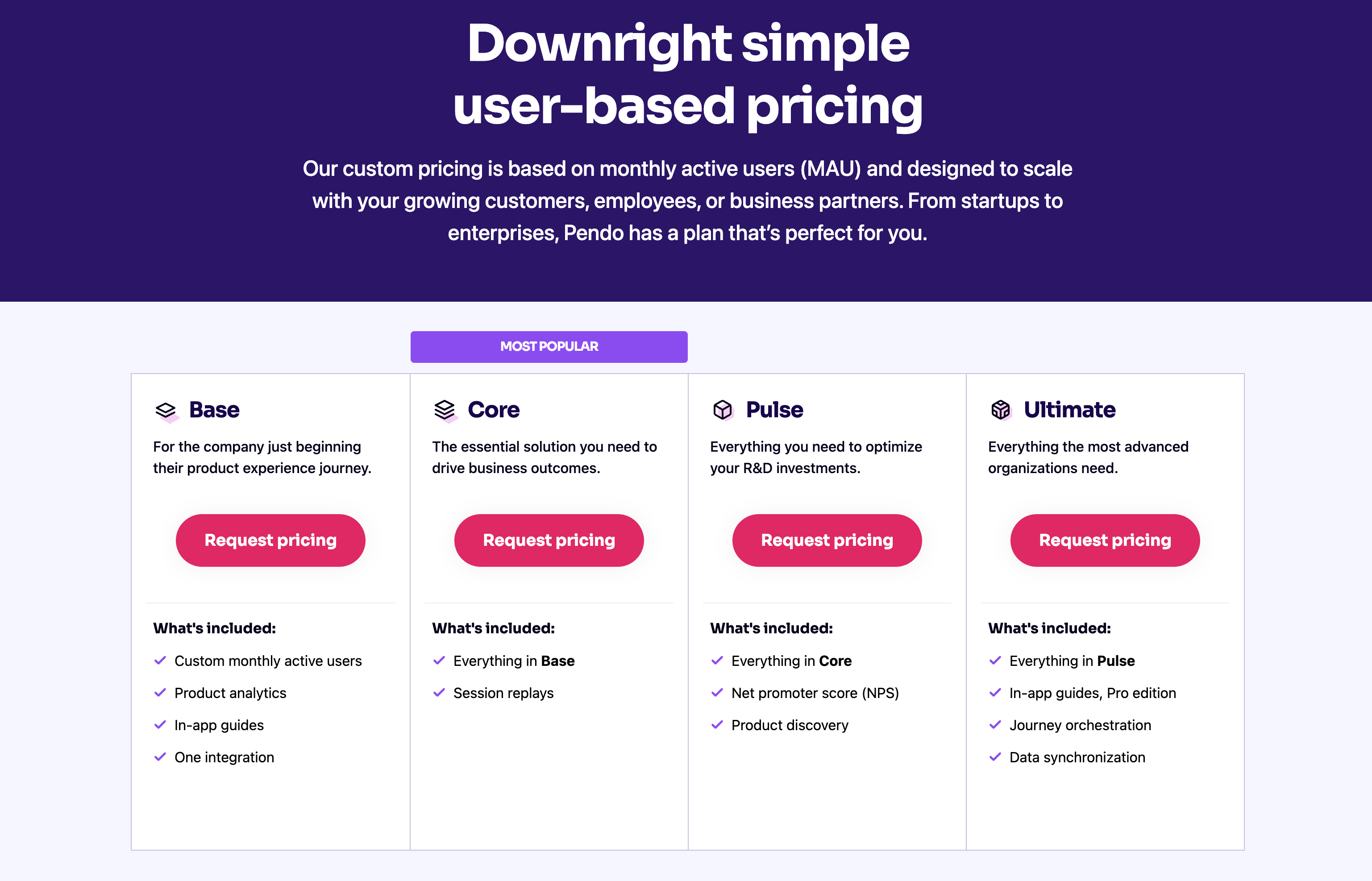
Pendo offers four plans, all priced on your number of monthly active users (MAUs). As of July 2026, the lineup is Free, Base, Core, and Ultimate (the old "Pulse" tier has been folded into the others):
- Free - 500 MAUs, product analytics, in-app guides, and Pendo-branded NPS surveys and roadmaps
- Base - Custom MAUs, analytics, and in-app guides. Session replay, product discovery, and sentiment tools are paid add-ons
- Core - Everything in Base, plus session replay included
- Ultimate - Everything in Core, plus product discovery, sentiment (NPS, PMF, CSAT), journey orchestration, Listen, and data sync
Every paid plan follows Pendo's "all-in access" model: once you buy a module, you get its full functionality with no gated features. A handful of capabilities are included on every plan, such as Leo (Pendo's AI assistant), retroactive analytics, security (SOC 2, GDPR, HIPAA), and 85+ integrations.
Here's how the tiers compare at a glance:
| Capability | Free | Base | Core | Ultimate |
|---|---|---|---|---|
| Monthly active users | 500 | Custom | Custom | Custom |
| Product analytics | Included | Included | Included | Included |
| In-app guides | Included | Included | Included | Included |
| Session replay | No | Add-on | Included | Included |
| Product discovery | No | Add-on | Add-on | Included |
| Sentiment (NPS, surveys) | Pendo-branded | Add-on | Add-on | Included |
| Journey orchestration | No | Add-on | Add-on | Included |
| Security & support | Analytics only | Included | Included | Included |
Pendo's exact pricing isn't published, so you have to contact sales for a quote. But community data gives a decent picture. As of July 2026, procurement platform Vendr reports that Pendo customers pay an average of around $47,330 a year, with deals ranging from roughly $15,000 to $142,476 depending on MAU volume, number of apps, and add-ons. Entry-level Base deals tend to start near $15,900 annually. 🕵️
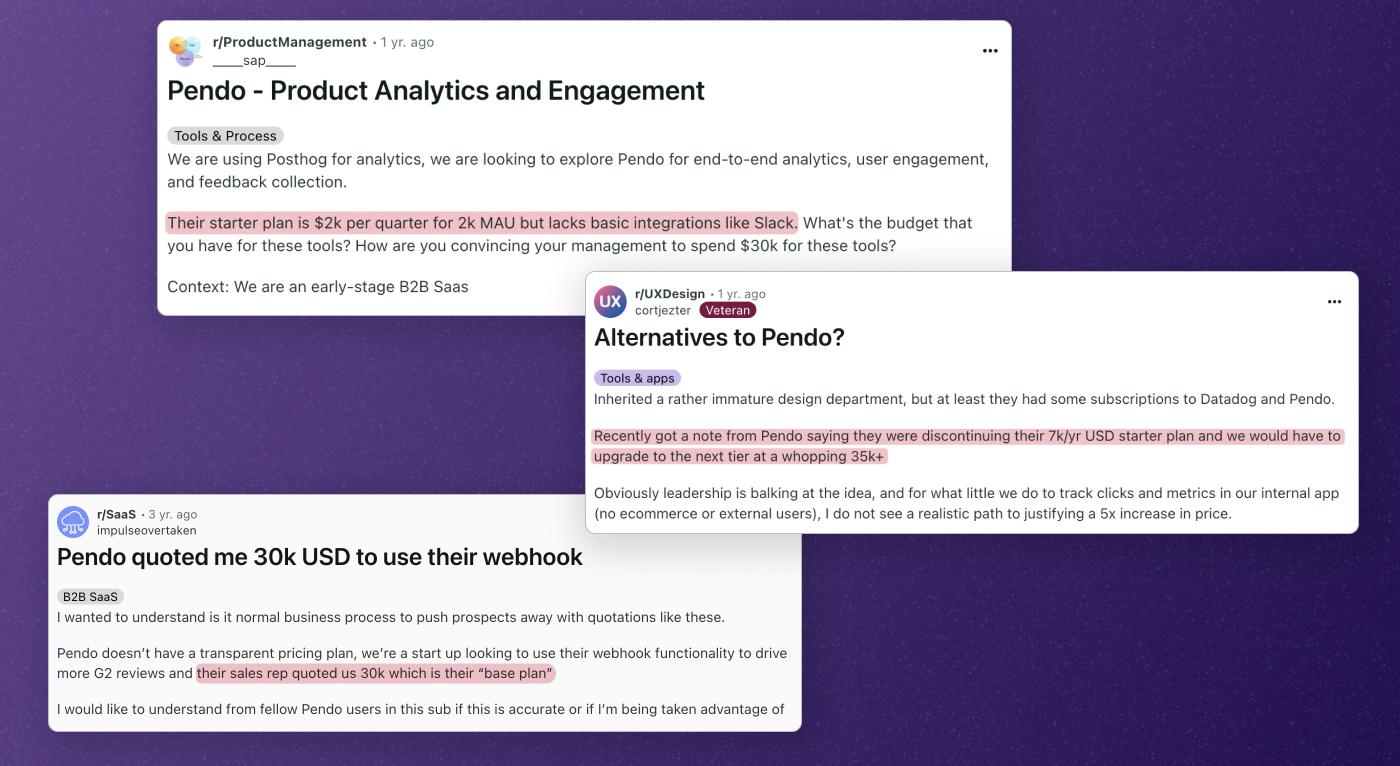
Real quotes buyers have shared line up with that spread:
- One Reddit user reported a Base plan at $2,000 per quarter ($8,000/year) for 2,000 MAUs, on the low end.
- Another was quoted $30,000/year just for webhook access on Base.
- A third said their old $7,000/year plan was retired and they were pushed onto a new Base plan at $35,000/year.
Add-ons and extra costs to watch for
The headline plan price is rarely the whole bill. Because Pendo unbundles several capabilities, teams on Base and Core often end up paying extra to get the features they expected:
- Session replay - included on Core and Ultimate, but a paid add-on on Base
- Product discovery - an add-on on Base and Core, only bundled on Ultimate
- Sentiment (NPS, PMF, CSAT surveys) - Pendo-branded on Free, a paid add-on on Base and Core, and included on Ultimate
- Journey orchestration - an add-on until you reach Ultimate
- Pendo AI - Predict (churn prediction) and Agent Analytics can be added to any plan for an extra fee
Implementation and onboarding can add to the total too. Professional services and premium support are commonly quoted on top of the license, so it's worth asking exactly what's bundled before you sign.
Who counts as monthly active users (MAU) in Pendo?
All of Pendo's plans limit the monthly active users (MAU) you can have. But who counts as an active user, and how is it calculated?
Monthly active users (MAU) are the number of unique visitors who have used your app in the last 30 days. MAUs are calculated by adding up anyone who engages with your app at least once during this time period.
Note that Pendo prices on MAUs, not on the number of applications or sessions, so you can track multiple apps without paying per app.
Does Pendo have a free trial?
Yes, Pendo offers a 30-day free trial of the full platform, so you can test analytics, in-app guides, feedback, and orchestration before committing. Because Pendo is such a broad product, they recommend focusing the trial on the areas most relevant to your goals, then expanding from there.
That's separate from Pendo Free, the free-forever plan for up to 500 MAUs with product analytics, in-app guides, and Pendo-branded NPS surveys and roadmaps. If you exceed the 500-MAU limit on Free, you lose the ability to create new guides, surveys, and segments until you upgrade.
Does Pendo offer discounts?
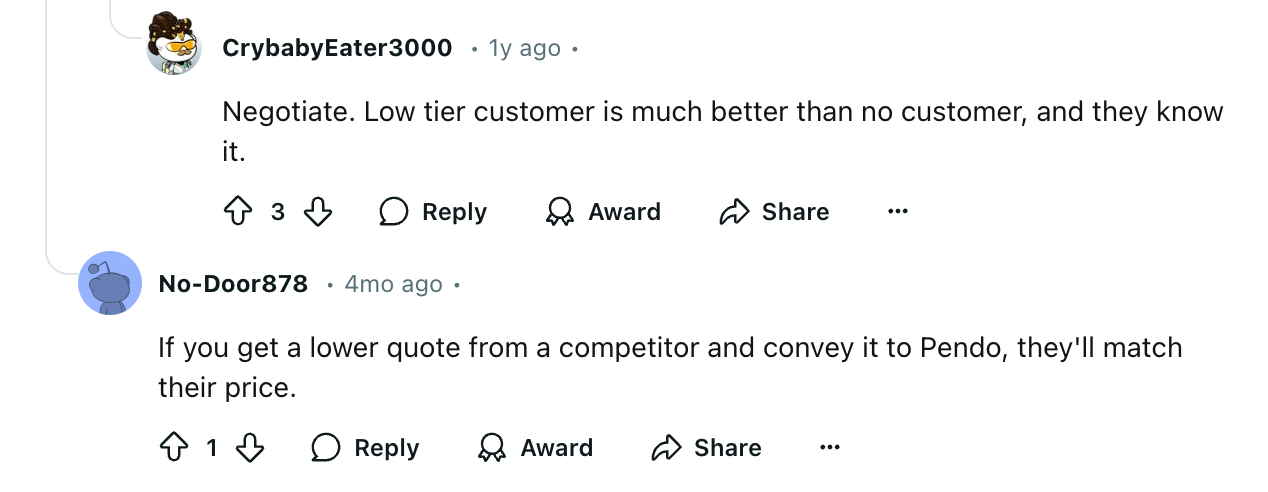
Pendo says volume and bundle discounts are already built into its pricing, and the cost per MAU drops as you scale. Beyond that, the final quote is highly negotiable. Vendr community data (as of July 2026) puts the average discount at roughly 41-46% on one-to-three-year deals.
A few tactics buyers use to bring the quote down:
- Use multi-year deals: committing to two or three years upfront typically locks in a better rate and shields you from renewal hikes
- Mention competition: with Amplitude, Featurebase, PostHog, Mixpanel, and others in the market, Pendo knows it's not the only game in town - use that to your advantage
- Bundle services: onboarding and training can get costly, so ask to include them (or reduce fees) in your contract to avoid surprises
- Negotiate payment & renewal terms: push for semi-annual billing and consider removing auto-renewal to maintain flexibility at renewal time
- Watch the renewal: without a multi-year lock-in, annual increases commonly land between 5% and 20%, so plan for them ahead of time
What if Pendo is too expensive for me?
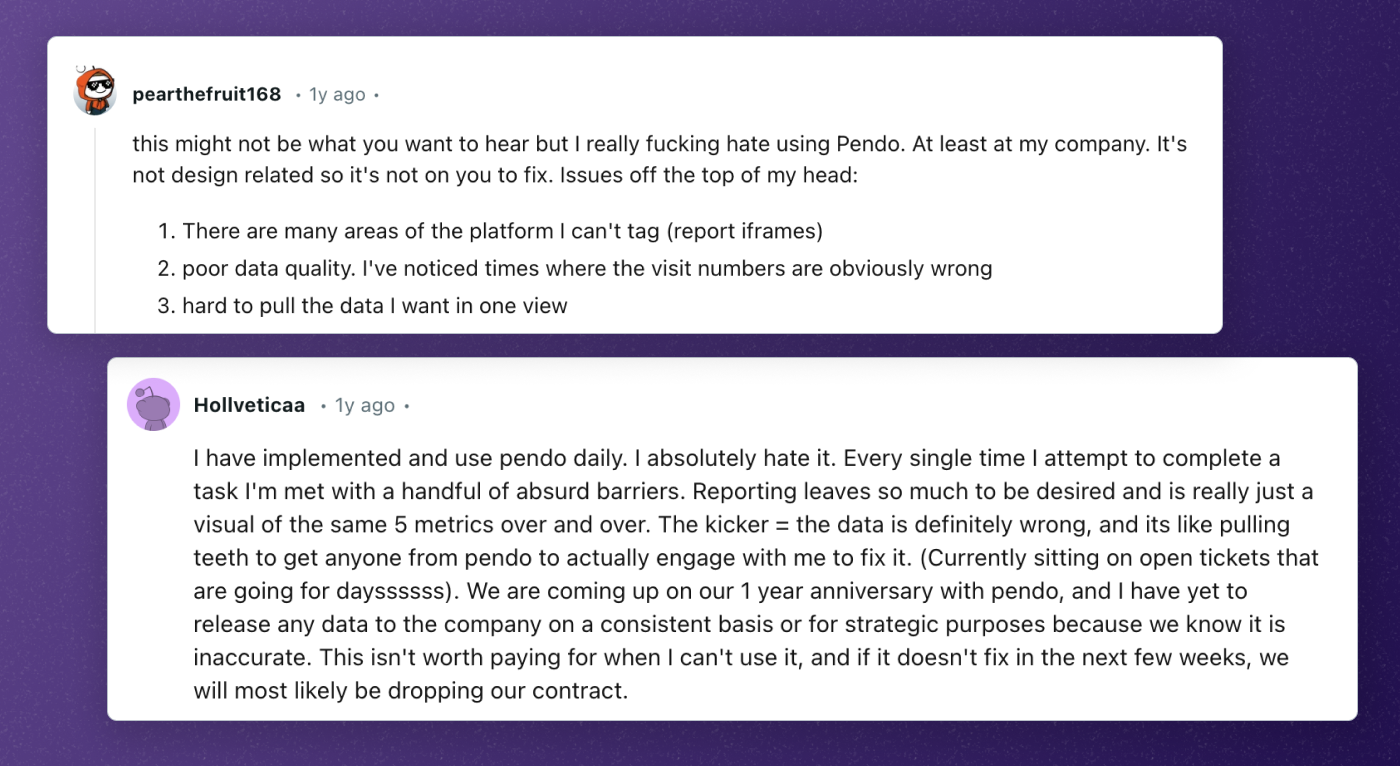
Well, as you saw from the screenshots above, you wouldn't be the only one. 🤒
Luckily, there are many modern and affordable alternatives offering the same features and even more. Here’s a list of the 12 best Pendo competitors in 2026:
- ✨ Featurebase - All-in-one feedback tool, best value for money
- ProdPad - For larger companies, roadmapping and feedback collection
- UserBack - For large teams with many products
- Canny - For super small or enterprise companies, no in-between
- Userpilot - Best for those also looking for product tours & analytics
- ProductPlan - Best for issue management & roadmaps, poor collection features
- Rapidr - Feedback collection, good price for very large teams
- Frill - Simple design and lightweight widgets
- featureOS - Good for collecting feedback, poor for prioritizing it
- Trello - Best for simple idea and task management
- Productboard - Best for issue management, poor collection features
- Aha! - for large companies looking to handpick what they get
You can see all of the Pendo alternatives more in-depth here, where we analyze the details of each tool and find out which one is the best.
Pendo pros and cons to keep in mind
Pendo pros:
- Centralized feedback collection
Pendo feedback tools like surveys and in-app messages help you collect customer feedback efficiently. You can even respond directly to users, making it simple to close the feedback loop and show customers their voices are heard. - Good for enterprises
Once you get through the lengthy onboarding, Pendo can be pretty decent for enterprise software companies. Sure, there’s a learning curve, but enterprise teams are used to much worse, making it a relatively modern tool for large organizations. - Works on both mobile and web apps
Pendo lets you create responsive in-app guides that look great, whether your users are on mobile apps or web. This ensures a smooth, consistent experience across platforms, no matter where your users engage.
Pendo cons:
- Expensive & opaque pricing
Pendo's pricing is notoriously high, with many users reporting quotes around $30k a year before add-ons. For startups or small businesses, this can quickly burn through a tight budget. Plus, every plan is gated behind a sales process, so it's hard to know your cost upfront. - Steep learning curve
Pendo's interface can be tough to navigate, especially for new users. Reviewers report that even basic tasks, like exporting user data or customizing a feedback widget, can require workarounds or coding skills like CSS and HTML. - Reporting and data-accuracy complaints
A recurring theme in user reviews is inconsistent visit numbers and difficulty pulling accurate data into a single view. Others mention limited in-app guide customization and survey export limits, which add extra work to make sense of the data.
Is Pendo worth the price?
Short answer: If you're an enterprise, then maybe. If you're anyone else, then probably not.
Longer answer: Pendo is a comprehensive product experience platform with the analytics, in-app guidance, and feedback tools large enterprises need. From behavioral analytics to user onboarding and journey orchestration, it covers a lot of ground.
However, its opaque and expensive pricing (plus the add-ons that stack on top) makes it hard to justify for SMBs and startups. It's tough to get your boss to sign off on $30k+ for a product analytics platform when many competitors offer the same core features for a fraction of the price.
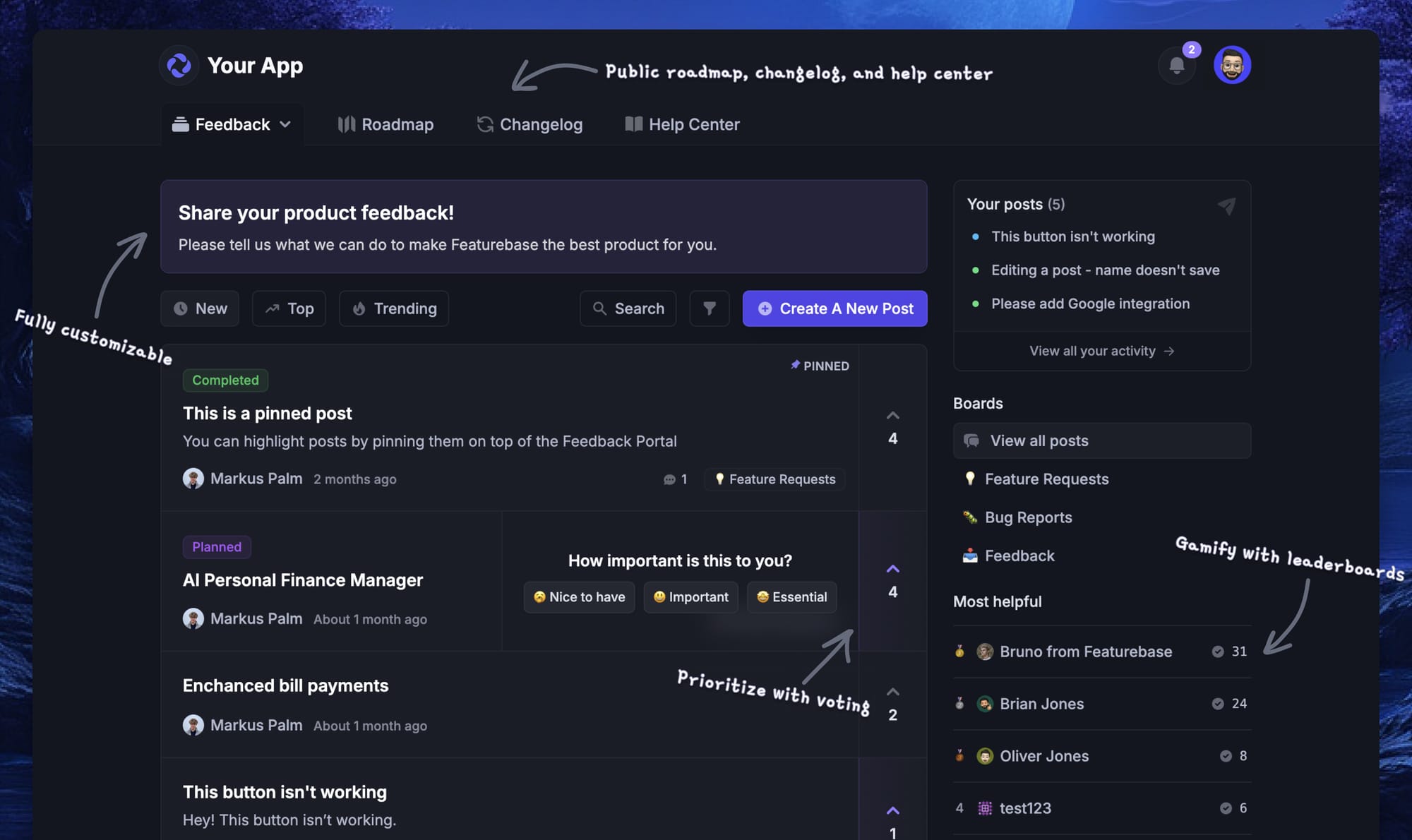
Featurebase is a modern feedback & support platform that helps product teams collect feedback, prioritize features, build roadmaps, and announce product updates – all in one place. It's loved by thousands of product teams from companies like Lovable, Raycast, and n8n. 💫
We offer a Free plan that allows unlimited MAUs and feedback. The onboarding is super fast and doesn't require a credit card!
Instead of juggling 4+ different tools, Featurebase brings your feedback collection, product updates, support, and help center together in one place. The onboarding is super fast and doesn't require a credit card, so there's no downside to trying it. 👇
✨ Start collecting feedback & building better products with Featurebase →
FAQs
Does Pendo charge extra for add-ons?
Yes. Several capabilities are priced separately depending on your plan. Session replay is included on Core and Ultimate but a paid add-on on Base, while product discovery and sentiment surveys are add-ons until the Ultimate tier. Pendo AI features like Predict and Agent Analytics can also be added to any plan for an extra fee.
Does Pendo's price go up when you renew?
Often, yes. Buyers report annual renewal increases commonly between 5% and 20% unless they've locked in a multi-year contract. Committing to two or three years upfront is the most reliable way to avoid a steep jump at renewal.
What happens if you exceed your Pendo MAU limit?
On a paid plan, your tracking keeps running without interruption and a Pendo rep reaches out to discuss whether it's expected growth that needs a contract adjustment. On the free plan, exceeding 500 MAUs stops you from creating new guides, surveys, and segments until you upgrade.
Does Pendo charge for onboarding or professional services?
It can. Implementation, onboarding, and premium support are frequently quoted on top of the license fee, especially for larger deployments. It's worth clarifying exactly what's included before signing, and negotiating to bundle those services into the contract.
Is there a cheaper alternative to Pendo?
Yes. If Pendo's cost or complexity is a dealbreaker, tools like Featurebase offer feedback collection, surveys, roadmaps, and changelogs on a free plan, with transparent per-seat pricing starting at $29/seat/month. It's a common switch for startups and SMBs that don't need Pendo's enterprise analytics depth.
More reading: