The Product Manager Career Path: Zero to Hero
Find out how to become a product manager and advance in a product management career.


Product management is an incredibly attractive career, even in 2025. With tech evolving at a neck-breaking pace and AI making major impacts every day, product managers are highly sought after.
There's also the fact that even junior product management roles command salaries of $79k per year. Did we mention that you don't necessarily need a technical background to get started either?
Here's what a typical career path looks like for someone working in product management. Whether you want to hire the right kind of expert to crush your business objectives or you want to get into a product management career yourself, we've covered every step of the way.
The product manager career path, step by step
The product management function is fairly new in the world of tech, but there is already an established career path that most product people go through.
1. Associate product manager
An associate product manager, or APM, is the most junior role on the product management team. They rarely work independently, and the bulk of their role revolves around shadowing more senior product managers.
The great news is that, typically, you don't need any formal education to get started in this role and career path, although a business or engineering degree definitely helps. Without a degree to point to, a product manager test gives recruiters something concrete to assess your skills against.
Hence, if you do have either one of these degrees, keep your academic credentials at hand so that it can be reviewed and verified by recruiters with your university transcript management software.
The main responsibilities of an APM include:
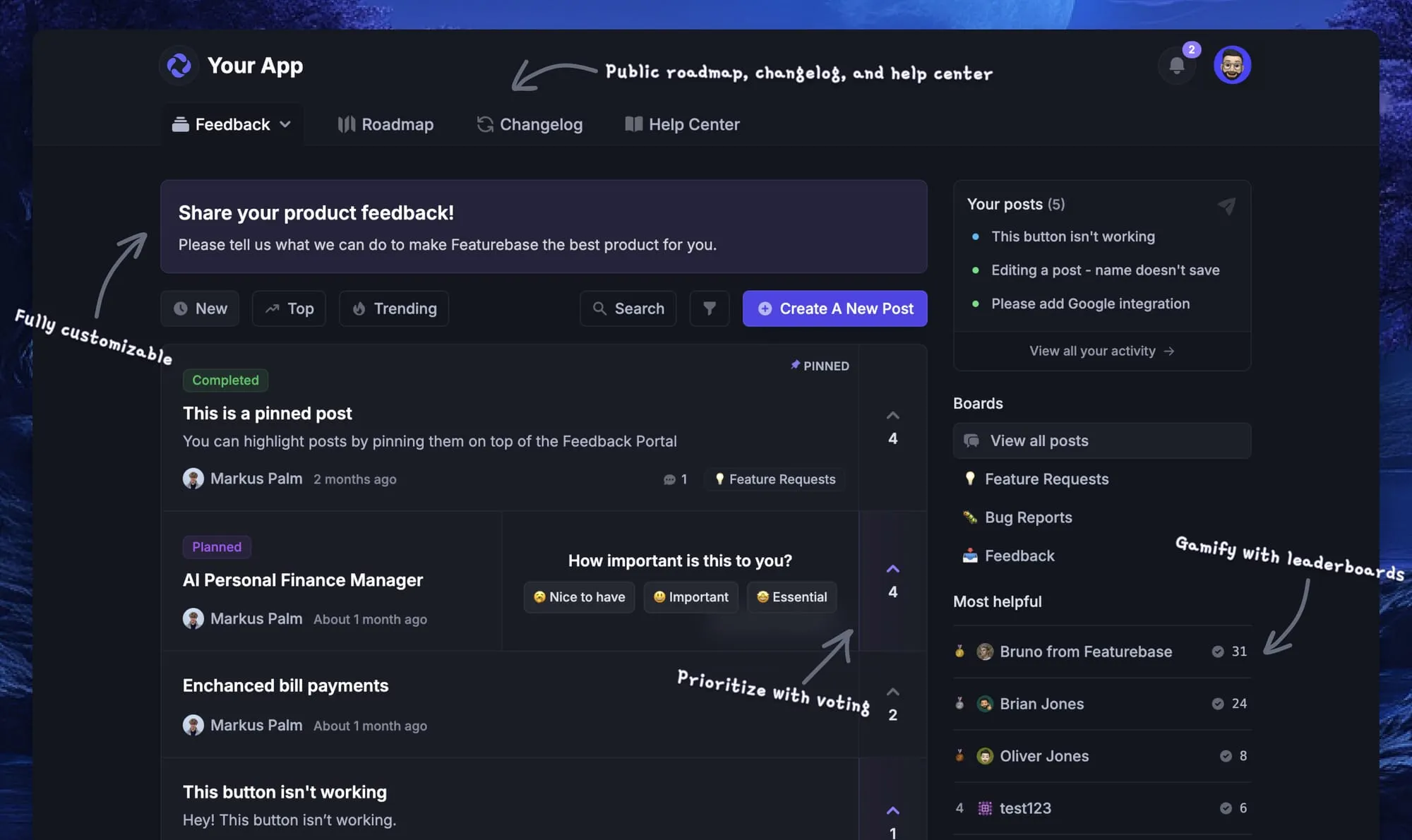
- Conduct market and user research, competitive analysis, and gather user feedback using a variety of product management tools like Featurebase.
- Assist with defining user stories, feature specs, backlog prioritization
- Participate in sprint planning and daily standups, note blockers and dependencies
- Support beta testing, gather feedback, run customer interviews, and report defects
- Analyze KPIs and usage data to spot issues or opportunities
- Communicate progress internally, prepare release notes, and support training
- Coordinate across engineering, design, marketing, and customer success
To advance to a full-fledged product manager, an APM should ideally:
- Track the clear delivery of projects end-to-end
- Take initiative: shadow senior PMs, ask what next-level responsibilities look like
- Build visible wins: hit milestones, gather metrics, and communicate impact to your manager
The salary range for this role is $79-145k, or ~$30–$40/hour.
2. Product manager
After about two to three years of experience, you can move on to the next step in the product management career. Product managers typically own an entire product or a specific area. Their goal is to deliver customer value while balancing what is technically possible with your business objectives and priorities.
Their responsibilities in the product management process include:
- Own 1–2 full features or a sub‑product
- Define roadmaps, write specs, set goals tied to metrics
- Coordinate cross‑functional execution and prioritize backlog
- Monitor KPIs, run A/B tests, and iterate based on findings
- Drive feature releases and go‑to‑market planning
- Engage stakeholders: summarize progress, negotiate trade‑offs
- Manage feature launches, feedback loops, and post‑launch support
To move on to the next step in your product manager career from this role, do some of the following:
- Demonstrate data-driven impact: instrument, analyze, tell a performance story
- Mentor APMs or junior PMs
- Expand scope: lead cross-functional projects and stakeholder communications
The salary range for this role is $90-$175k, with potential compensation of up to $200k, including the full compensation structure. The median salary is around $110-120k.
3. Senior product manager
Once you've managed a few successful product launches and you have a few years of experience under your belt, you can move into the role of a senior product manager. As a senior PM, you'll get the ability to create and execute product strategy, mentor junior product managers, and collaborate very closely with key stakeholders in the company.
Key responsibilities include:
- Lead multiple features or product lines
- Drive product strategy, vision, and roadmap alignment
- Coordinate long‑term planning across engineering, marketing, and support
- Mentor PMs, conduct design reviews, and enforce best practices
- Perform pricing, competitive, and profitability analysis
- Manage full product lifecycle: ideation through launch and iteration
- Advocate product strategy to senior leaders
- Liaise with sales and support to ensure customer alignment
If you're already in this role and want to take the next step, here are some ways to become a group product manager:
- Take on larger, more strategic product areas
- Mentor others and lead cross-functional initiatives
- Be the visible voice for product success and roadmap alignment
The base salary for this role is anywhere from $120-175k, with the total comp being anywhere from $150-275k per year.
4. Group product manager or principal product manager
After 5-10 years of experience in your product management career, you'll become a group product manager. This comes with a few perks, such as managing multiple product lines and managing people throughout the product development process.
Your key responsibilities will include:
- Oversee 3–5 PMs or a portfolio of products
- Blend strategic leadership with operational execution
- Mentor and elevate PM performance
- Define a cross‑product roadmap and ecosystem vision
- Coordinate layered strategy with design, data, and engineering
- Advocate for standardized product management frameworks, processes, and best practices
- Measure impact across the portfolio and report to the Director level
And this doesn't have to be the end of your entire career: you can move on to become a director of product. To do this, you'll need to:
- Show leadership: mentor peers, lead multiple teams
- Influence product direction across teams
- Handle bigger business impact
The base salary for this role is anywhere from $150-200k, and the total compensation package can go over $250k annually.
5. Director of product
At this point, you're at a great place in a product management career, but there is still room for growth. It's fairly similar to the Group Product Manager role, but you'll be in charge of more product lines and likely managing more people.
Responsibilities in this role include:
- Own product portfolio strategy and objectives
- Hire, develop, review PMs and GPMs
- Define and optimize product org structure and policies
- Set metrics aligned with company goals; track portfolio health
- Build executive stakeholder alignment
- Oversee budgets and resource allocation
- Ensure cross‑functional collaboration (UX, marketing, sales)
- Drive continuous improvement in product delivery processes
You're well along in your product management career path, and the next step is the VP level. Here's how to do that:
- Establish strong cross-department relationships
- Build a high-performing product team
- Show business outcomes across multiple products
The base salary for a director of product is $170-290k with the total compensation of $250-$350 k+.
6. VP of product/head of product
At the VP level, you're responsible for the entire product strategy. The head of product sets the product mission and vision and allocates resources. Besides product marketing and management, you collaborate with executive-level staff, manage P&L statements, and your work has a large-scale impact on the entire business.
Your main responsibilities include:
- Manage directors and senior leaders
- Set talent strategy, build org capacity
- Define go-to-market models, pricing, and positioning at scale
- Align product with marketing, sales, and finance strategies
- Handle budgeting, headcount, and forecasting
- Drive product culture and leadership development
- Engage customers, investors, executives, and the board
The only role higher than this one is a CPO or chief product officer. To get there, you'll need to cover some of the following:
- Scale product organization and strategy company-wide
- Manage senior leadership and budgets
- Shape long-term product vision
The base salary range for a VP of Product is $160-330k, with the total compensation package of $300-400k.
7. Chief product officer
At the pinnacle of the product manager career path is the CPO or Chief Product Officer, in charge of owning overall product vision and organizational outcomes. At this point, you manage multiple VP-level executives, and you're in charge of innovation and market strategy.
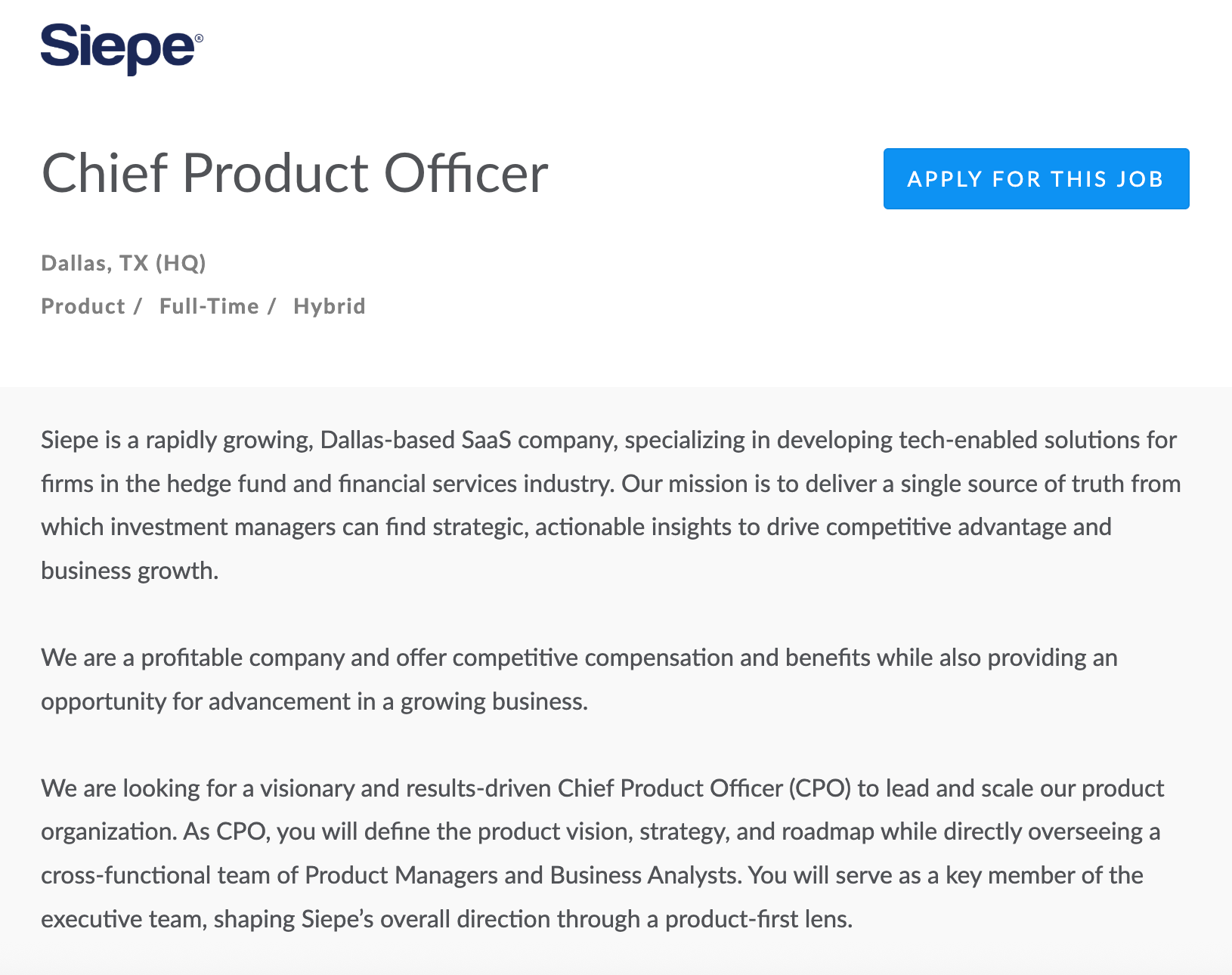
There are many responsibilities in this role, including:
- Set global product vision and strategic direction
- Own end-to-end product lifecycle across categories
- Lead VPs/Heads of Product, shaping leadership culture
- Integrate product strategy with corporate strategy
- Drive innovation, M&A, market positioning strategies
- Influence executive decisions, resource allocation
- Ensure cross-functional team alignment at the C‑suite level
- Represent the product in board meetings and investor relations
- Guide product ethics, compliance, user privacy, and security
The base salary for this role is from $235-470k, with total compensation packages going from $400-600k.
Conclusion
To sum up, this is what the career progression of a product manager should look like and what you should do to progress each step of the way:
- APM → PM: Deliver projects end-to-end, show ownership, and data insights
- PM → Senior PM: Master features, begin setting strategy, mentor others
- Senior PM → GPM: Lead multiple products and teams, set frameworks
- GPM → Director: Architect department-level strategy and metrics
- Director → VP: Scale org, P&L, cross-functional leadership
- VP → CPO: Drive vision, corporate strategy, executive influence
If you're up for an interesting career in tech that doesn't require the typical educational background (akin to online RN programs), this is an excellent way to make an impact (and a lot of money).
And once you're in a product manager role, you're going to have to collect customer feedback, prioritize roadmaps, and manage backlog. And Featurebase is a product manager's best friend.👇
Featurebase is a modern product management & feedback platform built to help product teams collect ideas, prioritize features, build roadmaps, and keep users engaged – all in one place. It’s loved by thousands of product, marketing, and support teams from companies like Lovable.dev, Elementor, and Beehiiv.
Start collecting feedback & managing your backlog with Featurebase for free