Top 10 Circle.so Alternatives for Product Feedback in 2026
Looking for a Circle.so alternative for collecting & managing product feedback? In this post, I've listed all of the top competitors that offer the best bang for your buck. I analyzed their pros, cons, and pricing, so you don't have to. Let's dive in!


On this page
Looking for a Circle.so alternative with feedback boards, roadmaps, changelogs, and in-app widgets?
If your main goal is to collect feature requests, prioritize customer feedback, share a roadmap, and announce product updates, I get it. You want something that's slick, powerful, and gets the job done quickly, but Circle.so just makes you want to pull your hair out.
No worries. I gathered all of the best Circle.so alternatives for feedback collection & management into one place and analyzed their pros, cons, and pricing, so you don't have to.
Let's find you the feedback tool of your dreams! 👇
Start collecting & managing feedback with Featurebase for free
The Best Circle.so Alternatives in 2026:
| Tool | Best for | Starting price | Best fit |
|---|---|---|---|
| ✨Featurebase | All-in-one product feedback, roadmap, and changelog management | Free for 1 user, and $29/seat/month | SaaS and product teams |
| Nolt | Simple public voting boards | $29/month | Small teams that want simplicity |
| FeedBear | Lightweight feedback boards | $49/month | Small teams with basic feedback needs |
| Frill | Simple feedback boards and changelogs | $25/month | Startups that want a lightweight setup |
| Skool | Community and course businesses | $99/month | Coaches, educators, and communities |
| Canny | Enterprise feedback management | Free | Very small teams or enterprises |
| Bettermode | Enterprise community engagement | $599/month | Larger community-led companies |
| Sleekplan | Affordable feedback boards and changelogs | Free | Budget-conscious startups |
| Roadmunk | Roadmapping and prioritization | $19/month | Product teams focused on internal roadmaps |
| Rapidr | Feedback management for larger teams | $49/month | Growing teams that need feedback workflows |
But before you run off to choose an alternative, let's go over Circle.so's drawbacks. This will help you know what to avoid while choosing a competitor. 🔎
What is Circle.so?
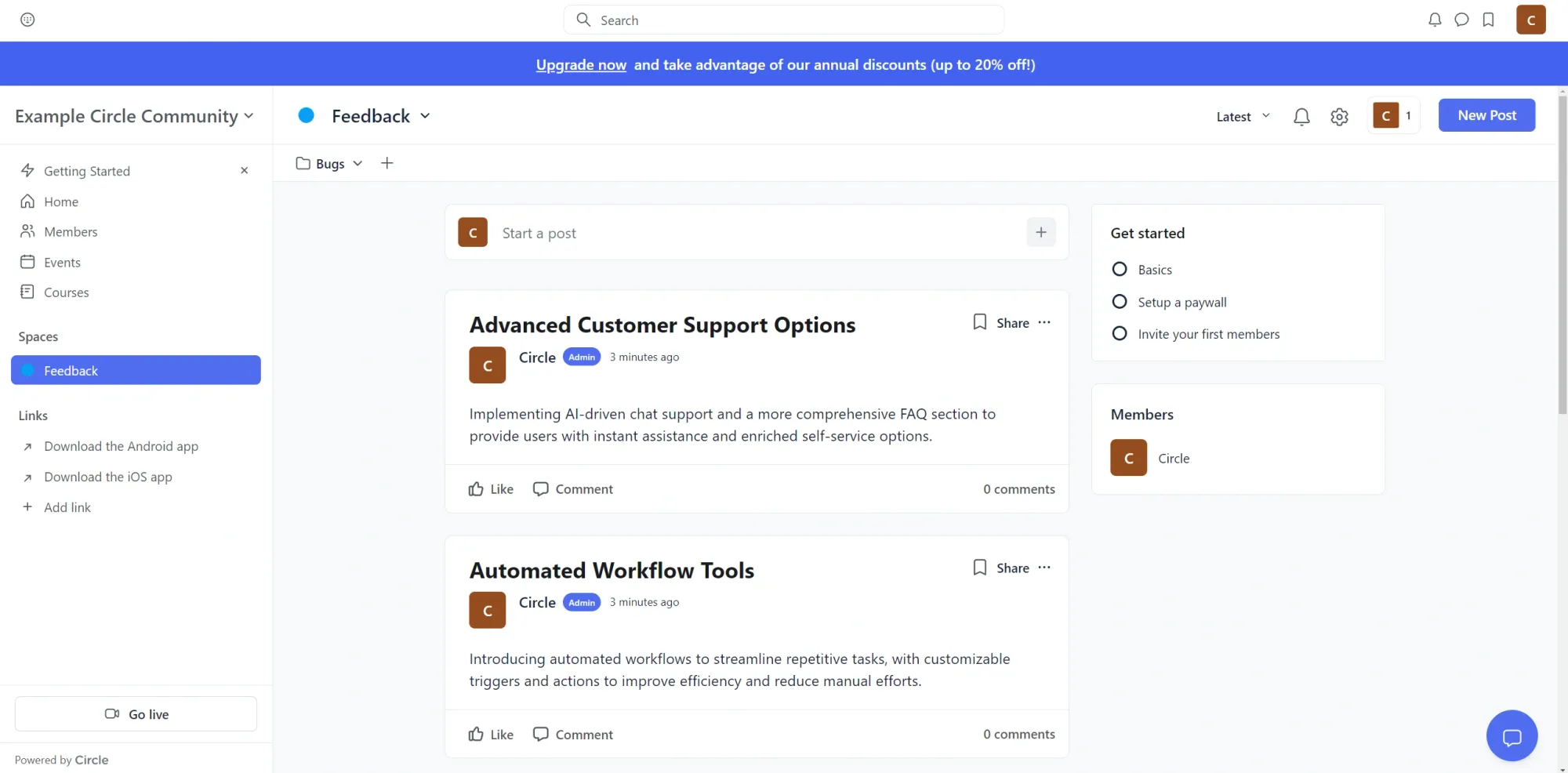
Circle.so is a platform for businesses to create their own online communities. It's user-friendly and a great fit for those looking to connect and collaborate digitally.
While you can easily gather product feedback on Circle, managing it can be a bit of a challenge. The platform doesn't have a way to spot repeat posts or a specific area to track all the feedback. This means that if you're getting a lot of responses, sorting them out can be tough.
How much does Circle.so cost?
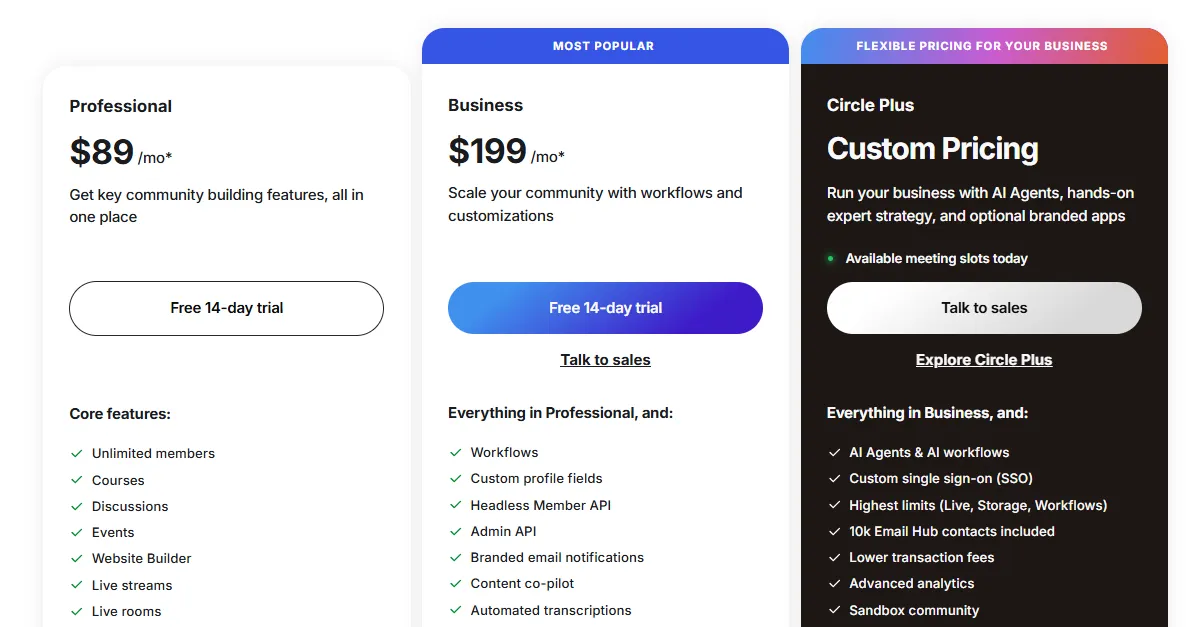
Circle’s paid plans start at $89/month for Professional and $199/month for Business, based on annual billing. Circle Plus uses custom pricing for teams that need AI agents, custom SSO, higher limits, priority support, and optional branded apps.
Circle is priced like a full community and membership platform, which makes sense if you need courses, events, live rooms, paid memberships, and community engagement.
But if your main goal is collecting and managing product feedback, you may end up paying for community features while still missing dedicated feedback workflows like prioritization, duplicate detection, changelog widgets, and structured customer feedback management.
Key features of Circle.so:
Circle.so offers many core features that most feedback tools do. This includes:
- Discussions - hold engaging conversations with customers
- Events - host virtual events
- Workflows - Deliver personalized welcome messages, nudges, awards, and subscription renewal reminders
Why look for a Circle.so alternative?
Circle is great for building online communities around discussions, members, courses, events, live streams, and community content. But product feedback needs a more structured workflow.
Product teams usually need a way to collect feature requests, merge duplicates, prioritize feedback by customer value, segment requests by user or company, publish a roadmap, close the loop with changelogs, collect feedback in-app, and sync insights with tools like Linear, Jira, Slack, Intercom, or HubSpot.
You can collect feedback in Circle through posts and discussions, but it isn’t purpose-built for managing product feedback at scale. Feedback can get buried, duplicate requests can pile up, and it becomes harder to turn community conversations into clear product decisions.
If you need a member community, Circle can be a great choice. If you need a feedback system for your product team, a dedicated feedback platform will usually work better.
What to look for in a Circle.so alternative for feedback
Before choosing a replacement, separate community features from feedback management features. A strong Circle alternative for product feedback should include:
- Feedback boards: Let customers submit ideas, vote on requests, and comment on what matters most.
- Roadmaps: Show what’s planned, in progress, or recently shipped.
- Changelog: Close the loop by announcing updates after you ship.
- In-app widgets: Collect feedback while users are inside your product.
- Duplicate detection: Prevent repeated ideas from cluttering your feedback board.
- Segmentation: Filter feedback by plan, revenue, company size, user type, or account status.
- Prioritization: Weigh requests by impact, effort, customer value, or product strategy.
- Integrations: Sync feedback with tools like Jira, Linear, Slack, Intercom, HubSpot, Zendesk, or GitHub.
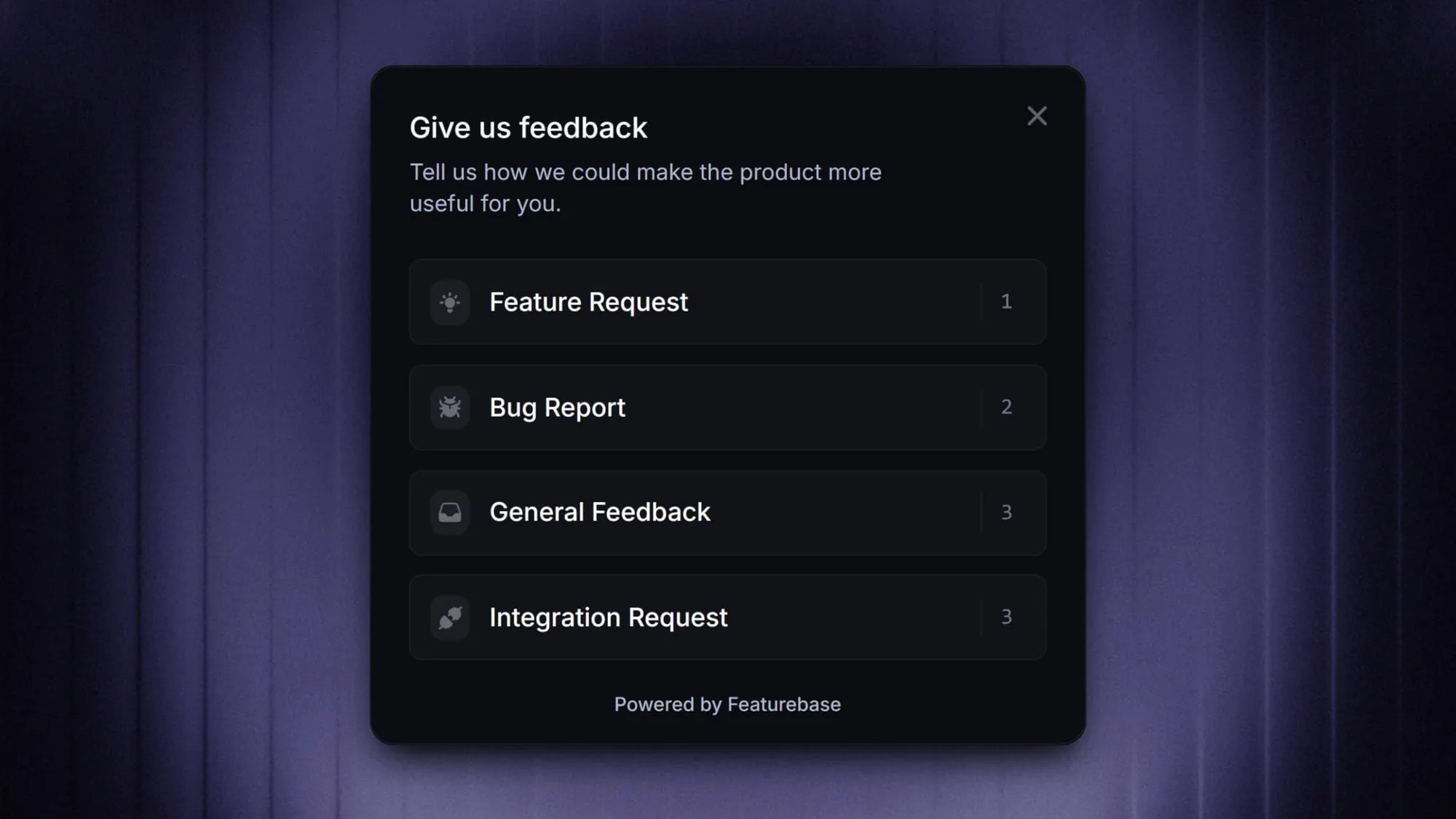
The 10 Best Circle.so Alternatives for Collecting Feedback
Now that we know what to avoid in a good alternative to Circle.so, let's get to the good part - the alternatives!
I handpicked each tool in this list by looking at their features and ease of use. I compared their advantages, drawbacks, and costs to Circle.so so you can pick the best one. Let's jump in!👇
1. Featurebase✨
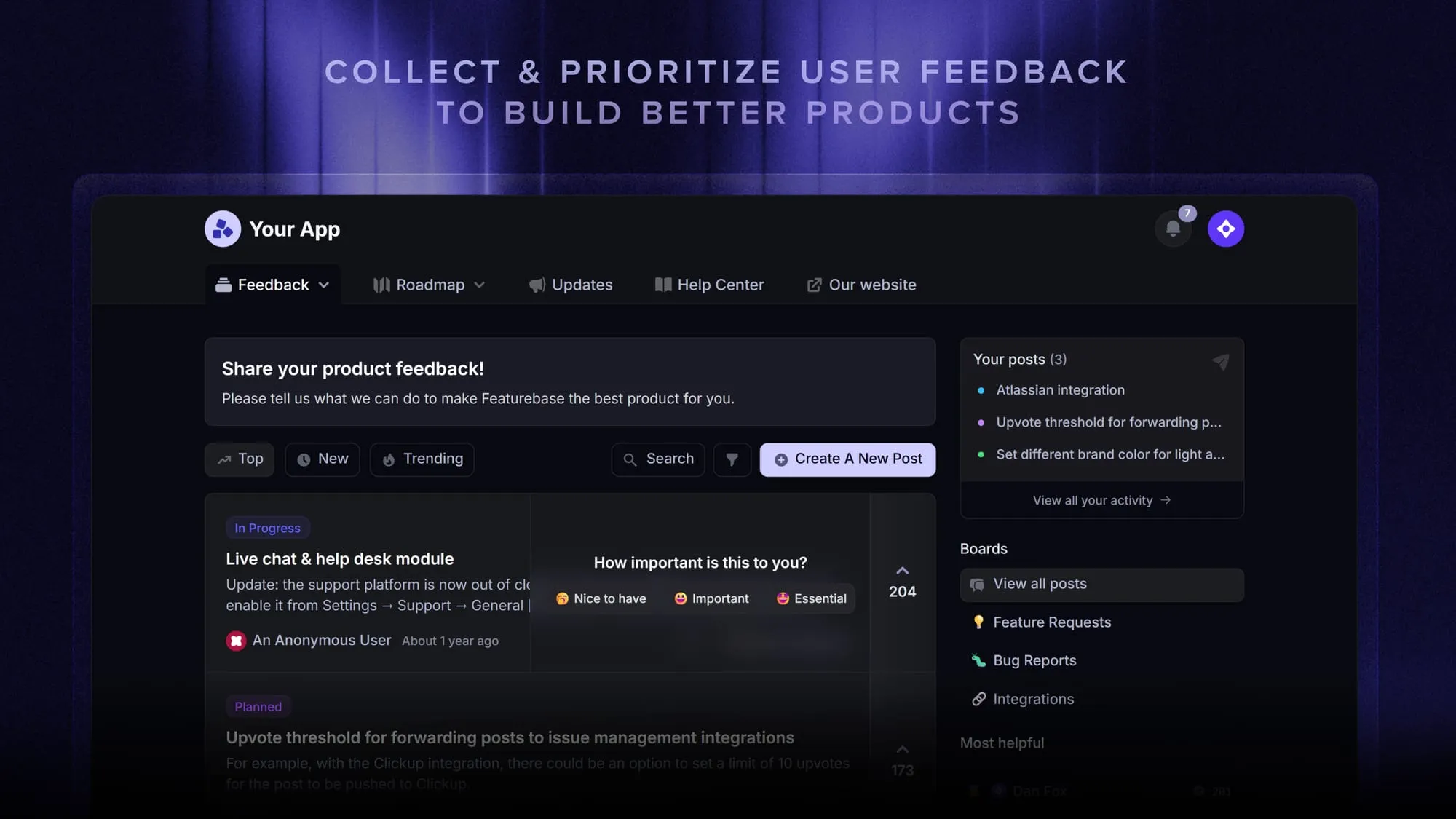
Featurebase is the best Circle.so alternative for product teams that want to do more than host community discussions.
While Circle is great for building online communities, courses, events, and paid memberships, Featurebase is built for collecting, managing, prioritizing, and acting on product feedback. It brings feedback boards, roadmaps, changelogs, surveys, in-app widgets, customer segmentation, and automated updates into one place, making it a stronger fit for SaaS teams that want to close the loop with users.
It also has a generous Free plan, transparent pricing, and takes just a few minutes to set up. ⚡️
Featurebase's key features
- All-in-one feedback platform – collect feedback, manage requests, publish roadmaps, announce updates, run surveys, and close the loop from one place.
- Intuitive interface – clean, modern, and easy to use for both your team and your users.
- Feedback boards – let users submit ideas, vote on requests, comment, and follow updates.
- Roadmaps and changelogs – show users what’s planned, what’s in progress, and what has shipped.
- In-app widgets – collect feedback and announce updates directly inside your product.
- AI duplicate post-detection – reduce repeated requests by showing similar posts before users submit new feedback.
- AI-powered search – quickly find relevant ideas, requests, and conversations, even if you don’t remember the exact wording.
- User segmentation – prioritize feedback based on customer data, plan, company, or revenue.
- Prioritization frameworks – compare requests by impact, effort, customer value, and product strategy.
- Automated user updates – notify users when their requested features move forward or get released.
- Customizations – customize your feedback portal, widgets, colors, theme, text, and overall experience.
- Integrations, API, and webhooks – connect feedback with the rest of your product workflow.
Advantages of Featurebase
Featurebase gives product teams a structured feedback workflow that Circle does not focus on. Instead of collecting ideas inside general community posts, you can organize requests on dedicated feedback boards, merge duplicates, segment feedback by customer data, and prioritize what to build next.
It’s also better for closing the feedback loop. You can publish roadmap updates, send changelog announcements, and automatically notify users when their feedback is reviewed, planned, or shipped.
For SaaS teams, the in-app widgets are especially useful because users can submit feedback while they’re actively using your product, without being redirected to a separate community space.
Drawbacks of Featurebase:
- No HubSpot & Salesforce integrations (see existing integrations)
How much does Featurebase cost?
- The Free plan is free forever with one seat. This plan gives you core functionality like live chat, unlimited conversations, a unified inbox, help center articles, feedback boards, changelogs, and surveys.
- The Growth plan costs $29 per seat per month. Designed for fast-growing startups, this tier adds the Fibi AI agent, email support, AI replies and macros, user segmentation, custom domains, basic analytics, and integrations.
- The Professional plan costs $59 per seat per month and it is built for scaling teams with multiple groups, it includes workflows and automations, service-level agreements, round-robin assignment, multilingual support, API and webhooks, plus 20 free Lite seats. AI usage is billed at $0.29 per resolution.
- The Enterprise plan costs $99 per seat per month. It is perfect for larger organizations that need advanced controls. This plan adds custom admin roles, single sign-on for admins, deeper integrative options like advanced HubSpot or Azure DevOps and AD support, personalized onboarding, custom invoicing, and 50 free Lite seats. AI resolutions are still billed at $0.29 each, and pricing is based on annual billing.
All plans let you collect unlimited feedback, and you can try the paid ones with a 10-day free trial. See pricing here →
Featurebase reviews:
- Product Hunt - 4.9/5
Conclusion
Featurebase is the best Circle.so alternative for collecting and managing feedback. It has a better dashboard and user interface for collecting feedback, all at a much lower price.
Featurebase offers an intuitive interface with feedback boards, a roadmap, a changelog, in-app widgets, and much more.
The onboarding is amazingly quick, with the migration options from Circle.so helping you get set up in minutes.
Learn more here →
2. Nolt.io
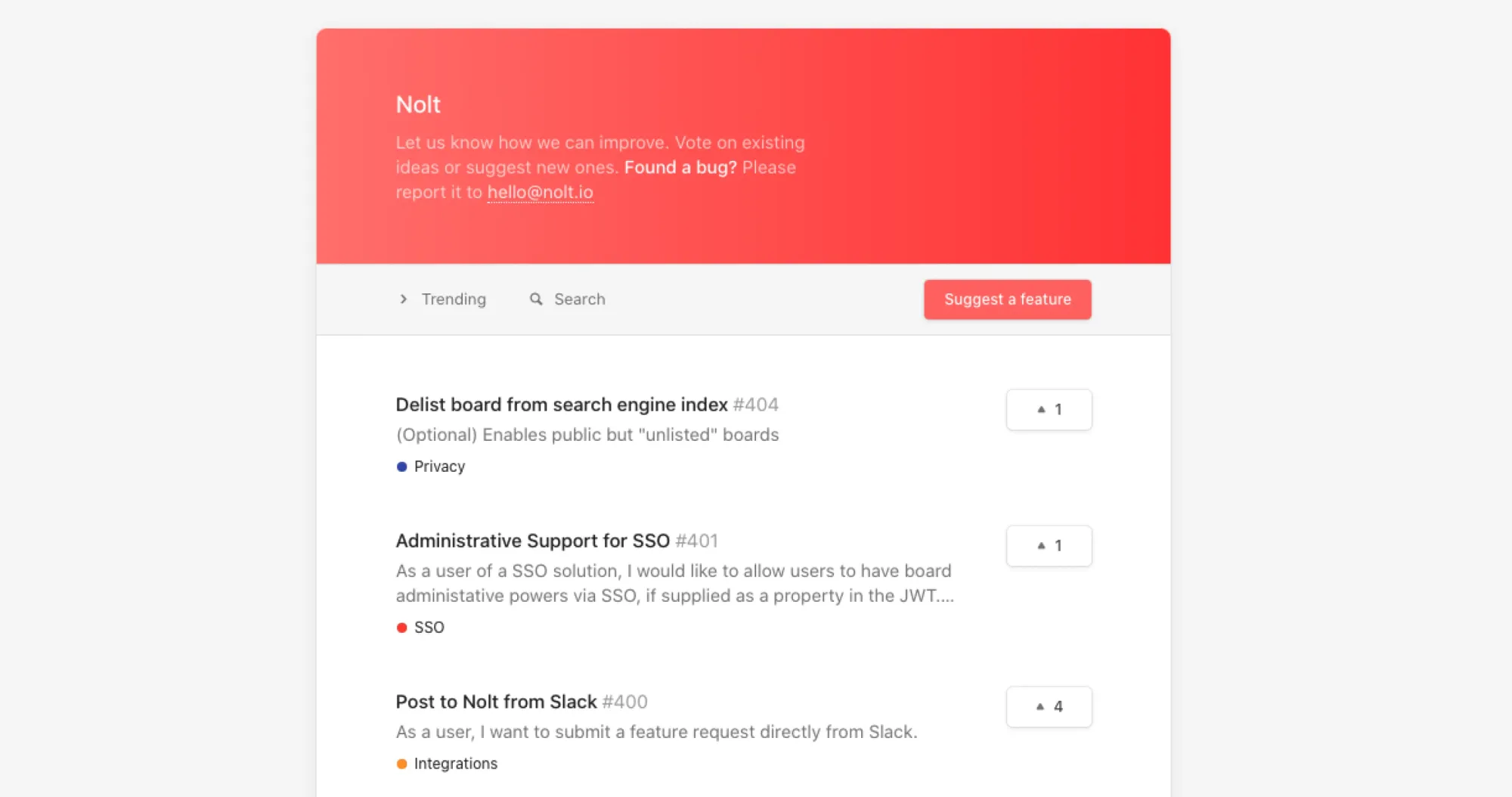
Nolt is a lightweight alternative to Circle.so that's best suited for small teams looking to collect feedback using simple features. However, it doesn't have changelogs and can get quite pricey for what it offers.
Nolt's key features:
- Feedback boards
- A roadmap
- Feedback collection widget
- Anonymous posting, commenting, and voting
- Password-protected boards
Advantages of Nolt:
- Simplicity (at the cost of many features)
- SAML 2.0 for enterprise
- Has over 10+ different translations
Drawbacks of Nolt:
- No admin dashboard
- No changelog for closing the feedback loop with users
- No duplicate post-detection system
- Only one widget
- No user segmentation
- No sorting feedback by customer revenue
- Doesn't scale well with many ideas (no bulk editing or filtering, etc.)
- No built-in prioritization frameworks for product managers
How much does Nolt cost?
- Essential ($29/month) - 1 board, roadmap, SSO
- Pro ($69/month) - 5 boards, API, and task management integrations
- Enterprise (talk to sales) - unlimited boards
The Essential Plan is great if you need SSO upfront, but otherwise, you'll find a better deal from other tools in this list.
Nolt reviews:
- G2 - 5/5
- Capterra - 4.9/5
- GetApp - 4.9/5
Conclusion
Nolt is a great Circle.so alternative for smaller teams looking for simplicity and voting boards. However, it lacks many crucial features like changelogs, user segmentation, and a dashboard.
Their pricing isn't expensive, but most alternatives offer much more for the same cost.
Check out the best Nolt alternatives →
3. FeedBear
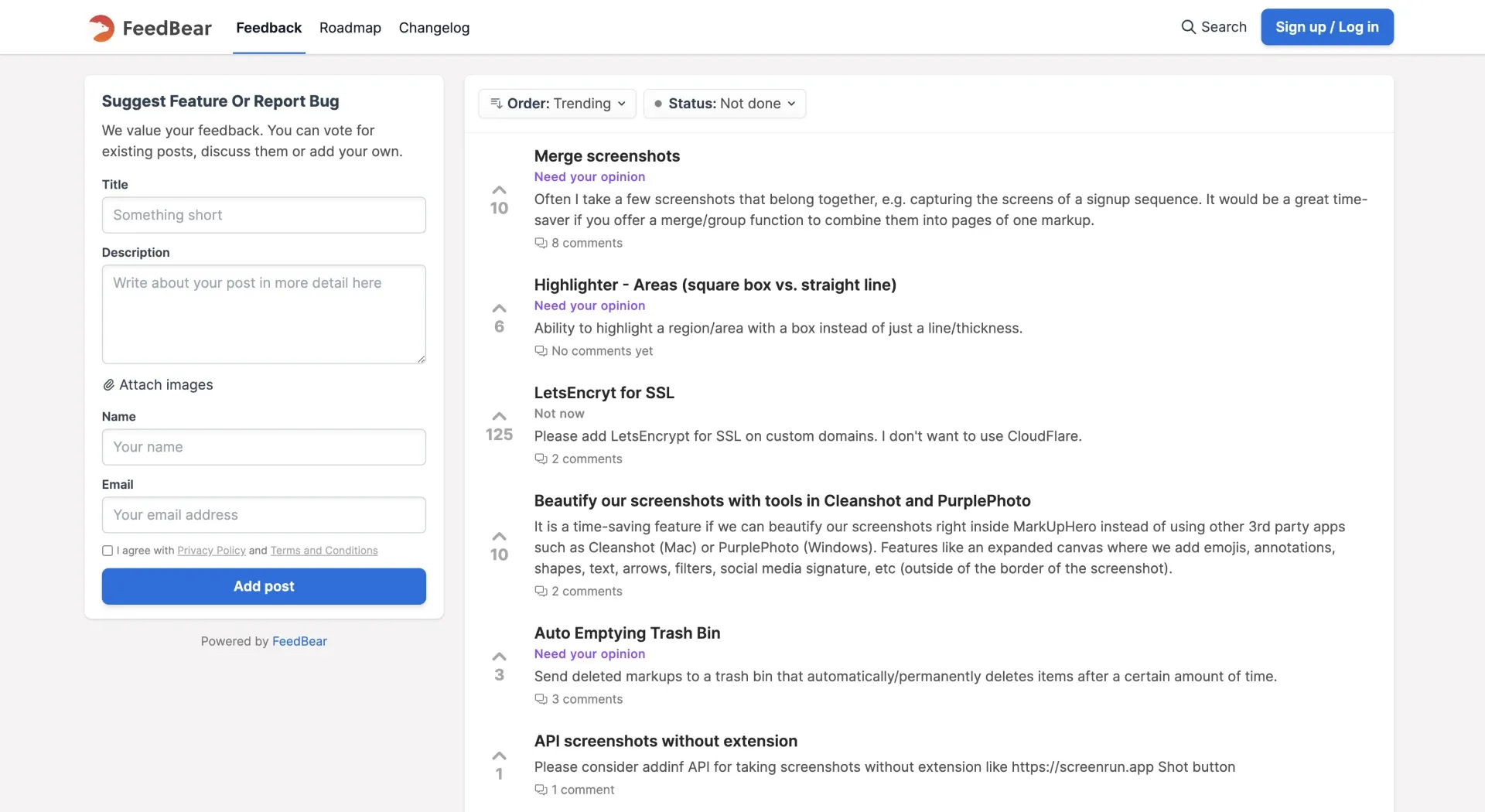
FeedBear is another very basic Circle.so alternative for collecting feedback. It has all the necessary features to get you started but falls short of competitors by missing many advanced functionalities like user segmenting.
FeedBear's key features:
- Idea boards for feature requests
- User voting on best ideas
- Product roadmap sharing
Advantages of FeedBear
- Fully customizable with your own CSS
- Single Sign On (SSO)
- Custom HTML/JS code
Drawbacks of FeedBear:
- No admin dashboard to effectively manage feedback
- Very primitive filtering and sorting
- No user segmenting
- Can't sort feedback by customer revenue
- No built-in prioritization frameworks
How much does FeedBear cost?
FeedBear has simple pricing starting from $49/month. It offers all core features like roadmap, changelog, and custom domain. The second plan is already $99/mo while removing branding and granting SSO. You can use the 14-day free to test them out.
FeedBear reviews:
- G2 - 4.8/5
- Capterra - 4.8/5
Conclusion
FeedBear is a very primitive feedback tool at an affordable price. They're ideal for smaller teams after simplicity and don't need many advanced features.
It lacks a dashboard and comprehensive filtering system to manage feedback effectively and doesn't scale well with those growing fast.
Want more options? Check out these top FeedBear alternatives →
4. Frill
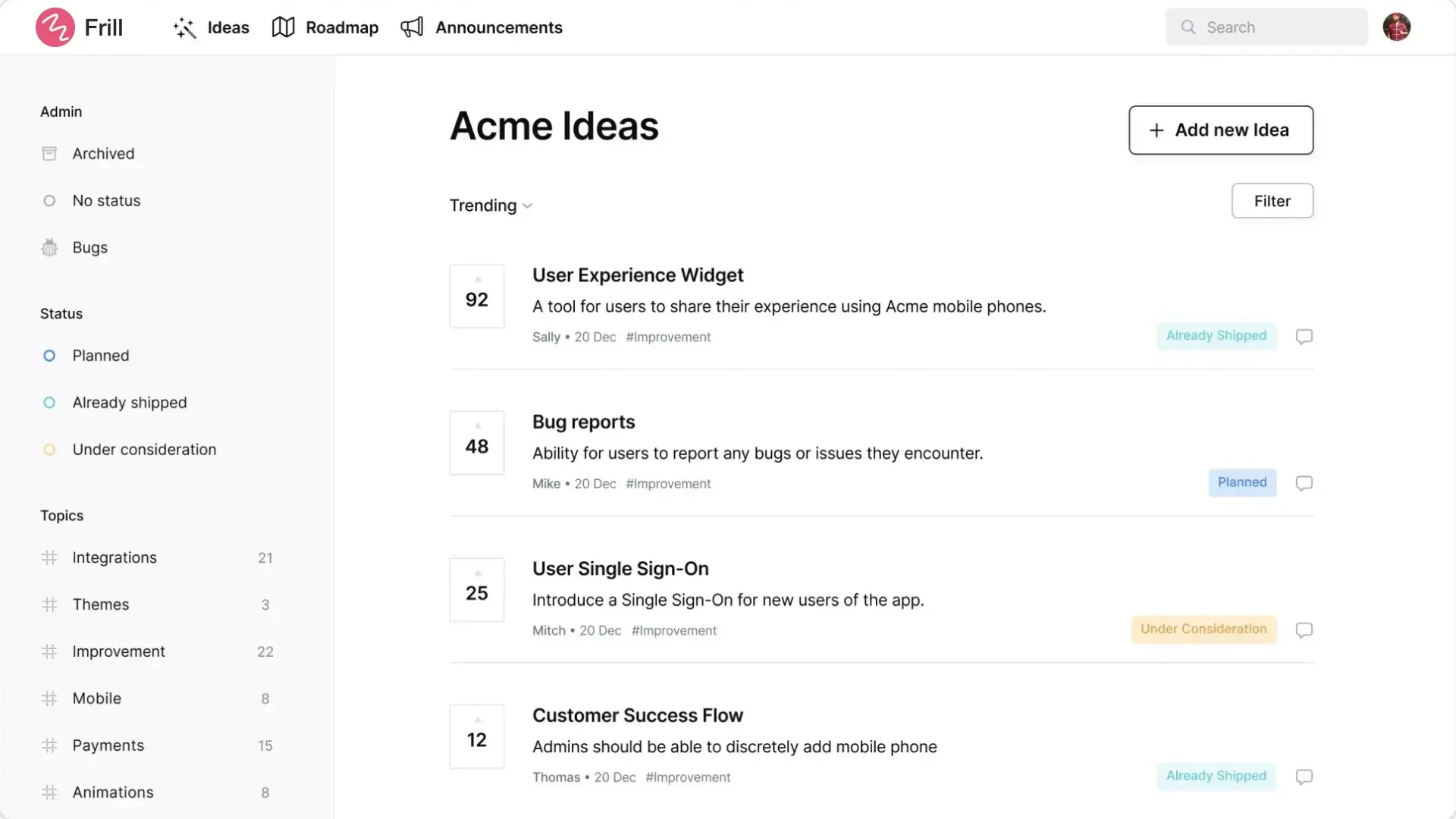
Frill is a straightforward Circle.so alternative with simple feedback boards and a widget. They have a pretty user interface but could improve their feedback management side.
The pricing and dashboard make it a more suitable option for smaller teams that don't get much feedback.
Frill's key features:
- Feedback boards, roadmaps, changelogs
- Feedback collecting widget & changelog popups
- Changelog notification emails
- Custom domain
Advantages of Frill:
- Minimalistic & straightforward UI
- Translations into any language
Drawbacks of Frill:
- Poor dashboard view for managing & moderating feedback
- No user segmentation
- No sorting feedback by customer revenue
- No changelog emails
- No duplicate post-detection system
- No built-in prioritization frameworks
How much does Frill cost?
Frill offers 4 plans to choose between. You can try out each one with a 14-day free trial.
- Startup ($25/month) - 50 active ideas at a time
- Business ($49/month) - removes the feedback limit
- Growth ($149/month) - unlimited feedback, white labeling, privacy features
- Enterprise (starting at $349/month) - SOC2 and a dedicated support manager
Frill reviews:
- G2 - 4.8/5
- Capterra - 4.6/5
- GetApp - 4.6/5
Conclusion
If you're looking for a simple alternative to Circle.so, Frill is a nice option. It offers a changelog, widgets, and a custom domain.
The first plan costs $25/mo and is suited for smaller teams that don't get more than 50 ideas in a month. The next plans are still quite affordable, but a bit pricey compared to others.
Check out the best Frill alternatives →
5. Skool
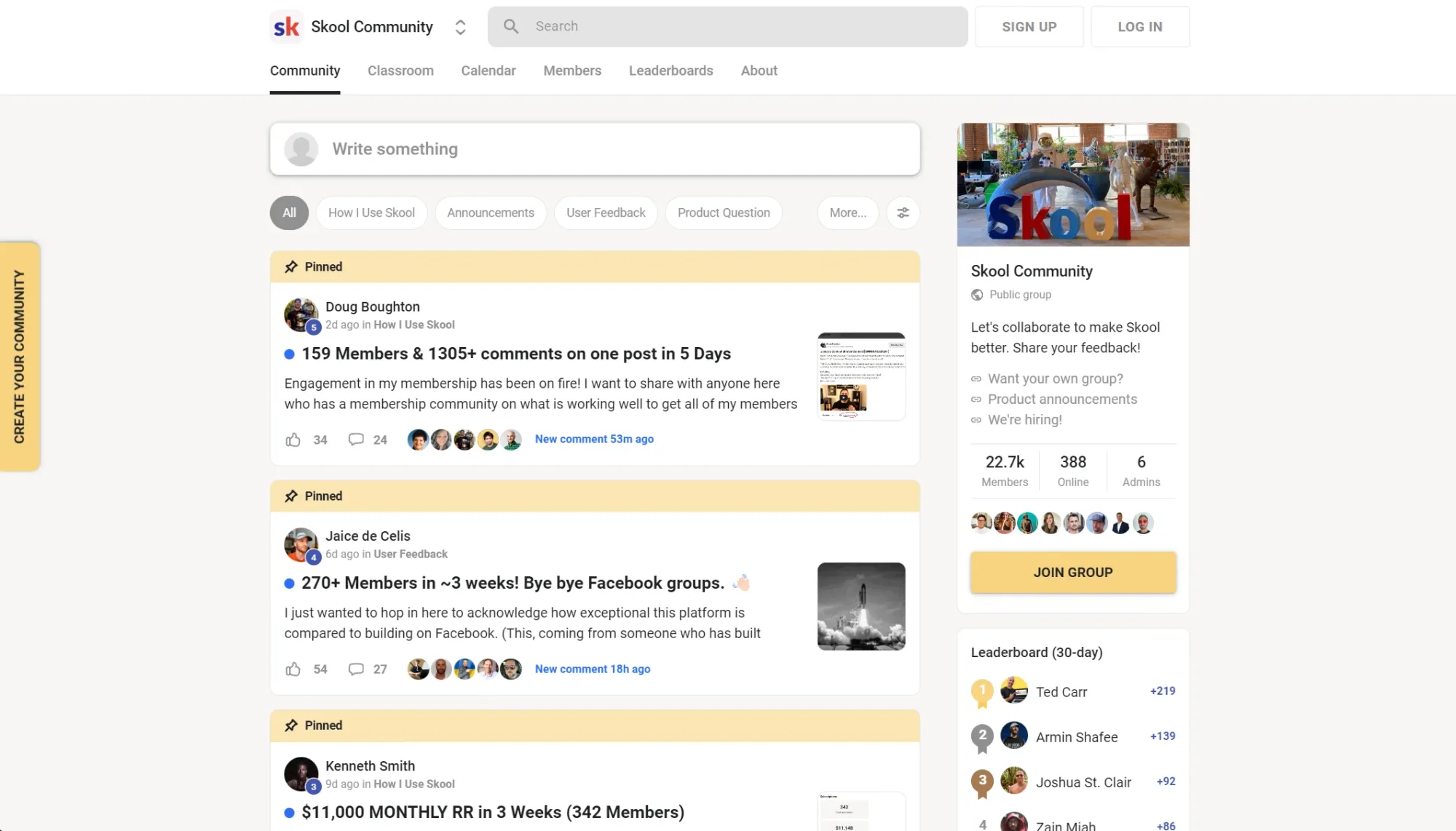
Skool is a platform for coaches and educators to create online communities and courses. It has basic features, limited customization, and lacks tools for detailed feedback management.
We find it best suited for simple community building and course management.
Skool's key features:
- Community - let users submit ideas and chat in a community
- Classroom - courses, modules, videos, resources, searchable transcripts, and progress tracking
- Gamification - make your group fun with points, levels, and rewards
Advantages of Skool:
- Very good for community management
- Gamification features help with community engagement
- Users can get notifications in-app and via email
Drawbacks of Skool:
- Poor feedback management
- No duplicate post-detection
- No widgets for in-app feedback gathering
- No prioritization frameworks for product management
- No integrations with tools like Jira, Intercom, or Slack
How much does Skool cost?
Skool offers all its features for $99/month. For community management & courses, this is a great deal. However, if you're also looking to handle feedback and bug reports, they do not have the tools for the job, and you will find better value elsewhere.
Skool reviews:
- No reviews
Conclusion
Skool is a community tool at it's core. It's got features like gamification, selling courses and event calendars.
Since most of the focus has gone to the community side, it lacks on the feedback management side. For example, they don't have a dashboard for managing feedback & have no statuses on posts like "In Progress" or "Completed".
Check out the best alternatives to Skool →
6. Canny.io
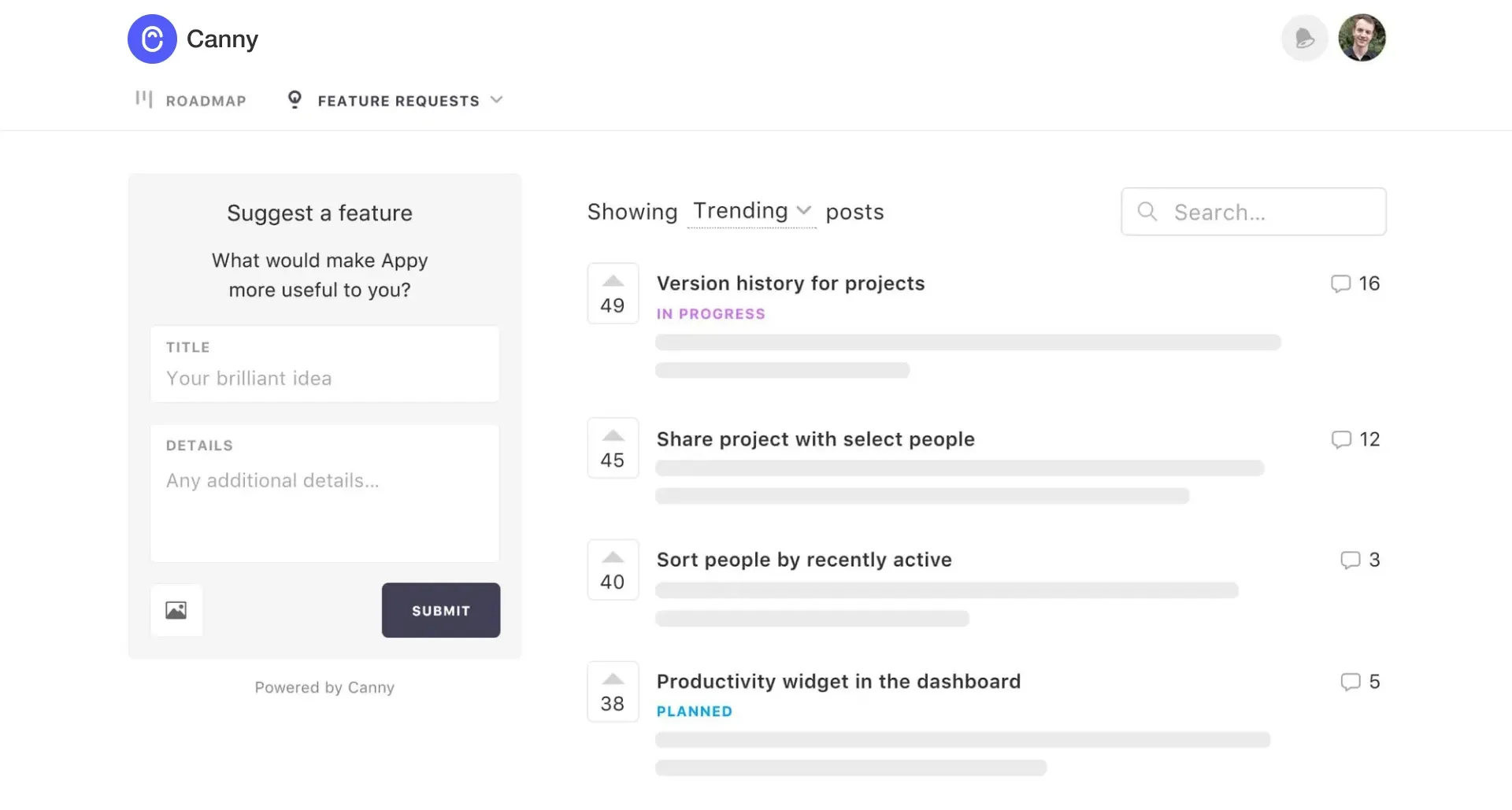
Canny.io is a popular feedback tool that targets enterprises. It offers all the same features as Circle.so and much more. However, their paid plans cost a lot, and the free plan has a strict limit on monthly posts.
Canny's key features:
- Feedback boards, roadmaps, changelog
- Prioritization frameworks
- Feedback widget
- Automated email notifications
- Duplicate post-detection
- Custom domain
Advantages of Canny:
- SOC2 compliance for enterprises
- Modern & intuitive design
Drawbacks of Canny:
- Very expensive pricing
- No changelog popups
- No bulk editing
- No prioritization matrices
- No follow-up questions like "How important is this for you?" for extra insights
- Customers complain about not being listened to
- Supports only English
How much does Canny cost?
- Free plan - limits active posts to only 100 a month. For very small companies only
- $99/month (Starter Plan) - custom domain, roadmap, 2 integrations. Very limited in features, equal to competitors' free plans
- $399/month (Growth) - for 5 admins, user segmentation, private boards, and more
- Business (talk to sales) - unlimited boards, pay by invoice, SOC2, etc.
Canny Pricing: Is It Worth It →
Canny reviews:
- G2 - 4.5/5 (complaints)
- Capterra - 4.8/5
- GetApp - 4.7/5
Conclusion
Canny is a reasonable Circle.so alternative for enterprises. They are SOC2 certified, support paying by invoice & have advanced moderation features.
They offer a free plan that limits you to 100 posts. Furthermore, the most useful features are on the $399/mo plan, so it can get even quite expensive.
Check out these affordable Canny alternatives →
7. Bettermode
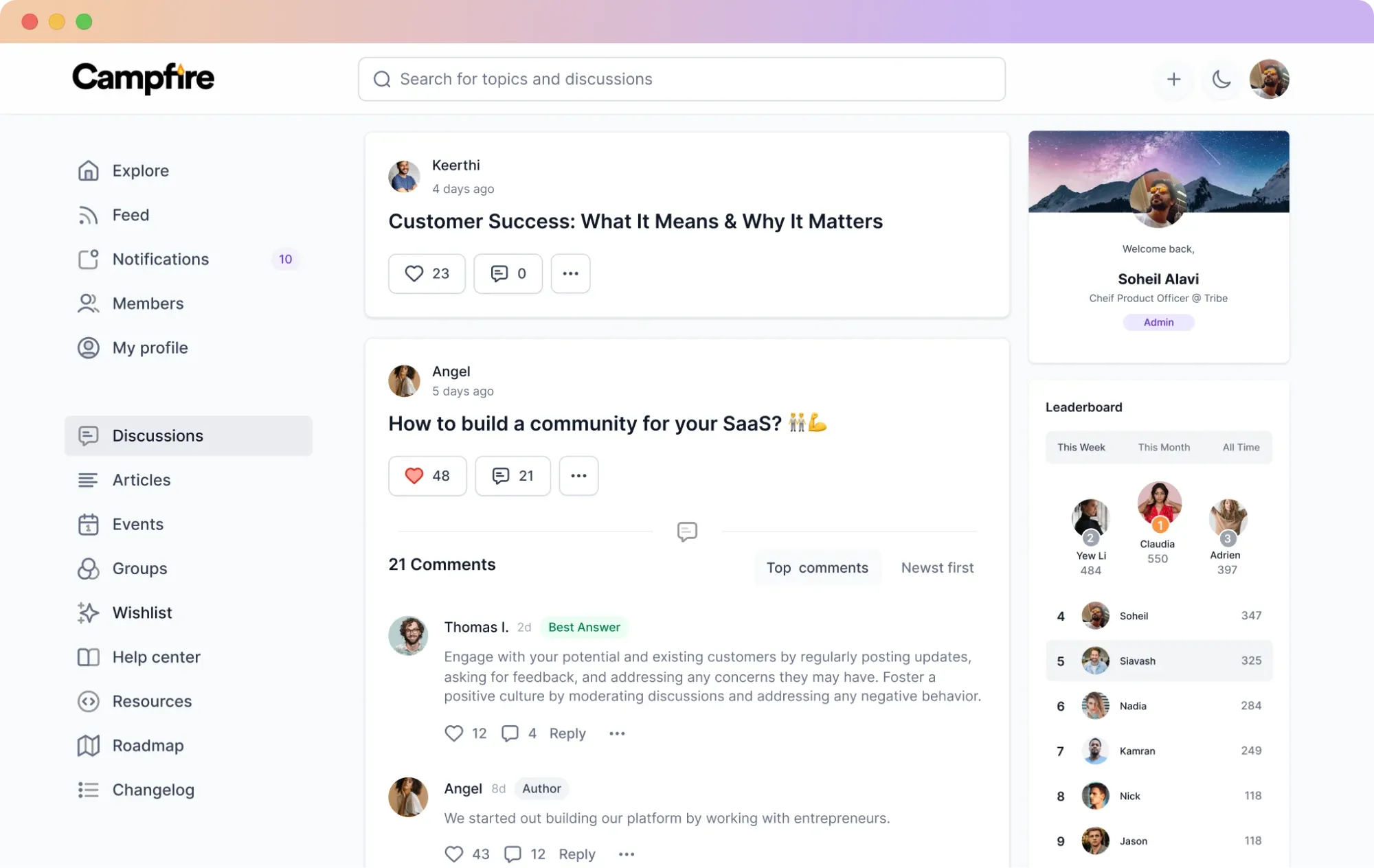
Bettermode is a Circle.so alternative that comes with a community feed, feedback board, help center & event handling. It's highly configurable and has integrations with popular tools like Jira or Intercom.
It lacks a good dashboard with filtering & prioritizing, making it not the best for feedback management. There is also no duplicate feedback detection, so you will have to handle that yourself.
Bettermode's key features:
- Community discussions - have a place for your community to chat & discuss things
- Ideation - capture feature requests and ideas from users
- Help Center - build a knowledge base for your users to teach them about your product
- Events - organize events & webinars with your users
Advantages of Bettermode:
- All-in-one tool - have all community management in a single platform
- Visually customizable - change every part of your community in real-time
- Gamification - boost engagement & encourage users to leave feedback
Drawbacks of Bettermode:
- Poor feedback management - no dashboard for handling large volumes of feedback
- Too complex - if you're only looking to manage feedback, there are better options
- High pricing - the cheapest plan starts at $599/mo
How much does Bettermode cost?
Bettermode has a pretty simple but costly pricing structure:
- Advanced ($599/mo) - all features except enterprise-specific ones
- Enterprise (talk to sales) - Uptime SLA, Master service agreement, SAML authentication
Bettermode reviews:
- G2 - 4.6/5
- TrustRadius - 8.8/10
Conclusion
Bettermode is an enterprise community platform. They are trying to be an all-in-one tool for communities but have some shortcomings.
Mainly, their feedback gathering & management could be improved. There is no dashboard & minimal filtering possible on user feedback. This makes it difficult to manage it at larger volumes.
Their cheapest plan costs $599/mo. For feedback management, more powerful and cheaper options are available at way cheaper prices.
Check out the best Bettermode alternatives →
8. Sleekplan
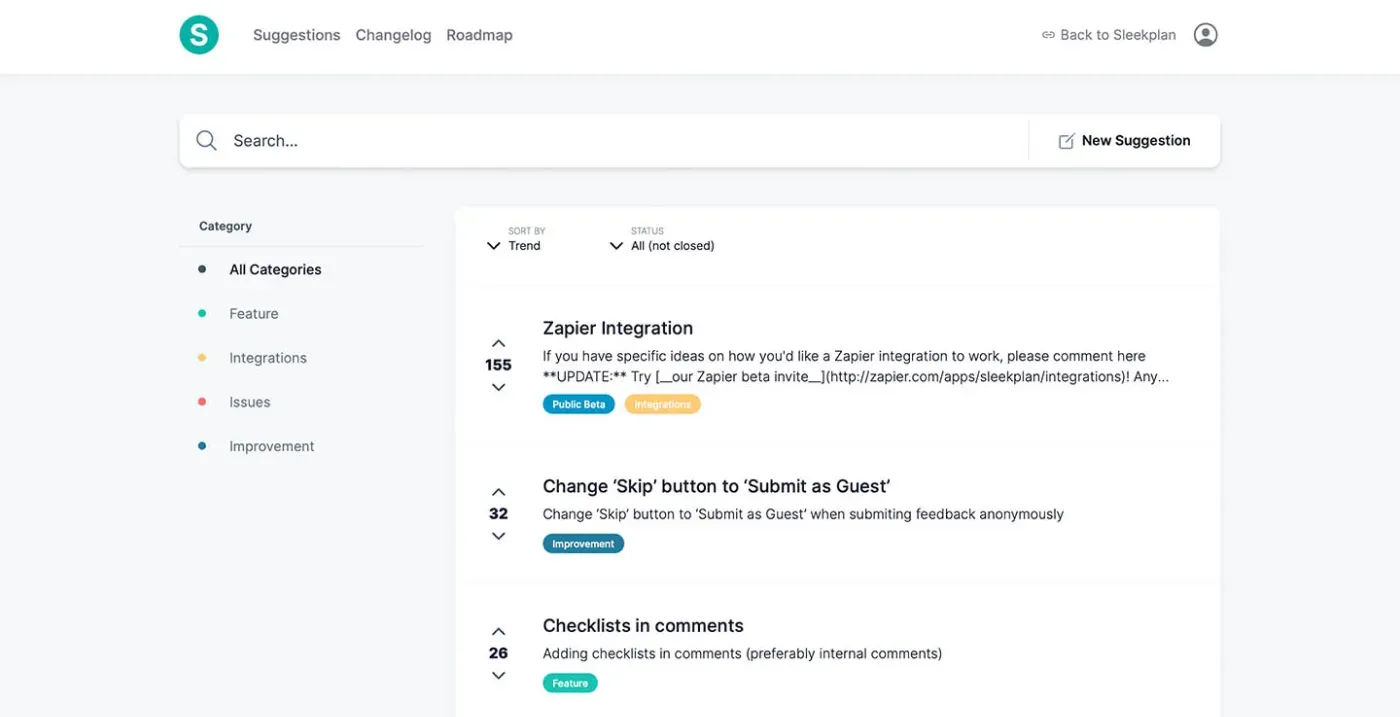
Sleekplan is one of the most budget-friendly alternatives to Circle.so. Besides feedback boards, roadmaps, and changelogs, it also supports satisfaction surveys. It's a great deal for smaller startups that don't need complex features.
Sleekplan's key features:
- Feedback boards, roadmaps, changelogs
- CSAT and NPS satisfaction surveys
- Anonymous posting, commenting, and voting
- Customizable survey widgets
- Supports 10+ languages
Advantages of Sleekplan:
- Very affordable pricing - highest plan $45/month
- A lightweight tool, not too complex
Drawbacks of Sleekplan:
- Outdated UI & UX
- No changelog popups
- No duplicate post-detection system
- No bulk editing
- No follow-up questions
- Few integrations
- Run by a solo founder, so customer support might not be good
How much does Sleekplan cost?
Sleekplan offers 4 plans to choose from. Each allows unlimited feedback and end users.
- Indie (free) - 1 admin, 1 feedback board, and a changelog
- Starter ($15/mo) - 3 admins, changelog, roadmap, customer satisfaction surveys
- Business ($45/mo) - 10 admins, merge posts, white labeling, custom domain, and user segmentation
- Enterprise (custom) - Everything in Starter, plus unlimited admins
Their pricing seems (and is) affordable, but many critical features like post-merging are only on the third plan.
Sleekplan reviews:
- G2 - 4.8/5
- Capterra - 5/5
- GetApp 5/5
Conclusion
Sleekplan is a good choice for smaller teams that also want to measure customer satisfaction. It's a nice, affordable alternative, but you'll have to go with the $45/mo plan to access most of the useful features.
Check out the best Sleekplan alternatives →
9. Roadmunk
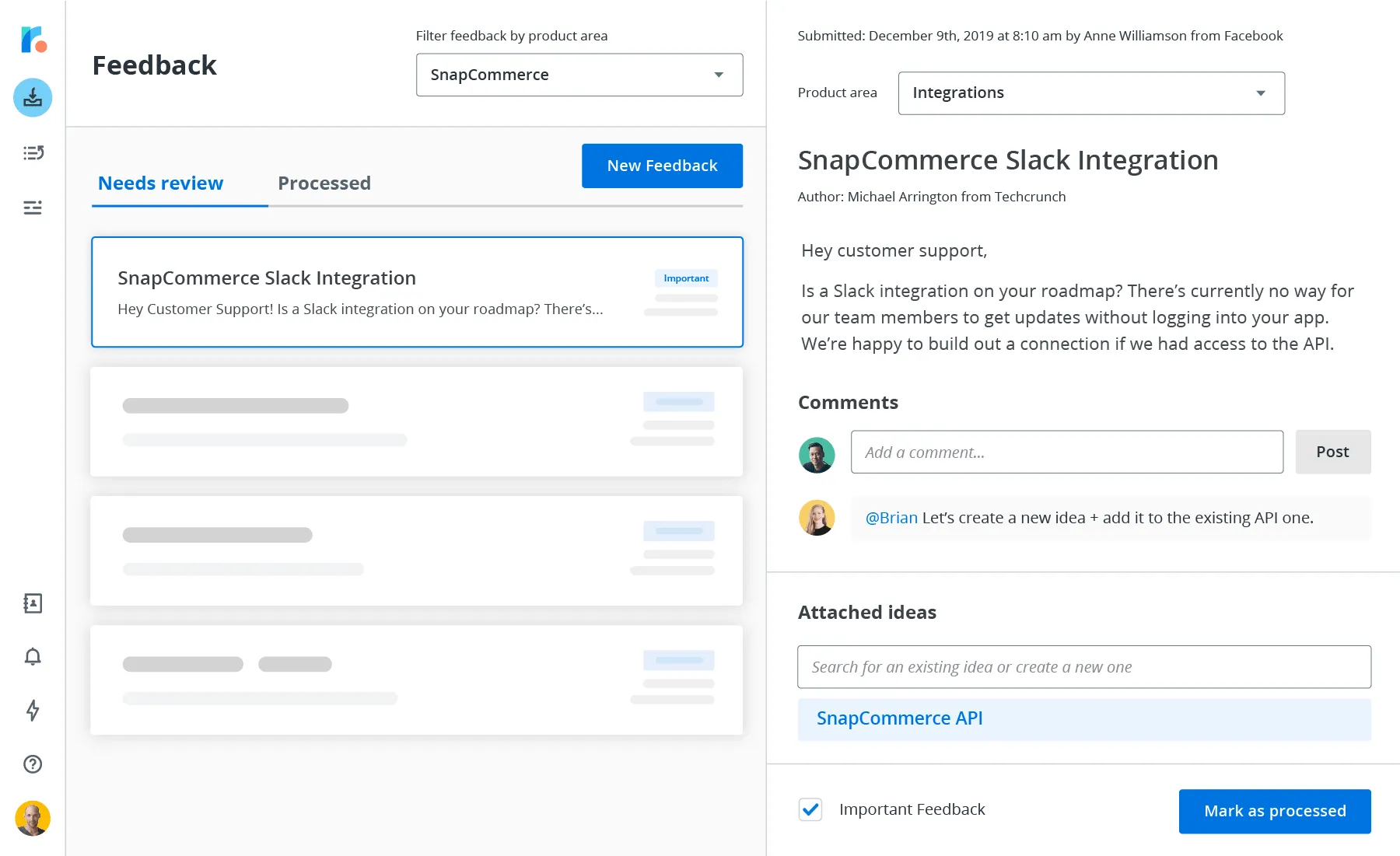
Roadmunk is a feature roadmapping tool for larger companies. It helps product managers manage and prioritize feature ideas to make better product decisions.
It's an expensive but robust tool with many rich features and integrations. However, it has its downsides, mostly on the feedback collection side.
Roadmunk's key features:
- Roadmaps - display upcoming features, manage and prioritize ideas on a roadmap view
- Feedback boards - let users submit ideas and upvote others' posts
- Prioritization frameworks - prioritize ideas using frameworks like Value vs Effort or RICE
- Integrations - connect Roadmunk with popular issue-tracking tools like Jira, Trello, and Monday
- Single Sign-On - automatically sign in users with your existing data
Advantages of Roadmunk:
- Customizable design and filter options
- Controlled Access for each member of the team
- Swimlane and Timeline are great features for internal presentations
Drawbacks of Roadmunk:
- Selecting dates from the calendar takes a lot of time. Users want a quicker way, like typing the date directly or copying and pasting
- There are reports of occasional lagging or slow performance
- It's not easy to customize some of the features
How much does Roadmunk cost?
Here are the 4 tiers with the main differences:
- Starter ($19/mo) - 1 admin, unlimited roadmaps, feedback collection & prioritization, One-way Jira, Azure, Trello integrations, 3 reviewers
- Business ($49/editor/mo) - customizations, dependencies, API, 5 reviewers. (Optional: Two-way Jira + Azure DevOps for $9/editor/mo)
- Professional ($99/editor/mo) - Single Sign-On, Two-way Jira + Azure DevOps, 10 reviewers
- Enterprise (custom $$$) - advanced customization, private cloud, custom nr of reviewers
It doesn't seem too expensive at first. However, if you take into account the 'per editor' pricing and compare its functionality to alternatives, it's quite a lot.
You can pay the same price for much more complete tools offering more seats and even get many of these features for free.
Roadmunk reviews:
- G2 - 4.0/5
- Gartner - 4.6/5
- TrustRadius - 8.9/10
Conclusion
Roadmunk is a good choice if creating customizable roadmaps is important to you. This, along with their prioritization frameworks makes it a good choice for managing feedback internally.
Feedback collection with Roadmunk is very primitive and they lack a public feedback board. It's not possible for users to upvote, chat with each other or view changelogs.
Check out the best Roadmunk alternatives →
10. Rapidr
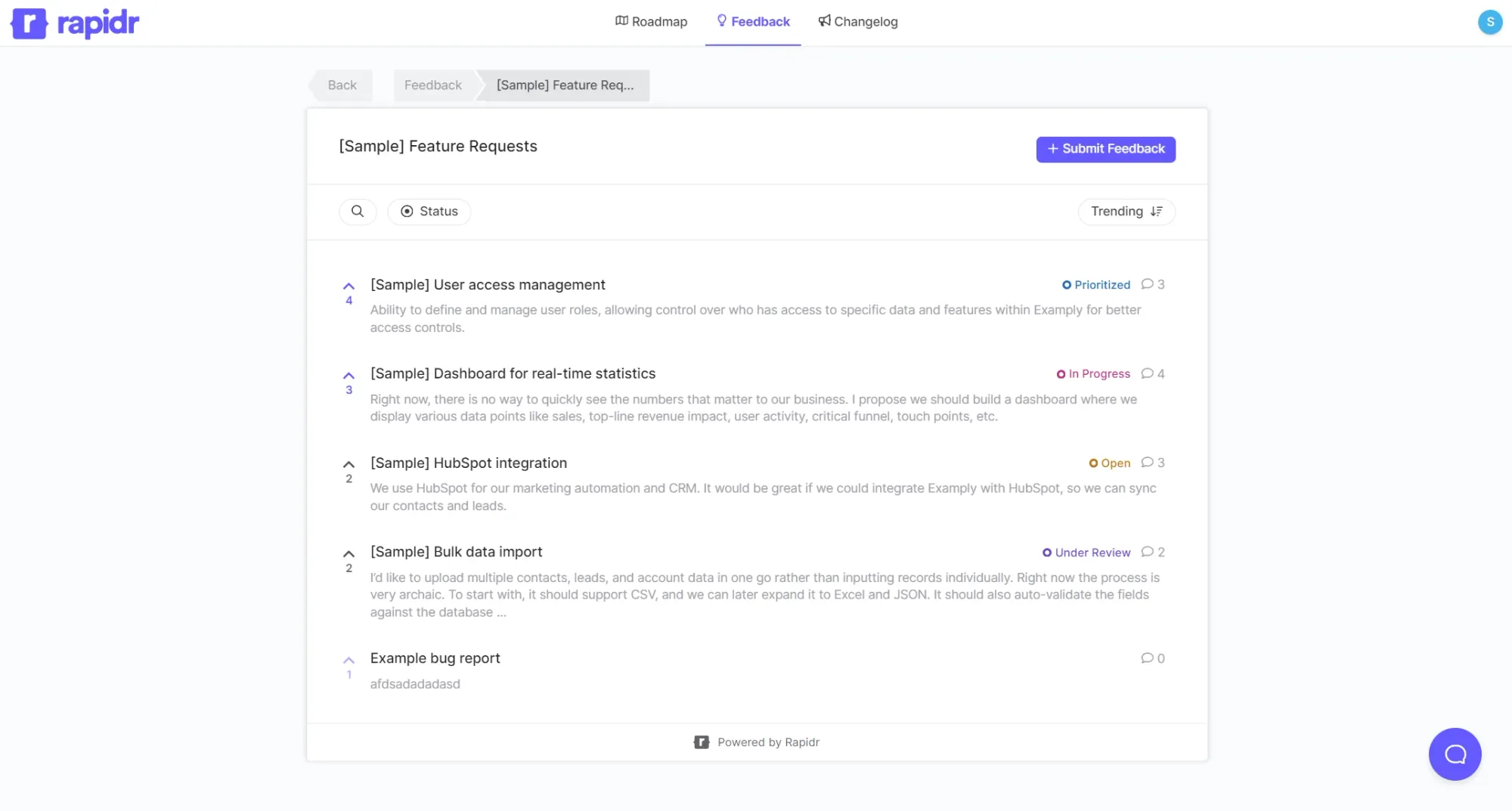
Rapidr is another good Circle.so alternative with a pretty intuitive design. It's aimed at larger companies, helping them collect and manage user feedback to make better product decisions. The pricing only makes sense for very large teams, so keep in mind if you're a smaller startup.
Rapidr's key features:
- Feedback boards, roadmap, changelog
- Custom domain
- Email notifications
- User segmentation
- Single Sign-On
Advantages of Rapidr:
- Pretty modern design compared to some other alternatives
- Enterprise integrations like Hubspot & Salesforce
- SAML 2.0 for enterprise
Drawbacks of Rapidr:
- Expensive
- No changelog widget or popups
- No built-in prioritization frameworks & matrices
- No bulk editing, deleting, or merging
- Very few customizations - can only change the theme color
How much does Rapidr cost?
Rapidr offers 3 pricing tiers:
- Startup ($49/mo) - 5 admins, roadmap, changelog, custom domain, widgets, and basic integrations like Slack
- Business ($199/mo) - 50 admins, user segmentation, SSO, and advanced integrations like
- Enterprise (custom) - unlimited admins, white labeling, and priority support
While the first plan is comparable with most other feedback tools on the market, the other plans are quite expensive and more suitable for enterprises.
Rapidr reviews:
- G2 - 4.8/5
Conclusion
Rapidr is a fresh feedback tool for larger teams. It's a robust alternative to Circle.so, but lacks some important features like prioritization frameworks and in-product widgets for notifications.
If you're a smaller startup, you'll find a better deal elsewhere in terms of pricing.
Check out the best Rapidr alternatives →
How to choose the right Circle.so alternative
The best tool depends on whether you need a customer community, a simple feedback board, a product feedback management system, or a broader product planning suite.
- Choose Featurebase if you want the best all-in-one platform for collecting feedback, prioritizing requests, publishing roadmaps, announcing updates, running surveys, and closing the loop with users.
- Choose Nolt if you want a simple public voting board and don’t need advanced feedback management.
- Choose FeedBear if you need a lightweight feedback board with basic roadmap and changelog features.
- Choose Frill if you want a clean, simple feedback portal with widgets and changelog updates.
- Choose Skool if you’re building a course, coaching, or creator community where feedback is only a small part of the experience.
- Choose Canny if you want a polished feedback portal and don’t mind paying more as your team grows.
- Choose Bettermode if you’re building a larger customer community and feedback is only one part of your engagement strategy.
- Choose Sleekplan if you’re a small startup looking for an affordable way to collect feedback and run simple satisfaction surveys.
- Choose Roadmunk if your main priority is internal roadmap planning and stakeholder alignment.
- Choose Rapidr if you want a feedback management platform for a larger team with segmentation, SSO, and enterprise integrations.
If you like Circle’s community experience but need a more practical way to collect feedback, prioritize requests, publish roadmaps, and close the loop with users, Featurebase is the strongest modern alternative.
Conclusion
Circle is a great community platform if you need discussions, events, courses, paid memberships, and member engagement. But if your main goal is to collect, organize, prioritize, and act on product feedback, a dedicated feedback platform will usually be a better fit.
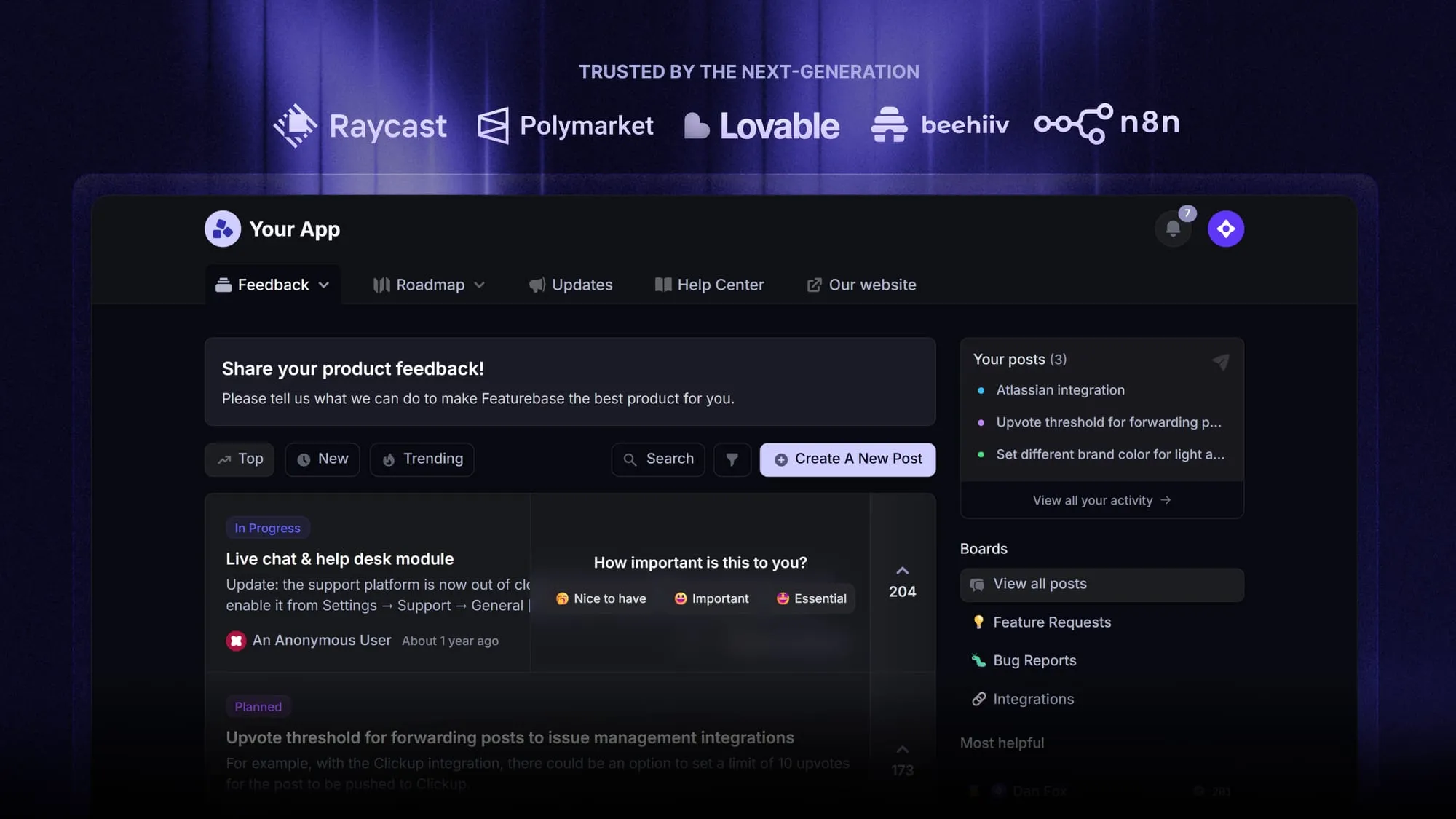
Featurebase is a modern and powerful Circle.so alternative for product feedback. It helps you collect feedback with feature voting boards, surveys, embeddable widgets, and integrations. You can then prioritize requests, connect feedback to customer data, publish roadmaps, announce updates, and close the loop with users from one place.
Featurebase comes with affordable pricing and a Free Plan for collecting unlimited feedback. The onboarding is quick, and you can try it without a credit card, so there’s no downside to giving it a spin. 👇
Start collecting & managing product feedback with Featurebase for free
FAQs
Featurebase is the best Circle.so alternative for product feedback because it includes feedback boards, roadmaps, changelogs, in-app widgets, surveys, user segmentation, duplicate detection, prioritization features, and customer notifications.
Circle can be used to collect product feedback through community discussions, but it is not purpose-built for structured feedback management. Dedicated feedback tools are better if you need voting boards, duplicate detection, roadmaps, changelogs, prioritization, and customer segmentation.
Featurebase and Sleekplan both offer free plans. The best choice depends on whether you need a complete product feedback workflow or a lightweight feedback board.
Featurebase is the best Circle.so alternative for SaaS companies because it helps product teams collect feedback in-app, prioritize requests, publish roadmaps, announce updates, and close the feedback loop with users.
Skool and Bettermode are strong Circle alternatives for online communities. Skool is best for creators, coaches, and course communities, while Bettermode is better for larger companies that need a branded customer community.
Circle is a community platform for discussions, courses, events, memberships, and member engagement. Featurebase is a product feedback platform for collecting feature requests, managing feedback, publishing roadmaps, sharing changelogs, and keeping customers updated.
Use Circle if your main goal is to build a community. Use Featurebase if your main goal is to collect, prioritize, and act on product feedback.


