Blog Customer FeedbackSaaS Customer Retention: 8 Strategies to Reduce Churn
SaaS Customer Retention: 8 Strategies to Reduce Churn
Improve SaaS customer retention with 8 practical strategies. Learn which metrics to track and how onboarding, feedback, and support help reduce churn.

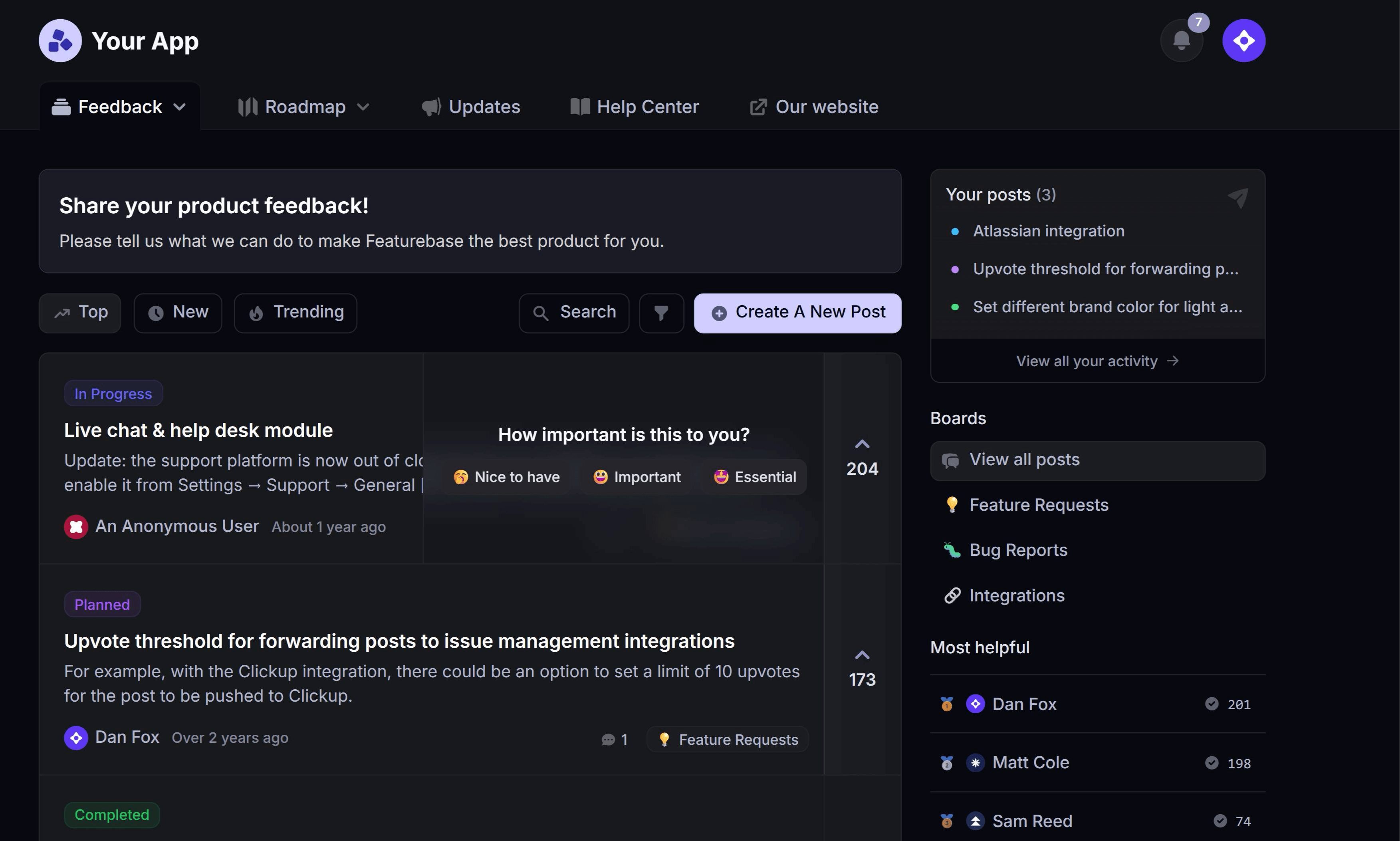

✨ Start collecting & managing feedback with Featurebase for free →
New signups can make your SaaS business look healthy while existing customers quietly leave. And when a few large accounts upgrade, growing revenue can hide the problem even longer.
Improving retention starts with understanding where customers stop getting value and fixing what gets in their way.
In this guide, I’ll cover the SaaS customer retention metrics that matter and 8 practical strategies across onboarding, product adoption, feedback, support, and billing. 👇
Key takeaways
- Measure customers and revenue separately: Customer retention shows who stays. Revenue retention shows how much recurring revenue those customers keep generating.
- Compare like with like: Use consistent time periods and customer groups before judging whether retention improved.
- Match the fix to the problem: Confusing onboarding, unresolved bugs, and failed payments need different responses.
- Featurebase✨ helps teams organize feedback from customer conversations, prioritize recurring needs, and send updates back to customers.
What is SaaS customer retention?
SaaS customer retention is your ability to keep existing customers paying for your product over time. A retained customer continues their subscription because the product keeps meeting a need.
For B2B SaaS, measure paying accounts rather than individual users. A company reducing its subscription from 20 seats to 10 is still a retained customer, but the lost revenue matters too.
Retention affects how much value you get from customer acquisition. When customers stay longer, you have more time to recover acquisition costs, increase customer lifetime value, and earn referrals.
But a paid subscription alone doesn’t prove customer loyalty. An annual customer can stop using your product months before canceling. That’s why retention metrics need context from product usage and customer conversations.
How to measure SaaS customer retention
Start with customer retention rate, then add revenue metrics to understand what changed inside those accounts.
Customer retention rate
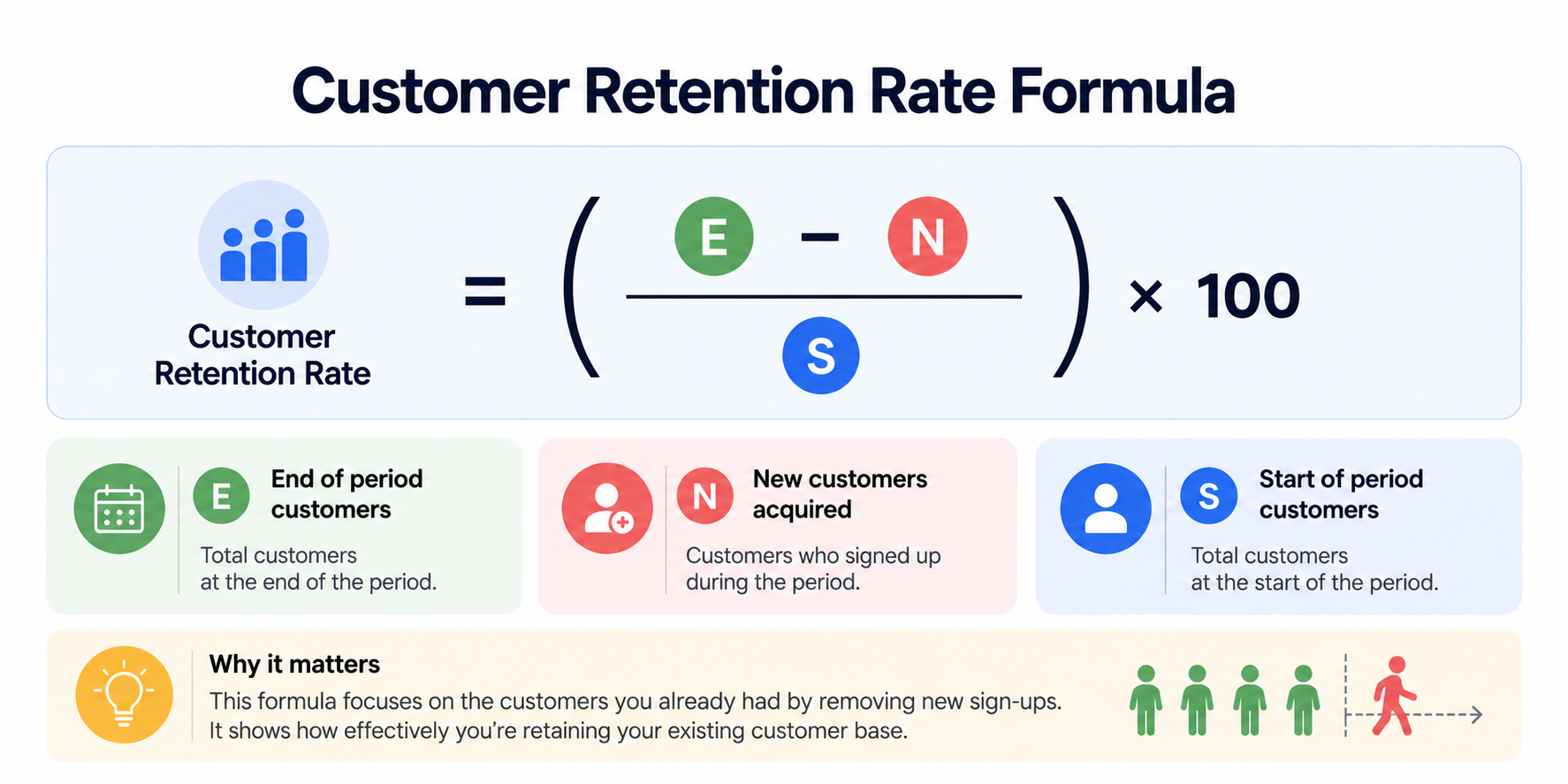
The clearest customer retention rate formula follows the customers you had at the beginning:
Customer retention rate = Starting customers still active at period end ÷ Starting customers × 100
For example, suppose you start a quarter with 200 paying accounts. If 180 of those accounts remain at quarter-end, your quarterly retention rate is 90%.
New customers acquired during the quarter don’t enter this calculation. Under the same cohort and cancellation definitions, the remaining 10% represents customer churn.
Count accounts directly when possible. Subtracting all new signups from your ending total can distort the result if some of those new customers also canceled during the period.
Gross and net revenue retention
Customer counts won’t tell you whether retained accounts are upgrading or reducing their spending. Use these metrics alongside them:
| Metric | What it measures | Calculation |
|---|---|---|
| Gross revenue retention (GRR) | Existing recurring revenue kept before expansion | (Starting MRR − churned MRR − contraction MRR) ÷ Starting MRR × 100 |
| Net revenue retention (NRR) | Existing recurring revenue kept, including expansion | (Starting MRR − churned MRR − contraction MRR + expansion MRR) ÷ Starting MRR × 100 |
MRR means monthly recurring revenue. Every amount in these calculations must come from the same starting customer group. Revenue from newly acquired accounts is excluded.
Here’s a hypothetical example: your starting accounts generate $20,000 MRR. Cancellations remove $2,000, downgrades remove $1,000, and upgrades add $4,000.
- GRR: $17,000 ÷ $20,000 = 85%.
- NRR: $21,000 ÷ $20,000 = 105%.
Revenue from existing customers grew overall, but expansion concealed losses. Tracking both metrics keeps those losses visible.
Compare the same cohorts and time periods
Use cohort analysis to group customers by when they started paying, then compare them at the same age. Compare each cohort’s first 3 months rather than comparing a new group with customers who have already stayed for years.
Also separate customer segments with different needs. Enterprise accounts with implementation support shouldn’t automatically share a target with self-serve customers buying a low-cost subscription.
For context, SaaS Capital’s 2026 benchmarking research reports median NRR of 103% and GRR of 91% for bootstrapped B2B SaaS companies with $3 million–$20 million ARR. The overall survey included more than 1,000 private SaaS companies.
Those are revenue retention benchmarks for a specific segment, not universal customer retention targets. Match the metric, measurement window, and business profile before making comparisons.
8 strategies to improve SaaS customer retention
Choose the strategy that addresses your biggest source of churn. You don’t need to launch every initiative at once.
1. Set realistic expectations before signup
Retention starts with attracting customers your product can serve. If sales promises an integration that doesn’t exist, even excellent onboarding won’t remove the mismatch.
Make capabilities, limitations, and implementation requirements clear before purchase. Then carry the customer’s goals into the handoff so they don’t have to explain everything again.
Record what success looks like in their words. For a reporting tool, that might be “prepare our weekly client report without copying data between spreadsheets.” Review early cancellations by acquisition channel and use case to spot poor-fit customers.
2. Get customers to their first useful outcome faster
A completed welcome tour isn’t the same as a customer getting value.
Design customer onboarding around a meaningful result. For the reporting tool, that could be connecting a data source and sharing the first report.
Remove steps that aren’t necessary for that result. Offer templates for common workflows and hands-on help when migration or technical setup blocks progress.
Track time to first value and whether customers reach that milestone. Then compare later retention between those who did and didn’t, while remembering that correlation alone doesn’t prove onboarding caused the difference.
3. Help customers adopt the features they need
Once onboarding ends, customers still need reasons to return. Focus on feature adoption that supports their goals rather than trying to get everyone using everything.
If an account creates reports manually every week, introduce scheduled delivery when that workflow becomes relevant. A short example showing the benefit is more useful than a generic announcement listing every feature.
Measure repeat use of the workflow, not just whether someone opened the announcement. If customers try a feature once and abandon it, investigate usability or usefulness before sending more reminders.
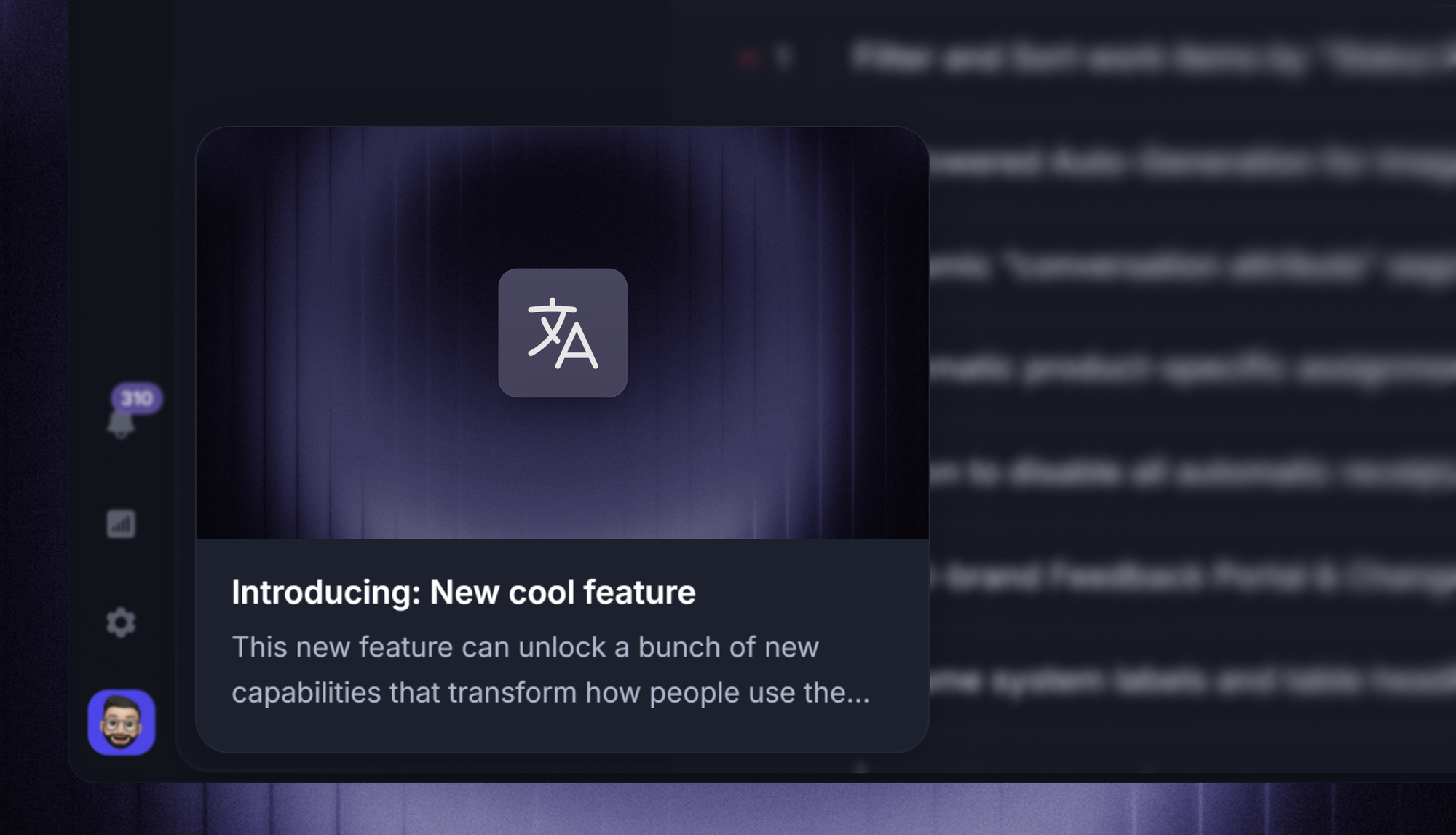
4. Collect feedback and act on recurring problems
Usage data can show where activity drops. Customer feedback helps explain why.
Ask focused questions at relevant moments. After onboarding, try “What nearly stopped you from getting set up?” After a difficult workflow, ask what would have made it easier.
Use customer satisfaction signals such as NPS or CSAT alongside open-ended responses. A score flags sentiment, but the explanation gives your team something to investigate.
Also capture feedback customers already share in support conversations and calls. Otherwise, your view of recurring problems depends on who takes the time to fill out a survey.
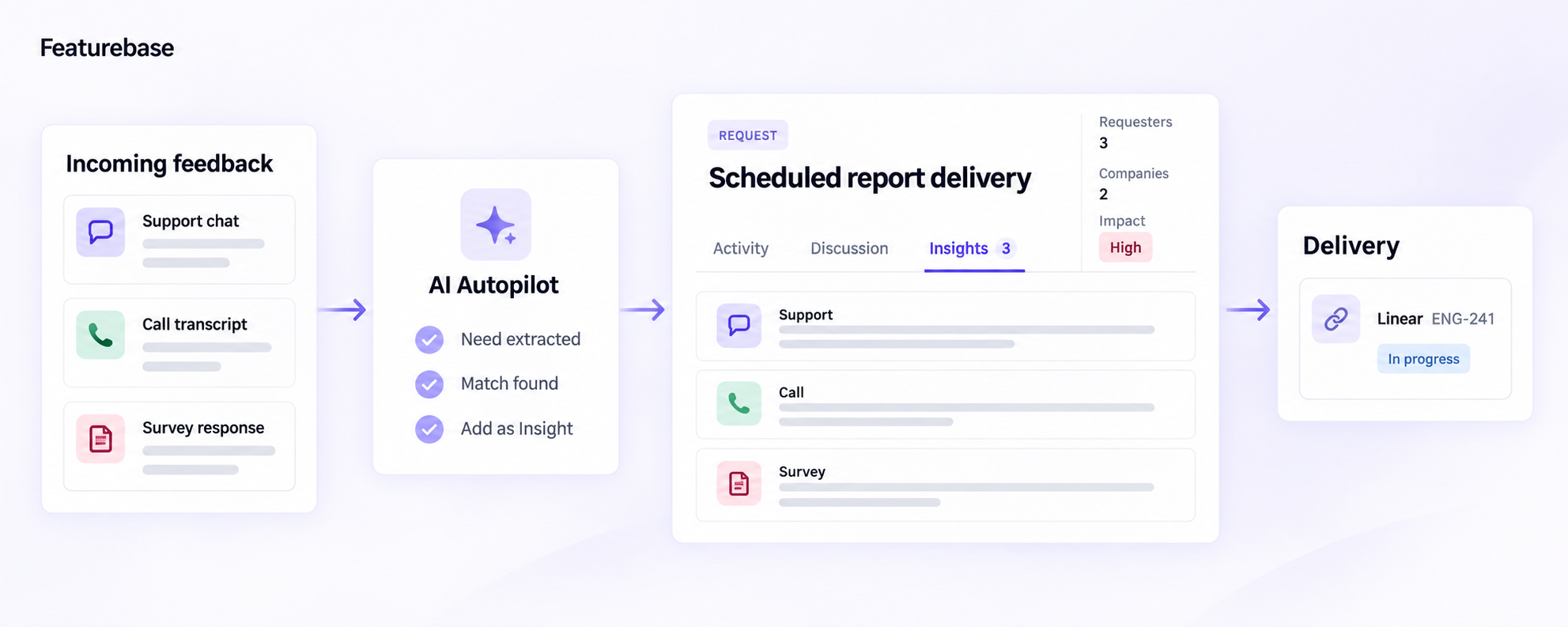
Featurebase’s AI Autopilot helps organize incoming feedback into Requests, with individual pieces of evidence attached as Insights. Through connected call recorders, it can extract feedback from transcripts and link it to relevant Requests. That brings repeated needs together with the customers and companies behind them, so your team can assess what to address.
Review recurring themes by affected accounts, impact, and fit with your product direction. Avoid treating the loudest request as the most valuable improvement.
5. Resolve support issues before they become cancellation reasons
A quick reply helps, but the customer still needs their problem solved. Review repeat contacts and reopened issues to find friction that response-time averages miss.
Give important issues a clear owner and an agreed next update. If resolution takes time, explain what customers can do in the meantime.
A self-service knowledge base helps with repeatable questions, while complicated or account-specific problems need an easy route to a person.
Use support trends to improve the product too. If customers repeatedly ask how to complete the same task, the interface or documentation may need attention.
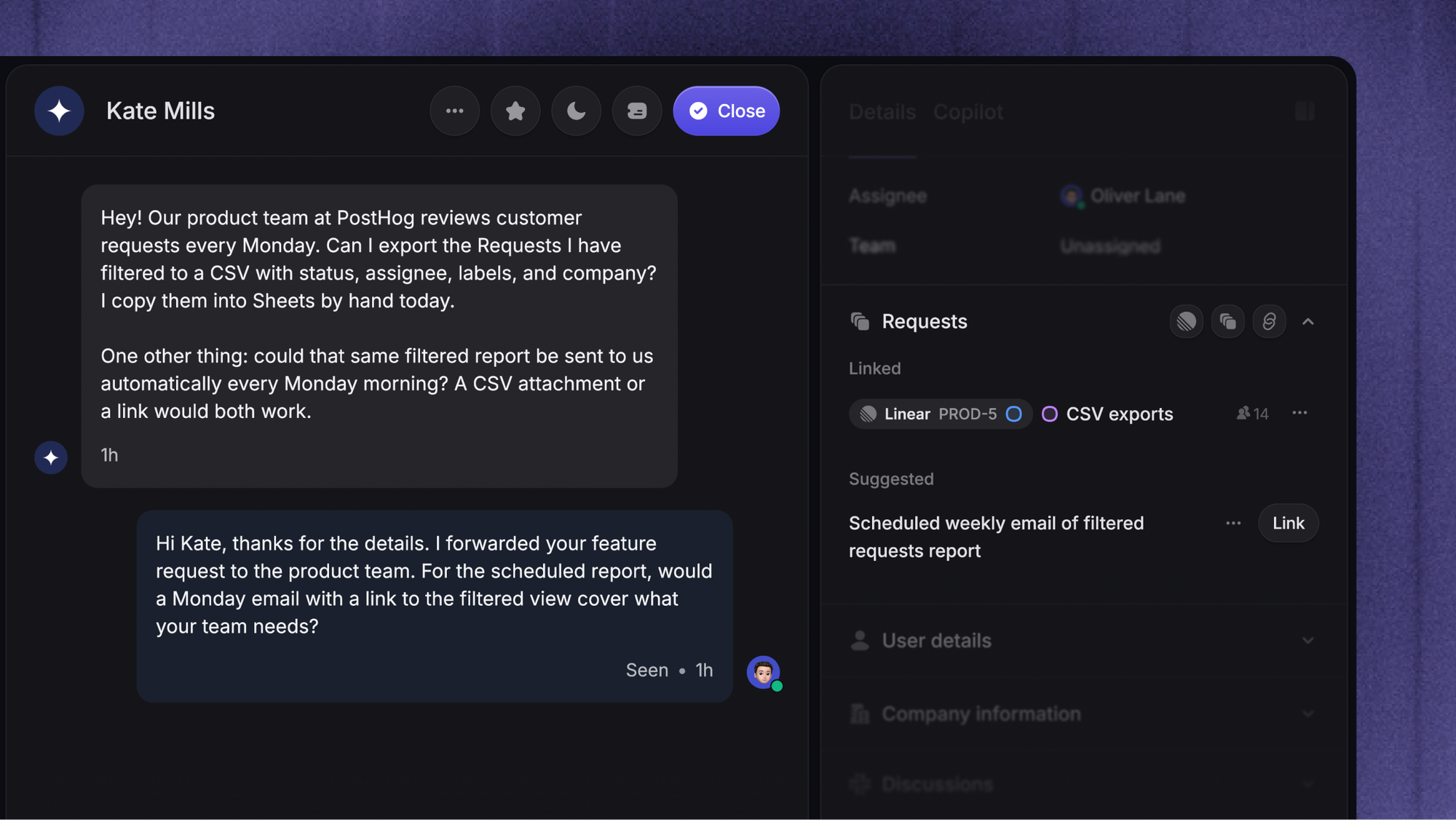
6. Follow up when meaningful product usage drops
Choose warning signals that reflect customer value. For a reporting product, missing a usual report cycle may matter more than fewer logins.
Watch for changes such as:
- Core activity stopping: A team no longer completes the workflow it bought the product for.
- Adoption narrowing: Several active teammates disappear, leaving a single user.
- Unresolved friction accumulating: Repeated support problems remain open as renewal approaches.
Treat these as possible churn risk, not proof that someone will leave. Seasonal usage, holidays, or automated workflows can explain lower activity.
Reach out with context: “Your scheduled reports haven’t run since the connection expired. Can we help reconnect it?” That gives the customer a useful next step.
7. Show customers what changed because of their feedback
Shipping an improvement doesn’t guarantee the people who requested it will notice. Close the customer feedback loop by telling them what changed and how it helps.
Make the update specific: “You can now schedule separate reports for each client, so you don’t need to export them manually.” Include a simple way to try it.
A public roadmap can communicate direction, but avoid presenting uncertain plans as delivery commitments. If a request isn’t planned, explain the decision honestly.
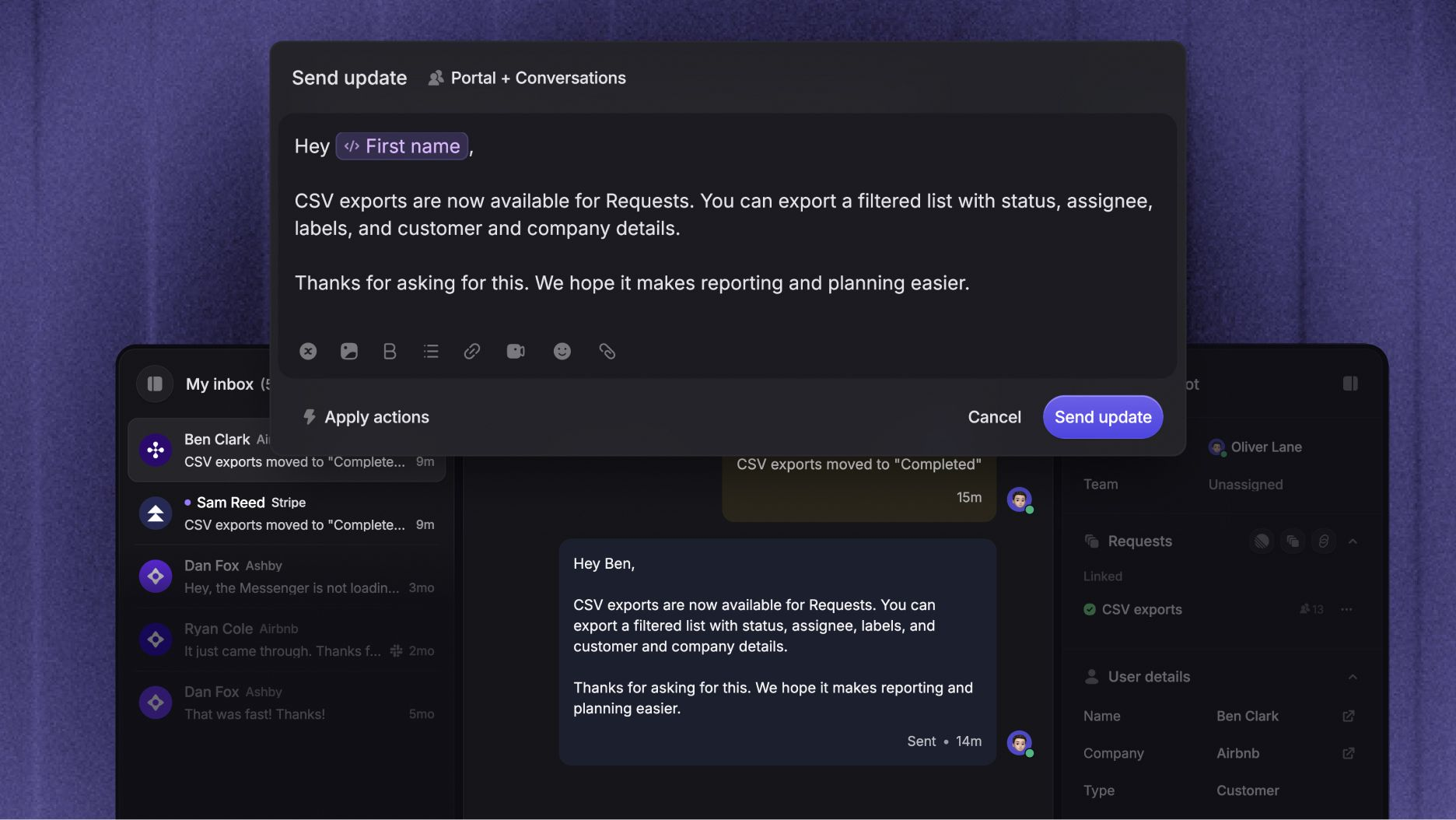
Featurebase lets you send Request updates back to linked support conversations, alongside portal and email updates. Write the update once and send it to the conversations where customers originally asked, so your team can follow up without tracking down each thread separately.
Follow up after release to learn whether the change solved the original problem. Feature announcements are the start of adoption, not its completion.
8. Recover failed payments and learn from cancellations
Separate voluntary churn from involuntary churn. Someone choosing to leave needs a different response from someone whose payment failed.
Use your billing provider’s payment-recovery tools to retry eligible payments and send clear notices with a way to update billing details. Coordinate the messages so customers don’t receive conflicting reminders.
For intentional cancellations, keep the process straightforward and offer a short, optional exit survey. Group the reasons into problems your team can investigate, such as missing functionality, poor fit, or budget changes.
Measure recovered payments separately from customers who choose to stay after a conversation. This shows which retention efforts are actually working.
Turn retention insights into a focused action plan
Start with a customer group whose retention is declining. Review its usage patterns, support history, and feedback, then choose a single problem to address.
For example, if new accounts abandon setup before importing data, your plan could be:
- Change: Simplify the import flow and offer help when imports fail.
- Owner: A product manager, supported by customer success.
- Early signal: More accounts complete their first successful import.
- Outcome: Better paid retention when the next cohort reaches the same age.
Record the baseline and launch date. Where feasible, compare a similar untreated group to avoid crediting the change for seasonal improvements. Allow enough time for customers to reach the renewal or usage milestone you’re measuring.

Turn feedback into products your users love
Centralize feedback, identify product opportunities, and build the right features
Conclusion
Better SaaS customer retention starts with understanding why customers stop getting value. Measure the losses, choose a focused improvement, and check whether customers stay longer afterward.
Featurebase is a modern feedback & support platform that brings customer feedback, supporting evidence, and product priorities together. Its AI Autopilot helps organize feedback into Requests, while linked updates help teams tell customers when their needs have been addressed.
It comes with a Free plan, so you can start exploring it without a credit card. 👇
✨ Start collecting & managing feedback with Featurebase for free →
FAQs
How does customer retention differ from renewal rate?
Customer retention follows an existing customer group over a defined period. Renewal rate measures the share of contracts or subscriptions due for renewal that actually renew. These can differ when only some customers reach a renewal date during your reporting window.
Can retention exceed 100%?
Net revenue retention can exceed 100% when expansion outweighs revenue lost through cancellations and downgrades. Customer retention and gross revenue retention cannot. If your customer retention calculation exceeds 100%, check whether new accounts were mistakenly included.
What does a customer retention curve tell you?
A retention curve shows the share of an original customer group remaining as time passes. A steep early decline points you toward initial fit or onboarding, while a later drop can prompt a closer look at renewals or ongoing value. The curve identifies when to investigate, not the cause on its own.
What monthly churn rate should a SaaS company aim for?
Set a target using your customer segment, contract structure, and historical performance rather than a universal percentage. Low monthly churn can still accumulate into substantial annual losses. For annual contracts, also examine cohorts at renewal, since monthly averages can hide when customers actually decide to leave.
When should a SaaS startup prioritize retention?
Start learning from retention as soon as paying customers have had enough time to experience the product’s intended value. Early on, interviews and individual account histories can reveal problems that small samples make difficult to measure statistically. Before scaling acquisition, look for evidence that customers repeatedly get value and choose to stay.