Blog Customer FeedbackCustomer Satisfaction Survey Best Practices
Customer Satisfaction Survey Best Practices
Learn 10 customer satisfaction survey best practices that get honest answers, higher response rates, and feedback you can actually act on.


✨ Start running surveys & collecting feedback with Featurebase for free →
Most customer satisfaction surveys get ignored, and the ones people do answer often hand you data you can't use.
The problem usually isn't your survey tool. It's how the survey is built, when it's sent, and what happens to the results afterward. Fix those and a simple survey becomes one of your best sources of honest customer feedback.
Here are 10 customer satisfaction survey best practices that lift response rates and give you insights worth acting on. 👇
Key takeaways
- Shorter surveys win: 3 to 5 focused questions get far higher completion rates than a long questionnaire.
- Timing matters as much as wording: send the survey right after the interaction, while the experience is still fresh.
- Pair a rating with an open-ended follow-up: the score tells you what, the comment tells you why.
- A survey is only worth running if you act on it: closing the loop is what turns feedback into retention.
- Featurebase✨ lets you run in-app CSAT and NPS surveys, target specific user segments, and manage the responses next to the rest of your feedback.
- Watch for the classics that wreck your data: leading questions, inconsistent scales, and survey fatigue.
What is a customer satisfaction survey?
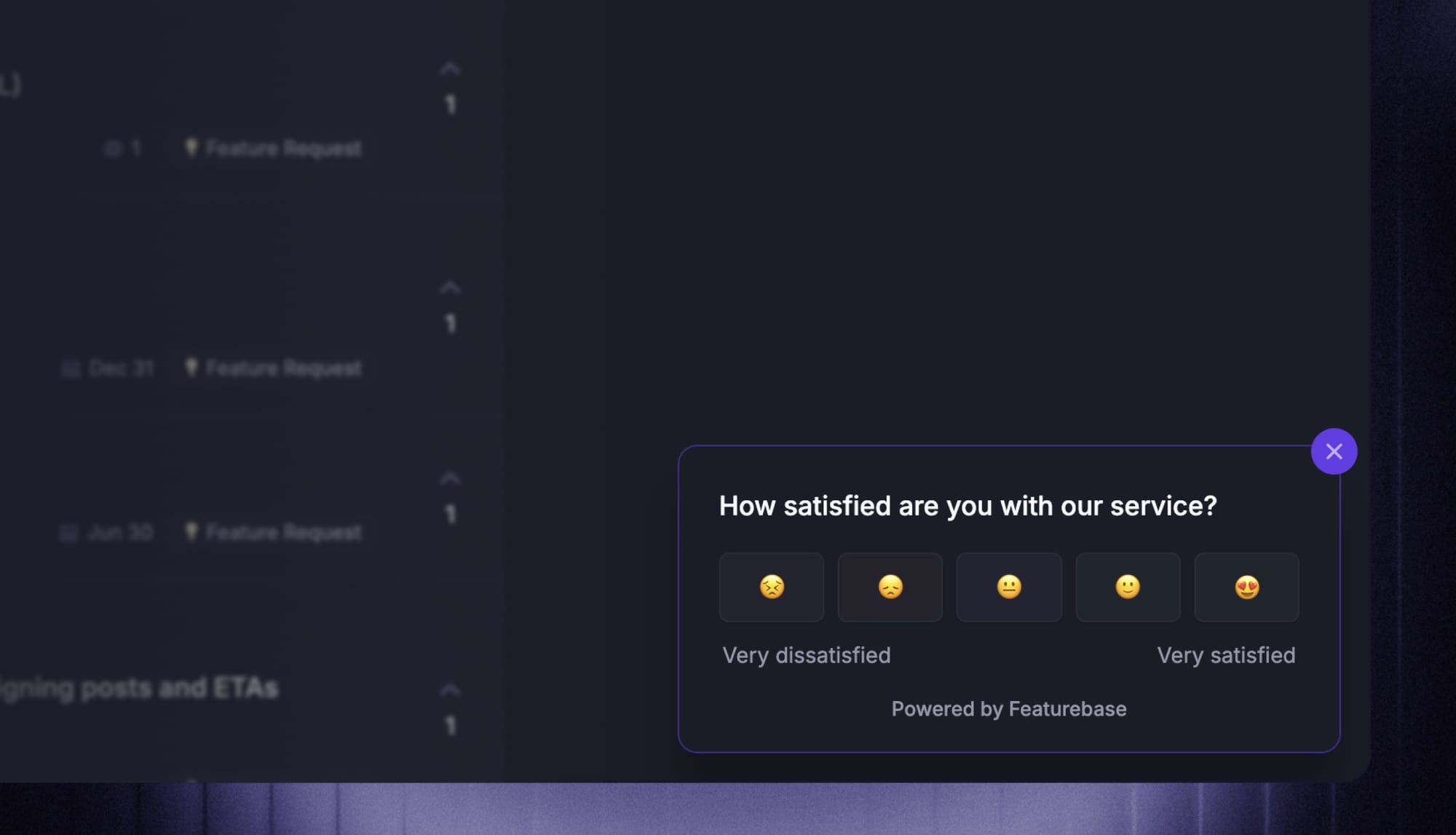
A customer satisfaction survey is a short set of questions that asks customers how happy they are with your product, service, or a specific interaction. Most track a metric like customer satisfaction score (CSAT), and many pair the score with an open-ended question to capture the reason behind it.
They matter because most unhappy customers never actually tell you they're unhappy. Fewer than 1 in 3 consumers give feedback directly to a company after a very bad experience, according to Qualtrics' 2024 Consumer Experience Trends. Most churn stays invisible until revenue drops, and a well-timed survey is one of the few ways to catch it early.
Done right, satisfaction surveys help you spot friction, coach your team, and fix problems before they cost you customers.
Types of customer satisfaction surveys
"Customer satisfaction survey" is a broad label. Most fall into 3 common types, each measuring something slightly different:
- CSAT (customer satisfaction score): asks how satisfied a customer was, usually on a 1 to 5 scale, right after an interaction. It's fast and ideal for measuring specific touchpoints.
- NPS (net promoter score): asks how likely someone is to recommend you on a 0 to 10 scale. It measures long-term loyalty rather than a single moment.
- CES (customer effort score): asks how easy it was to get something done. Lower effort tends to predict higher satisfaction and retention.
If you're deciding between the first two, our guide to NPS vs CSAT breaks down when each one fits.
There's also a timing distinction worth knowing:
- Transactional surveys go out after a single interaction, like a support chat or a purchase.
- Relational surveys measure overall sentiment on a schedule, like a quarterly check-in.
You'll usually want both. Transactional surveys catch problems in the moment, while relational ones track the bigger trend over time.
10 customer satisfaction survey best practices
These practices apply whether you're running a 1-question CSAT prompt or a longer relational survey. Start here.
1. Start with the overall satisfaction question
Ask the big-picture rating first, before any detailed questions have a chance to color the answer. If you ask about wait times or pricing up front, you nudge people toward those factors when they rate their overall experience.
Lead with something simple like "How satisfied were you with your experience?" Then drill into specifics.
2. Keep it short and ask one thing at a time
Every extra question costs you completions. Aim for 3 to 5 questions and be ruthless about cutting anything that doesn't serve a clear goal. If you don't truly need a customer's name or how they found you, don't ask.
Show one question at a time, too. Bundling several asks into one screen leads to rushed, half-hearted answers, or an abandoned survey.
3. Use a simple, consistent rating scale
Pick one scale and keep it consistent across the whole survey. Flipping from "1 = worst, 5 = best" to "1 = most important" halfway through quietly ruins your data as people answer on autopilot.
Keep the range small. A 1 to 5 scale is usually plenty. And use concrete labels rather than vague ones like "excellent," which means different things to different people.
4. Avoid leading and loaded questions
A leading question points people toward the answer you want, which makes the results useless. "How much did you love our fast new checkout?" is not a real question.
Write neutral wording instead: "How would you rate the checkout experience?" When your goal is to learn something honest, don't get in the way of it.
5. Add an open-ended follow-up
Ratings tell you what customers feel. Open-ended questions tell you why. A single "What's the main reason for your score?" after the rating is often where the most useful insight lives.
Keep open-ended questions to a minimum and place them after the quick rating, so people build momentum before they hit a text box. For inspiration, we put together a list of customer feedback questions you can borrow.
6. Speak your customer's language, not your jargon
Internal acronyms, product code names, and industry buzzwords confuse people and lower your response quality. Write the way your customers talk.
If a question needs specialized knowledge to answer, either rephrase it or drop it. A survey should never make someone feel tested.
7. Send the survey at the right moment
Timing drives both response rates and accuracy. The best time to send a customer satisfaction survey is right after the relevant interaction, while it's still fresh, ideally within minutes. Wait a few days and you get vaguer answers and lower response rates.
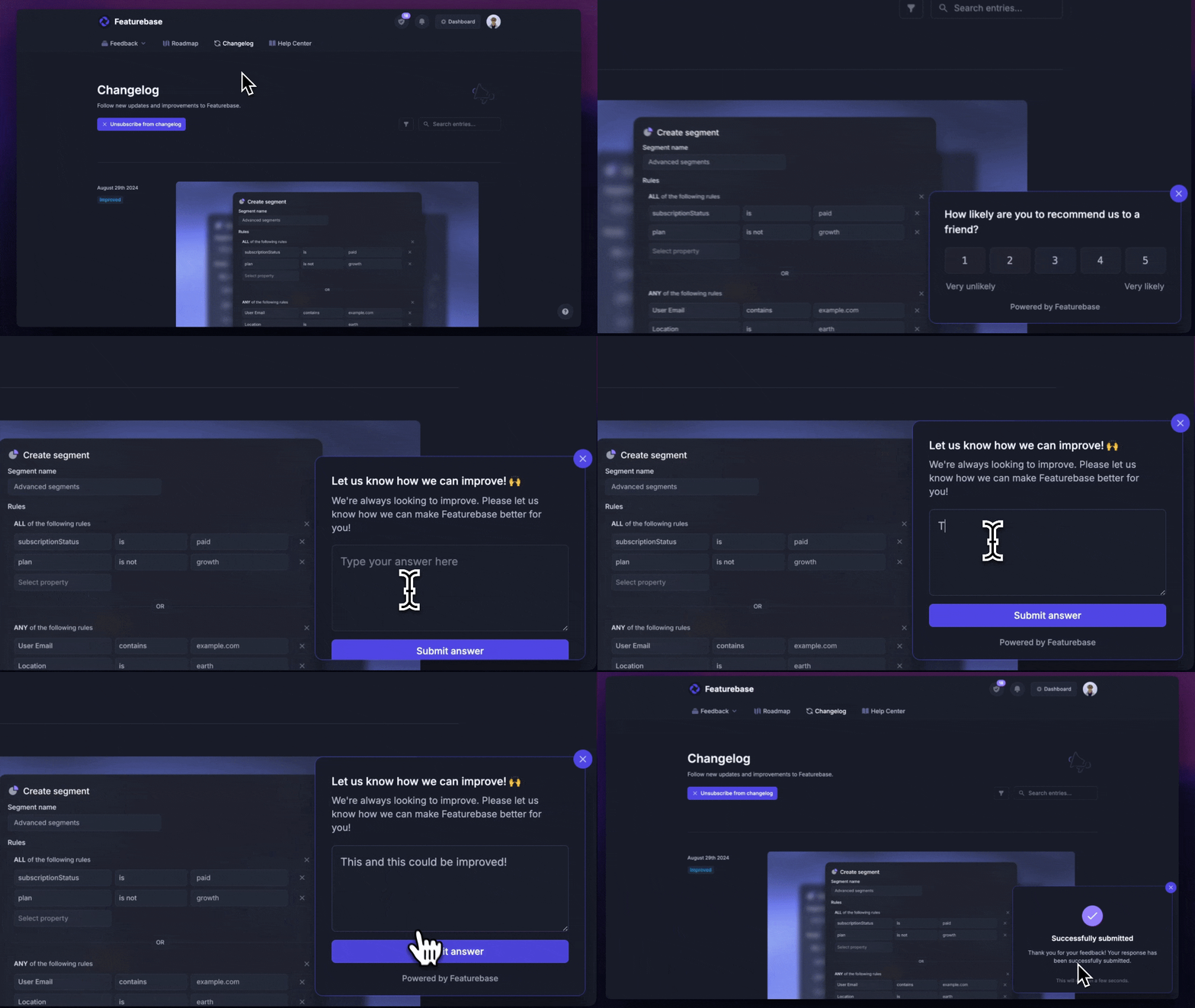
This is where in-app surveys shine. With Featurebase, you can trigger a CSAT or NPS survey to a specific user segment the moment they finish a key action in your product, so you're asking at the exact point the experience is top of mind.
8. Don't over-survey the same people
Survey fatigue is real. Blasting every customer after every interaction burns out even your most loyal respondents and drags your response rates down.
Set frequency limits and sample thoughtfully. Rotate who gets surveyed, and make sure you're not only hearing from repeat callers or your happiest customers, which skews the whole picture.
9. Segment and benchmark your results
A single average score hides more than it reveals. Segment responses by interaction type, customer profile, and journey stage so you can see where satisfaction actually breaks down. Feedback from a billing issue and a feature request rarely tell the same story.
Then benchmark. Compare scores across teams and channels internally, and against industry norms externally, so a number becomes a direction instead of a data point.
10. Close the loop and act on the feedback
This is the one that matters most. A survey sitting in a spreadsheet changes nothing. Use the results to coach your team, fix recurring issues, and follow up with customers who flagged a problem.
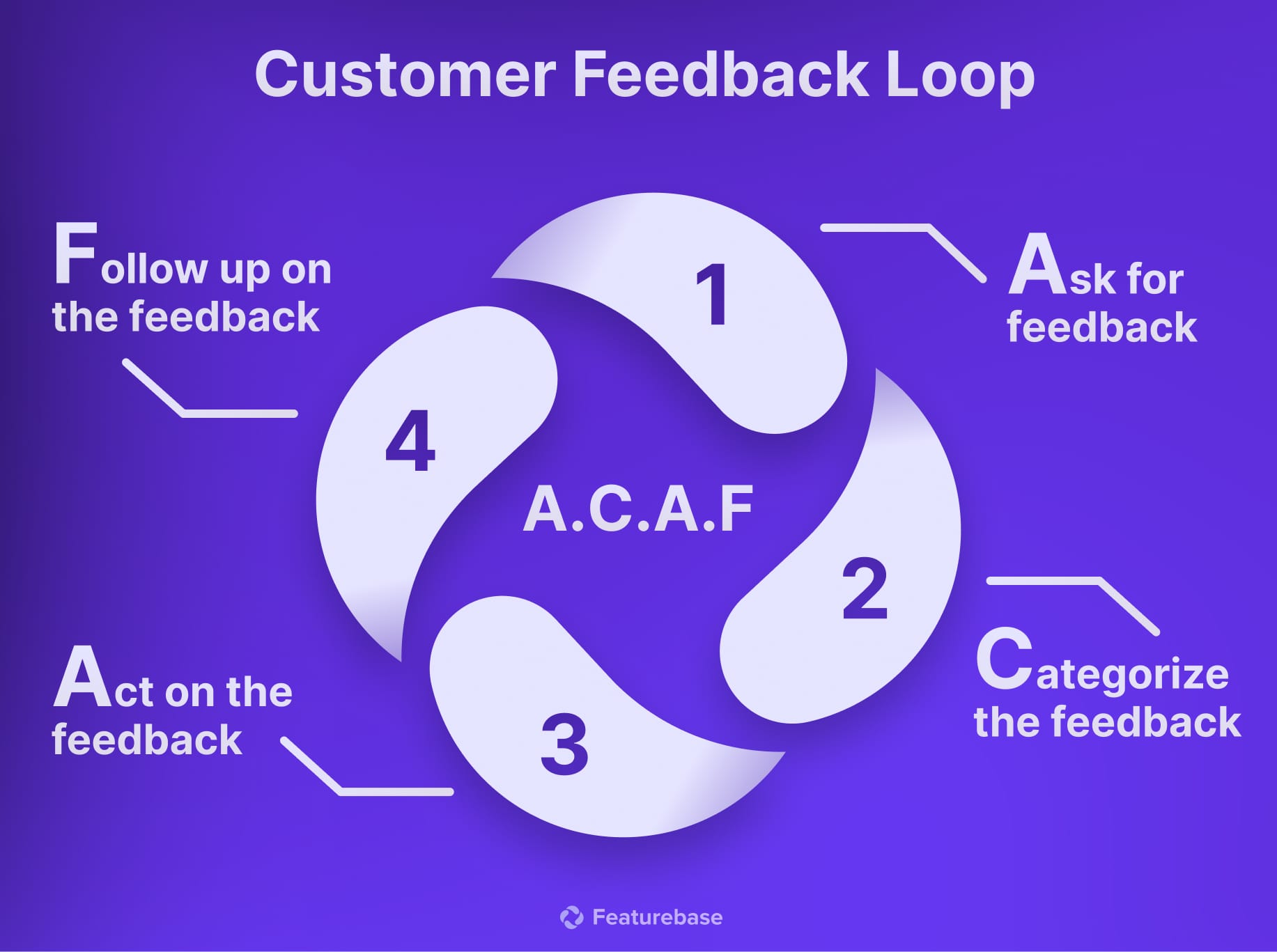
Closing the loop builds trust and cuts churn. Customers who see their feedback lead to real change are far more likely to stick around and respond next time. Building a continuous feedback loop turns one-off surveys into an ongoing improvement engine.
Common mistakes to avoid
Most survey failures come down to a handful of repeat offenders. Watch for these:
- Leading questions: biased phrasing pushes people toward a "correct" answer and leaves you with data you can't trust.
- Inconsistent or confusing scales: when the scale changes mid-survey or the labels are vague, people answer inaccurately without realizing it.
- Bad timing: a survey sent days after the interaction gets fuzzy, low-quality answers.
- Over-surveying: too many requests lead to survey fatigue and rising opt-out rates.
- Collecting feedback you never use: if nothing changes after customers respond, they stop responding.
- Overusing incentives: heavy rewards can buy you responses, but they bias the answers you get back.

Start running surveys & collecting feedback
Create targeted NPS, CSAT, multiple-choice, or text response surveys for free
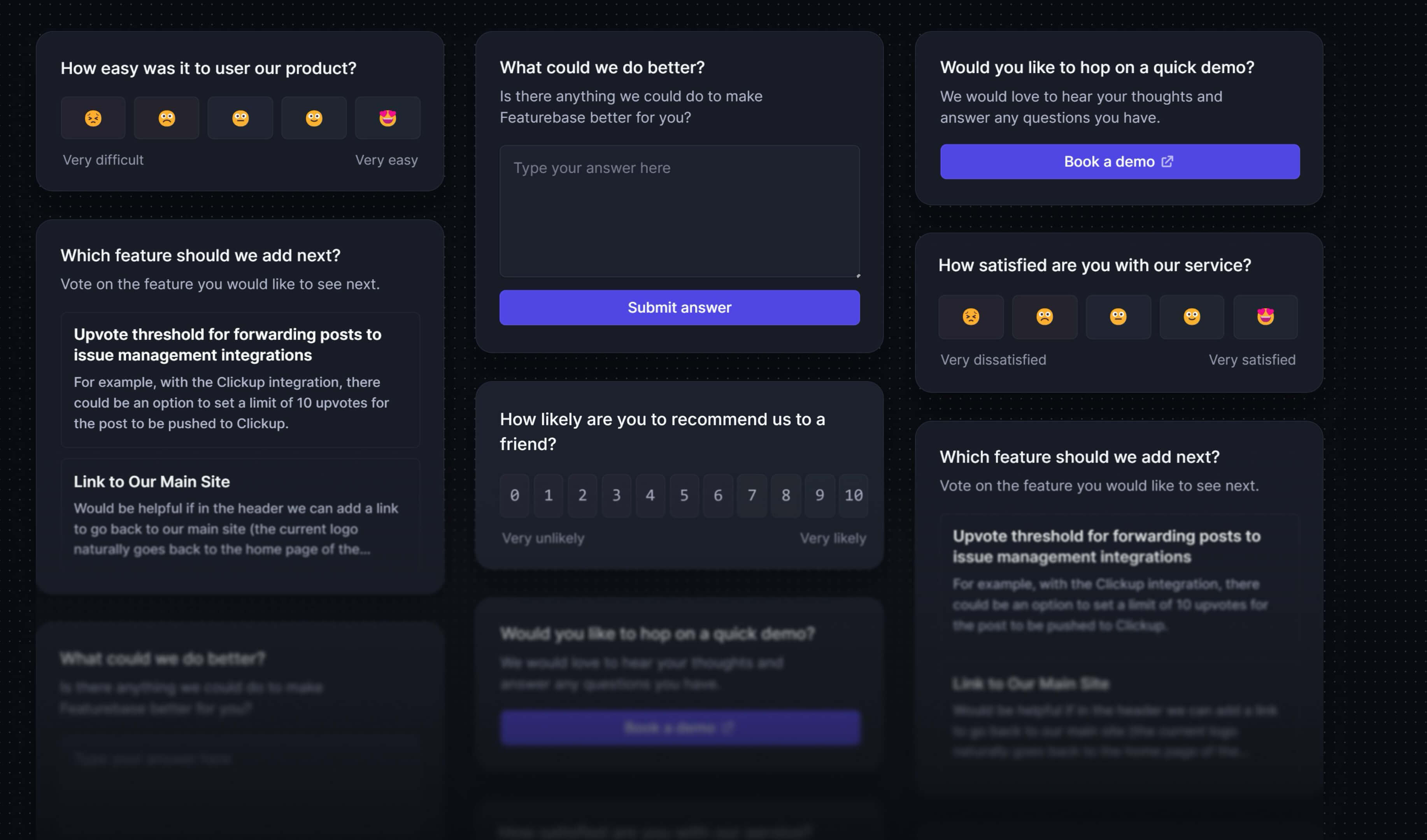
Run customer satisfaction surveys with Featurebase
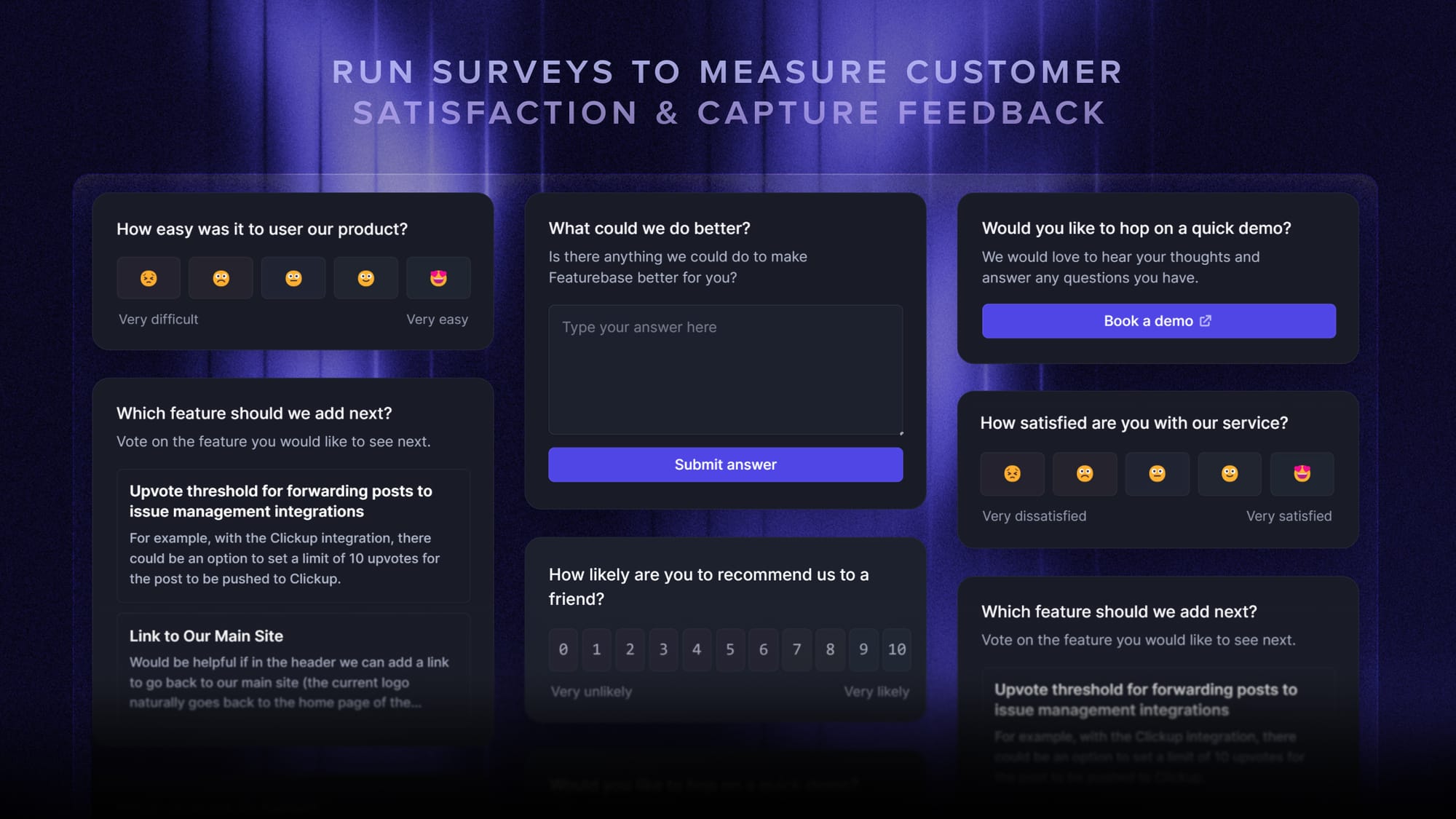
If you'd rather not stitch together a survey tool, your product, and a spreadsheet, Featurebase brings customer satisfaction surveys and feedback into one place. It's a modern feedback and support platform loved by product teams at companies like Lovable, Raycast, and n8n. 💫
A few things that make it a good fit for CSAT and NPS surveys:
- Surveys (NPS, CSAT, etc.) – Create targeted no-code surveys to ask users anything and measure customer satisfaction
- User targeting – Show surveys to specific segments based on plan, role, location, and more
- Conditional multi-step surveys – Ask smart follow-up questions based on how someone answered
- In-app widgets – Collect ratings, bug reports, and suggestions right inside your product
- Feedback forum – Let users post ideas and vote, so survey data connects to a wider feedback loop
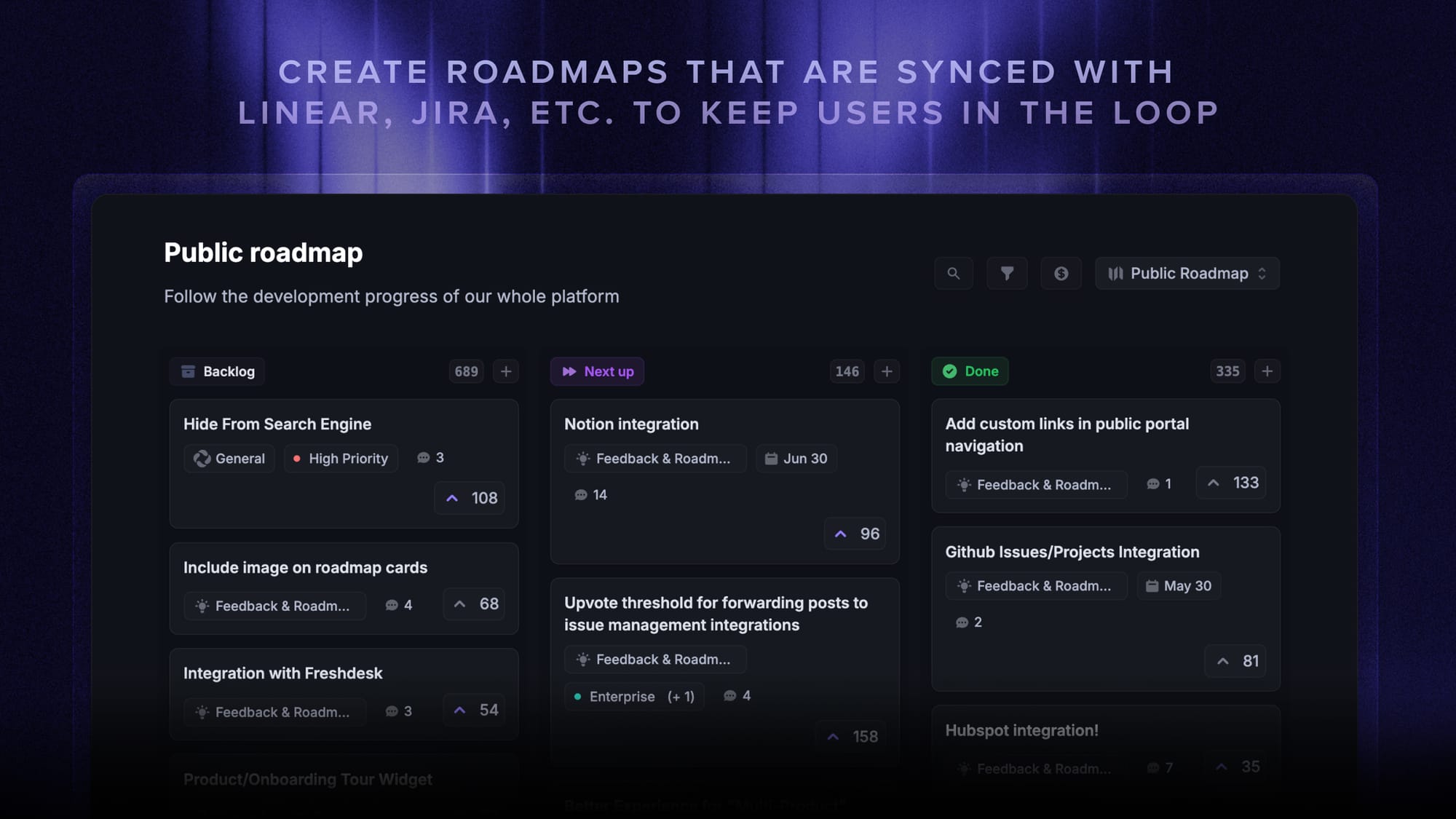
Because survey responses live right next to your feedback forum and roadmap, it's easy to close the loop instead of letting insights gather dust in a report.
Pricing: there's a Free plan with unlimited survey responses, and paid plans start at $29/seat/month.
Conclusion
Great customer satisfaction surveys aren't complicated. Keep them short, ask clear and neutral questions at the right moment, and actually do something with the answers. That covers most of the work.
Featurebase makes that last part simple by combining CSAT and NPS surveys, in-app feedback widgets, and a public feedback forum in one platform, so the insights you collect turn into product decisions instead of a forgotten spreadsheet.
There's a Free plan with unlimited survey responses, so there's no downside to trying it out. 👇
✨ Start running surveys & collecting feedback with Featurebase for free → Get started
FAQs
What questions should you ask in a customer satisfaction survey?
Start with one overall satisfaction rating, then add a single open-ended follow-up like "What's the main reason for your score?" From there, tailor a question or two to the interaction, such as whether an issue was fully resolved or how easy the process was. Keep the total to a handful of focused questions rather than a long list.
How many questions should a customer satisfaction survey have?
Aim for 3 to 5 questions at most. One core satisfaction rating plus one or two follow-ups is usually enough to get useful data without overwhelming the respondent. Shorter surveys consistently see higher completion rates.
When is the best time to send a customer satisfaction survey?
Send it right after the relevant interaction, ideally within minutes. The experience is freshest then, so you get more accurate answers and higher response rates. Automated triggers make it easy to send consistently without manual effort.
How do you improve customer satisfaction survey response rates?
Keep the survey short, send it at the right moment, and make it mobile-friendly. Match the format to the channel, personalize where you can, and limit how often you survey the same person. Being transparent about how you'll use the feedback helps too.
Why are customer satisfaction surveys important?
Because most unhappy customers leave without ever telling you why. Surveys surface the friction and dissatisfaction that would otherwise stay hidden until it shows up as churn. That early signal gives you a chance to fix problems and keep customers you'd otherwise lose.
What is a good CSAT score?
A CSAT score in the 75% to 85% range is generally considered healthy, though it varies widely by industry and channel. Rather than chasing a universal benchmark, track your own score over time and compare it against peers in your sector. The trend matters more than any single number.