Blog Customer ServiceCustomer Service Philosophy: How to Build One That Sticks
Customer Service Philosophy: How to Build One That Sticks
80% of customers say experience matters as much as the product. Here’s how to write a service philosophy your team can actually follow.


✨ Automate your support with the fastest AI-enhanced Inbox today →
A customer service philosophy is what separates "we have rules" from "we know what we believe." The first lives in a policy doc nobody opens. The second is the reason your team picks up the phone at 9pm on a Saturday, refunds an order without asking 3 questions, and tells a customer the truth when something breaks.
This guide walks you through what a customer service philosophy actually is, the principles strong ones share, how to write yours in 6 steps, and how to wire it into the way your team works every day. 👇
Key takeaways:
- A customer service philosophy is a short set of principles that guide how your team handles every customer interaction. It's separate from a policy, which only lists the procedural rules.
- The strongest philosophies share 6 principles: responsiveness, empathy, consistency, transparency, customer autonomy, and continuous improvement.
- Writing one takes 6 steps: anchor it in your mission, talk to customers and agents, choose your principles, write the statement, publish it widely, and translate it into daily operations.
- Real examples worth studying include Disney's "We create happiness," Zappos' "Deliver WOW through service," Ritz-Carlton's "Ladies and gentlemen serving ladies and gentlemen," and Trader Joe's friendly neighborhood-store warmth.
- Featurebase✨ gives you an omnichannel inbox, AI agent, help center, and workflows in a single platform so your team can actually deliver on the principles you write down.
What is a customer service philosophy?
A customer service philosophy is a short, written set of principles that describes how your company approaches every customer interaction. It is not a list of rules. It is the why behind the rules. It's the answer your team reaches for when something happens that no playbook covers.
If a customer service policy says "issue refunds within 14 days," a customer service philosophy says "we believe customers should never feel trapped by a purchase they regret." The policy follows from the philosophy. Without the philosophy, the policy is arbitrary, and the moment a situation falls outside the 14-day rule, your agents have nothing to fall back on except managerial approval.
A strong philosophy usually fits in 1 or 2 sentences. Sometimes it looks like a tagline, motto, or internal mantra: The Ritz-Carlton's "We are ladies and gentlemen serving ladies and gentlemen" is 10 words. Zappos has "Deliver WOW through service" as one of its 10 core values. But the short line only works when the team knows what it means in practice. It should name what you believe about your customers, what you owe them, and how you want them to feel after every interaction. Short on purpose, so agents can hold it in their head while they read a frustrated email at the end of a long shift.
Why a philosophy can sometimes beat a policy
A customer service policy tells your team what to do. A philosophy tells your team how to think when the policy doesn't cover what's in front of them.
The difference shows up in moments that don't fit a template:
- A long-time customer asks for a refund 16 days after a purchase. The 14-day policy says no. The philosophy might say yes.
- An agent gets a furious email at 11pm. The hours of operation say the reply waits until tomorrow. The philosophy might say tonight.
- A bug breaks one customer's workflow on a Friday afternoon. The standard SLA gives you 24 hours. The philosophy might say "fix it before you go home."
Strong philosophies matter because customers feel the difference. 80% of customers say the experience a company provides is as important as its products or services, according to Salesforce's State of the Connected Customer research, meaning a great product with mediocre service is no longer enough on its own. And the patience for mediocre service is thinning: 32% of customers say they would walk away from a brand they love after just one bad experience, per PwC's landmark Experience is Everything research.
Policies tell agents how to follow the rules. Philosophies tell agents what to do when the rules and the right thing diverge, which is exactly when customers decide whether they trust you.
6 principles every great customer service philosophy shares
Read enough company philosophies and the same handful of ideas keep coming back. You don't need all 6. You probably only need 3 or 4. But this is the shortlist most strong philosophies draw from.
Responsiveness
The single biggest reason customers churn after a service interaction is feeling ignored. Responsiveness is not about hitting an arbitrary SLA. It's about acknowledging the customer's existence quickly, even if the full resolution takes time. A "we see this, we're on it, we'll have an answer by 2pm" message in the first 5 minutes is worth more than a perfect answer 6 hours later.
Empathy and human warmth
Empathy is the willingness to start by understanding what the customer is feeling before solving what they need. It's also the hardest principle to live out at scale, because exhausted agents at the end of a long queue stop sounding like humans. You have to hire for the right customer service skills, train them, and then protect agents from the queue lengths that erode the empathy you hired for in the first place.
Consistency across every channel
A customer who emails you, then opens a chat, then DMs you on Slack should feel like they're talking to the same company every time. That sounds obvious. It is rare. Consistency means the same tone, the same context, and the same authority to resolve, regardless of which door the customer walks through. The infrastructure piece is non-negotiable: without a real omnichannel support platform, agents physically cannot see the customer's full history when the channel switches.
Transparency and honest communication
Customers can tell when they are being managed. They cannot always tell what is going wrong, but they can always tell when you are trying to hide it. A philosophy of transparency means agents are allowed to say "I don't know yet, I'll find out by 3pm," and managers are allowed to say "we broke it, here's the timeline to fix it" in public updates.
Customer autonomy
The customers who love you most are usually the ones who needed you the least. Strong philosophies build for autonomy through customer self-service: a clear help center, in-app product guidance, and status pages that answer the obvious questions before the customer has to ask. Respect for the customer's time is its own form of service.
Continuous improvement
A philosophy is not finished the day you publish it. Customer expectations shift, your product changes, your team grows. The strongest philosophies bake in their own update mechanism: a quarterly review of recent complaints, a feedback loop where agents flag where the philosophy is hard to follow, and a willingness to drop principles that stop applying. Continuous improvement is also where modern customer service automation earns its place. Once you can measure where principles break down, you can fix them at the workflow level instead of nagging agents.
How to write your customer service philosophy in 6 steps
Most philosophies fail because they are written by one person in one afternoon and then mailed around for sign-off. The ones that stick come from a slower, more consultative process. Here is the shape of that process.
Step 1 - Anchor it in your company mission
Your customer service philosophy should sound like it belongs to your company, not like it was borrowed from a different one. Start by writing down your company's mission and 3 core values in plain English. The philosophy you write next should be a direct extension of those, and a natural input into your broader customer service strategy. If it could be lifted onto any competitor's website unchanged, it's generic.
Step 2 - Talk to your customers and agents
The 2 groups who know what your current service is actually like are the customers receiving it and the agents delivering it. Run 5 short conversations with each before you write anything. Ask customers: "When was the last time a company impressed you, and what did they do?" Ask agents: "What's the rule you most often have to bend to do right by a customer?" The answers will tell you which principles you already half-live, and which ones you are skipping.
Step 3 - Choose your principles (and cut the rest)
Aim for 3 or 4 principles. 6 is the upper bound and most teams should stop at 4. Each principle should be specific enough to be testable. "We respond quickly" is not testable. "We acknowledge every customer message within 30 minutes during working hours" is. Cut anything that sounds aspirational but cannot be observed in a real ticket queue.
Step 4 - Write the statement in plain language
Write the philosophy at the top, in 1 or 2 sentences. List the principles underneath. Avoid jargon, marketing language, and abstract nouns. The test: read it aloud to a new agent on their first day and see if they nod or squint. If they squint, simplify.
Step 5 - Publish it where it counts
Put the philosophy where it shapes decisions. That means:
- The first page of your support team's onboarding doc.
- A poster, screen, or pinned message in the support channel.
- The internal wiki, next to the macros and the escalation rules.
- The careers page, so people who don't share the philosophy self-select out.
Putting it only on the public website is the most common mistake. The public version is for trust. The internal version is for daily use.
Step 6 - Translate it into daily operations
This is the step most companies skip. A philosophy only matters if it changes the things you can observe: who you hire, how you train, what you measure, and which tools you buy. For each principle, name 1 or 2 operational changes that follow from it. "Responsiveness" might mean a 15-minute first-response SLA and an AI assistant that drafts replies. "Customer autonomy" might mean a fully staffed help center team and a quarterly audit of unanswered questions. This is also where you connect the philosophy to your broader customer support operations so the principles you wrote down show up in queue routing, escalation rules, and reporting.
4 customer service philosophy examples worth stealing from
The companies most often praised for service all have philosophies you can summarize in a single sentence. That is not a coincidence.
Disney - "We create happiness"
Disney's service philosophy across its parks is built on 4 standards: Safety, Courtesy, Show, and Efficiency, in that priority order. The genius is the ordering. A cast member who sees a guest in distress is empowered to break courtesy and show to handle safety, because the priorities are explicit. Most service philosophies fail because they treat principles as a flat list. Disney's treats them as a decision tree.
Zappos - "Deliver WOW through service"
Zappos famously ran a 10-hour customer call and frames every interaction as a chance to surprise the customer in a way that gets talked about. The philosophy is reinforced by a hiring practice that includes a paid quit offer at the end of the first week, so the team that stays is the team that genuinely buys in. Philosophy plus a hiring filter is what makes it real.
Ritz-Carlton - "Ladies and gentlemen serving ladies and gentlemen"
Every Ritz-Carlton employee, from the front desk to housekeeping, is empowered to spend up to $2,000 per guest to resolve an issue without manager approval. That is the operational version of the philosophy. The principle that all employees are professionals trusted to act on the brand's behalf, made tangible by a budget line.
Trader Joe's - "The friendly neighborhood store"
Trader Joe's never published a polished philosophy statement, but if you ask any crew member, they describe the same culture: warmth, knowing customers by name, and a willingness to refund anything for any reason. The philosophy is taught by example, hire by hire, and reinforced by deliberately small store footprints that keep relationships personal.
Turning your philosophy into daily support habits
Writing a customer service philosophy is the easy part.
The harder part is making sure it shows up in the queue on a busy Monday morning, when agents are context-switching between chat, email, Slack, bug reports, and customers who all need different levels of help.
That is where your support setup matters.
If your philosophy says you care about responsiveness, agents need a clear way to prioritize conversations and track SLAs. If it says you care about consistency, every customer conversation should live in one place, no matter whether it started in live chat, email, or Slack. If it says you care about customer autonomy, your help center needs to be easy to search, easy to maintain, and connected to the questions customers actually ask.
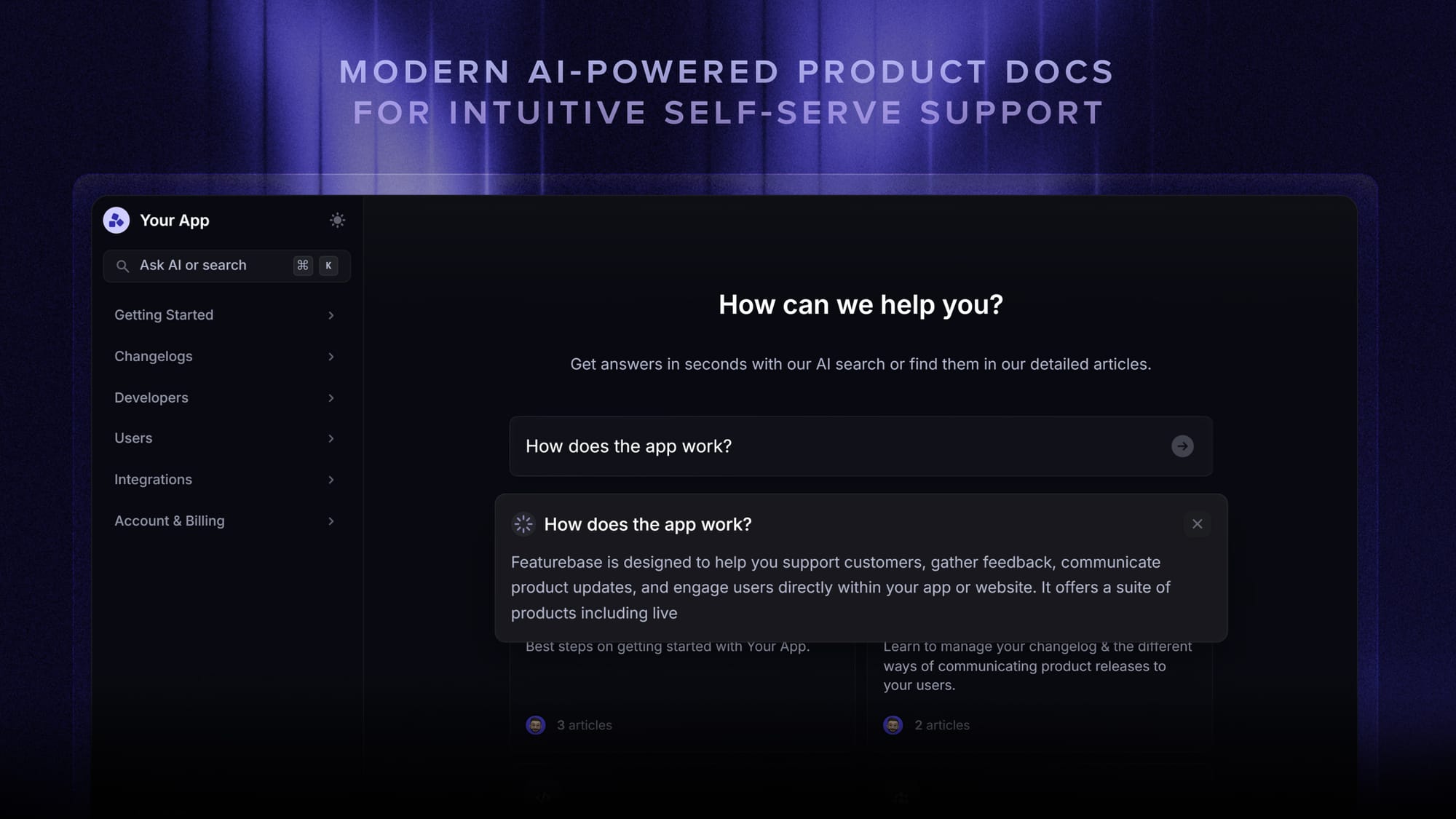
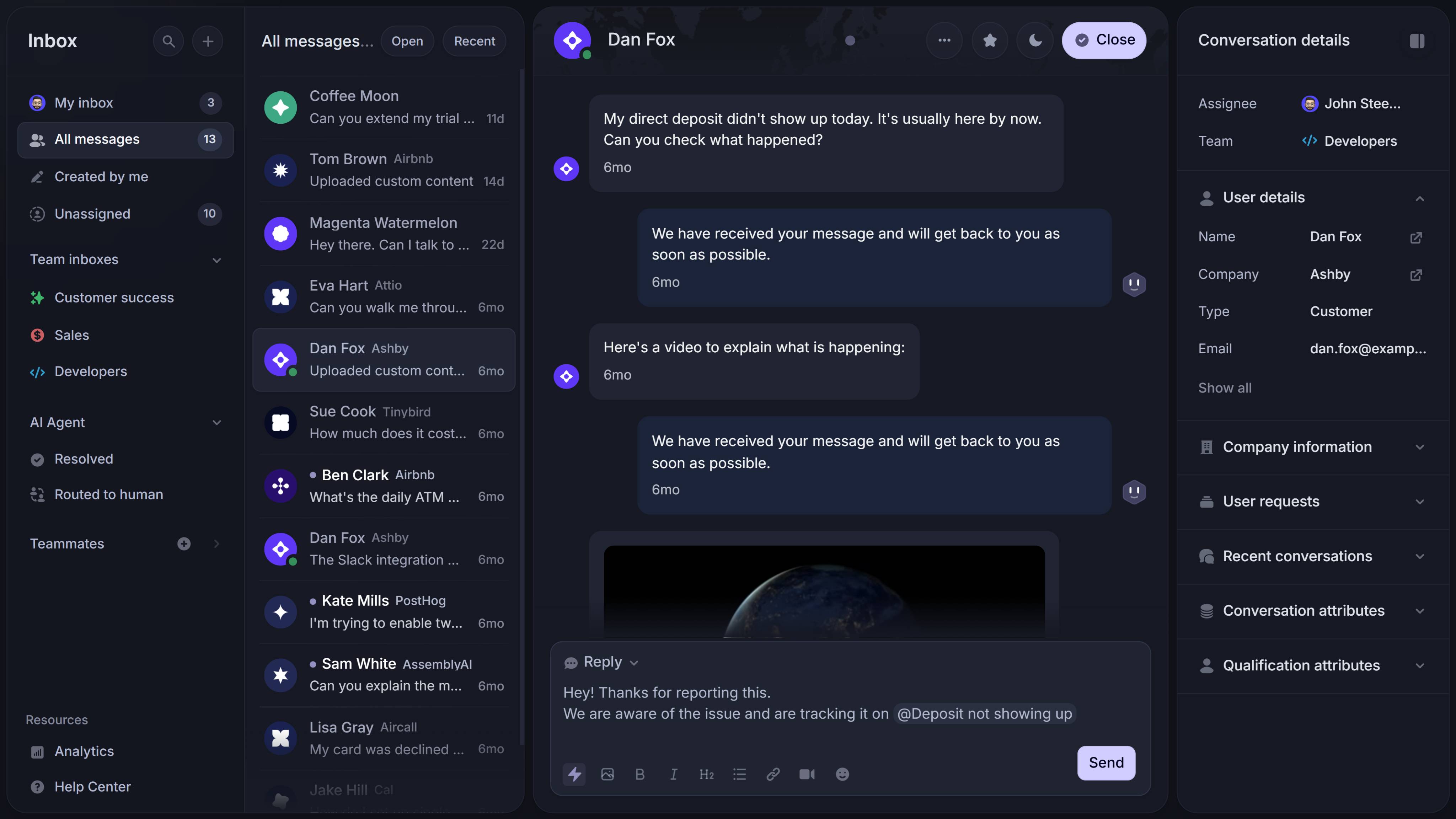
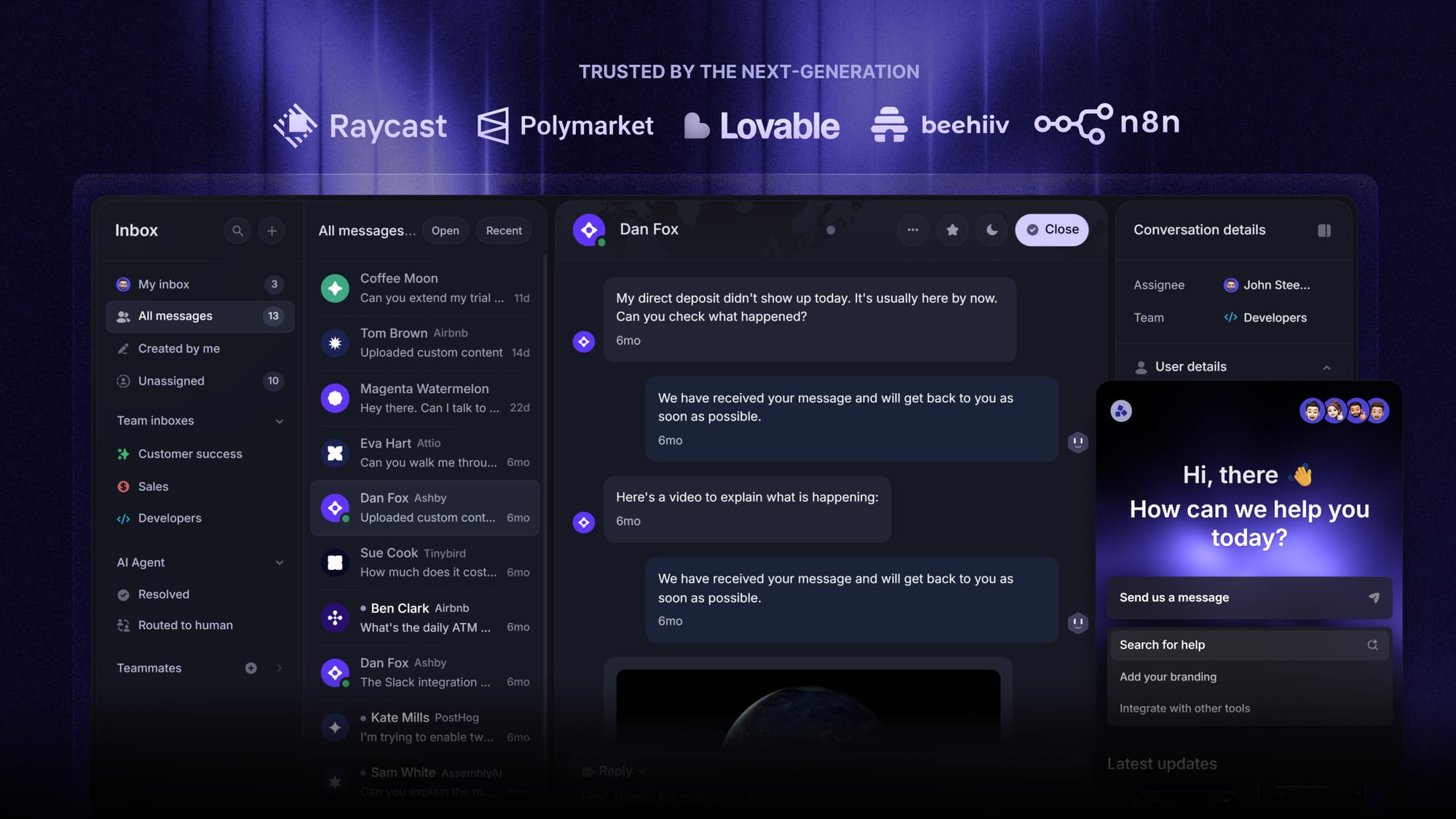
Featurebase helps with that by bringing your inbox, AI agent, help center, workflows, and customer feedback into one platform.
For example:
- Your team can manage live chat, email, and Slack conversations from one shared inbox.
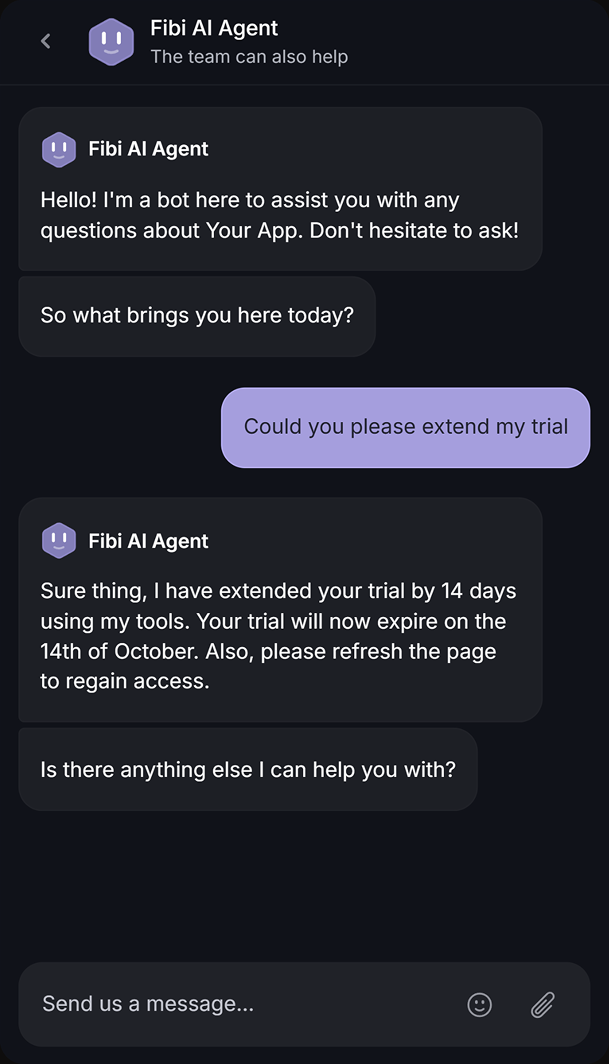
- Fibi AI Agent can handle common questions and run actions like trial extensions or refunds.
- AI Copilot can help agents answer faster using your internal knowledge.
- Workflows can route, assign, and organize conversations automatically.
- Your help center and feedback tools help customers find answers and give your team a clearer view of what needs improving.
The point is not to replace your philosophy with software. It is to make the philosophy easier to follow when the queue is full and the edge cases show up.
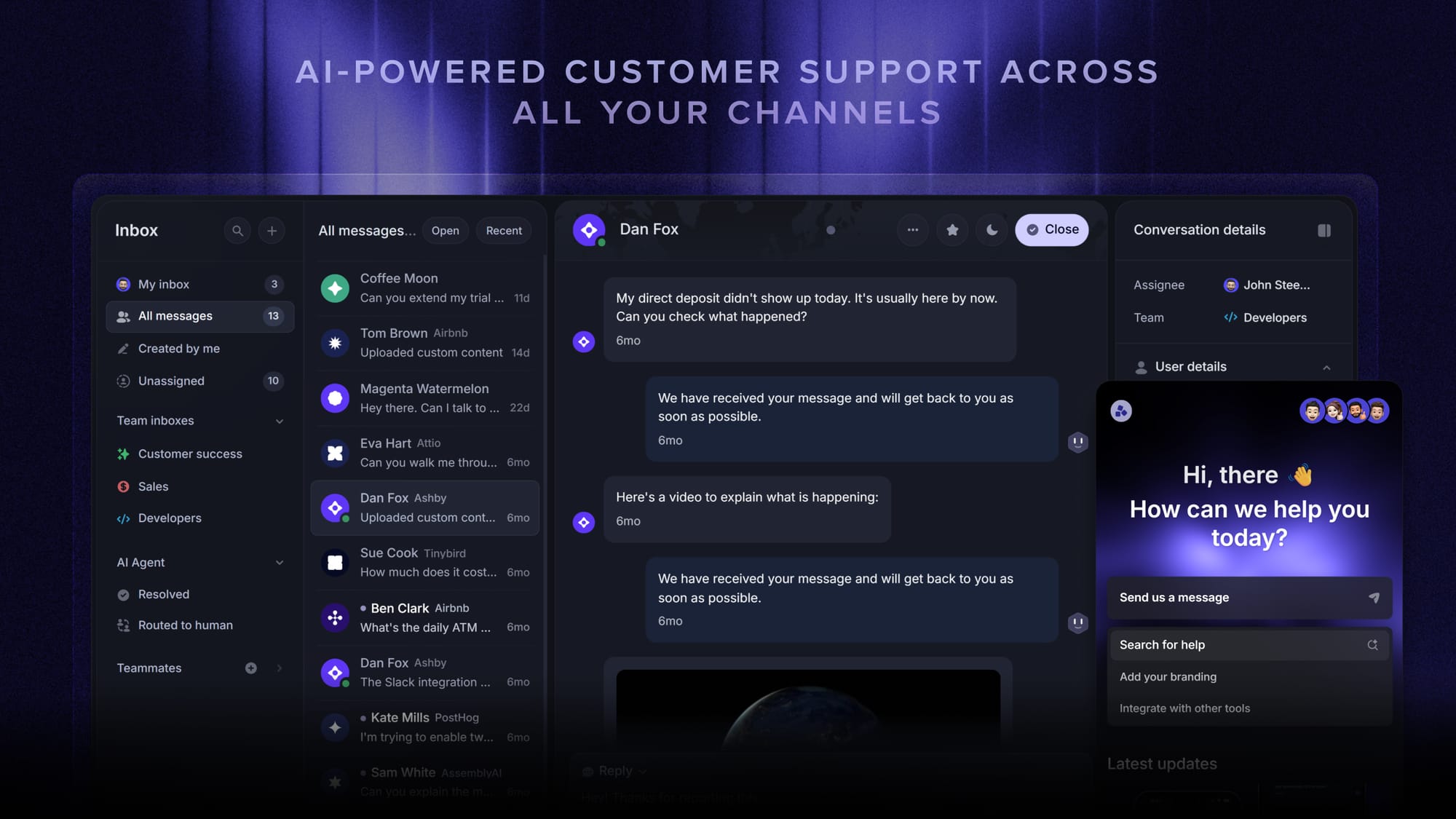
Responsiveness becomes easier when SLAs, routing, and AI assistance live next to the inbox. Consistency becomes easier when every channel shares the same customer context. Customer autonomy becomes easier when your help center actually answers the questions people are asking.
That is the kind of support system Featurebase is built for: helping product-led SaaS teams turn good support principles into everyday practice.

Get the fastest AI-powered Support Inbox
Support your customers from anywhere with an AI-powered omnichannel inbox
Conclusion
A customer service philosophy is not a marketing exercise. It is the operating system your team falls back on when the rules don't cover what's in front of them. Write yours in plain language, anchor it in a handful of principles your team can actually live, and put it everywhere decisions get made, not just on the careers page.
Featurebase is a modern AI-powered customer support platform that helps you turn your service principles into daily practice. It comes with an omnichannel inbox, AI agent, help center, and the workflows that tie them all together. It's the platform that supports your philosophy instead of fighting it.
It comes with affordable pricing and a Free plan, so there's no downside to trying it. 👇
✨ Automate your support with the fastest AI-enhanced Inbox today →
FAQs
How is a customer service philosophy different from a policy?
A philosophy becomes real only when it's built into how the team actually works, which is the job of customer support operations. A customer service policy tells your team what to do in specific situations, like refund windows, response-time SLAs, and escalation paths. A customer service philosophy tells your team how to think when no policy covers what's in front of them. Policies follow from philosophy. Without the philosophy, every edge case becomes a manager decision.
How should you answer "What is your customer service philosophy?" in a job interview?
Pick 2 or 3 principles you actually believe (responsiveness, empathy, ownership), give one short story of a time you applied them, and tie it back to the company you're interviewing with. Avoid abstract answers like "the customer is always right." Hiring managers are listening for whether you have a real point of view on service, not for whether you can quote a slogan. For more prep, see our breakdown of common customer service interview questions.
Where should you publish your customer service philosophy?
Everywhere agents make decisions. That means the careers page (so candidates self-select), the first page of new-hire onboarding, the pinned message in your support team channel, and the wiki next to your macros. The public website is the least important location. The internal placements are the ones that actually change behavior.
Can small businesses really benefit from a written philosophy?
Yes, often more than larger ones. Small teams cannot lean on the playbooks, training programs, and management layers that bigger companies use to enforce consistency. A short, shared set of principles is what substitutes for that scaffolding. It gives a 3-person support team the same decision-making compass that a 300-person team gets from process.
How do you measure if your customer service philosophy is working?
Pick 2 or 3 metrics tied to each principle and watch them quarterly. CSAT trend captures empathy and resolution quality. First-response time and SLA compliance measure responsiveness. Repeat-contact rate measures whether you fix things the first time. And agent retention measures whether the philosophy is one the team can actually live. High attrition often means the principles on the wall don't match the daily reality.
What tools help support a strong customer service philosophy?
The shortlist is small: a unified inbox so every channel feels like the same company, a knowledge base so customer autonomy is possible, AI assistance so responsiveness scales without burning out your agents, and feedback tooling so you keep hearing what the customer service experience is actually like. Featurebase brings all of these into one platform so the principles you write down have something to run on.