Blog Customer ServiceWhat is SaaS Customer Support? Definition, Importance & Best Practices
What is SaaS Customer Support? Definition, Importance & Best Practices
SaaS customer support matters: a 5% increase in customer retention can increase profits by 25–95%. Learn the basics and best practices.

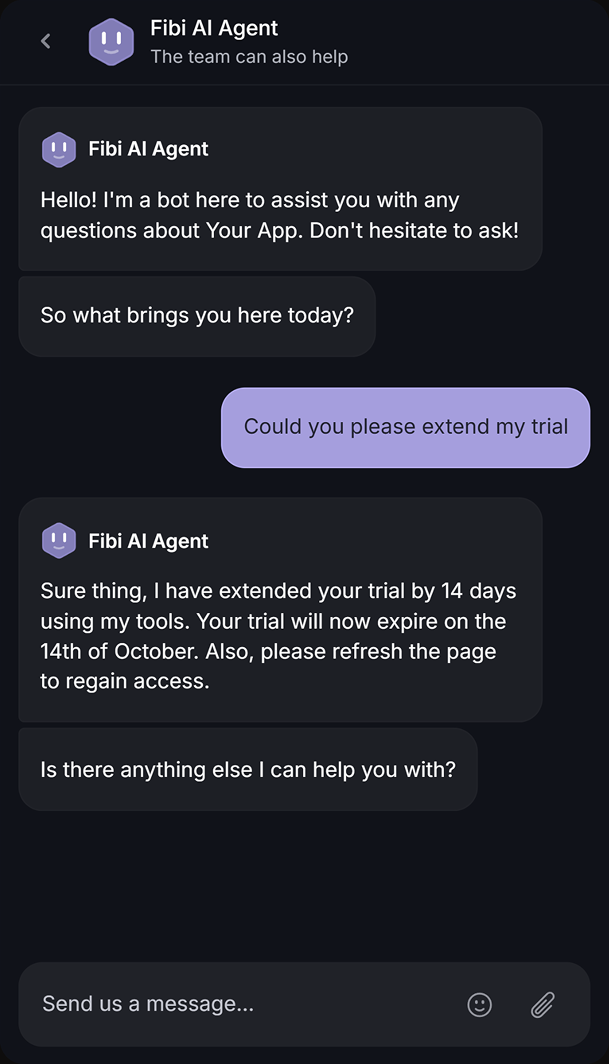

✨ Automate your SaaS customer support with the fastest AI-enhanced Inbox today →
SaaS support often starts with a shared inbox or a few Slack messages.
That works until questions, bugs, and feature requests start coming from everywhere. Replies get missed, feedback gets buried, and customers wait longer than they should.
SaaS customer support gives your team a clear way to manage those issues, help customers faster, and keep them getting value from your product.
In this guide, I’ll explain what it means, why it matters, and how to do it well.👇
Key takeaways:
- SaaS customer support is the process of helping customers use, troubleshoot, and get ongoing value from a subscription-based software product.
- Great customer support improves customer satisfaction, customer retention, and product adoption.
- A strong customer support team needs clear support channels, a knowledge base, ticketing systems, and useful customer data.
- The best SaaS support teams work closely with customer success teams, product teams, and engineering teams.
- Key support metrics include response time, customer satisfaction score, net promoter score, ticket volume, and customer churn rate.
- Tools like Featurebase✨ help SaaS businesses combine AI-powered ticketing, a help center, customer feedback, and support operations in one place.
What is SaaS customer support?
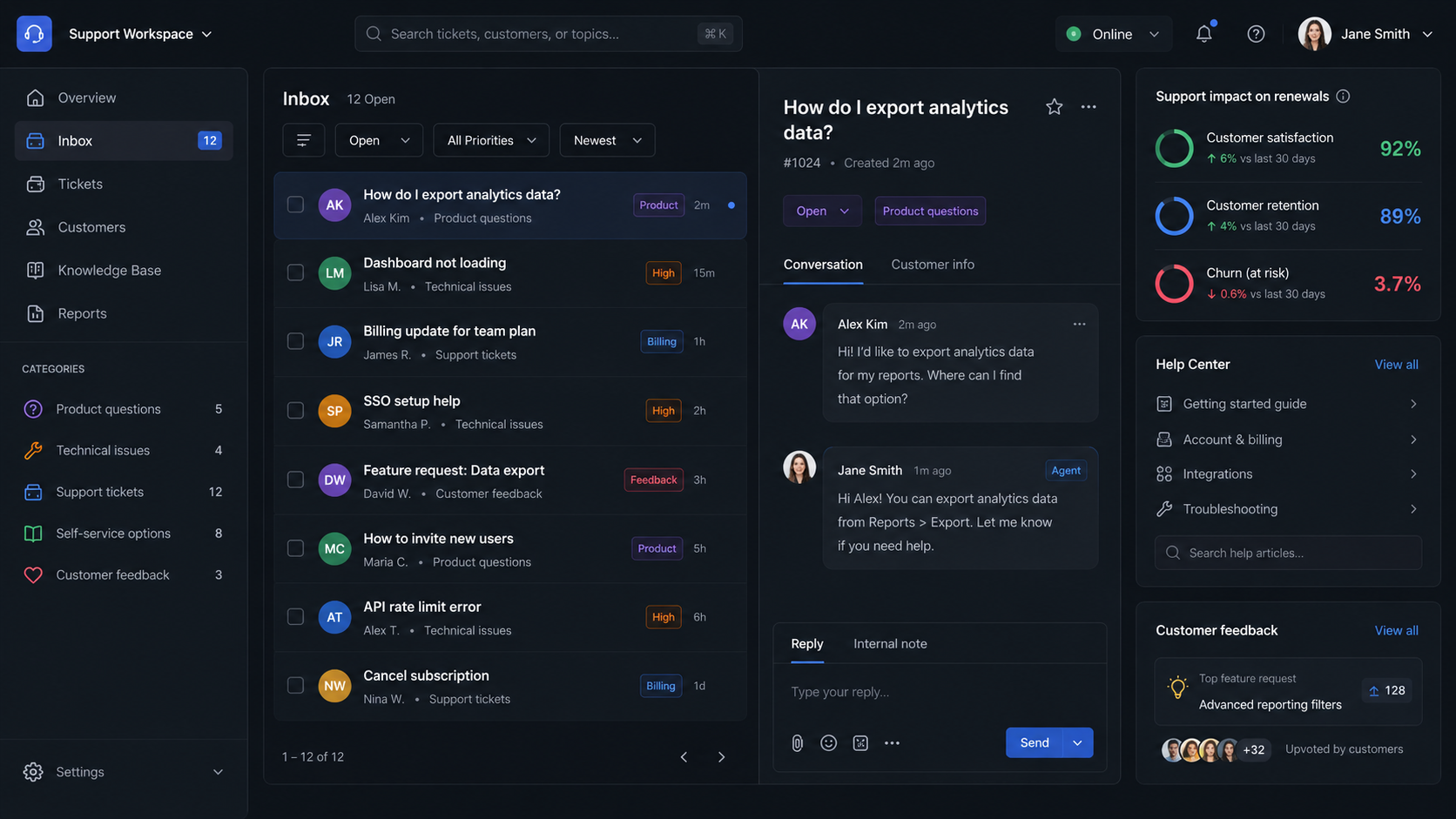
SaaS customer support is the process of helping customers use, troubleshoot, and get ongoing value from a subscription-based software product.
It covers product questions, technical issues, support tickets, self-service options, and customer feedback.
Unlike one-time purchases, SaaS depends on customers renewing. That means every support interaction can affect customer satisfaction, customer retention, and churn.

Resolve 70% of customer requests with AI
Automatically resolve customer issues & cut down support loads for your team
Why SaaS customer support is important
SaaS customer support is important because customers need to keep getting value from your product over time.
In a traditional business, a customer might buy something once and only contact support if something goes wrong. In SaaS companies, the relationship is ongoing. Customers are constantly learning new features, asking questions, reporting bugs, sharing feature requests, and deciding whether the product is still worth paying for.
That makes support a core part of the business.
It improves customer satisfaction
Customer satisfaction is one of the clearest signs that your support team is doing a good job.
When customers contact support, they usually want one of three things:
- a fast answer
- a clear explanation
- a real solution
If your support reps can provide that consistently, customers are more likely to trust your company and keep using your product.
Great customer service is not always about doing something dramatic. Most of the time, it means being clear, helpful, and reliable when customers need you.
That is what creates great customer support.
It helps improve customer retention
Customer retention matters a lot in SaaS because revenue depends on customers renewing.
Even small retention gains can have a big financial impact. Research summarized in a University of Washington-hosted academic paper found that a 5% increase in customer retention can increase profits by 25% to 95%.
If customers feel ignored, confused, or stuck, they are more likely to leave. But when they get helpful answers, easy self-service options, and proactive support when something goes wrong, they are more likely to stay.
It gives product teams better customer feedback
Support teams hear from customers every day.
They see what users misunderstand, which bugs keep coming up, what feature requests appear most often, and where customers struggle inside the product.
That support data is incredibly valuable for product teams.
Instead of guessing what customers need, product teams can look at real customer conversations, support interactions, and customer feedback to make better decisions.
This is one of the biggest advantages of great SaaS customer support. It turns everyday support requests into customer insights your company can actually use.
It creates a competitive advantage
Many SaaS products compete in crowded markets.
Features matter. Pricing matters. But the customer support experience can also become a competitive advantage.
If your customers know they can contact support easily, get useful answers, and trust your team to follow through, that can be a real reason to choose you over another tool.
Exceptional customer support is especially powerful for SaaS companies selling to teams and businesses, where reliability and trust matter a lot.
How SaaS customer support is different from regular customer support
SaaS customer support is different because the customer relationship continues after signup.
Customers keep using the product, learning new features, adding teammates, connecting integrations, and deciding whether to renew. So support is not just about fixing one issue. It is about helping customers get value over time.
| Regular customer support | SaaS customer support |
|---|---|
| Often tied to one-time purchases | Tied to recurring subscriptions |
| Usually focuses on fixing individual issues | Focuses on helping customers get ongoing value |
| Mostly reactive | Mix of reactive and proactive support |
| Support data may stay inside the support team | Support data often informs product, success, and engineering teams |
| Success is measured by issue resolution | Success is measured by support quality, retention, adoption, and customer satisfaction |
This is why SaaS support teams often work closely with customer success, product, and engineering. A support ticket might reveal a bug, a confusing workflow, or a feature request that affects renewals.
✨ Automate your SaaS customer support with the fastest AI-enhanced Inbox today →
What does SaaS customer support include?
SaaS customer support includes all the work your team does to help customers solve problems, understand the product, and continue getting value from it.
The exact process looks different for every company, but most SaaS support includes a few core components.
Technical support
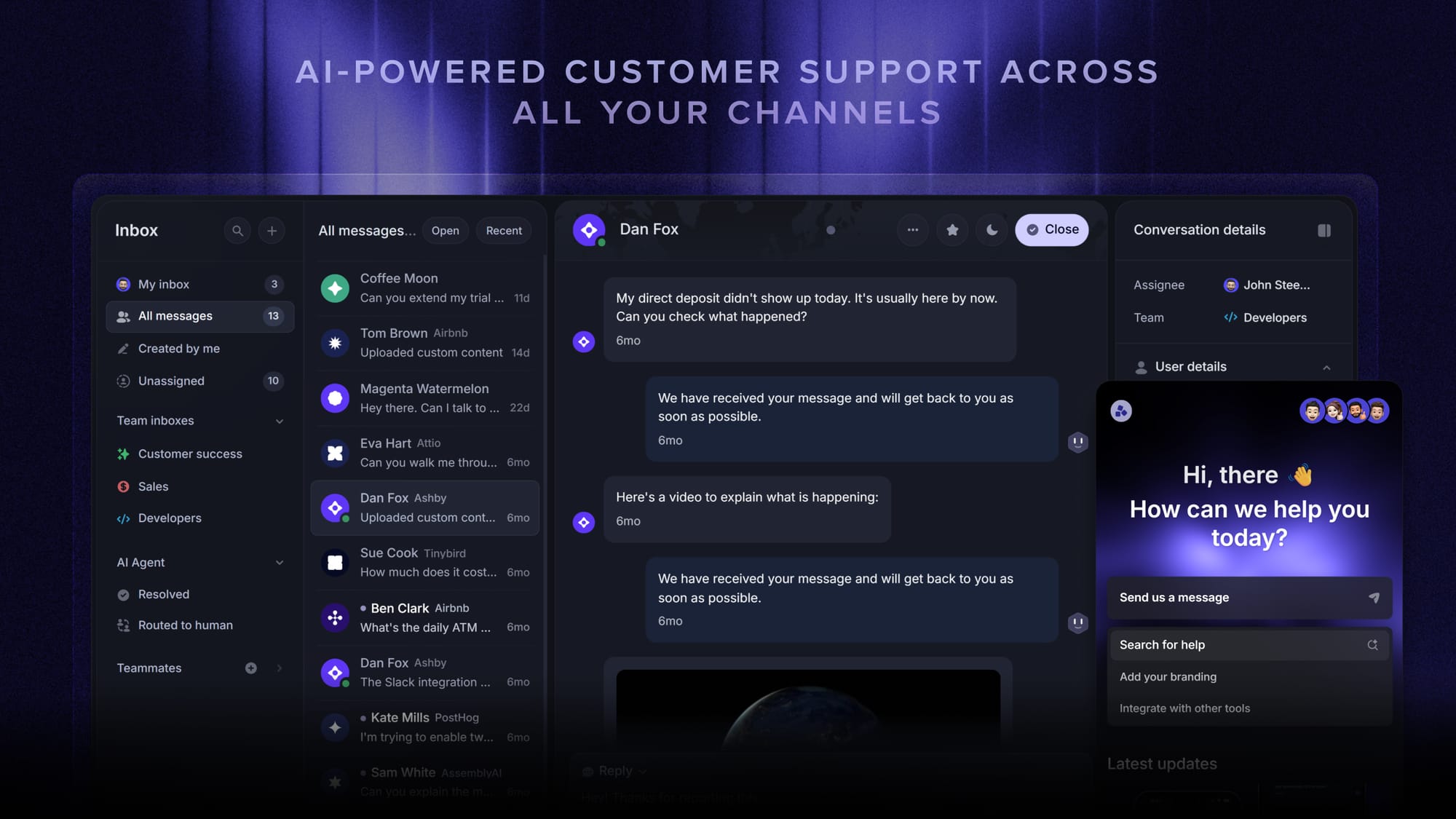
Technical support helps customers solve product, setup, integration, access, or performance issues.
For SaaS companies, this can include things like:
- login problems
- failed integrations
- broken workflows
- missing permissions
- billing or plan issues
- product bugs
- setup questions
- data import problems
Some technical support issues can be handled by support agents right away. Others need to be escalated to engineering teams.
That is why a good support process should make it easy to collect details, reproduce the issue, and keep the customer updated.
Ticket management
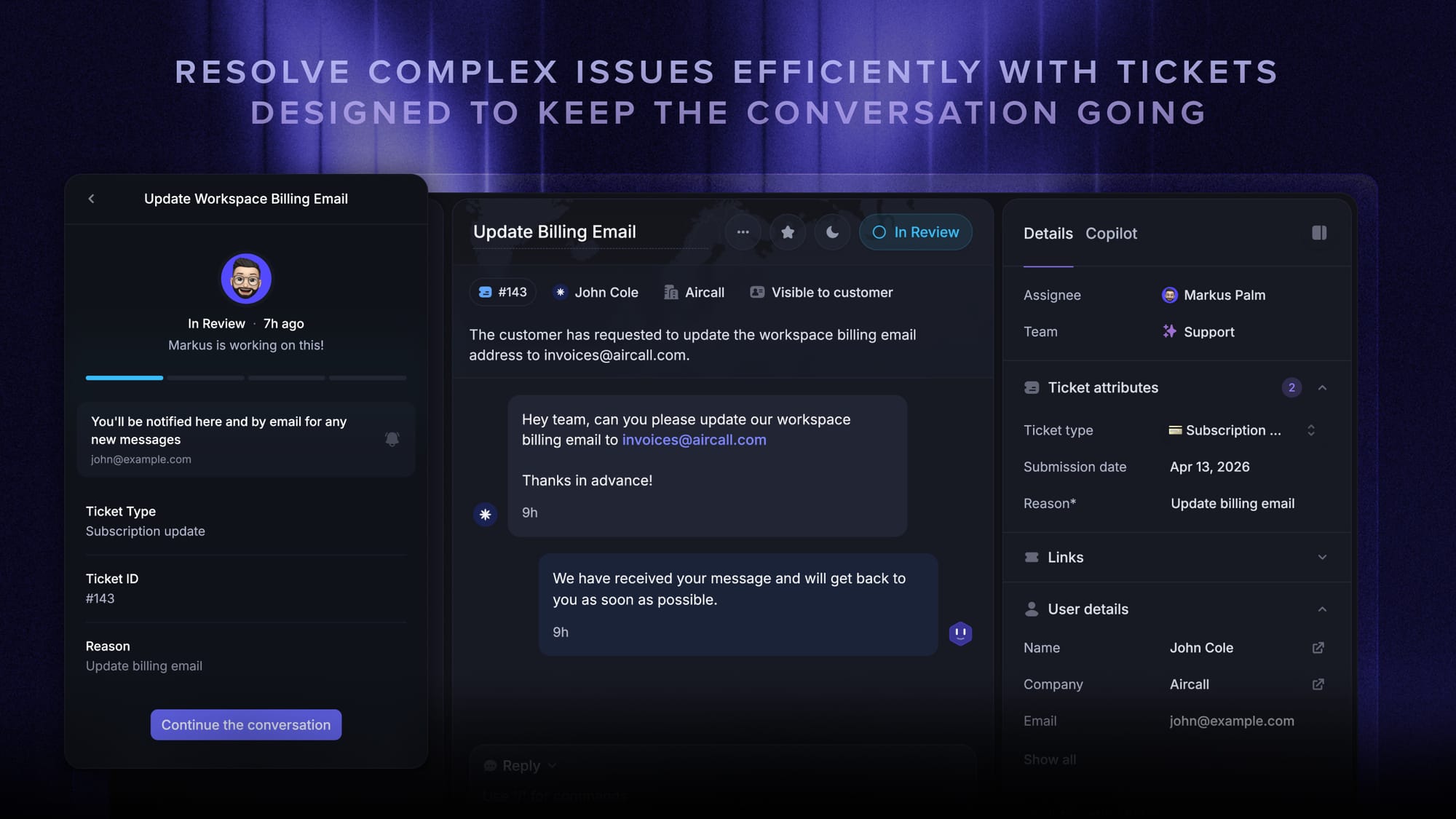
Ticket management is the process of collecting, organizing, assigning, prioritizing, and resolving support tickets.
This is especially important as support volume grows.
Without a proper system, support requests can get lost across email, Slack, live chat, social media messages, and internal notes. That leads to missed replies, duplicate work, and frustrated customers.
A good ticketing system helps your team streamline ticket management by giving every issue a clear place to live.
It shows:
- who owns the ticket
- what the customer asked
- what has already been said
- what priority the issue has
- whether the issue is still open
- what needs to happen next
This makes support operations much easier to manage.
Self-service support
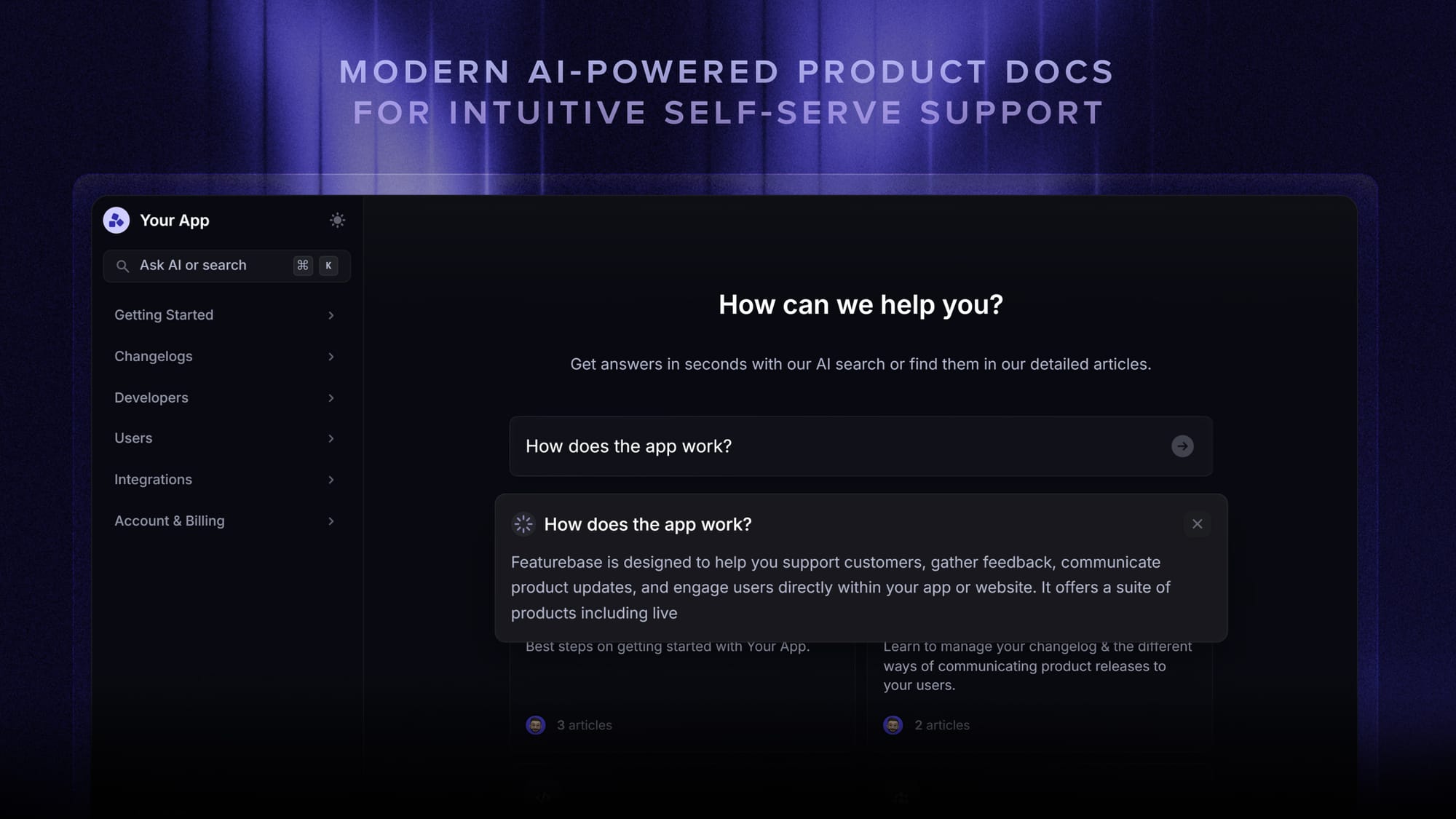
Not every customer wants to contact support.
Many customers would rather find the answer themselves, especially for simple questions. That is why self-service options are such an important part of SaaS customer support.
A self-service knowledge base can help customers solve common issues without waiting for a support agent.
It can include:
- help articles
- setup guides
- FAQs
- troubleshooting steps
- product tutorials
- best practice guides
- videos or screenshots
Good self-service support empowers users to move faster.
But self-service should not become a dead end. Customers should still have an easy way to contact support when they need help from a human.
Customer feedback
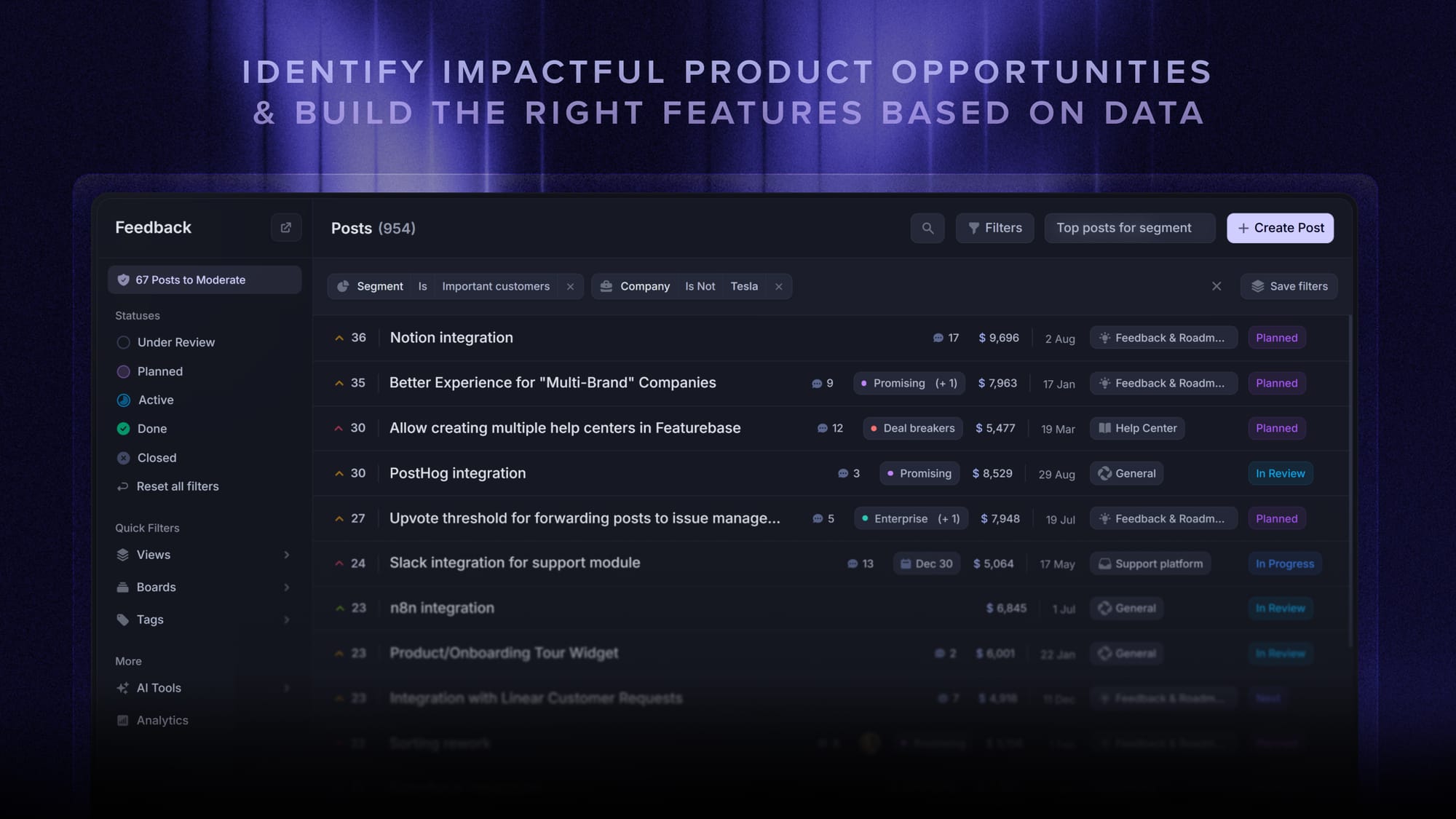
Customer feedback is one of the most valuable parts of SaaS support.
Support conversations often reveal what customers actually need. They show which parts of the product are confusing, which features are missing, and which customer issues keep coming up.
This feedback should not stay buried inside support tickets.
The best SaaS support teams have a clear way to send customer feedback and feature requests to product teams. That helps the company improve the product based on real customer needs.
Proactive support
Proactive support means helping customers before they have to ask.
For example, your team might:
- send onboarding tips to new customers
- warn users about a known issue
- reach out after a failed setup step
- share help articles based on product behavior
- notify customers when a requested feature ships
- offer assistance before a renewal risk becomes churn
This kind of support is powerful because it shows customers that your team is paying attention.
It also helps reduce avoidable support requests and creates a smoother customer journey.
Account management
In many SaaS businesses, account management overlaps with support and customer success.
This is especially true for larger customers.
An account manager might help customers understand their plan, manage renewals, coordinate support escalations, or connect them with the right internal team.
Support still handles customer issues, but account management can help make sure important customers get the right level of attention across the full customer lifecycle.
Resolve 70% of customer requests with AI
Automatically resolve customer issues & cut down support loads for your team
Common SaaS customer support channels
SaaS customers do not all want to contact support in the same way. It helps to understand the different customer service channels before you prioritize.
Some prefer live chat. Others send email. Some enterprise customers expect Slack support or phone support. Others want to search a knowledge base before talking to anyone.
The best SaaS support teams meet customers on their preferred platform while keeping every conversation organized in one place.
Email support
Email is one of the most common customer support channels.
It works well for longer questions, billing issues, technical problems, and support requests that do not need an instant reply.
The downside is that email can get messy without a ticketing system. Dedicated email support software keeps it organized in a shared inbox.
Live chat and in-app messaging
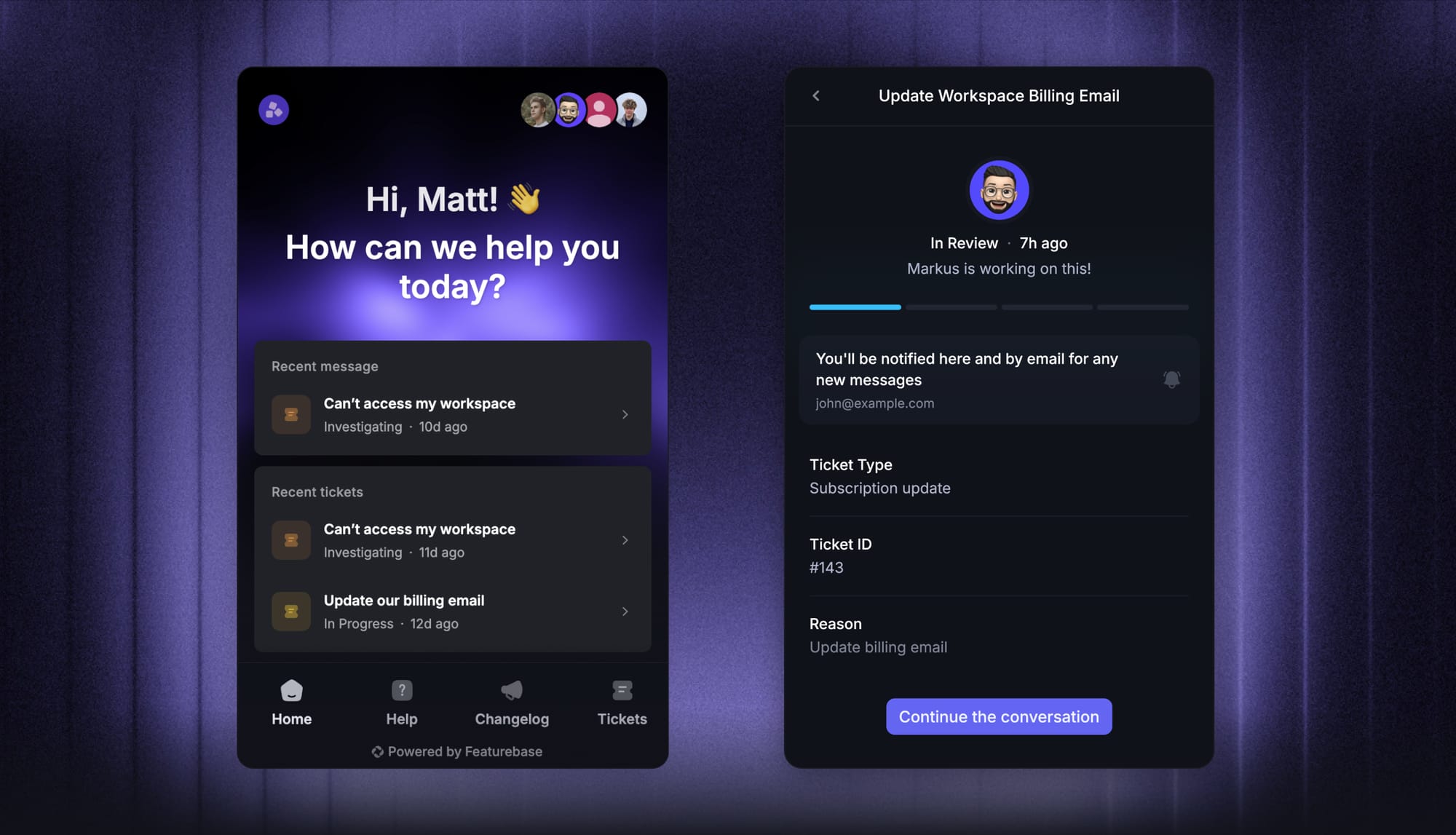
Live chat is useful when customers need help while they are using the product.
It can create a better customer support experience because customers do not need to leave the app to ask a question.
In-app messaging is especially useful for SaaS products because support can happen in the same place where the problem is happening.
Help center and knowledge base
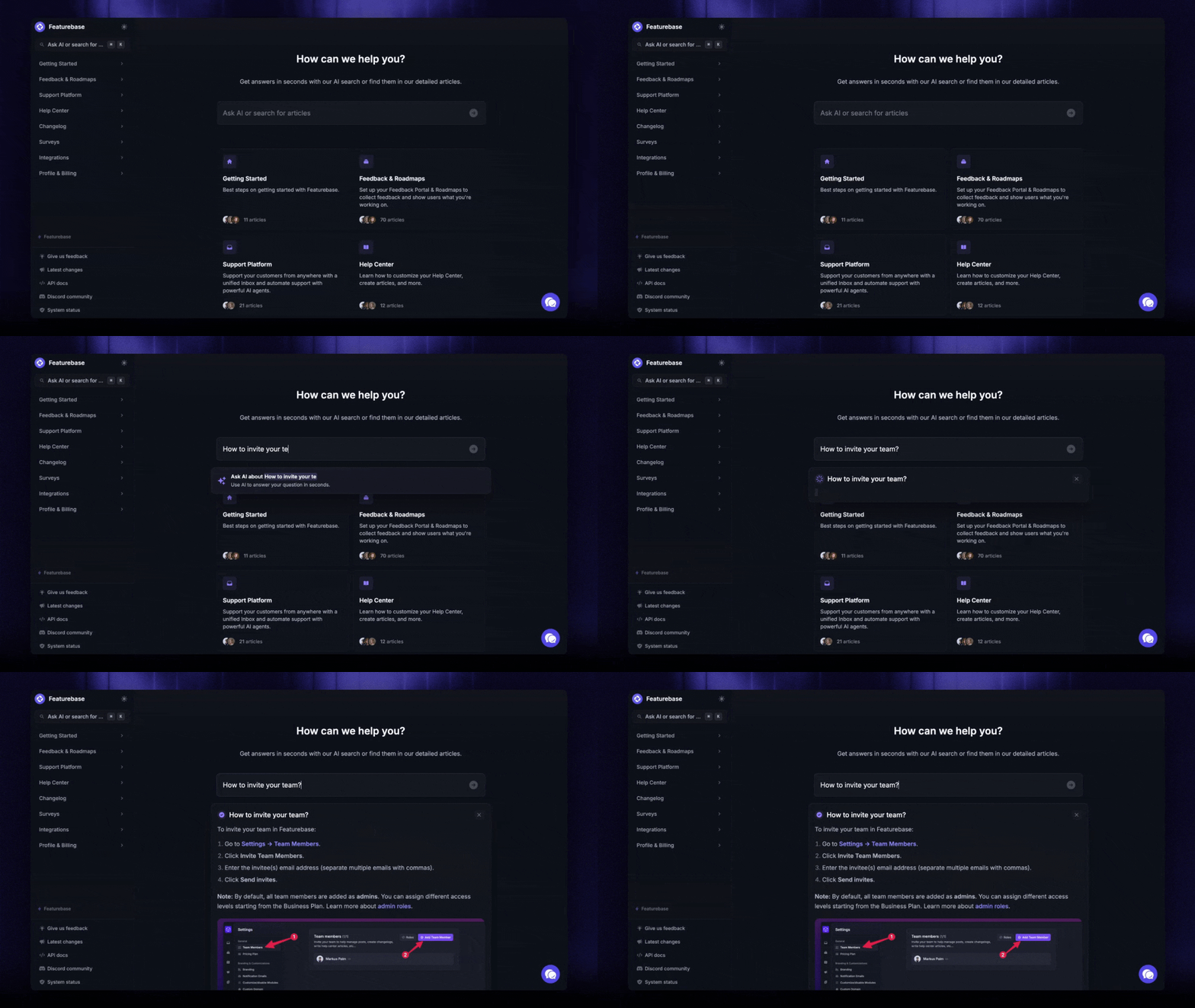
A help center gives customers a place to find answers on their own.
This is one of the best ways to serve customers at scale because a good knowledge base can answer common questions even outside support hours.
It also reduces repetitive support tickets and gives support agents more time to focus on complex issues.
Phone support
Phone support is less common for early-stage SaaS companies, but it can still be useful for urgent or complex issues.
For example, larger accounts may expect phone support for billing problems, outages, or technical assistance.
Slack or Microsoft Teams support
Slack and Microsoft Teams are common support channels for B2B SaaS companies, especially for larger customers.
They make support feel faster and more personal because customers can ask questions in the tools they already use every day. This works well for technical questions, onboarding help, account updates, and ongoing customer conversations.
The problem is that chat threads can get messy fast. Important context gets buried, feature requests are easy to miss, and support agents may lose track of who owns the issue.
That is why many SaaS teams connect Slack or Microsoft Teams with their support tools, ticketing systems, or customer feedback workflows. For example, Featurebase helps teams connect customer feedback with Slack, so important requests do not get lost in chat threads and can be tracked in a more organized way.

Customers still get a convenient way to reach your team, while your internal team keeps support requests and feedback easier to manage.
Social media messages
Some customers will reach out through social media messages, especially if they cannot find another way to contact support.
These messages should not be ignored, but they also should not live separately from the rest of your support operations.
If social media is a real support channel for your company, it should be connected to your broader support process.
SaaS customer support vs customer success
Customer support and customer success are closely related, but they are not the same thing.
Customer support is usually reactive. It helps customers solve issues when they contact support.
Customer success is more proactive. It helps customers reach their goals, adopt the product, and get more value over time.
| Metric | What it tells you |
|---|---|
| Response time | How quickly support agents reply to customers |
| Resolution time | How long it takes to solve customer issues |
| Customer satisfaction score | How happy customers are after support interactions |
| Net promoter score | How likely customers are to recommend your SaaS product |
| Ticket volume | How many support requests your team handles |
| Self-service resolution rate | How often customers solve issues through self service options |
| Escalation rate | How often issues need technical support or engineering help |
| Customer churn rate | Whether poor support may be hurting customer retention |
These metrics are useful on their own, but they are even more useful when combined with qualitative customer feedback.
It's also worth separating two terms people mix up: customer service vs customer support. Support is the reactive slice; service is the whole relationship.
SaaS customer support tools
SaaS customer support tools help teams manage support tickets, answer customer questions, create self-service content, and turn customer feedback into product insights.
The right tool depends on your team size, support volume, customer needs, and how closely support needs to connect with product work.
| Tool type | What it helps with | Examples |
|---|---|---|
| Ticketing and help desk tools | Organizing support tickets, assigning ownership, tracking status, and managing response times | Featurebase✨, Zendesk, Freshdesk, Help Scout, Front, Hiver |
| Knowledge base tools | Creating help articles, FAQs, setup guides, and other self-service resources | Featurebase✨, Zendesk Guide, Intercom Help Center, Freshdesk Knowledge Base, Help Scout Docs, HubSpot Knowledge Base |
| Live chat and customer messaging tools | Letting customers contact support from your product or website | Featurebase✨, Intercom, Zendesk Messaging, Freshchat, Crisp, Help Scout Beacon |
| Customer feedback tools | Collecting feature requests, product ideas, and recurring customer issues | Featurebase✨, Canny, Productboard, UserVoice |
| AI support tools | Summarizing conversations, suggesting replies, routing tickets, and helping agents work faster | Featurebase✨, Intercom Fin, Zendesk AI, Freshdesk Freddy AI, Forethought |
| All-in-one support platforms | Combining multiple support workflows like ticketing, help center, AI, feedback, and reporting | Featurebase✨, Zendesk, Freshdesk, Intercom, HubSpot Service Hub |
For a deeper comparison of ticketing options, see the best customer support ticketing software.
The tricky part is not always choosing a tool. It is making sure your tools work together.
If tickets, feedback, help articles, and product requests all live in separate places, your team has to piece the story together manually. That slows support down and makes it easier to miss useful customer insights.
Ideally, your support stack should give the team one clear view of what customers are asking, where they are getting stuck, and what needs to happen next.
Get the best SaaS customer support tool
Automatically resolve 70% of customer requests & cut down manual support loads
Conclusion
SaaS customer support is more than answering questions. It helps customers get value from your product, resolve issues faster, share feedback, and continue using your software over time.
When done well, it improves customer satisfaction, strengthens customer retention, reduces avoidable churn, and gives your team valuable insights into what customers actually need.
Featurebase is a modern & powerful customer support platform for SaaS teams. It brings together AI-powered ticketing, a help center, customer feedback, roadmaps, changelogs, and in-app widgets, so your team can manage support requests, collect feature requests, and close the loop with customers from one place.
It comes with affordable pricing and a Free plan. The onboarding is quick, so there’s no real downside to trying it. 👇
✨ Automate your SaaS customer support with the fastest AI-enhanced Inbox today →
FAQs
What is SaaS customer support?
SaaS customer support is the process of helping customers use, troubleshoot, and get ongoing value from a subscription-based software product. It includes answering questions, resolving customer issues, managing support tickets, offering self-service options, and collecting customer feedback.
Why is customer support important for SaaS companies?
Customer support is important for SaaS companies because it affects customer satisfaction, customer retention, product adoption, and churn. Since SaaS businesses rely on recurring revenue, good support helps customers keep getting value from the product so they are more likely to renew.
What is the difference between SaaS customer support and customer success?
SaaS customer support is usually reactive. It helps customers solve issues when they contact support. Customer success is more proactive. It helps customers reach their goals, adopt the product, and get more value over time. In many SaaS companies, both teams work closely together.
What are the main SaaS customer support channels?
The main SaaS customer support channels include email, live chat, in-app messaging, help center forms, phone support, Slack or Microsoft Teams, customer portals, and social media messages. The best channel depends on your customer needs, product complexity, and support team capacity.
What tools do SaaS support teams use?
SaaS support teams often use ticketing systems, knowledge base tools, live chat tools, customer feedback tools, AI support tools, customer success platforms, and account management tools. These tools help teams manage support requests, organize customer conversations, and improve support operations.
What metrics should SaaS customer support teams track?
SaaS customer support teams should track response time, resolution time, customer satisfaction score, net promoter score, ticket volume, escalation rate, self-service resolution rate, support quality, and customer churn rate. These key support metrics help teams understand performance and improve the customer support experience.
How can SaaS companies improve customer support?
SaaS companies can improve customer support by making it easy to contact support, building a helpful self-service knowledge base, using ticketing systems, tracking key metrics, aligning support with customer success, and sending recurring customer feedback to product and engineering teams.