Salesforce vs. ServiceNow: Which Is Right for You?
Salesforce vs. ServiceNow compared across CRM, ITSM, customer service, AI, and pricing, with a clear guide to which platform fits your team.


On this page
- What are Salesforce and ServiceNow?
- CRM vs. ITSM: What each is built for
- Customer service: Service Cloud vs. CSM
- AI and automation
- Pricing and licensing
- Integrations, customization, and architecture
- When to choose Salesforce vs. ServiceNow
- Looking beyond Salesforce and ServiceNow: try Featurebase
- Conclusion
Psst... run a lean product-led team that just needs modern support and feedback, not an enterprise platform? Check out Featurebase
Salesforce and ServiceNow both sit near the top of every enterprise-software shortlist, but they were built for opposite jobs. One runs your customer relationships. The other runs your internal operations and IT.
The catch is that in 2025 and 2026 each pushed into the other's territory, so the line between them is blurrier than it used to be. Here is how they actually compare, and how to pick 👇
Key takeaways:
- Salesforce is a CRM at its core: it manages customer-facing work like sales, marketing, and service, and acts as your system of record for customer data.
- ServiceNow is an ITSM and enterprise service management platform: it automates internal workflows like IT support, HR, and operations, and acts as a system of action.
- They now overlap: ServiceNow launched an AI-powered CRM and Salesforce announced its move into IT service management, so feature parity is growing in customer service.
- Pricing differs sharply: Salesforce publishes per-user tiers (from $25/user/month), while ServiceNow uses custom, fulfiller-based quotes that usually land much higher.
- Both are heavyweight: each carries a steep learning curve, real implementation time, and enterprise pricing.
- If you are a smaller product-led SaaS team that mostly needs modern customer support and feedback rather than a full enterprise suite, Featurebase✨ covers that in one lighter, more affordable tool.
What are Salesforce and ServiceNow?
Both are cloud platforms used by most of the Fortune 500, but they grew up solving different problems.
Salesforce

Salesforce launched in 1999 and became the world's leading CRM. It is built to manage everything that faces your customer: sales pipelines, marketing campaigns, and customer service. Its core products are Sales Cloud for managing leads and deals, Service Cloud for customer support, and Marketing Cloud for campaigns, all tied together by a 360-degree view of each customer. Layered on top is its AI suite, Einstein and the newer Agentforce, plus the AppExchange marketplace of third-party apps.
In short, Salesforce is where you store and act on customer relationships.
ServiceNow
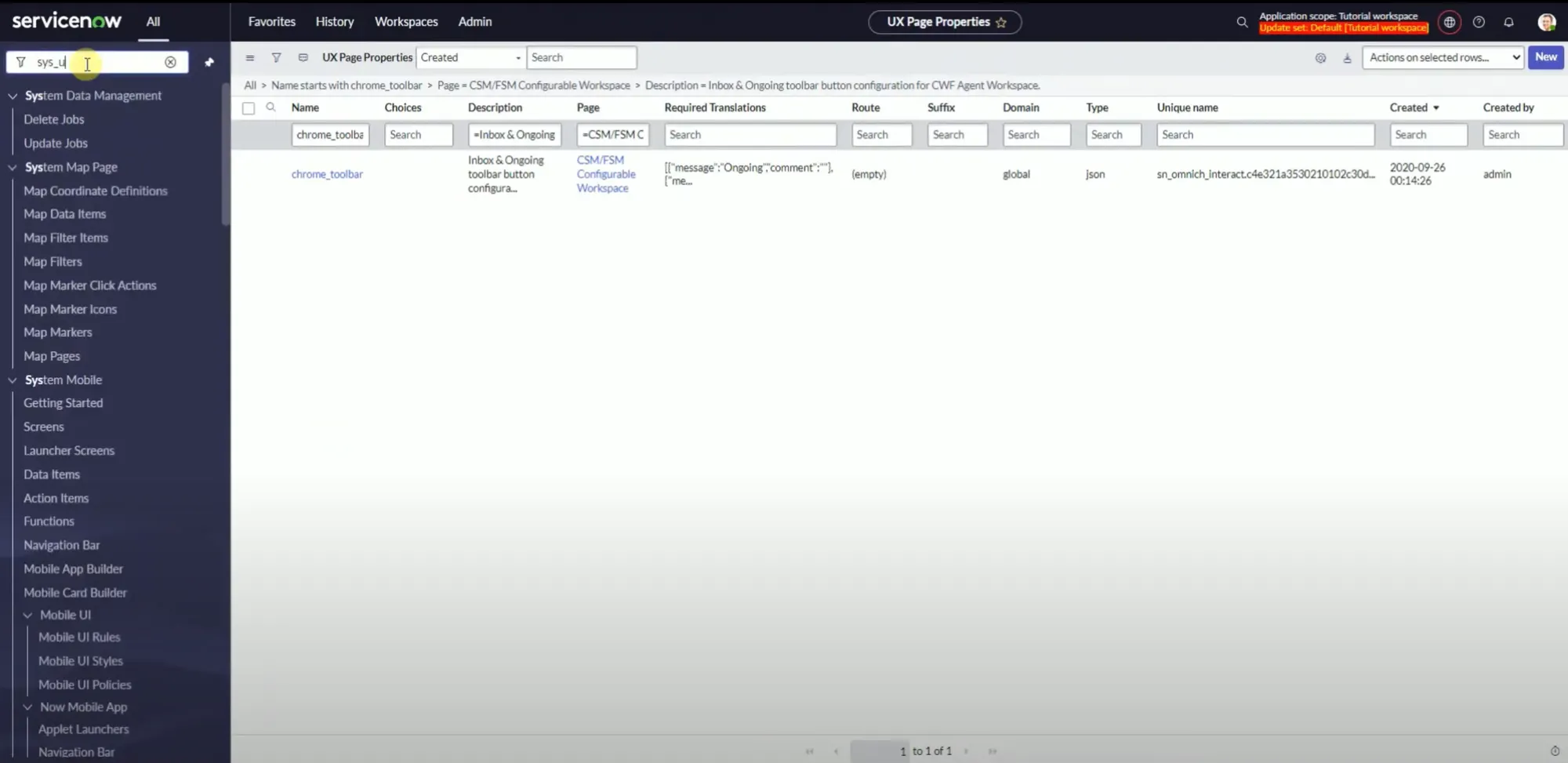
ServiceNow launched in 2004 as an IT service management tool and grew into a workflow engine for the whole enterprise. It is built to manage what happens inside your business: IT incidents and changes, HR requests, security operations, and asset management, all running on its Now Platform. Its strength is automating structured, cross-department workflows rather than customer conversations.
ServiceNow is where you run and automate internal operations. The two platforms historically met only at the edges, but that is changing fast.
CRM vs. ITSM: What each is built for
The cleanest way to understand these platforms is the job each was designed for:
- CRM (Salesforce): customer relationship management, the outward-facing work of winning and keeping customers.
- ITSM (ServiceNow): IT service management, the inward-facing work of keeping systems and employees running.
- ESM (ServiceNow): enterprise service management, extending those same workflow tools to HR, finance, and legal.
Each platform dominates its home turf. Salesforce leads the CRM market, which is projected to reach $128.97 billion by 2028. ServiceNow is the long-standing ITSM leader and a repeat Gartner Magic Quadrant winner, in a cloud ITSM market projected to reach $15.6 billion by 2026.
What changed recently is that both started selling into each other's market. ServiceNow rolled out an AI-powered CRM, and Salesforce announced its entry into ITSM. ServiceNow has also been growing faster than Salesforce in recent years, which helps explain why it is willing to attack Salesforce's core. For most buyers today, though, the historical split still holds: Salesforce for customers, ServiceNow for operations.
Customer service: Service Cloud vs. CSM
Customer service is the one area where these platforms now compete head to head. Salesforce offers Service Cloud, and ServiceNow offers Customer Service Management (CSM). Both cover the modern basics:
- Omnichannel support: both route cases from email, chat, phone, and social to the right agent.
- Self-service portals: both let you build branded help centers and knowledge bases so customers can resolve issues on their own.
- Case management: both give agents a single workspace to track and resolve tickets.
- AI assistance: Salesforce uses Einstein and Agentforce, ServiceNow uses Now Assist and its AI agents.
The difference is what sits behind the service desk. Salesforce Service Cloud is wired into sales and marketing data, so support agents see the full customer relationship. Salesforce surveys can connect post-support feedback with those customer records. ServiceNow CSM is wired into IT and operational workflows, so a customer issue can trigger an internal process, like dispatching a field technician or opening an IT incident, automatically.
ServiceNow's CSM is also newer and less mature than Salesforce's decade-plus of service tooling. If you want to see how a dedicated customer-service platform stacks up against Salesforce, our Zendesk vs. Salesforce comparison is a useful reference point.
Winner: Salesforce (for customer-facing service) Service Cloud is deeper and more proven for pure customer support. Pick ServiceNow CSM only when service needs to plug directly into internal IT and operational workflows.
AI and automation
Both companies have bet heavily on AI, and both now ship autonomous agents rather than simple chatbots.
Salesforce leads with Agentforce, a layer of AI agents that act across sales, service, marketing, and commerce, built on Einstein and grounded in your CRM data. Because Salesforce holds the customer record, its agents are strongest at customer-facing tasks: qualifying leads, drafting replies, and resolving support cases.
ServiceNow leads with Now Assist and its AI agents, built on the Now Platform and grounded in your workflow data. Because ServiceNow holds the operational record, its agents are strongest at internal automation: resolving IT incidents, routing requests, and orchestrating multi-step processes across departments. ServiceNow even applies AI to its own service desk, as covered in our look at the ServiceNow AI chatbot.
The pattern mirrors the core split. Salesforce automation points outward at customers. ServiceNow automation points inward at operations.
Winner: Tie Both have credible, agent-first AI. The right one depends on whether you are automating customer conversations (Salesforce) or internal workflows (ServiceNow).
Pricing and licensing
This is where the two diverge most, and where buyers feel the most pain.
Salesforce publishes its Service Cloud pricing as clear per-user tiers, billed annually:
| Plan | Price (per user / month) | Best for |
|---|---|---|
| Starter Suite | $25 | Small teams getting started |
| Pro Suite | $100 | Growing teams needing more flexibility |
| Enterprise | $175 | Larger teams needing customization |
| Unlimited | $350 | Teams wanting the full AI suite |
| Agentforce 1 Service | $550 | AI-first service at scale |
The headline prices look approachable, but add-ons for extra AI, integrations, and premium support can add $50 to $200 per user, and most editions lock you into an annual commitment.
ServiceNow takes the opposite approach: it publishes no public pricing at all. Every contract is a custom quote negotiated with sales, priced mainly by "fulfiller" seats (the people doing the work) plus per-module subscriptions. In practice that lands well above Salesforce's entry tiers, and G2 reviewers consistently flag the licensing and implementation costs as high, with implementations often running several months. We break the numbers down in our ServiceNow pricing guide.
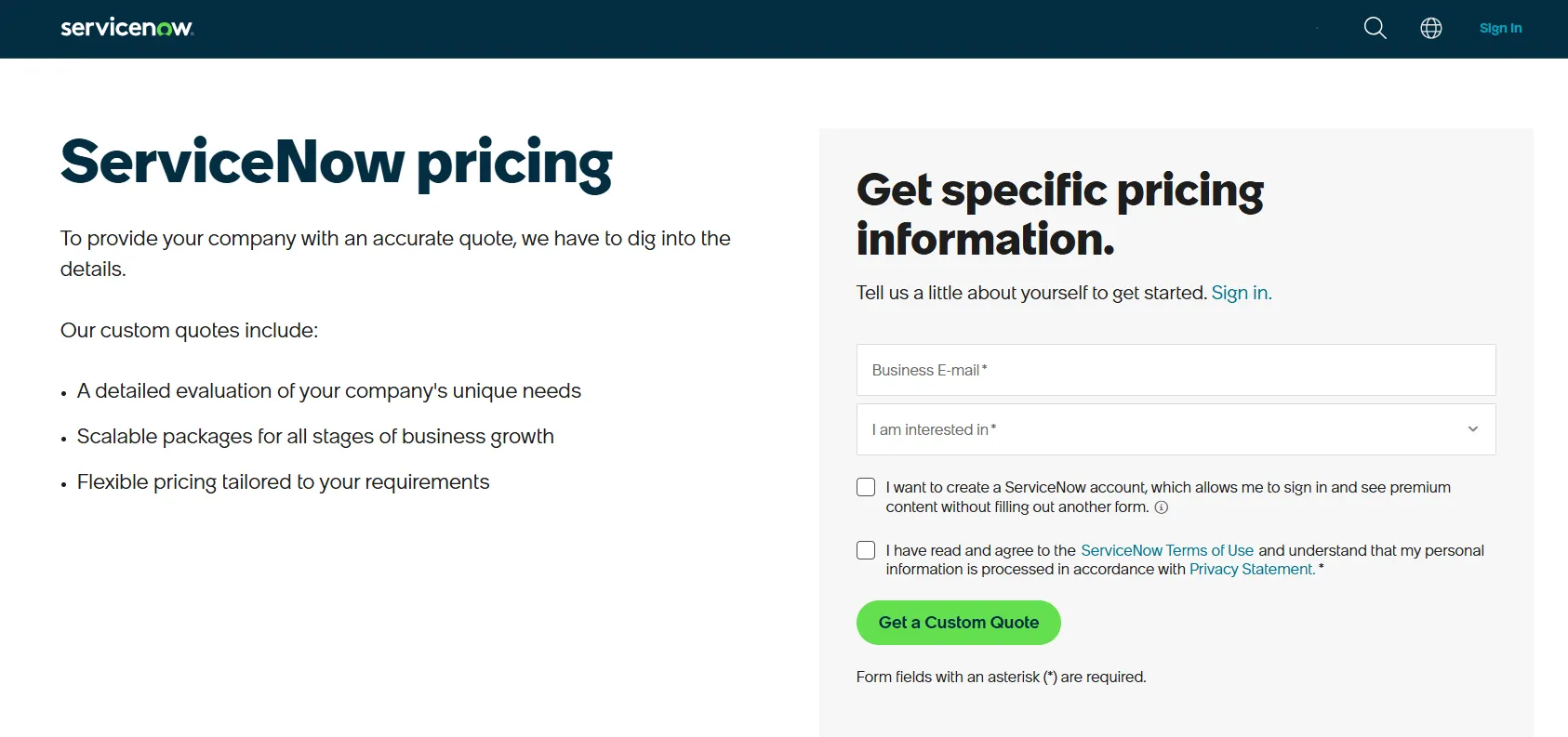
Winner: Salesforce (on transparency) Salesforce at least tells you the sticker price. ServiceNow's custom quotes are harder to budget and usually higher, though both get expensive fast at scale.
Integrations, customization, and architecture
Both platforms are highly extensible, but they are engineered differently underneath.
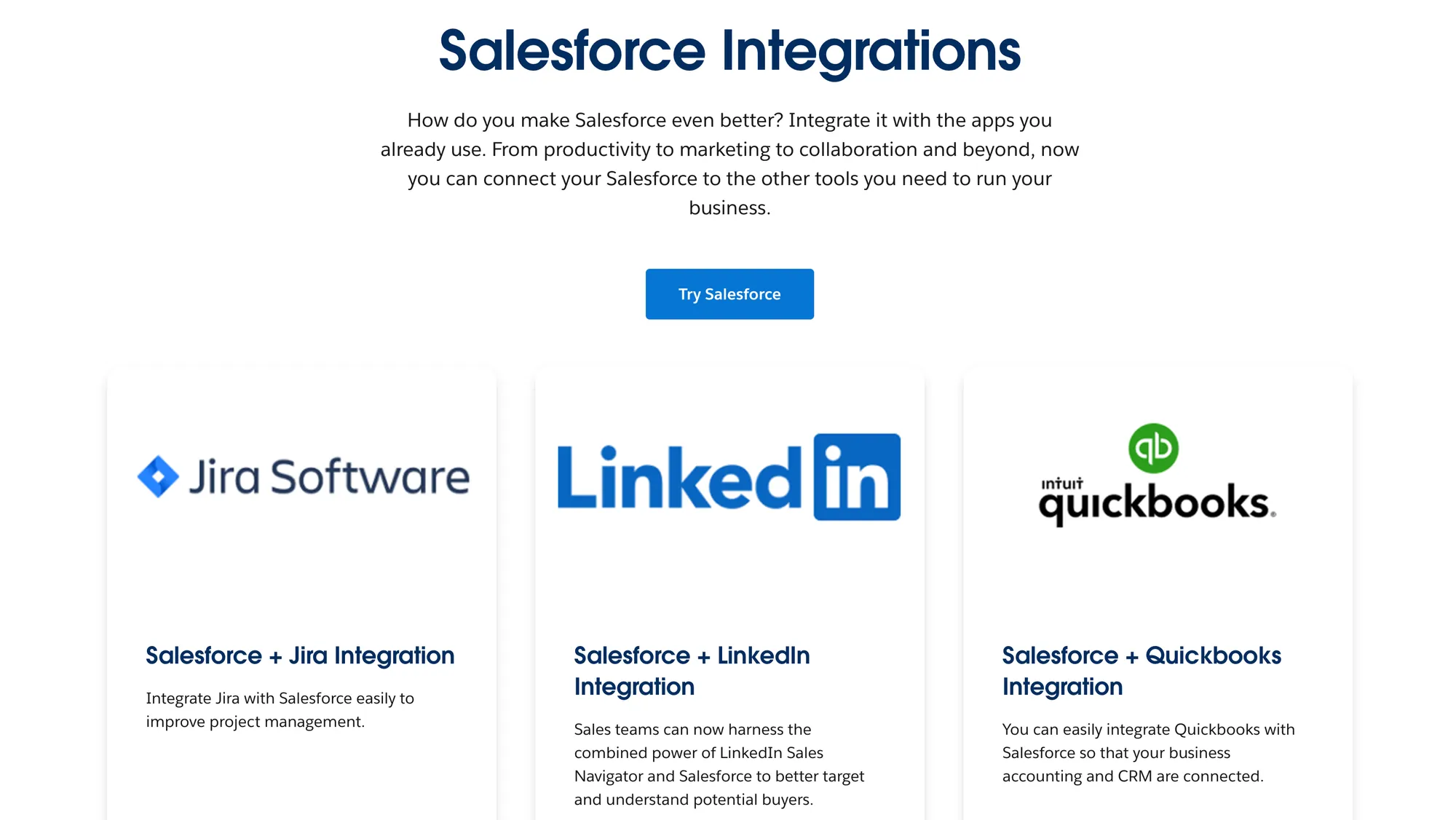
On integrations, Salesforce leans on its AppExchange marketplace of thousands of prebuilt apps plus MuleSoft for connecting external systems. ServiceNow leans on its IntegrationHub and REST and SOAP APIs, with particular strength connecting to legacy IT and enterprise systems.
The bigger difference is architecture:
- Salesforce is multi-tenant: customers share infrastructure while their data stays isolated, and customization happens through metadata without touching the core.
- ServiceNow is multi-instance: each customer gets a dedicated instance with its own database, which appeals to large enterprises with strict isolation and customization needs.
Both are heavily customizable through low-code and no-code tooling. The trade-off G2 reviewers raise for both is the same: deep customization takes real expertise, and the more you bend the platform, the more you pay in setup time and maintenance.
When to choose Salesforce vs. ServiceNow
For most teams, the decision still comes down to which side of the business you are solving for:
| Choose Salesforce if... | Choose ServiceNow if... |
|---|---|
| Your priority is sales, marketing, and customer relationships | Your priority is IT service management and internal operations |
| You want a mature, customer-facing CRM | You want workflow automation across IT, HR, and finance |
| You need transparent per-user pricing | You need dedicated-instance isolation for a large enterprise |
| Your team is customer-facing | Your team is operations and IT-facing |
Many large enterprises end up running both and connecting them through APIs, which is a perfectly valid path when the budget and the IT resources are there.
But not every team needs a platform of this weight. Smaller product-led SaaS companies often just need to talk to customers and act on their feedback, and a heavyweight CRM or ITSM suite is overkill for that. That is the gap a lighter tool like Featurebase fills, and it is worth a look before you commit to enterprise pricing. If you are specifically weighing ServiceNow, our roundup of ServiceNow alternatives covers more options.
Looking beyond Salesforce and ServiceNow: try Featurebase
If your real need is modern customer support and feedback rather than a full enterprise platform, there is a simpler option.
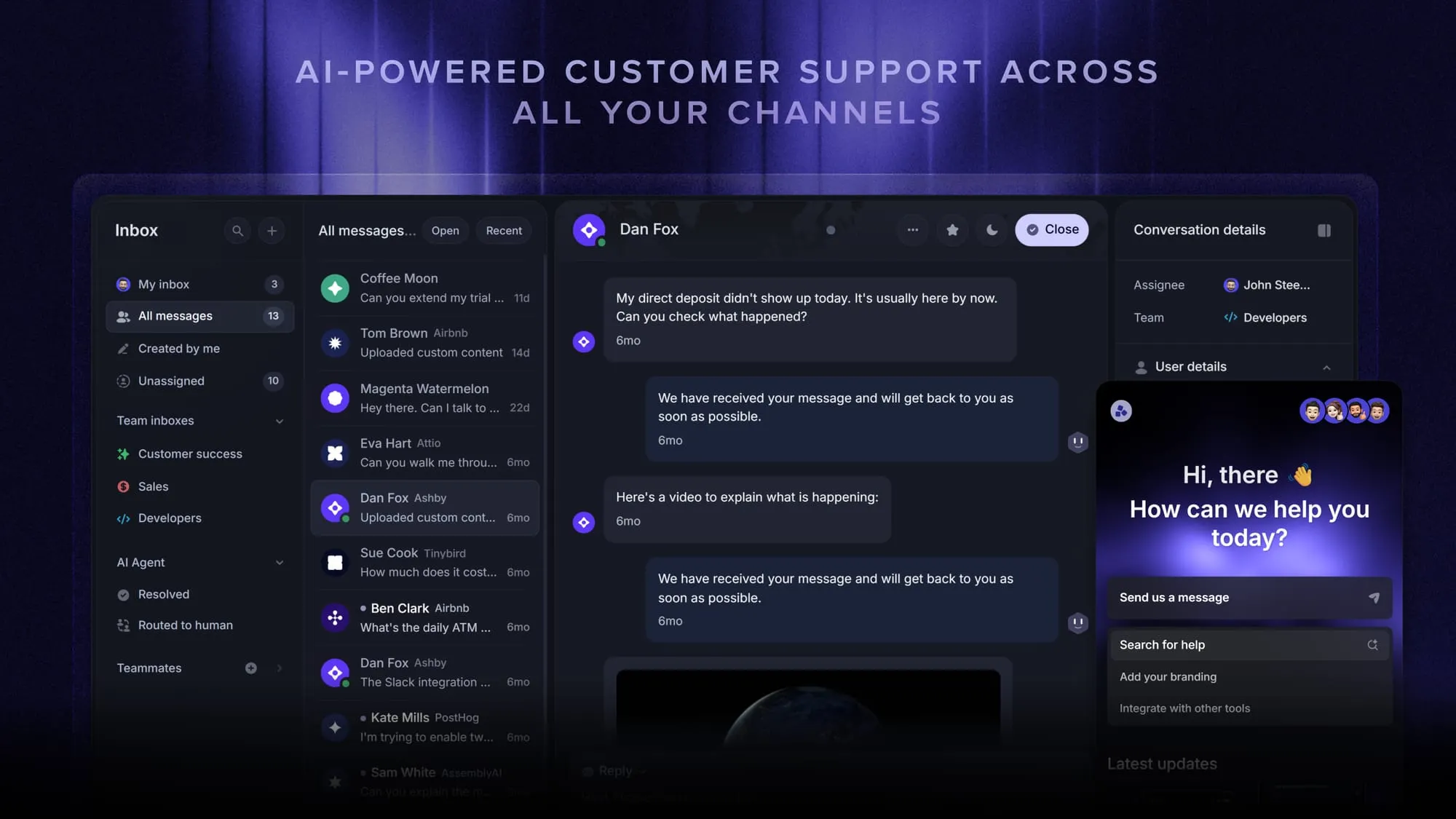
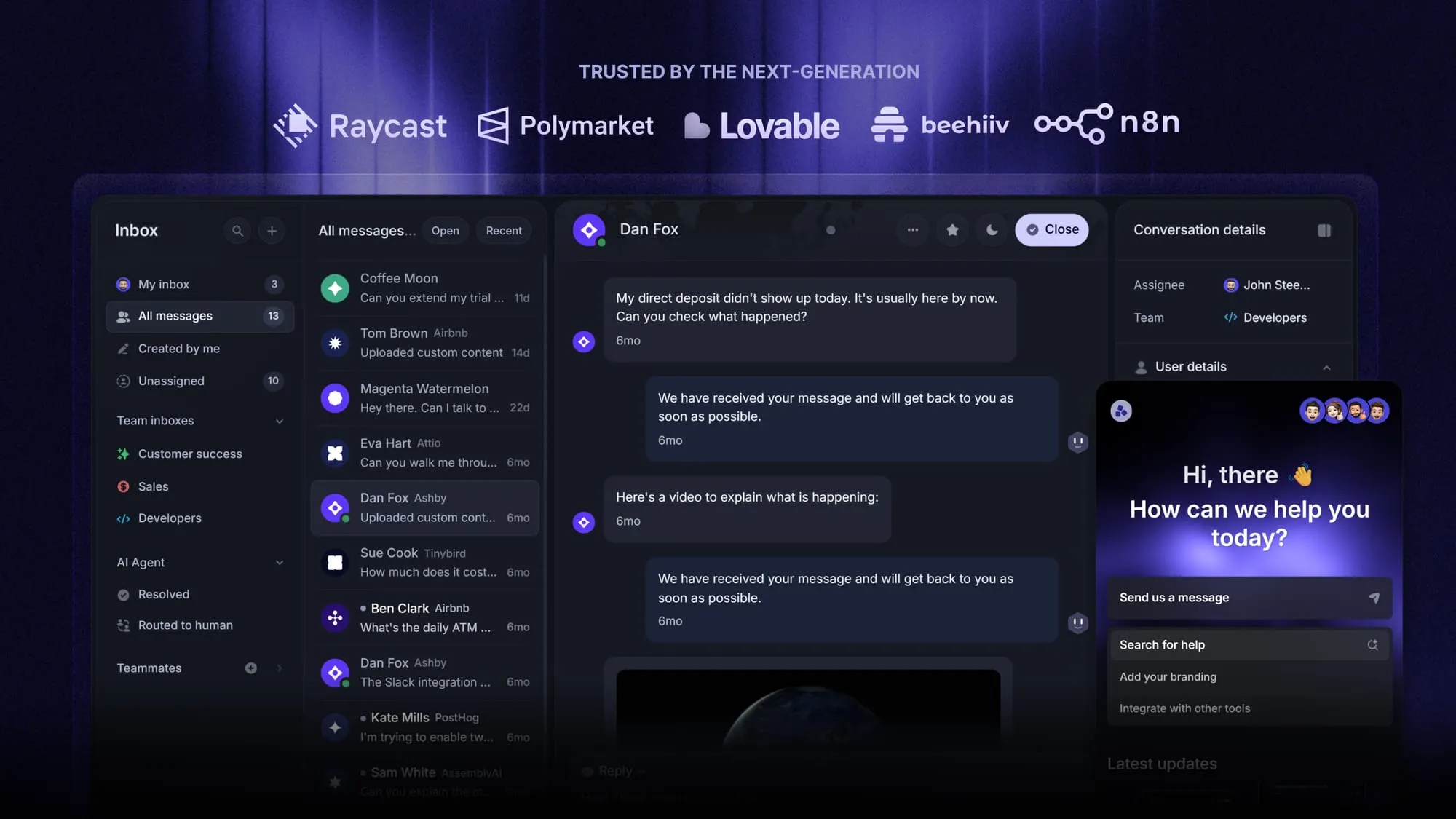
Featurebase is a modern AI customer support platform for product-led SaaS. It combines AI-powered support, help center, and feedback management into a single platform for startups that want all their customer-facing tools in one place. Featurebase is loved by thousands of support teams from companies like Lovable, Raycast, and n8n. 💫
Top features:
- Omnichannel inbox – Manage live chat, email, and Slack conversations from one AI-powered view
- Fibi AI Agent - Resolve customer issues on autopilot & run custom actions like trial extensions and refunds
- Help center with AI search – Provide instant, multilingual self-serve answers
- Workflows & automations – Auto-assign tickets, route conversations, collect customer data, and more
- AI Copilot – Help your agents answer customers faster with AI Copilot that uses your internal knowledge
- Multi-brand support – Manage multiple Help Centers and Live chats from a single workspace
- Automatic AI translations – Automatically translate all messages and help articles to your customers native language
- Service Level Agreements – Track SLAs to make sure your team responds to customers on time, every time
- Mobile app – Respond to customers, receive notifications, and unblock users on the go
- Feedback & roadmap tools – Collect feature requests and close the loop with updates
- Product updates – Publish release notes with a changelog page, in-app widget, and emails
- Integrations – Connects with Slack, Linear, Jira, HubSpot, and more
Pricing: Free plan available with unlimited conversations. Paid plans start at $29/seat/month with $0.29 per AI resolution.
Featurebase covers all the basic support features that legacy platforms do, but with a much more modern approach. It comes with AI automations, a mobile app, and multiple channels (email, live chat, Slack, etc.).
Conclusion
Salesforce and ServiceNow are both excellent at what they were built for. Salesforce owns the customer relationship and the CRM record, while ServiceNow owns internal workflows and the ITSM record. They are converging, but for now you should pick based on the problem in front of you: customer-facing work points to Salesforce, internal operations point to ServiceNow, and the largest enterprises often run both.
If you stepped into this comparison because you just need a modern way to support customers and collect their feedback, Featurebase gives you AI-powered support, a help center, and feedback management in one place without the enterprise price tag or the months-long rollout. 💫
There is a free plan and onboarding takes minutes, so there is no downside to trying it. 👇
Automate your support with the fastest AI-enhanced Inbox today
FAQs
Neither is universally better. Salesforce is the stronger choice for customer relationship management, sales, and customer service, while ServiceNow is stronger for IT service management and internal workflow automation. The right pick depends on whether your priority is customer-facing work or internal operations.
Yes. Many enterprises run both and connect them through APIs and tools like MuleSoft, so customer data in Salesforce can trigger operational workflows in ServiceNow. It is a common setup for large organizations that need both a CRM and an ITSM platform, though it does add integration cost and complexity.
Both are enterprise-priced, but they bill differently. Salesforce publishes per-user tiers starting at $25/user/month, while ServiceNow uses custom, fulfiller-based quotes that are not public and typically land higher. Total cost for either climbs quickly once you add AI, premium support, and implementation.
It is unlikely in the near term because they lead different markets: ServiceNow dominates ITSM and Salesforce dominates CRM. ServiceNow has entered the CRM space and is growing fast, so it will compete more directly, but unseating Salesforce in its core market is a long road.
Historically no, ServiceNow was an ITSM and workflow platform. That changed when it launched an AI-powered CRM, so it now offers customer relationship management features, though its CRM is newer and less mature than Salesforce's.
Usually not. Both platforms are built for the scale, budget, and complexity of larger enterprises, and they are heavy for a small product-led team. If you mainly need to support customers and collect feedback, a lighter tool like Featurebase delivers that in one place at a fraction of the cost and setup.