Zendesk vs. ServiceNow: Which One Fits Your Team?
Zendesk vs. ServiceNow compared: customer support vs enterprise ITSM, ease of use, customization, pricing, and how to tell which platform fits your team.


On this page
Psst... Looking for a modern & affordable alternative to Zendesk? Check out Featurebase
Searching "Zendesk vs ServiceNow" usually means you're weighing two platforms that, on paper, both "do tickets." In practice, they were built for very different jobs.
Zendesk is a customer support platform. ServiceNow is an enterprise ITSM and workflow engine. The right pick depends less on a feature checklist and more on what you're actually trying to run.
Here's how the two compare on focus, ease of use, customization, integrations, and price - and how to tell which one fits your team. 👇
Key takeaways:
| Criteria | Zendesk | ServiceNow |
|---|---|---|
| Best for | Customer-facing support teams, SMB to mid-market | Large enterprises running IT and cross-department workflows |
| Core focus | Omnichannel customer support and ticketing | Enterprise ITSM, ITOM, HRSD, and workflow automation |
| Ease of use | Fast to adopt, intuitive for agents | Powerful but complex, needs trained admins |
| Setup time | Days to weeks | Weeks to months, often consultant-led |
| ITSM depth | ITIL-aligned, no native CMDB or change management | Full ITSM with incident, problem, change, and CMDB |
| Pricing | Public, per agent ($19–$115+/mo) | Custom quote only, enterprise-scale spend |
What are Zendesk and ServiceNow?
Both platforms manage requests and route work, but they start from opposite ends of the market.
Zendesk
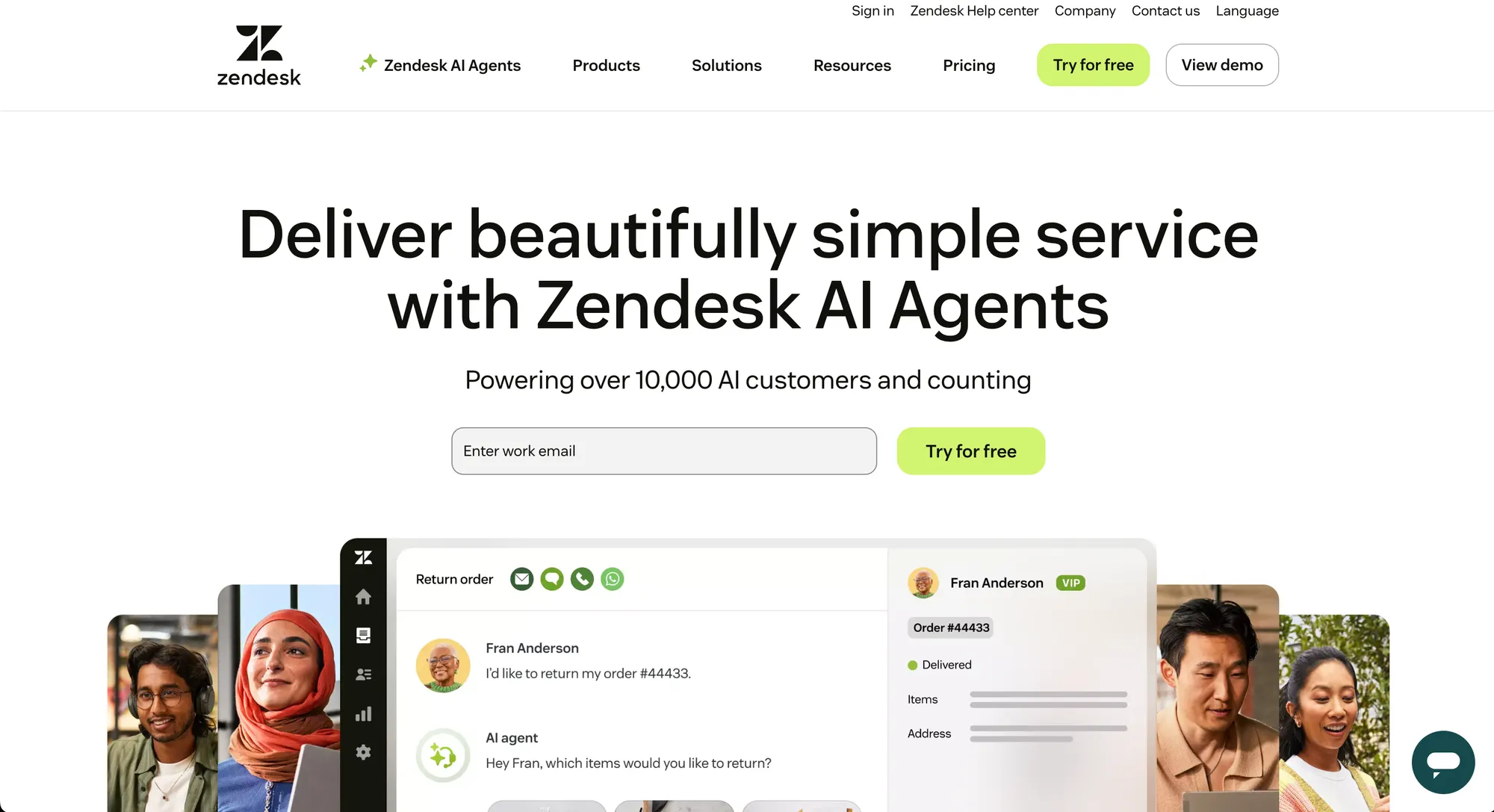
Zendesk is a cloud-based customer support platform built around the ticket. It pulls requests from email, chat, voice, messaging, and social into a single workspace, then layers in automation, a help center, and AI agents to speed up resolution.
Its strengths are the customer-facing basics done well: omnichannel ticketing, macros and triggers, self-service knowledge bases, and reporting focused on resolution time and customer satisfaction. It serves everyone from small teams to large brands, and agents tend to be productive quickly. If you mainly need to answer customers, this is the category Zendesk owns.
ServiceNow

ServiceNow is an enterprise platform built to orchestrate work across an entire organization. Ticketing lives inside a much broader system that covers IT Service Management (ITSM), IT Operations Management (ITOM), HR Service Delivery (HRSD), and Customer Service Management (CSM).
It's designed for organizations that need a single system of record, where resolving a ticket can mean managing risk, enforcing approvals, and tracking downstream impact. ServiceNow brings deep, ITIL-aligned processes - the kind of ticketing system that ties incidents to infrastructure, change management, and a configuration management database (CMDB). That depth is the point, and it's also where the complexity starts.
Customer support vs enterprise ITSM: The core difference
This is the distinction that decides everything else. The two tools optimize for different outcomes:
- Zendesk optimizes customer conversations: it's built to resolve inbound requests fast and keep satisfaction high. It's ITIL-aligned, but it isn't a full native ITSM suite - there's no built-in CMDB or formal change management.
- ServiceNow orchestrates enterprise processes: it's built to enforce governance, consistency, and auditability across IT and other departments. Customer support is one module among many, not the whole product.
Put simply, Zendesk is a help desk that does customer support extremely well, while ServiceNow is a service desk and workflow platform where support is inseparable from IT operations. Large support orgs often compare enterprise help desk platforms more broadly. Most of the "which is better" debate is really a question of which of those two jobs you're hiring for.
Ease of use and setup
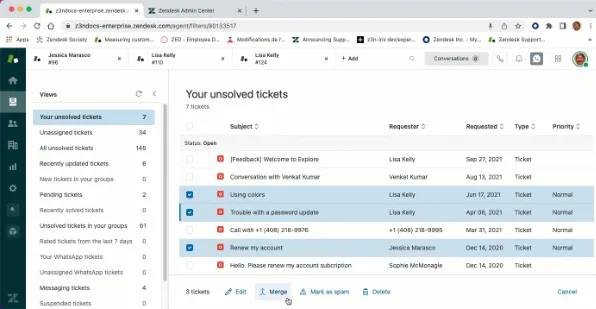
Zendesk is built for speed of adoption. Configuration exists, but it rarely blocks agents from getting to work, and teams usually go live in days or weeks without outside help.
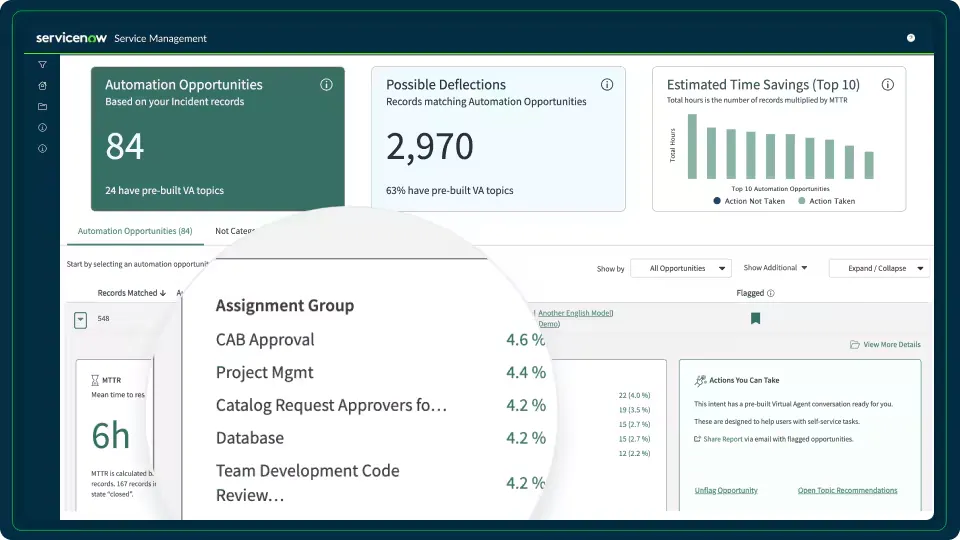
ServiceNow prioritizes precision over speed. It typically requires dedicated admins, technical expertise, and ongoing maintenance, and implementations often run for weeks or months with help from certified partners. ServiceNow users on G2 frequently flag a steep learning curve and admin overhead, and note that documentation can lag behind the platform's frequent releases. Zendesk reviewers are happier on day-one usability, though they mention that advanced workflows still come with their own learning curve.
If your underlying need is modern customer support rather than enterprise IT governance, both tools can feel like overkill. Featurebase is a newer option here: a modern support and ticketing platform with an omnichannel inbox and the Fibi AI Agent that teams can roll out without a consultant-led implementation.
Winner: Zendesk (for ease of use) For customer support teams, Zendesk is far quicker to adopt. ServiceNow's complexity is justified only when you genuinely need enterprise-grade IT workflows.
Customization and automation
ServiceNow is the more powerful platform here. It lets you build custom workflows, forms, and business rules, and its automation extends into AI and predictive intelligence across departments. The trade-off shows up in G2 feedback: customization is often slow and developer-heavy, with long build times and the risk of drifting away from out-of-the-box processes.
Zendesk takes a lighter approach. Automation through triggers, macros, and routing removes repetitive work, and most teams can configure it themselves. The recurring complaint on G2 is that customization has limits - ticket forms, user roles, and workflows can feel constrained once your needs get advanced, and you can read more in this breakdown of Zendesk's pros and cons.
Winner: ServiceNow (for depth) ServiceNow wins on raw customization and automation power. Zendesk wins if you'd rather configure things yourself without a development team.
Integrations
Both platforms integrate widely, but in different styles.
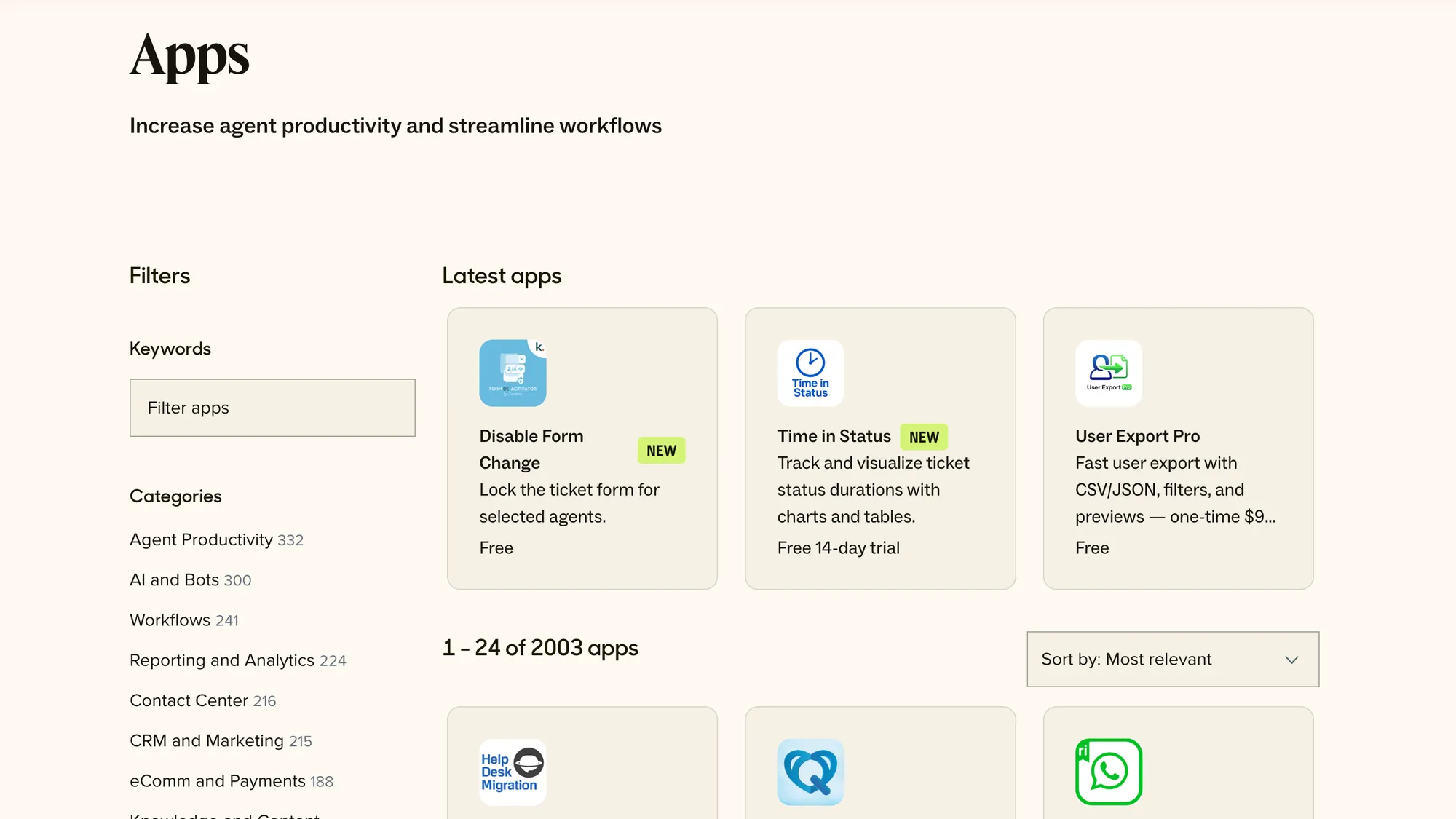
Zendesk leans on its marketplace of 1,800+ prebuilt apps and integrations, plus APIs for custom connections. It's an easy way to plug support into CRMs, chat tools, and analytics platforms, though some integrations are gated to higher tiers.
ServiceNow connects through its Integration Hub and enterprise-grade connectors to systems like Salesforce, Workday, Jira, and Oracle. These integrations are powerful and built for cross-functional operations, but complex tech stacks often need middleware and professional services to wire everything together.
Winner: Tie Zendesk is simpler to connect for support stacks. ServiceNow is built for deep, enterprise-wide integration, and your environment decides which matters more.
Pricing compared
This is where the two platforms diverge most sharply.
Zendesk publishes per-agent pricing, billed annually:
- Support Team: $19/agent/month for core email and ticketing essentials.
- Suite Team: $55/agent/month, adding AI agents, omnichannel messaging, live chat, and a knowledge base.
- Suite Professional: $115/agent/month, with skills-based routing, advanced AI, and more reporting.
- Suite Enterprise: custom-quoted, for advanced security, governance, and Copilot.
AI agents are billed per automated resolution on top of the seat price, and Zendesk reviewers note that costs climb quickly once you add agents, AI, and premium add-ons.
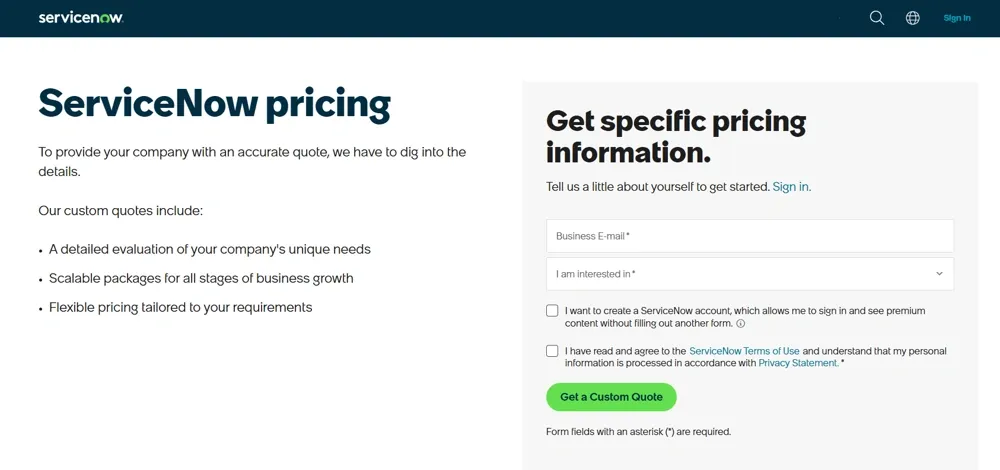
ServiceNow doesn't publish pricing at all - every deal is a custom quote shaped by which modules you license, how many users you have, and your contract term. According to Vendr's buyer data, the median ServiceNow buyer pays roughly $124,000 per year, with deals ranging from about $44,000 to nearly $694,000. On top of that, implementation and professional services often add a significant share of the annual software spend. You can see a fuller breakdown in our ServiceNow pricing guide.
For teams that just want predictable, transparent support pricing, Featurebase publishes its plans openly: a free plan with unlimited conversations, with paid plans starting at $29/seat/month plus $0.29 per AI resolution.
Winner: Zendesk (for transparency and SMB budgets) Zendesk's public per-agent pricing is dramatically easier to budget than ServiceNow's enterprise contracts - though large IT organizations may still find ServiceNow's scope worth the spend.
Which one should you choose?
There's no universal winner, only the right fit for the job in front of you.
Choose Zendesk if you:
- Run customer-facing support and want fast adoption with minimal setup
- Need omnichannel ticketing, live chat, and a help center in one place
- Want transparent, per-agent pricing you can predict
- Are an SMB or mid-market team without a dedicated platform admin
Choose ServiceNow if you:
- Manage IT operations across a large enterprise or many departments
- Need deep, ITIL-aligned ITSM with CMDB, change, and asset management
- Have the budget and in-house expertise for a full implementation
- Want a single system of record spanning IT, HR, and beyond
If neither feels right - ServiceNow too heavy, Zendesk getting pricey - it's worth looking at modern Zendesk alternatives and ServiceNow alternatives built for product-led teams.
Looking beyond Zendesk and ServiceNow: Try Featurebase
If your real need is customer support rather than enterprise IT governance, both Zendesk and ServiceNow can be more than you want to manage or pay for.
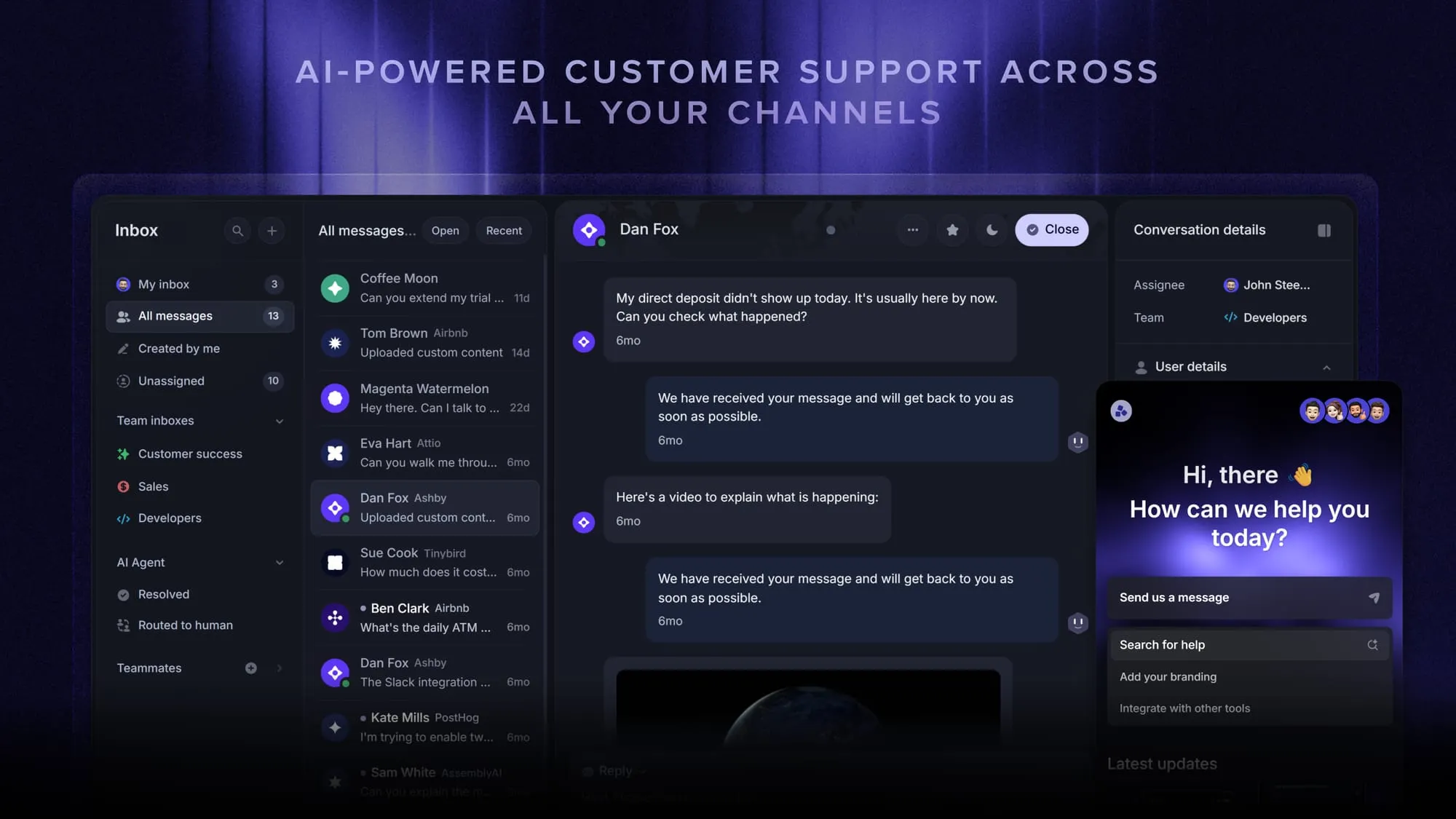
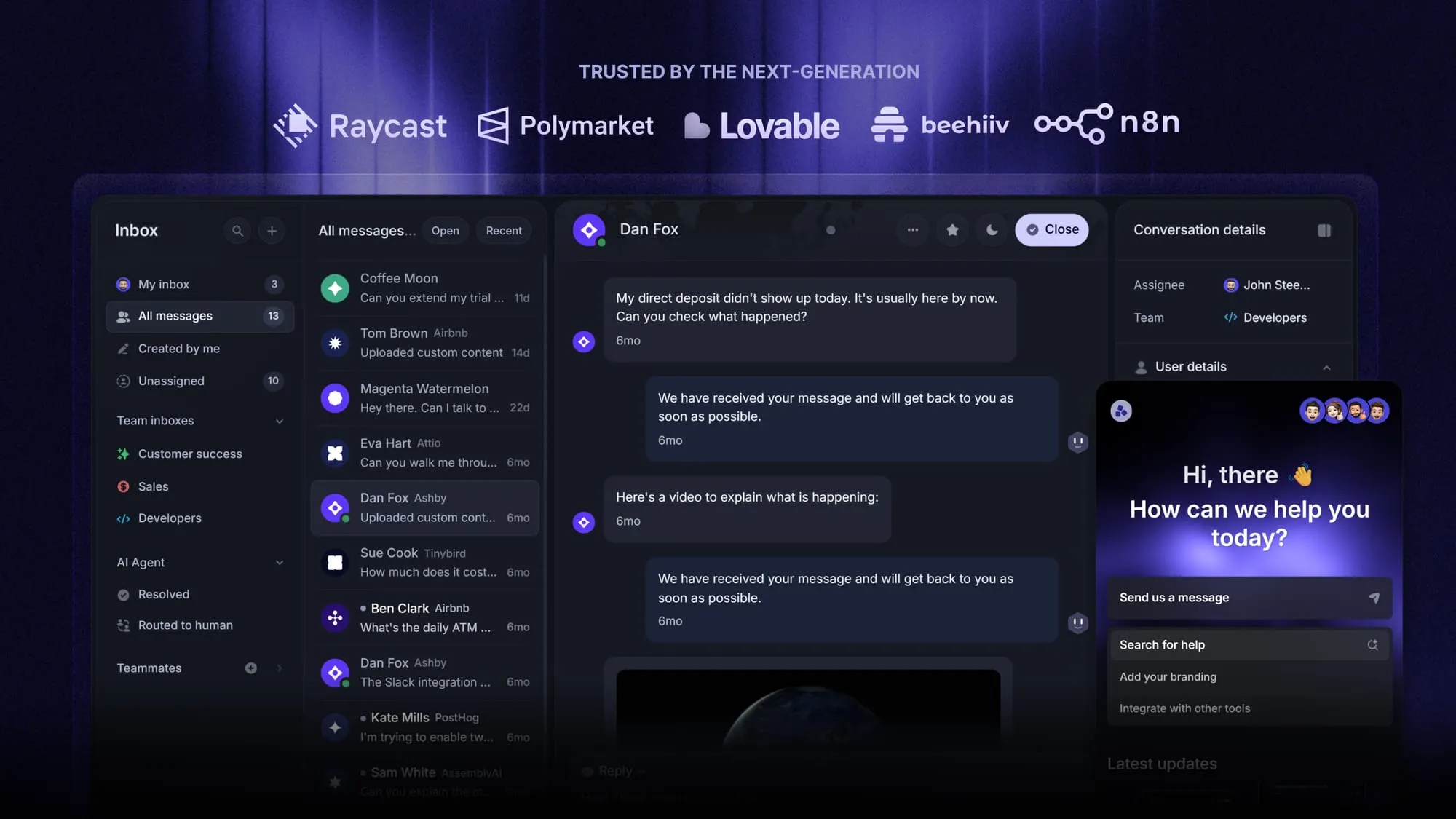
Featurebase is a modern AI customer support platform for product-led SaaS. It combines AI-powered support, help center, and feedback management into a single platform for startups that want all their customer-facing tools in one place. Featurebase is loved by thousands of support teams from companies like Lovable, Raycast, and n8n. 💫
Top features:
- Omnichannel inbox – Manage live chat, email, and Slack conversations from one AI-powered view
- Fibi AI Agent - Resolve customer issues on autopilot & run custom actions like trial extensions and refunds
- Help center with AI search – Provide instant, multilingual self-serve answers
- Workflows & automations – Auto-assign tickets, route conversations, collect customer data, and more
- AI Copilot – Help your agents answer customers faster with AI Copilot that uses your internal knowledge
- Multi-brand support – Manage multiple Help Centers and Live chats from a single workspace
- Automatic AI translations – Automatically translate all messages and help articles to your customers native language
- Service Level Agreements – Track SLAs to make sure your team responds to customers on time, every time
- Mobile app – Respond to customers, receive notifications, and unblock users on the go
- Feedback & roadmap tools – Collect feature requests and close the loop with updates
- Product updates – Publish release notes with a changelog page, in-app widget, and emails
- Integrations – Connects with Slack, Linear, Jira, HubSpot, and more
Pricing: Free plan available with unlimited conversations. Paid plans start at $29/seat/month with $0.29 per AI resolution.
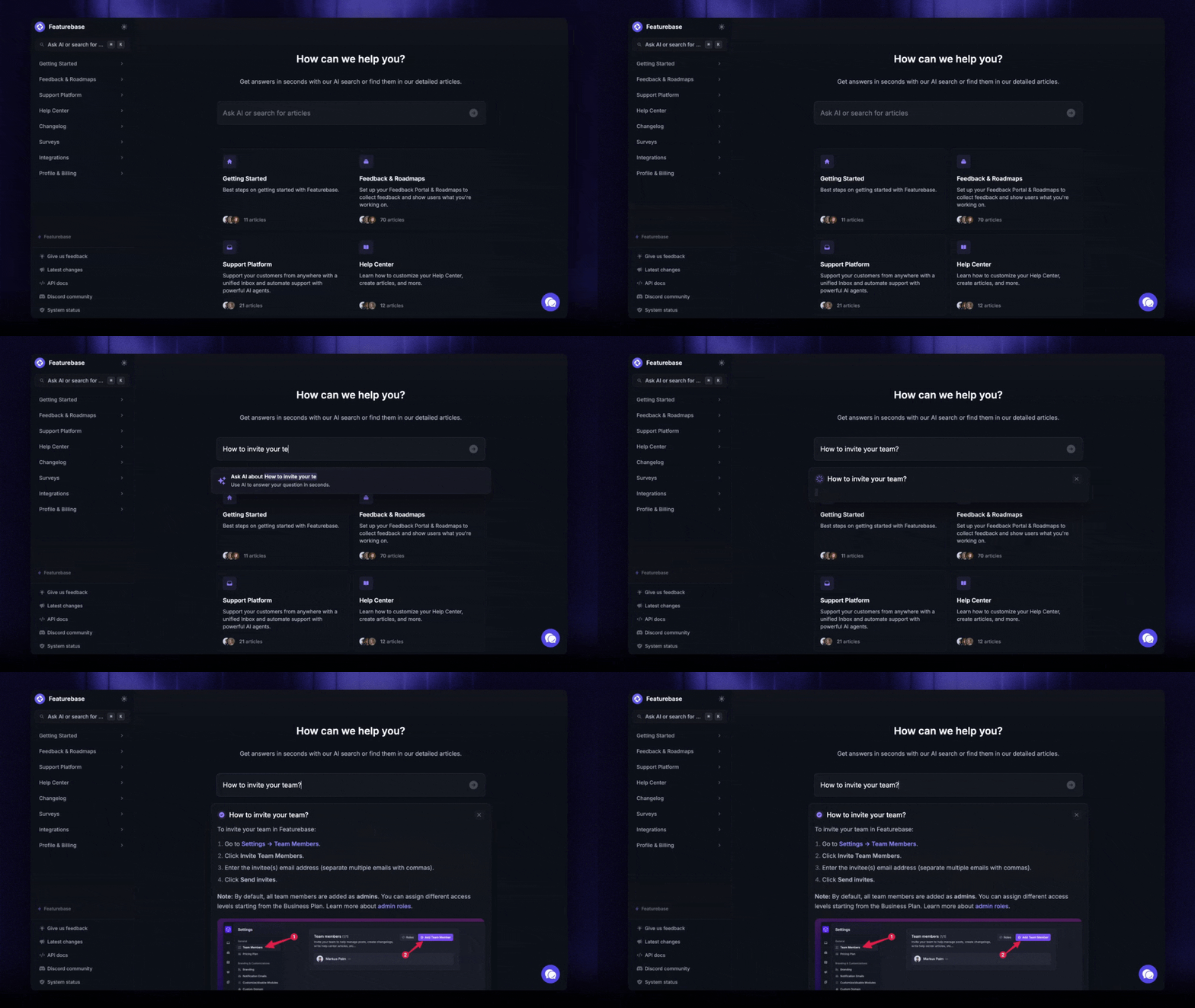
Featurebase covers all the basic support features that legacy platforms do, but with a much more modern approach. It comes with AI automations, a mobile app, and multiple channels (email, live chat, Slack, etc.).
Conclusion
The Zendesk vs ServiceNow decision isn't about which platform is more powerful - it's about which job you're hiring for. Zendesk keeps customer support teams fast, affordable, and focused on resolution. ServiceNow keeps large enterprises governed, customized, and aligned across IT and beyond.
If you're a support or product team that wants modern, AI-powered customer support without enterprise complexity or custom-quote pricing, Featurebase brings your support inbox, help center, and feedback tools together in one place - with transparent pricing and onboarding measured in minutes, not months.
There's a free plan with unlimited conversations, so there's no downside to trying it. 👇
Automate your support with the fastest AI-enhanced Inbox today
Frequently asked questions
Zendesk is a customer support platform built around omnichannel ticketing, live chat, and a help center. ServiceNow is an enterprise platform built for IT service management and cross-department workflows, with ticketing as one piece of a much larger system. Zendesk optimizes customer conversations, while ServiceNow orchestrates enterprise processes.
Neither is universally better - it depends on the job. ServiceNow is the stronger choice for large organizations that need deep, ITIL-aligned ITSM with governance and a single system of record. Zendesk is better for teams whose primary need is fast, affordable customer support.
Yes. The two can be connected so customer-facing Zendesk support works alongside ServiceNow's IT workflows. This is usually done through third-party integration tools like Zapier or Workato, or via custom API connections, letting tickets and data flow between the platforms.
Zendesk publishes per-agent pricing, starting around $19/agent/month and rising to $115+/agent/month, plus per-resolution AI fees. ServiceNow doesn't publish pricing - deals are custom-quoted, and buyer data shows a median spend of roughly $124,000 per year before implementation costs. ServiceNow sits firmly in enterprise-budget territory.
Not in the full sense. Zendesk is ITIL-aligned and offers an employee-service and internal IT use case, but it lacks native ITSM building blocks like a configuration management database (CMDB) and formal change management. For deep IT operations, a dedicated ITSM platform like ServiceNow is the better fit.
For most small businesses, Zendesk is the more practical choice - it's affordable, quick to set up, and focused on customer support rather than enterprise IT. ServiceNow's cost and complexity are hard to justify at that scale. Smaller teams should also weigh modern alternatives like Featurebase, which offers AI support, a help center, and feedback tools on a free plan.