AI Chatbot vs ChatGPT: What's the Difference?
ChatGPT and AI chatbots get used like the same thing, but they aren't. Here's what actually separates them, and how to pick the right one for your business.


On this page
Is ChatGPT just a fancy chatbot, or something completely different? It's a fair question, because the two terms get thrown around like they mean the same thing.
Pick the wrong one, and you either burn budget or frustrate the customers you were trying to help.
So let's clear it up. In this guide, I'll break down what actually separates an AI chatbot from ChatGPT, and help you choose the right one for your business. 👇
Key takeaways:
- ChatGPT is a product, "AI chatbot" is a category: ChatGPT is one specific generative chatbot built by OpenAI. "AI chatbot" describes any bot that uses AI to understand and respond to messages.
- There are 3 types of chatbots: rule-based, AI-powered, and generative. They sit on a spectrum that runs from rigid scripts to flexible, human-like conversation.
- ChatGPT is built for open-ended chat, purpose-built chatbots are built for a job: ChatGPT is a general assistant. A business chatbot is trained on your data, follows your workflows, and plugs into your systems.
- For customer-facing use, guardrails matter as much as intelligence: raw ChatGPT has no access to your data and can hallucinate, so a controlled chatbot usually wins for support.
- If you want an AI chatbot built for customer support, trained on your own help center with human handoff, Featurebase✨ does exactly that with the Fibi AI Agent.
- Many teams run both: ChatGPT for internal drafting and brainstorming, a dedicated AI chatbot for customers.
What is an AI chatbot?
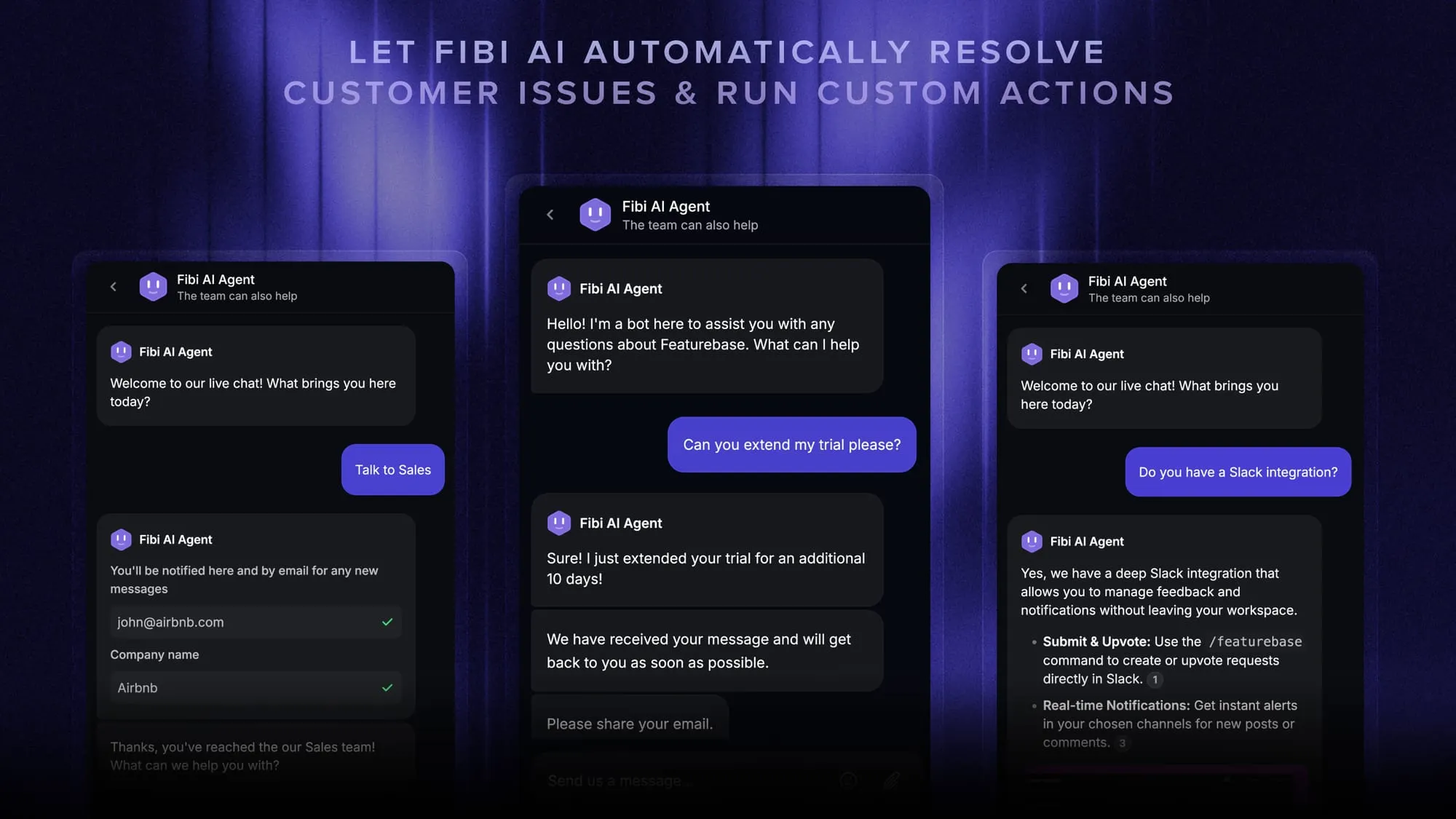
An AI chatbot is any software you can chat with in natural language that uses artificial intelligence to understand what you mean and respond.
Instead of following a fixed "press 1 for support" script, it interprets intent (what you actually want) and generates a helpful, context-aware reply. That's the whole category, not a single product.
AI chatbots show up almost everywhere:
- On websites, guiding visitors and answering questions
- Inside apps, helping users onboard or find features
- On WhatsApp and social channels, handling queries at scale
- Within internal tools, helping employees with HR, IT, or knowledge lookups
The key thing to remember: "AI chatbot" is a role and a use case, not a brand.
The 3 main types of chatbots
Not every chatbot is equally smart. They fall into 3 broad types, and knowing which is which makes the whole ChatGPT comparison click into place:
- Rule-based chatbots: The simplest kind. They match your input against predefined rules, like a flowchart running as a conversation. Great for FAQs and password resets, useless the moment you phrase something they didn't expect.
- AI-powered chatbots: These use machine learning to understand intent rather than match keywords. They know "I want a refund" and "how do I send this back?" mean the same thing, and they improve with more data. But they can only answer within the domain they were trained on.
- Generative chatbots: These use large language models to generate responses from scratch instead of retrieving stored answers. They handle open-ended, novel questions across almost any topic. ChatGPT lives here.
Once you see this spectrum, the confusion mostly disappears. ChatGPT isn't the opposite of a chatbot. It's the most advanced type of one.
What is ChatGPT?
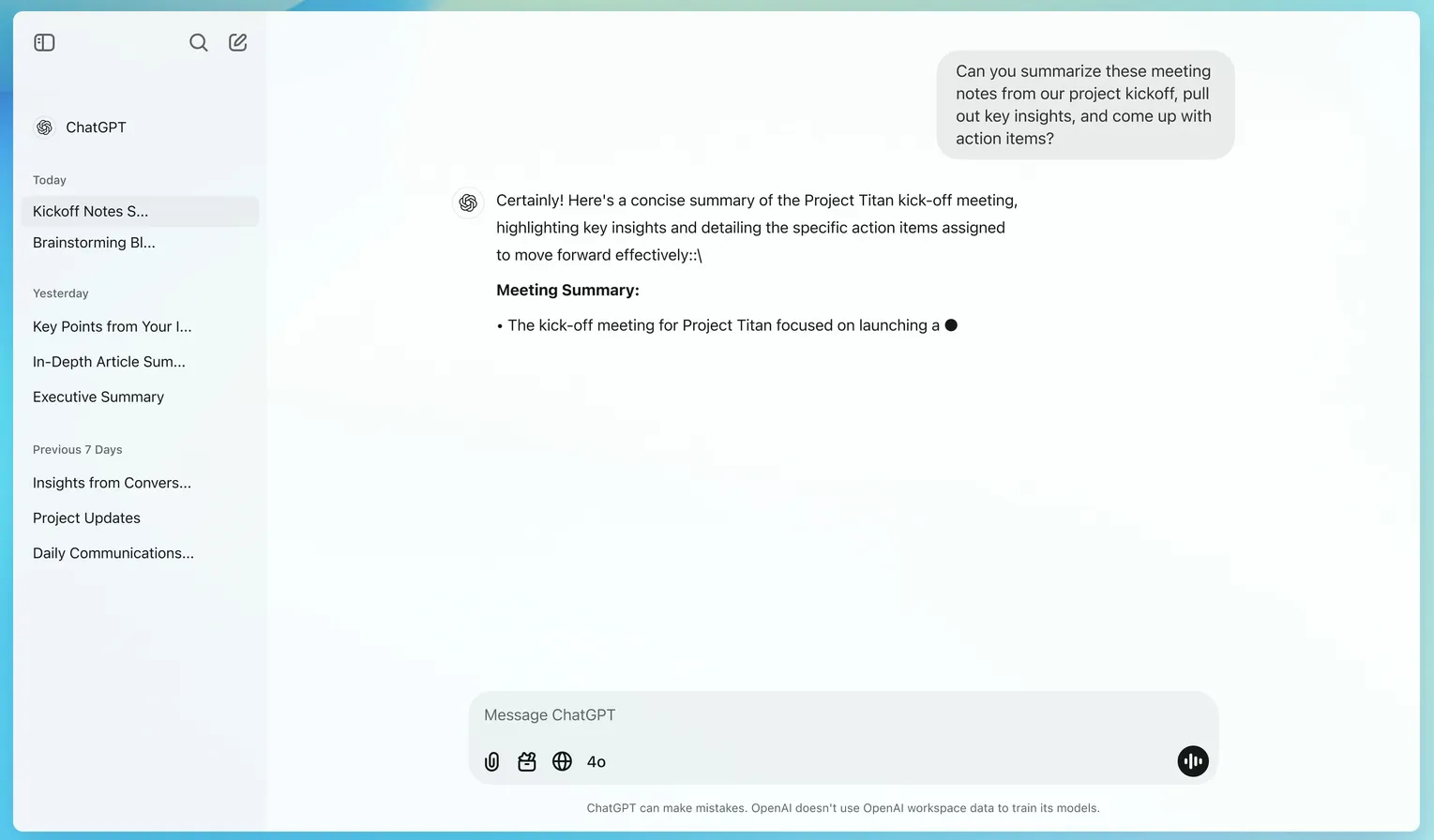
ChatGPT is a generative AI chatbot built by OpenAI. The name spells out what it does: Generative (it creates text), Pre-trained (it learned from huge amounts of data before you ever talked to it), and Transformer (the neural network architecture behind it).
Unlike a rule-based bot, ChatGPT generates original responses instead of picking from a script. It can discuss code, recipes, travel, or homework, remembers the flow of a conversation, and works across many languages.
Think of it like comparing categories. An AI chatbot is any car. ChatGPT is one specific make and model, a famous, very capable one that anyone can drive through a website, app, or API.
That versatility is its biggest strength. It's also why it isn't automatically the right fit for a business that needs a bot to do one specific job really well.
AI chatbot vs ChatGPT: the key differences
Since ChatGPT is an AI chatbot, the more useful comparison is between raw ChatGPT and a purpose-built AI chatbot you'd deploy for your business. Here's how they stack up:
| Purpose-built AI chatbot | ChatGPT | |
|---|---|---|
| Purpose | Built for a specific job (support, sales, onboarding) | General-purpose assistant |
| Knowledge source | Your help docs, product data, and past conversations | Broad public data it was trained on |
| Flexibility | Focused, but deep within its domain | Extremely broad across topics |
| Consistency | Follows your workflows and guardrails | Flexible, but can drift or hallucinate |
| Integrations | Connects to your CRM, help desk, and databases | Mostly a standalone interface |
| Data control | Configurable privacy and data policies | Runs on OpenAI's infrastructure |
| Cost model | Per seat or per resolution | Subscription or API usage |
A few of these differences matter more than the rest:
- Scope: ChatGPT is a Swiss Army knife. A purpose-built chatbot is a scalpel. If your customers keep asking the same 50 questions, you want the scalpel.
- Customization and control: A dedicated AI chatbot can carry your brand voice, follow your policies, escalate to a human, and collect emails or create tickets. You decide what it can and can't say. ChatGPT lets you set instructions, but it stays an OpenAI product rather than your branded assistant.
- Data and privacy: A business chatbot can be configured so data stays under your governance. ChatGPT only knows what you feed it in a session or through the API, so exposing your own knowledge takes extra plumbing.
None of this makes ChatGPT "worse." It just means the two are built for different jobs.
Which one should you choose?
The honest answer is that it depends on the job. Here's a simple way to frame it.
When ChatGPT is the right tool
ChatGPT shines when you want a flexible, general-purpose thinking partner. Reach for it when you need to:
- Brainstorm content, campaigns, or ideas
- Draft emails, posts, or documents
- Summarize articles, PDFs, or long threads
- Learn a new topic or debug some code
For individuals, small teams, and creators, ChatGPT is a superpowered assistant. The catch is that it's built for you, the operator, not for your customers.
When a purpose-built AI chatbot wins
The moment real customers are on the other end, the calculation changes. Customers ask about your product, your pricing, and their order, and raw ChatGPT knows none of that. It can also confidently invent answers, which is a serious risk in support.
This is where a purpose-built AI chatbot earns its place. It's trained on your own help center and past conversations, follows guardrails, and hands off to a human when it's out of its depth.
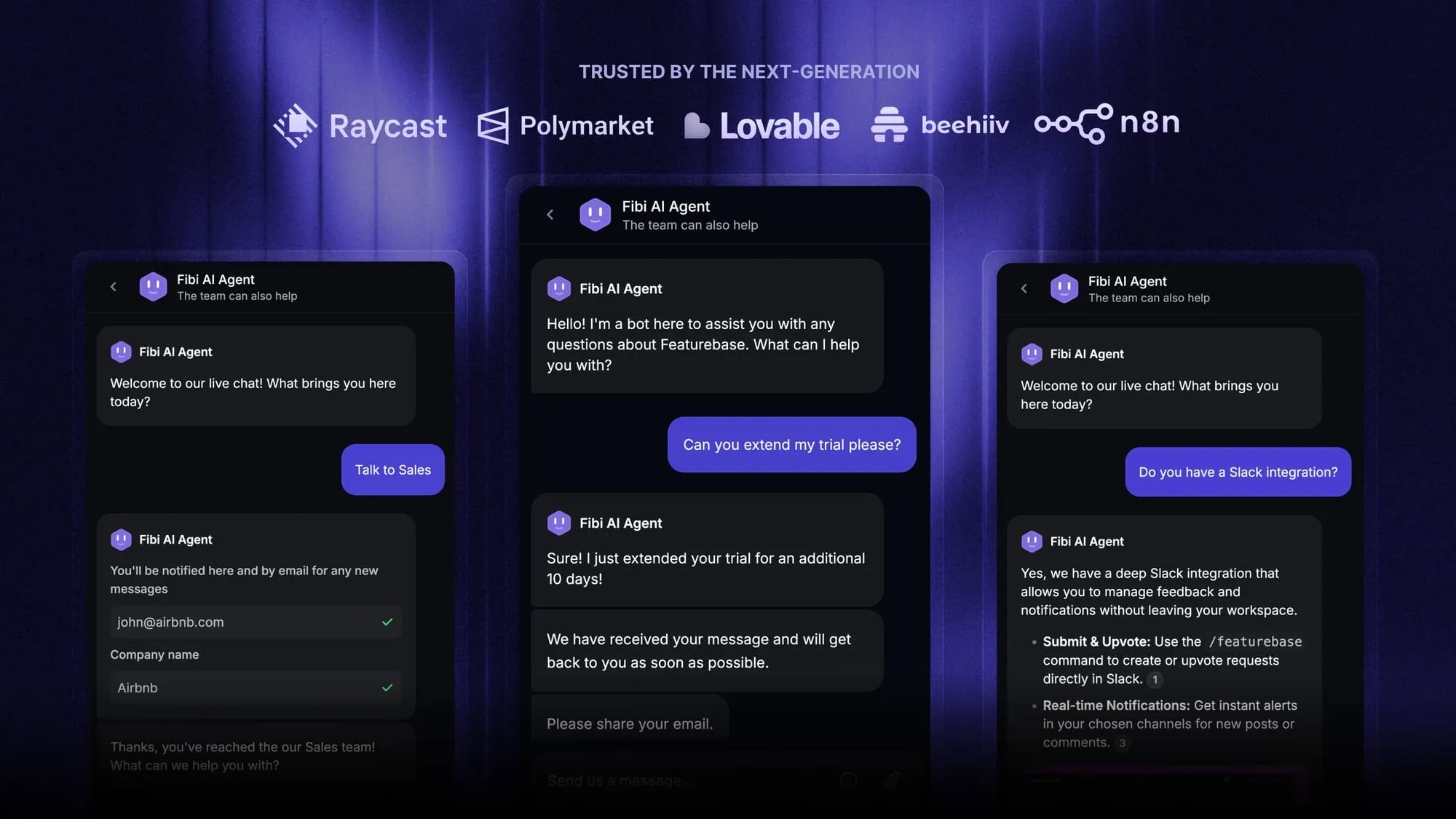
For example, Featurebase's Fibi AI Agent answers customer questions using your own help articles and product data, and can run real actions like extending a trial or issuing a refund, then pass the conversation to a person when needed. That's the difference between a general chatbot and one built for a job.
The customer trust angle matters too. Gartner found that 64% of customers would prefer that companies didn't use AI in their customer service, and 53% would consider switching to a competitor over it. The takeaway isn't "avoid AI." It's that a controlled, accurate bot that connects people to a human when needed beats an unpredictable one every time.
Can you use both? The hybrid approach
For most businesses, this isn't an either-or decision. The strongest setups are hybrid.
Interest is already there. Gartner reports that 85% of customer service leaders will explore or pilot customer-facing conversational GenAI in 2025. The winners aren't the ones that bolt on raw ChatGPT. They're the ones that combine approaches thoughtfully.
In practice, that looks like:
- ChatGPT for internal work: drafting, brainstorming, and problem-solving for your team
- A purpose-built AI chatbot for customers: trained on your data, with guardrails and human handoff
- Humans for the hard stuff: complex, emotional, or high-stakes issues where a person needs to step in
The best deployments match the technology to the task. Simple, repetitive questions go to the bot. Nuanced conversations go to a person. And generative AI sits underneath it all, doing the heavy lifting without being left unsupervised.
What a support-ready AI chatbot actually needs
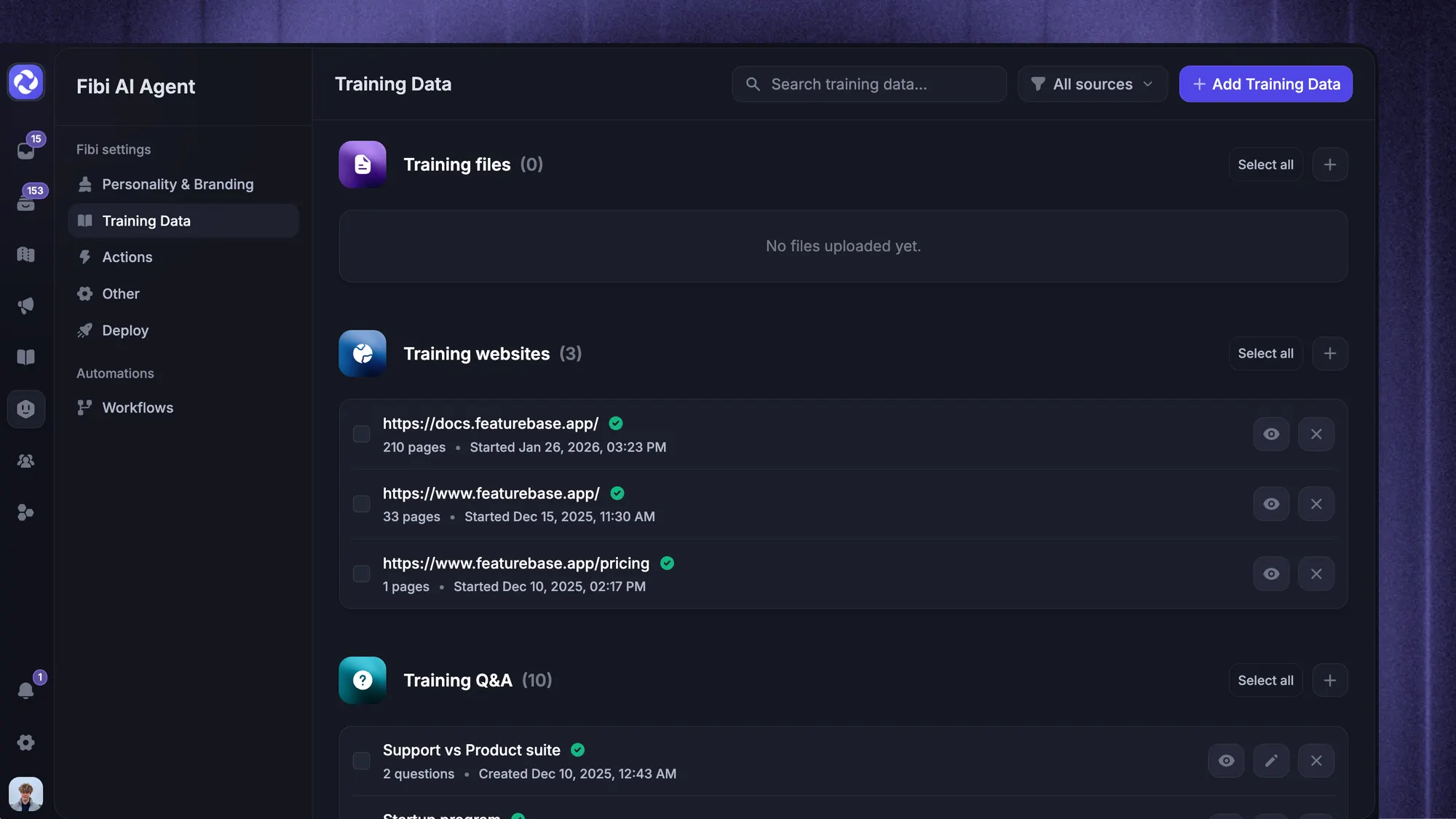
If the takeaway is "use a purpose-built chatbot for customers, not raw ChatGPT," the fair next question is: what makes one purpose-built? It comes down to 4 things ChatGPT doesn't do on its own.
- It answers from your knowledge, not the internet: The bot should pull from your help center, product data, and past tickets, so every answer reflects what's actually true about your product today, not a plausible-sounding guess.
- It can take action, not just talk: Resolving "extend my trial" or "refund this charge" means doing the thing, not explaining how. A support chatbot needs to run real actions inside your systems.
- It hands off cleanly: When the bot hits something it can't handle, it should pass the conversation, and its full context, to a human without making the customer start over.
- It stays on-brand and in-bounds: Your policies, tone, and guardrails apply, so it won't wander off or promise something you don't offer.
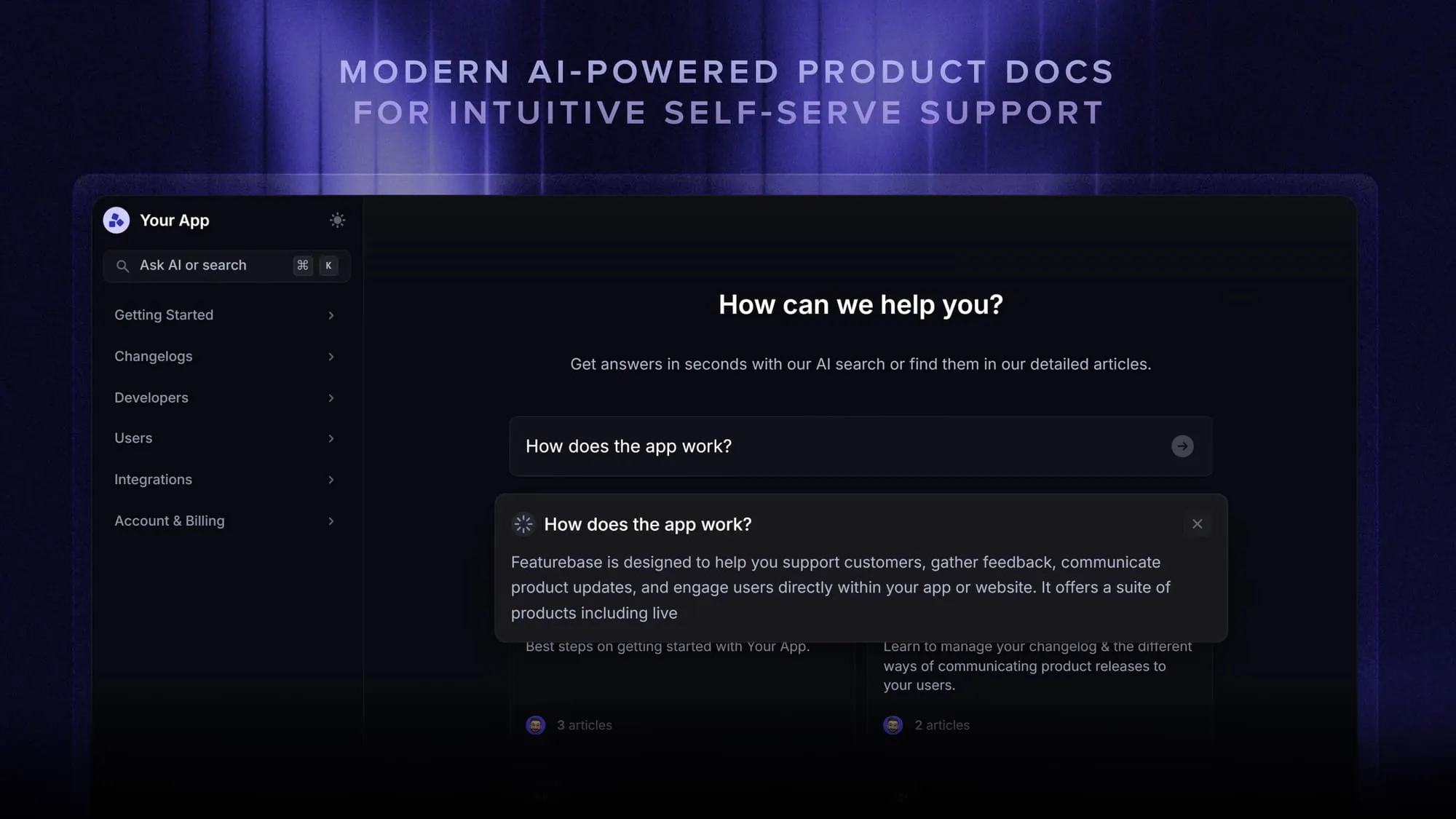
This is the gap Featurebase is built to fill. Its Fibi AI Agent answers from your own help center and product data, runs actions like trial extensions and refunds, and hands off to a person the moment a conversation needs one, all from a single inbox that also holds your live chat, email, and Slack conversations.
The point isn't that you need Featurebase specifically. It's that "AI chatbot for support" means something more specific than "ChatGPT with your logo on it," and that difference is exactly what you're evaluating when you choose.
Conclusion
The whole "AI chatbot vs ChatGPT" debate comes down to one realization: ChatGPT is one type of AI chatbot, not the alternative to one. ChatGPT is unbeatable as a general assistant, but for customer-facing work you want a chatbot trained on your data, wrapped in guardrails, and connected to a human.
Featurebase is a modern AI customer support platform that gives you exactly that. The Fibi AI Agent answers from your own help center and product data, runs real actions like refunds and trial extensions, and hands off to your team when a human is needed, all from one omnichannel inbox.
It comes with a Free plan and unlimited conversations, and the onboarding is quick with no credit card required, so there's no downside to trying it. 👇
Automate your support with the fastest AI-enhanced Inbox today
FAQs
Yes. ChatGPT is a generative AI chatbot, the most advanced of the 3 chatbot types. The confusion comes from treating "chatbot" as only the old rule-based kind. ChatGPT is one specific chatbot product, while "AI chatbot" is the whole category it belongs to.
Neither is universally better, because they're built for different jobs. ChatGPT is the better choice for open-ended, general tasks like writing and brainstorming. A purpose-built AI chatbot is better for a specific business job like customer support, where it needs your data, guardrails, and integrations.
Not in its raw form. The consumer version of ChatGPT doesn't know your product, pricing, or customer history, and it can hallucinate answers. However, chatbots that are built on the same GPT technology and trained on your own data can absolutely handle customer service, which is what most modern support chatbots now do.
They use different cost models, so it depends on volume. ChatGPT charges a monthly subscription for individuals or usage-based fees through its API. Business AI chatbots typically charge per seat or per resolution, which can be more predictable and cost-effective at support scale.
Not the standard consumer app. To make GPT answer from your knowledge, you need to connect your data through the API using a retrieval setup, or use a platform that handles it for you. Featurebase, for instance, lets its AI agent answer directly from your help center and product data without any of that engineering work.
Yes, ChatGPT has a free tier that covers most everyday use. Paid plans unlock faster responses, more advanced models, and higher usage limits. For business deployments, costs usually come from API usage rather than the consumer subscription.