Blog Customer ServiceGenerative AI for Customer Service: A Practical Guide
Generative AI for Customer Service: A Practical Guide
Generative AI for customer service explained: what it is, the use cases that actually work, the benefits, and how to roll it out without losing the human touch.


Most customers have rage-typed "agent" into a chatbot that just kept repeating its menu. That era is ending.
Generative AI can now understand a messy question, pull the right answer from your docs, and respond like a human, which is why 85% of customer service leaders are exploring or piloting it.
In this guide, I'll break down what generative AI in customer service actually is, where it works, the benefits, how to roll it out, and the risks to plan for. 👇
Key takeaways:
- Generative AI creates new responses, instead of picking from pre-written scripts like older chatbots. That's what lets it handle messy, real-world questions.
- The proven use cases are practical, not futuristic: self-service answers, agent assist, summarization, knowledge-base upkeep, and real-time translation.
- The biggest wins are productivity and speed. Support agents with an AI assistant resolved 14% more issues per hour in a study of over 5,000 agents.
- It augments agents, it doesn't replace them. The best results come from pairing AI speed with human judgment on complex or emotional cases.
- Accuracy is the thing to get right. Grounding the AI in your own knowledge base and keeping a human in the loop is what stops hallucinations.
- Featurebase✨ brings generative AI support, a help center, and feedback collection into one platform, with a free plan to start.
What is generative AI in customer service?
Generative AI is a type of AI that creates new content - text, summaries, replies - based on patterns it learned from huge amounts of data. In customer service, that means it can read a customer's question, understand the intent behind it, and generate a natural, relevant answer on the fly.
It runs on large language models (LLMs), the same technology behind tools like ChatGPT. Instead of matching a query to a fixed script, it generates a response that fits the specific situation, in the customer's own language and tone.
The practical upshot: it can finally handle the long tail of questions that traditional bots never could.
Generative AI vs traditional customer service AI
The difference comes down to how each one produces an answer:
- Traditional AI (rule-based bots) follows pre-set rules and decision trees. Ask something it wasn't programmed for, and it falls back to "I didn't understand that" or a canned menu.
- Generative AI understands context and writes a fresh response each time. It can interpret a vague question, factor in the customer's history, and reply conversationally.
Here's the classic example. A customer asks a rule-based bot to check their ticket status, and it replies "Please provide your ticket ID." A generative assistant can say: "I found your ticket from two days ago, it's with our tech team and should be resolved tomorrow. I'll let you know the moment it updates." One is transactional. The other feels like service.
6 ways generative AI is used in customer service
The hype around generative AI is loud, but the use cases that actually deliver are refreshingly down-to-earth. Here are the 6 that show up again and again across support teams.
- Self-service answers: A generative AI agent connected to your knowledge base can resolve common questions instantly, 24/7, without routing the customer to a human. Acting as an AI receptionist, it pulls answers from your existing docs rather than forcing customers to read through long help articles themselves.
- Agent assist: While a human handles a conversation, AI suggests responses, surfaces relevant info, and drafts replies in the background. Agents stop searching and start resolving.
- Conversation summarization: AI auto-summarizes long threads and calls, so the next agent (or the customer) gets instant context. This saves serious time on handoffs and escalations.
- Knowledge-base upkeep: Generative AI can spot gaps from incoming ticket trends, draft new help articles, and refresh outdated ones, keeping your self-service content current without a full-time editor.
- Multilingual support: It translates messages and help content in real time, so a small team can serve customers in dozens of languages without hiring for each one.
- Sentiment and quality monitoring: AI reads the tone of conversations to flag frustrated customers and surface coaching moments, helping managers catch problems as they happen.
The pattern across all 6: generative AI handles the repetitive, high-volume work so your team can focus on the conversations that genuinely need a person.
The benefits of generative AI for customer service
So what does this actually buy you? The returns cluster around a few clear areas.
- Higher agent productivity: This is the most-studied benefit. In a landmark study of 5,179 support agents, access to a generative AI assistant increased resolved issues per hour by 14% on average, and by 34% for new and lower-skilled agents. AI effectively spreads the habits of your best people across the whole team.
- Faster, always-on service: Generative AI answers instantly and never sleeps, so customers get help at 2am without waiting in a queue. That alone removes one of the biggest sources of frustration in support.
- Better customer satisfaction: When answers are fast, accurate, and personalized, satisfaction climbs. IBM's research found that mature AI adopters reported a 17% higher CSAT and a 38% lower average inbound call handling time.
- Lower cost to serve: By deflecting repetitive questions to self-service and speeding up the rest, generative AI lets you handle more volume without linearly growing headcount.
The throughline is leverage. You serve more customers, faster, without sacrificing quality, which is exactly the bind most support teams are stuck in.
How to implement generative AI in customer service
Buying an AI tool is easy. Getting real value from it takes a bit of discipline. These are the steps that separate the teams that win from the ones that stall.
Start with one clear use case. Don't try to automate everything at once. Pick a specific, high-volume problem - usually FAQ deflection or agent assist - and prove value there before expanding.
Ground the AI in your own knowledge. A generative model is only as good as the content it draws from. Clean up your help docs, remove duplicates, and make sure the AI answers from your trusted sources, not from its general training data. This is the single biggest lever for accuracy.
Teams exploring genai development services can also use these principles to build AI solutions around specific business needs and trusted data.
An AI image editor can follow a similar approach by using clear, well-organized reference material to produce more consistent results.
Keep a human in the loop. Build a workflow where agents can review, edit, or approve AI responses before they reach customers, especially early on. AI handles speed, people handle judgment.
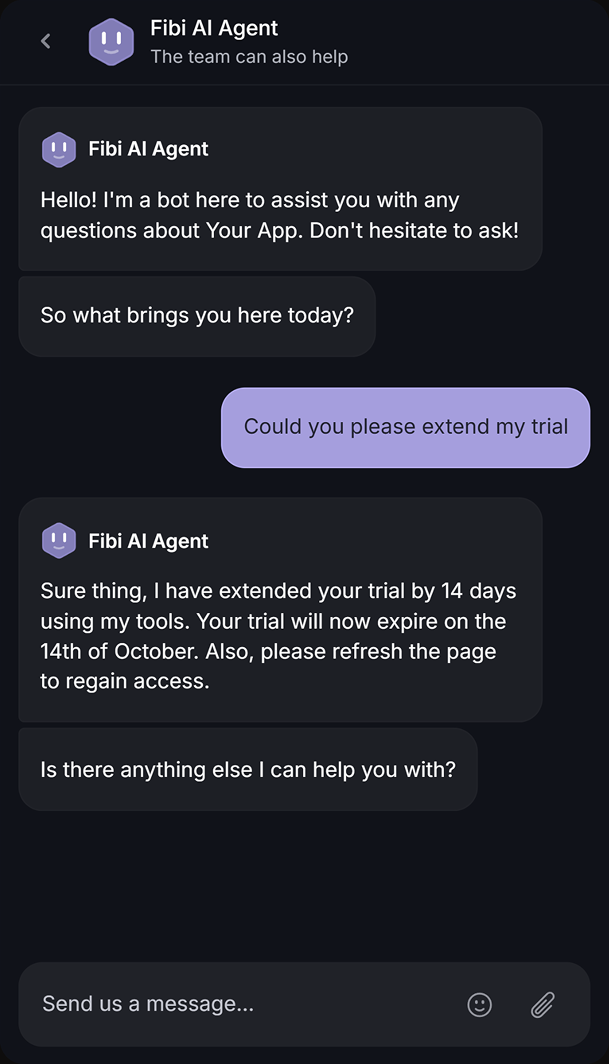
Connect it to your systems. Answers are useful, but actions are better. The real payoff comes when your AI can do things on the customer's behalf, like checking an order or processing a refund. For example, Featurebase's Fibi AI Agent resolves issues on autopilot and runs custom actions like trial extensions and refunds, not just answering questions but actually closing them out.
Measure and iterate. Track the metrics that matter (more on those below), review AI outputs for tone and accuracy, and feed real conversations back into the system to improve it over time.
Risks and limitations to plan for
Generative AI is powerful, but it isn't magic, and pretending otherwise is how teams get burned. A few risks deserve real attention:
- Hallucinations: LLMs can sound confident while being wrong. Without grounding in your own content and a review process, the AI can invent answers that mislead customers and damage trust.
- Accuracy and compliance: In regulated industries, a wrong answer isn't just embarrassing, it's a liability. You need governance over what data the AI uses and how its outputs are checked.
- Losing the human touch: Customers can tell when they're being handled by a robotic, scripted system. Over-automating sensitive or emotional issues backfires. Some conversations should always reach a person.
- Data quality and bias: AI trained on messy or biased data produces messy or biased responses. Clean inputs and regular audits aren't optional.
None of these are reasons to avoid generative AI. They're reasons to deploy it thoughtfully, with guardrails, instead of flipping a switch and hoping for the best.
Where Featurebase fits in
Most of the principles above (ground the AI in your own knowledge, keep a human in the loop, connect it to your systems) are easier when your support tools live in one place instead of stitched across separate products.
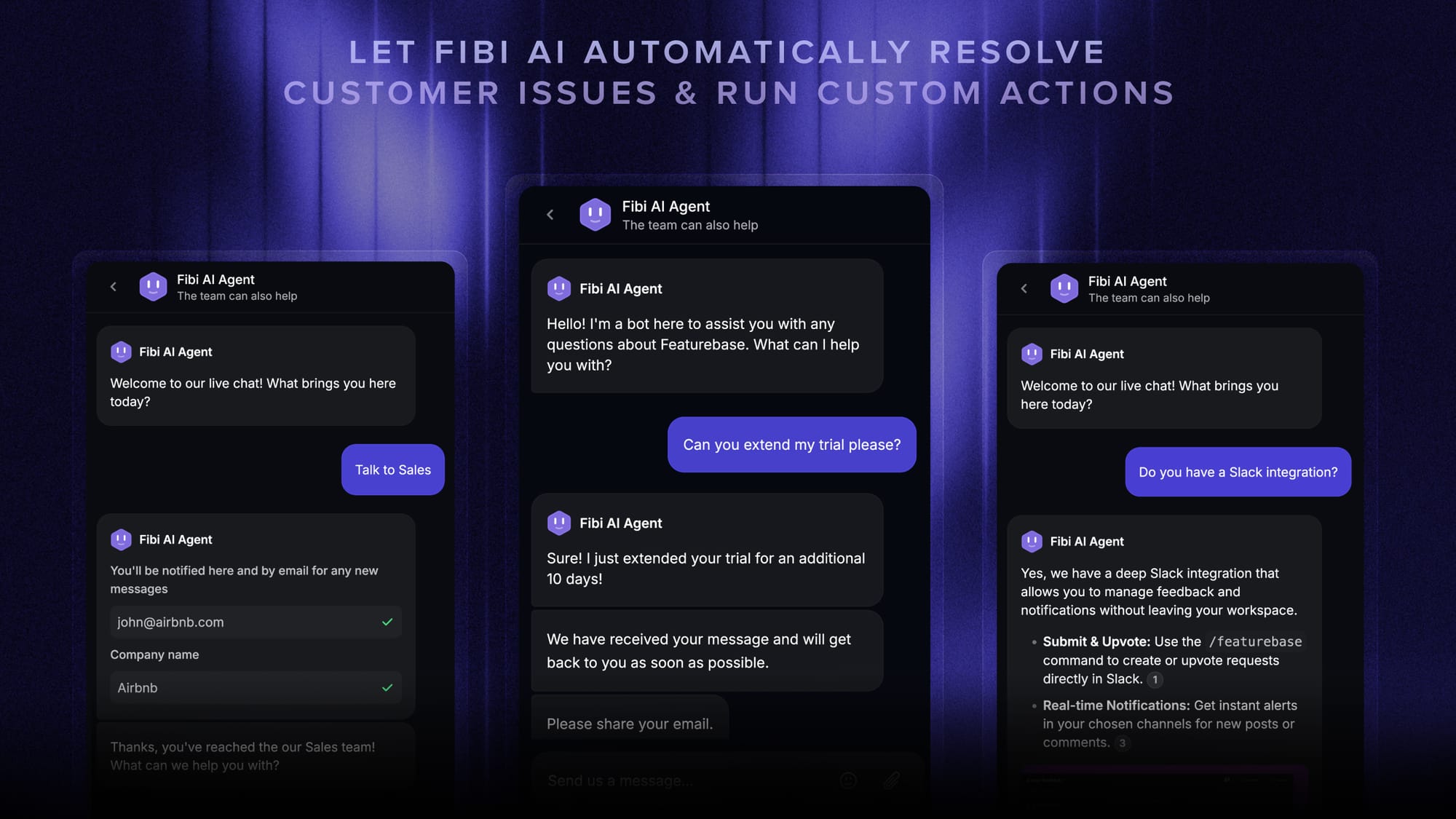
That's the approach behind Featurebase, our support platform. The AI answers from your own help center rather than guessing, its Fibi agent can take actions like trial extensions and refunds instead of only replying, and agents keep an AI Copilot alongside them for the conversations that still need a person. Translations, workflows, and feedback collection sit in the same workspace. In practice that makes it function as AI support software that grounds every answer in your own help center.
It has a free plan with unlimited conversations, so it's straightforward to test the ideas in this guide on your own support volume before committing.
Conclusion
Generative AI has moved past the hype and into the daily reality of customer service. Used well, it resolves more questions faster, makes your agents more productive, and frees your team to focus on the conversations that actually need a human. Used carelessly, it hallucinates and frustrates. The difference is grounding it in your own knowledge and keeping people in the loop.
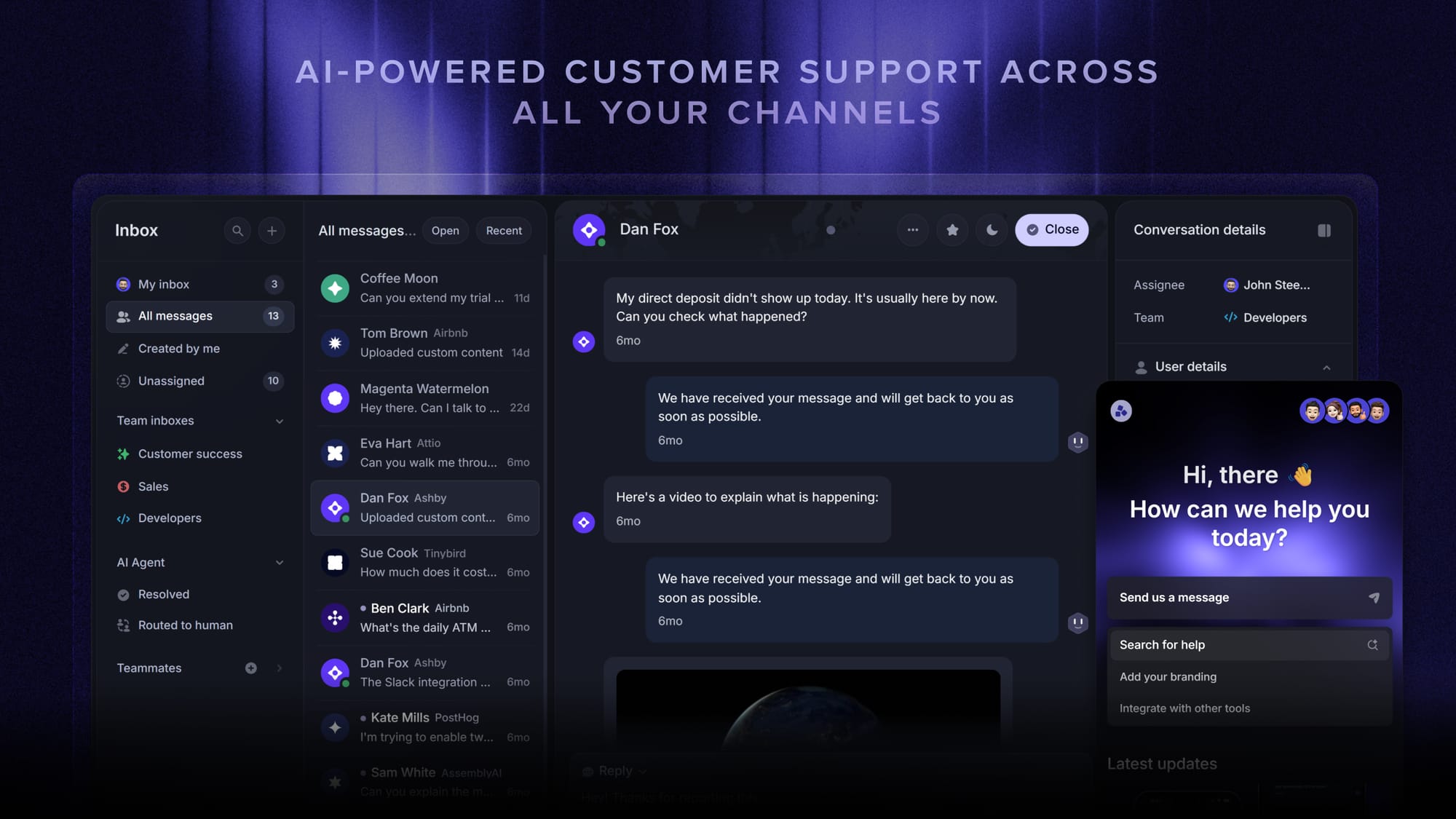
Featurebase is a modern AI customer support platform that combines an omnichannel inbox, an AI agent, a help center, and feedback tools in one place - so you can automate the repetitive work and still give customers a real, human experience when it matters.
It comes with a Free plan with unlimited conversations, and the onboarding is quick, so there's no downside to trying it. 👇
✨ Automate your support with the fastest AI-enhanced Inbox today →
FAQs
Will generative AI replace human customer service agents?
No, and the evidence points the other way. Generative AI is best at handling repetitive, high-volume questions, which frees human agents to focus on complex, emotional, or high-stakes conversations where judgment and empathy matter. Most teams use it to augment agents, not replace them, and roles often shift toward overseeing and improving the AI.
What's the difference between generative AI and conversational AI?
Conversational AI is the broader category of any technology that can hold a dialogue, including older rule-based chatbots. Generative AI is the engine that can power a much smarter version of it, creating original responses instead of picking from scripted ones. In short, generative AI makes conversational AI feel genuinely human rather than robotic.
How do you keep generative AI customer service responses accurate and compliant?
The key is grounding the AI in your own trusted knowledge base, so it answers from your verified content rather than guessing. Pair that with a human review step for sensitive cases, and run regular audits to catch hallucinations, tone issues, or compliance gaps. Clean, well-maintained source content does most of the heavy lifting here.
How do you measure the ROI of generative AI in customer service?
Track a handful of core metrics: ticket deflection rate (share of issues the AI resolves), average handle time, first contact resolution, CSAT, and cost per contact. Compare AI-assisted workflows against your old baseline to isolate the impact. The clearest signals are usually faster resolutions and more volume handled without adding headcount.
How much does generative AI customer service software cost?
Pricing varies widely, from per-seat subscriptions to usage-based pricing charged per AI resolution, and many tools layer the two. Some platforms offer a free tier to start. Featurebase, for example, has a free plan with unlimited conversations, with paid plans from $29 per seat per month plus $0.29 per AI resolution.
Can generative AI reduce agent burnout?
Yes. By taking repetitive questions, drafting replies, and summarizing long threads, generative AI removes a lot of the grind that wears agents down. That lets them spend more time on meaningful, complex work, which tends to improve both focus and job satisfaction.