Blog Customer FeedbackCustomer Experience Optimization: A Practical Guide
Customer Experience Optimization: A Practical Guide
Customer experience optimization is how you turn scattered customer interactions into a loyal, growing customer base. Here's a practical, closed-loop process to do it.


Customers no longer judge you on your product alone. They judge you on every interaction they have with your brand, and a single broken moment is often enough to send them to a competitor.
That's what customer experience optimization is built to prevent. It's the ongoing work of improving how customers experience your brand, and it has quietly become the biggest differentiator most companies have left.
In this guide, I'll break down what customer experience optimization actually involves, why it matters, and a step-by-step process you can start using right away. 👇
Key takeaways:
- Customer experience optimization (CXO) is continuous, not a project: it's the ongoing practice of improving every interaction a customer has with your brand across all touchpoints.
- It's a growth lever, not a feel-good initiative: better experiences drive retention, higher lifetime value, and pricing power, while one bad experience can lose a customer for good.
- Feedback is the engine: the companies that optimize best collect customer feedback constantly, act on it, and close the loop so customers know they were heard.
- You can't optimize what you don't measure: track a mix of sentiment, behavioral, operational, and revenue metrics to know whether your efforts are working.
- Featurebase✨ brings feedback collection, surveys, roadmaps, and product updates into one platform so you can run the whole feedback loop in one place, free to start.
- Most programs fail for predictable reasons: treating CXO as one-off, over-automating, and working from disconnected data are the usual culprits.
What is customer experience optimization?
Customer experience optimization (CXO) is the ongoing process of improving how customers interact with and perceive your brand across every touchpoint. That includes your website, your app, your support channels, your emails, and everything after the sale.
The traditional customer service model is reactive. It solves problems once they surface. CXO is proactive: it anticipates what customers need and removes friction before satisfaction takes a hit.
The goal is simple to state and hard to do. Deliver positive, consistent, and personalized experiences everywhere a customer meets your brand, and keep improving them over time.
CXO vs. customer service, UX, and CX management
These terms get used interchangeably, but they describe different things:
- Customer service is one department: the team that helps customers when they reach out. It's a part of the experience, not the whole thing.
- User experience (UX) is about the usability of a specific product or interface: how easy your app is to navigate, for example.
- Customer experience management (CXM) is the practice of managing customer relationships and interactions across the journey.
- Customer experience optimization (CXO) is the continuous improvement layer on top of all of it. It uses data and feedback to make every one of those interactions better over time.
The distinction that matters most is between CXM and CXO. Management keeps the experience running. Optimization keeps making it better.
Why customer experience optimization matters
Customer expectations keep rising, and patience keeps shrinking. According to Zendesk's 2025 CX Trends Report, 63% of consumers say they would switch to a competitor after just one bad experience, a figure that grew 9% year-on-year.
That cuts both ways. If a single bad experience can lose a customer, a consistently good one can keep them for years and turn them into an advocate.
The business case is straightforward. Better experiences reduce churn, increase customer lifetime value, and lower acquisition costs through word of mouth. As products become more commoditized and markets get more crowded, the experience is often the only thing left to compete on.
It also compounds. A customer who has a great experience buys more, refers others, and forgives the occasional slip. That loyalty is far cheaper to maintain than it is to win a new customer from scratch.
How to optimize the customer experience step by step
Optimizing CX can feel overwhelming, but it breaks down into a repeatable loop. Work through these 6 steps, then start again, because the process is never truly finished.
Map and audit the customer journey
Start by mapping the full lifecycle of a customer, from first awareness through onboarding, active use, and renewal. Tools like session recordings, funnel analytics, heatmaps, and customer interviews help you see where people get confused or drop off.
The point is to find the moments that matter most, the ones that make or break how a customer feels, and design them intentionally. Audit what's working too, not just what's broken, so you can double down on it.
Centralize and analyze customer data
You can't improve an experience you can't see clearly. Pull behavioral, transactional, and sentiment data into one place so you get a 360-degree view of each customer instead of scattered fragments.
A customer data platform or a well-integrated CRM lets you unify this data and segment customers by behavior, plan, or need. That segmentation is what makes the next step possible.
Personalize across every touchpoint
Once you understand your customers, use what you know to tailor their experience. That means relevant product recommendations, targeted messaging, and support agents who can see a customer's full history before they respond.
Personalization is no longer a nice-to-have. McKinsey's Next in Personalization report found that 71% of consumers expect companies to deliver personalized interactions, and 76% get frustrated when it doesn't happen. Meeting that expectation is table stakes.
Connect your channels into one experience
Customers move between your app, your website, email, social, and phone without thinking about it, and they expect the experience to follow them. A conversation that starts in live chat should carry its context into an email reply, so nobody has to repeat themselves.
This is where omnichannel consistency earns its keep. Salesforce's State of the Connected Customer research found that 75% of customers expect consistent experiences across channels. Disjointed handoffs between channels and teams are one of the fastest ways to erode trust.
Close the customer feedback loop
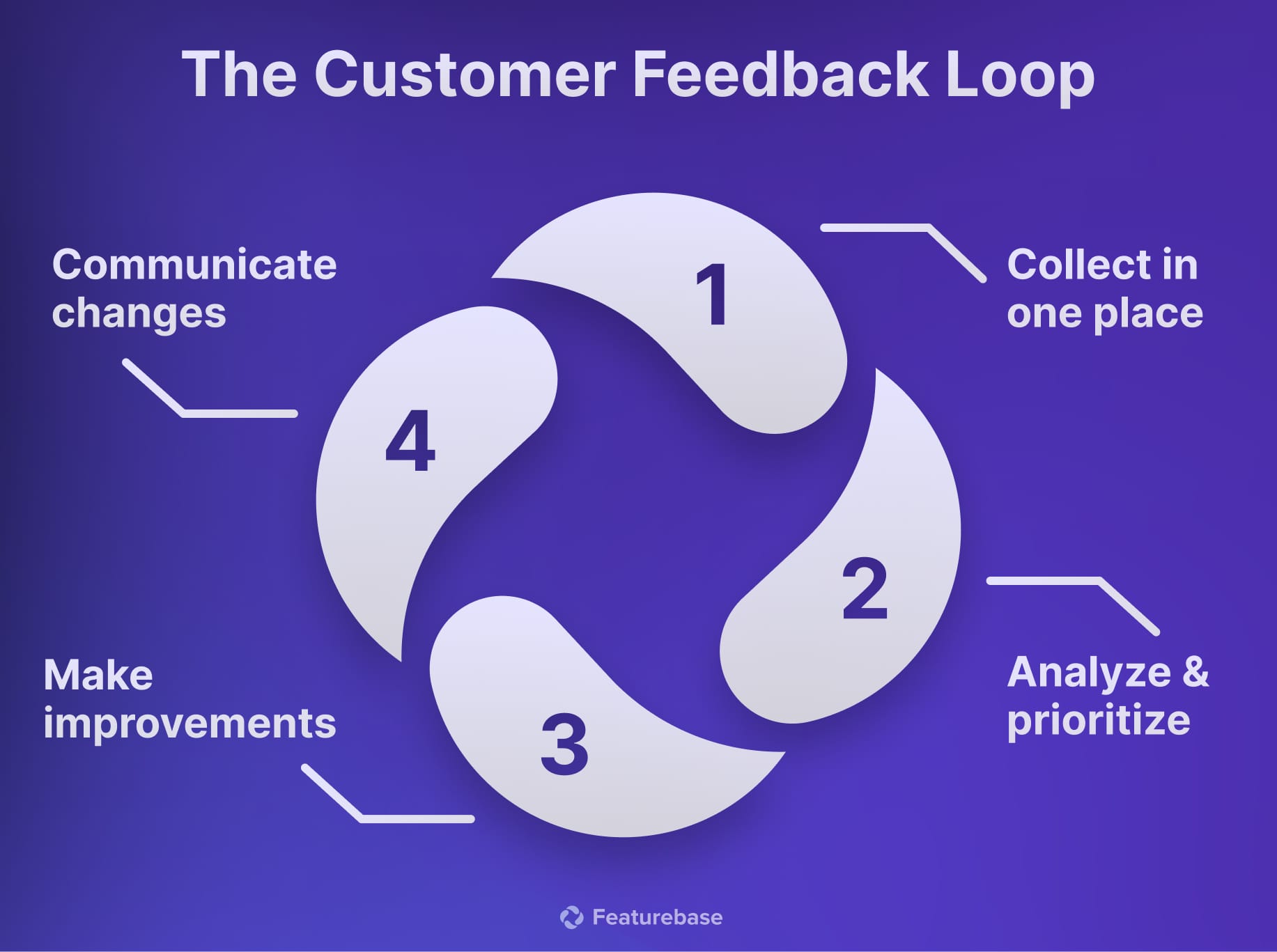
Feedback is the fuel for everything else. Run voice-of-customer programs like post-interaction surveys, in-product feedback, and NPS campaigns, then route what you learn to the teams who can act on it.
The step most companies skip is the last one: telling customers what you did with their input. When someone requests a feature or reports a problem, following up to say it's fixed is what turns a complaint into loyalty.
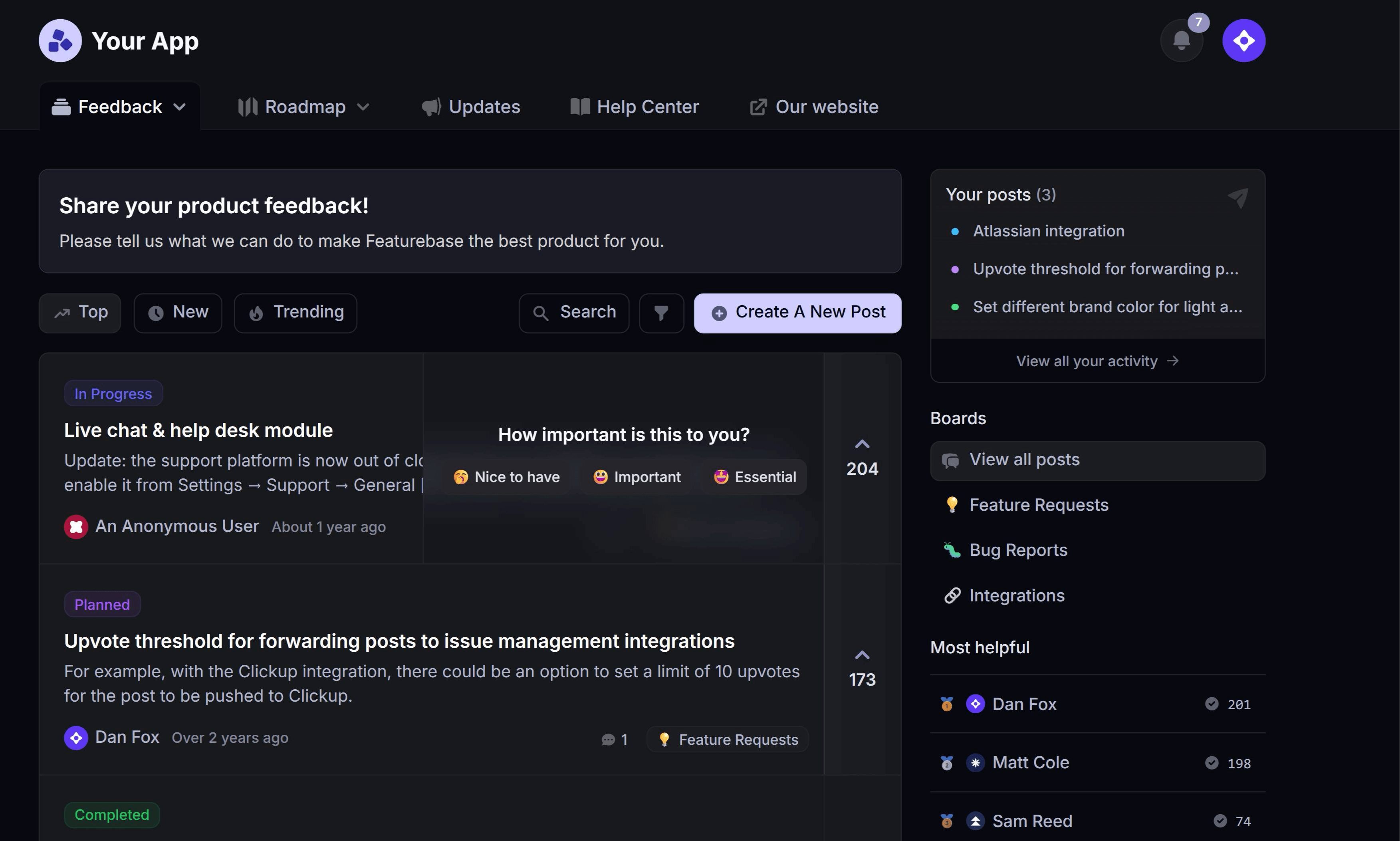
This is exactly where Featurebase fits. You can collect feature requests and bug reports through a public feedback forum and in-app widgets, prioritize them, and then automatically email users when their requested feature ships, so the loop actually closes instead of going quiet.
Add AI and automation where they help
Automation frees your team to focus on the high-touch moments that need a human. Chatbots and AI agents can handle routine questions around the clock, route conversations to the right person, and surface context to agents mid-conversation.
The rule of thumb is that automation should enhance human service, not replace it. Used well, it cuts wait times and reduces errors. Used badly, it creates impersonal, frustrating experiences that push customers away.
Metrics to track for customer experience optimization
If you want to know whether optimization is working, you need to measure it. The most useful approach is to track a spread of metrics across four categories rather than obsessing over any single number.
Sentiment metrics capture how customers feel:
- CSAT (Customer Satisfaction Score): a quick pulse check on how satisfied someone is with a specific interaction, product, or service.
- NPS (Net Promoter Score): a measure of long-term loyalty based on how likely a customer is to recommend you.
- CES (Customer Effort Score): how much effort it took a customer to get something done, where lower effort tracks with higher loyalty.
Behavioral metrics show what customers actually do:
- Churn rate: the percentage of customers who leave over a given period, and an early warning sign of unresolved friction.
- Repeat purchase rate: how often customers come back, which reflects genuine satisfaction and product fit.
- Task completion rate: whether users can accomplish what they came to do, like completing a checkout or submitting a request.
Operational metrics reveal how efficiently your team delivers:
- First contact resolution (FCR): how often issues get solved on the first interaction, which lowers cost and lifts satisfaction.
- Resolution time: the average time to fully resolve an issue, where long delays reliably frustrate customers.
- Escalation rate: how often frontline agents have to escalate, which points to process or tooling gaps.
Revenue metrics tie experience back to the bottom line:
- Customer lifetime value (LTV): the total revenue a customer generates, which better retention directly increases.
- Customer acquisition cost (CAC): what you spend to win a customer, which strong CX lowers through referrals and higher conversion.
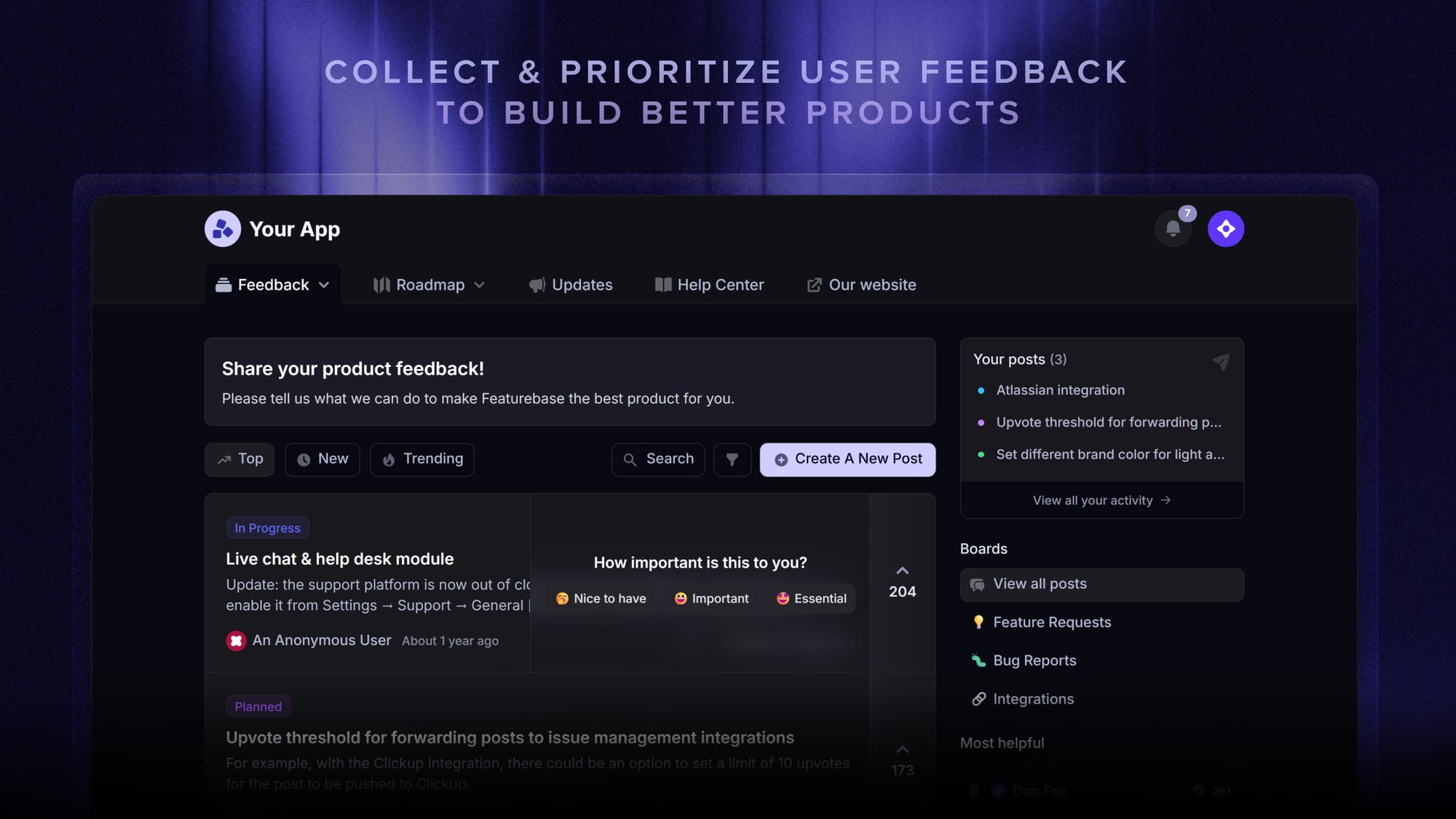
You don't need all of these at once. Pick the handful that map to your current goals, and make sure they allow for comparison over time. Running targeted surveys with a tool like Featurebase makes it easy to capture CSAT and NPS at specific points in the journey rather than guessing at sentiment.
Best practices and why CX programs fail
Most CX optimization programs don't fail because of a bad strategy. They fail for a few predictable, avoidable reasons:
- Treating it as a one-time project: CXO is an ongoing loop that evolves with customer expectations, not a quarter-long initiative you finish and forget.
- Over-relying on automation: leaning too hard on bots for complex, emotional issues creates impersonal experiences that frustrate customers.
- Working from disconnected data: when customer information lives in separate systems, you get inconsistent experiences and customers repeating themselves.
- Tracking vanity metrics: ticket volume and raw CSAT scores matter less than outcomes like reduced churn and lower escalation rates.
The teams that get it right tend to do the opposite of all four. A few habits show up again and again:
- Bake CX into leadership goals: when experience targets sit in executive OKRs, the work gets real visibility and resources instead of being siloed in one team.
- Collaborate across functions: product, operations, support, and marketing all shape the experience, so they need shared feedback and a shared goal.
- Enable your frontline team: give agents the context, training, and tools to respond with empathy, because soft skills have measurable effects on satisfaction.
- Work in small, fast iterations: treat CX like a product, with quick tests and feedback loops rather than one big overhaul.
Where a feedback tool fits in
Most of the steps above depend on the same thing: a reliable way to hear from customers and act on what they say. That's usually the weakest link in a CX stack, because feedback ends up scattered across support tickets, sales calls, and one-off surveys with no single place to make sense of it.
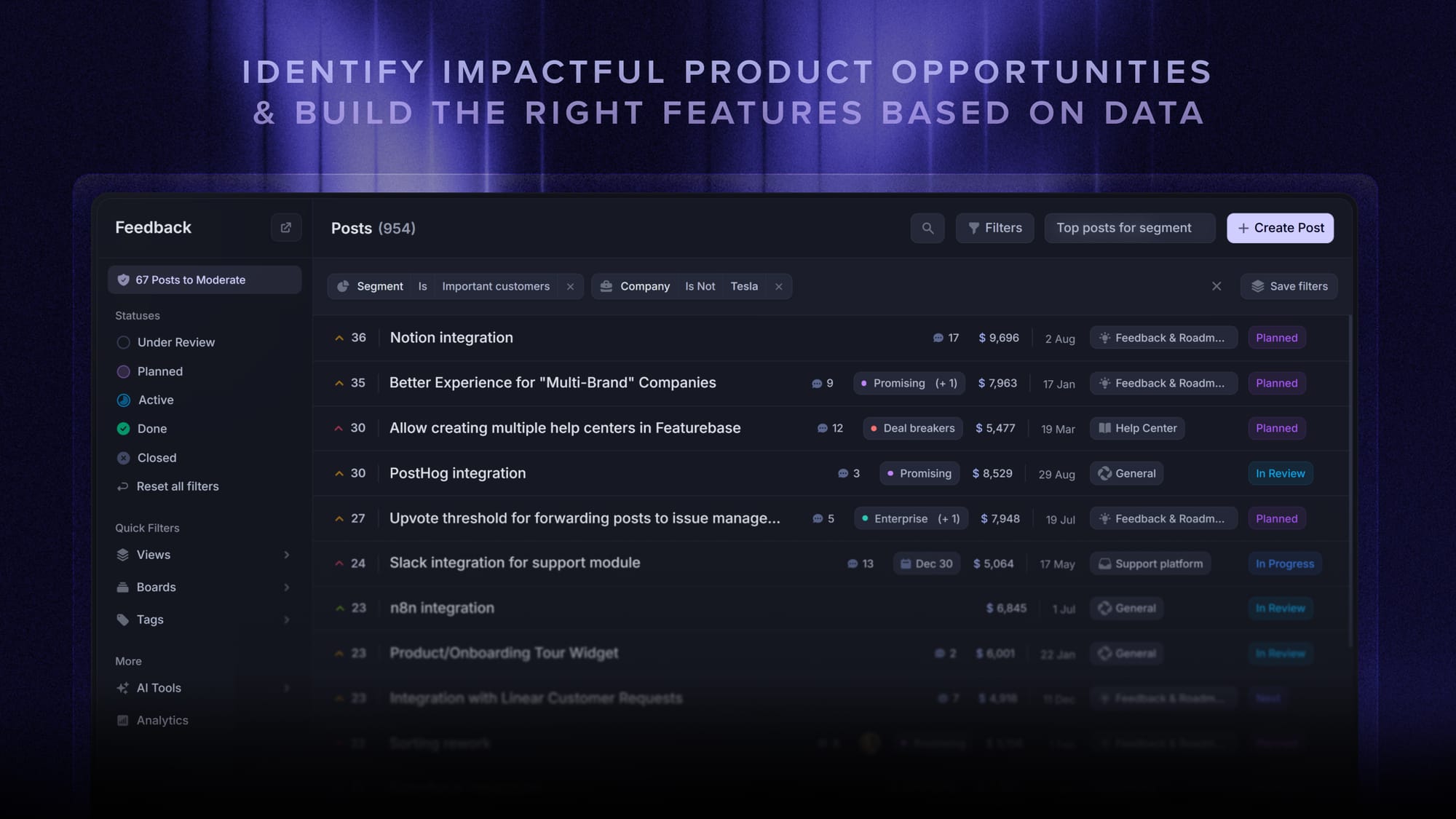
A dedicated feedback platform like Featurebase is one way to close that gap. The idea is to run the whole loop in one place: collect feature requests and bug reports through a feedback forum and in-app widgets, prioritize them by things like customer revenue, and then automatically tell users when their idea ships so the loop actually closes.
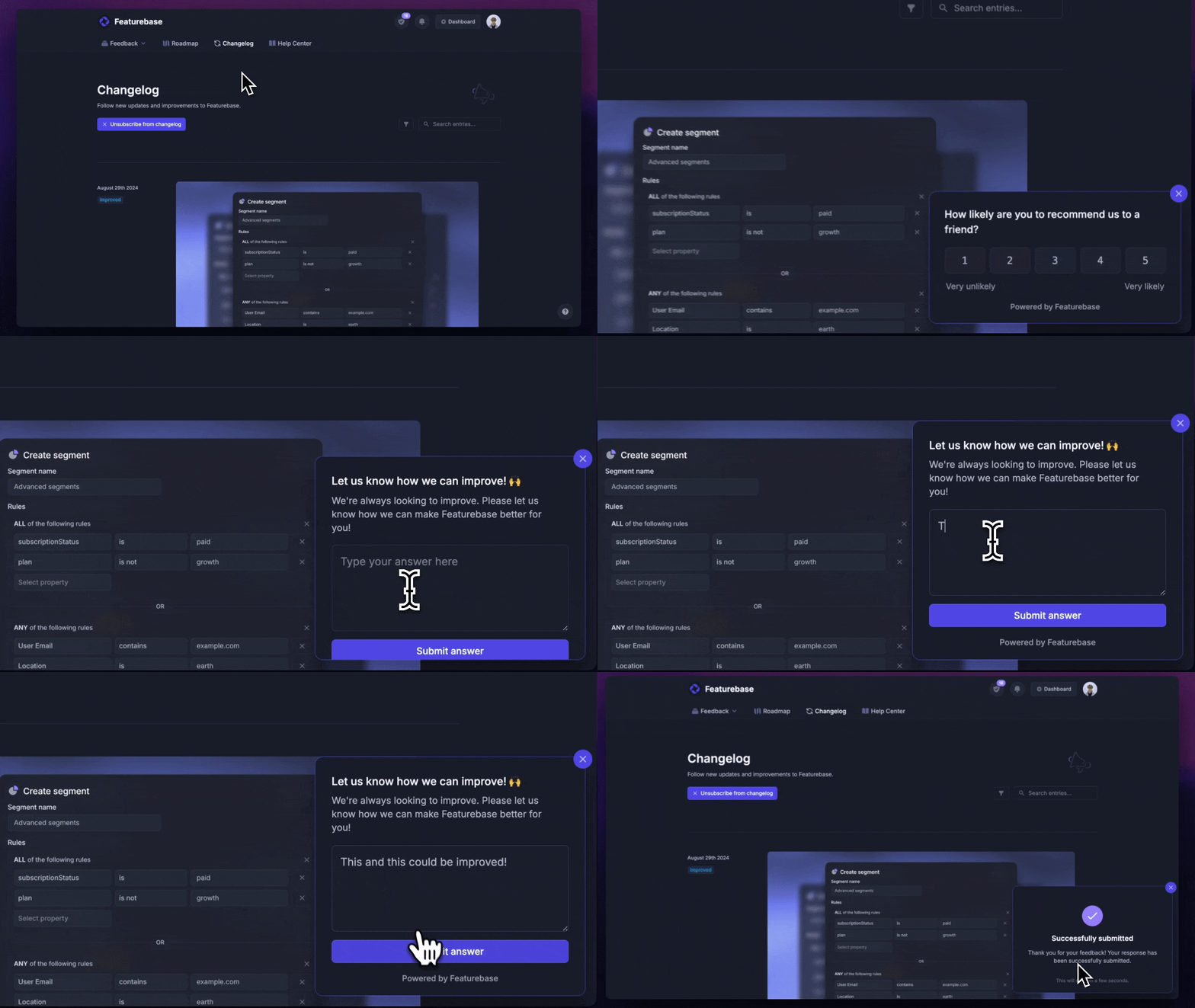
It also covers the measurement side, with targeted NPS and CSAT surveys you can trigger at specific points in the journey, plus roadmaps and a changelog to keep customers in the loop on what's coming. There's a free plan, so it's straightforward to test against your own workflow before committing.
Whatever tool you land on, the principle matters more than the brand: pick something that lets you collect, act on, and follow up on feedback without stitching four disconnected apps together.
Final thoughts
Customer experience optimization isn't a one-time fix. It's a habit your organization builds and keeps sharpening, because the moment you stop improving, customer expectations move on without you.
The companies that win treat it as a loop: they listen to customers, act on what they hear, measure the impact, and close the feedback loop so people know they were heard. Get that cycle turning and everything else, retention, loyalty, revenue, tends to follow.
Featurebase gives you the tools to run that loop in one place, from collecting and prioritizing feedback to shipping updates and telling customers about them. There's a free plan with unlimited feedback collection, so there's no downside to trying it. 👇
✨ Start collecting & managing feedback with Featurebase for free →
FAQs
What's the difference between customer experience optimization and customer experience management?
Customer experience management (CXM) is about managing customer interactions and relationships across the journey. Customer experience optimization (CXO) is the continuous improvement layer on top of that: using data, feedback, and analytics to make those interactions better over time. In short, management keeps the experience running, and optimization keeps making it better.
How long does it take to see results from customer experience optimization?
It depends on the scope of what you're changing. Quick fixes like reducing resolution time or removing a UX friction point can show results within weeks. Deeper cultural and process shifts usually take several months, but they tend to deliver the more lasting value.
Who should own customer experience optimization?
Ownership often sits with a CX or customer success leader, but the most effective programs are cross-functional. Marketing, product, support, and operations all shape the experience, so they need to align around shared goals rather than optimizing in isolation.
What tools do you need for customer experience optimization?
A typical stack includes journey analytics, a customer data platform or integrated CRM, feedback and survey tools, and a helpdesk. The right mix depends on your size and channels, but the feedback layer is the one most teams underinvest in. Featurebase covers that side by combining a feedback forum, surveys, roadmaps, and product updates in one platform, with a free plan to start.
What are the 3 C's of customer experience?
The 3 C's are context, consistency, and completeness. Context means understanding a customer's situation and history at any given moment. Consistency means delivering the same quality of experience across every channel, and completeness means addressing the full journey rather than isolated touchpoints.
How often should you update your CX optimization strategy?
Review it at least quarterly. The best teams treat their CX strategy as a living framework and adjust it continuously based on feedback, performance metrics, and shifting business priorities, rather than revisiting it once a year.