Blog Customer FeedbackWhat Is Customer Intelligence? Types, Benefits, and Tools
What Is Customer Intelligence? Types, Benefits, and Tools
Customer intelligence is how you turn scattered customer data into decisions. This guide covers what it is, the data types, benefits, how to collect it, and the tools that help.

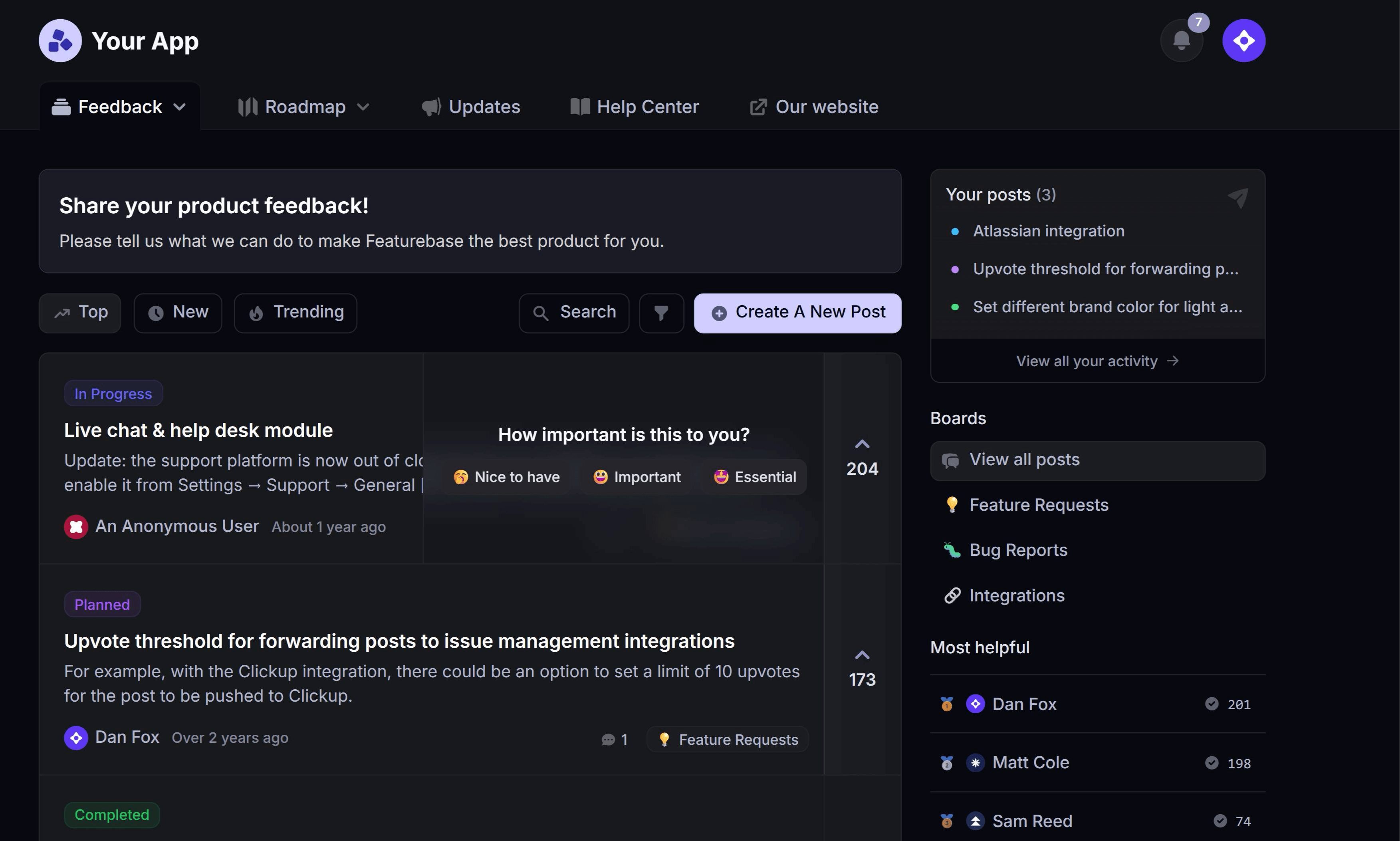

✨ Start collecting & managing feedback with Featurebase for free →
Most businesses aren't short on customer data. They're short on insight. Every click, ticket, purchase, and survey response piles up across a dozen disconnected tools, and almost none of it gets turned into a decision.
Customer intelligence is how you close that gap. It's the practice of pulling all that data together and reading it well enough to act on it.
In this guide, I'll break down what customer intelligence actually is, how it differs from business intelligence, the types of data it uses, how to collect it, and what to look for in a customer intelligence platform. 👇
Key takeaways
- Customer intelligence (CI) is the process of collecting and analyzing customer data to produce insights that improve decisions across product, marketing, sales, and support.
- It's different from business intelligence: CI is about understanding your customers, while BI is about understanding your own operations.
- Strong CI pulls from 5 data types - transactional, behavioral, demographic, psychographic, and attitudinal (voice-of-customer) data.
- The payoff shows up as better retention, sharper personalization, more revenue, and smarter product decisions.
- A customer intelligence platform unifies data from many sources, applies analytics, and makes the insights usable by the teams who need them.
- Featurebase✨ helps you capture the voice-of-customer side of customer intelligence - feedback, feature requests, and survey responses - in one place.
What is customer intelligence?
Customer intelligence (CI) is the process of collecting customer data and pulling insights from it that you can actually act on. Those insights tell you what customers need, how they behave, what they value, and where they're likely to churn.
The point isn't the data itself. It's the decision the data unlocks. Good customer intelligence turns raw signals into next steps, like which feature to build next, which segment to target, or which at-risk account to call before it cancels.
CI blends the numbers (what customers do) with the qualitative (why they do it). A spike in cancellations is a fact. The frustrated survey responses explaining that spike are the context. You need both to move.
Customer intelligence vs. business intelligence vs. customer analytics
These three terms get used interchangeably, but they answer different questions:
- Customer intelligence is about understanding your customers - their needs, behaviors, and preferences - so you can act on that understanding in customer-facing work.
- Customer analytics is the set of methods and models used to explore customer data, from descriptive reporting to predictive scoring. It's the technique, not the outcome.
- Business intelligence is about understanding your own company - sales, finance, operations - through dashboards and reports that help leaders track performance.
Put simply: business intelligence tells you how the business is doing, customer analytics is how you crunch the numbers, and customer intelligence turns those numbers into a plan for the customer in front of you.
The 5 types of customer intelligence data
Customer intelligence draws on several kinds of data, and the richest picture comes from combining them rather than leaning on any single source:
- Transactional data: what customers actually buy. Purchase history, order value, payment method, discounts used, and subscription status. It's the clearest signal of what people are willing to pay for.
- Behavioral data: how customers engage with your brand. Page views, feature usage, content downloads, and the path they take before converting. This reveals intent and friction.
- Demographic data: the basic attributes of a customer or segment, like age, location, income, job role, and industry. It's how you group people and spot trends tied to specific characteristics.
- Psychographic data: the attitudes, interests, values, and motivations behind a decision. It gets at why customers choose what they choose, not just what they chose.
- Attitudinal data: how customers feel about your product, brand, and experience. This is the voice-of-customer layer, gathered from surveys, reviews, support conversations, and feedback. It explains the sentiment behind everything else.
The first four types tell you what happened and who it happened to. Attitudinal data tells you why, which is usually the part teams are missing.
The benefits of customer intelligence
When customer data actually informs decisions, the returns show up across the business.
Personalization is the clearest example. McKinsey found that 71% of consumers expect companies to deliver personalized interactions and 76% get frustrated when that doesn't happen. Customer intelligence is what makes personalization at scale possible, because you can't tailor an experience you don't understand.
Beyond personalization, the main benefits look like this:
- Higher retention: CI surfaces early warning signs like declining usage or negative sentiment, so you can reach out before an account churns instead of after.
- Sharper personalization: granular segments let you tailor content, offers, and timing to what each group actually wants, which lifts conversion and lifetime value.
- More revenue: better targeting, smarter pricing, and well-timed cross-sell and upsell all come from knowing what your customers need before they ask.
- Smarter product and CX decisions: combining feedback with behavioral data tells you which problems to fix first and whether the fix actually worked.
The common thread is focus. Customer intelligence points finite time and budget at the customers, products, and moments that matter most.
How to collect customer intelligence data
Collecting customer intelligence means pulling from many sources and then unifying what you find. Here's where the data comes from and a simple process for putting it to work.
The main data sources
- CRM systems: the record of accounts, deals, and interactions, and often the backbone of a customer intelligence setup.
- Website and product analytics: behavioral data on how people navigate your site and use your product.
- Surveys and feedback: the most direct way to capture attitudinal data, through NPS, CSAT, and open-ended questions.
- Support conversations: tickets, chats, and calls that reveal recurring problems and sentiment in customers' own words.
- Third-party data: aggregated market and demographic data that fills gaps your own systems can't cover. Providers such as Coresignal can supply structured company, employee, and jobs data for this external context.
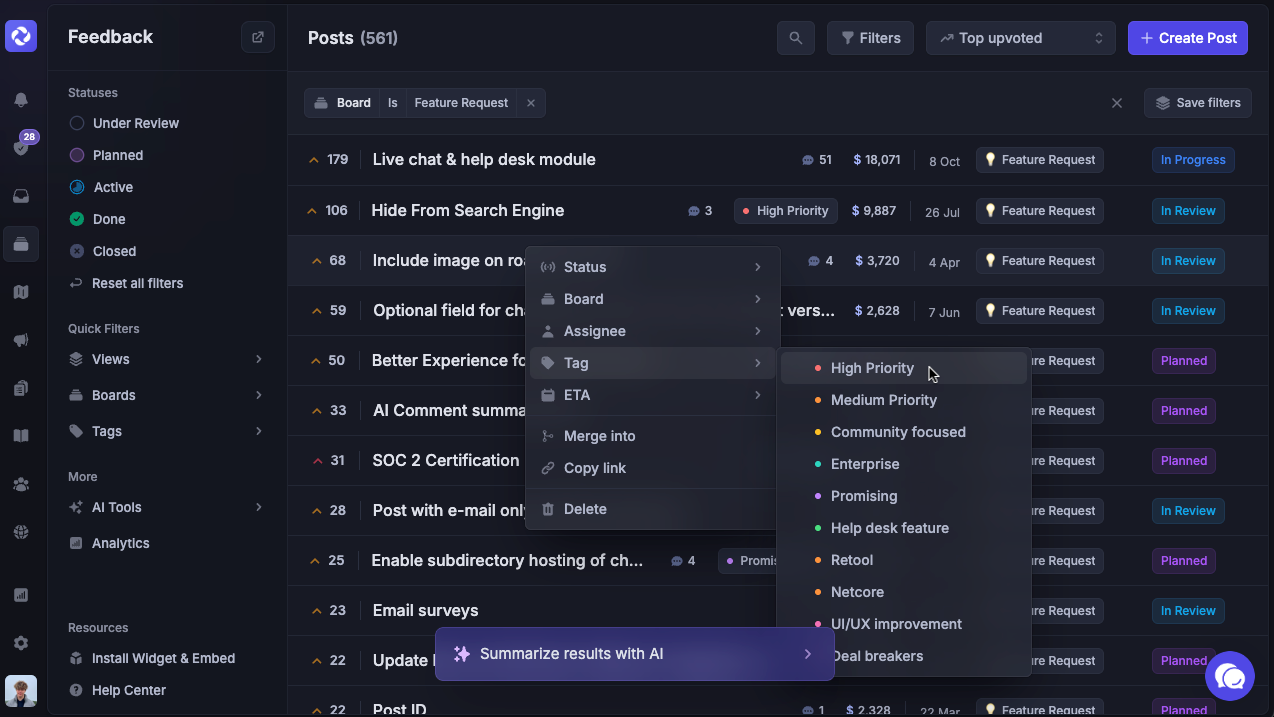
The attitudinal, voice-of-customer piece is where most teams come up short, since it doesn't accumulate automatically the way clicks and transactions do. You have to ask for it. This is where Featurebase helps: a public feedback forum, in-app feedback widgets, and targeted surveys let you gather feature requests, bug reports, and satisfaction data directly from users, so the qualitative side of your customer intelligence keeps up with the quantitative side. Pairing that with a clear customer feedback strategy turns scattered opinions into a usable signal.
A simple 5-step process
- Define your objectives: decide what questions you're trying to answer before you collect anything, so you gather the right data instead of all of it.
- Unify your data sources: bring transactional, behavioral, and attitudinal data into one place and resolve it to individual customer profiles.
- Analyze for insight: apply segmentation, propensity scoring, and trend analysis to turn the unified data into patterns you can name.
- Act on the findings: push insights to the teams who can use them, whether that's a targeted campaign, a product fix, or a proactive outreach.
- Monitor and iterate: treat customer intelligence as an ongoing loop, reviewing results and refining as behavior and markets shift.
What is a customer intelligence platform?
A customer intelligence platform is software that unifies customer data from many sources, applies analytics to it, and makes the resulting insights usable by the teams who need them. Collecting data is easy. Turning it into something a marketer or product manager can act on is the hard part, and that's the job a CI platform does.
It's worth knowing how a CI platform differs from two tools it often sits alongside:
- Customer data platform (CDP): builds and manages unified customer profiles and segments, then activates them, usually to marketing channels.
- Customer relationship management (CRM): runs sales and service workflows around accounts, deals, and support cases.
- Customer intelligence platform: adds the analytics and decisioning layer on top, focused on what to do next for a given customer or segment.
AI is reshaping this category fast. BCG found that up to 53% of industry leaders believe AI will be a game-changer for consumer intelligence, largely because it can summarize sprawling datasets and surface insights in minutes rather than weeks. If you're evaluating options, a roundup of customer insight tools and customer service analytics software is a good place to compare approaches.
Customer intelligence best practices
A few habits separate customer intelligence programs that drive decisions from ones that just generate dashboards nobody reads.
- Combine qualitative and quantitative data: numbers tell you what's happening, but the attitudinal context tells you why. A drop in conversions could mean low interest or a broken checkout, and only the qualitative side settles it.
- Prioritize privacy and consent: collect sensitive data only with permission, follow the relevant regulations, and be transparent about why you're gathering information. Trust is part of the data strategy, not separate from it.
- Tie every insight to an action: an analysis that doesn't change a decision is wasted effort. Assign an owner and a next step to each insight so it actually reaches the front lines.
- Stay customer-first: keep the goal in view, which is a better experience for the customer, not just a more efficient internal process. Insights should serve the person on the other end.
Turn customer feedback into intelligence with Featurebase
The hardest part of customer intelligence to get right is the voice-of-customer layer. Behavioral and transactional data collect themselves, but feedback, feature requests, and sentiment have to be actively gathered and organized before they're useful.
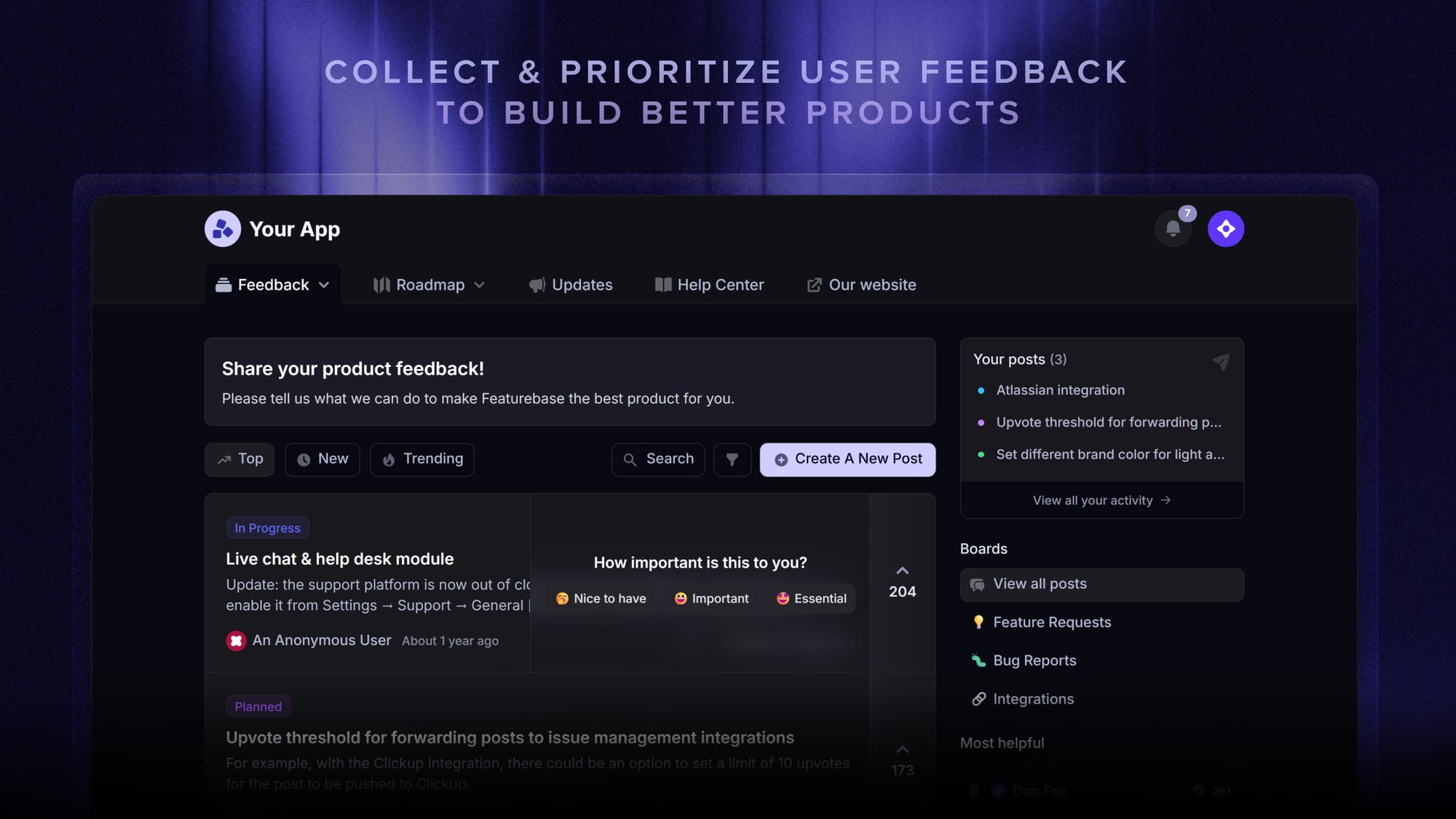
Featurebase is a modern feedback platform that helps product teams collect feedback, prioritize features, build roadmaps, and announce updates, all in one place. It's loved by thousands of product teams from companies like Lovable, Raycast, and n8n. 💫
A few of the features that make it useful for customer intelligence:
- Feedback forum - a public space where users submit ideas and vote on features, so you can see what customers actually want
- In-app widgets - embed feedback, changelog, and help center widgets right in your product to capture input in the moment
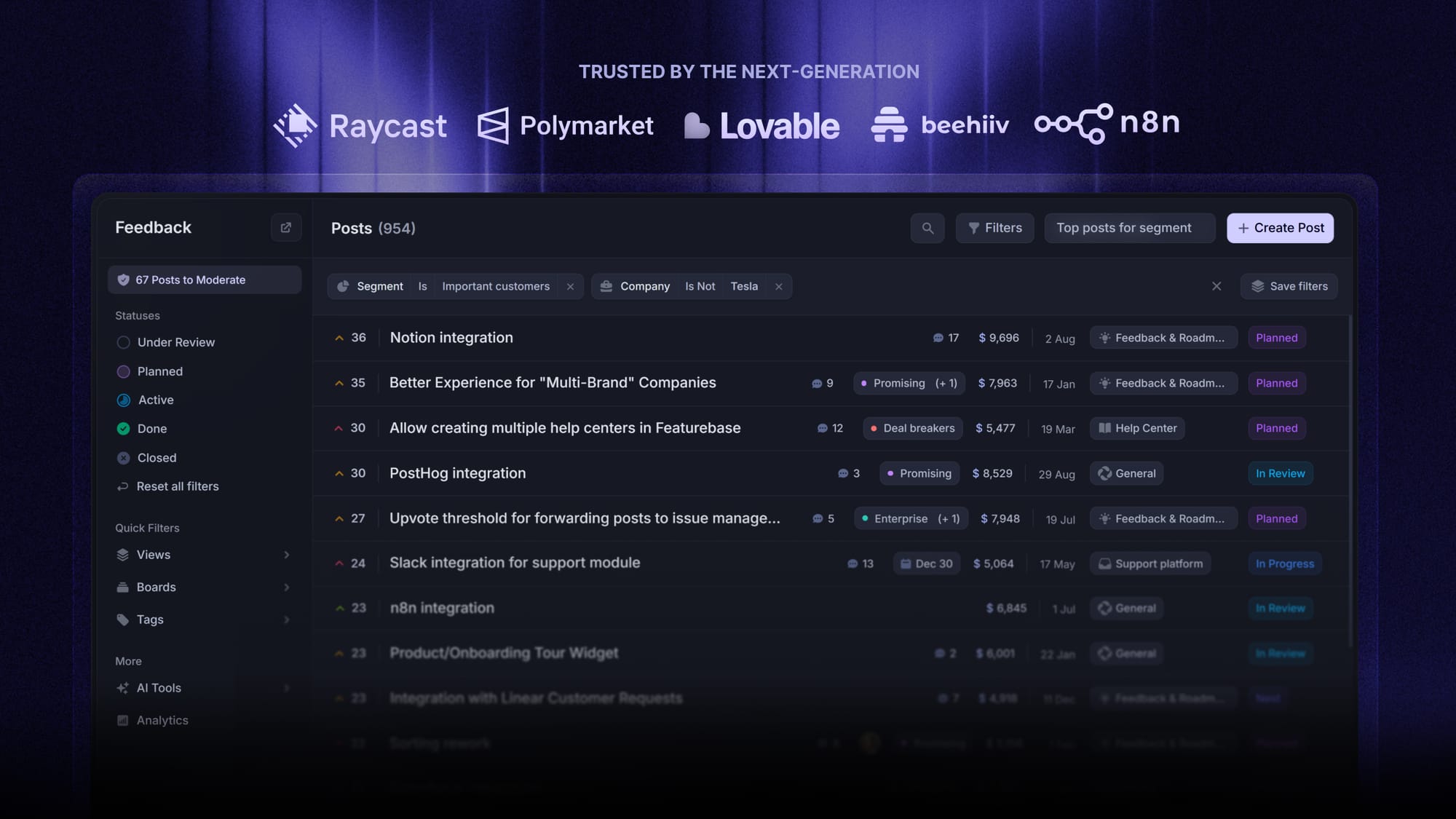
- Prioritize by revenue - link feedback to customer revenue and company size to understand the real impact of each idea
- AI feedback categorization - automatically group large volumes of feedback into themes and product areas
- Surveys (NPS, CSAT, etc.) - run targeted surveys to measure satisfaction and ask users anything
- Roadmaps and product updates - close the loop by showing users what's coming and what shipped
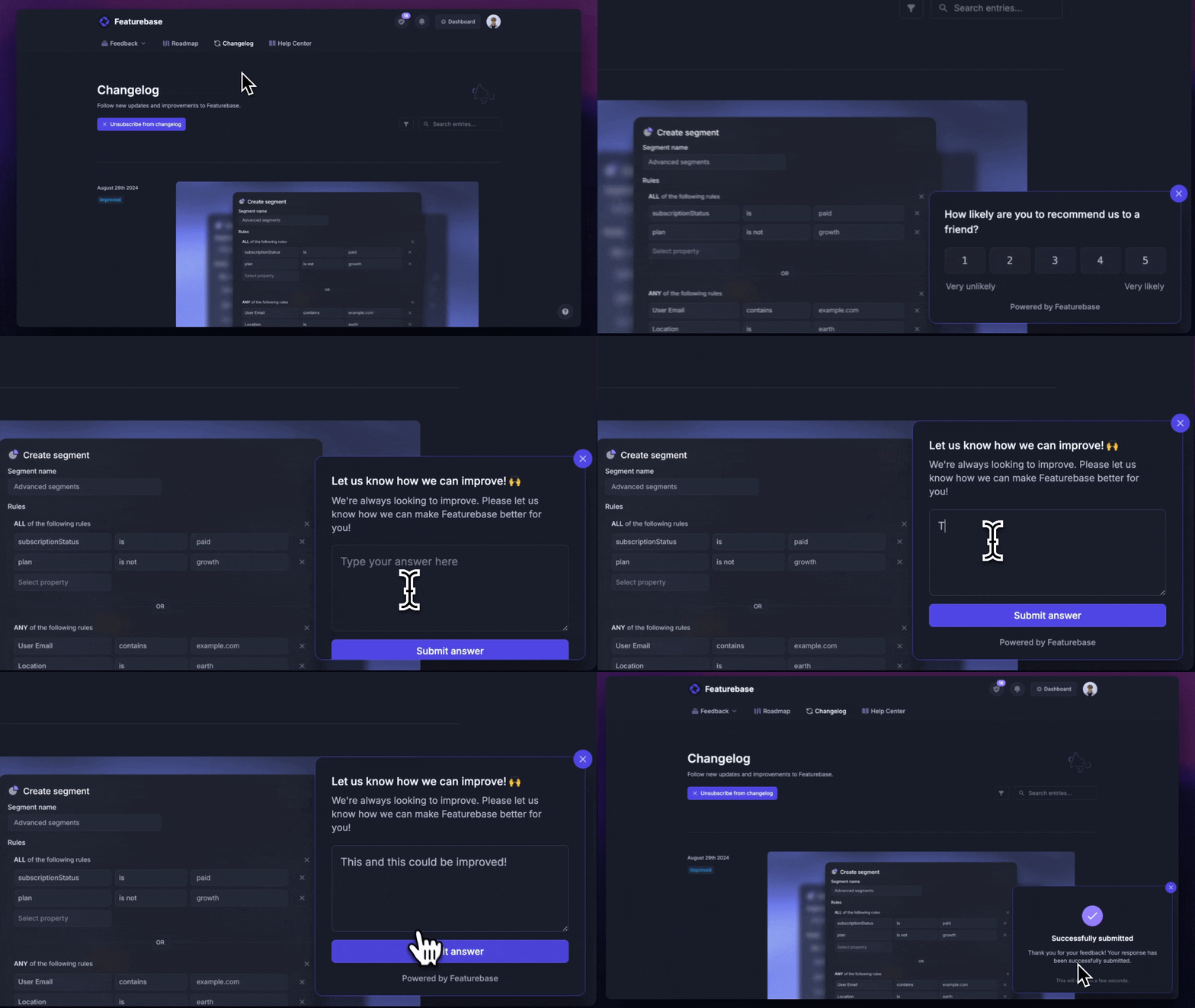
Instead of leaving qualitative signal scattered across inboxes and spreadsheets, Featurebase turns it into structured, prioritized insight you can act on.
Conclusion
Customer intelligence isn't a tool you buy. It's a discipline: gathering the right customer data, reading it honestly, and letting it change what you do next. The businesses that do it well grow faster because they aim their effort at the customers and moments that matter, instead of guessing.
The quantitative side of that picture tends to take care of itself. The qualitative, voice-of-customer side is where most teams fall behind, and it's the part that explains everything else.
Featurebase brings that side together - feedback collection, surveys, roadmaps, and product updates in one platform - so the insight you need to understand your customers doesn't stay locked in scattered tools.
There's a Free plan and onboarding is fast, so there's no downside to trying it. 👇
✨ Start collecting & managing feedback with Featurebase for free →
FAQs
What is the difference between customer intelligence and business intelligence?
Customer intelligence is about understanding your customers, including their needs, behaviors, and preferences, so you can act on that understanding in customer-facing work. Business intelligence is about understanding your own company, using dashboards and reports on sales, finance, and operations to track performance. CI often feeds into BI, but it's aimed at decisions for individual customers or segments rather than enterprise-wide metrics.
What is a customer intelligence platform?
A customer intelligence platform is software that unifies customer data from many sources, applies analytics and machine learning, and makes the resulting insights usable across teams. It differs from a customer data platform, which mainly builds unified profiles, and a CRM, which runs sales and service workflows. The CI platform adds the decisioning layer that helps you figure out what to do next for a given customer.
Why is customer intelligence important?
Customer intelligence turns scattered data into better decisions, which shows up as higher retention, stronger personalization, and more revenue. It lets you spot churn risk early, tailor experiences to what customers actually want, and focus resources on the segments and products that matter most. Without it, teams end up guessing about the people they're trying to serve.
What are the four types of customer analytics?
The four types are descriptive (what happened), diagnostic (why it happened), predictive (what will happen), and prescriptive (what to do next). Descriptive analytics summarizes past behavior, diagnostic explains the drivers behind it, predictive forecasts outcomes like churn or conversion, and prescriptive recommends the best action to take. Together they form the analytical backbone of customer intelligence.
How do companies collect customer intelligence data?
Companies collect it from a mix of sources: CRM systems, website and product analytics, surveys and feedback, support conversations, and third-party data. Quantitative sources like analytics and transactions accumulate automatically, while attitudinal, voice-of-customer data has to be actively gathered through surveys and feedback tools. The strongest programs combine both so they can see what customers do and understand why.
What is the best tool for collecting customer feedback data?
The best tool depends on your needs, but for gathering the voice-of-customer side of customer intelligence, Featurebase lets you collect feature requests, bug reports, and survey responses through a public feedback forum, in-app widgets, and targeted surveys. It also prioritizes feedback by revenue and uses AI to categorize it, which turns raw input into structured insight. There's a Free plan, so it's easy to test before committing.