Blog Customer FeedbackCustomer Feedback Surveys: Types, Questions & Tips
Customer Feedback Surveys: Types, Questions & Tips
Learn the main types of customer feedback surveys, the best questions to ask, and how to run surveys that actually improve your product and customer experience.

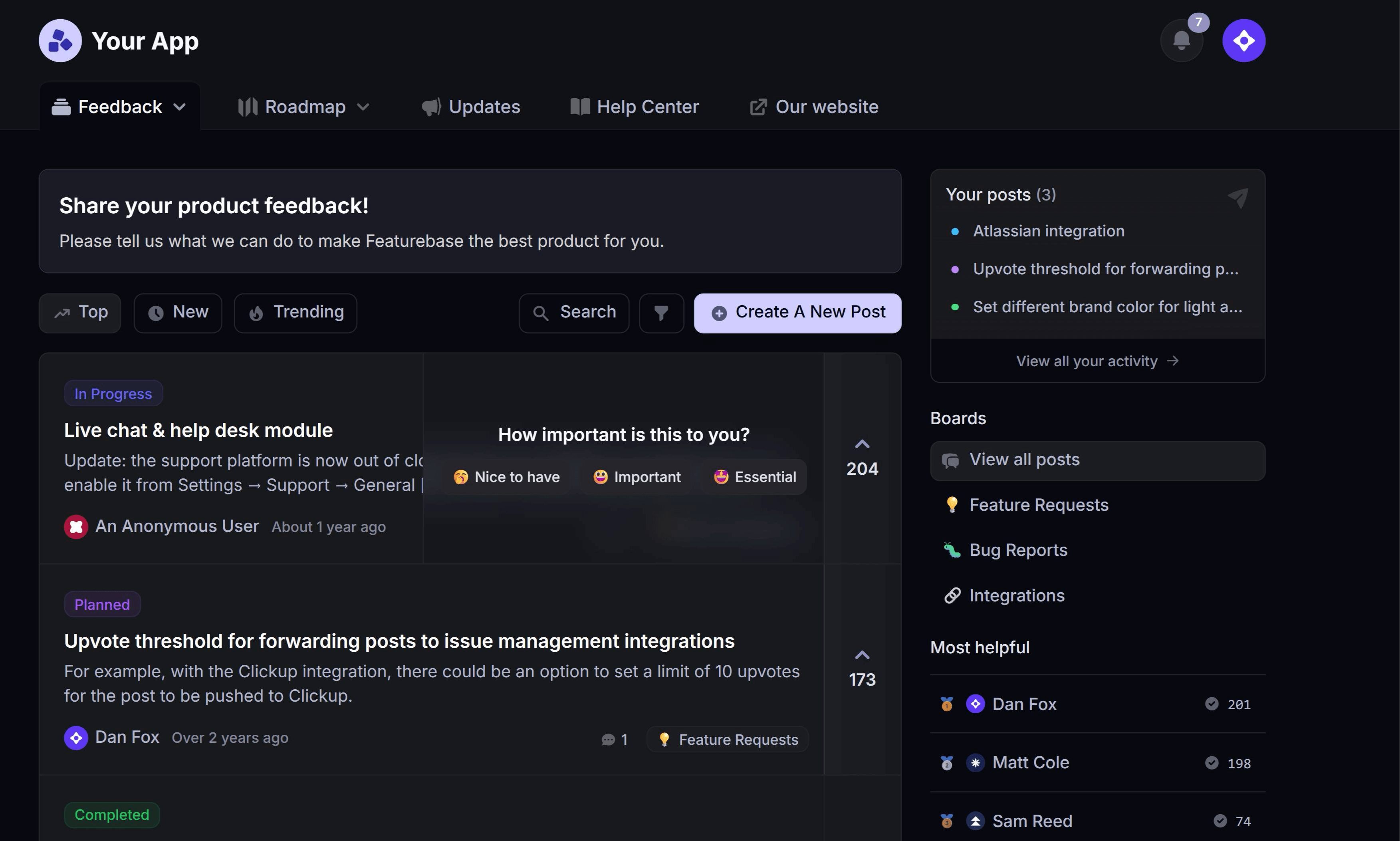

✨ Start collecting & managing feedback with Featurebase for free →
Most teams collect more customer feedback than ever, yet their satisfaction scores barely move. The gap usually sits in how the survey is built and what happens after the responses land.
A good customer feedback survey is not a form you send and forget. It is one input in a system for listening to customers and acting on what they say.
In this guide, I'll cover what these surveys are, the main types, the exact questions to ask, and how to turn answers into action. 👇
Key takeaways
- A customer feedback survey is a structured set of questions that turns how customers feel into data you can track and act on.
- CSAT, NPS, and CES each measure a different thing, so the strongest programs run more than one rather than picking a single metric.
- The best surveys ask few, neutral questions, at the right moment, on the channel your customers already use.
- Collecting feedback is roughly 20% of the work. Routing responses, spotting themes, and closing the loop is the rest.
- Featurebase✨ lets you run targeted NPS and CSAT surveys and funnel the responses straight into your feedback boards and roadmap, so insights turn into shipped changes.
- The biggest mistake is surveying with no plan to act, which wastes both the customer's time and yours.
What is a customer feedback survey?
A customer feedback survey is a structured set of questions that measures how people feel about your product, service, or support. It captures opinions in a way you can score and compare over time, which turns scattered impressions into data you can act on.
It matters because experience is now a core part of what customers buy. 80% of customers say the experience a company provides is as important as its products and services, per Salesforce research. If you are not measuring how that experience lands, you are guessing.
The catch is that measuring alone changes nothing. Forrester's 2025 Customer Experience Index found that 21% of brands declined in CX quality while only 6% improved and 73% stayed flat. A survey earns its place when it changes something, so treat it as the most direct channel inside a wider voice-of-the-customer program rather than the whole picture.
The main types of customer feedback survey
There is no single survey that captures everything. A few standard types do most of the work, and each answers a different question about the experience.
Customer Satisfaction Score (CSAT)
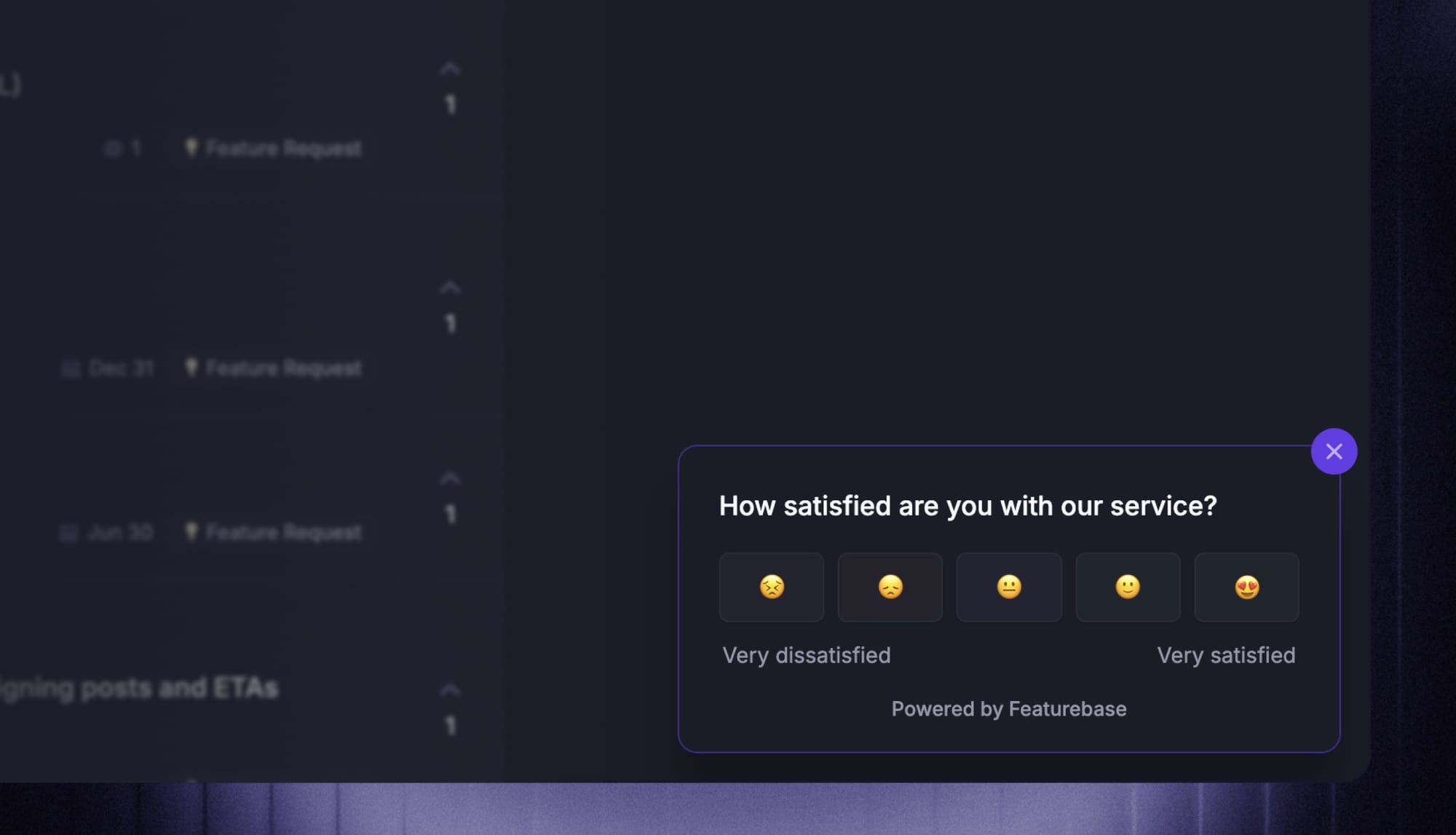
A CSAT survey asks how satisfied someone was with a specific interaction, usually on a scale of 1 to 5. You calculate it by dividing positive responses by total responses and multiplying by 100. It works best right after a support ticket closes or a purchase completes, when impressions are still fresh. CSAT tells you whether someone is happy, not why, so pair it with a short open-ended follow-up.
Net Promoter Score (NPS)
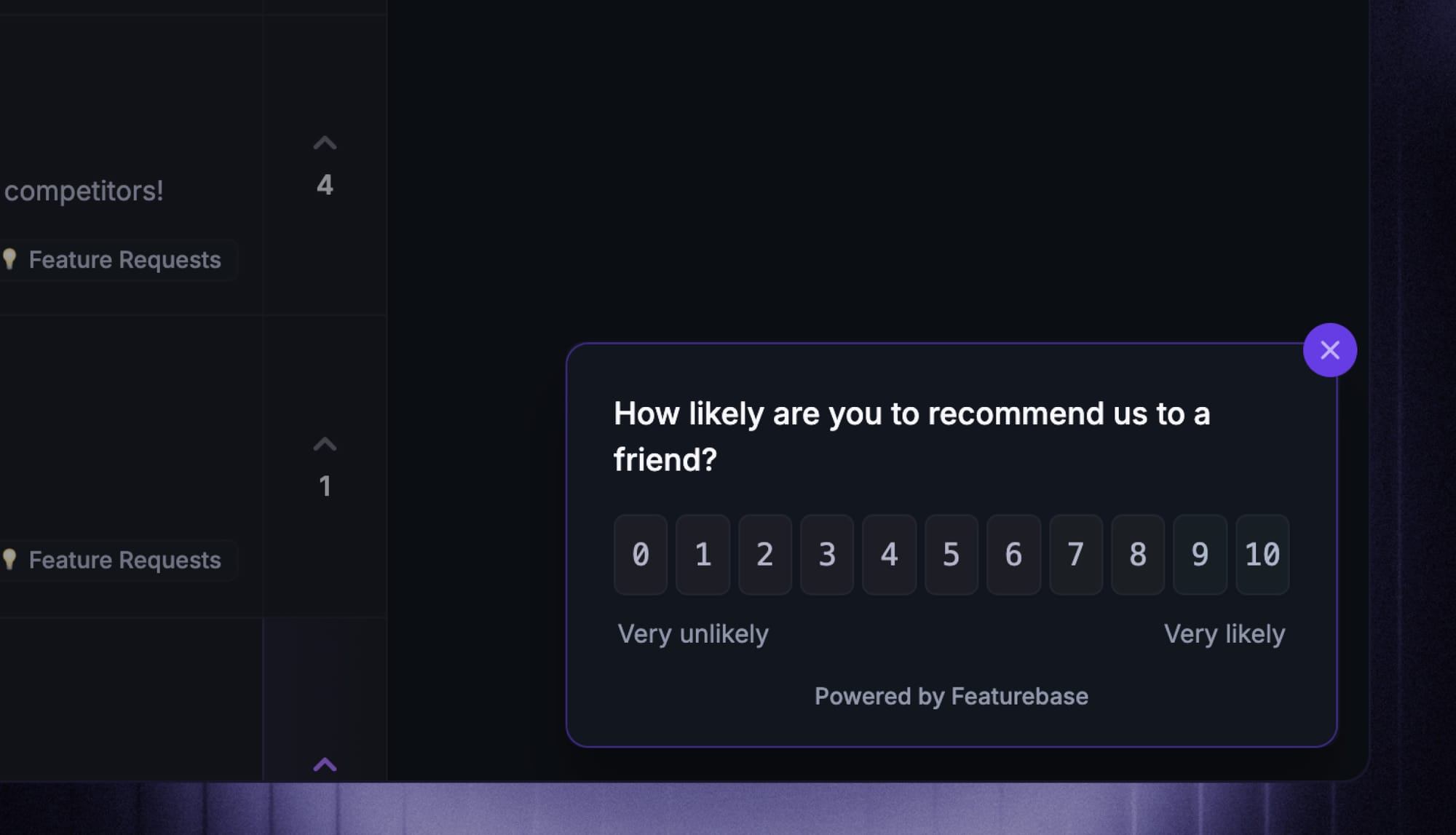
NPS measures loyalty by asking how likely a customer is to recommend you, on a scale of 0 to 10. Responses split into promoters, passives, and detractors, and you subtract the share of detractors from promoters to get the score. Because it reflects long-term sentiment, send it on a regular schedule rather than after a single ticket. A score collected right after a tense conversation will be skewed by that one moment.
Customer Effort Score (CES)
CES asks how easy it was to get something done, on a scale from very difficult to very easy. High effort is a strong predictor of churn, so a spike after a particular process, like a refund or an onboarding step, flags friction worth fixing. Reach for CES when you want to find where customers struggle rather than measure overall mood.
Product feedback surveys
Product surveys gather insight on how well your product meets customer needs. They lean on open questions like "Which feature do you use most?" and "What would you improve first?" Where CSAT and CES refine daily operations, product surveys inform the roadmap by surfacing demand you would otherwise have to guess at.
The short answer on which to use is more than one. Run CSAT to check a single interaction, NPS to track the relationship over months, CES to find friction, and product surveys to shape what you build next.
Customer feedback survey questions to ask
The questions you ask decide whether your data is useful. Here is a bank of feedback questions you can adapt, grouped by what you are trying to learn.
CSAT and satisfaction questions:
- How satisfied were you with the support you received today?
- Please rate your overall satisfaction with [company].
- How satisfied are you with the time it took to resolve your request?
NPS and loyalty questions:
- How likely are you to recommend us to a friend or colleague?
- What is the main reason for your score?
CES and effort questions:
- How easy was it to get your issue resolved today?
- How much effort did you have to put in to get the help you needed?
Product questions:
- How well does our product meet your needs?
- Which feature do you use most often?
- What is the one feature you would improve first?
Open-ended questions:
- What is the one thing we could do better?
- In your own words, what has your experience been like?
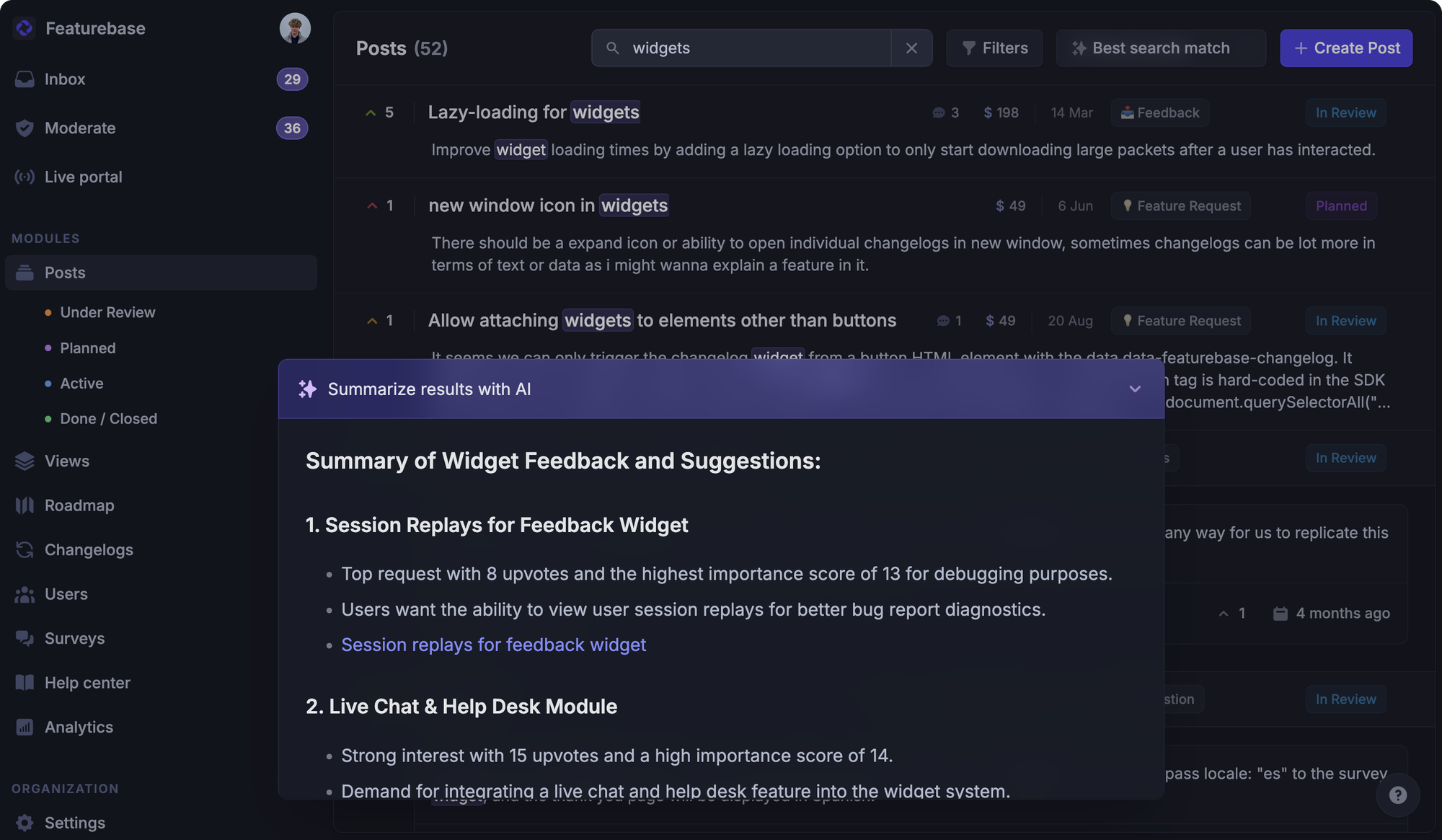
Include at least 1 open-ended question in every survey. Reading long-form answers used to be slow, but AI feedback analysis now summarizes open responses at scale, so a single "What is the main reason for your score?" often reveals more than 10 rating questions.
How to write good survey questions
Format shapes the answer almost as much as wording does. Match the question type to the insight you need: Likert scales for attitude, multiple choice for known options, rating scales for a trackable number, open text for detail, and yes/no for a single clean fact.
Whatever the mix, these 5 rules keep the data honest:
- Stay neutral: Ask "How satisfied were you with our communication?", not "How great was our support?" Leading words push respondents toward the answer you want to hear and distort the result.
- Ask one thing at a time: Split "Was support fast and helpful?" into two questions. A person may rate speed and helpfulness very differently, and a double-barrelled question hides that.
- Use plain language: Drop internal jargon so anyone can answer without guessing what you mean. Clear wording also signals respect for the customer's time and lifts completion rates.
- Keep it short: Every extra question lowers your completion rate, so cut anything you will not act on. Abandonment climbs sharply once a survey runs past a few minutes.
- Keep scales consistent: Pick one rating range and hold it across the whole survey. Switching from a 1 to 5 scale to a 0 to 10 scale mid-survey confuses respondents and muddies your analysis.
When and where to send your surveys
Where and when you ask affects response rates as much as what you ask, so treat delivery as part of the design.
Each channel trades depth for speed, so match the method to the moment:
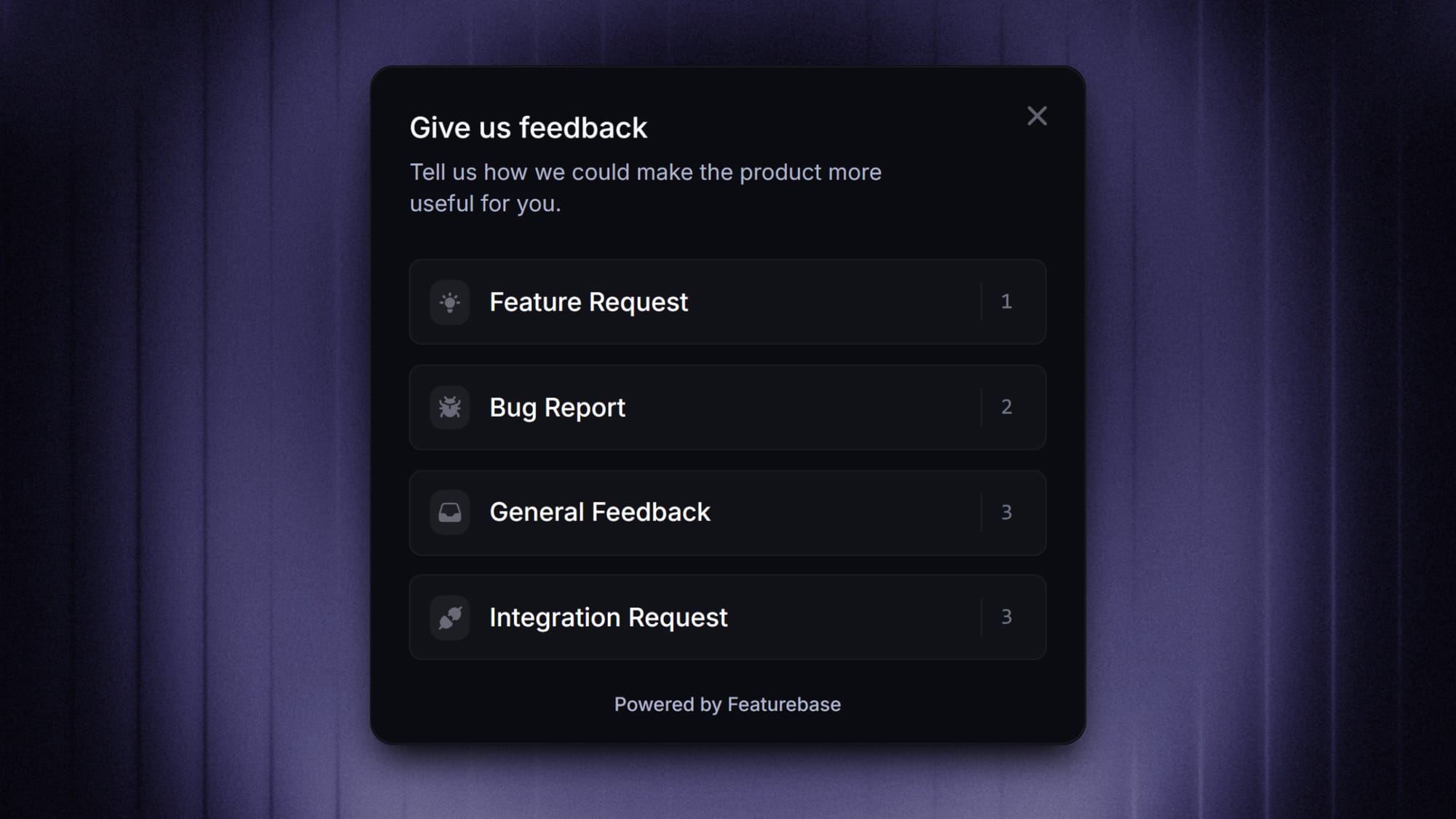
- Email: best for detailed feedback after a purchase or a resolved ticket, where the customer has room to write.
- In-app prompt: catches reactions while someone is still using the product, and in-app feedback usually beats email on response rate.
- SMS: suits fast, single-question replies right after a short interaction.
- Web intercept: gathers real-time reactions on a specific page, like checkout.
Timing changes both how many people reply and how accurate their answers are. Send transactional CSAT surveys right after the interaction while it is fresh, send relationship NPS surveys on a steady quarterly cadence, and trigger exit surveys the moment a customer cancels, because that answer tells you exactly what to fix next.
One caution: do not send too early. Customers need to have formed an opinion before you ask, so give a new feature or a delivery enough time to land before the survey goes out.
How to act on survey results and close the loop
Collecting feedback is the small part of the job. Roughly 20% of the effort goes into sending the survey. The other 80% goes into the follow-up, the analysis, and the change you make. Here is how to turn raw responses into action.
Route every response to an owner. A score with no owner goes nowhere. Send low scores straight to a named person who replies within a set window, flag promoters who might leave a review, and alert the account owner to any dip before a renewal date.
Group open text into themes. Individual comments are anecdotes, but patterns are evidence. Tag each open response by topic, such as pricing, onboarding, or response time, then count the frequency so the biggest theme becomes the obvious priority. AI can do the first pass in minutes.
Act, then prove you acted. Fix the top theme with a clear deadline, reply to detractors personally, and announce the change with a short "you asked, we changed this" note. Closing that customer feedback loop is the step most teams skip, yet it is the reason your next survey gets answered.
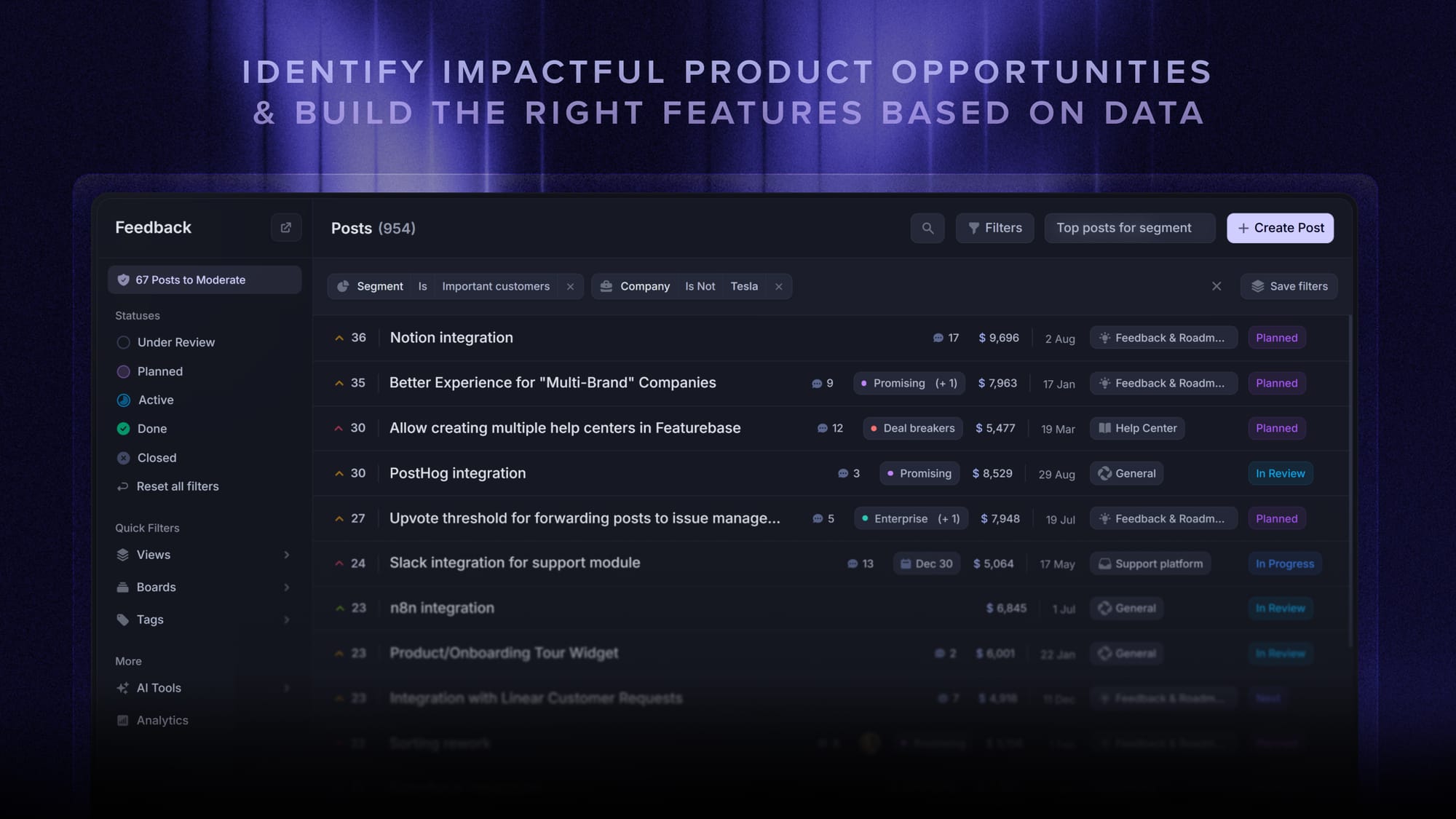
This is where a dedicated feedback platform earns its keep. With Featurebase you can run your NPS and CSAT surveys and send the responses into the same place your feature requests, roadmap, and support conversations already live, so a recurring theme in survey comments becomes a prioritized item on your roadmap instead of a note that gets lost in a spreadsheet.
Common customer feedback survey mistakes to avoid
A few habits quietly wreck otherwise good surveys, so they are worth naming before you launch:
- Surveying too often: Bombarding the same people tires them out and lowers answer quality. Cap how frequently any single customer is asked.
- Running a survey with no plan: If you have not decided what you will do with the answers, you are wasting the customer's time and yours. Define the goal first.
- Relying on a single metric: One number shows one side of the experience. Layer CSAT, NPS, and CES so you see satisfaction, loyalty, and effort together.
- Ignoring a falling response rate: A declining rate is an early warning that customers no longer believe their feedback matters. Treat it as a signal, not a footnote.
Run customer feedback surveys with Featurebase
Featurebase is a modern feedback & support platform that helps product teams collect feedback through multi-step surveys, integrations, and a feedback portal, all in one place, to make better product decisions. It's loved by thousands of product teams from companies like Lovable, Raycast, and n8n. 💫
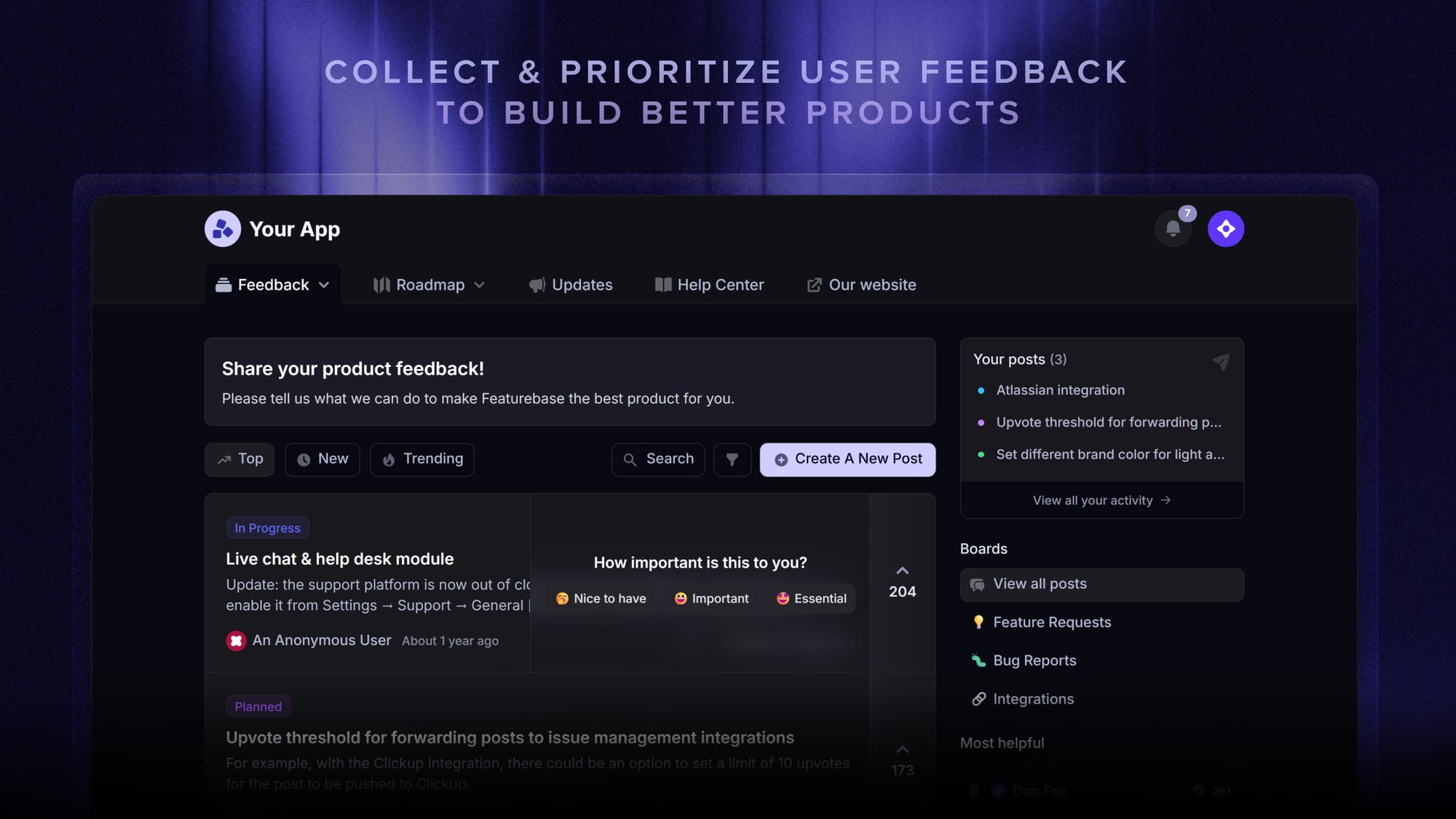
Users on G2 rate it 4.7 out of 5, and a recurring theme in that feedback is how it pulls scattered requests from Slack, email, and support into a single portal tied directly to the roadmap.
"Easy to use and great for managing and prioritising user feedback. Like that we're able to log user feedback as well as have users themselves submit their own requests. Integration with Intercom, Jira and ClickUp was the deciding factor in going with Featurebase as our feedback tool.
Verified User in Commercial Real Estate, Small-Business (G2 review, 5/5)
Top features:
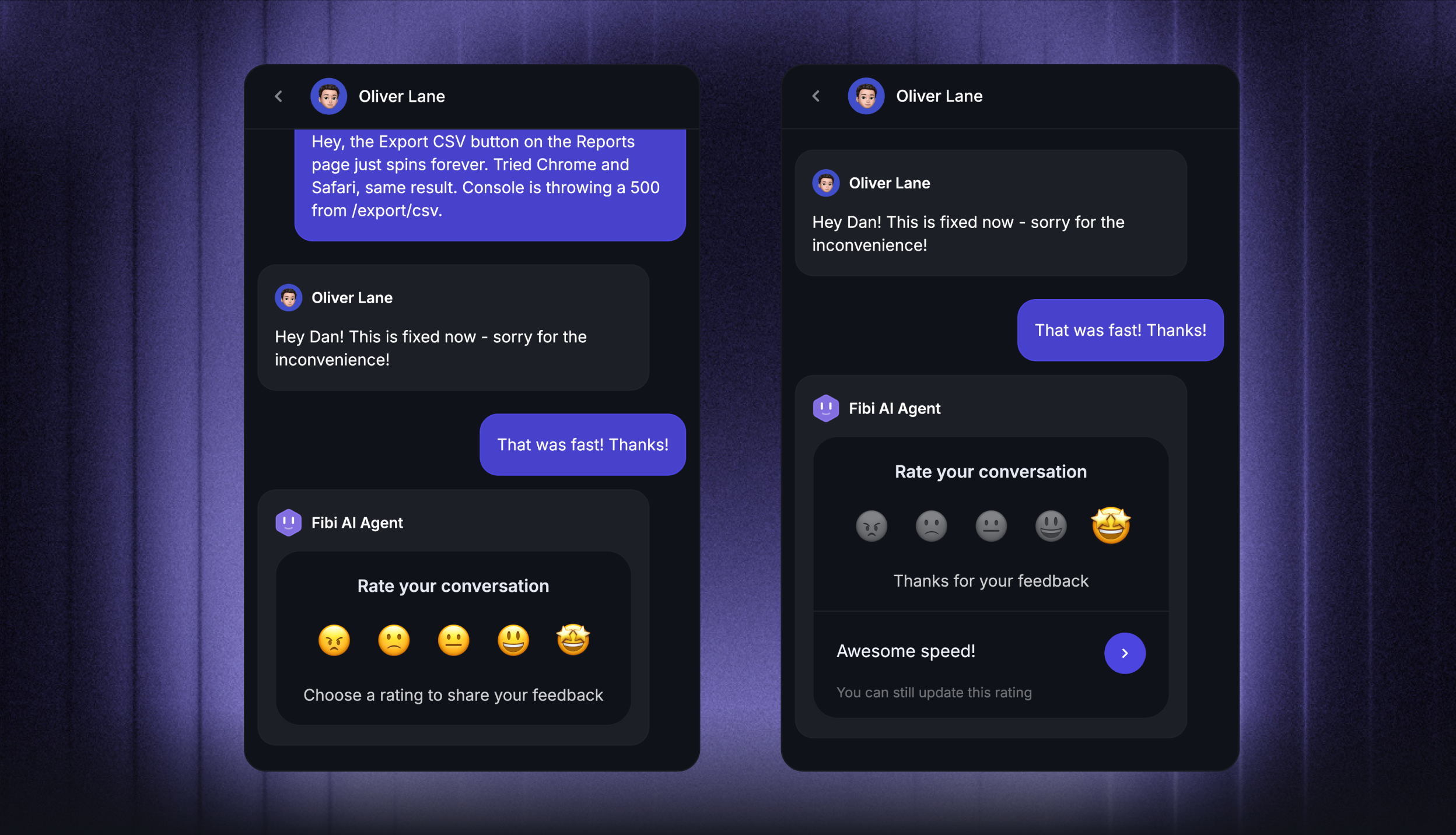
- Surveys (NPS, CSAT, etc) – Create targeted no-code surveys to ask users anything and measure customer satisfaction.
- User targeting – Target specific user segments based on properties like plan, role, location, etc.
- Conditional multi-step surveys – Ask follow-up questions based on conditional logic and users' answers
- In-app widgets – Collect ideas, bug reports, and suggestions directly from your website or webapp with interactive widgets
- Feedback forum – Public feedback forum where users can submit ideas and vote on features helping you know what customers want
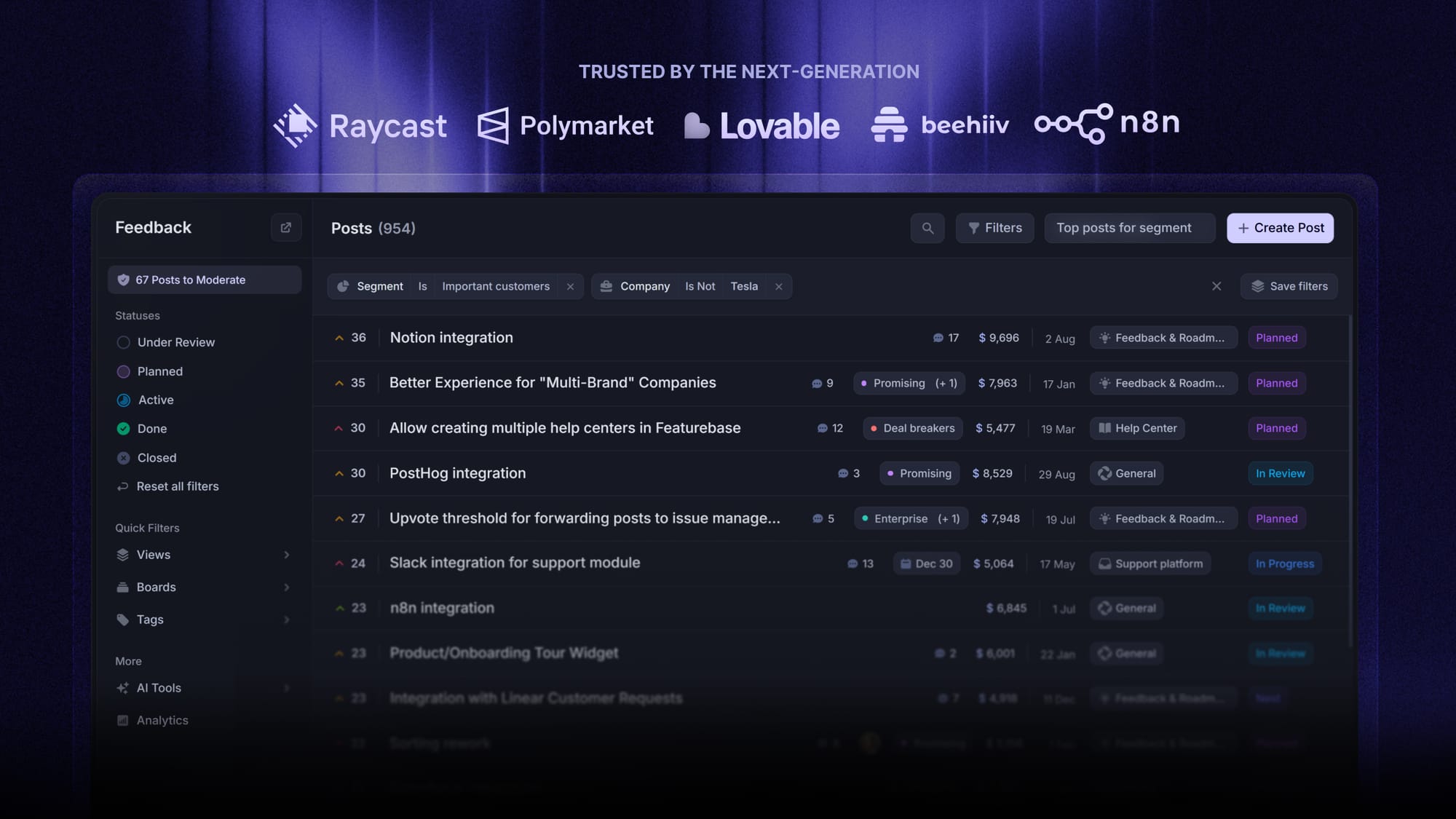
- Prioritize by revenue – Link feedback with customer revenue, company size, and much more to better understand the impact of ideas
- Integrations – Connects with Slack, Linear, Jira, HubSpot, and more
- Plus, help center, product roadmaps, release notes, and customer surveys – all in one place
Pricing: Free plan available with unlimited survey responses and feedback. Paid plans start at $29/seat/mo.
Instead of having 4+ different tools, Featurebase enables you to replace all your customer-facing tools by bringing your feedback collection, product updates, support, and help center together in one place, helping you build products your users love.

Get the best feedback tool
Centralize feedback, identify product opportunities, and build the right features
Turn survey responses into better products
The best survey programs share one habit above all others. They measure in order to act, not simply to collect. Pick the metric that fits the question, ask a few clear questions, read every reply, and tell customers what you changed because of them.
Featurebase brings your surveys, feature requests, roadmap, and product updates into one place, so the feedback you gather actually turns into shipped work instead of a report nobody opens.
There is a free plan with unlimited survey responses, so there is no downside to trying it. 👇
✨ Start collecting & managing feedback with Featurebase for free →
FAQs
What is the difference between CSAT, NPS, and CES surveys?
CSAT measures how satisfied someone was with a specific interaction, usually right after it happens. NPS measures long-term loyalty by asking how likely a customer is to recommend you. CES measures how much effort it took to get something done. Most teams run all 3, because each answers a question the others miss.
How many questions should a customer feedback survey have?
Keep it short. Most guidance lands around 5 to 10 questions, with 3 to 5 enough for a quick transactional survey. Completion rates drop sharply once a survey runs past a few minutes, so cut any question you will not act on.
How often should you send customer feedback surveys?
It depends on the type. Send CSAT right after an interaction, NPS on a steady quarterly cadence, and broader product or relationship surveys a few times a year. Whatever the cadence, cap how often any single customer is asked, because survey fatigue lowers both response rates and answer quality.
What is a good response rate for a customer feedback survey?
A response rate between 20% and 30% is generally considered solid, and anything above 50% is excellent. In-app and post-interaction surveys usually outperform email. A falling response rate is worth watching on its own, since it often signals customers no longer believe their feedback leads to change.
What are the advantages and disadvantages of customer feedback surveys?
The main advantage is direct, measurable insight into how customers feel, which helps you spot churn risk, prioritize fixes, and track sentiment over time. The downsides are that surveys only capture the people who respond, they can suffer from bias and fatigue, and a score alone does not tell you why. The fix is to keep surveys short, pair ratings with one open question, and combine survey data with signals like support tickets and reviews.
What is the best tool for running customer feedback surveys?
The best tool depends on whether you just want a score or want to act on what you learn. Look for targeted NPS and CSAT surveys, conditional follow-up questions, and a way to route responses to whoever owns the fix. Featurebase lets you run targeted in-app NPS and CSAT surveys and send the responses into the same workspace as your feature requests and roadmap, so survey insights turn into prioritized work instead of a standalone report.