Blog Customer ServiceCustomer Service Collaboration: How to Get It Right
Customer Service Collaboration: How to Get It Right
Learn what customer service collaboration is, why siloed support quietly costs you customers, and the practical tactics and tools that help your team resolve issues faster together.


Great customer service rarely comes down to one agent working alone. The trickiest tickets need a second opinion, a subject-matter expert, or an answer that lives in another department entirely. When those people can't work together easily, customers feel it: repeated questions, slow replies, and conflicting answers.
Customer service collaboration is how you fix that. This guide covers what it means, why it pays off, the tactics that make it work in practice, and what to look for in a tool. 👇
Key takeaways:
- Customer service collaboration means agents, and often other teams, share context and work on customer issues together instead of solving them in isolation.
- Siloed support has a real cost: customers hate repeating themselves, and internal silos are widely cited as the single biggest barrier to good service.
- The highest-impact tactics are structural, not motivational: a shared team inbox, internal notes instead of forwarded emails, clear ownership, shared KPIs, and standardized handoffs.
- Collaboration shouldn't stop at the support team. Looping in sales, product, and engineering turns everyday support conversations into a better product.
- Featurebase✨ brings your team inbox, internal notes, and feedback-to-roadmap loop into one platform, so support and product can collaborate without switching tools.
What is customer service collaboration?
Customer service collaboration is the practice of having your support team, and often other departments, work together to resolve customer issues rather than handling them in isolation. Team members share information, coordinate on tricky cases, and keep each other in the loop so the customer gets one clear, accurate answer.
In practice, it comes down to a few specific habits:
- Shared visibility: everyone can see the customer's history and open conversations, so no one has to start from scratch or ask the customer to re-explain.
- Internal discussion: agents pull in a colleague or another team behind the scenes, and the customer only ever sees the polished, final response.
- Clear handoffs: when a conversation moves between people or teams, the full context moves with it instead of getting lost.
The goal isn't to have 5 people weigh in on every email. That creates bottlenecks, not better service. The goal is to make the right expertise easy to reach in the moments when a single agent can't resolve something alone.
Why customer service collaboration matters
When collaboration breaks down, customers are the first to notice. 74% of customers find it frustrating to tell their story over and over to different agents, according to Zendesk's CX Trends research. Every time context gets lost between people, you're recreating exactly that frustration.
The barrier is usually organizational, not technical. In Salesforce's research, 70% of customer service professionals say a silo mentality is the biggest obstacle to great service, and more than half feel that sales, service, and marketing simply don't share information well.
Getting collaboration right pays off in a few concrete ways:
- Faster resolutions: when an agent can reach the person with the answer in seconds instead of forwarding an email and waiting, time-to-resolution drops across the whole team.
- More accurate answers: pooling knowledge means customers get the right fix the first time, rather than a confident guess that creates a follow-up ticket.
- Less agent stress: no one has to feel like they're solving every hard problem alone, which reduces burnout on teams that deal with frustrated customers all day.
- A stronger product: recurring issues and feature requests surface faster when support shares what it hears, so the underlying problems actually get fixed.
How to improve customer service collaboration
Better collaboration comes from structure, not pep talks. These are the changes that move the needle, roughly in order of impact.
Give everyone shared visibility with a team inbox
The foundation of collaboration is a shared view of customer conversations in a team inbox. When every agent can see the full history and who's working on what, they stop asking customers to repeat themselves and stop duplicating each other's replies. A personal inbox per agent is where collaboration goes to die, because the context is locked away where teammates can't reach it.
Discuss issues with internal notes, not forwarded emails
Most collaboration happens in the gap between "I don't know the answer" and "here's the answer." The faster you close that gap, the better. Internal notes and @mentions let an agent pull in a colleague right inside the conversation, get an answer in minutes, and reply to the customer without any of the back-and-forth ever being visible externally.
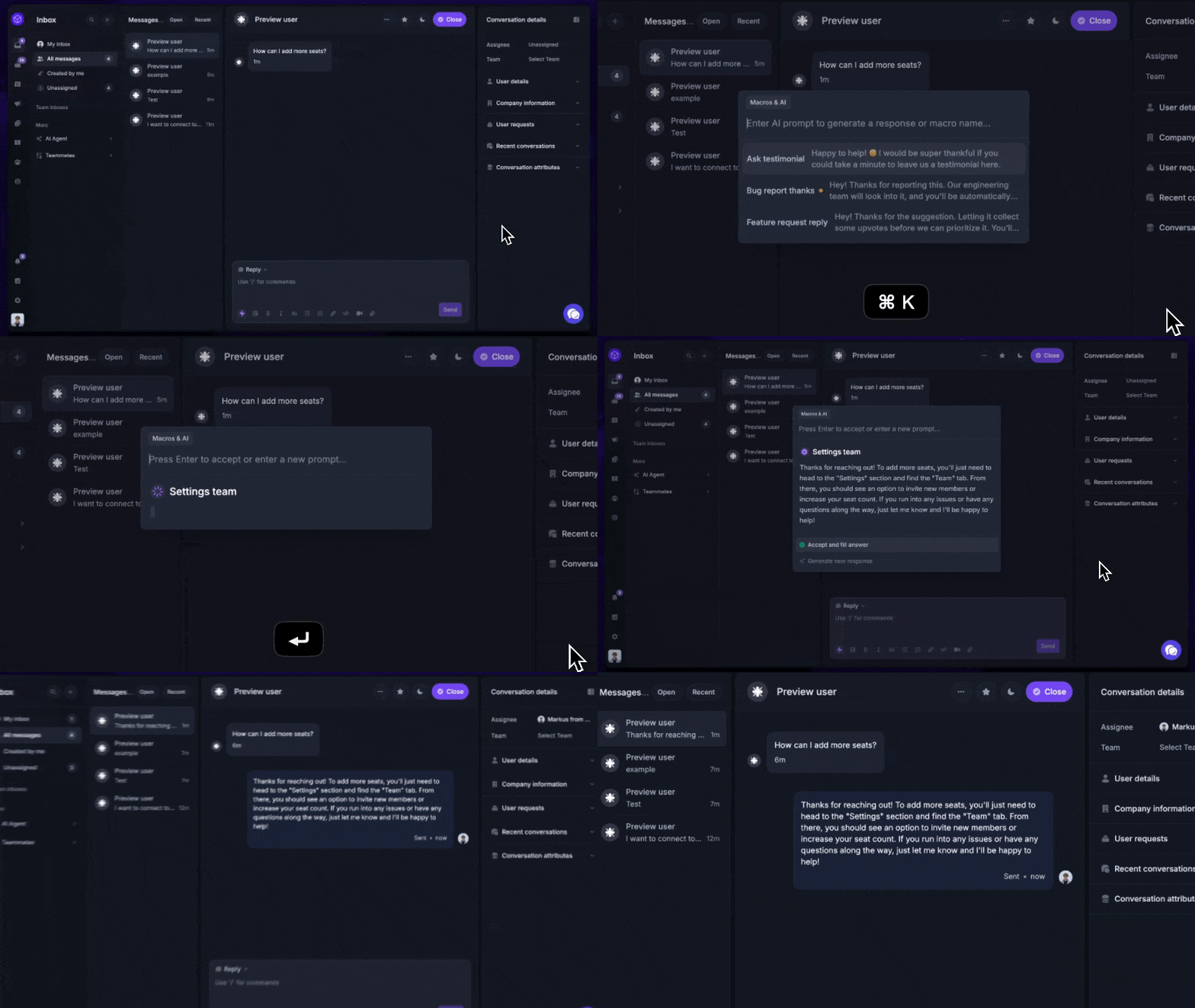
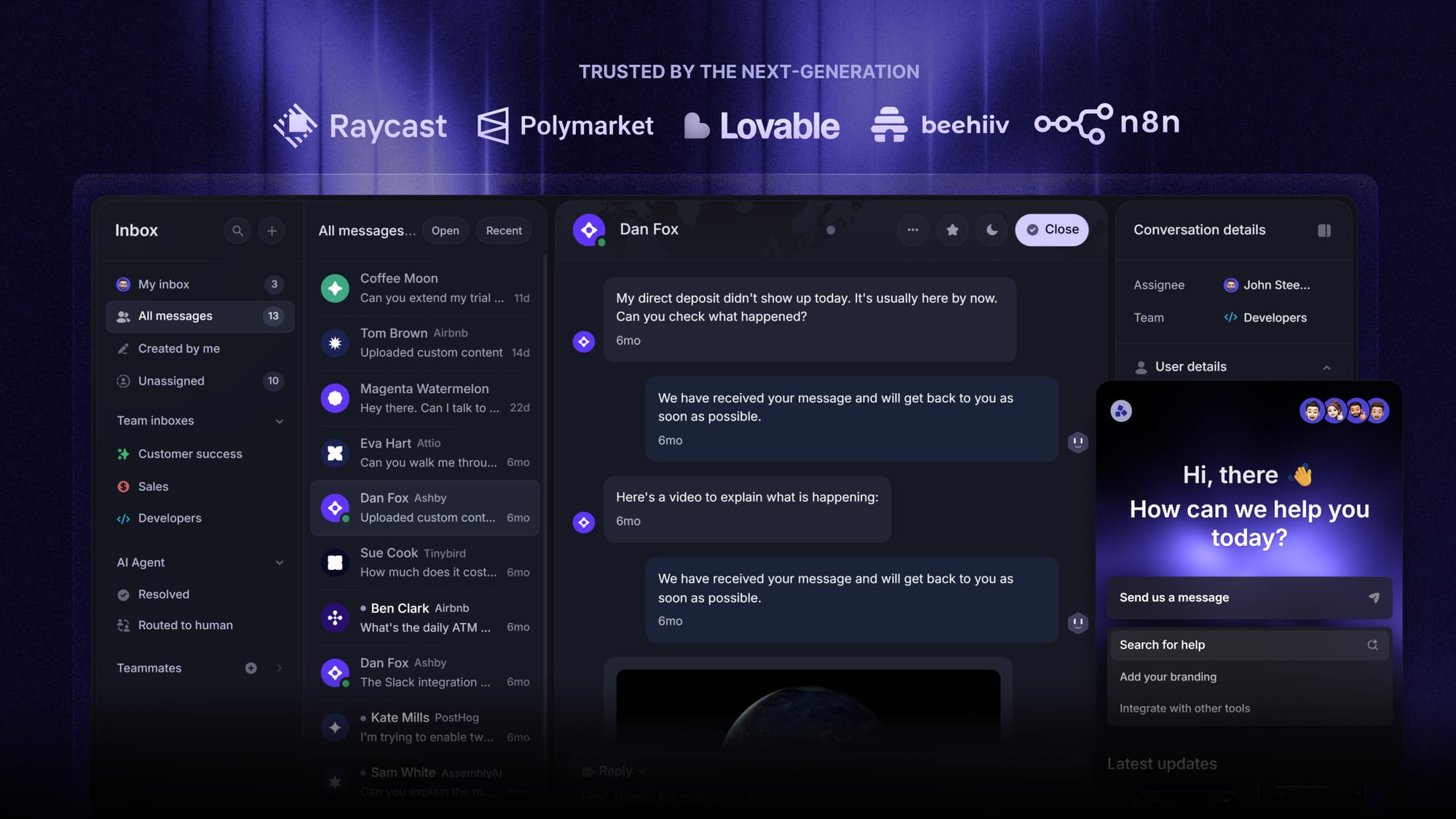
This is where a unified tool helps. With Featurebase, agents handle live chat, email, and Slack from one shared inbox and add internal notes or ask the AI Copilot for context without leaving the ticket, so the whole discussion stays attached to the conversation instead of scattered across other apps.
Assign clear ownership for every conversation
Collaboration only works when someone is clearly responsible for each conversation. A shared inbox where nobody is assigned is just a group of people watching each other not respond. Assign every conversation to a person or team, so it's always obvious who owns the next reply, even when several people have chipped in behind the scenes.
Share team-based KPIs, not just individual ones
If agents are measured purely on their own numbers, they have little reason to help each other. Balancing individual metrics with team-level goals like shared CSAT, median resolution time, and SLA adherence rewards the behavior you actually want. When the whole team wins or loses together, helping a colleague stops feeling like a distraction from your own targets.
Standardize handoffs between agents and teams
Most context gets lost at the handoff. Define a simple, consistent way to pass a conversation between shifts, escalation tiers, or departments: what gets summarized, who takes ownership, and how the customer is kept informed. A clean handoff means the next person picks up where the last one left off, instead of the customer having to re-explain the whole situation.
Collaborating beyond the support team
The best support collaboration doesn't stay inside the support team. Some of the most valuable customer interactions need input from sales, product, or engineering, and support sits on insights those teams rarely see directly.
Two relationships matter most:
- Support and sales: sales sets expectations during the deal, and support delivers on them afterward. Regular syncs on escalations, churn risks, and common questions keep both teams telling customers the same story.
- Support and product: agents hear about bugs, confusing features, and feature requests before anyone else. That signal is gold, but only if there's a path to route it to the people who can act on it.
The trick is making cross-team collaboration low-friction. If it takes five steps and a separate Slack channel to get a product manager's input, your team simply won't do it. If it takes an @mention or a single click to log a feature request, they'll do it every time.
This is where closing the loop matters. With Featurebase, support agents can turn recurring conversations into tracked feature requests, tie them to the customers asking, and automatically notify those customers when the fix ships. That turns support from a cost center into a steady source of product improvements.
What to look for in a customer service collaboration tool
The right tool makes collaboration the default rather than the exception. When you're evaluating options, look for:
- A true collaborative inbox: not just shared access to an email account, but assignment, internal notes, and collision detection so agents don't reply over each other.
- Internal notes and @mentions: the ability to discuss a conversation privately, inside the ticket, without CCing people or leaving the tool.
- Clear ownership and routing: automatic or one-click assignment so every conversation has an owner and the right person picks it up.
- Cross-team connections: integrations with the tools sales, product, and engineering already live in, like Slack, Linear, and Jira, so handoffs don't hit a wall.
- A feedback and roadmap loop: a way to capture what support hears and route it to product, then close the loop with customers when something changes.
- Shared reporting: team-level analytics so managers can spot bottlenecks and measure whether collaboration is actually improving resolution times.
You don't need a separate app for each of these. The fewer tools your team has to switch between, the less context gets lost in the cracks.
Bring support and product collaboration into one place: Featurebase
Featurebase is a modern AI customer support platform for product-led SaaS. It combines AI-powered support, help center, and feedback management into a single platform for startups that want all their customer-facing tools in one place. Featurebase is loved by thousands of support teams from companies like Lovable, Raycast, and n8n. 💫
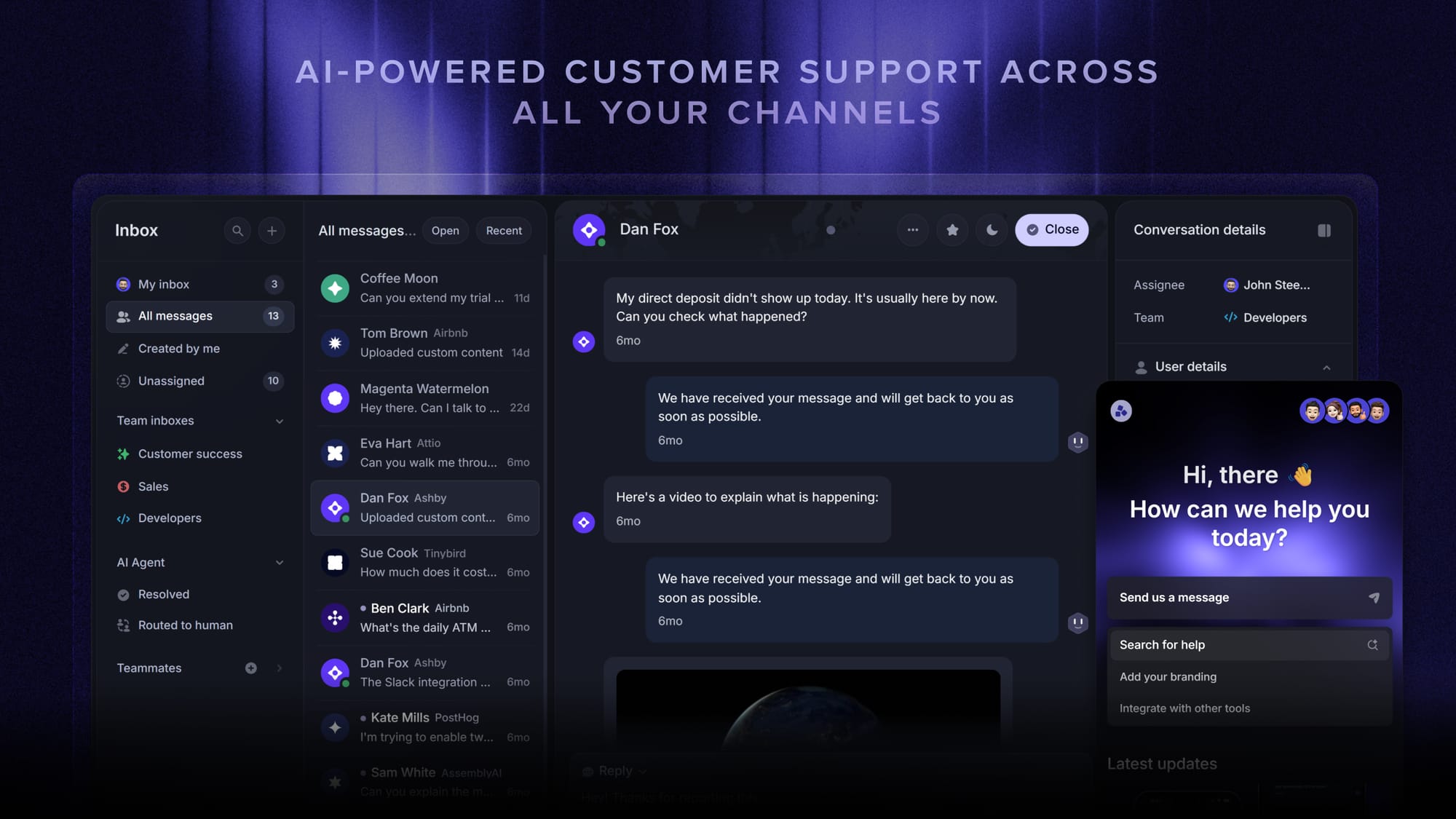
For collaboration specifically, the advantage is that your team inbox, internal notes, and feedback-to-roadmap loop all live in the same platform, so context never gets lost handing off between separate tools.
Top features:
- Omnichannel inbox – Manage live chat, email, and Slack conversations from one AI-powered view
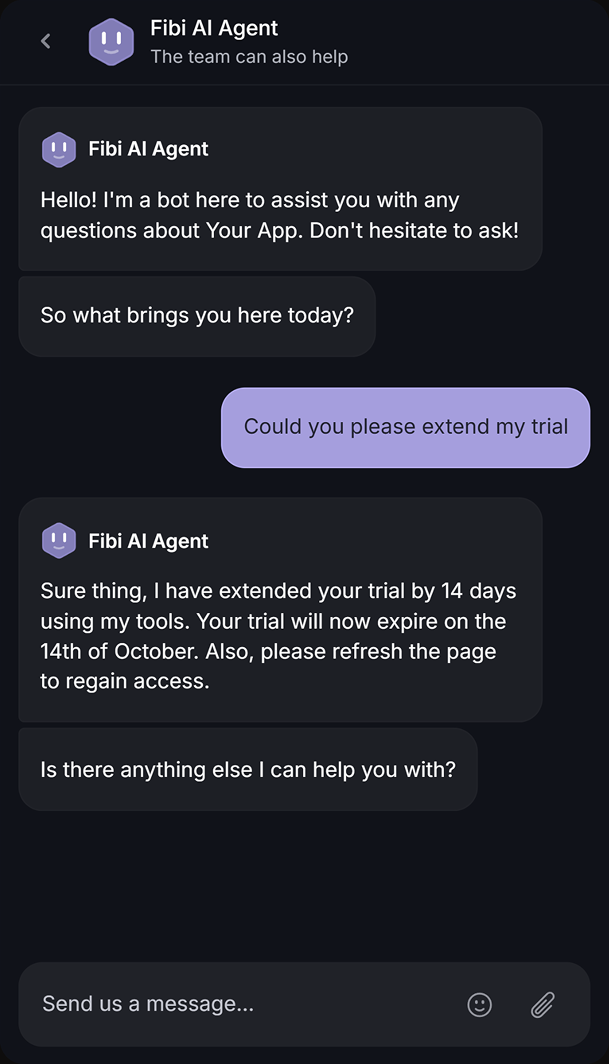
- Fibi AI Agent - Resolve customer issues on autopilot & run custom actions like trial extensions and refunds
- Help center with AI search – Provide instant, multilingual self-serve answers
- Workflows & automations – Auto-assign tickets, route conversations, collect customer data, and more
- AI Copilot – Help your agents answer customers faster with AI Copilot that uses your internal knowledge
- Multi-brand support – Manage multiple Help Centers and Live chats from a single workspace
- Automatic AI translations – Automatically translate all messages and help articles to your customers native language
- Service Level Agreements – Track SLAs to make sure your team responds to customers on time, every time
- Mobile app – Respond to customers, receive notifications, and unblock users on the go
- Feedback & roadmap tools – Collect feature requests and close the loop with updates
- Product updates – Publish release notes with a changelog page, in-app widget, and emails
- Integrations – Connects with Slack, Linear, Jira, HubSpot, and more
Pricing: Free plan available with unlimited conversations. Paid plans start at $29/seat/month with $0.49 per AI resolution.
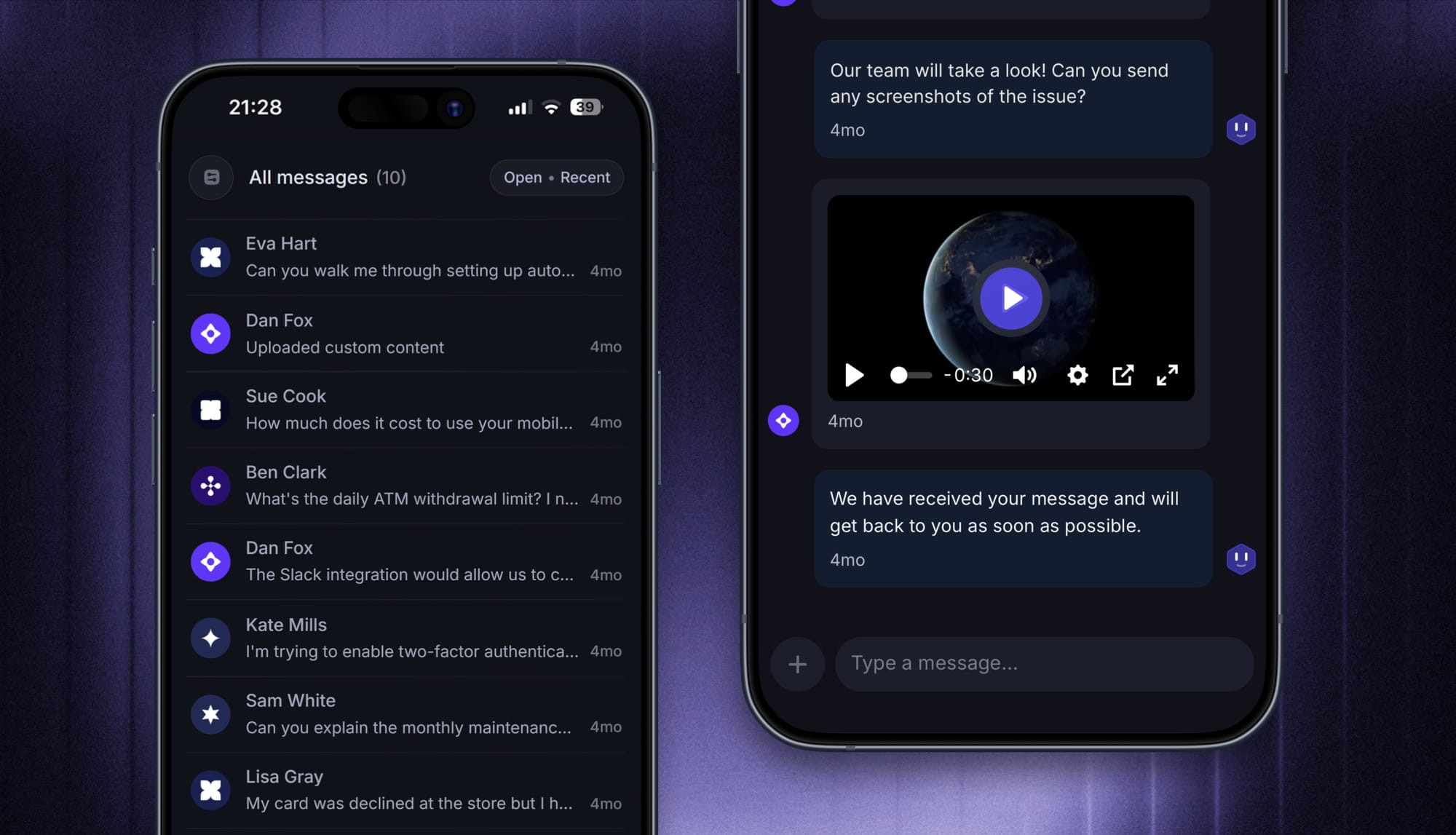
Featurebase covers all the basic support features that legacy platforms do, but with a much more modern approach. It comes with AI automations, a mobile app, and multiple channels (email, live chat, Slack, etc.).

Get the best customer service tool in the market!
Automatically resolve 70% of customer requests & cut down manual support loads
Conclusion
Customer service collaboration isn't a single tool or a one-off initiative. It's a set of habits - shared visibility, internal discussion, clear ownership, and clean handoffs - backed by tools that make the right behavior the easy behavior. Start with one change, whether that's moving to a shared inbox or setting up a feedback loop with your product team, and build from there.
If you want your support and product collaboration in one place, Featurebase gives your team an AI-powered shared inbox, internal notes, and a built-in feedback-to-roadmap loop, so agents can resolve issues together and turn what they hear into a better product. 💫
It comes with a free plan, and the onboarding is fast, so there's no downside to trying it. 👇
✨ Automate your support with the fastest AI-enhanced Inbox today →
FAQs
What are the 5 C's of collaboration?
The 5 C's of collaboration are most commonly listed as communication, cooperation, coordination, contribution, and commitment. In a support context they work as a useful checklist: agents need to communicate openly, cooperate on tricky cases, coordinate handoffs, contribute their own expertise, and stay committed to a shared standard of service. Different sources word them slightly differently, but the theme is the same - collaboration is a set of behaviors, not a personality trait.
What are the 4 types of collaborators?
There's no single official list, but one widely used model is Deloitte's Business Chemistry framework, which splits people into four working styles: pioneers (idea-driven), drivers (results-driven), integrators (relationship-driven), and guardians (detail-driven). Knowing the mix on your team helps you assign work and run meetings in a way that plays to each style. For support teams, the practical takeaway is that a healthy team blends fast problem-solvers with careful, detail-focused agents.
What tools help customer service teams collaborate?
The core tool is a shared or collaborative inbox that lets multiple agents see, discuss, and assign customer conversations in one place. From there, you layer on internal notes, clear ownership, and a way to route recurring issues to other teams. Featurebase combines an AI-powered team inbox, internal notes, and a feedback-to-roadmap loop, so support agents can collaborate on tickets and pass product insights straight to the product team without switching apps.
How do you measure customer service collaboration success?
Track team-level metrics rather than individual output. Median resolution time, first-response time, CSAT, and the percentage of conversations that get reassigned or escalated are all good signals. If collaboration is working, resolution times drop and fewer conversations bounce between people before they're solved.
What's the difference between a shared inbox and a collaborative inbox?
A shared inbox usually means several people can access the same email account, like a support@ address. A collaborative inbox goes further, adding assignment, internal notes, collision detection, and audit trails so the team can work the same queue without stepping on each other. In practice, most modern support tools are collaborative inboxes, even when they're marketed simply as shared inboxes.
How can customer support and product teams work together?
Support teams hear about bugs, confusing features, and feature requests before anyone else, so the highest-value collaboration is routing that signal to product. Set up a simple path for agents to log recurring issues and feature requests, tie them to the customers asking, and close the loop when something ships. That turns everyday support conversations into a steady stream of product improvements instead of insights that die inside a ticket.