Blog ComparisonsFreshdesk vs Salesforce: Which Is Right for You?
Freshdesk vs Salesforce: Which Is Right for You?
Freshdesk vs Salesforce Service Cloud compared on features, AI, ease of use, and pricing, plus which support platform actually fits your team.


✨Psst... Looking for a modern & affordable alternative to Freshdesk and Salesforce? Check out Featurebase →
Picking between Freshdesk and Salesforce isn't really a feature checklist. It's a choice between two philosophies: a lightweight help desk you can launch in an afternoon, or a heavyweight CRM suite you build around your whole business.
When people say "Salesforce" in a support context, they almost always mean Salesforce Service Cloud, so that's what we're comparing here.
I'll break down how the two stack up on ticketing, AI, ease of use, integrations, reporting, and price, with a clear verdict for each. 👇
Key takeaways:
| Comparison point | Freshdesk | Salesforce Service Cloud |
|---|---|---|
| Best for | SMBs and startups that want fast setup | Large enterprises with complex, CRM-linked service |
| Ease of use | Quick onboarding, minimal admin | Steep learning curve, admin expertise needed |
| Pricing model | Transparent per agent, free plan | Premium per user, no free tier |
| Starting price | $15/agent/mo (Growth) | $25/user/mo (Starter) |
| AI | Freddy AI, practical and built in | Einstein & Agentforce, advanced and data-hungry |
| Standout strength | Speed to value | Depth and unified CRM data |
| Main trade-off | Thinner customization and reporting | Cost and complexity |
✨Want modern support without legacy bloat or enterprise pricing? Try Featurebase for free →
What are Freshdesk and Salesforce Service Cloud?
Both tools handle customer support, but they come at it from opposite directions. One is a standalone help desk. The other is a service layer bolted onto the world's biggest CRM.
Freshdesk
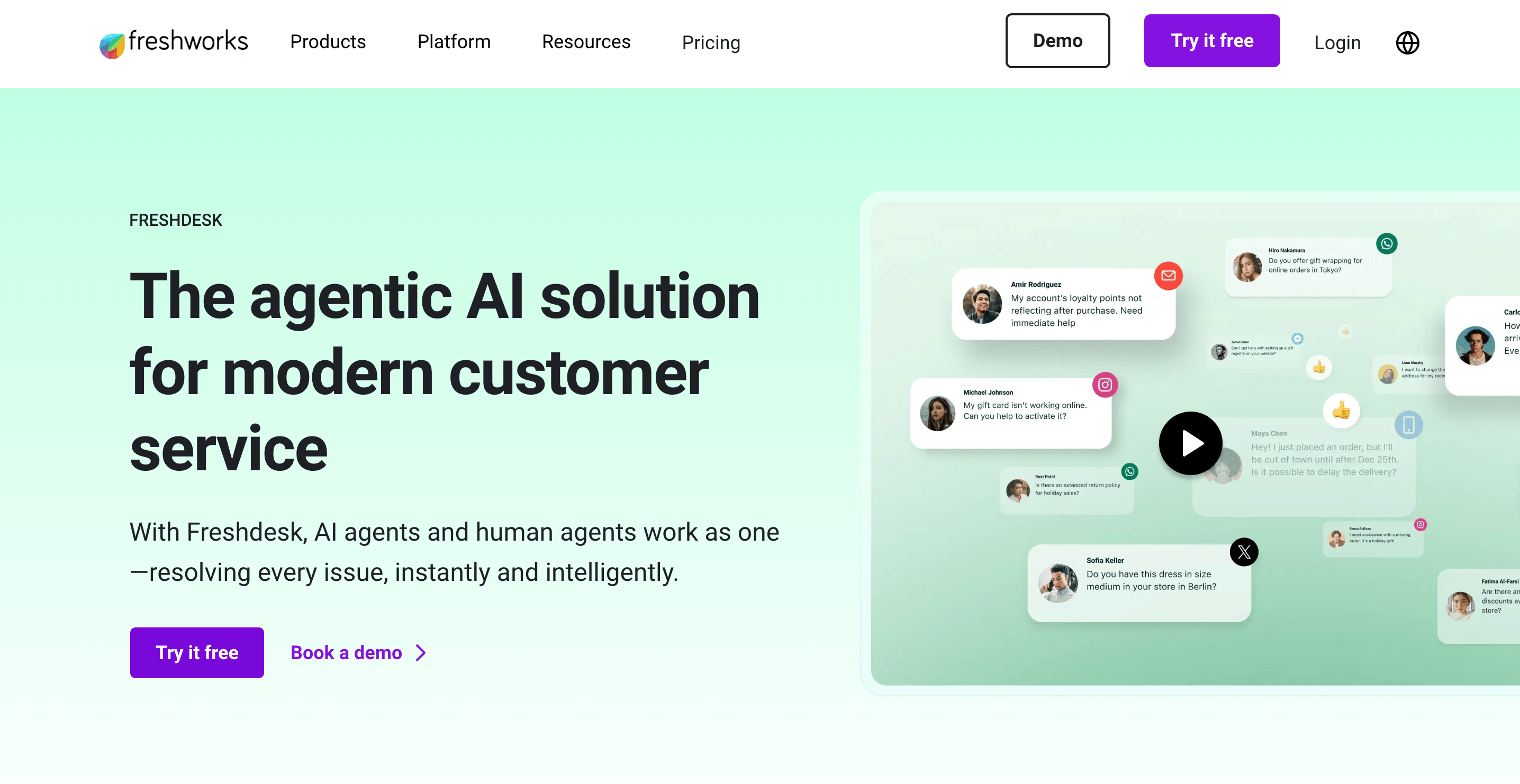
Freshdesk is a cloud help desk built by Freshworks. It centralizes email, chat, phone, social, and web-form tickets into one clean inbox, then layers automation and a knowledge base on top.
It built its reputation on being affordable and easy to adopt. Most teams are live in hours, not weeks, which is why it's a default pick for SMBs and startups.
Salesforce Service Cloud
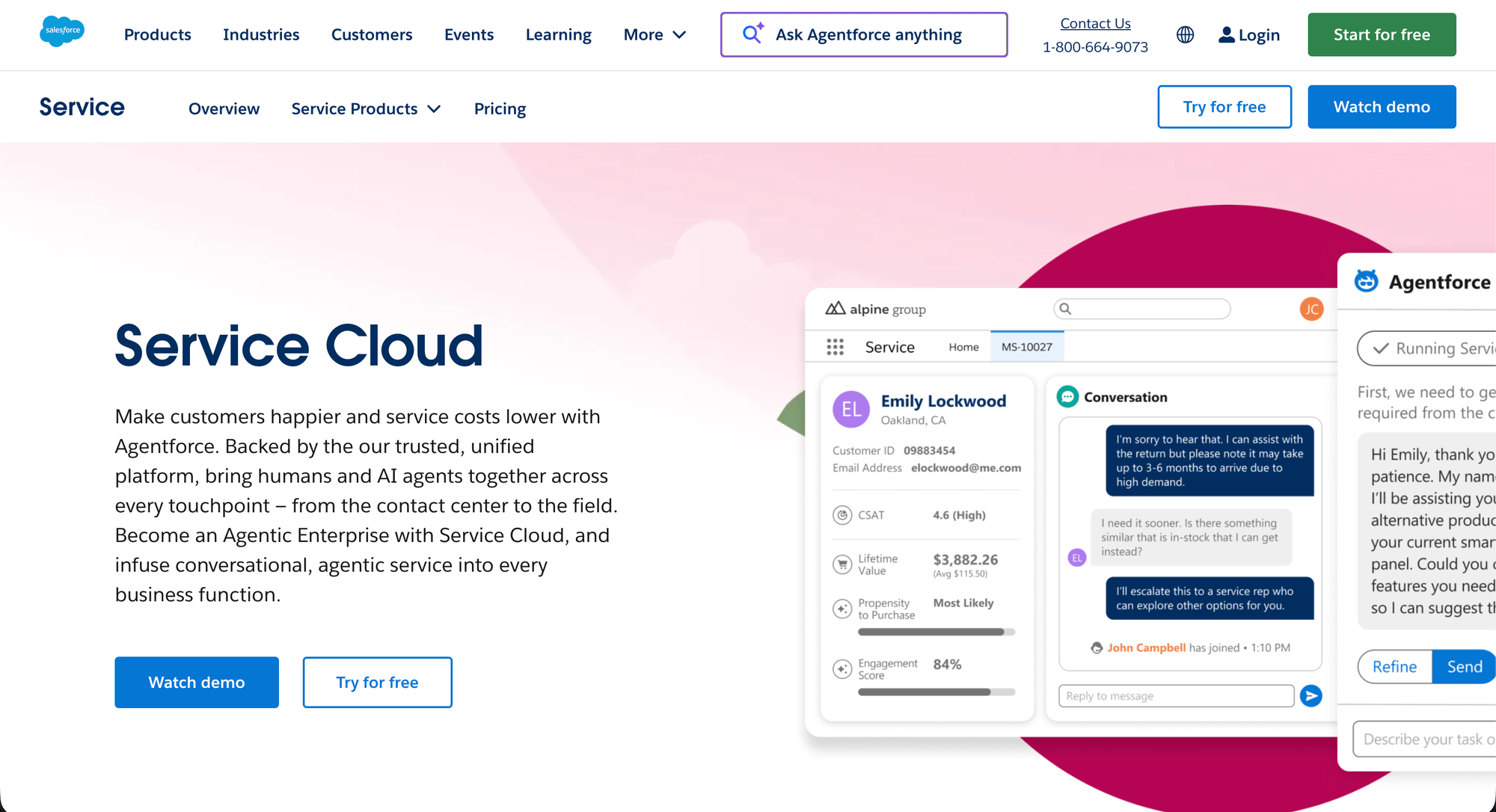
Salesforce Service Cloud is the customer service product inside the Salesforce platform. It turns support into part of a unified customer record, so agents, sales, and marketing all work from the same data.
That depth is its whole point. It handles advanced case routing, high-volume queues, and deep customization, but it expects configuration time and admin expertise to match.
Ticketing and multichannel support
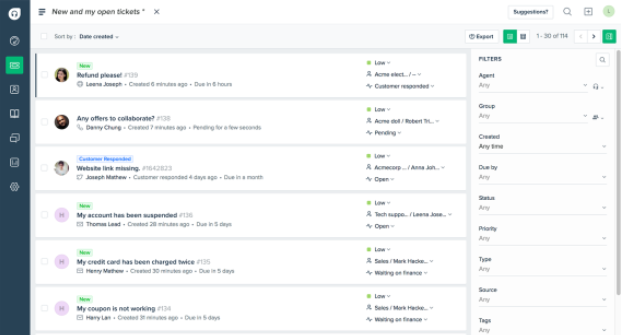
Freshdesk makes ticketing feel simple from day one. Email, chat, phone, social, and web forms funnel into one dashboard, and agents get collision detection, canned responses, and easy collaboration without heavy setup. It's a strong, no-friction customer support ticketing system for teams that want to start fast.
Service Cloud's case management is more sophisticated. Omni-channel routing, CTI phone integrations, and multi-department workflows make it built for organizations juggling a large, messy support footprint across many channels.
The split comes down to volume and complexity:
- Freshdesk wins when you want a tidy, ready-to-use ticketing experience that agents grasp immediately.
- Salesforce wins when you have intricate routing rules, huge queues, and many teams touching the same case.
Winner: depends on scale Freshdesk for clean, fast ticketing at SMB-to-mid-market volume. Service Cloud for enterprise queues and complex routing.
AI and automation
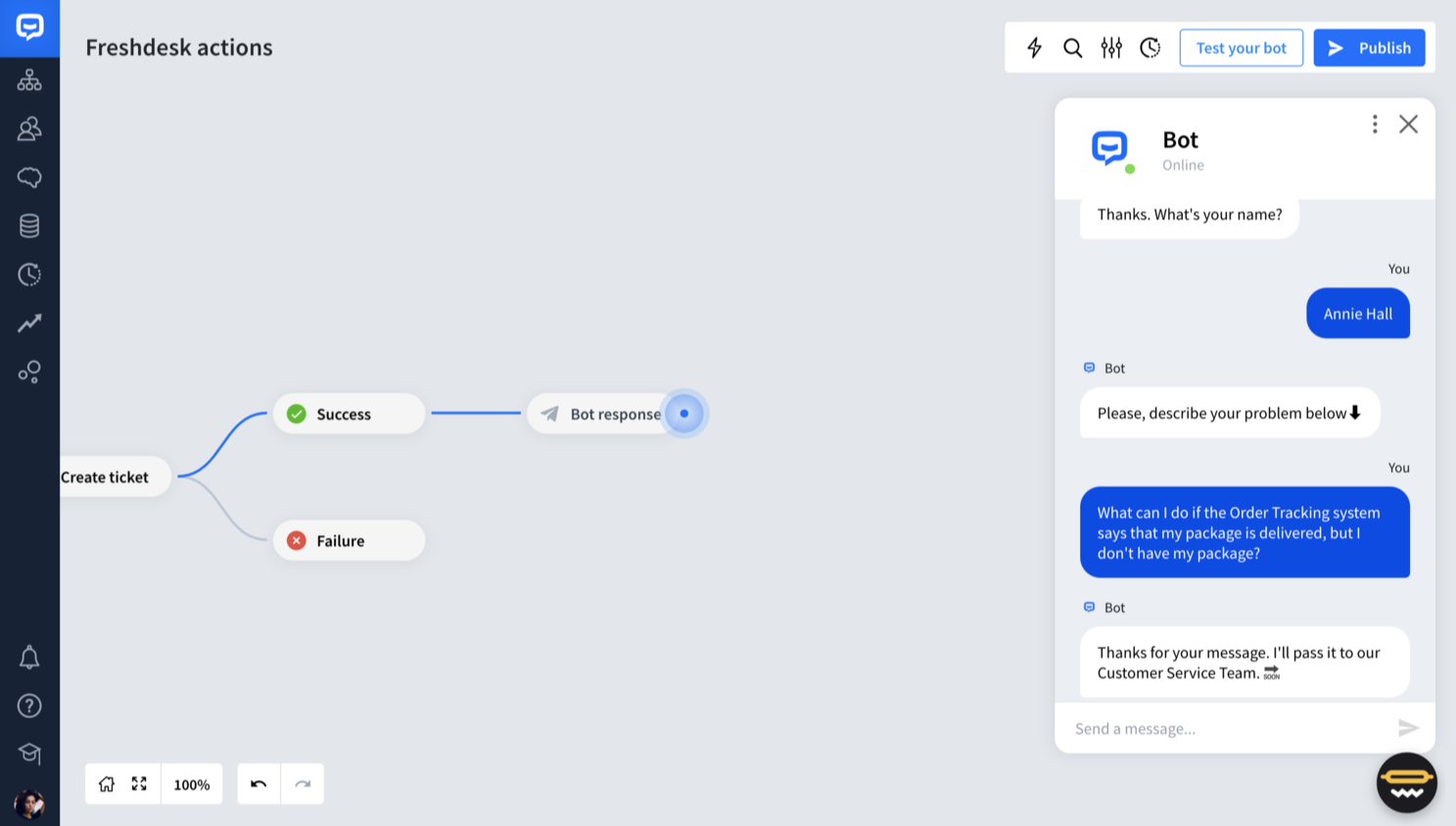
Freshdesk's AI runs on Freddy AI, a suite built into the help desk. It classifies tickets, suggests replies, summarizes long threads, and can trigger single-click actions, all designed so non-technical teams can use it without building an automation framework.
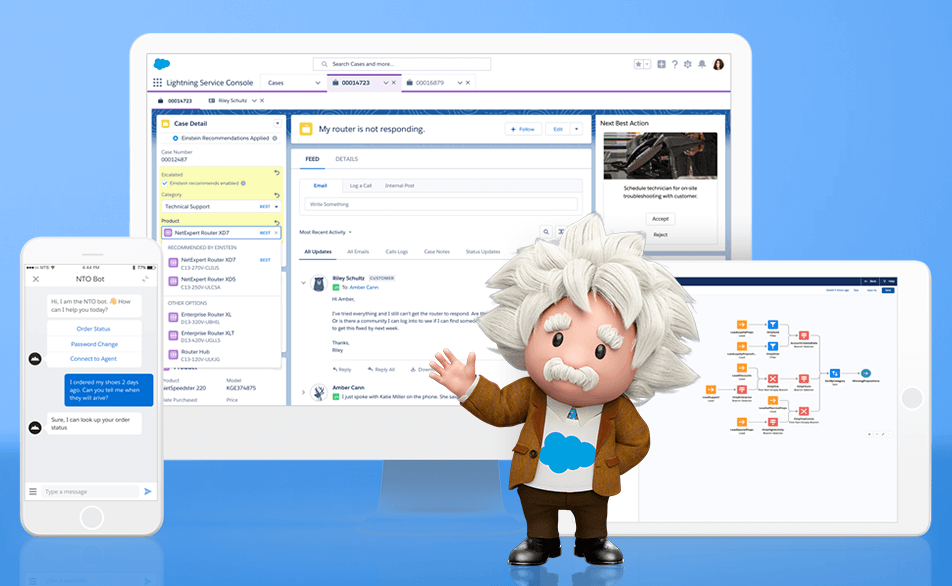
Salesforce goes much further with Einstein and the newer Agentforce layer. You get predictive case routing, automated recommendations, and autonomous AI agents that can run entire tasks and reach into external systems.
The trade-off is familiar: power versus practicality.
- Freddy AI is easy to switch on and useful out of the box, but narrower in scope.
- Einstein and Agentforce are far more capable and data-driven, but they need volume and configuration to shine, and they sit on Salesforce's pricier tiers.
Winner: Salesforce (for depth) Einstein and Agentforce are more powerful, but Freddy AI gives smaller teams more value per minute of setup.
Ease of use and implementation
This is where the two part ways most sharply. Freshdesk is built for rapid adoption with minimal technical lift. Agents are productive within hours because common features like SLA rules and email automation don't require code or a dedicated admin.
Salesforce Service Cloud is a different commitment. Going live means defining objects, building automation flows, configuring omni-channel routing, and customizing the Service Console. Even small changes, like custom case-assignment logic, can mean work in Flow Builder, which has a real learning curve.
G2 reviewers echo this clearly. Freshdesk users consistently praise how quickly new agents get comfortable, while a recurring theme in Service Cloud feedback is that the platform can feel overwhelming and often needs a skilled admin or implementation partner to manage well.
If you're a small team without dedicated Salesforce admins, Freshdesk is usually the more comfortable fit, and it sits among the best help desk software for small business for that reason.
Winner: Freshdesk Fast onboarding and low admin overhead beat raw configurability for most teams.
Integrations and ecosystem
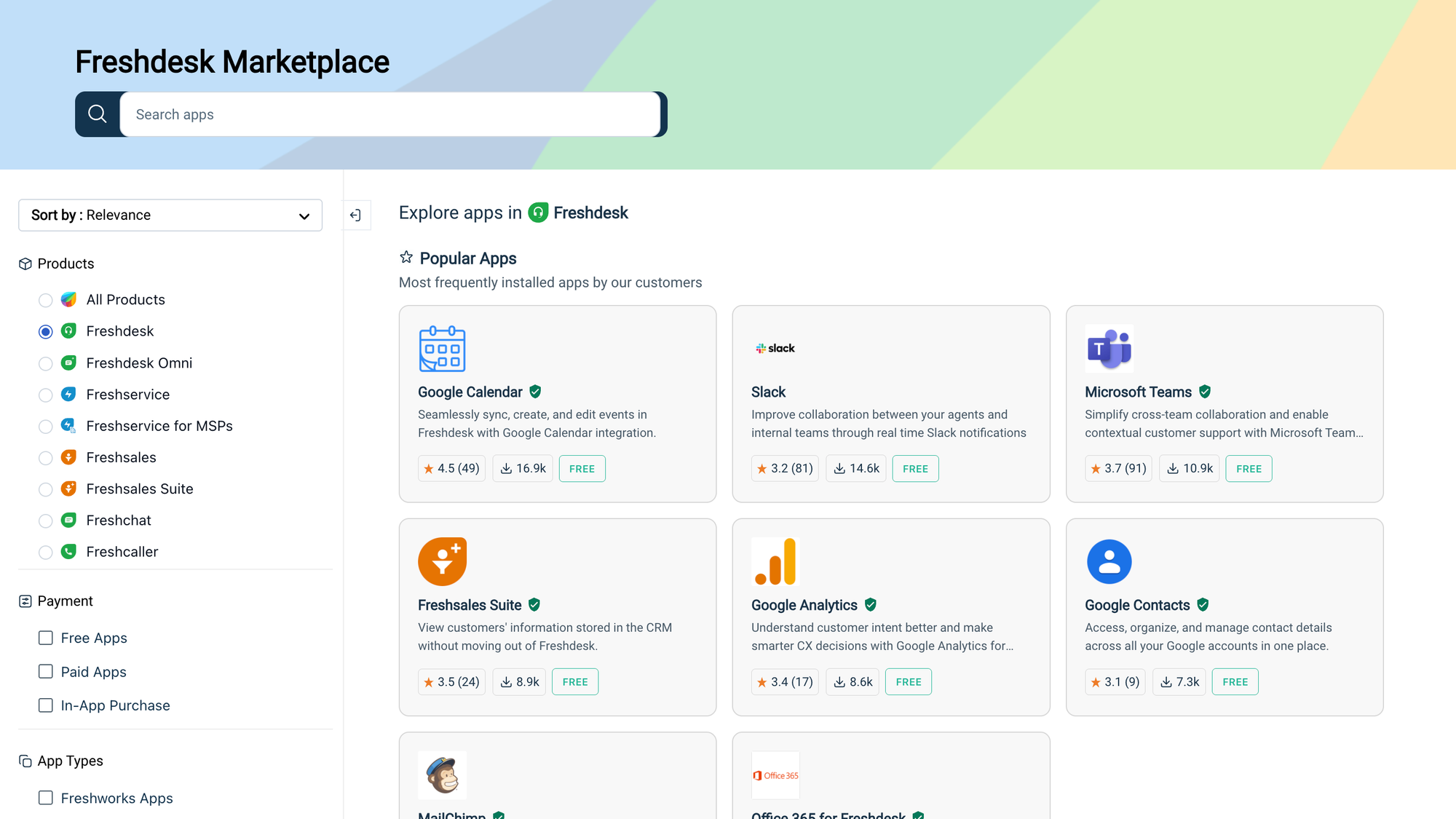
Freshdesk works as a flexible support layer. Its marketplace has 1,000+ prebuilt integrations covering tools like Slack, Microsoft Teams, Shopify, and Jira, and most can be enabled straight from the admin console. For teams that want a dependable omnichannel customer support platform without re-architecting their stack, that's plenty.
Salesforce operates inside a tightly linked ecosystem instead. Service Cloud, Sales Cloud, Marketing Cloud, and Slack all share customer data natively, and AppExchange adds thousands of approved connectors. For complex environments, Salesforce APIs and MuleSoft enable enterprise-grade, custom integrations.
The difference is philosophy again. Freshdesk plugs into your existing tools. Salesforce wants to be the platform your tools plug into.
Winner: Salesforce (for ecosystems) Unbeatable if you're already on Salesforce. Freshdesk's marketplace is more than enough for everyone else.
Reporting and customization
Freshdesk reporting is easy to set up and read. Prebuilt reports cover ticket volume, response and resolution times, SLA compliance, and CSAT, and real-time dashboards help leads spot queue backlogs as they happen. The limit is depth: G2 reviewers note that detailed insights often take configuration, and the heaviest customization is narrower than enterprise tools.
Salesforce reporting is far more adjustable. Its report builder can model intricate service workflows, and service data can be analyzed alongside sales, marketing, and product data for a full-company view.
Customization follows the same pattern:
- Freshdesk covers most everyday needs without developer resources.
- Salesforce scales to the most complex operations, but configuring it takes time and expertise.
Winner: Salesforce (for depth) Deeper reporting and customization, as long as you have the resources to build it.
Pricing and value for money
Pricing is the clearest contrast of all. Freshdesk's pricing is transparent and starts low, with a free plan for tiny teams. Salesforce is premium, per user, and has no free tier, only a trial.
| Freshdesk (per agent/mo, billed annually) | Salesforce Service Cloud (per user/mo, billed annually) | |
|---|---|---|
| Free plan | Yes, for 1-2 agents | No, trial only |
| Entry tier | Growth: $15 | Starter: $25 |
| Mid tier | Pro: $49 | Pro Suite: $100 |
| Higher tiers | Enterprise: $79 | Enterprise: $165, Unlimited: $330 |
| Top AI tier | Freddy AI sold as add-on | Agentforce / Einstein: $500 |
| Add-on gotchas | Freddy AI Copilot and AI Agent sessions billed separately | Digital Engagement, Voice, and Field Service can add $50-200/user each |
The headline numbers understate the gap. A Service Cloud Enterprise seat with common add-ons can climb well past $300 per user before discounts, while Freshdesk keeps most teams in the $15-79 range. G2 reviewers regularly flag Salesforce's total cost of ownership as a pain point for smaller teams.
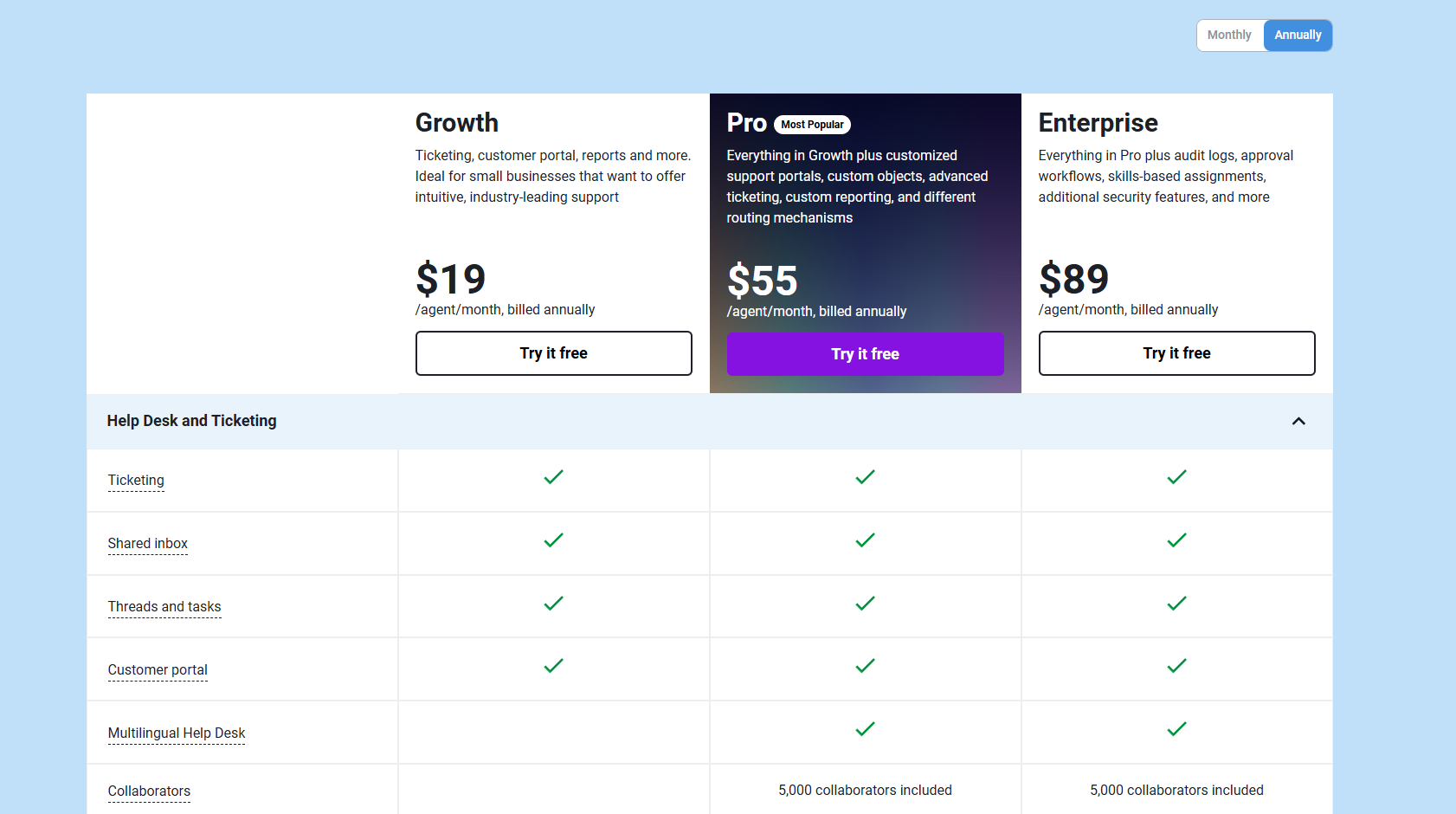
This is also where a modern alternative like Featurebase lands: a free plan with unlimited conversations, then $29/seat/month with $0.29 per AI resolution, so your cost tracks usage instead of headcount plus add-ons.
Winner: Freshdesk Dramatically lower and more predictable cost for everyone but the largest enterprises.
Looking beyond Freshdesk and Salesforce: Try Featurebase
Here's the thing most of these comparison points to: Freshdesk can feel too basic as you scale, and Salesforce can feel too heavy and too expensive. If you want modern support without either extreme, there's a middle ground worth a look. 👇
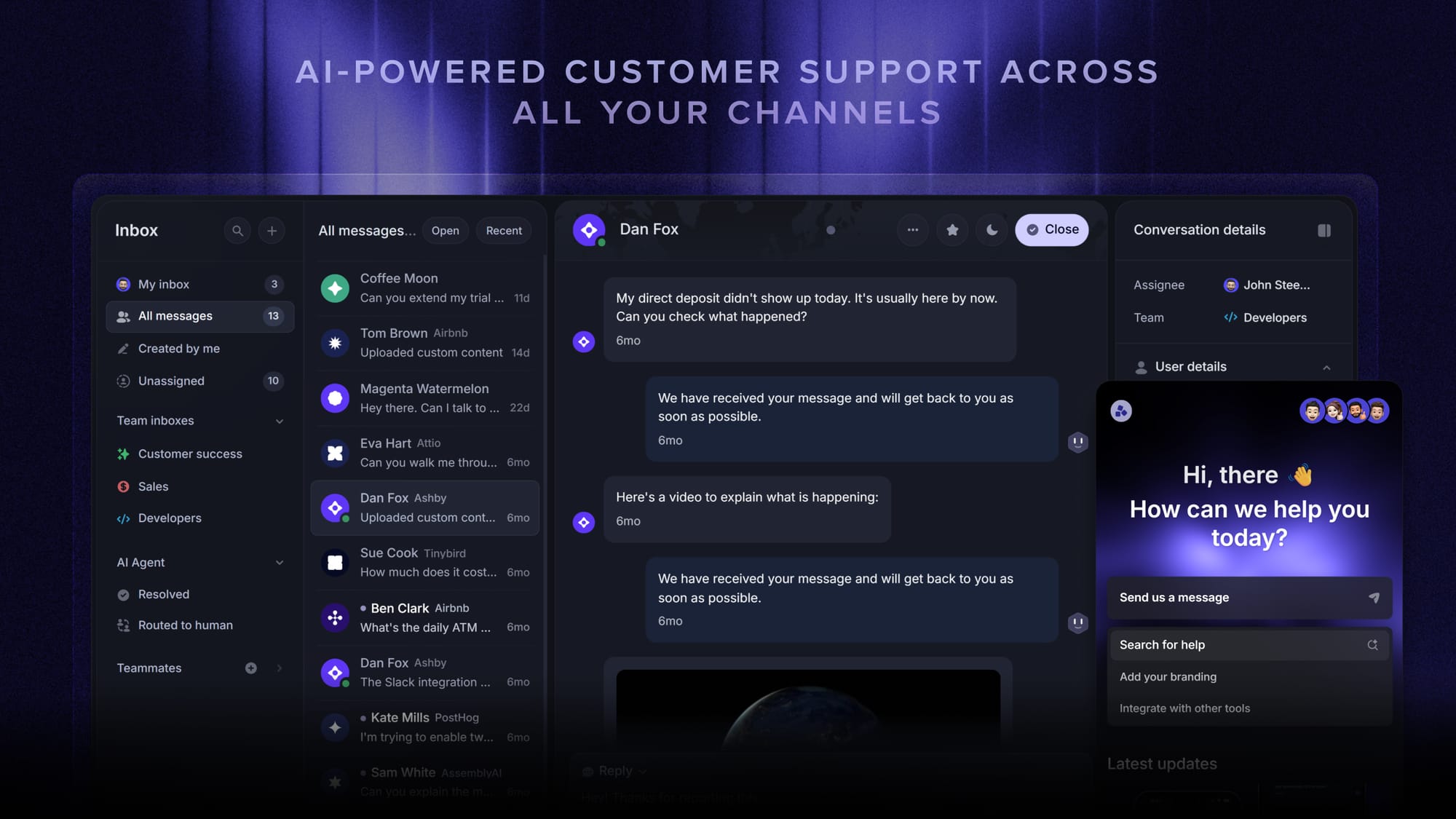
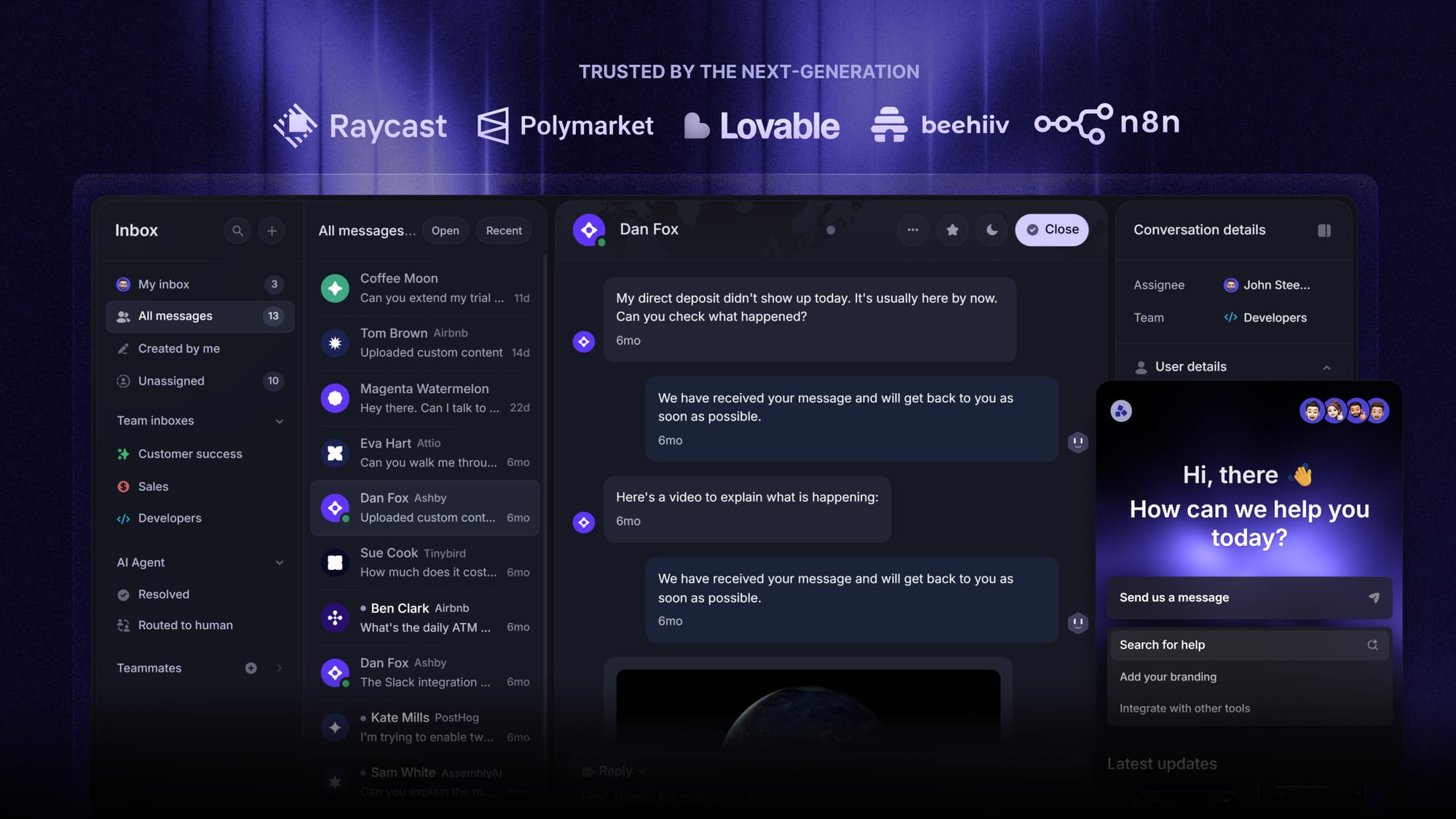
Featurebase is a modern AI customer support platform for product-led SaaS. It combines AI-powered support, help center, and feedback management into a single platform for startups that want all their customer-facing tools in one place. Featurebase is loved by thousands of support teams from companies like Lovable, Raycast, and n8n. 💫
Top features:
- Omnichannel inbox – Manage live chat, email, and Slack conversations from one AI-powered view
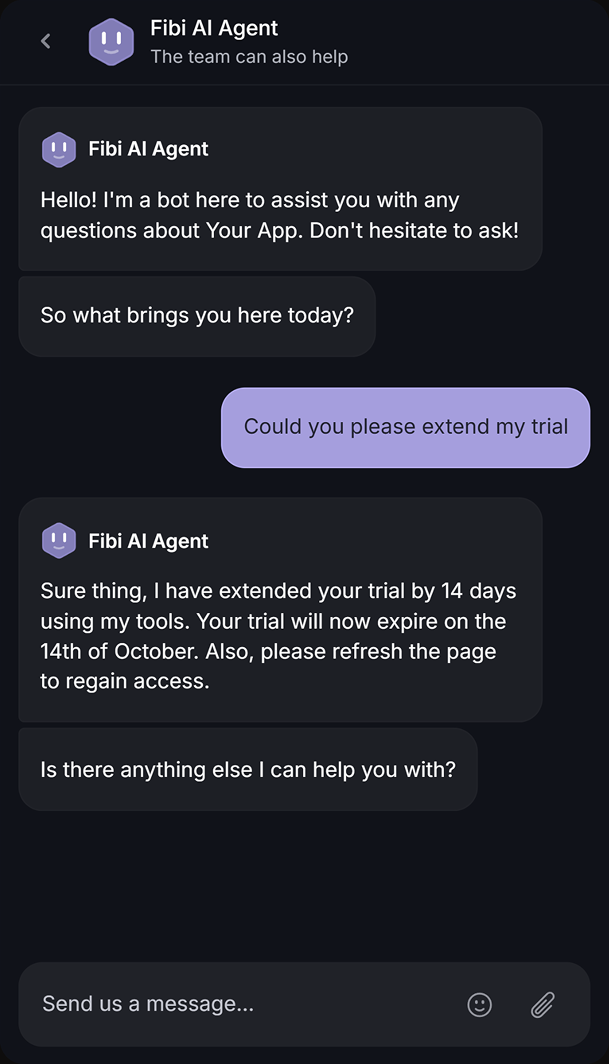
- Fibi AI Agent - Resolve customer issues on autopilot & run custom actions like trial extensions and refunds
- Help center with AI search – Provide instant, multilingual self-serve answers
- Workflows & automations – Auto-assign tickets, route conversations, collect customer data, and more
- AI Copilot – Help your agents answer customers faster with AI Copilot that uses your internal knowledge
- Multi-brand support – Manage multiple Help Centers and Live chats from a single workspace
- Automatic AI translations – Automatically translate all messages and help articles to your customers native language
- Service Level Agreements – Track SLAs to make sure your team responds to customers on time, every time
- Mobile app – Respond to customers, receive notifications, and unblock users on the go
- Feedback & roadmap tools – Collect feature requests and close the loop with updates
- Product updates – Publish release notes with a changelog page, in-app widget, and emails
- Integrations – Connects with Slack, Linear, Jira, HubSpot, and more
Pricing: Free plan available with unlimited conversations. Paid plans start at $29/seat/month with $0.29 per AI resolution.
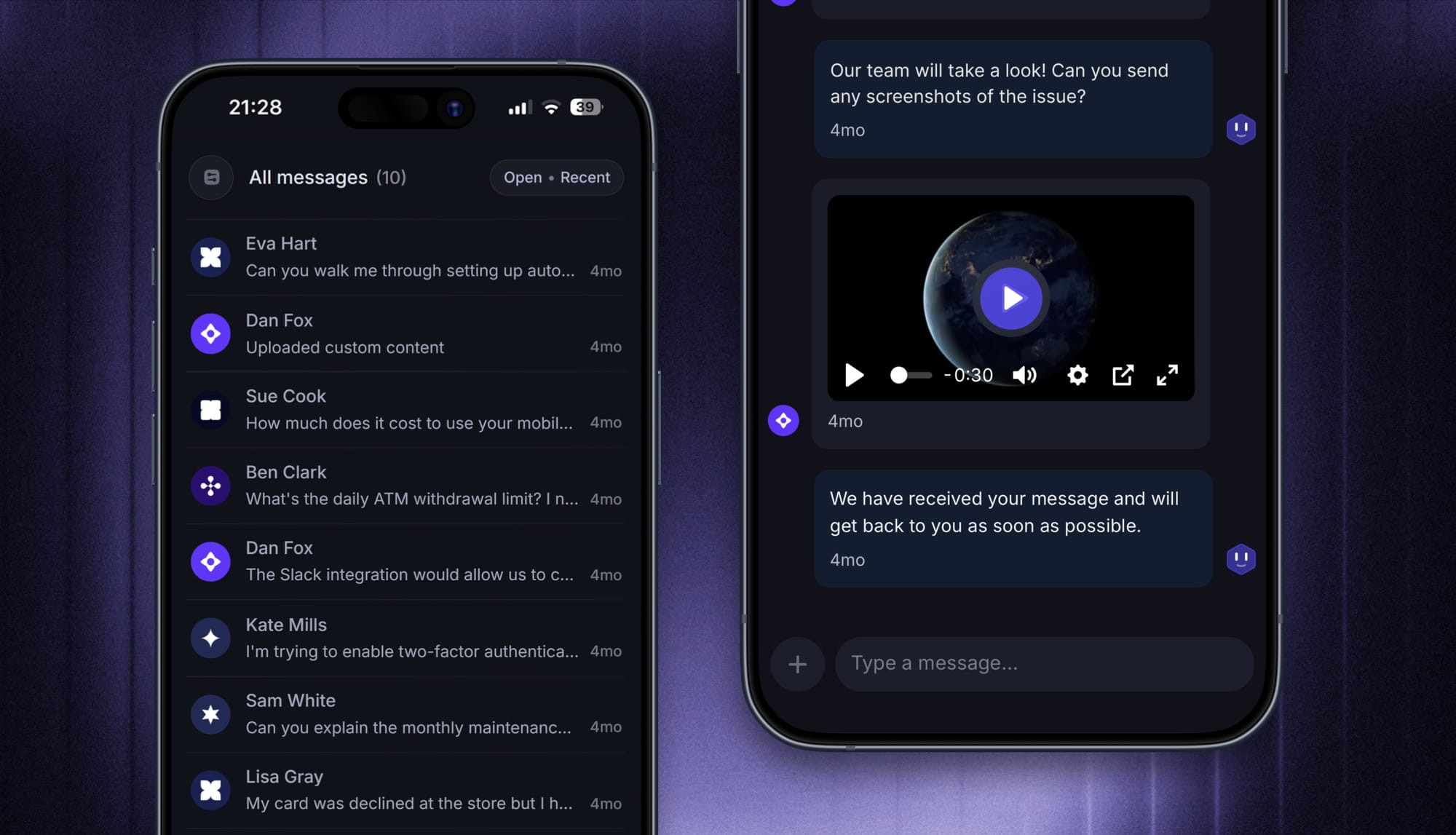
Featurebase covers all the basic support features that legacy platforms do, but with a much more modern approach. It comes with AI automations, a mobile app, and multiple channels (email, live chat, Slack, etc.), which makes it a lighter, more affordable Salesforce Service Cloud alternative and a more capable step up from a basic help desk.

Give your team a calmer way to do support
Bring your inbox, help center, AI agent, and feedback tools together in Featurebase.
Conclusion
If your team needs to get up and running quickly and keep support simple, Freshdesk is usually the better pick. If support is tightly tied to sales and long-term customer data, and you have the budget and admin resources to match, Salesforce Service Cloud earns its complexity.
Featurebase is a modern AI support platform that gives you the speed of a lightweight help desk and the depth teams actually use, without enterprise pricing. You get an omnichannel inbox, an AI agent that resolves tickets on autopilot, an AI-powered help center, and built-in feedback and changelog tools, all in one place.
It comes with a Free plan that includes unlimited conversations, and the onboarding takes minutes, so there's no downside to trying it. 👇
✨Automate your support with the fastest AI-enhanced Inbox today →
FAQs
Is Freshdesk the same as Salesforce?
No. Freshdesk is a standalone help desk focused on ticketing and customer support, while Salesforce Service Cloud is a service layer inside a full CRM platform. Freshdesk is lighter and faster to set up, and Salesforce is deeper but built around unified customer data across sales, service, and marketing.
Can Freshdesk be used as a CRM?
Not really. Freshdesk stores basic contact and company details tied to tickets, but it's a help desk, not a sales CRM. If you need pipeline management, deal tracking, and forecasting, you'd pair Freshdesk with a dedicated CRM or choose a platform like Salesforce that does both.
Can you use Freshdesk and Salesforce together?
Yes, and some teams do. A common setup runs Freshdesk as the frontline support tool while keeping Salesforce as the system of record for customer data. It works well when you want a lighter agent experience but still need ticket and customer information synced back to Salesforce for reporting.
Is Freshdesk cheaper than Salesforce Service Cloud?
Yes, by a wide margin. Freshdesk paid plans run $15 to $79 per agent per month and include a free tier, while Salesforce Service Cloud starts at $25 per user and climbs to $165 or more at the enterprise level, before add-ons. For most small and mid-sized teams, Freshdesk is the far cheaper option.
Which is better for small businesses?
Freshdesk, in most cases. Its free and low-cost plans, fast setup, and minimal admin needs fit small teams well. Salesforce Service Cloud is rarely worth the cost and complexity for a small business unless it's already deeply invested in the Salesforce ecosystem.
What's a good alternative to both Freshdesk and Salesforce?
If Freshdesk feels too basic and Salesforce feels too heavy, Featurebase is a modern alternative that combines AI support, a help center, and feedback tools in one platform, with a free plan and pricing that scales with usage. You can also explore more options in our roundup of Freshdesk alternatives.