Best Enterprise Help Desk Software for Support in 2026
An overview of the best enterprise help desk software for support teams, with key features and pricing.


On this page
The bigger your business, the bigger the problems. As your team (and the number of customers) grows, your support operations need to undergo a lot of changes. Ticket volume increases, AI becomes a necessity, and data security is no longer an afterthought, among other things.
So, what does enterprise even mean in for this kind of software, and which tools are the best for the job? Let's take a look at some of the best enterprise help desk software you can get for your support team, with their key features and pricing. 👇
Short overview
The best enterprise help desk software for support teams in 2026:
- ✨Featurebase – Best for modern enterprise teams that want to move fast, while staying close to customers and provide omnichannel support
- Freshdesk – Best for growing support teams that need structured ticketing and automation at scale
- Zendesk – Best for large enterprises managing high volume, multi-channel customer support
- Kustomer – Best for customer-centric support teams that rely on full conversation history and data context
- Jira Service Management – Best for IT and engineering-driven service teams managing incidents and internal requests
- HappyFox – Best for enterprise support operations that need strong automation and performance tracking
- UseResponse – Best for teams that want to combine customer support with feedback and community forums
- Tidio – Best for chat-focused support teams handling real-time customer conversations
- Hiver – Best for teams managing customer support directly from Gmail
- Gladly.ai – Best for large B2C brands focused on personalized, conversation-based support across channels
What makes enterprise help desk software unique?
You may think that your average help desk system that works for a two-person Shopify store can suit the needs of a larger business, and you'd be wrong. For enterprise support processes, you need the right tool for the job.
Here's what makes enterprise help desks different.
- The scope and scale
Enterprise tools are built for handling thousands of support tickets per day, and not just a handful that the average business works with. Enterprise tools need to perform well under heavy load, but that's just the starting point. They should also support complex org structures, multiple teams, and high concurrency without performance issues. - Advanced customization
Standard ticket fields, automations, and simple workflows are not enough. Enterprise systems have deep customization, custom objects, role-based views, advanced routing logic, and tailored workflows that match internal processes across departments. - Security and compliance
At an enterprise level, data security is a major concern. Enterprise help desks typically come with Single Sign On (SSO), audit logs, data access controls, and encryption standards. They also include compliance support for frameworks like SOC 2, HIPAA, or GDPR. That last one matters most for healthcare help desk software. For businesses handling customer payment data, the integration of robust PCI compliance solutions is often a non-negotiable requirement to ensure end-to-end data protection. - Integration capabilities
While all help desk tools come with some native integrations, enterprise tools take it a step further. Of course, you get the basics, such as integrations with CRMs, team collaboration tools, communication platforms like Slack and similar. On top of that, you should get APIs, webhooks and middleware platforms that allow you to truly customize how the tools integrate in your tech stack. - Multi-team and multi-brand support
Enterprise means scale, and that translates to multiple users and teams. For example, one SaaS platform could have support agents for Europe and Asia, or they could have multiple smaller teams within one department. - Automation and routing complexity
Standard help desks can auto-assign tickets based on rules. Enterprise systems handle more complex routing using skill-based assignment, tiered escalation paths, load balancing, and priority logic across global teams. - Better reporting and analytics
Enterprise help desk solutions help you better understand how your AI and human agents are performing, which channels (don't) work and what metrics are not doing too well. - Onboarding and support
Setting up a standard help desk or ticketing system is usually pretty straightforward. Enterprise help desk software requires much more handholding, and guides and tutorials usually don't do the trick. You'll need a dedicated account manager to guide you and set the help desk up.
If you run a large enterprise and need a tool to improve your first response time and ticket resolution, there are many options in the market. You could research them all to find out which ones meet your business requirements, or you could just read through our list of the very best tools in 2026.
The best enterprise help desk software for support operations in 2026
Want to provide exceptional (technical) support to your customers with all the features your enterprise organization may need? These are your best choices.
1. Featurebase ✨
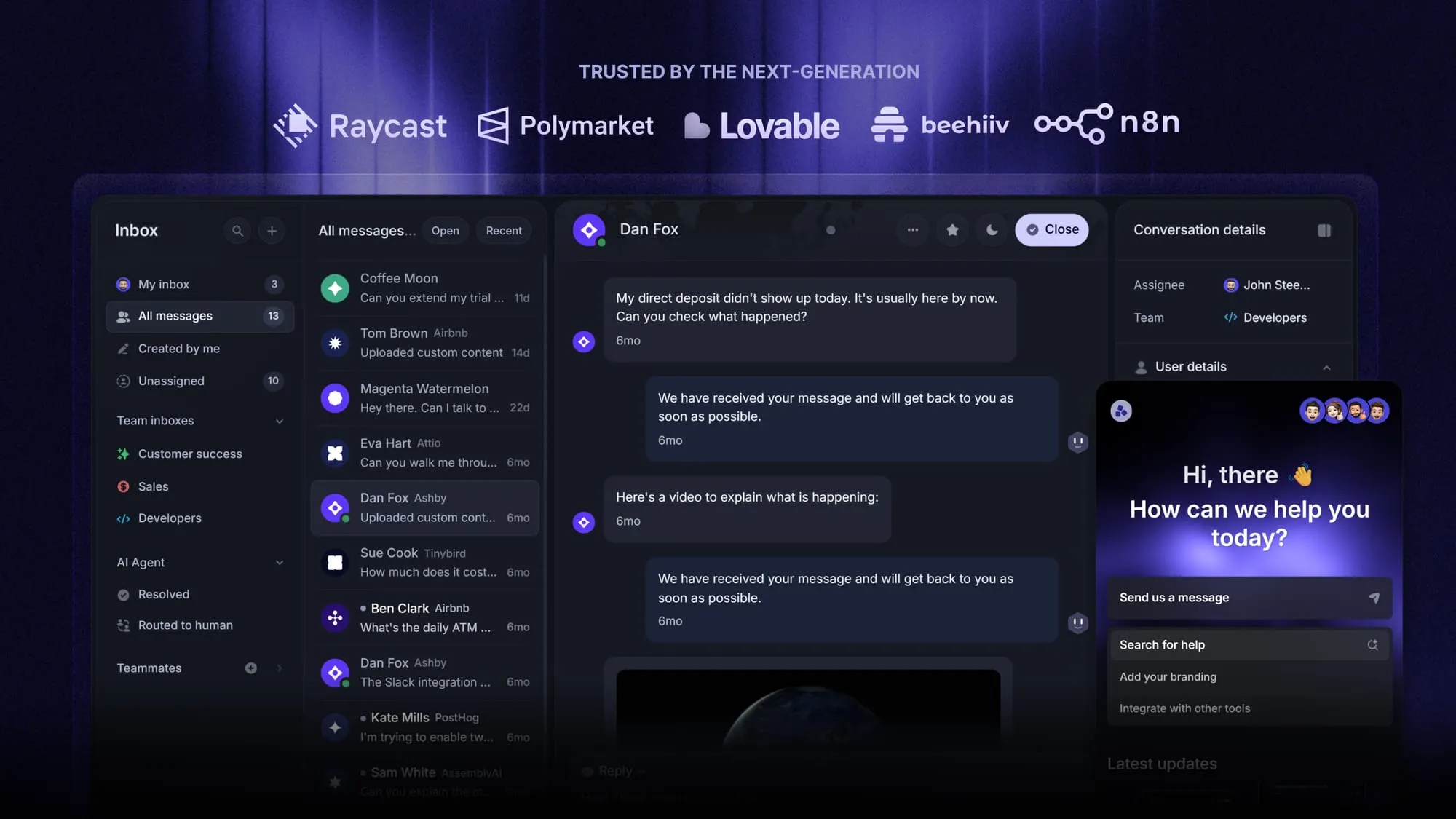
Featurebase is a modern AI help desk platform for enterprise teams. It combines an AI-powered omnichannel inbox, help center, and feedback management into a single platform for startups and enterprise teams that want all their customer-facing tools in one place. Featurebase is loved by thousands of support teams from companies like Lovable, Raycast, and n8n. 💫
Top features:
- Omnichannel inbox – Manage live chat, email, and Slack conversations from one AI-powered view
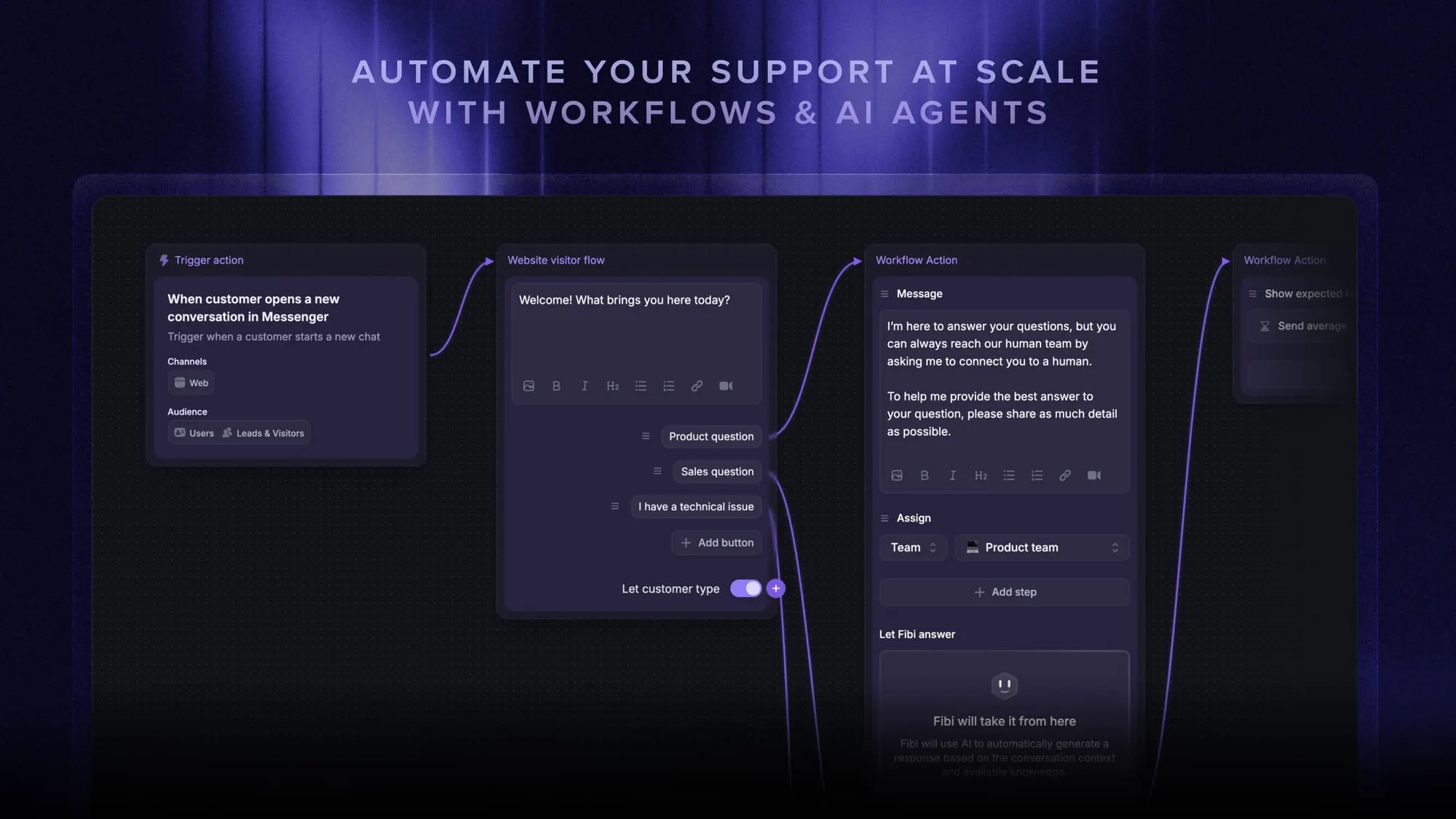
- Fibi AI Agent – Resolve customer issues on autopilot & run custom actions like trial extensions and refunds
- Help center with AI search – Provide instant, multilingual self-serve answers
- Tickets Portal – A dedicated page where customers can submit, view, and track all their company's tickets in one place
- Workflows & automations – Auto-assign tickets, route conversations, collect customer data, and more
- AI Copilot – Help your agents answer customers faster with AI Copilot that uses your internal knowledge
- Multi-brand support – Manage multiple Help Centers and Live chats from a single workspace
- Automatic AI translations – Automatically translate all messages and help articles to your customers native language
- Service Level Agreements – Track SLAs to make sure your team responds to customers on time, every time
- Mobile app – Respond to customers, receive notifications, and unblock users on the go
- Integrations – Connects with Slack, Linear, Jira, HubSpot, and more
Pricing: Free plan available with unlimited conversations. Paid plans start at $29/seat/month with $0.29 per AI resolution.
Featurebase covers all the enterprise-ready support features that legacy platforms do (SSO, audit logs, custom roles, SLAs, advanced routing) but with a much more modern approach, AI automations, and startup-friendly pricing.
2. Freshdesk
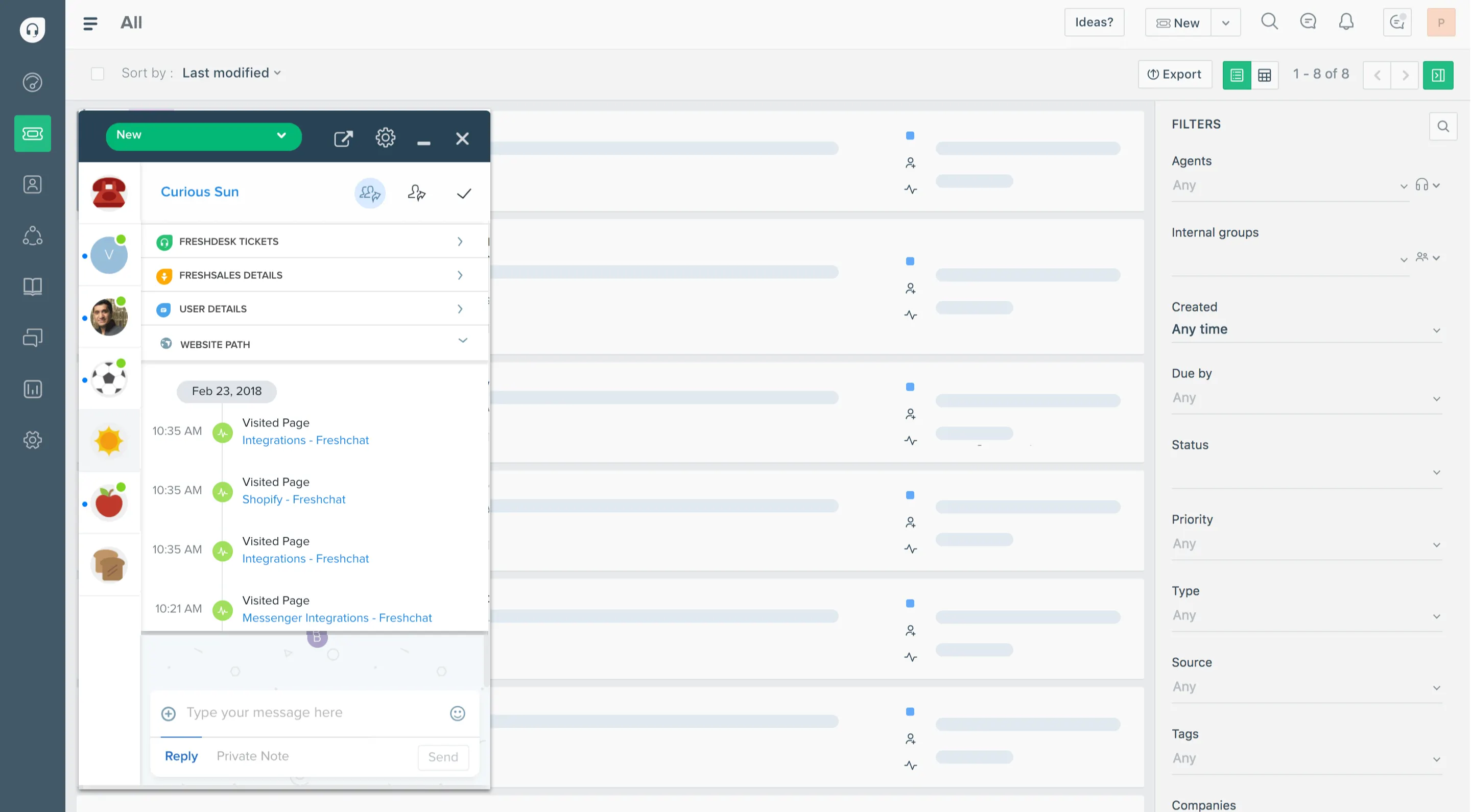
Freshdesk is a help desk platform used by support teams that need structure, automation, and visibility across large ticket volumes. It fits growing companies and enterprises that handle support across multiple channels, teams, and regions, and want a system that can scale without becoming hard to manage.
Top features:
- Advanced ticketing and omnichannel support: Centralizes email, chat, social, and portal requests into one queue so large teams can manage high volumes without losing context.
- Skill based routing and SLA management: Automatically assigns tickets based on agent expertise, availability, and priority rules, which helps enterprise teams maintain strict response targets.
- Custom roles, permissions, and audit logs: Gives large organizations control over who can access what, while keeping a record of actions for security and compliance.
- Automation and workflow orchestration: Lets teams build detailed rules for escalation, assignment, and repetitive tasks to support complex internal processes.
- Enterprise grade analytics and reporting: Offers dashboards and reports that help leadership track performance, team workload, and service quality trends across departments.
Considerations:
Freshdesk can get expensive as you add advanced features, agents, and AI sessions, and many enterprise-level capabilities sit in higher tiers or paid add ons. Large organizations may also need time to configure workflows properly before they get full value from it.
Freshdesk pricing starts at $19 per agent per month.
3. Zendesk
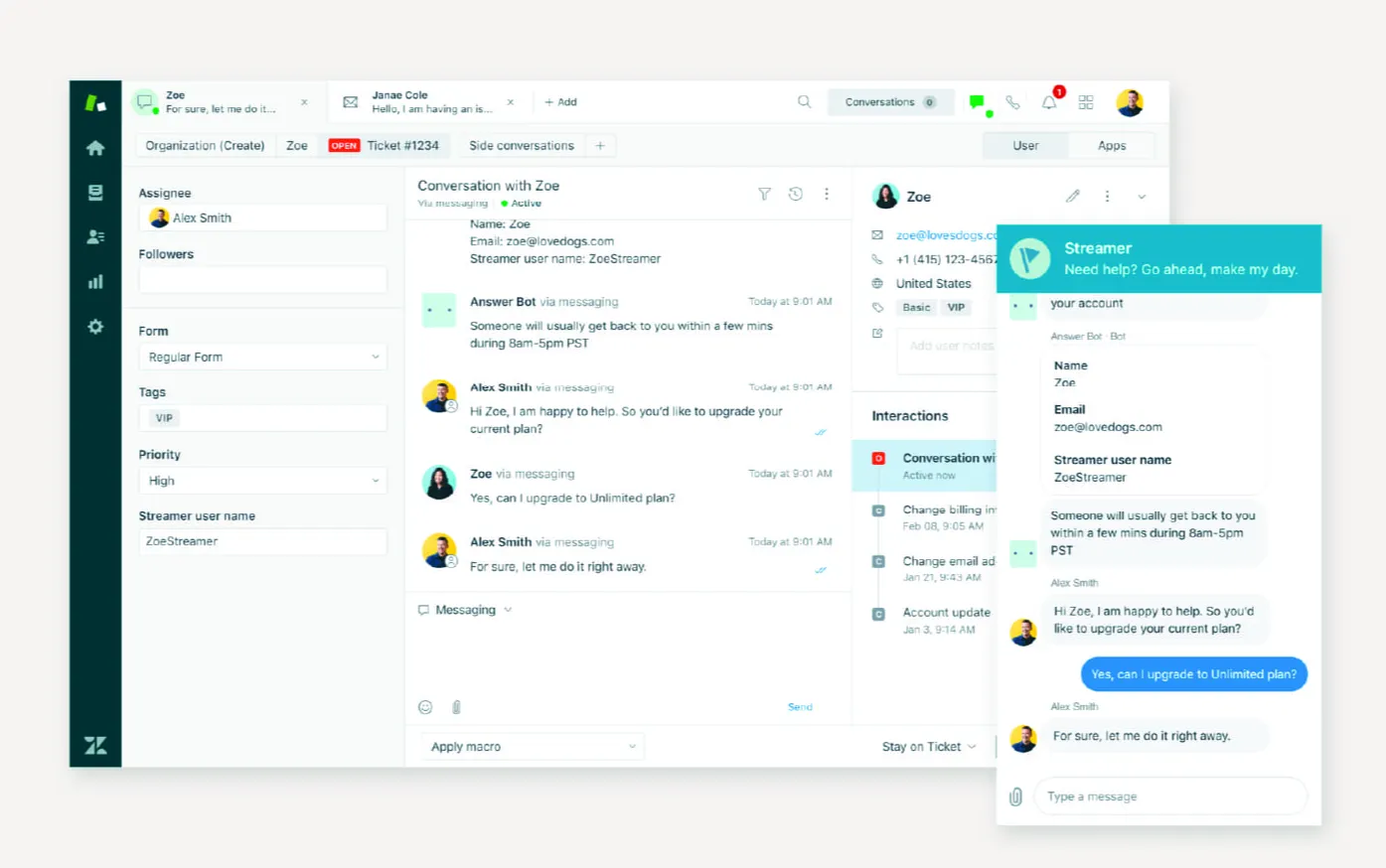
Zendesk is a widely-used customer support platform built for companies that manage large scale service operations across multiple channels. It suits enterprise teams that need structured workflows, deep reporting, and tight control over how tickets move between departments.
Top features:
- Omnichannel ticketing at scale: Brings email, chat, voice, social, and web requests into a single system so large support teams can manage high volumes without losing context.
- Advanced routing and workforce management: Assigns tickets based on agent skills, availability, and priority levels, which helps enterprise teams handle complex support structures and SLAs.
- Custom roles, permissions, and data controls: Gives large organizations detailed control over access, visibility, and actions across teams, which supports internal governance and security needs.
- Powerful automation and workflow builder: Lets teams create layered triggers, automations, and escalation paths to handle repetitive tasks and keep support operations consistent.
- Enterprise reporting and performance analytics: Provides detailed dashboards and custom reports that help leadership track agent performance, ticket trends, and service outcomes across regions.
Considerations:
Zendesk can become expensive quickly as you scale, especially once you add advanced features, automation, and multiple support channels. It also takes time to set up properly, and larger teams may need dedicated admins to manage workflows and reporting.
Zendesk pricing starts at $19 per agent per month.
4. Kustomer
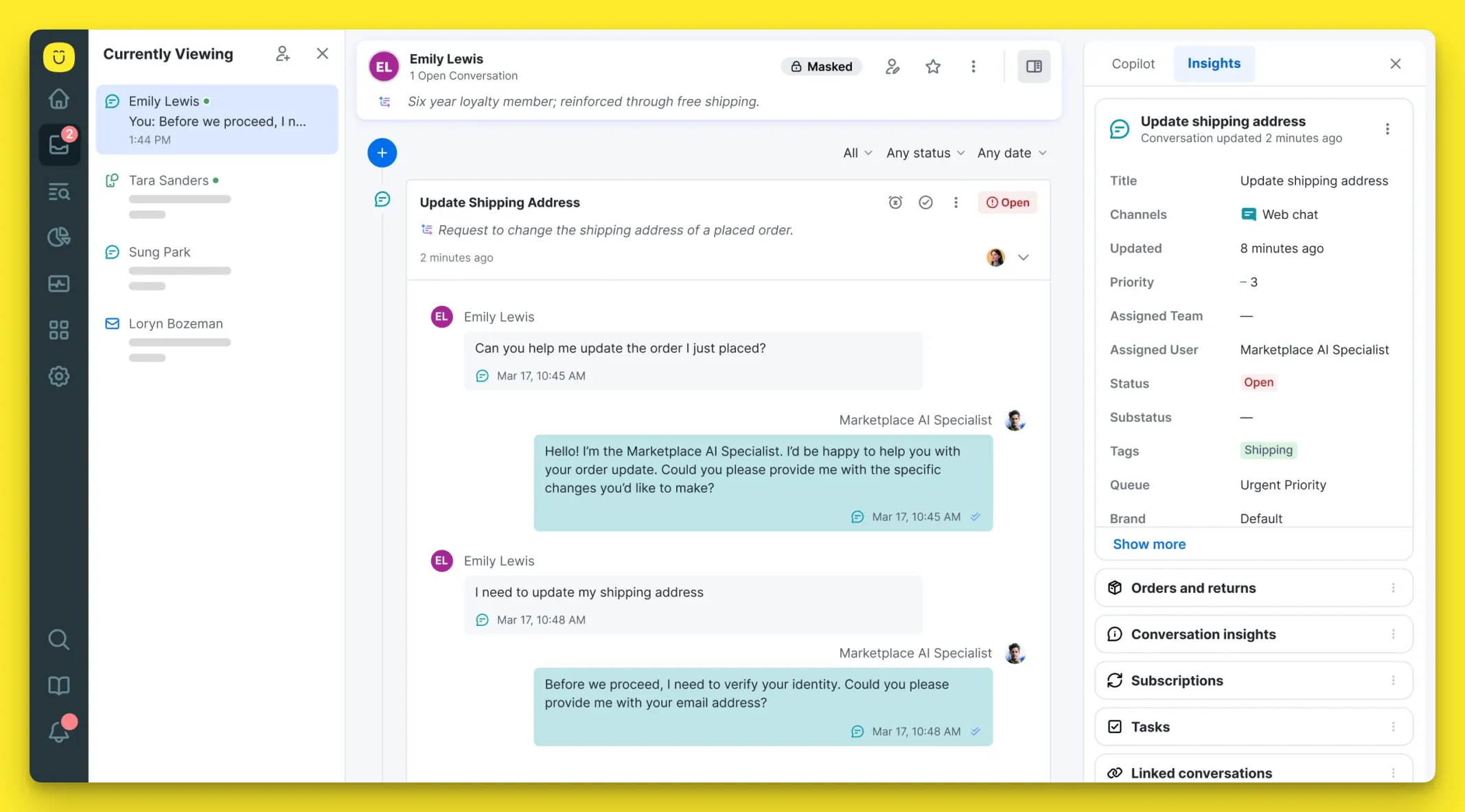
Kustomer is a customer service platform built around a single timeline view of each customer, which makes it easier for large support teams to track conversations and history in one place. It is often used by enterprise companies that handle high support volumes across channels and want a system that connects customer data, workflows, and service interactions.
Top features:
- Unified customer timeline: Combines conversations, orders, past issues, and interactions into one view so agents can understand the full customer context without switching tools.
- Omnichannel conversation management: Supports email, chat, voice, social, and messaging apps in one interface, which helps large teams manage support across many channels.
- Advanced automation and routing: Routes conversations based on intent, priority, or customer data, and automates repetitive actions to keep large support operations organized.
- Custom data objects and workflows: Lets enterprises build custom fields, processes, and logic tied to their internal systems and customer data.
- Enterprise analytics and performance tracking: Offers reporting tools that help leaders track agent performance, queue trends, and service outcomes across teams.
Considerations:
Kustomer can require a heavier setup process compared to simpler help desk tools, especially if you plan to connect it with internal systems and custom workflows. Teams may also need technical support during implementation to get the most value out of the platform.
Kustomer pricing starts at $89 per user per month.
5. Jira Service Management
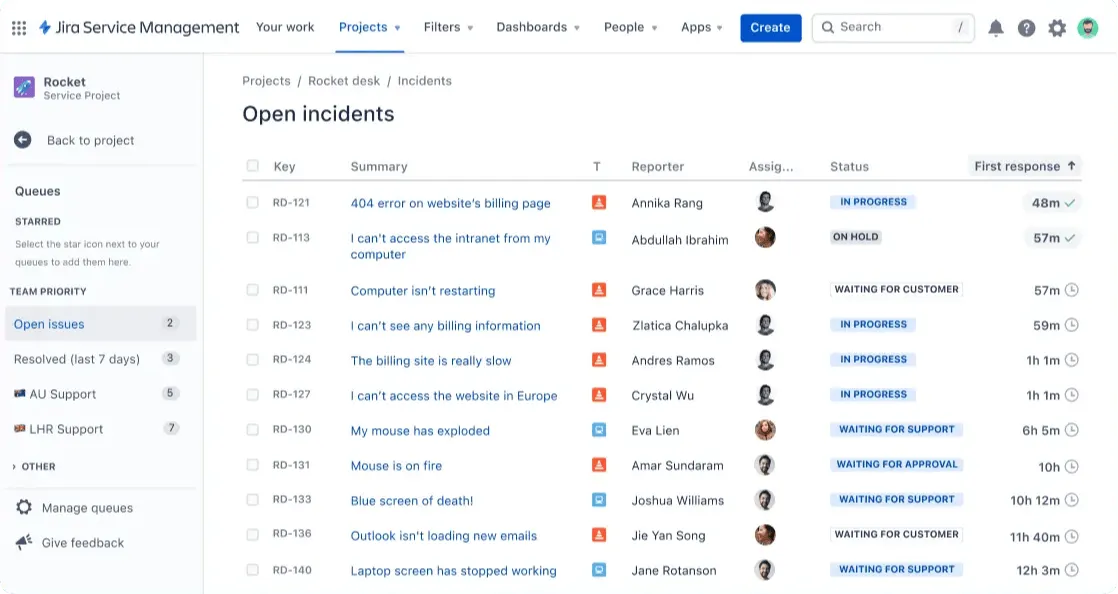
Jira Service Management is an enterprise-focused help desk platform built for companies that want to connect customer support with IT, engineering, and internal operations. It works best for organizations that are already using Atlassian tools and need tight coordination between service teams and technical teams handling incidents, requests, and changes.
Top features:
- Deep integration with Jira and developer workflows: Connects support tickets directly to engineering tasks, bug tracking, and product work so technical teams can act on issues faster.
- Advanced incident and change management: Helps large organizations manage outages, internal service requests, and infrastructure changes with structured processes and approvals.
- Custom workflows and request types: Lets enterprises create detailed service processes for different departments, including IT, HR, finance, and customer support.
- Knowledge base integration with Confluence: Gives teams a built in way to share internal documentation and self service content tied to support requests.
- Enterprise grade permissions and compliance controls: Supports role based access, audit logs, and data visibility settings suited for large organizations with strict governance needs.
Considerations:
Jira Service Management can feel complex for teams that are not already familiar with the Atlassian ecosystem, and setup often takes time. Non-technical support teams may also find the interface less intuitive compared to traditional help desk tools.
Pricing starts at $20 per agent per month.
6. HappyFox
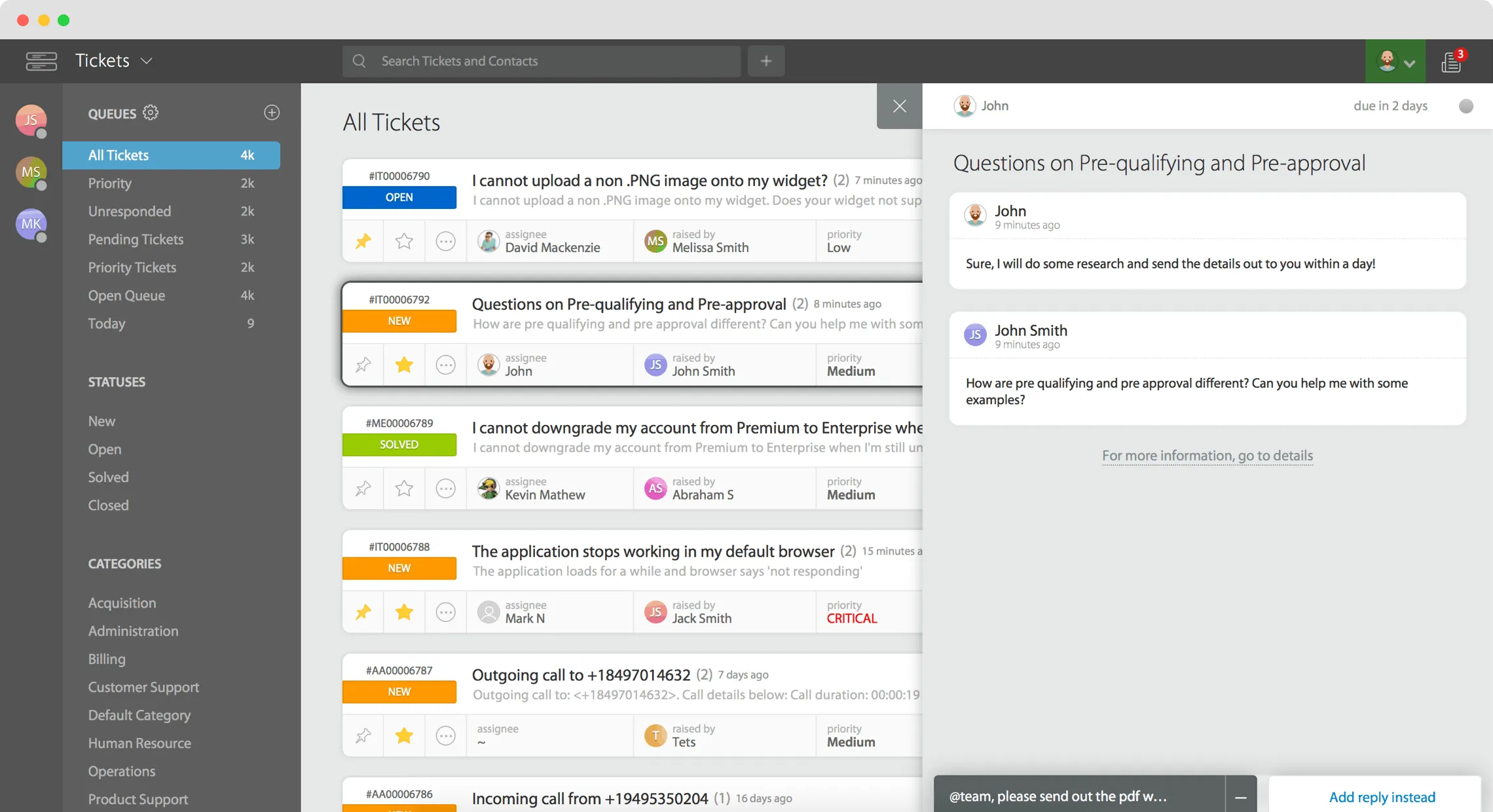
HappyFox is a help desk platform built for companies that manage large support teams and need structure across departments, channels, and regions. It is often used by enterprise organizations that want strong ticket automation, performance tracking, and control over how support operations are run at scale.
Top features:
- Smart ticket routing and queue management: Automatically assigns tickets based on agent skills, workload, and priority so large teams can keep response times consistent.
- Omnichannel support management: Brings together email, chat, phone, and web requests into one system, which helps enterprise teams manage high volumes without losing track of conversations.
- Custom roles and workflow configuration: Lets organizations build detailed processes, permissions, and approval flows that match internal support structures across multiple departments.
- Built-in knowledge base and self service portal: Gives customers access to help articles and common answers, which can reduce ticket volume for large support operations.
- Advanced reporting and productivity insights: Provides detailed reports on agent performance, ticket trends, and service levels so leadership can monitor large scale support teams.
Considerations:
HappyFox can become expensive as team size grows since pricing is tied to the number of agents and plan tier. It also takes time to configure workflows and reporting properly, especially for larger organizations with complex support structures.
Pricing starts at $24 per agent per month.
7. UseResponse
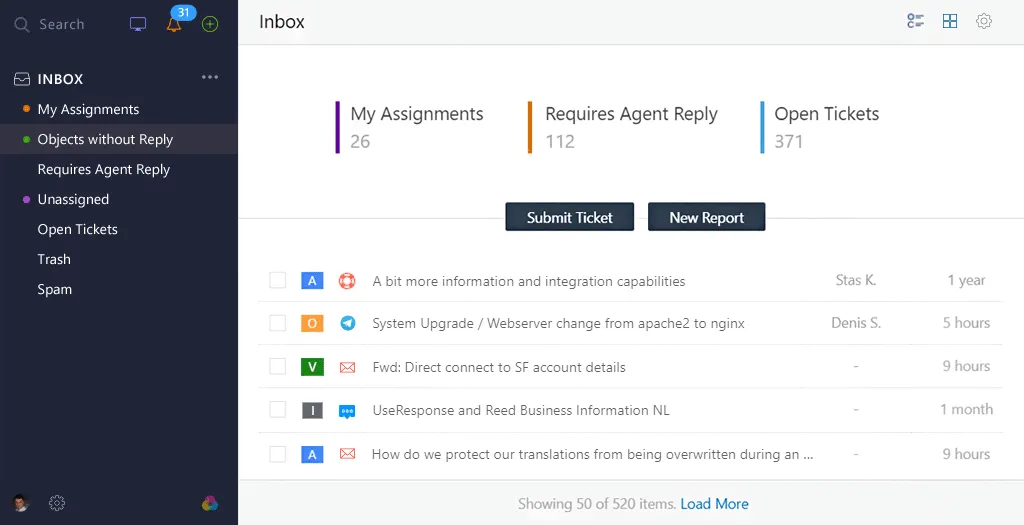
UseResponse is a customer support and feedback platform that brings help desk, live chat, and product feedback tools into one system. It is used by enterprise teams that want to manage support requests, feature requests, and customer communication in a single place without juggling multiple tools.
Top features:
- Multi channel ticket management: Collects requests from email, chat, social platforms, and web forms into one queue so large teams can track and respond without losing context.
- Self service portal and knowledge base: Lets enterprises build public help centers and community forums to reduce ticket volume and give customers quick answers.
- Custom workflows and automation rules: Supports routing, tagging, and automated actions based on request type, priority, or customer data.
- Product feedback and feature request tracking: Allows support and product teams to collect ideas, track demand, and connect feedback to real customer conversations.
- Role based access and team structure support: Gives organizations control over permissions, agent groups, and visibility across departments.
Considerations:
UseResponse covers a lot of ground with support and feedback features in one platform, but the interface can feel dated compared to newer tools. Larger teams may also need time to configure the system properly to match complex internal processes.
Pricing starts at $49 per month.
8. Tidio
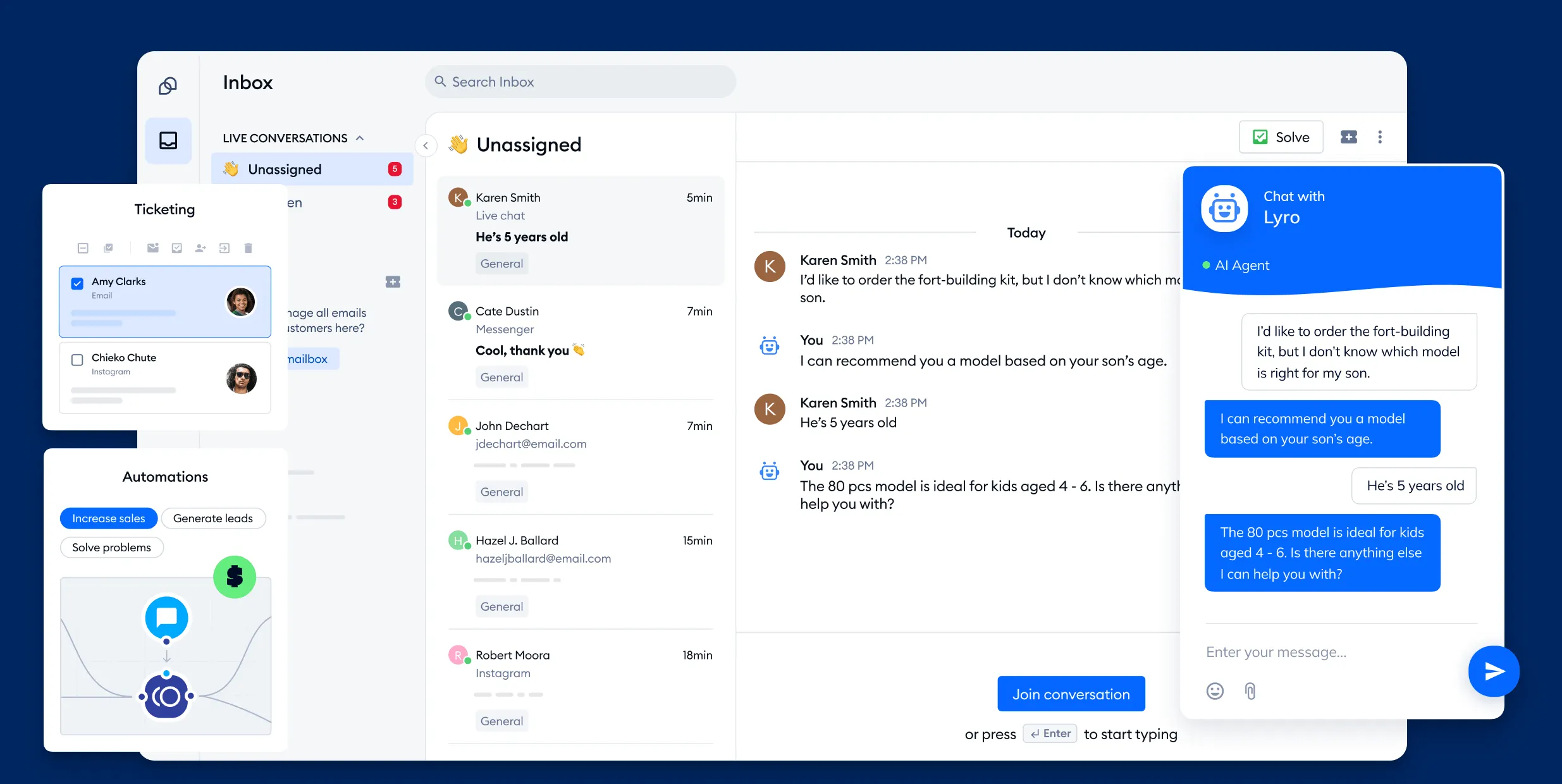
Tidio is a customer support platform that combines live chat, help desk ticketing, and automation in one system. It is often used by fast-growing companies and larger support teams that want to manage high volumes of customer conversations across multiple channels while keeping response times low.
Top features:
- Omnichannel conversation management: Handles chat, email, Messenger, and other channels in one shared inbox so enterprise teams can keep all communication in a single place.
- Automation and chat flow builder: Lets teams create automated conversation paths to answer common questions, route requests, and collect information before agents step in.
- Custom departments and agent roles: Supports team structures with permissions, routing rules, and access control suited for larger organizations.
- Real time visitor tracking and context: Shows what users are doing on the site, which helps agents respond with more relevant answers and faster resolutions.
- Analytics and performance monitoring: Provides dashboards that help leaders track response times, workload distribution, and conversation outcomes across teams.
Considerations:
Tidio is strong on chat and real-time conversations, but its help desk capabilities are not as deep as some enterprise-first platforms. Larger organizations with complex internal processes may find its ticketing and workflow options more limited.
Tidio pricing starts at $29 per agent per month for the Starter plan.
9. Hiver
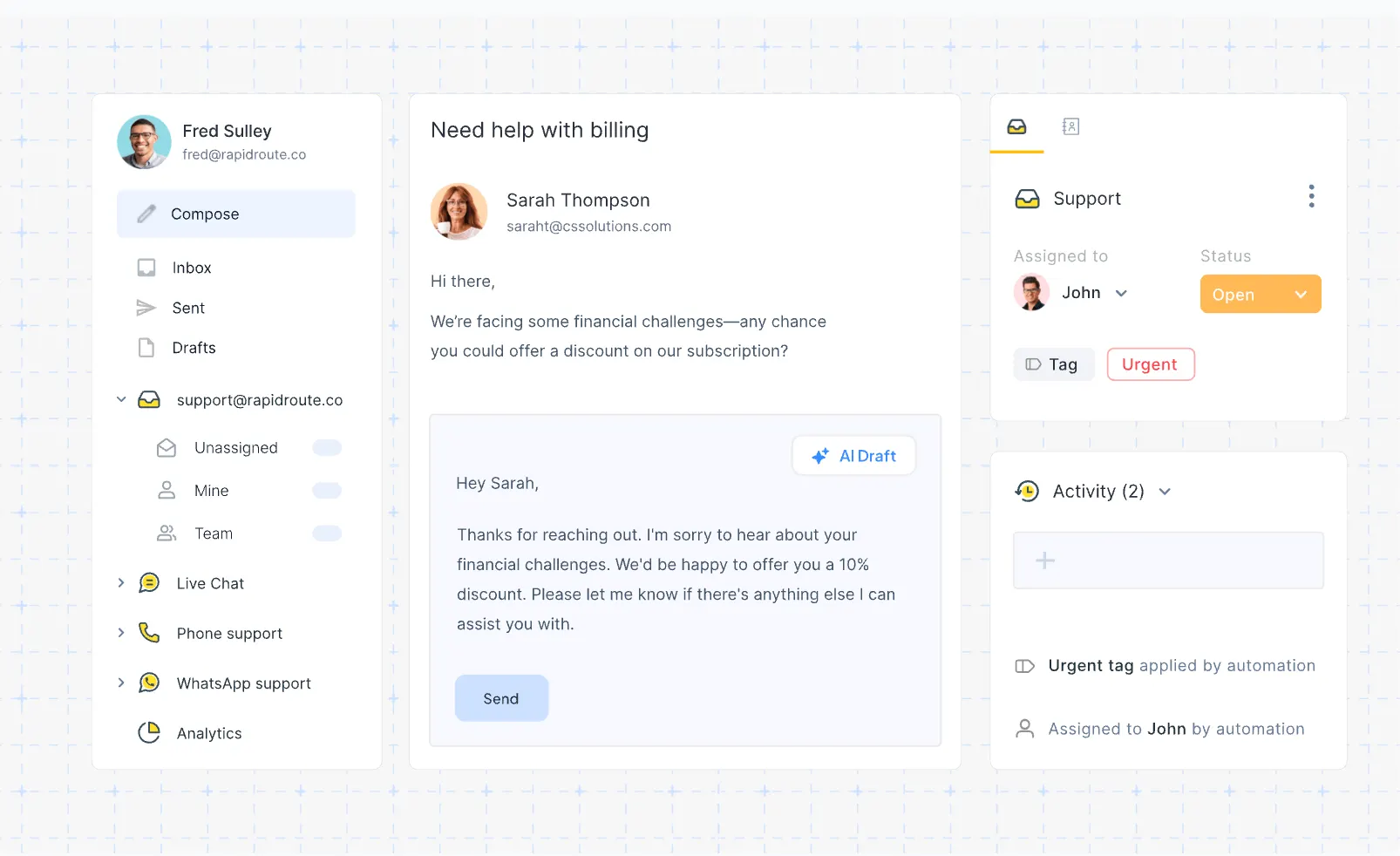
Hiver is a help desk platform that runs inside Gmail, turning shared inboxes into structured support workspaces for teams. It is used by companies that want to manage customer support, internal requests, and collaboration without leaving their email environment, which makes it a strong fit for enterprise teams that rely heavily on Google Workspace.
Top features:
- Shared inbox management in Gmail: Lets teams manage support emails collaboratively, assign ownership, and track status without moving to a separate help desk system.
- Email based ticketing with ownership tracking: Converts incoming emails into trackable tasks with clear accountability, which helps large teams avoid duplicate replies and missed requests.
- Automation and workflow rules: Supports auto assignment, tagging, and reminders so enterprise teams can keep response times consistent across departments.
- Multi channel support add ons: Extends beyond email with chat, voice, and knowledge base features that can be managed alongside Gmail conversations.
- Analytics and performance reports: Provides visibility into response times, workload distribution, and team performance for leaders managing larger support operations.
Considerations:
Hiver works best for teams that already live inside Gmail. Companies using other email systems or needing deep customization, complex routing, or heavy IT service workflows may find it more limited than traditional enterprise help desk platforms.
Hiver pricing starts at $19 per user per month.
10. Gladly.ai
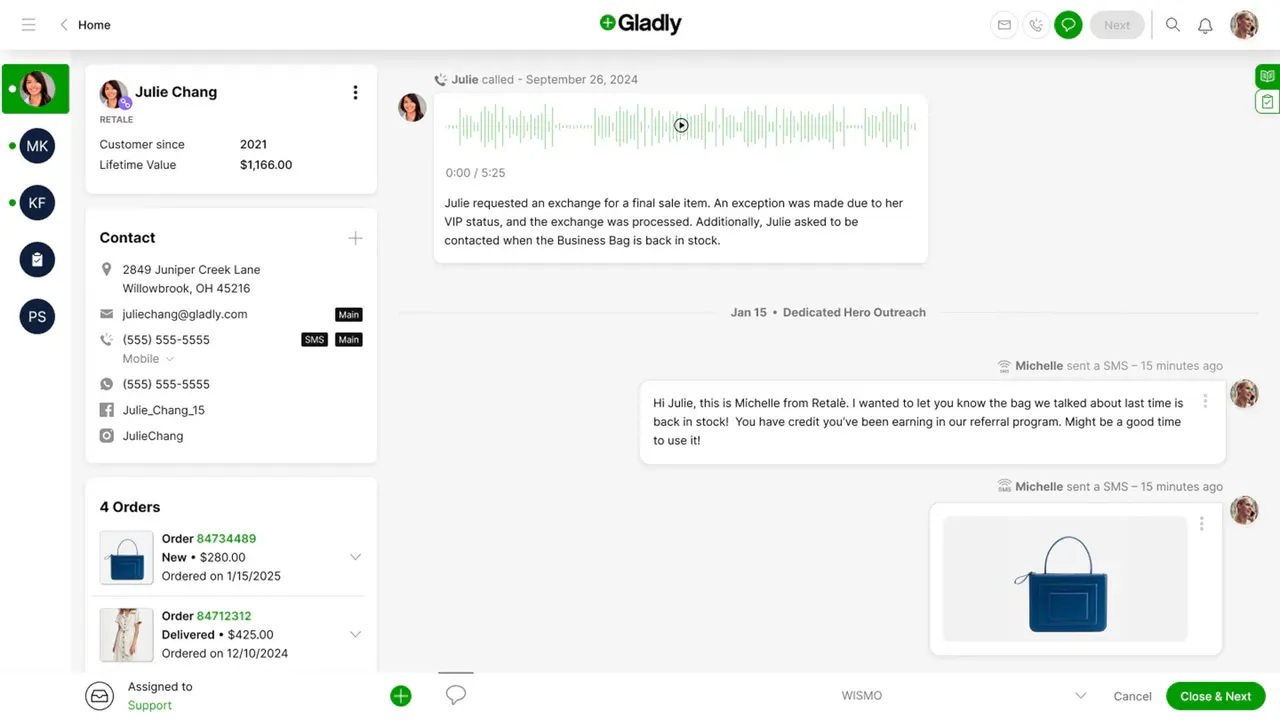
Gladly is a customer service platform built around ongoing customer conversations rather than traditional ticket queues. It is often used by large retail, ecommerce, and travel brands that want agents to see a full history of each customer and handle support across voice, chat, email, and messaging in one place.
Top features:
- Single customer conversation timeline: Keeps every interaction tied to one profile so enterprise agents can see past issues, orders, and context without switching between systems.
- Voice first support capabilities: Strong phone support tools that connect calls, messages, and case history, which works well for large teams that rely heavily on voice.
- Advanced automation and task management: Lets teams automate follow ups, internal tasks, and repetitive processes tied to customer events and service workflows.
- Omnichannel support in one workspace: Brings together email, SMS, chat, social, and voice so enterprise teams can manage all communication from one interface.
- Customer data and system integrations: Connects with e-commerce, CRM, and internal tools so agents can access customer details and take action without leaving the platform.
Considerations:
Gladly is built with large B2C support teams in mind, which means it can be expensive and often requires a sales call to get exact pricing. It also has fewer ready-made integrations than some older enterprise help desk platforms, which can limit flexibility for complex tech stacks.
Pricing is not available publicly.
Get help desk software optimized for your team and customers' needs
Enterprise help desk software isn't just an upgraded version of standard help desk tools. These are platforms that can handle a large volume of conversations, custom integrations and advanced security features, among other things. With or without AI, these tools should help resolve complex issues with remarkable resolution time.
Featurebase is a modern AI help desk platform for enterprise teams. It combines an AI-powered omnichannel inbox, help center, and feedback management into a single platform, so your enterprise team gets SSO, audit logs, SLAs, and advanced routing without paying legacy-platform prices. It's loved by thousands of support teams at companies like Lovable, Polymarket, and n8n. 💫
It comes with a Free plan and paid plans starting at just $29/seat/month. We're enterprise-ready but with startup-friendly pricing, and setup takes minutes without a credit card, so there's no downside to trying it. 👇
Automate your support with the fastest AI-enhanced Inbox today