Blog Customer FeedbackCustomer Relationships: What They Are & How to Build Them
Customer Relationships: What They Are & How to Build Them
A customer relationship is every interaction a customer has with your business over time. Here's what that means, why it matters, and how to build relationships that actually last.


✨ Start collecting & managing feedback with Featurebase for free →
Most businesses pour their energy into winning new customers, then watch the ones they already have quietly slip away. That's expensive. A new customer costs far more to acquire than an existing one costs to keep, and your current customers are the ones who renew, upgrade, and refer their friends.
The difference between a customer who stays and one who leaves usually comes down to one thing: the relationship you've built with them.
Here's what a customer relationship actually is, why it matters, and how to build ones that last. 👇
Key takeaways:
- A customer relationship is the sum of every interaction someone has with your business, from first discovery to long after they buy.
- Customer relations is broader than customer service. It's proactive and ongoing, not just reactive problem-solving.
- Strong relationships drive retention, referrals, and revenue. A 5% lift in retention can raise profits by 25% to 95%.
- You build them with fast, personal, consistent service, and by actually acting on customer feedback.
- Featurebase✨ helps you strengthen customer relationships by collecting feedback, closing the loop, and keeping customers in the know, all in one place.
What is a customer relationship?
A customer relationship is the connection between your business and a customer, shaped by every interaction they have with you over time.
That's a lot more than support tickets. A single relationship spans the whole customer journey:
- Discovery: finding your brand through marketing, search, or word-of-mouth
- Purchase: signing up or buying for the first time
- Support: reaching out when something breaks or they have a question
- Follow-up: receiving product updates, check-ins, and renewal reminders
- Advocacy: leaving a review or referring a friend
Each of those touchpoints adds up. Handled well, they build trust and loyalty. Handled badly, they hand customers a reason to leave. Managing customer relationships just means being intentional about those interactions instead of leaving them to chance.
Customer relations vs. customer service
People use "customer relations" and "customer service" interchangeably, but they aren't the same thing. Customer service is one part of customer relations, not the whole of it.
| Customer service | Customer relations |
|---|---|
| Reactive: responds to issues as they come up | Proactive: builds the relationship before problems arise |
| Narrow scope: solving individual requests | Broad scope: the entire customer journey |
| Owned mostly by the support team | Shared across support, product, marketing, and sales |
| Success = fast, helpful resolutions | Success = loyalty, retention, and advocacy |
Put simply, good customer service is one ingredient in a good customer relationship. It matters, but it isn't the whole recipe.
Why customer relationships matter
Strong customer relationships aren't a nice-to-have. They're one of the most reliable growth levers you have.
The economics are hard to argue with. Research from Bain & Company found that a 5% increase in customer retention can increase profits by 25% to 95%. Loyal customers buy more often, cost less to serve, and stick around through rough patches.
Customers also expect more from you than they used to. Salesforce found that 88% of customers say the experience a company provides is as important as its products or services. In other words, the relationship itself is now part of what you're selling.
A few concrete payoffs of getting this right:
- Higher retention: satisfied customers have less reason to shop around, so more of them stay and keep paying.
- More referrals: happy customers tell their friends, which brings in new business you didn't have to pay for.
- Lower acquisition costs: when existing customers buy again, you spend less on ads and outreach to hit the same revenue.
- Better products: an ongoing relationship gives you a steady stream of feedback about what to build and fix next.
How to build strong customer relationships
You don't build strong relationships by accident. Here are 7 strategies that consistently work.
- Respond quickly and consistently: speed signals that you care. Set a standard for how fast your team replies and hit it every time, so customers learn they can count on you.
- Personalize every interaction: use what you know about a customer to make them feel seen. Referencing their history, name, and past purchases turns a generic exchange into a real relationship.
- Meet customers on their preferred channels: some people want live chat, others email or social. Being reachable where your customers already are removes friction, and the right customer communication tools make that manageable at scale.
- Be transparent, especially when things go wrong: honesty builds trust faster than a polished front. Owning a mistake and explaining what you'll do about it usually earns more loyalty than pretending it never happened.
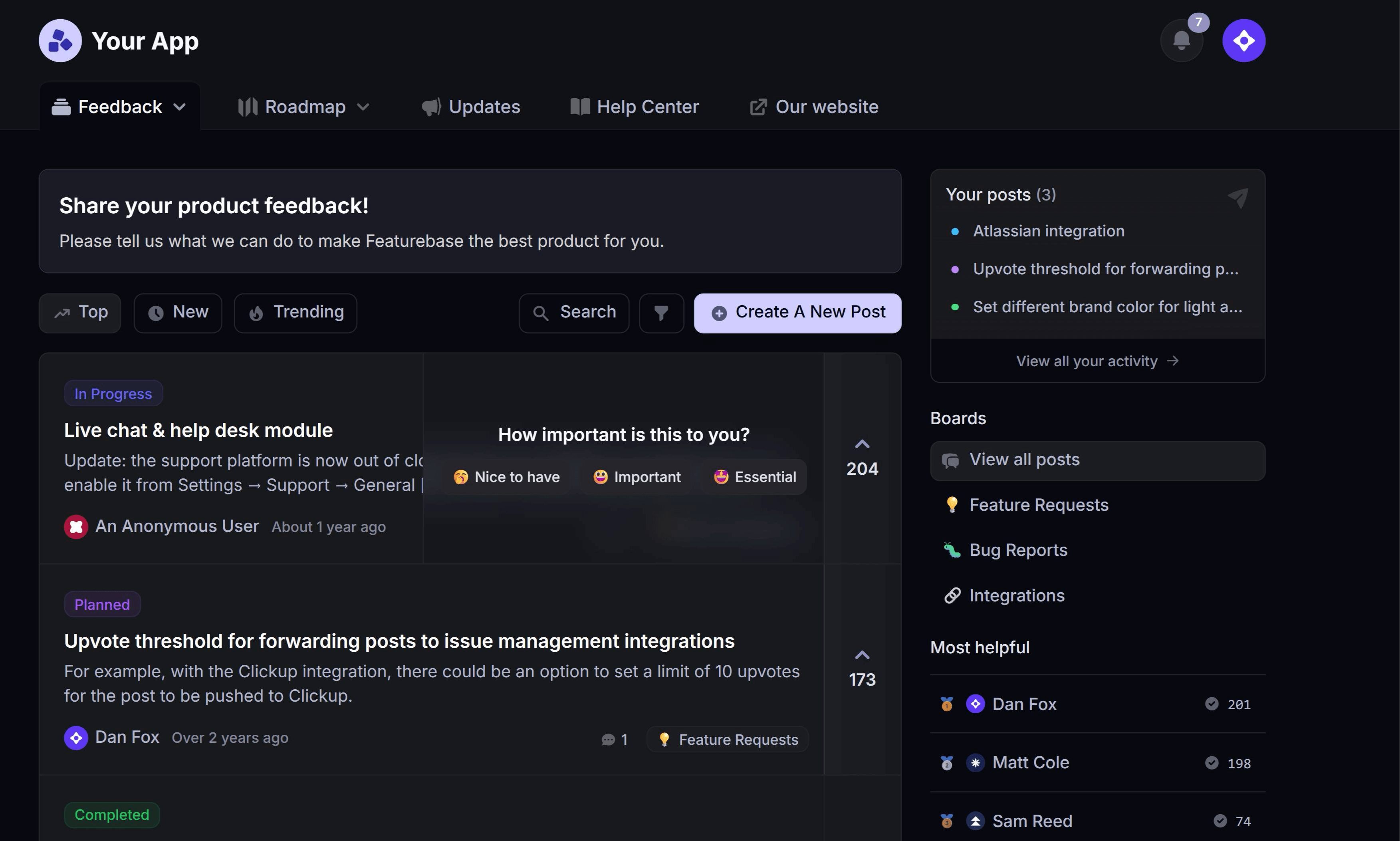
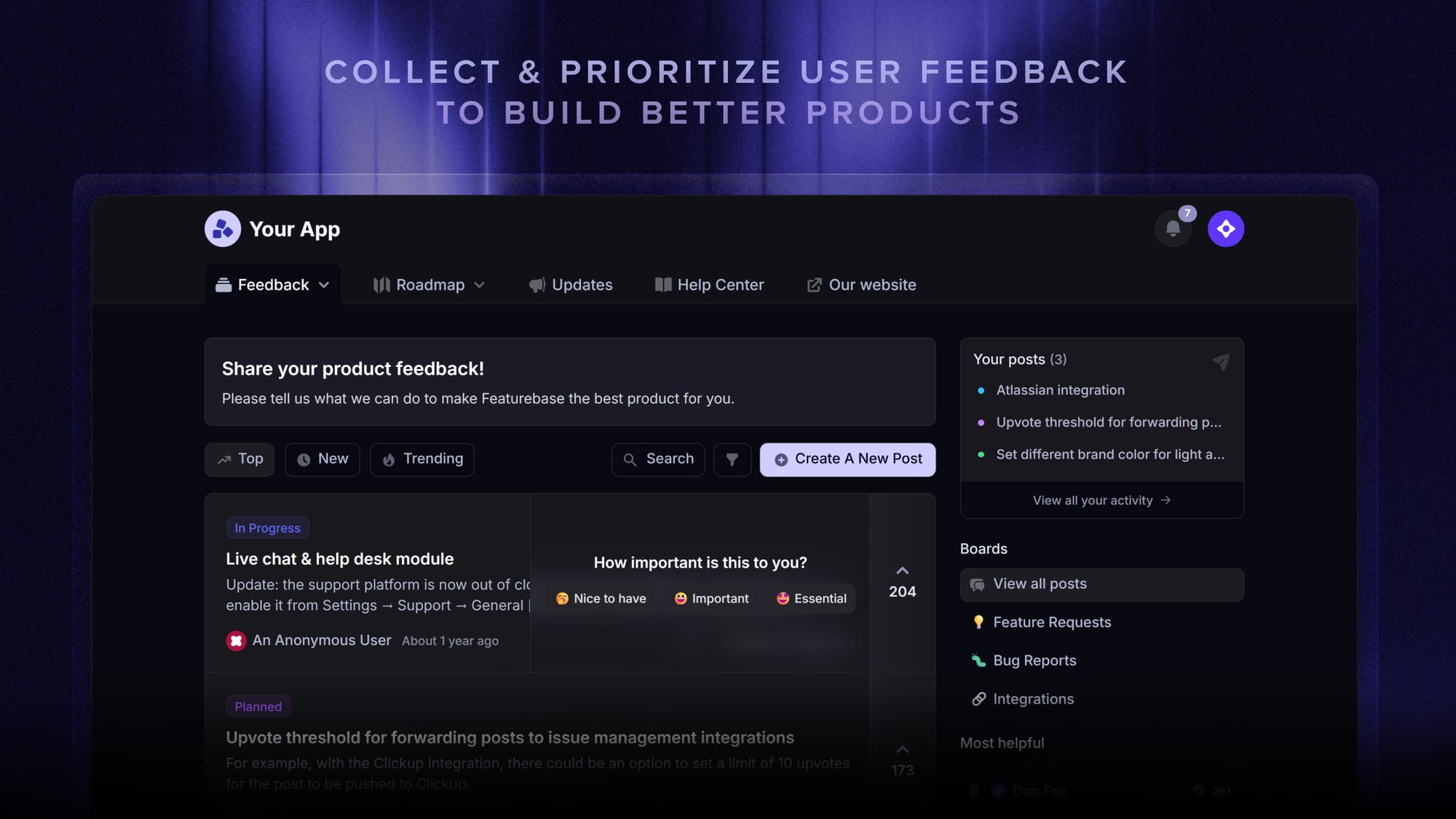
- Collect feedback and close the loop: ask customers what they think, then show them you acted on it. With a feedback tool like Featurebase, customers can submit ideas and vote on a public feedback forum, and you can automatically notify them when a request ships. Being able to close the feedback loop tells customers you actually listened, which is one of the fastest ways to deepen a relationship.
- Reward loyalty: give long-standing customers a reason to keep choosing you. Loyalty perks, early access, or a simple thank-you make people feel valued rather than taken for granted.
- Keep showing up after the sale: the relationship doesn't end at checkout. Proactive check-ins and useful follow-ups remind customers you're invested in their success, not just their first payment.
Tools for managing customer relationships
As your customer base grows, you can't hold every relationship in your head. The right tools help you stay organized and personal at scale.
Most teams lean on a few categories:
- CRM software: a customer relationship management system like Salesforce or HubSpot tracks contacts, deals, and interaction history so nothing falls through the cracks.
- Support and help desk tools: live chat, a shared inbox, and a knowledge base keep response times fast and answers consistent.
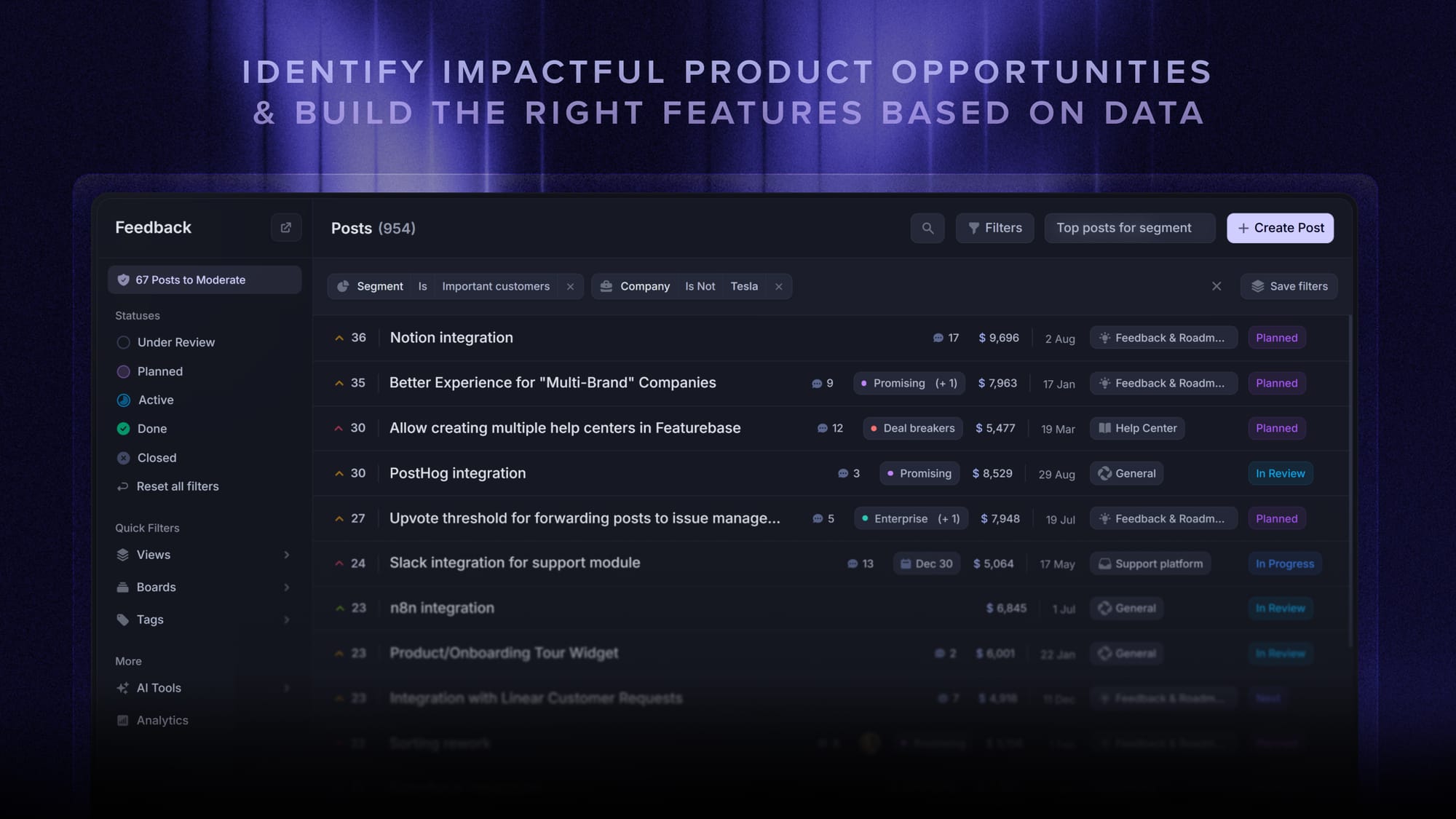
- Feedback and product tools: feedback boards, surveys, and voice-of-the-customer tools capture what customers want so you can act on it.
The best setup depends on your business, but the goal is always the same: one clear view of each customer, so every interaction feels informed and personal instead of like starting from scratch.

Add the best feedback tool in your arsenal
Centralize feedback, identify product opportunities, and build the right features
Build stronger customer relationships with Featurebase
Featurebase is a modern AI-powered customer platform for product-led SaaS. It combines an omnichannel inbox, feedback management, product changelogs, and AI agents into a single platform for teams that want all their customer-facing tools in one place. It's loved by thousands of support, product, and marketing teams from companies like Lovable, Raycast, and n8n. 💫
Instead of juggling 5+ different tools, Featurebase brings everything you need to build strong customer relationships into one place:
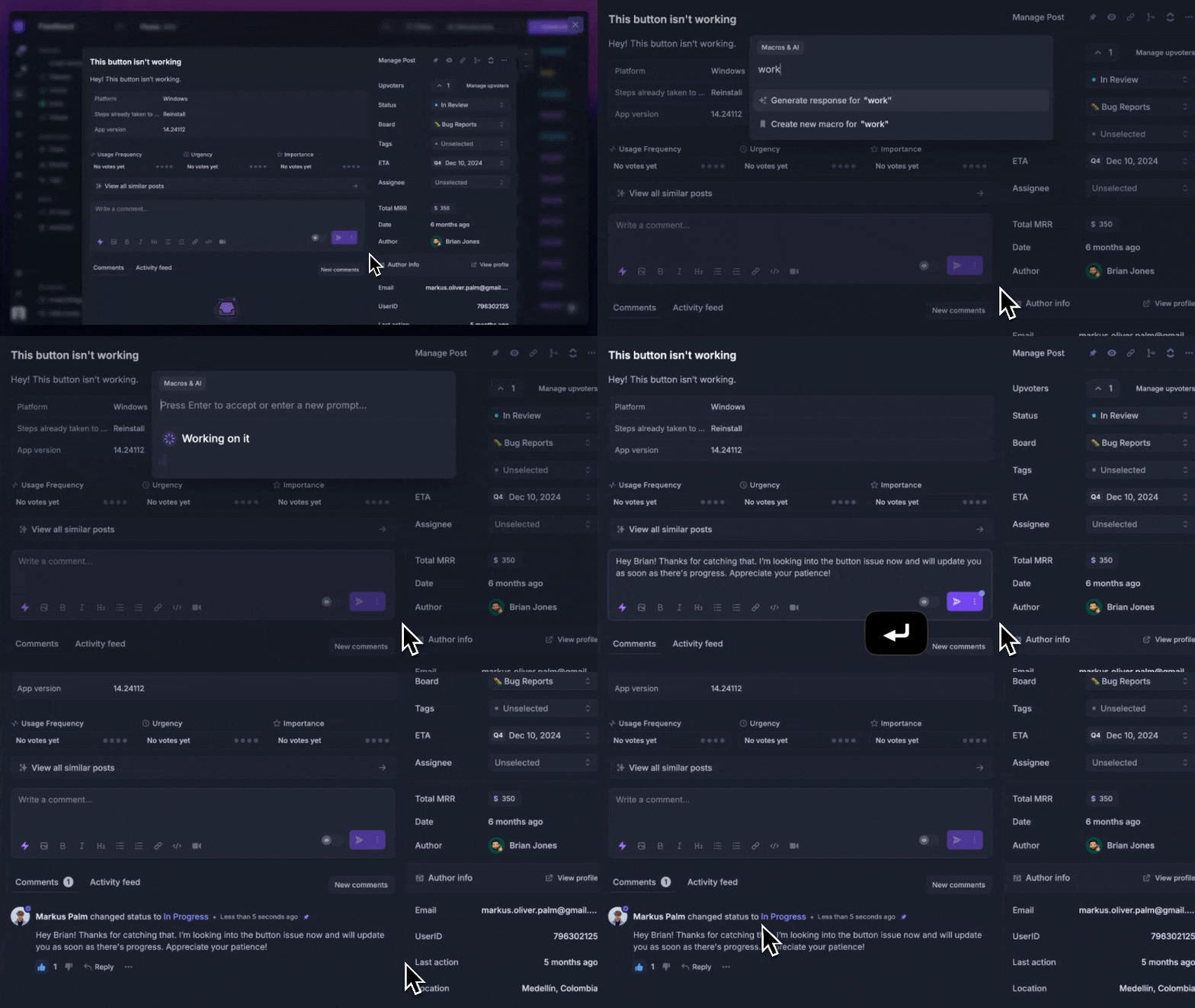
- Support platform – Support your customers via live chat, email, and Slack with an omnichannel inbox and automate support with powerful AI agents.
- Help center – Provide self-serve support with an AI-powered knowledge base for instant, multilingual answers.
- Feedback collection – Centralize feedback with integrations, feedback widgets, AI, and a public feedback forum. Let users vote on each other's ideas, see their total revenue, and focus on the most impactful features.
- Surveys (NPS, CSAT, etc.) – Create targeted surveys to ask users anything and measure customer satisfaction.
- Product updates – Announce product updates and increase feature adoption with neat in-app popups, notification emails, and a dedicated updates page.
- Workflows & automations – Automate repetitive tasks, like extending trials, routing conversations, collecting customer data, and more.
Plus, it integrates with many popular tools that you likely already use, such as Linear, Jira, Slack, and many more.
Pricing: Featurebase comes with a Free plan, with paid plans starting at $29/seat/month. The onboarding is super fast, so there's no downside to trying it. 👇
Conclusion
Customer relationships are built one interaction at a time. Respond fast, keep it personal, stay honest, and above all, listen to what your customers tell you and act on it. Do that consistently, and loyalty follows.
Featurebase is a modern feedback and support platform that helps you build those relationships in one place. You can collect feedback through a public forum, surveys, and widgets, keep customers in the loop with changelogs and automated updates, and handle support with an AI-powered inbox, so every customer feels heard and looked after.
It comes with a Free plan and the onboarding takes minutes, so there's no downside to trying it. 👇
✨ Start collecting & managing feedback with Featurebase for free →
FAQs
Why are customer relationships important?
Customer relationships decide whether people stick with you or leave for a competitor. Strong ones drive retention, repeat purchases, and word-of-mouth referrals, and they lower your acquisition costs because keeping a loyal customer is cheaper than winning a new one. Over time, that loyalty compounds into more predictable, sustainable revenue.
What are the different types of customer relationships?
In the Business Model Canvas framework, companies build a few distinct types of customer relationships, often more than one at the same time:
- Transactional: one-off interactions with no ongoing connection, like a quick retail purchase.
- Self-service: you give customers the tools to help themselves, such as a help center or knowledge base.
- Personal assistance: a real person helps the customer over chat, email, or in person.
- Communities: customers connect with each other and your brand in forums or user groups.
- Co-creation: customers actively shape your product, for example by submitting and voting on feature requests.
How do you maintain customer relationships over time?
Consistency is what keeps a relationship healthy long after the first sale. Follow up proactively, deliver the same quality every time, and check in even when nothing is wrong. Collecting feedback regularly and acting on it also shows customers the relationship goes both ways, which keeps them engaged.
What is a customer relationship manager?
A customer relationship manager is the person or role responsible for building and maintaining a company's relationships with its customers. They set the standards for how the team interacts with customers, handle key accounts, and develop programs that improve satisfaction and retention. In many companies the role overlaps with customer success and account management.
What is customer relationship marketing?
Customer relationship marketing is a strategy focused on building long-term loyalty instead of chasing one-off sales. Rather than optimizing for a single transaction, it prioritizes retention, repeat business, and advocacy through personalized communication, loyalty programs, and consistent value. The logic is that a loyal customer is worth far more over their lifetime than any single purchase.
What tools help you manage customer relationships?
Most teams pair a CRM (to track contacts, deals, and history) with support and feedback tools that handle the day-to-day interactions. Featurebase covers the feedback and support side by bringing feedback collection, surveys, product updates, and an AI-powered support inbox together, so you can listen to customers and respond to them without switching between apps. The right stack depends on your size and goals, but the aim is always a single, clear view of each customer.