Blog How to Build Customer Rapport: 8 Proven Ways
How to Build Customer Rapport: 8 Proven Ways
Customer rapport is the trust that turns a one-off support chat into a lasting relationship. Here are 8 proven ways to build it on every call, chat, and email.


Customers rarely remember the exact words an agent used. They remember how the conversation made them feel.
That feeling is customer rapport, and it's the difference between a ticket that gets closed and a customer who sticks around. Without it, even fast and correct answers can feel cold and forgettable.
In this guide, I'll break down what customer rapport is, why it matters for retention, and 8 practical ways to build it in every interaction. 👇
Key takeaways
- Customer rapport is the trust and mutual understanding you build with customers through consistent, genuine interactions.
- It directly affects retention, loyalty, and satisfaction scores like CSAT and NPS.
- The core skills are active listening, empathy, mirroring, and personalization, and all of them can be trained.
- Rapport looks different on the phone than it does over live chat or email, so agents need to adapt to the channel.
- You can track rapport over time with CSAT, NPS, repeat-purchase, and referral rates.
- Featurebase✨ gives your team a unified inbox with full customer context, so every reply feels personal instead of scripted.
What is customer rapport?
Customer rapport is the positive relationship an agent builds with a customer, based on trust, mutual understanding, and respect. It's what makes someone feel heard and valued rather than processed.
Rapport applies to every channel: phone, live chat, email, and social. No matter how someone reaches out, the goal is the same. Make them feel like a person, not a ticket number.
It's easy to confuse rapport with good service, but they aren't the same thing. Service is about resolving the issue. Rapport is about the connection you build while you do it. The best support does both at once.
Why customer rapport matters
Rapport isn't a soft nicety. It's a measurable driver of revenue and retention.
Harvard Business Review research found that emotionally connected customers are more than twice as valuable as highly satisfied ones. They spend more, stay longer, and refer more people to you. Satisfaction gets someone out the door happy. Connection brings them back.
The flip side is just as real. According to PwC, 32% of customers will walk away from a brand they love after just one bad experience. A single cold, impersonal interaction can undo years of goodwill.
When customers trust the person helping them, a few things follow:
- Higher retention: People stay with brands that make them feel understood, which lowers churn and protects revenue.
- More referrals: Customers who feel a genuine connection tell friends and colleagues, giving you word-of-mouth growth for free.
- Fewer escalations: Customers who feel heard are far less likely to demand a manager, which cuts down on ticket escalations and handle time.
- Better CSAT: Rapport is one of the strongest levers on satisfaction scores, second only to actually resolving the issue.
How to build rapport with customers (8 ways)
Rapport is built on skills, not luck. These 8 techniques are the ones that show up again and again across great support teams. Most of them are customer service skills you can coach and improve over time.
1. Practice active listening
Most people don't really listen. They wait for their turn to talk. Active listening means paying close enough attention that you actually understand the problem before you respond.
A simple trick is to repeat the last few words of what the customer said back to them. If someone says their order arrived damaged, you might reply, "So the package was dented when it arrived?" It confirms you're following and buys you a second to think.
Verbal cues like "okay," "I see," and "got it" also signal that you're engaged, which matters even more when the customer can't see your face.
2. Use the customer's name and personalize
Hearing your own name makes you feel seen. Use it naturally throughout the conversation, not just in the opening line. The same goes for details: reference the specific product they bought or the issue they flagged last week.
This is much easier when your team can see a customer's full history in one place. With a tool like Featurebase, agents work from a unified inbox that shows past conversations, requests, and feedback, so they can pick up where the last chat left off instead of asking the customer to repeat themselves.
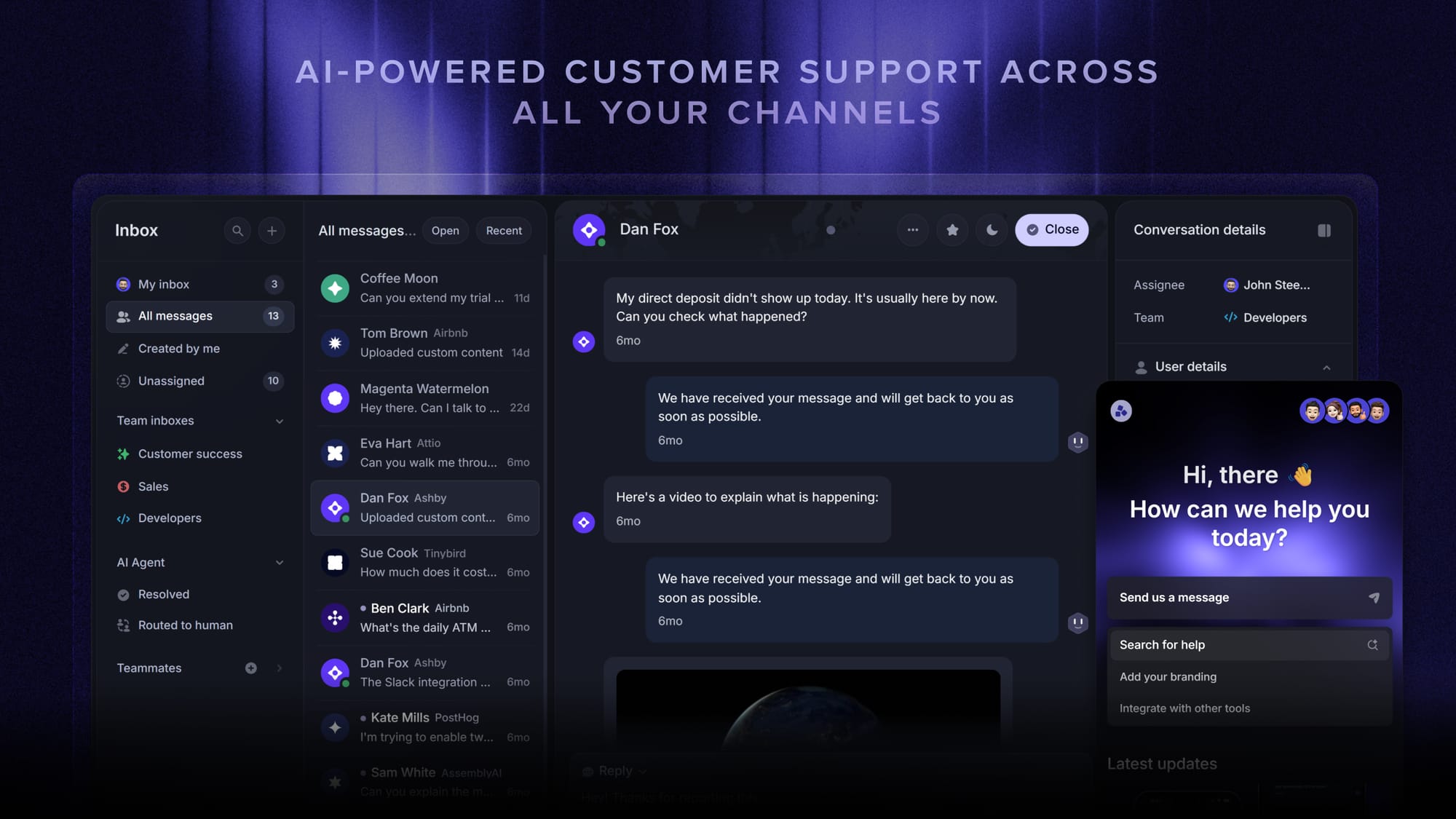
That kind of personalized customer service turns a generic exchange into one that feels tailored to the person on the other end.
3. Show genuine empathy
Empathy is simply showing the customer that you understand how they feel and why. It's the fastest way to defuse a tense conversation and build trust.
A useful pattern is the "I and we" approach: "I understand how frustrating this is, and we're going to fix it together." It acknowledges the emotion first, then reframes the problem as something you'll solve as a team.
When you're handling your 40th ticket of the day, empathy is hard. Remind yourself there's a real person on the other end who needs help, and it gets easier to mean it.
4. Mirror their tone and language
Mirroring is subtly matching a customer's tone, pace, and word choice. If they're formal, stay formal. If they're casual and cracking jokes, you can loosen up too.
This works especially well on channels where you can't see body language, like live chat. Pick up on a few key terms the customer uses and echo them back naturally.
The trick is subtlety. Copying every word or gesture comes across as mockery, so keep it light.
5. Mind your pace and speak clearly
Talk too fast and customers miss important information or feel rushed. Talk too slow and they get impatient. Most communication research points to a rate of roughly 140 to 160 words per minute as the sweet spot.
Pause between key points so the customer has time to absorb what you said. If you're walking someone through steps, break them up: "First, we'll reset your password. (Pause.) Then we'll log back in."
Clarity beats speed. Avoid jargon, and summarize the next steps so nobody leaves the conversation confused.
6. Ask open-ended questions (try the FORD method)
Open-ended questions invite the customer to share more, which gives you both information and connection. Swap "Do you like the product?" for "What do you like most about the product?"
A simple framework for this is the FORD method:
- Family - ask about their household or life outside work
- Occupation - show interest in what they do
- Recreation - talk about hobbies and interests
- Dreams - learn about their goals and plans
You don't need to run through all four on every call. Just pick up on details customers mention in passing, and reference them later to show you were paying attention. Keep it professional and never force it.
7. Use specific, positive language
Vague, generic phrasing makes you sound uninterested. Instead of "I see the item is delayed," say "I can see your Bosch Series 4 oven is delayed because of storms on the East Coast, and the new delivery date is Friday."
Specificity proves you're actually listening and understand the issue. It's the difference between sounding like a script and sounding like a person who cares.
Keep the tone positive, too. Focus on what you can do rather than what you can't. "Here's how we'll sort this out" lands far better than "There's nothing I can do about that."
8. Follow up and close the loop
Rapport doesn't end when the ticket closes. A quick follow-up that references the exact issue, not a generic "just checking in," shows the customer they weren't forgotten.
This is where proactive support shines. Reaching out before a customer has to chase you tells them you're invested in the outcome, not just the resolution.
Even a short message like "Wanted to confirm the refund for your damaged oven went through" can turn a frustrated customer into a loyal one.
Building rapport across phone, chat, and email
The core skills stay the same, but how you apply them shifts by channel. Each one has its own constraints:
- On the phone: You have no visual cues, so your voice carries everything. Smile while you talk (people can hear it), use verbal nods, and mind your pace to sound warm and confident.
- Over live chat: Speed and tone matter most. Mirror the customer's language, use their name, and avoid sounding robotic even when you're using saved replies. This is where conversational customer service earns its keep.
- In email: Clarity and personalization win. Reference specifics, keep it concise, and close with a clear next step so the customer never feels left hanging.
How to measure customer rapport
Rapport feels intangible, but its effects are measurable. A few metrics tell you whether your team is building it:
- CSAT (Customer Satisfaction Score): The most direct read on whether individual interactions land well.
- NPS (Net Promoter Score): Captures the longer-term loyalty and willingness to recommend that strong rapport creates.
- Repeat and referral rates: Customers who feel connected come back and bring others with them.
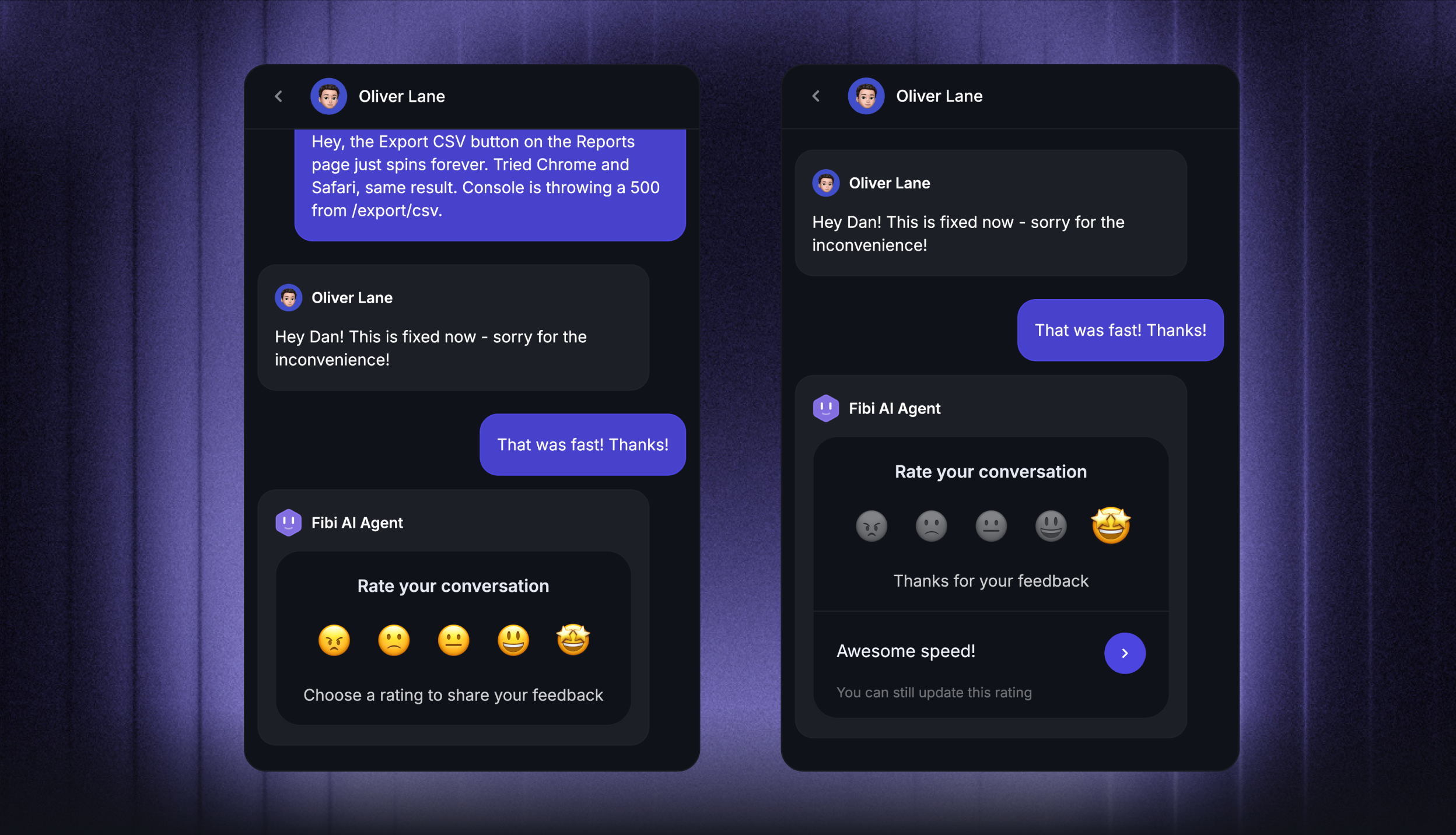
If you're deciding what to track, our guide on NPS vs CSAT breaks down when to use each. The point isn't to obsess over a single number. It's to measure customer experience over time and spot where rapport is slipping.
Conclusion
Building customer rapport comes down to consistency: listen closely, show genuine empathy, and follow through every time. The techniques above work on any channel, and they only get stronger the more your team practices them.
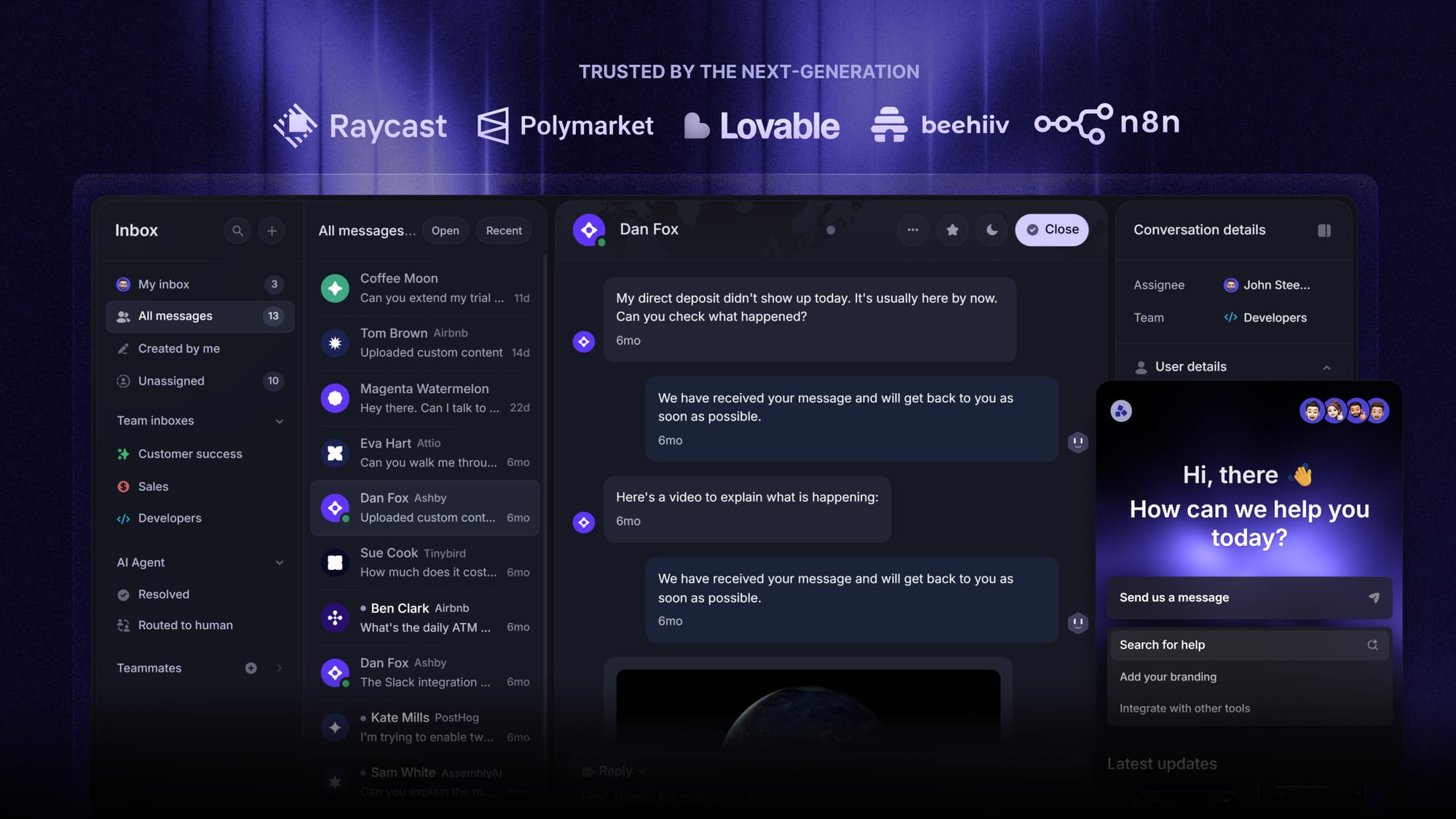
Featurebase is a modern AI customer support platform that helps your team build rapport at scale. It brings live chat, email, and Slack into one unified inbox with full customer context, so every reply feels personal, and the Fibi AI Agent handles routine questions so your team has time for the conversations that matter.
It comes with a Free plan and quick onboarding that doesn't need a credit card, so there's no downside to trying it. 👇
✨ Automate your support with the fastest AI-enhanced Inbox today →
FAQs
How do you build rapport with a customer over the phone?
On the phone you lose all visual cues, so your voice does the work. Smile while you speak (it genuinely changes your tone), use verbal nods like "I see" to show you're listening, and keep a steady pace so you sound calm and in control. Using the customer's name and referencing their specific issue also makes a phone call feel personal.
What are the four building blocks of rapport?
The four building blocks of rapport are empathy, authenticity, similarity, and shared experience. Empathy shows understanding, authenticity builds trust, similarity creates connection, and shared experience strengthens the bond. Together they make an interaction feel human rather than transactional.
Can customer rapport be learned and trained?
Yes. Rapport is a skill that improves with practice, coaching, and feedback, not an inborn talent. Teams build it through habits like active listening, tone control, and personalized follow-ups. Role-playing and quality assurance reviews help reinforce those behaviors and keep them consistent.
What are the three Cs of rapport?
The three Cs of rapport are connection, credibility, and comfort. Connection focuses on genuine engagement, credibility builds confidence through expertise, and comfort makes the interaction feel natural and low-pressure. Hitting all three creates a smoother, more trusting customer experience.
How do you measure customer rapport?
The clearest signals are satisfaction metrics like CSAT and NPS, alongside behavioral ones like repeat-purchase and referral rates. Tracking these over time shows whether rapport is turning into loyalty. Tools like Featurebase let you run in-app CSAT and NPS surveys so you can measure this without adding another platform.
What's the difference between customer rapport and customer service?
Customer service is about resolving the issue a customer came to you with. Customer rapport is the trust and connection you build while doing it. You can deliver technically correct service with zero rapport, but the customers who stay are the ones who feel a genuine relationship, not just a solved ticket.