Customer Success vs Customer Support: Key Differences
Compare customer success vs customer support, from responsibilities and metrics to practical examples of how both teams help customers get more value.


On this page
Automate your support with the fastest AI-enhanced Inbox today
A customer can get a fast answer to every support ticket and still struggle to get value from your product. Resolving their latest issue doesn't necessarily mean they've achieved what they signed up for.
In this guide, I'll break down customer success vs customer support, explain where their responsibilities overlap, and show how both teams can work together. 👇
Key takeaways
- Customer success: Helps customers achieve their goals through onboarding, product adoption, and ongoing guidance.
- Customer support: Resolves questions and problems that prevent customers from using your product effectively.
- Both need shared context: A resolved ticket can still leave an account needing training, a product improvement, or a revised success plan.
- Featurebase ✨ : Brings support conversations and product feedback together so teams can collaborate around what customers need.
What is customer success?
Customer success is the work of helping customers achieve their desired outcomes with your product. It connects what they bought with the results they need, from their first useful action through ongoing adoption and renewal.
A customer success manager (CSM) learns what those outcomes look like, agrees on milestones, and checks whether the customer is making progress.
Typical responsibilities include:
- Onboarding: Helping new customers reach an initial goal, such as launching their first project or completing a workflow.
- Product adoption: Guiding customers toward capabilities that improve their work and addressing gaps in usage.
- Ongoing account guidance: Reviewing progress, spotting risks, and coordinating renewal or expansion conversations with the relevant team.
For example, a company buys reporting software to shorten its monthly reporting process. Customer success helps the team establish that workflow and evaluate whether it's saving time. Logging in regularly is useful evidence, but the customer's business outcome is the goal.
What is customer support?
Customer support helps customers solve specific problems and get answers about your product. That includes troubleshooting errors, explaining functionality, and coordinating technical fixes with engineering.
Support teams commonly handle:
- Product questions: Explaining how a feature works or helping someone complete a task.
- Technical issues: Investigating failed integrations, broken workflows, and unexpected behavior.
- Issue follow-up: Keeping customers informed while a problem is investigated and confirming that the solution works.
In the reporting-software example, support investigates why an export fails and helps the customer produce the report they need.
Support also contributes to prevention. Clear help articles, incident notifications, and fixes for recurring issues can stop customers from needing to contact the team in the first place.
Customer success vs customer support: 6 key differences
The main difference is what each function takes responsibility for: customer success focuses on progress toward customer outcomes, while customer support focuses on resolving specific needs and obstacles.
| Dimension | Customer success | Customer support |
|---|---|---|
| Primary goal | Help customers achieve ongoing value | Help customers overcome a question or problem |
| Typical trigger | An onboarding milestone, usage change, or account review | A customer question, reported issue, or detected incident |
| Time horizon | Progress across the customer lifecycle | Resolution of an individual issue, including follow-up |
| Responsibilities | Success planning, adoption guidance, and account coordination | Troubleshooting, product education, and technical escalation |
| Metrics | Adoption, time to value, retention, and account growth | Response time, resolution quality, and customer satisfaction |
| Core skills | Goal discovery, relationship management, and business analysis | Diagnosis, product knowledge, and clear problem-solving |
These are primary responsibilities, not rigid boundaries. Both teams need empathy, product knowledge, and good communication. Both influence whether customers want to stay.
Proactive and reactive work overlap
Customer success usually initiates contact to help customers progress. Customer support often starts with an incoming request. But timing alone doesn't define the role.
A support team can proactively warn customers about an integration outage. A CSM can react to a customer saying their rollout has stalled. The useful question is which outcome needs an owner: resolving the incident, getting the rollout back on track, or both.
Measure each team's contribution
When comparing customer support vs customer success, avoid judging both teams by ticket volume. Their work needs different measures.
Useful customer success metrics include:
- Time to value and adoption: How quickly customers reach a meaningful result and continue using the workflows that matter.
- Customer retention and churn: Whether customers stay over a defined period. These outcomes also reflect product quality, pricing, and customer fit.
- Net revenue retention: How recurring revenue from existing customers changes after expansion, downgrades, and churn. Customer lifetime value provides a longer-term view of the relationship's economic value.
Useful customer support metrics include:
- First response time: How long customers wait for an initial reply.
- Resolution time and first contact resolution: How quickly issues get resolved and how often customers get a solution in the first interaction.
- Customer satisfaction score (CSAT): How customers rate an interaction. Pair it with response comments and reopened tickets to understand the experience behind the score.
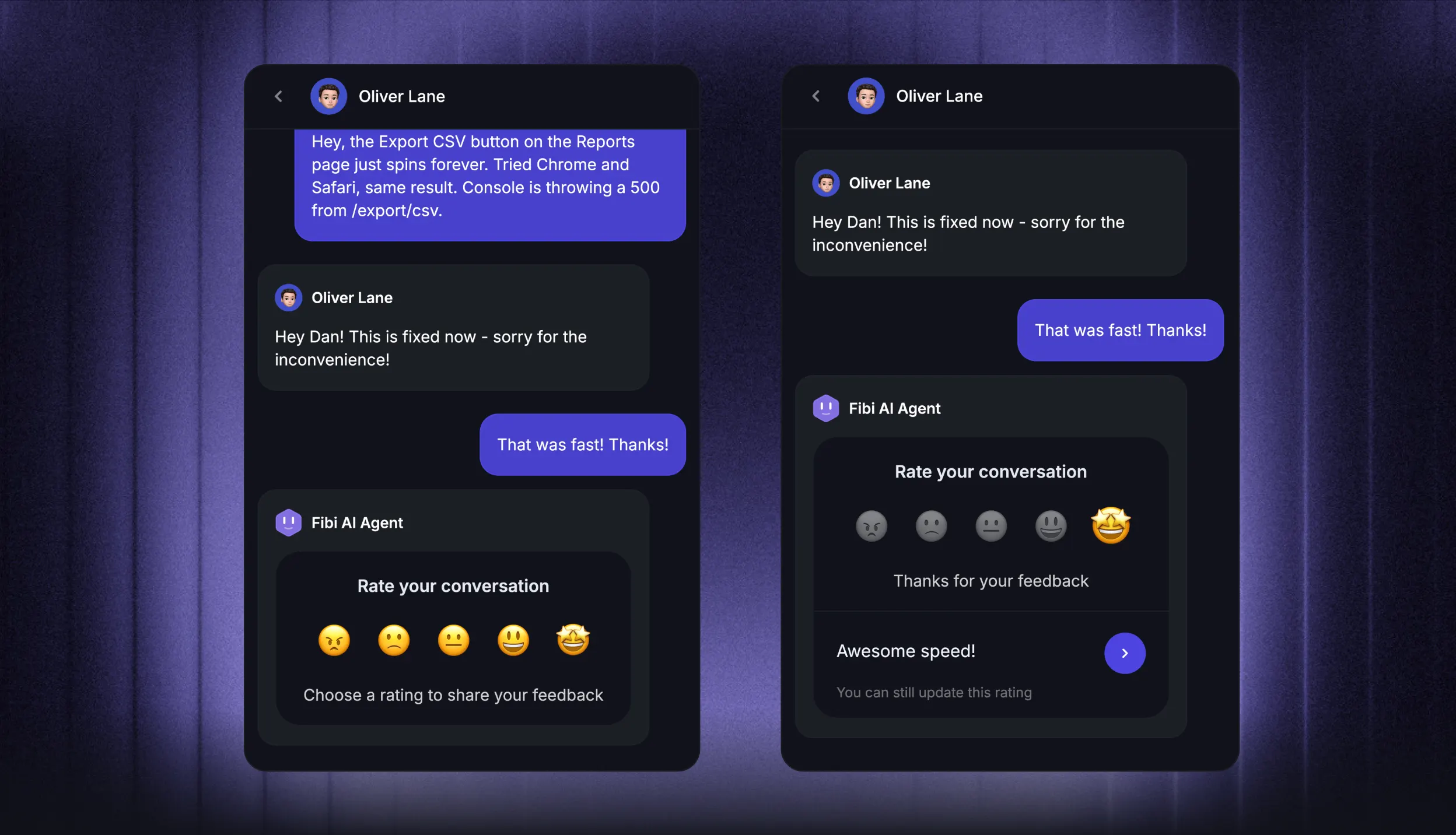
Review these measures together. Fast replies and positive CSAT scores can coexist with weak product adoption. Equally, a customer might renew while an unresolved support issue continues to disrupt their work.
Who owns the customer problem? 3 practical examples
The overlap becomes easier to manage when you separate the immediate problem from the customer's broader goal. Here's how that works in practice.
A new customer gets stuck during onboarding
A customer can't connect their data source, which prevents them from completing setup.
Support investigates the connection error and coordinates any technical fix. Customer success keeps the customer onboarding plan moving, adjusts milestones if necessary, and confirms that the customer reaches their first useful result.
The handoff should include the blocker, its impact on the rollout, and the next agreed update. Support closing the issue is a useful milestone. The customer still needs to complete the workflow they came to build.
Product usage drops without a support request
An account's weekly activity falls, but nobody has submitted a ticket.
Customer success investigates whether priorities changed, a key contact left, or users never established a useful routine. A customer health score can flag the change, but a conversation helps explain it.
If a technical problem emerges, support takes ownership of that issue. If the problem is a training gap, customer success arranges the guidance. An empty support queue doesn't tell you whether customers are getting value.
A recurring issue puts a renewal at risk
A customer reports the same failure again shortly before renewal.
Support owns the investigation, workaround, and technical updates. Customer success discusses the business impact and coordinates an account recovery plan with the people responsible for renewal.
Agree on who sends each update and what can realistically be promised. The customer should receive consistent information about the fix and the next steps for their account.
How customer success and support should work together
Customers experience the whole relationship. In PwC's 2025 survey, 29% of US consumers said poor customer experience had caused them to stop using or buying from a brand.
That finding spans consumer industries. For software teams, it offers a useful reminder to look beyond individual interactions when reviewing the customer journey.
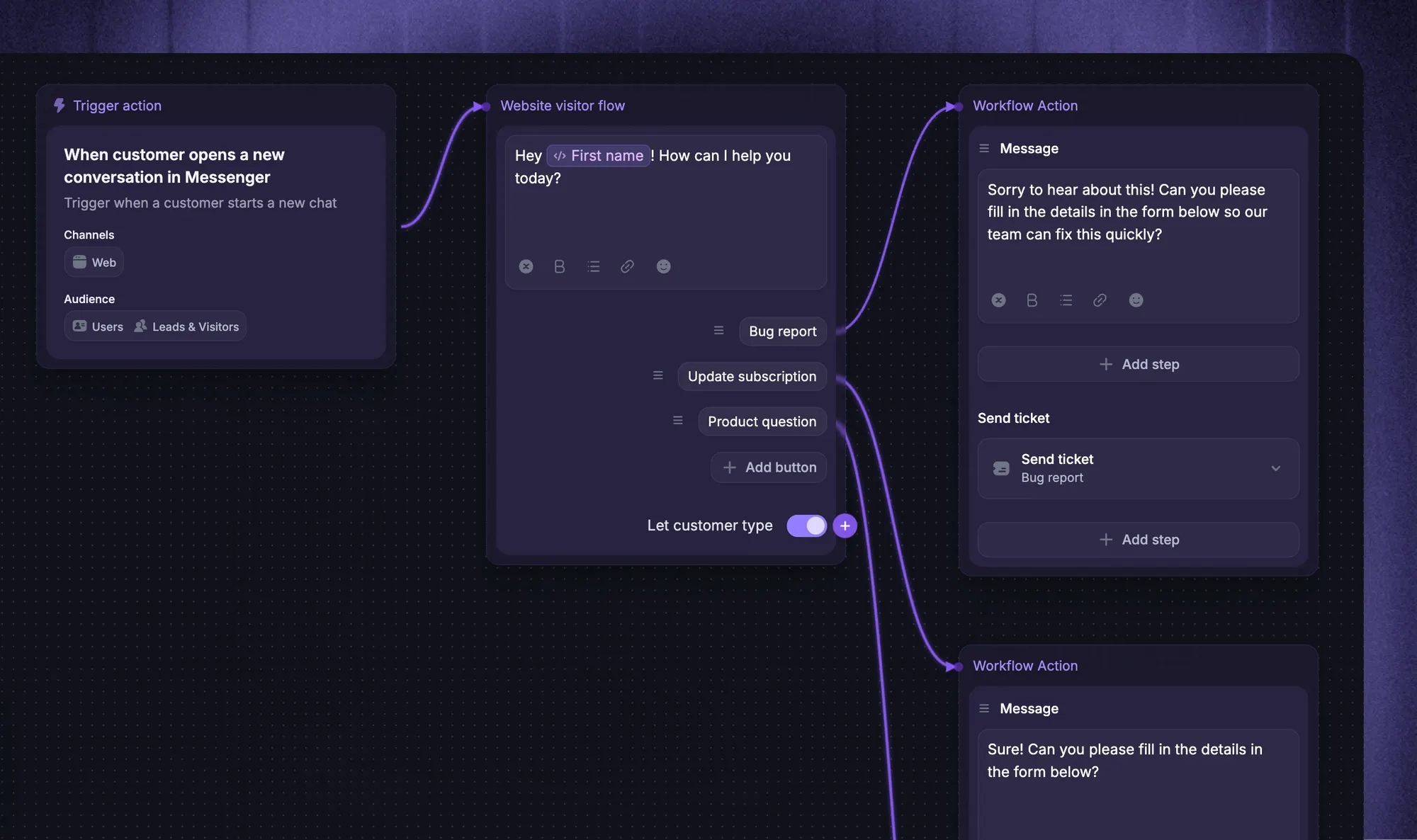
Set clear ownership and escalation rules
Document who owns technical resolution, adoption guidance, and account decisions. Define the signals that bring another team into the conversation, such as repeated incidents, a missed onboarding milestone, or an explicit cancellation concern.
Assign a named owner to the next action and make the next update clear to the customer. Consulting another team shouldn't leave the conversation waiting for someone to volunteer.
Share customer context during handoffs
A useful handoff gives the receiving teammate enough context to act. Capture:
- Customer goal: What the customer is trying to accomplish.
- Current blocker: What happened and what has already been tried.
- Business impact: Which workflow, deadline, or group of users is affected.
- Next action: Who will do what, and when the customer will hear back.
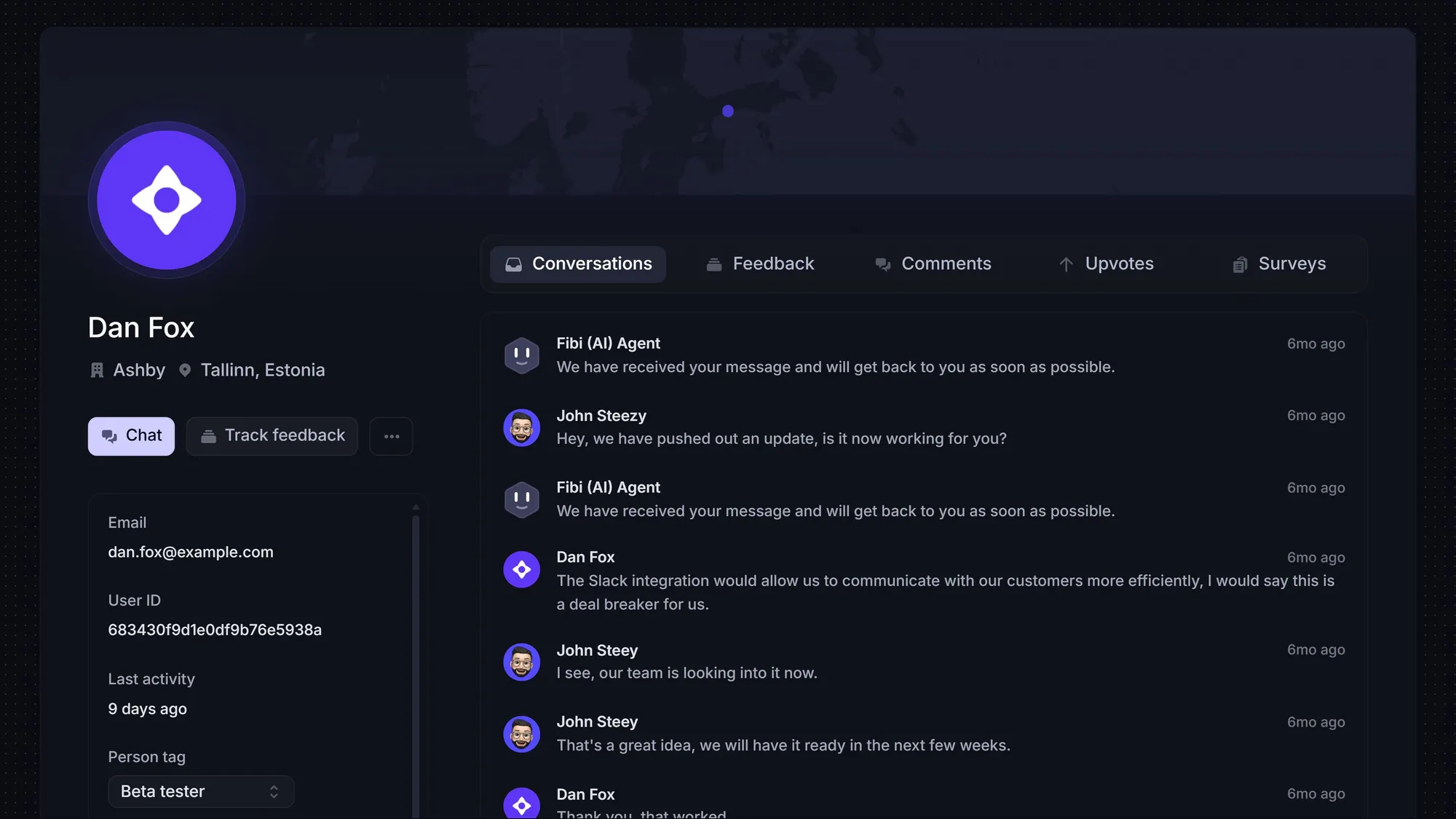
Keep this context with the conversation. In Featurebase, the Support Inbox lets teammates add internal notes, mention colleagues, and assign conversations. Teams can also create or link product Requests while keeping the original conversation available as evidence.
Turn recurring problems into education and product feedback
Review recurring themes together. Repeated setup questions might call for a clearer help article, while repeated workarounds may point to a product limitation that needs engineering attention.
Use a customer feedback loop to connect those observations to action and follow-up. Track the product request separately from the immediate support issue so that resolving the customer's workaround doesn't make the underlying need disappear.
Conclusion
Customer success vs customer support comes down to complementary responsibilities: helping customers achieve ongoing value and resolving the obstacles they encounter. Clear ownership and shared context let both teams contribute without making customers repeat themselves.
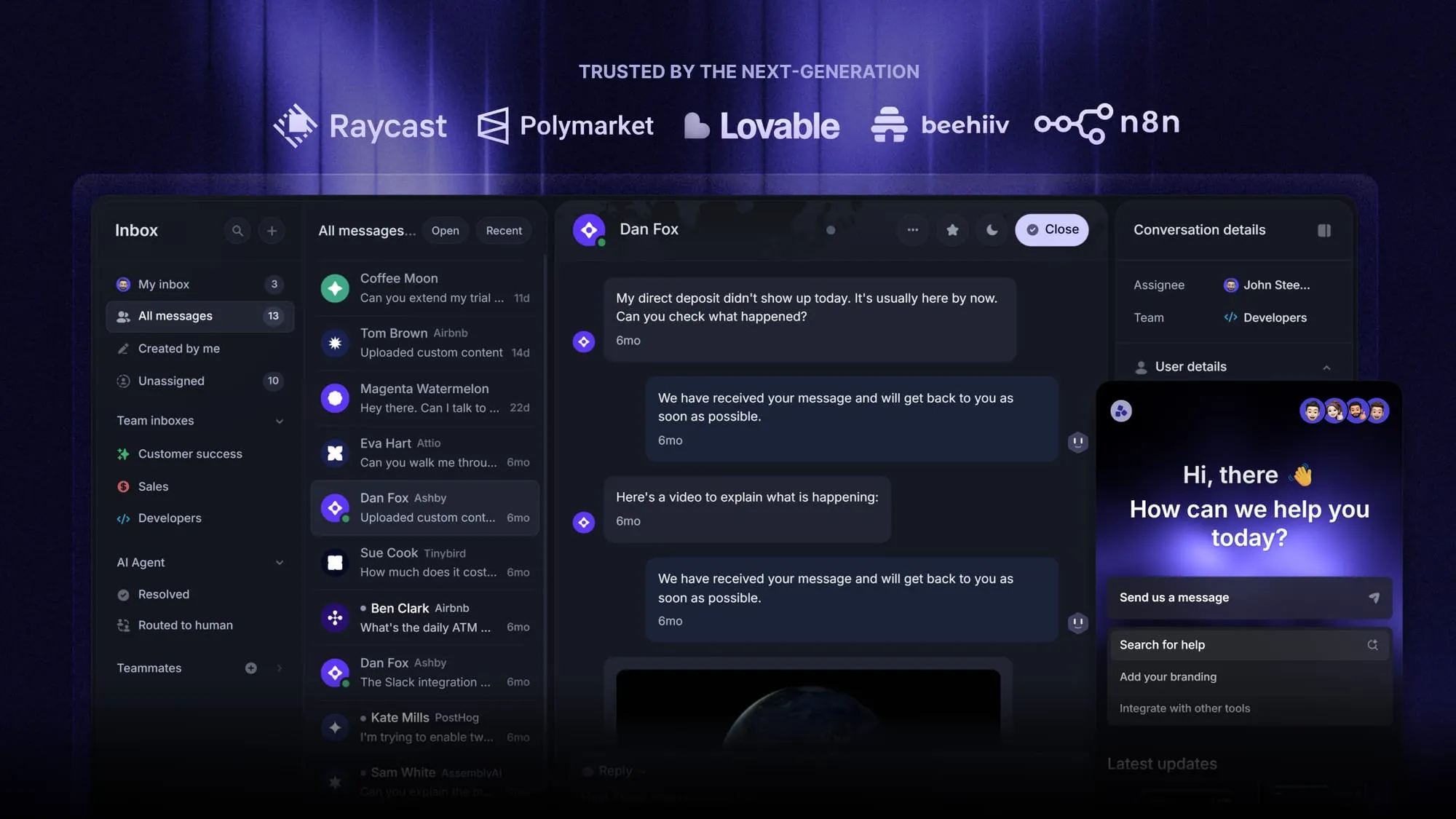
Featurebase is a modern AI customer support platform that combines an omnichannel inbox, help center, and feedback management in one place. It helps software teams manage customer conversations and keep product feedback connected to the needs behind it.
It comes with a Free plan, so you can try it without a credit card. 👇
Bring customer support and feedback together with Featurebase
FAQs
Customer service broadly covers the assistance a business provides throughout the buying and ownership experience. Customer success focuses on helping customers achieve agreed outcomes after they buy. Terminology varies, so define responsibilities explicitly, including where customer service and customer support sit within your organization.
Yes. Customer experience encompasses how customers perceive their interactions with your business, from marketing and sales through product use and support. Customer success contributes to that experience by helping customers achieve meaningful outcomes, but it doesn't own every touchpoint.
Customer success can have commercial responsibilities, including renewals or identifying expansion opportunities, depending on the organization. Its core responsibility is helping customers achieve value from the product. Some companies give contract negotiations to sales or account management while CSMs concentrate on adoption and outcomes.
Yes. Product knowledge, troubleshooting, and communication skills transfer well from support to customer success. Build experience in discovering business goals, interpreting usage data, and managing longer-term plans, ideally through onboarding projects or collaboration with a CSM.
No. Some customers benefit from a named CSM, while others can achieve their goals through a pooled success team, group training, and digital guidance. Choose the model based on implementation complexity, the guidance customers need, and the resources required to deliver it effectively.