Blog Comparisons9 Best Kore AI Alternatives for AI Chat and Customer Support (2026)
9 Best Kore AI Alternatives for AI Chat and Customer Support (2026)
Kore AI can be complex; discover the best 2026 alternatives for faster AI support, better pricing, and smarter agent assist.

Kore AI is a popular conversational AI platform. But if you’re trying to roll out an AI agent for support, the setup can feel heavier than it needs to be. The steep learning curve, complex workflows, and reliance on significant technical expertise often slow down teams that just want to improve customer engagement.
So, in this guide, I’ll break down the best Kore AI alternatives in 2026. I’ll focus on tools that help teams and businesses ship conversational automation faster, with better pricing transparency, stronger agent assist, and clearer ways to connect to enterprise systems. 👇
Short overview
TL;DR: the best Kore AI alternatives to check in 2026:
- ✨ Featurebase – Best overall for AI support, plus feedback and customer engagement
- Ada – Best for global enterprises needing multilingual support and enterprise-scale automation
- Intercom – Best for business teams that want fast setup, web chat, and strong agent assist
- Drift– Best for sales and marketing teams using chat to qualify leads and drive pipeline
- Zendesk – Best for enterprise support teams that need a proven support platform with help docs, workflows, and automation
- Helpshift – Best for mobile-first and in-app support experiences
- Tidio – Best for SMBs that want simple AI chatbots with transparent pricing
- Help Scout – Best for mid-market support teams that want a clean inbox and help docs
- Quiq – Best for enterprise teams that need agentic AI workflows.
What is Kore AI?
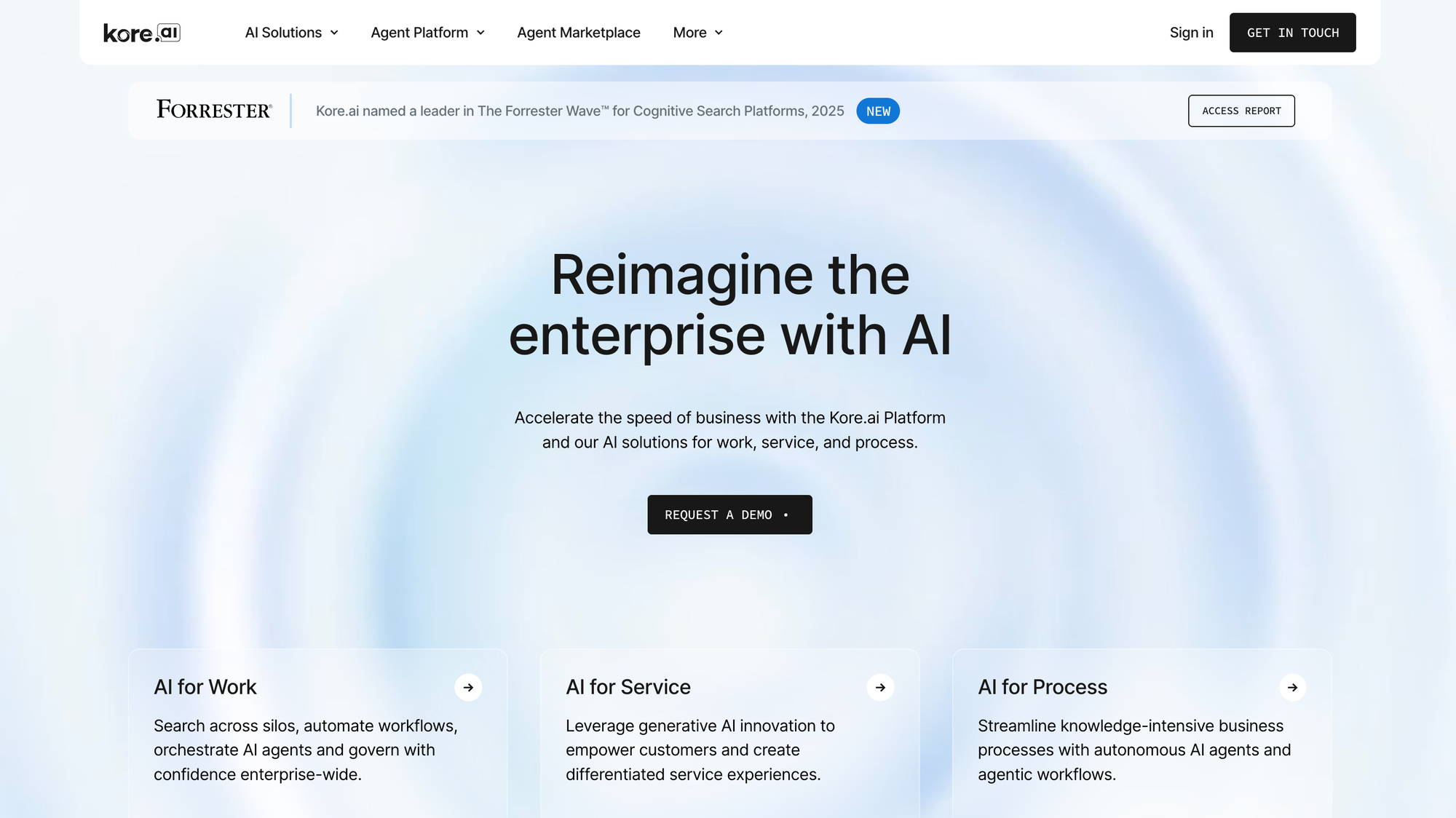
Kore.ai is an enterprise-grade conversational AI platform that helps teams automate customer interactions and internal support. It is typically used to build virtual assistants, deploy an AI agent for support, and run conversational flows across web chat and other channels.
While Kore AI can be a solid option in enterprise settings. But it often takes more work to build, test, and maintain. If you want to move fast, connect the assistant to enterprise systems, and ship improvements weekly, it can feel like you are fighting the platform.
Why look for alternatives to Kore AI?
I usually see teams explore AI alternatives for three reasons:
- Steep learning curve and too much setup
Many conversational AI tools assume you have specialists who can design flows, manage training data, and maintain complex workflows. That is tough for support teams and business users, especially non-technical users who still need to own day-to-day updates. - Rigid operating models
Some teams encounter friction over agent behavior and operating procedures. When every change needs a heavy workflow review, conversational automation slows down. - Pricing transparency is not always great
Enterprise platforms often come with custom packages. If you need predictable pricing and a clear pricing model as you scale, it can be frustrating.
Top Kore AI alternatives for 2026
1. Featurebase✨
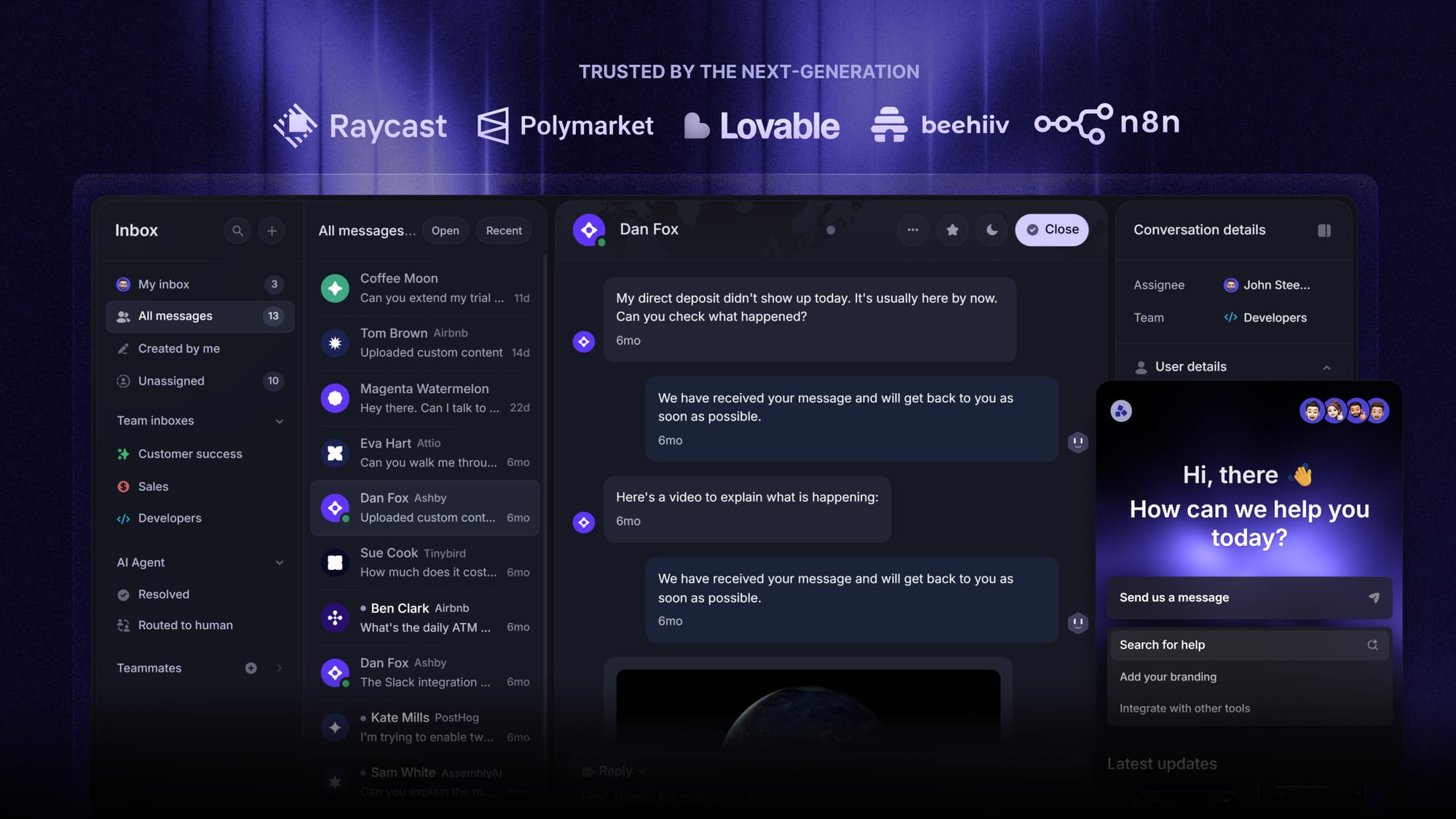
Featurebase is a modern AI customer support platform for product-led SaaS. It combines AI-powered support, a help center, and feedback tools into a single platform, so your team can resolve issues faster and learn from every interaction. 💫
If Kore AI feels designed for long enterprise rollouts, Featurebase is the opposite. It’s built for fast deployment, day-to-day ownership by support teams, and an AI agent that can take real actions, not just respond.
Top features:
- Omnichannel inbox – Manage chat, email, and Slack conversations from one AI-powered view
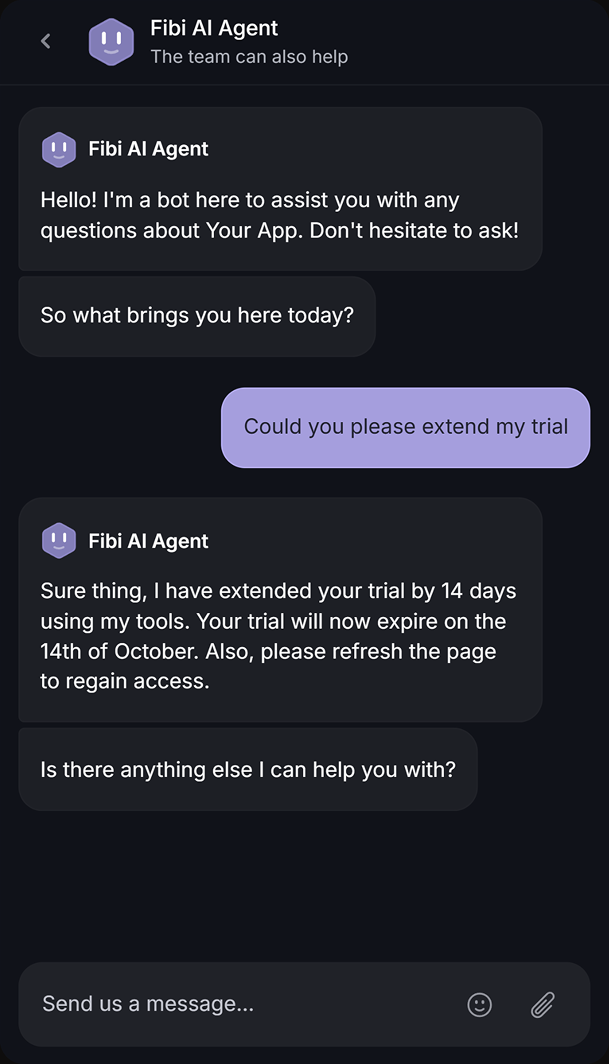
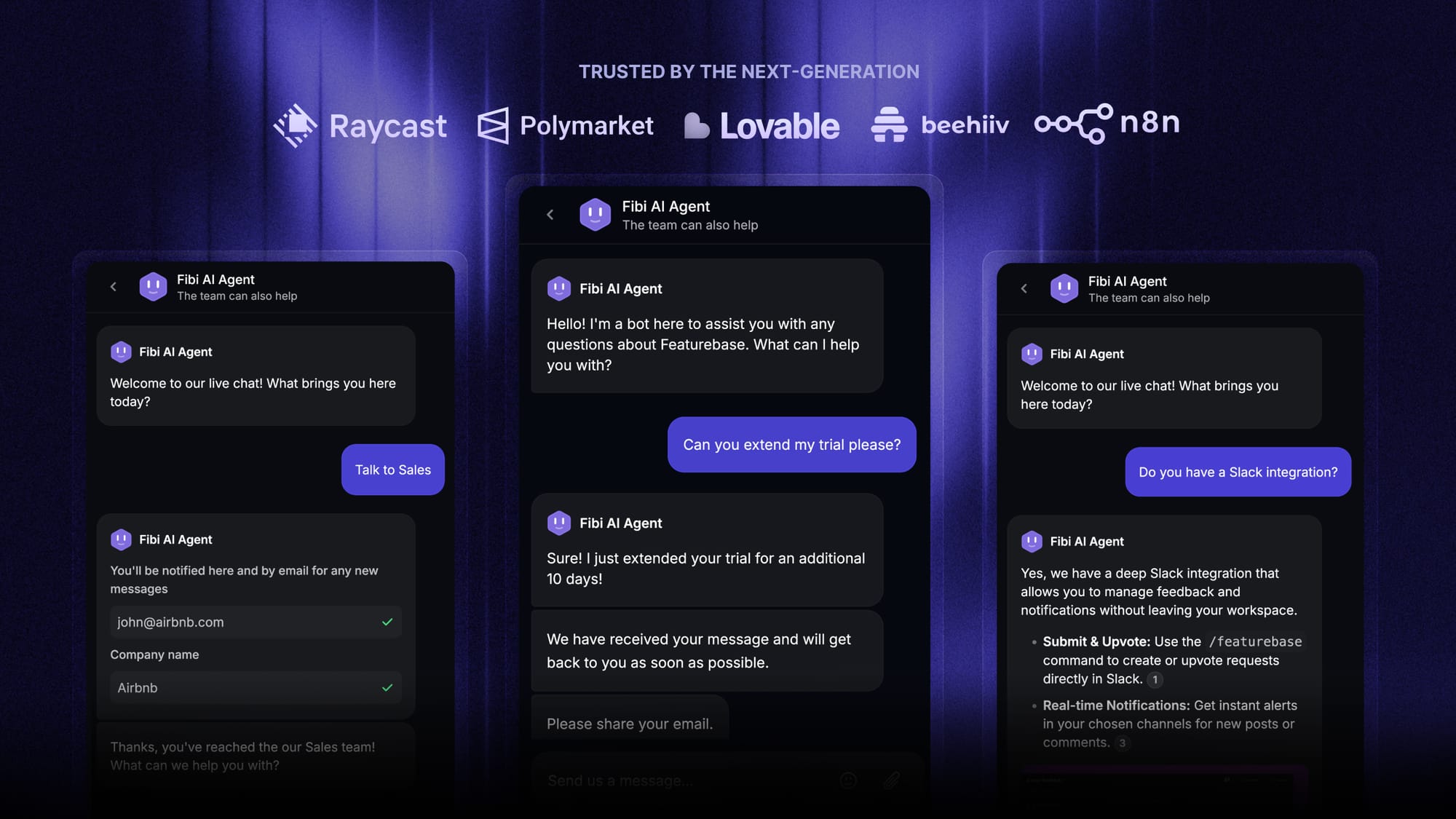
- Fibi AI Agent – Automate resolutions and run custom actions like trial extensions, refunds, and routing
- Help center with AI search – Provide instant, multilingual self-serve answers
- In-app support widget & web chat – Deliver AI or human support directly in your product or website
- Workflows & automations – Auto-assign tickets, route conversations, and collect customer data
- Copilot – Help human agents respond faster during live conversations with AI
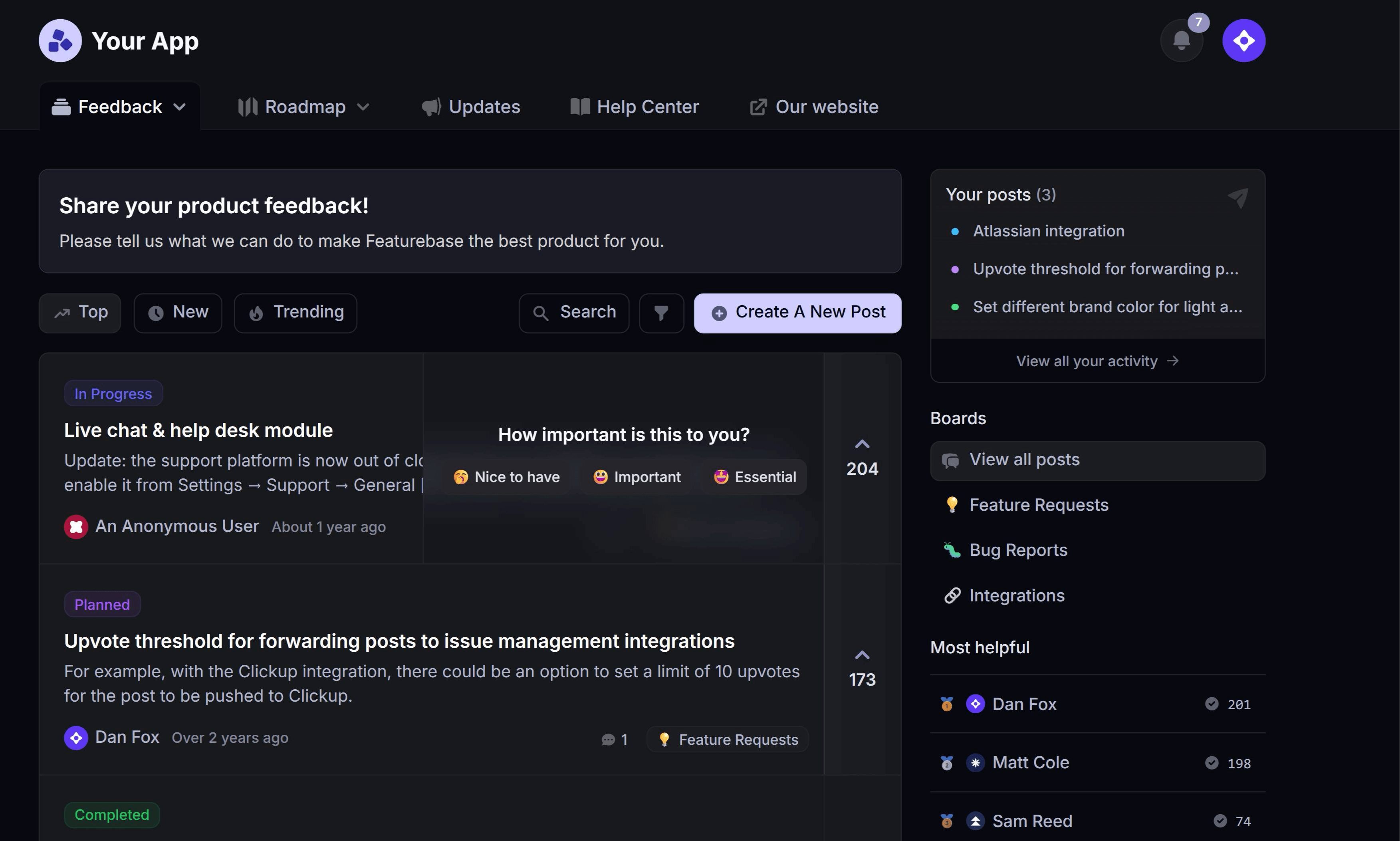
- Feedback boards, roadmaps & changelogs – Collect feature requests, prioritize ideas, and keep users updated
- Integrations – Connect with Slack, Linear, Jira, HubSpot, and more
Pricing: Free plan available with unlimited conversations. Paid plans start at $29/seat/month, plus $0.29 per AI resolution.

Get the best modern Kore AI alternative
Automatically resolve 70% of customer requests & cut down manual support loads
2. Ada
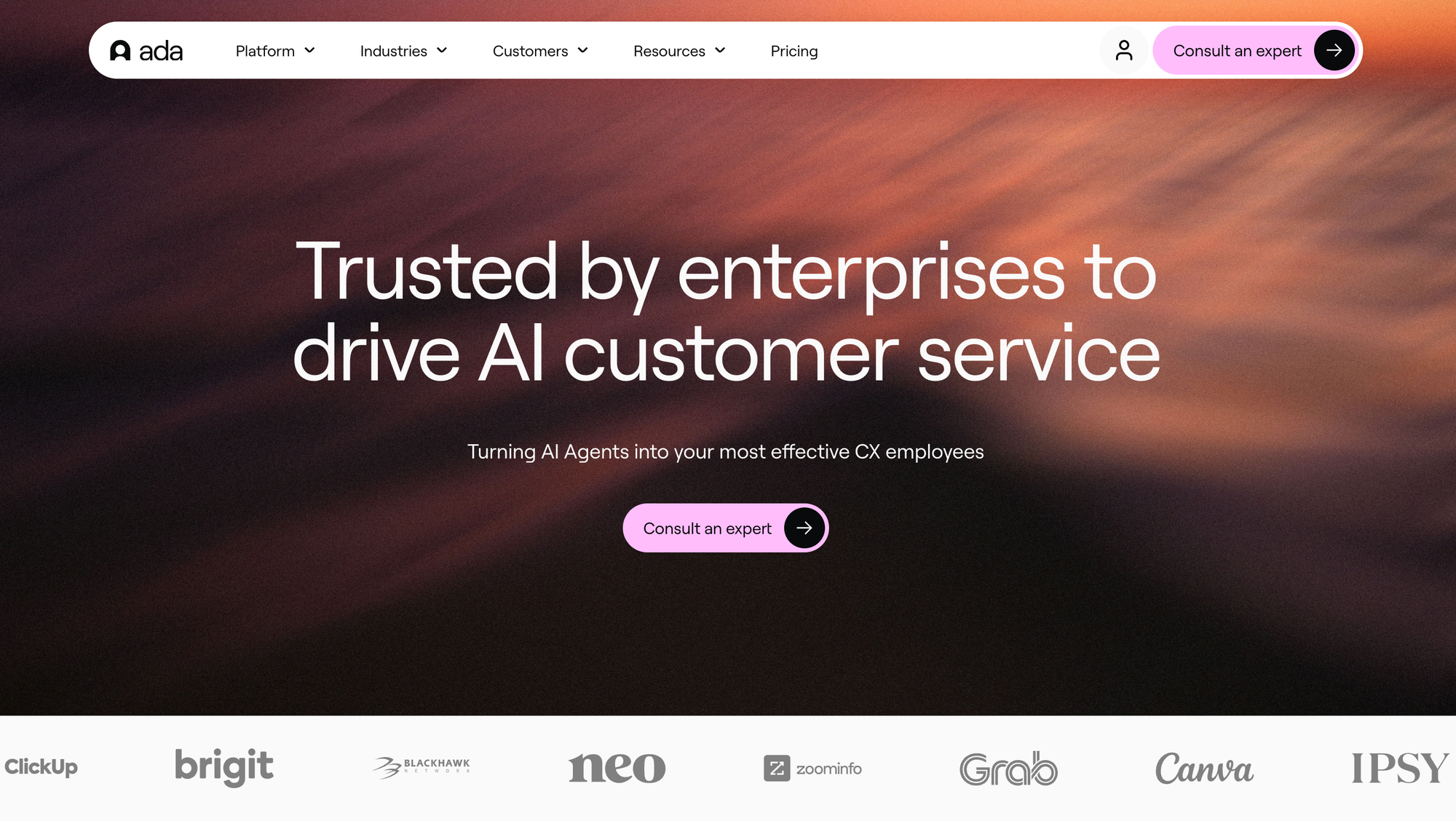
Ada is built for enterprise-scale customer support automation and is common in global enterprises that need multilingual support and consistent customer experiences.
If you want a tool that feels “support-first” with a lot of structure baked in, Ada is a strong pick. It leans into repeatable automation, templated experiences, and analytics that help large support teams scale without losing control of agent behavior.
Key features:
- AI chatbots and virtual assistants
- Automation workflows and routing
- Agent assist and handoff to human agents
- Pre-built solutions and pre built industry templates
- Reporting and conversation intelligence
- Integrations with enterprise systems and other enterprise systems
Pricing: Custom pricing.
3. Intercom
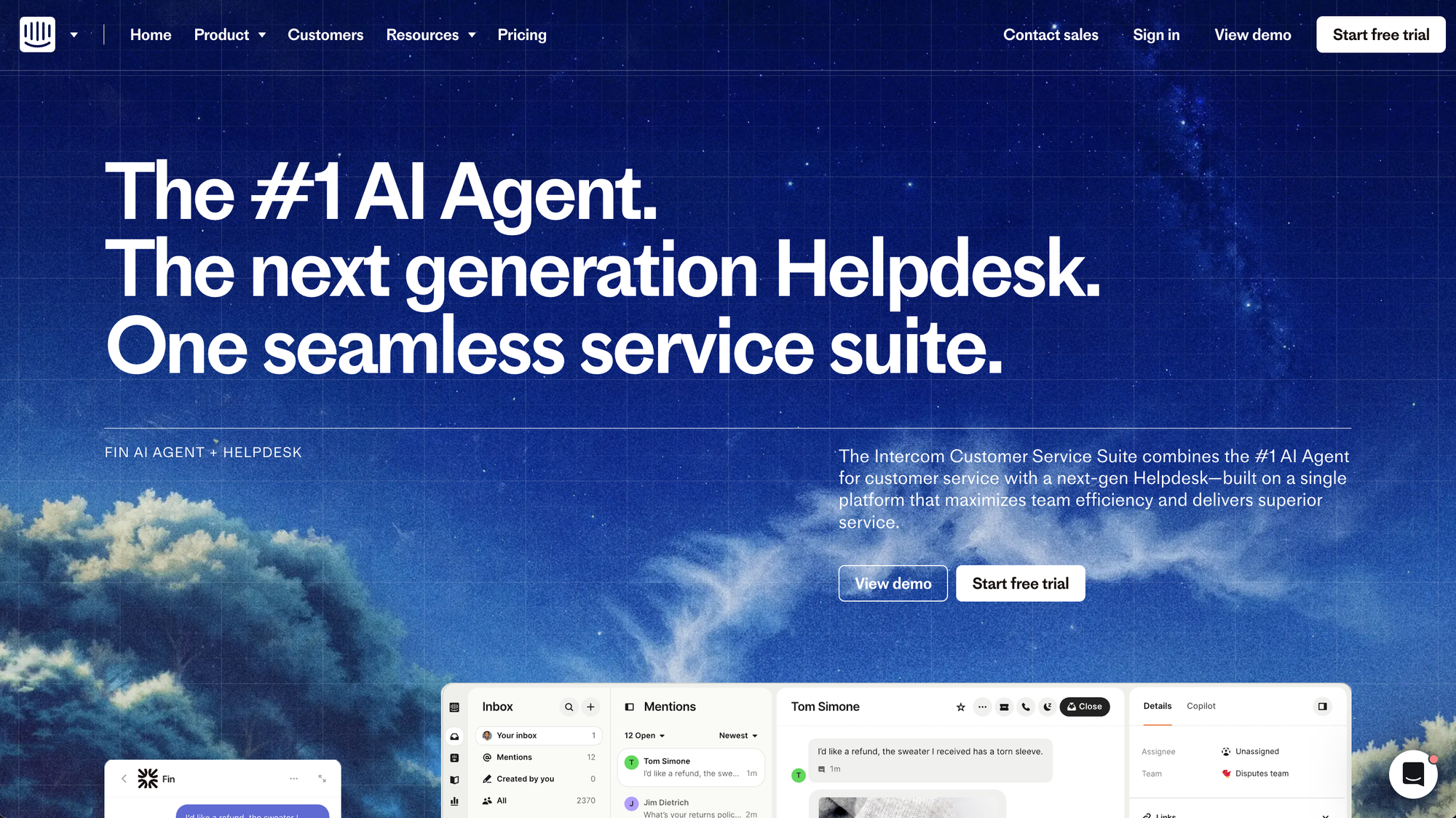
Intercom blends conversational AI with a full support platform. It is popular with business teams because it is straightforward to roll out, and it keeps the AI agent, web chat, and team inbox connected.
Intercom is a good option if you want to improve customer engagement quickly without significant technical expertise or building complex workflows from scratch. It is also one of the easier choices for non-technical users to iterate on.
Key features:
- AI agent and conversational automation
- Web chat and shared inbox
- Agent assist and suggested replies
- Reporting and conversation intelligence
- Integrations with CRMs and support tooling
Pricing: Essential starts at $19 per seat/month billed annually ($29 billed monthly), plus $0.99 per Fin outcome. Advanced costs $85/seat/month and Expert costs $132/seat/month, billed annually.
4. Drift
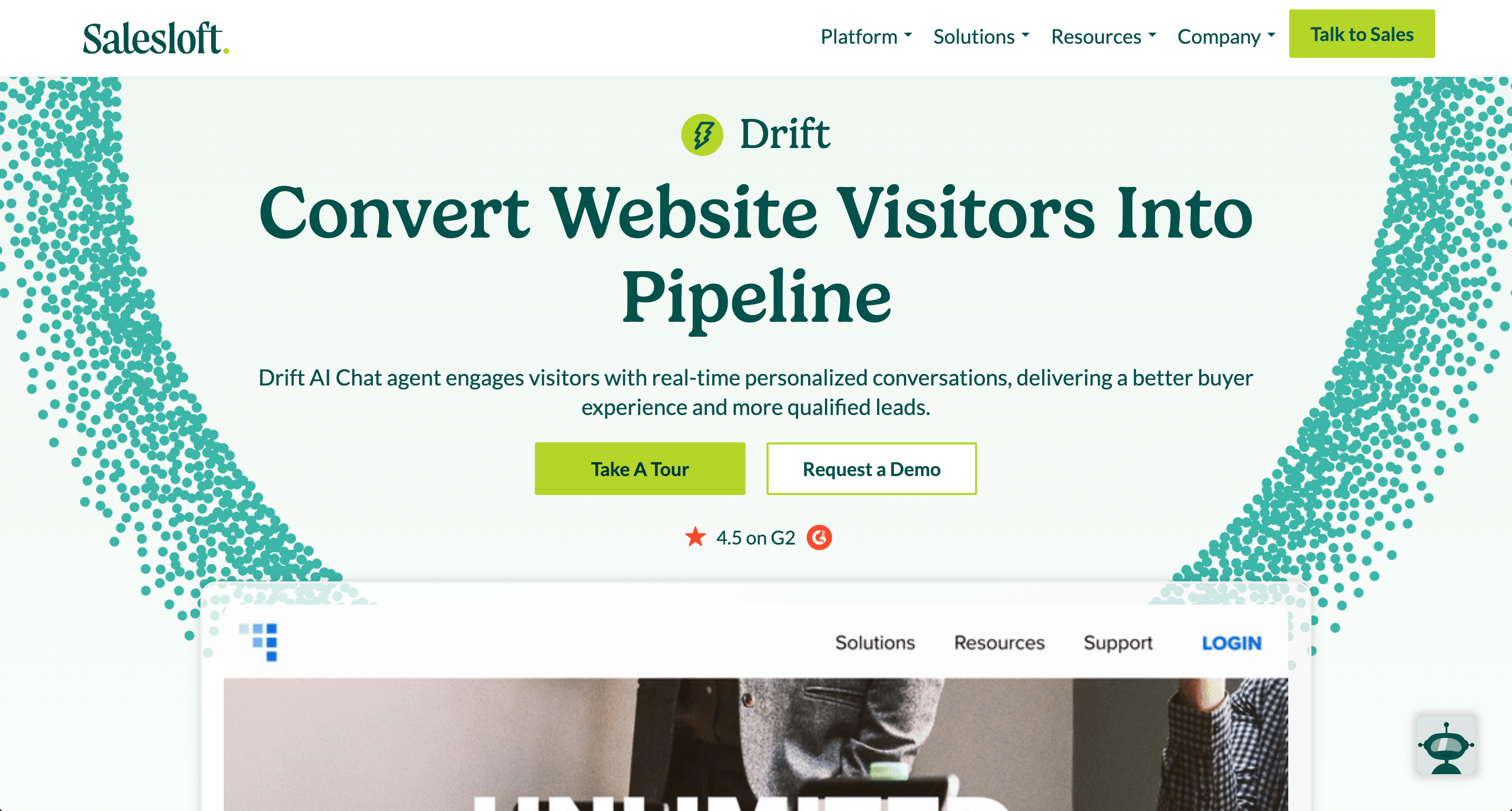
Drift is a conversational AI platform built around sales motions. It is designed to qualify leads, route conversations, and book meetings, which is why marketing teams tend to love it.
If your “support chat” is really a revenue channel, Drift is a better fit than enterprise conversational platforms that prioritize business processes and contact center automation. It is narrower, but it is optimized for conversion.
Key features:
- AI chatbots and conversational agents
- Routing, qualification, and scheduling workflows
- Conversation intelligence dashboards
- CRM and marketing automation integrations
- Rules and targeting for web chat
Pricing: On request.
5. Zendesk
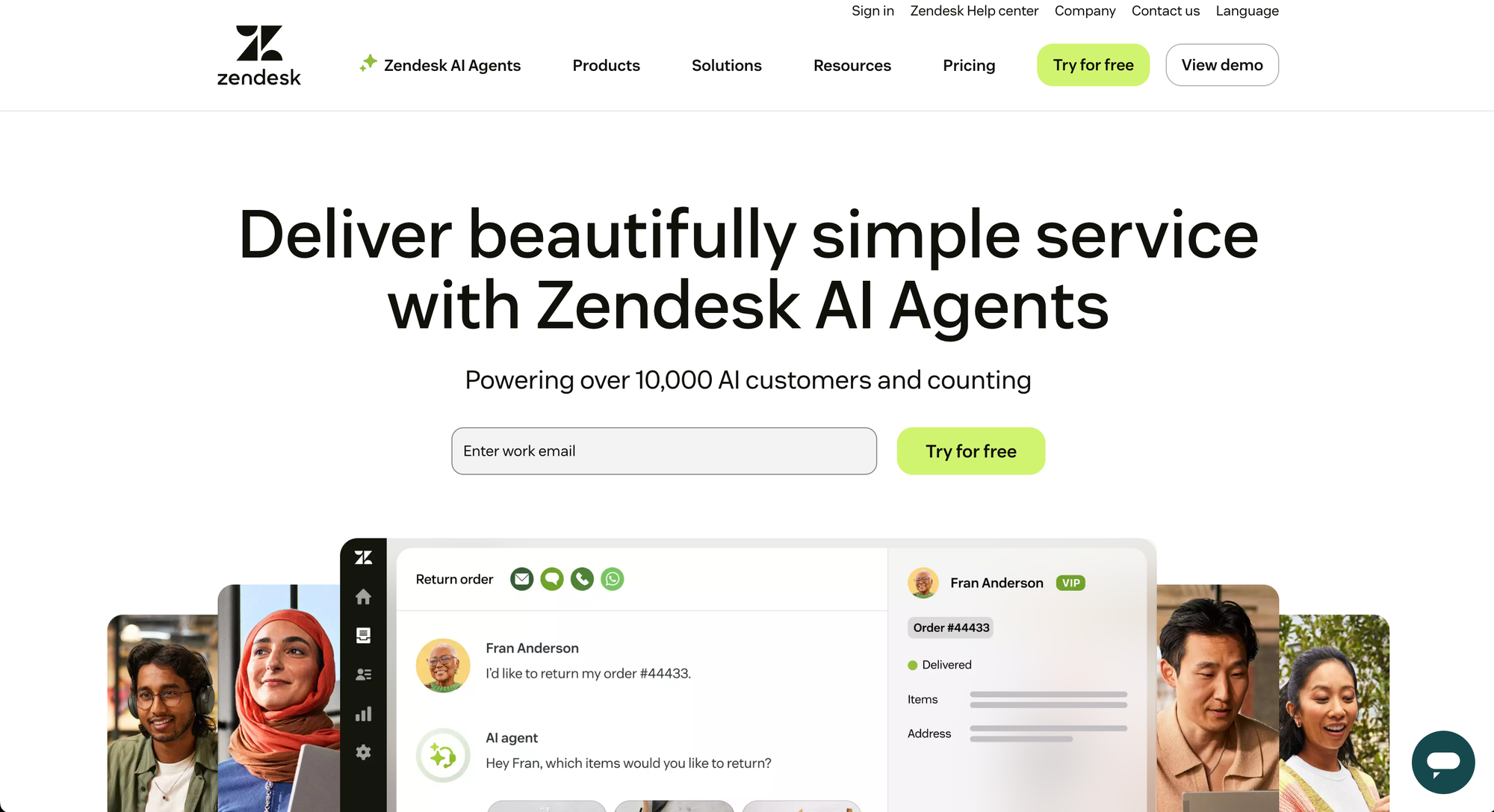
Zendesk is a support platform built for high-volume support teams that need structure. If your goal is to standardize customer interactions across channels, it gives you a strong inbox, a mature help center, and workflow automation that scales.
The big difference vs Kore AI is where you start. With Zendesk, you usually start with proven support workflows, then layer in AI capabilities like agent assist and automation once the basics are humming. That tends to reduce the steep learning curve for support teams, especially when non-technical users need to own day-to-day changes.
Key features:
- Omnichannel support workflows across chat, messaging, and email
- Help center and self-serve help docs
- Automation rules for routing, triage, and business processes
- Agent assist features to support human agents
- Reporting and conversation intelligence for performance tracking
- Integrations with enterprise systems and other enterprise systems
- Surveys for CSAT and customer satisfaction tracking
Pricing: Starts at $55 per agent per month (billed annually).
6. Helpshift
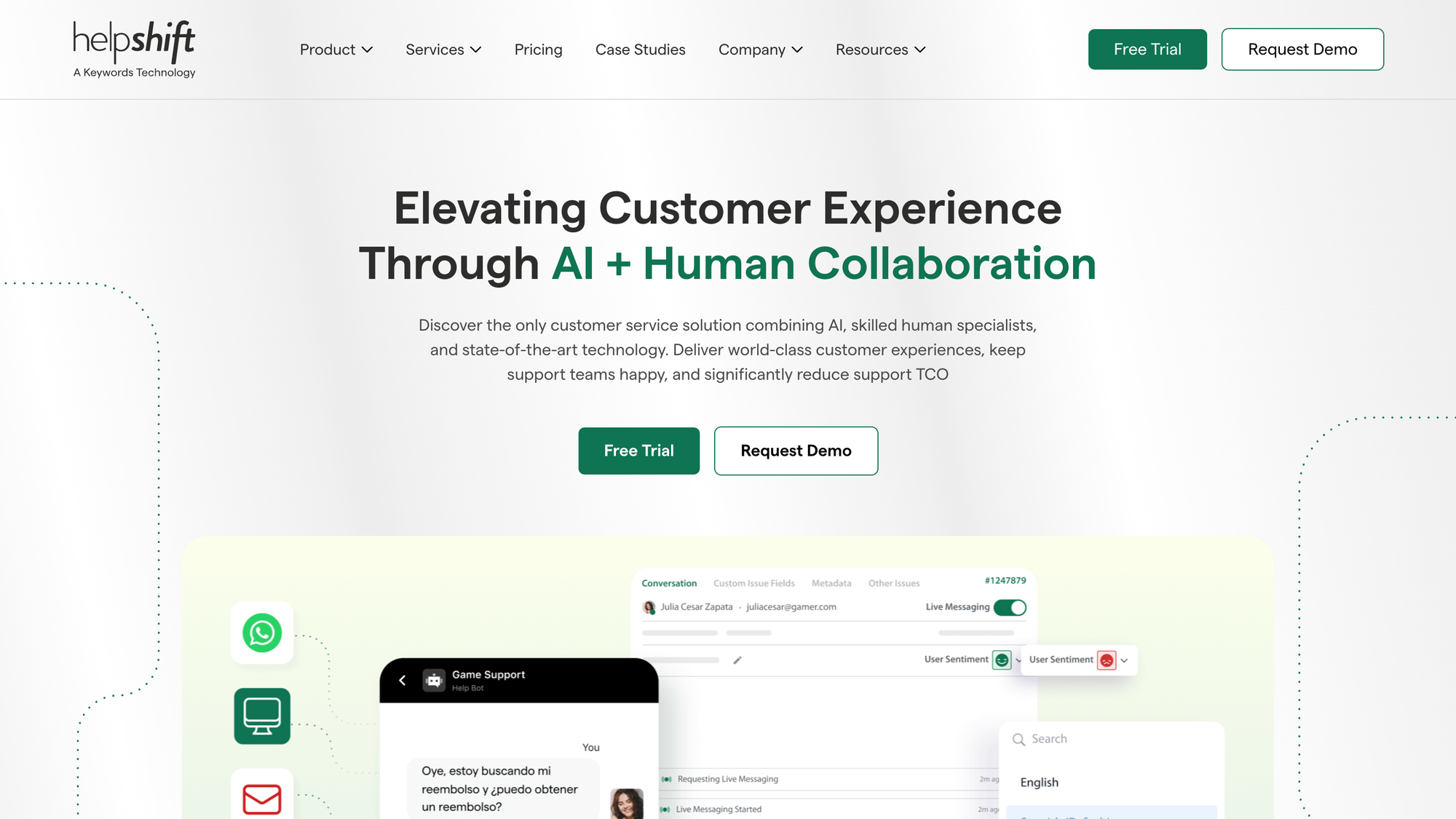
Helpshift is a mobile-first support platform designed for in-app customer interactions. It is common in gaming, fintech, and consumer apps, where most support occurs within the product.
If your users live in your app, Helpshift is one of the most practical ways to ship conversational automation without forcing voice-first assumptions. It also gives support teams a clear path to escalate and get agent assistance when an AI assistant reaches its limits.
Key features:
- AI assistants and in-app messaging
- Automation flows and routing
- Agent assist and handoff to human agents
- Reporting and analytics
- Integrations with CRMs and support tools
Pricing: Starts at $150 per month.
7. Tidio
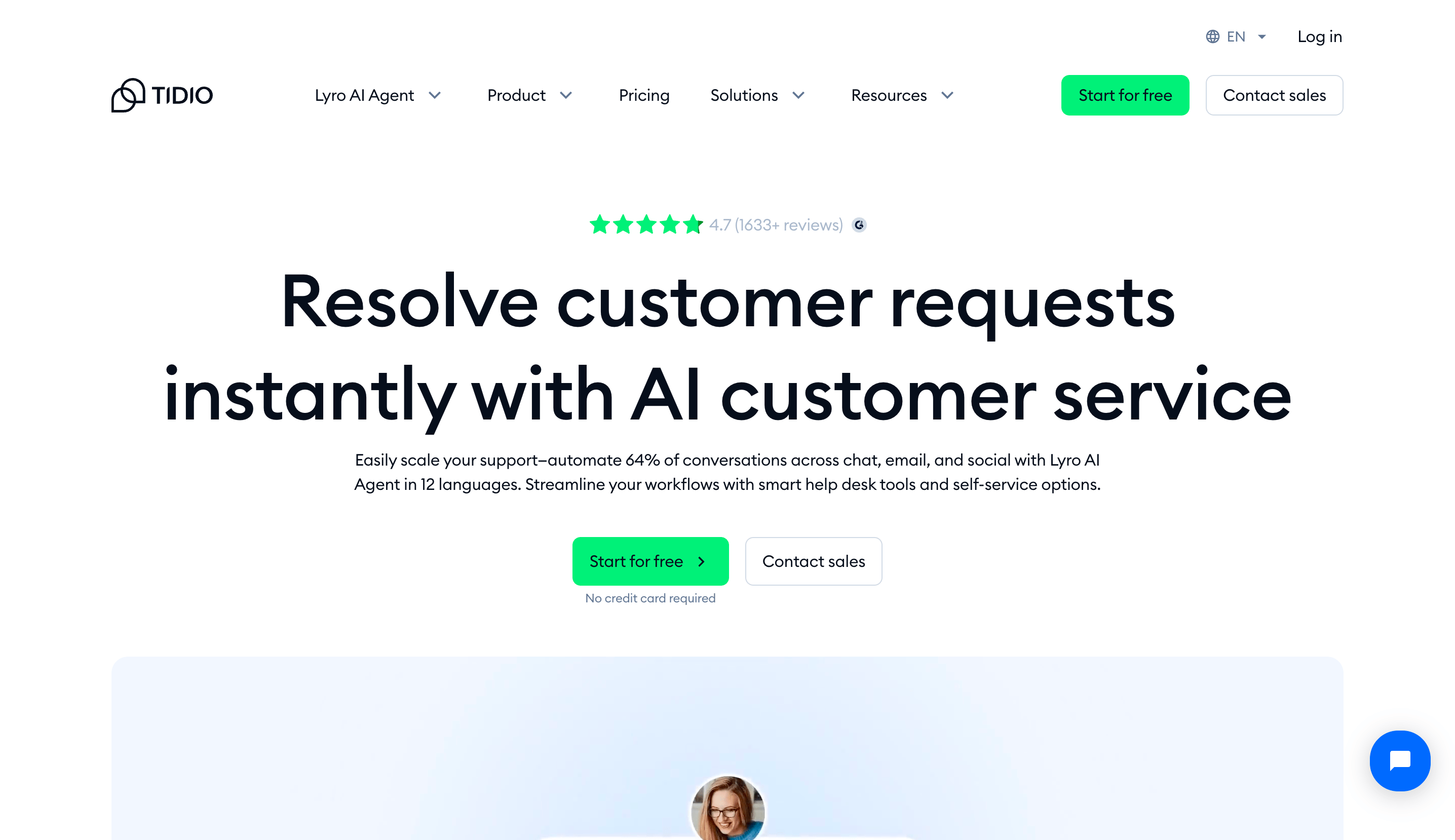
Tidio is a lightweight option for small businesses that want AI chatbots and a simple AI agent without enterprise complexity. It is best when you want to launch web chat fast and keep the setup manageable.
Tidio works well if you care about transparent pricing, quick deployment, and a visual flow builder for conversational flows. It is not trying to be an enterprise AI agent platform, which is exactly why it is easier for small teams.
Key features:
- AI chatbots for web chat
- Visual flow builder and automations
- Pre-built templates for common questions
- Integrations for e-commerce and CRM
- Basic reporting
Pricing: Starts at $29 per month.
8. Help Scout
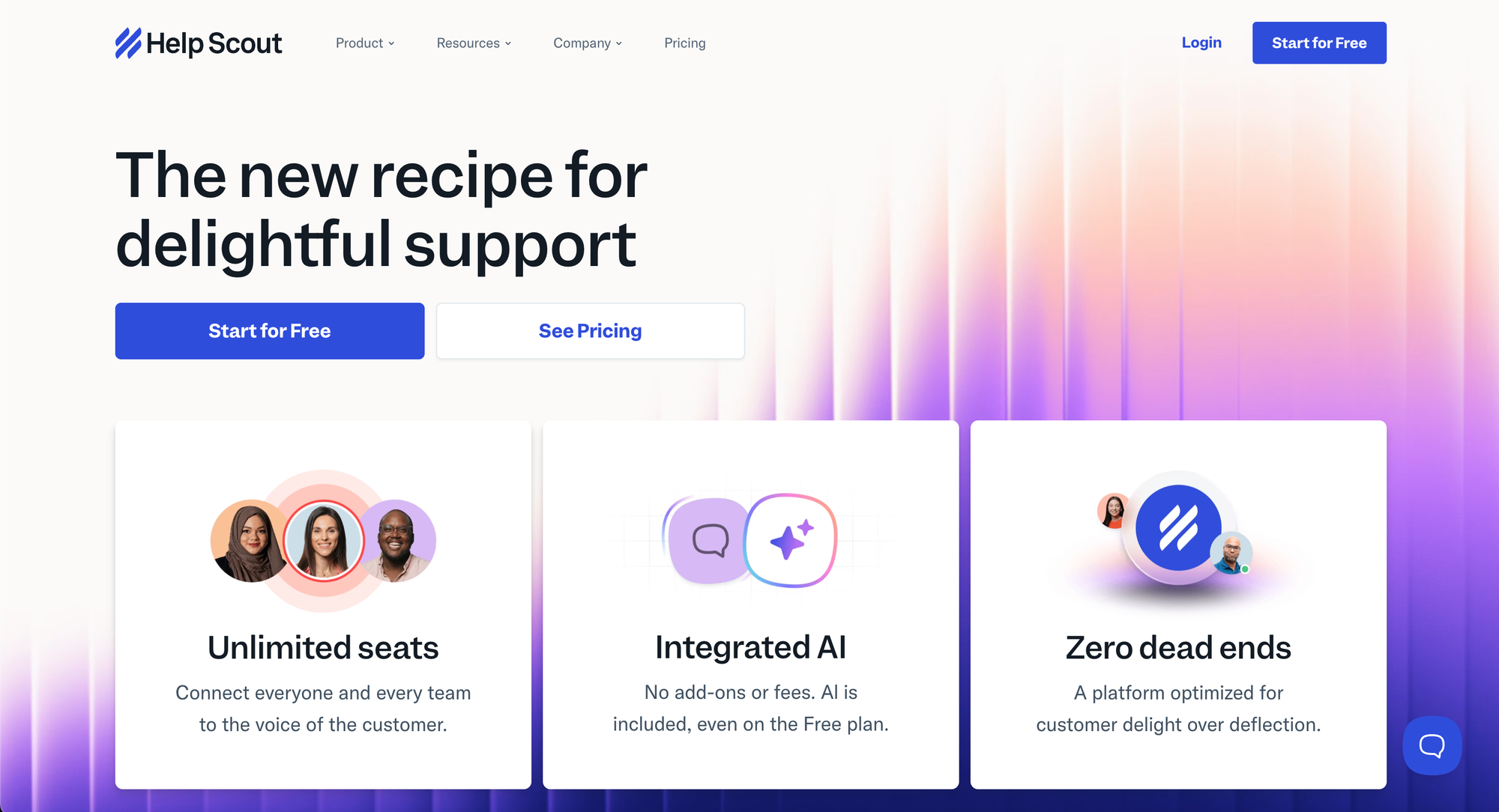
Help Scout is a support platform built for teams that want a clean inbox experience, a strong help center, and fast day-to-day execution. It’s a great fit when you want conversational AI to support teams, not replace your whole support stack.
Where it tends to beat Kore AI is simplicity. Help Scout is easier for business users and non-technical users to operate, and it avoids the heavy setup that usually comes with enterprise conversational AI platform rollouts. You can keep agent operating procedures lightweight, support human agents with agent assist, and still improve customer engagement through web chat and self-serve help docs.
Key features:
- Shared inbox for support teams with routing and automation
- Help center for self-serve customer interactions
- Web chat and in-app style support experiences
- Agent assist features to support human agents
- Reporting and conversation intelligence for support performance
- Integrations with enterprise systems and other enterprise systems
Pricing: Starts at $25 per user per month (billed annually).
How to choose the right conversational AI platform
Picking between Kore AI alternatives is mostly about your operating model.
If you want a platform where business users can ship updates weekly, prioritize no-code tools, pre-built templates, and simple analytics. If you run enterprise contact centers, prioritize reliability, governance, and integration with enterprise systems.
Here is what I look at:
- AI capabilities: Does it handle real business processes, not only FAQs?
- AI agent platform: Can the AI agent take action, or does it only answer?
- Agent behavior: Can you control policies and escalation without slowing everything down?
- Agent assist: Does it help human agents resolve faster?
- Channels: Do you need voice channels, voice and digital channels, or only web chat?
- Integrations: Can it connect to enterprise systems and enterprise systems and other enterprise systems?
- Analytics: Do you get conversation intelligence you can act on?
- Pricing: Is there pricing transparency and predictable pricing as you scale?
9. Quiq
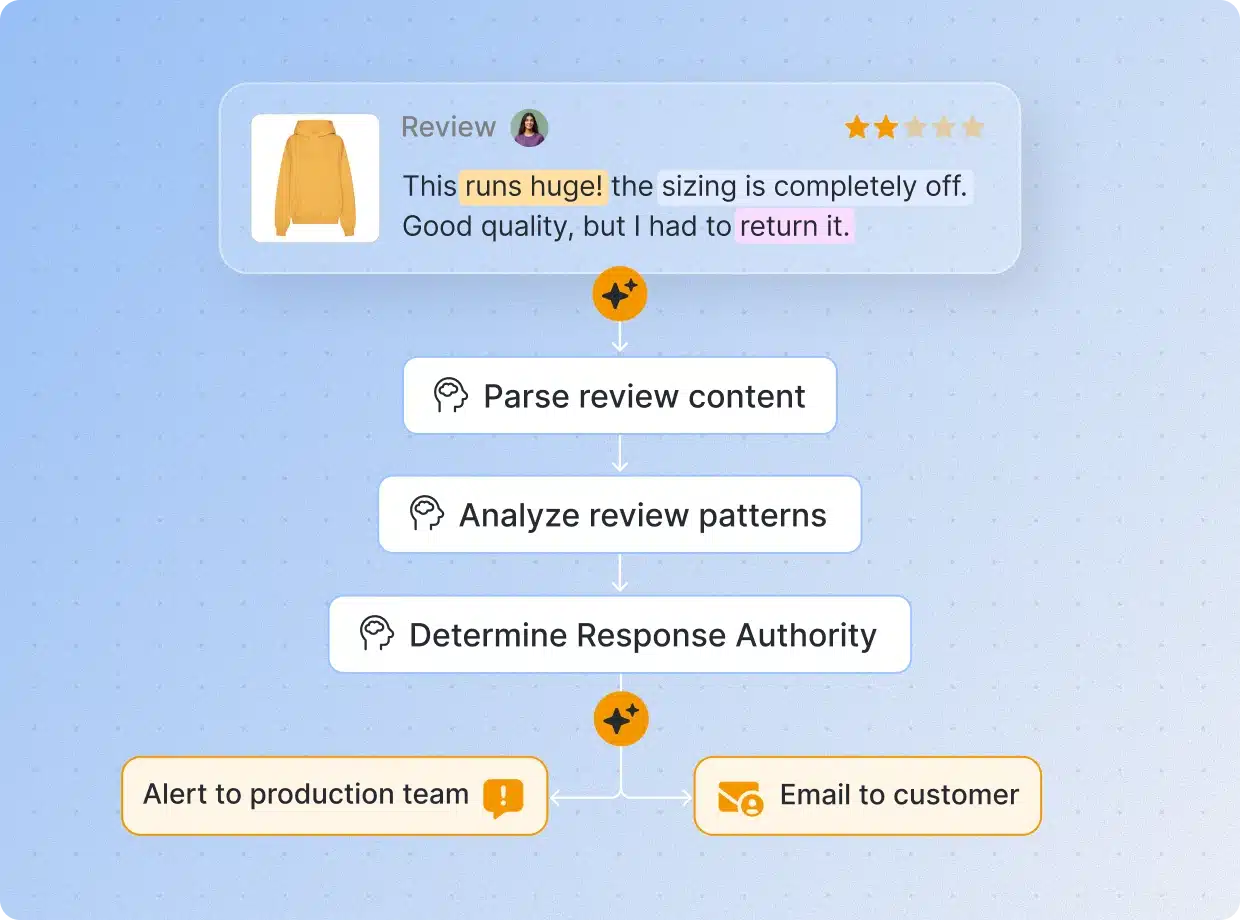
Quiq is an agentic customer journey platform built specifically for enterprise customer experience. While Kore.ai covers a broader mix of work, service, and process automation, Quiq concentrates on customer conversations, resolution, and the handoff between AI and human agents.
Its AI Agents can answer questions and take actions such as processing returns, updating account information, and rebooking flights. Quiq also maintains conversation context across channels and human escalations, with Process Guides, verification checks, and visible AI decision logic giving CX teams more control over how agents behave.
Key features:
- AI Agents across voice, SMS, chat, WhatsApp, and other digital channels
- AI Assistants for human customer service agents
- Continuous context across AI, human agents, and channels
- Process Guides for defining workflows, brand voice, and rules
- Guardrails, claim verification, and visible AI decision logic
- AI Conversation Analysts for automated quality management
- Integrations with major CRM and customer service platforms
Pricing: Custom enterprise pricing based primarily on conversation volume, with additional charges for automated resolutions and premium capabilities.
Conclusion
Most teams looking at Kore AI alternatives want the same thing: a conversational AI platform that is easier to ship, easier to improve, and easier to justify on cost. The best options help you run an AI agent for real customer interactions, support human agents with agent assist, and deliver consistent customer experiences without a steep learning curve.
Featurebase is one of the best AI-powered Kore alternatives for a powerful AI support agent with seamless human handoff and built-in ticketing. It has everything Kore.ai has, plus native product docs, custom workflows, and much more. It's loved by thousands of companies like Lovable, Polymarket, and Raycast.
It has affordable pricing for just $0.29 per AI resolution and a Free plan, so there’s no downside to trying it. 👇
✨ Start automating customer support with AI in Featurebase for free →
FAQs
What is the best Kore AI alternative in 2026?
For product-led SaaS, Featurebase is often the best mix of AI automation, agent assist, and customer engagement workflows. For global enterprises and enterprise-scale programs, Ada and LivePerson are common choices. If you want quick deployment for business teams, Intercom is a strong option.
Is there a cheaper alternative for startups?
Yes. If you care about pricing transparency and predictable pricing, tools like Featurebase, Tidio, and Freshchat are usually easier to budget for than enterprise platforms.
Which alternative is best for sales and marketing teams?
Drift is typically the best fit when your goal is to qualify leads, route them, and accelerate the pipeline through web chat.
What should I compare before switching?
Compare channels like voice interactions and digital channels, quality of agent assist, how well it connects to enterprise systems, and whether the tool supports natural language instructions, templates, and quick iteration for non-technical users.