Blog ComparisonsBest HubSpot Service Hub Alternatives for your CS Team in 2026
Best HubSpot Service Hub Alternatives for your CS Team in 2026
Think HubSpot Service Hub is the best way to manage customer support just because you’re already using their CRM? Many teams find out the hard way that it’s not that simple. In this post, we’ll look at why Service Hub often falls short - and what tools might fit your needs better.

HubSpot is one of the most powerful CRM tools in the market, but CRM is not the only notable aspect of this platform. On top of CRM, they have a range of marketing and sales automation features and tools. They also help businesses focus on customer satisfaction, and this is where HubSpot offers its Service Hub.
If you're already using HubSpot's CRM software, it's the logical choice for managing customer interactions. But if you're looking for a new tool to manage customer interactions, the situation is a bit different.
Today, we're showing you some of the best alternatives to Service Hub, along with some reasons why you should reconsider this tool in the first place. 👇
TL;DR - The best HubSpot Service Hub alternatives you should try:
- ✨ Featurebase – Best modern AI support & product suite for fast-growing startups
- Zendesk - Best enterprise-grade, highly customizable support platform
- Kustomer - Best unified CRM and support timeline solution
- Kayako - Best simple, context-rich helpdesk for small teams
- Freshdesk - Best affordable omnichannel support with automation
- LiveAgent - Best combined chat, email, and call center platform
- Zoho Desk - Best context-aware support for Zoho users
- Front - Best collaborative email-first support tool
- Gorgias - Best e-commerce helpdesk for Shopify and BigCommerce
- Salesforce Service Cloud - Best enterprise AI and CRM-integrated support suite
- Help Scout - Best simple, email-based helpdesk for growing teams
- Tidio - Best budget-friendly live chat and chatbot support
- Intercom - Best real-time in-app support for SaaS and enterprise teams
Why look for HubSpot Service Hub alternatives in the first place?
Out of all the HubSpot products, the Service Hub has the lowest average rating on G2, and there are a number of reasons for that.
1. The complexity of the product
If you're already using the HubSpot CRM for contact management, customer segmentation, marketing automation, etc., then it won't be too difficult to find your way around the Service Hub. However, if you're just starting out with it as your new customer support tool, it may take some time to get accustomed to it.
- "Having everything in one place can also be its most daunting feature when you're first starting. Seeing the full suite of tools for marketing, sales, customer service, and operations all at once can certainly feel overwhelming, and it's easy to get "lost in translation" trying to figure out how all the pieces fit together for your specific needs. A focus on customer onboarding and educating customers on how to maximise their investment should be implemeted" (G2 review)
2. Customization comes at a cost
If you want to create customized workflows for your customer support teams, you'll most likely have to upgrade to one of the pricier plans. Before committing to purchase the Service Hub, make sure your chosen plan has all the tools you need, such as solid reporting and analytics features, the right integrations, and more.
- "Advanced reporting and customization options can require an additional investment in higher tiers, and installing marketplace apps from third-parties. I’d love to see improved native integrations for quote-to-cash systems, as syncing can sometimes require workarounds or the use of a system like Zapier." (G2 review)
- "What I dislike about HubSpot Service Hub is that some of the most valuable features—like advanced reporting, custom workflows, and SLAs—are only available in the higher-tier plans, which can get pricey. Also, while the interface is user-friendly, deeper customizations can feel limited or require technical workarounds." (G2 review)
3. Reporting features are subpar
Compared to other tools in the market, HubSpot Service Hub users, especially sales teams, may find the reports a bit rough around the edges. Getting the right information without tons of customization can be painstaking.
- "Set up for tickets has been a challenge particularly related to threading emails in tickets. While it is easy to use, it is not easy to set up or fix when it breaks. Reporting takes some time to understand. Self help can be difficult as finding what you need in their content and then trying to understand all the terminology can be challenging" (G2 review)
- "The out-of-the-box reporting capabilities are still a little behind other enterprise tools, but Service Hub is getting there." (G2 review)
The best HubSpot Service Hub alternatives for sales & marketing automation in 2025
HubSpot is a strong CRM and marketing automation platform with an attractive free plan. But if you don't need the CRM and marketing automation tools in HubSpot, you're better off looking at alternative tools that can offer more, without forcing you into the HubSpot ecosystem. These are the best HubSpot alternatives for increasing customer engagement and satisfaction. 👇
1. Featurebase ✨
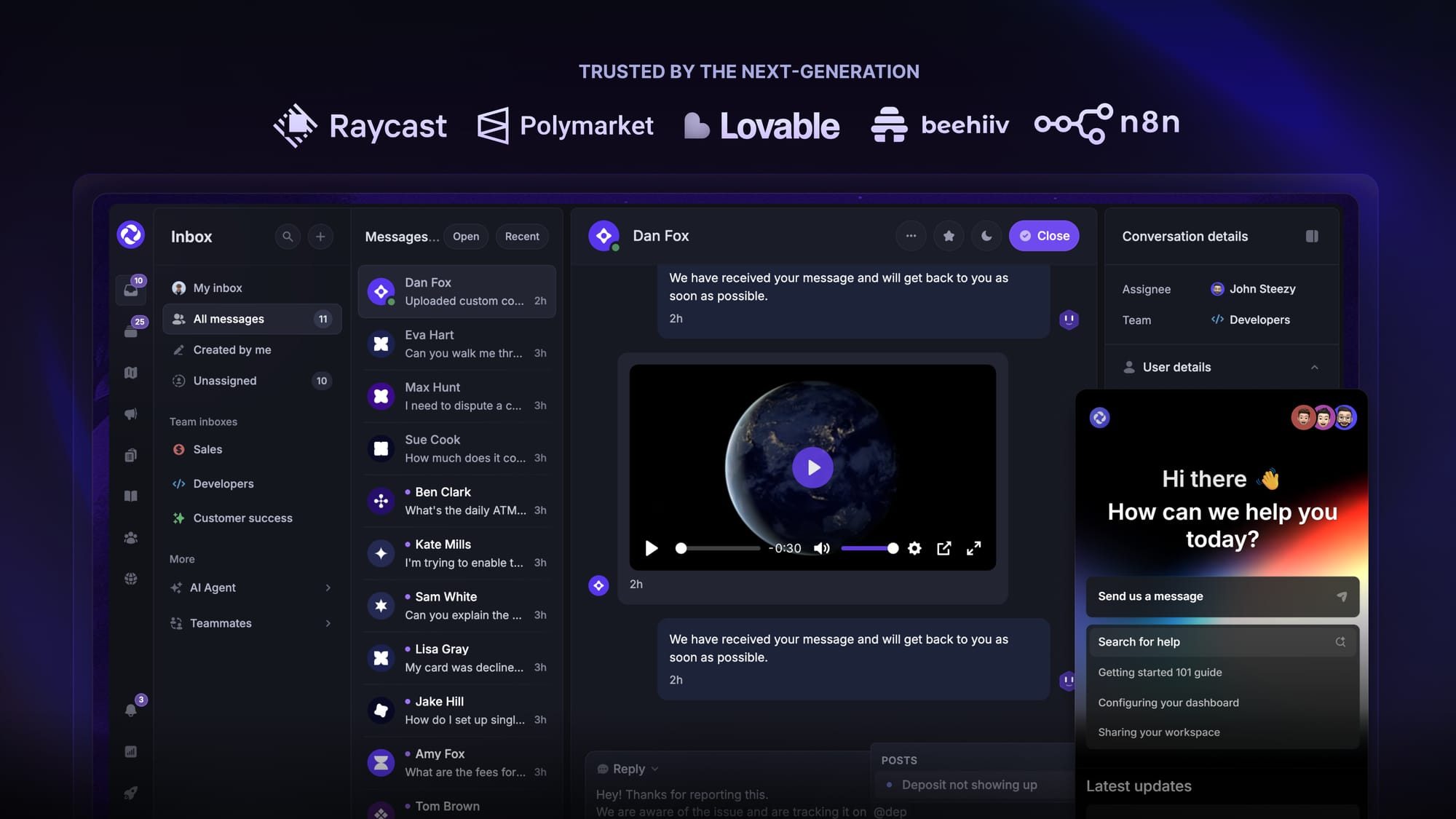
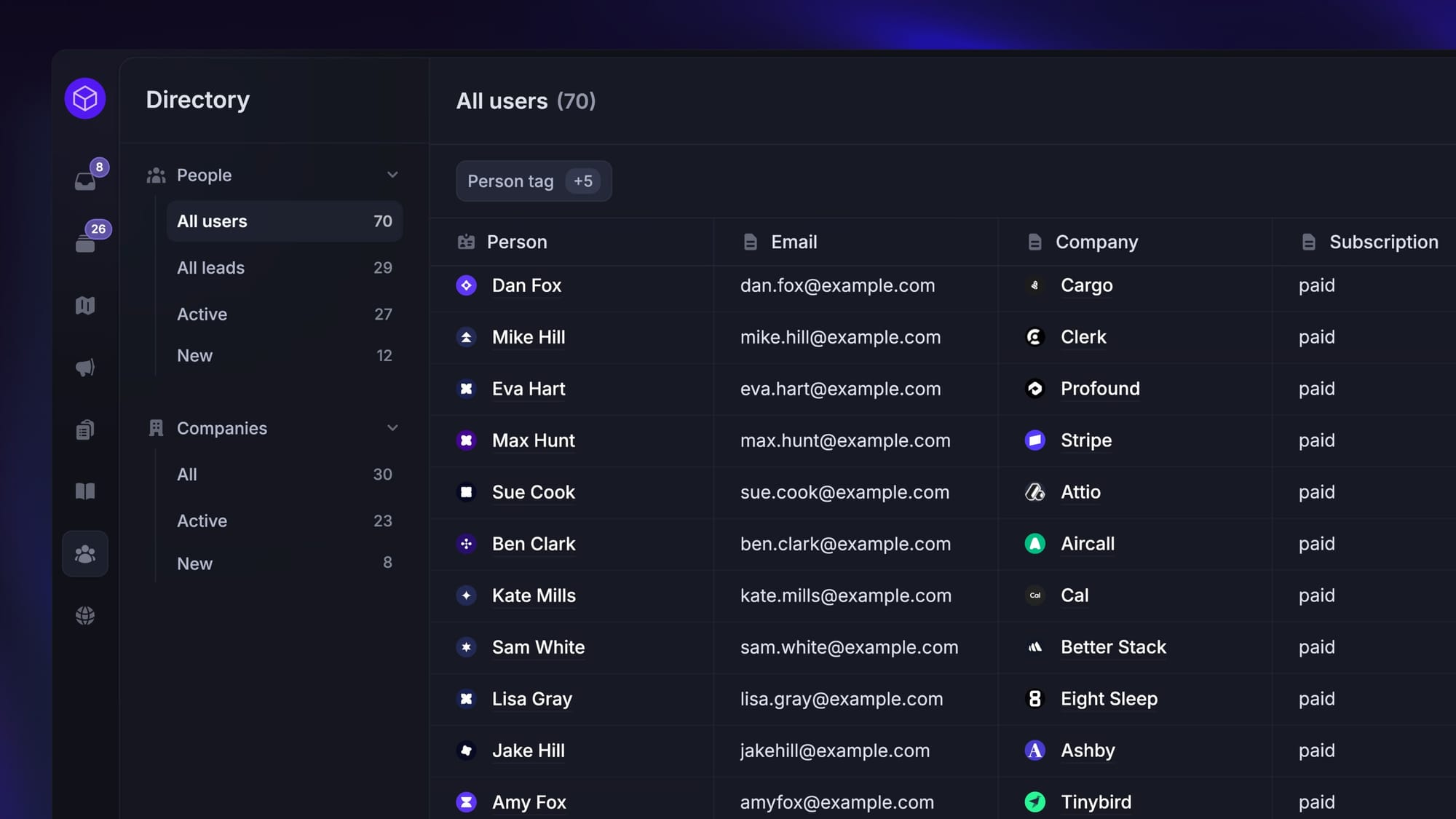
Featurebase is a modern HubSpot Service Hub alternative that combines AI-powered support, CRM, documentation, surveys, and changelogs into a single platform for startups. It's loved by thousands of support teams from companies like Lovable, Raycast, and Beehiiv. 💫
- Support platform – Support your customers from anywhere with an omnichannel inbox and automate support with powerful AI agents.
- Help Center – Provide self-serve support with a beautiful AI-powered knowledge base & bring help articles inside your product with a widget.
- Feedback collection & roadmaps – Centralize feedback with integrations, feedback widgets, AI, and a public feedback forum. Let users vote on each other's ideas, see their total revenue, and focus on the most impactful features. All upvoters will automatically be notified when you complete their request.
- Changelogs – Announce product updates and increase feature adoption with neat in-app popups, notification emails, and a dedicated updates page.
- Surveys (NPS, CSAT, etc.) – Create targeted surveys to ask users anything and measure customer satisfaction.
Plus, it integrates with many popular tools that you likely already use, such as Linear, Jira, Slack, and many more.
How it’s better than HubSpot: Unlike HubSpot Service Hub, Featurebase is affordable and built for usability, enabling you to replace all your customer-facing tools by bringing your omnichannel support, help center, product updates, and feedback collection together in one place, providing powerful ecosystem advantages in modern support.
Pricing: Featurebase offers a generous Free plan, which includes unlimited support conversations. The paid plans start at $29/user/month + $0.29 per AI resolution. You can start free without a credit card, so there's no downside to trying it. 👇
✨ Automate your support with the fastest AI-enhanced Inbox today →
2. Zendesk
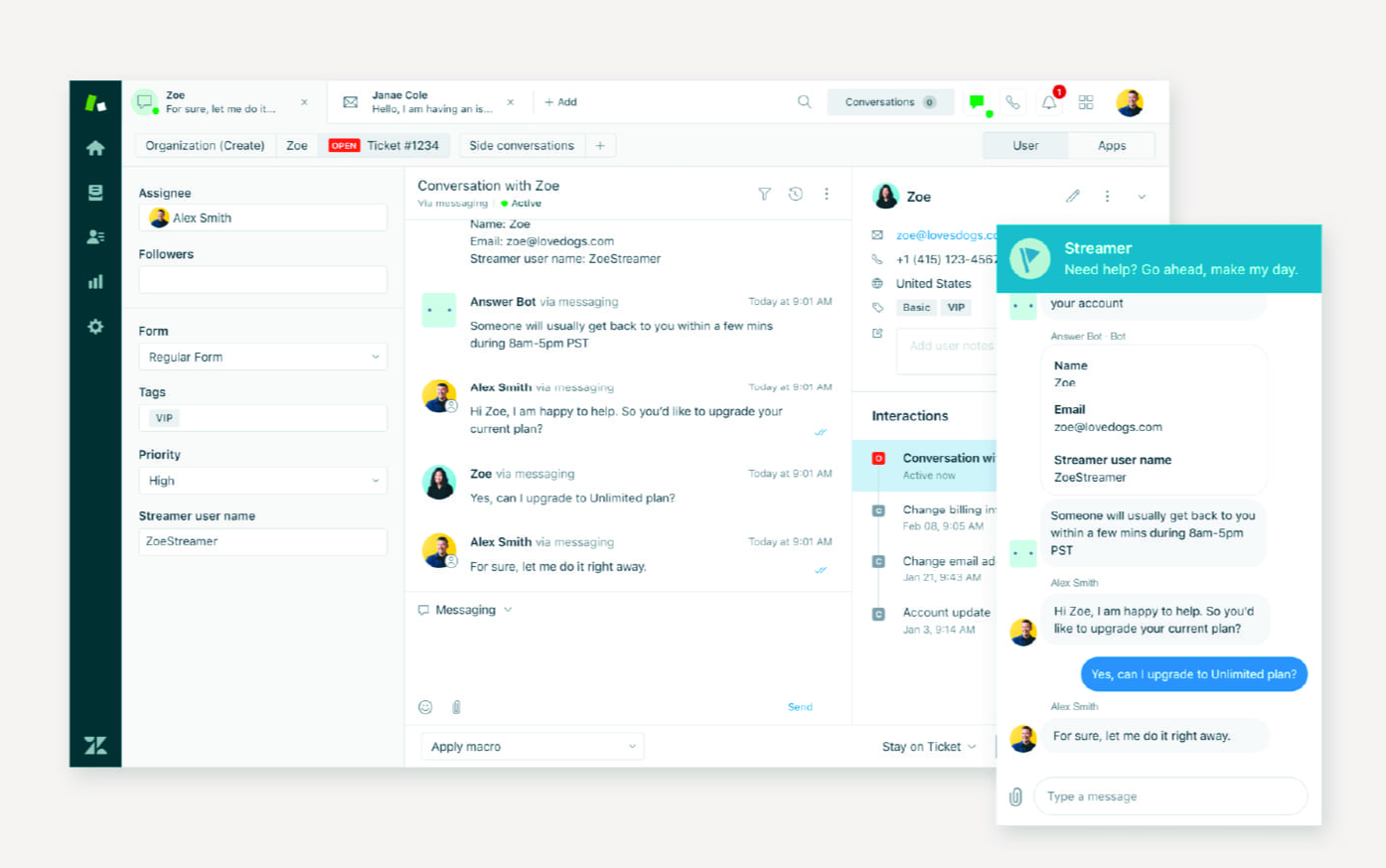
Zendesk is a widely adopted support platform known for its scalability and flexibility. It’s a common choice for companies that want a mature system with advanced customization options. Zendesk is incredibly powerful, but that comes with a learning curve that takes a bit of time compared to other HubSpot alternatives on this list.
Top features
- Ticketing system: Manage customer issues from email, chat, phone, and social.
- Automation and macros: Reduce repetitive work with pre-built replies and workflows.
- AI tools: Use AI for chatbots, intent detection, and knowledge suggestions.
- Knowledge base: Build a customer-facing help center and internal guides.
- Marketplace apps: Extend functionality with integrations across thousands of apps.
How it’s better than HubSpot Service Hub: Zendesk is more established as a dedicated service platform, with stronger ticketing depth and customization. HubSpot is stronger for CRM-native users, but Zendesk gives support teams more control over complex workflows.
Pricing: Zendek's pricing starts at $19 per user per month.
3. Kustomer
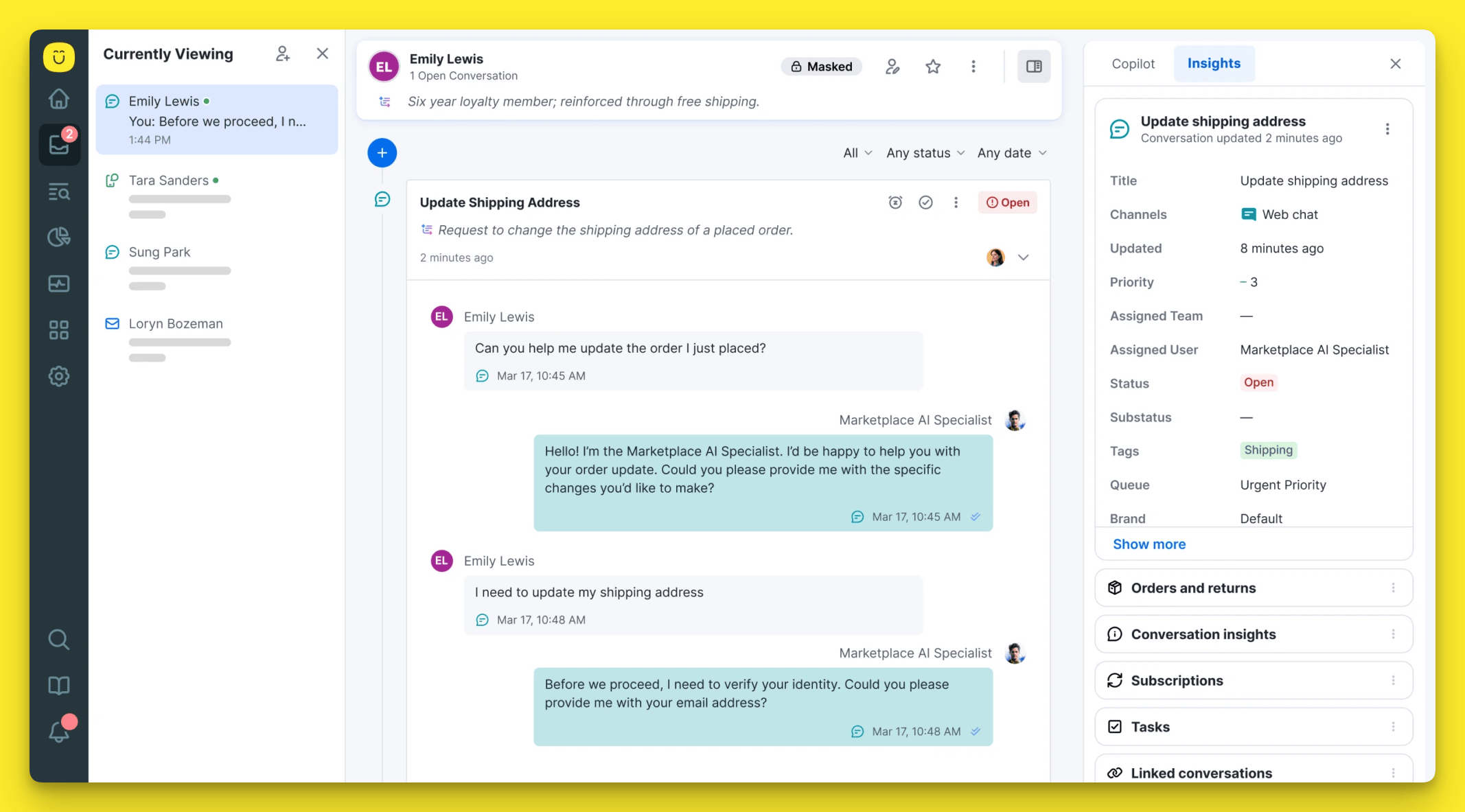
Kustomer is a customer service CRM built to give agents a complete picture of every customer interaction. It’s best for businesses that want customer data and service tightly connected. If you don't already have a CRM tool and you want to kill two birds with one stone, Kustomer can do just that, at a price point similar to HubSpot.
Top features
- Unified timeline: View all emails, chats, calls, and orders in one continuous thread.
- AI-powered tools: Automate routing, responses, and intent detection.
- Omnichannel support: Handle email, chat, social, and SMS in a single platform.
- CRM capabilities: Store and manage customer records directly inside the system.
- Workflows: Build custom automations for recurring tasks and escalations.
How it’s better than HubSpot Service Hub: Kustomer offers a deeper integration of CRM and support in one tool, while HubSpot separates these functions across different hubs. This makes Kustomer a better fit for service teams that want everything inside a single timeline.
Pricing: starts at $89 per user per month. There is no free trial or plan available and you can only schedule a demo.
4. Kayako
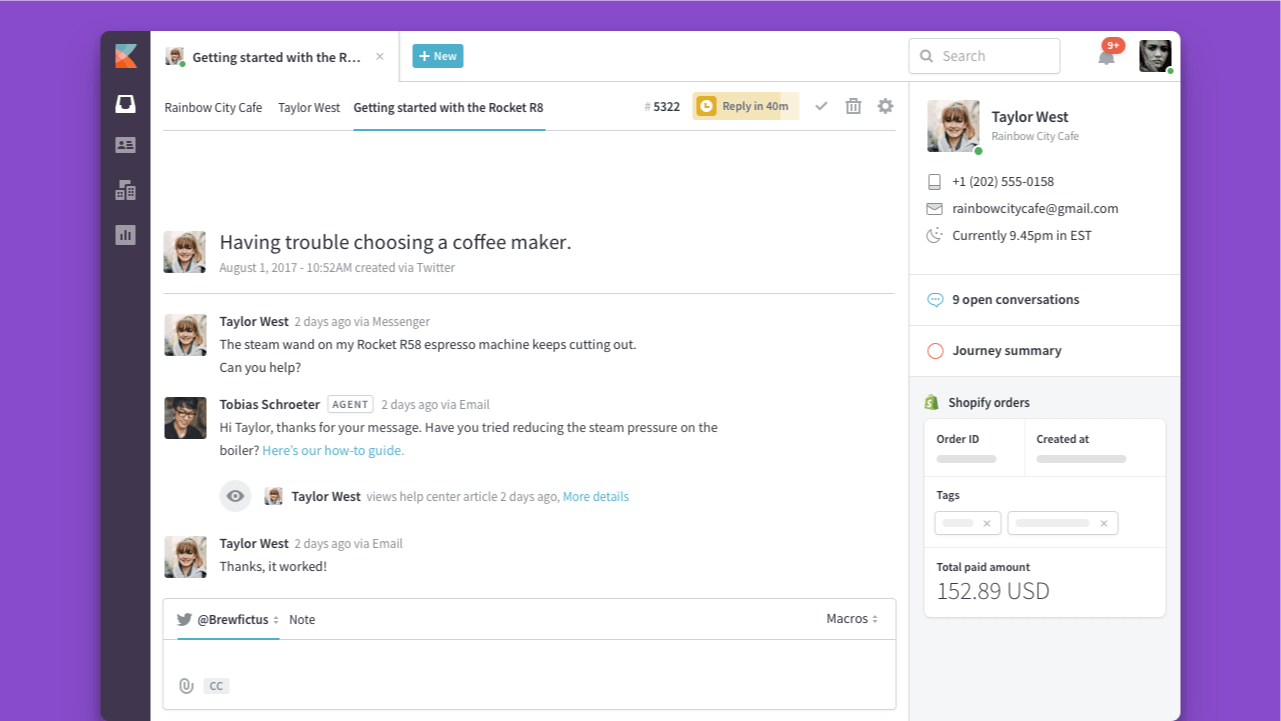
Kayako is a customer service platform that provides a single view of every customer interaction. It’s especially suited for smaller teams that value simplicity and context over complexity.
Top features
- Unified inbox: Combine chat, email, and social conversations.
- Customer journey view: Track all touchpoints in one timeline.
- Automation: Build rules for routing, prioritization, and escalations.
- Collaboration tools: Share private notes and assign tickets.
- Help center: Create a knowledge base for self-service.
How it’s better than HubSpot Service Hub: Kayako’s strength lies in presenting the full customer journey in one view, whereas HubSpot relies more on CRM-driven records. Teams that want lightweight, context-rich support will find Kayako easier to manage.
Pricing: starts at $79 per user per month.
5. Freshdesk
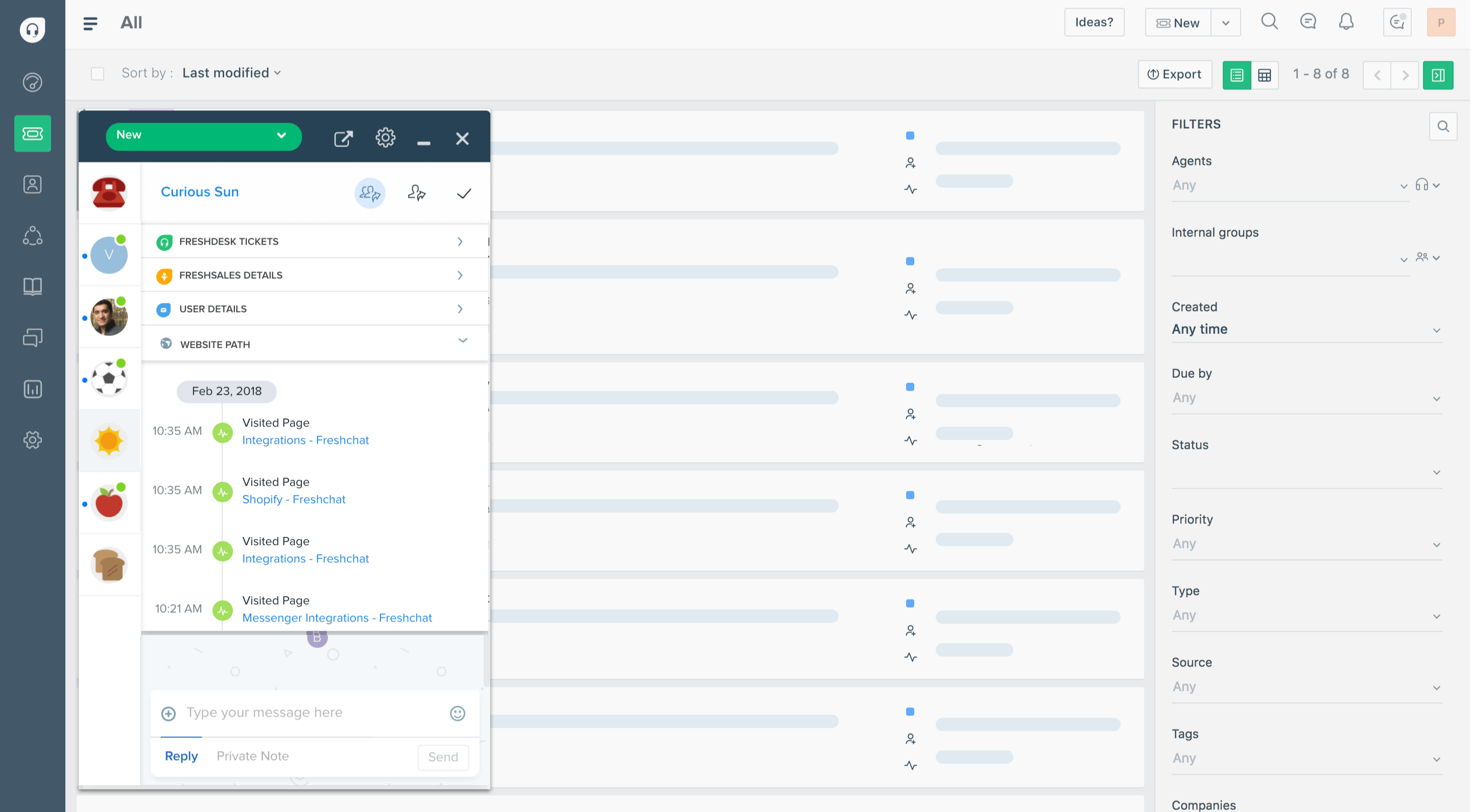
Freshdesk is a cloud-based helpdesk designed for businesses of all sizes. It balances affordability with advanced features, making it one of the most popular support tools on the market. It's easier to use than HubSpot and comes with a significantly lower price point, which is why it's more popular with smaller companies and startups
Top features
- Omnichannel support: Manage email, chat, phone, and social tickets in one place.
- AI-powered bots: Automate responses and triage incoming queries.
- SLA management: Monitor deadlines with rules and escalations.
- Marketplace integrations: Connect with CRM, project management, and analytics apps.
- Collaboration tools: Share notes and updates internally to resolve issues faster.
How it’s better than HubSpot Service Hub: Freshdesk provides more flexible omnichannel coverage at a lower price point. HubSpot is stronger on CRM integration, but Freshdesk excels at scaling customer service across multiple channels.
Pricing: Freshdesk's pricing starts at $15 per agent per month.
6. LiveAgent
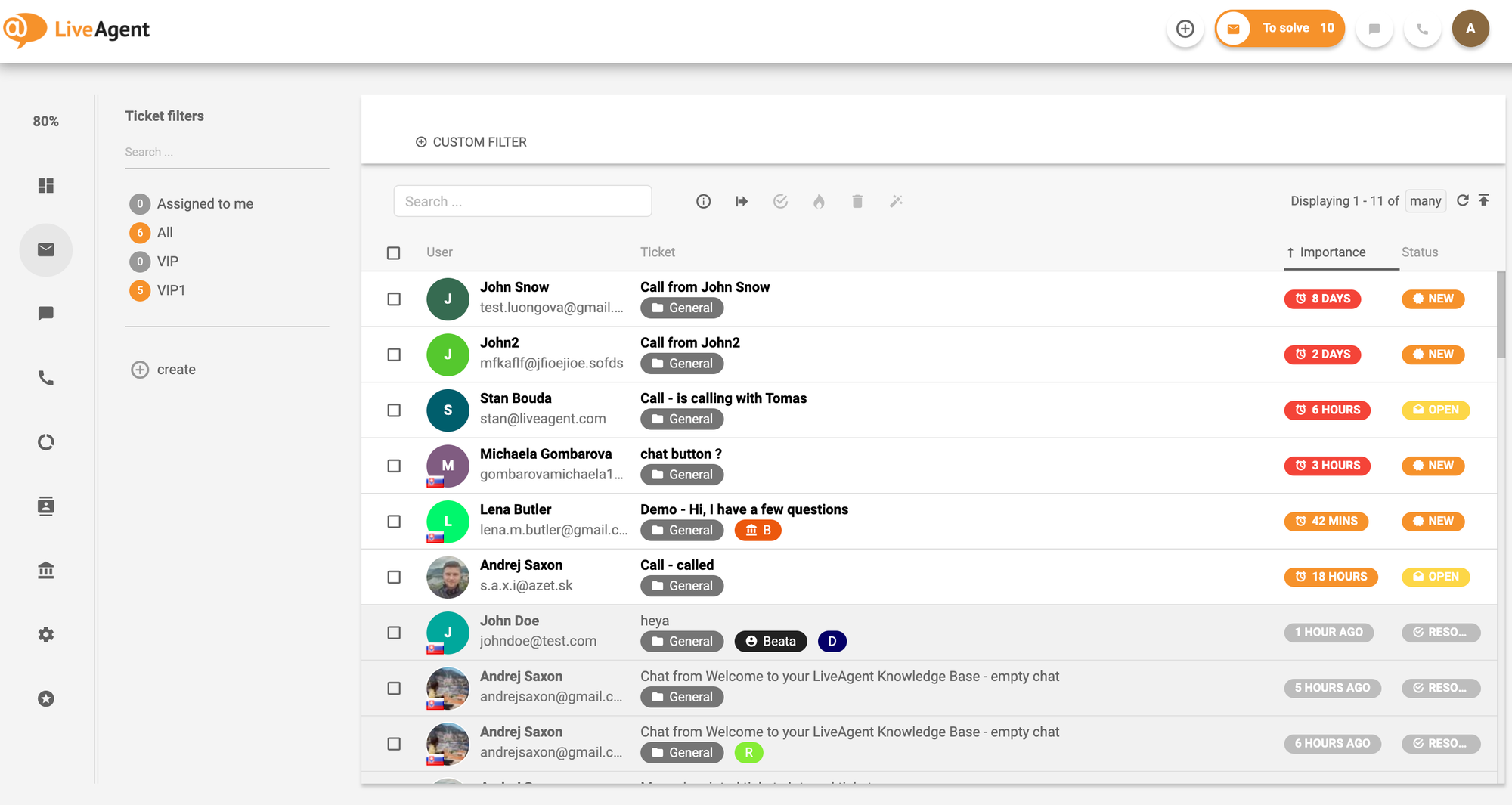
LiveAgent is a customer support platform that combines live chat, ticketing, and call center features. It’s aimed at businesses that need a broad range of support tools in one system. It has an incredibly attractive entry price point, but you'll find all of the most valuable features are locked behind more expensive plans.
Top features
- Universal inbox: Collect customer queries from email, chat, calls, and social media.
- Live chat: Add real-time chat to your website with proactive invitations.
- Call center support: Manage inbound and outbound calls with IVR and call routing.
- Automation rules: Set triggers to assign or escalate tickets.
- Customer portal: Provide FAQs and self-service resources.
How it’s better than HubSpot Service Hub: LiveAgent stands out for built-in call center functionality, something HubSpot doesn’t natively offer. It’s a stronger choice for companies that want phone support as part of their helpdesk.
Pricing: starts at $9 per user per month.
7. Zoho Desk
Zoho Desk is a cloud-based customer service software that integrates tightly with the broader Zoho ecosystem. It’s best for businesses already using Zoho apps for sales, marketing, and operations. While it has all the benefits of other Zoho tools, it carries over some of the negatives too, such as difficulty with getting started and the dated UI and UX.
Top features
- Multi-channel support: Manage tickets from email, chat, phone, and social.
- AI assistant: Use Zia for sentiment analysis, ticket suggestions, and automation.
- SLA management: Track deadlines and automate escalations.
- Knowledge base: Build customer self-service portals and FAQs.
- Custom dashboards: Visualize metrics and performance across departments.
How it’s better than HubSpot Service Hub: Zoho Desk provides deeper value for businesses running on Zoho’s suite of apps, offering tight integrations and lower costs. HubSpot focuses on CRM-first workflows, while Zoho Desk spreads across multiple functions.
Pricing: Zoho Desk's pricing starts at 7EUR per user per month.
8. Front
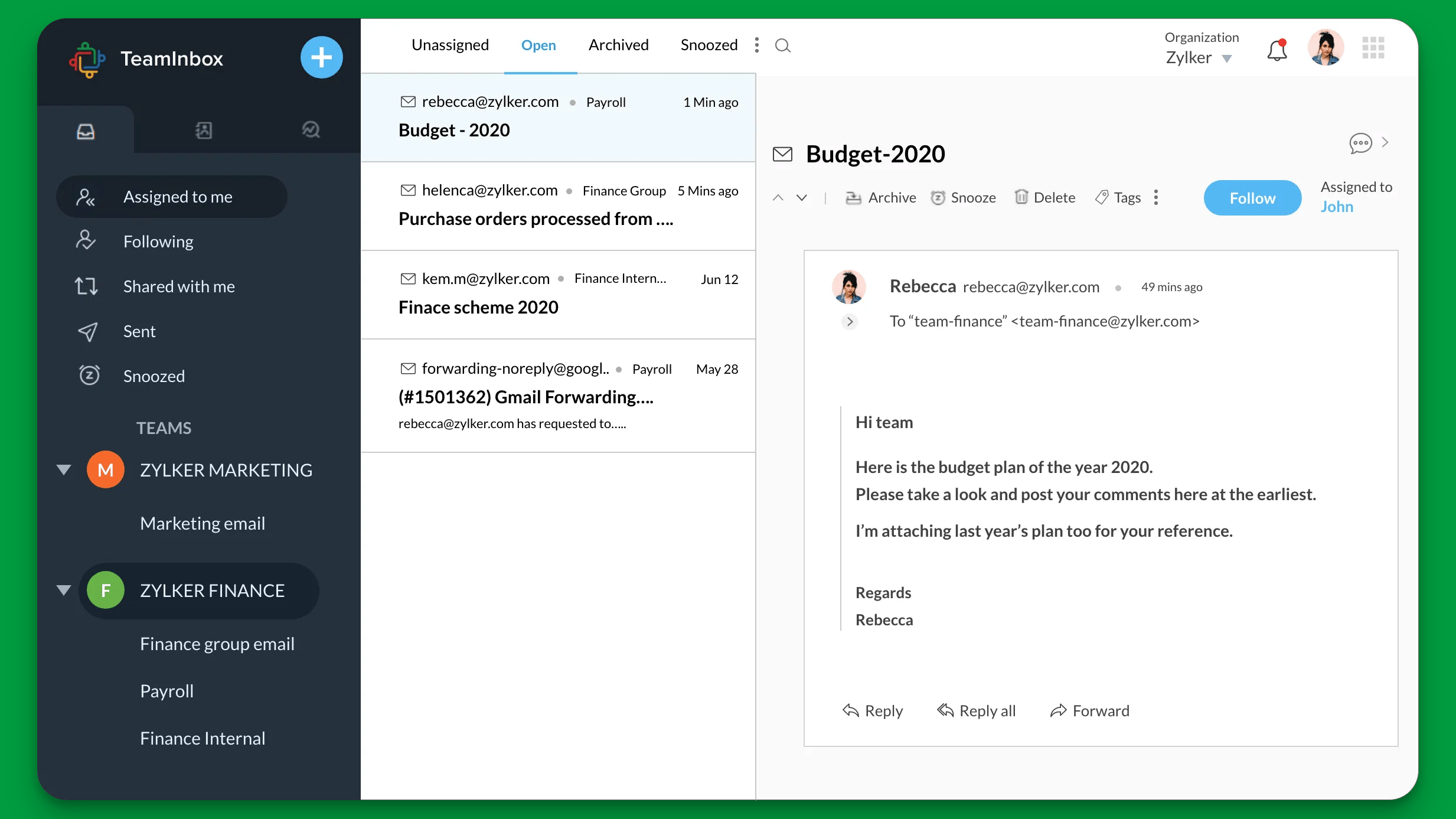
Front is a customer communication platform that enhances email with collaboration and automation. It’s ideal for teams that want to keep the familiarity of email while adding shared workflows. It's cheaper than HubSpot Service Hub, but the best features (such as smart automated workflows) are behind much more expensive plans.
Top features
- Shared inboxes: Centralize email, chat, and messages from multiple channels.
- Rules and workflows: Automate message routing, tagging, and assignments.
- Collaboration: Use comments, mentions, and assignments to work together.
- Customer context: View CRM data and conversation history alongside emails.
- Analytics: Track team performance, SLAs, and response metrics.
How it’s better than HubSpot Service Hub: Front is easier to adopt for teams that live in email, while HubSpot requires moving into a ticketing-first workflow. Front feels natural for businesses that don’t want to leave the inbox behind.
Pricing: Front's pricing starts at $25 per user per month.
9. Gorgias
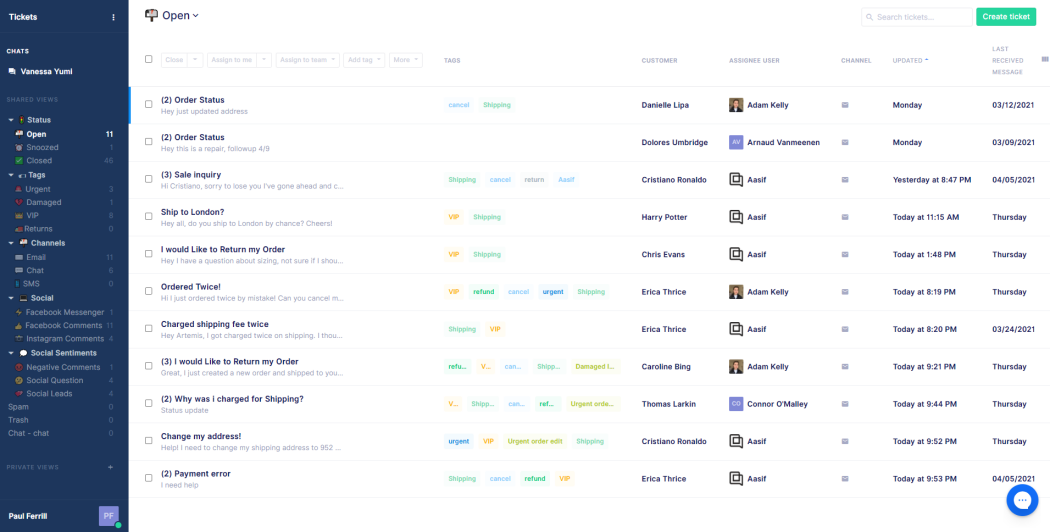
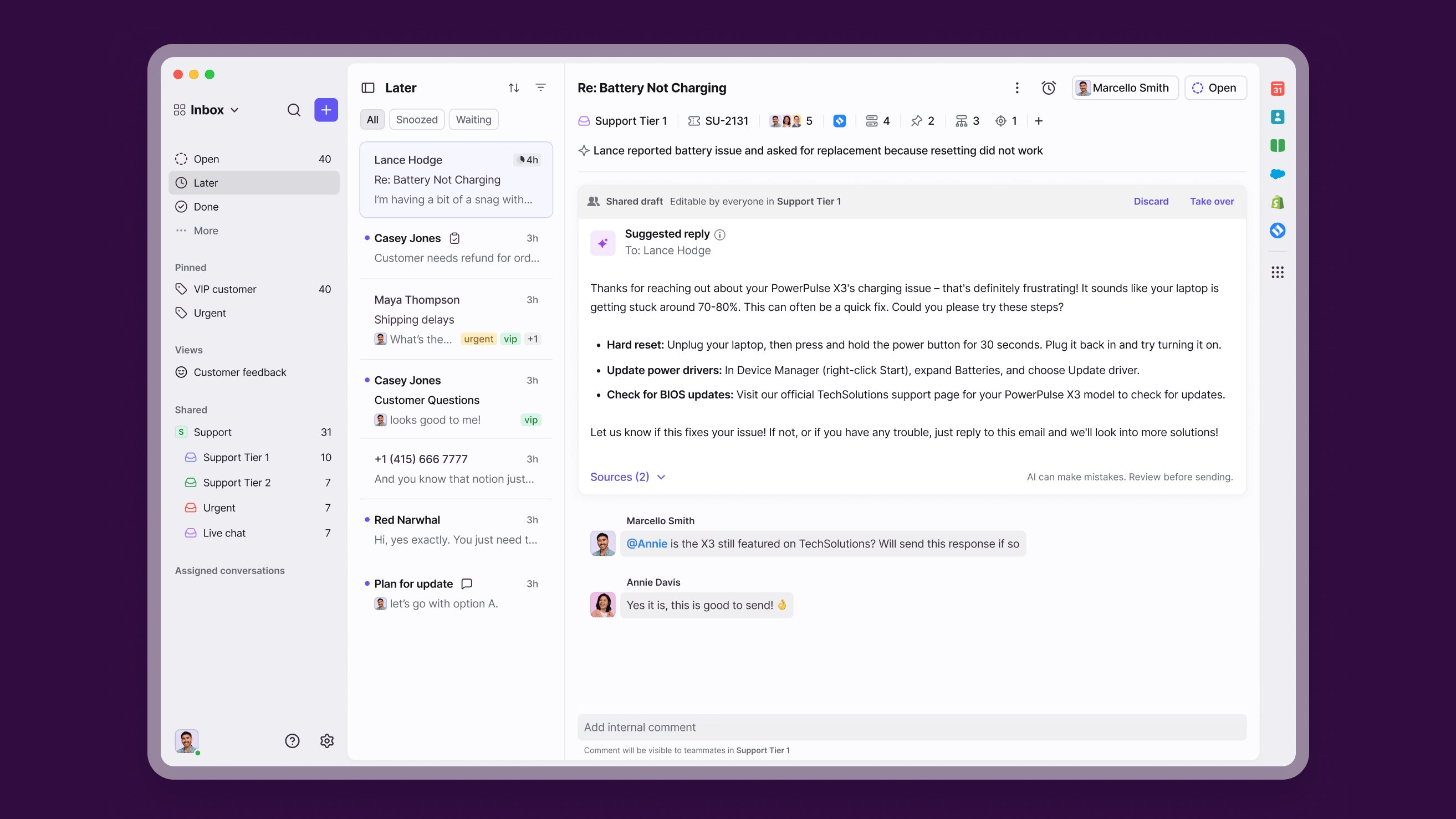
Gorgias is a helpdesk platform built for e-commerce businesses. It connects directly with platforms like Shopify, Magento, and BigCommerce to give support teams immediate context for each customer interaction. It may not be the best HubSpot alternative for all types of customers, but it's far better for ecommerce.
Top features
- E-commerce integrations: Access order history and customer data from Shopify, Magento, and more.
- Automation: Set rules for tagging, assigning, and responding to repetitive requests.
- Macros: Use pre-built replies for common support scenarios.
- Multi-channel inbox: Handle email, chat, social media, and SMS from one place.
- Revenue tracking: Measure the sales impact of support conversations.
How it’s better than HubSpot Service Hub: Gorgias is purpose-built for e-commerce, with native integrations that HubSpot lacks. It allows agents to manage refunds, shipping updates, and order edits directly inside the helpdesk.
Pricing: depends on how many help desk tickets you get per month, and it starts at $10 per month.
10. Salesforce Service Cloud
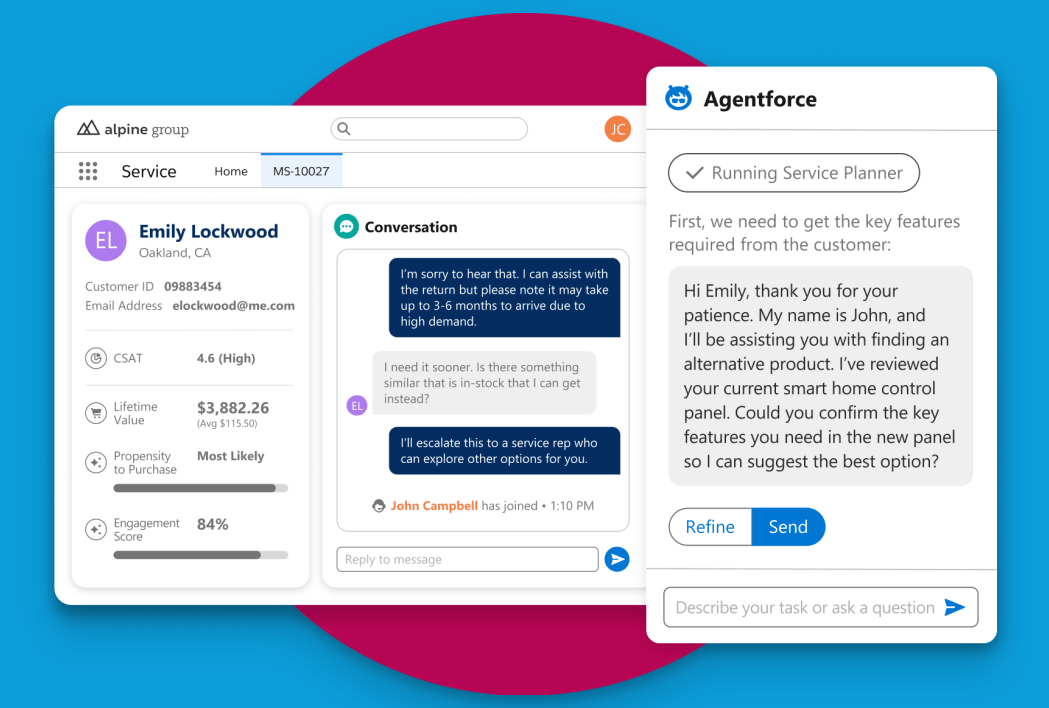
Salesforce Service Cloud is a comprehensive support platform designed for enterprises. It ties customer service into the broader Salesforce ecosystem and gives companies access to advanced automation and customer data across the business.
Top features
- Omnichannel support: Manage cases from chat, phone, email, social, and SMS.
- Case management: Track, route, and resolve support cases with automation.
- AI tools: Use Einstein AI for chatbots, predictions, and automated suggestions.
- Knowledge base: Create and share articles internally and externally.
- 360-degree customer view: Access data from Salesforce CRM to give agents full context.
How it’s better than HubSpot Service Hub: Service Cloud offers deeper enterprise-grade features and scalability, making it a better fit for larger organizations. HubSpot is strong for mid-market teams, but Salesforce provides more customization and global support capabilities.
Pricing: starts at $25 per user per month.
11. Help Scout
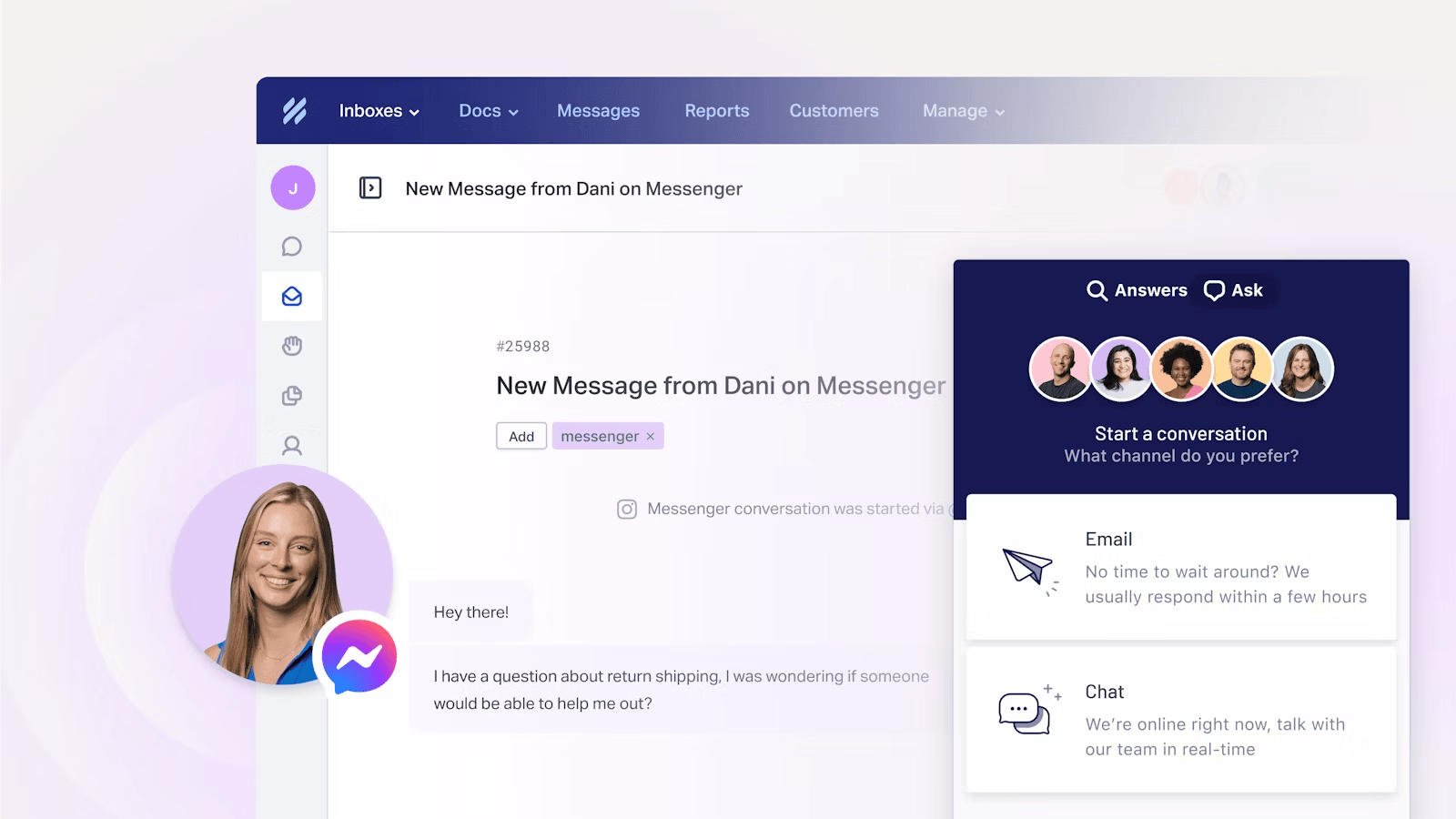
Help Scout is a support platform built around simplicity and customer friendliness. It’s designed for small and mid-sized teams that want email-first support enhanced with collaboration and chat.
Top features
- Shared inbox: Manage all customer emails with assignments, tags, and collision detection.
- Beacon widget: Combine chat, knowledge base articles, and contact forms.
- Knowledge base: Build self-service help centers for customers.
- Customer profiles: See interaction history and details alongside each conversation.
- Collaboration tools: Use private notes and mentions to coordinate internally.
How it’s better than HubSpot Service Hub: Help Scout is easier to adopt for teams that primarily support customers over email, while HubSpot leans toward CRM-heavy workflows. It’s a better choice for teams prioritizing personal, email-based communication.
Pricing: depends on the number of contacts you have. For up to 100 contacts, Help Scout is free. For 101 and over, Help Scout pricing starts at $50 per month.
12. Tidio
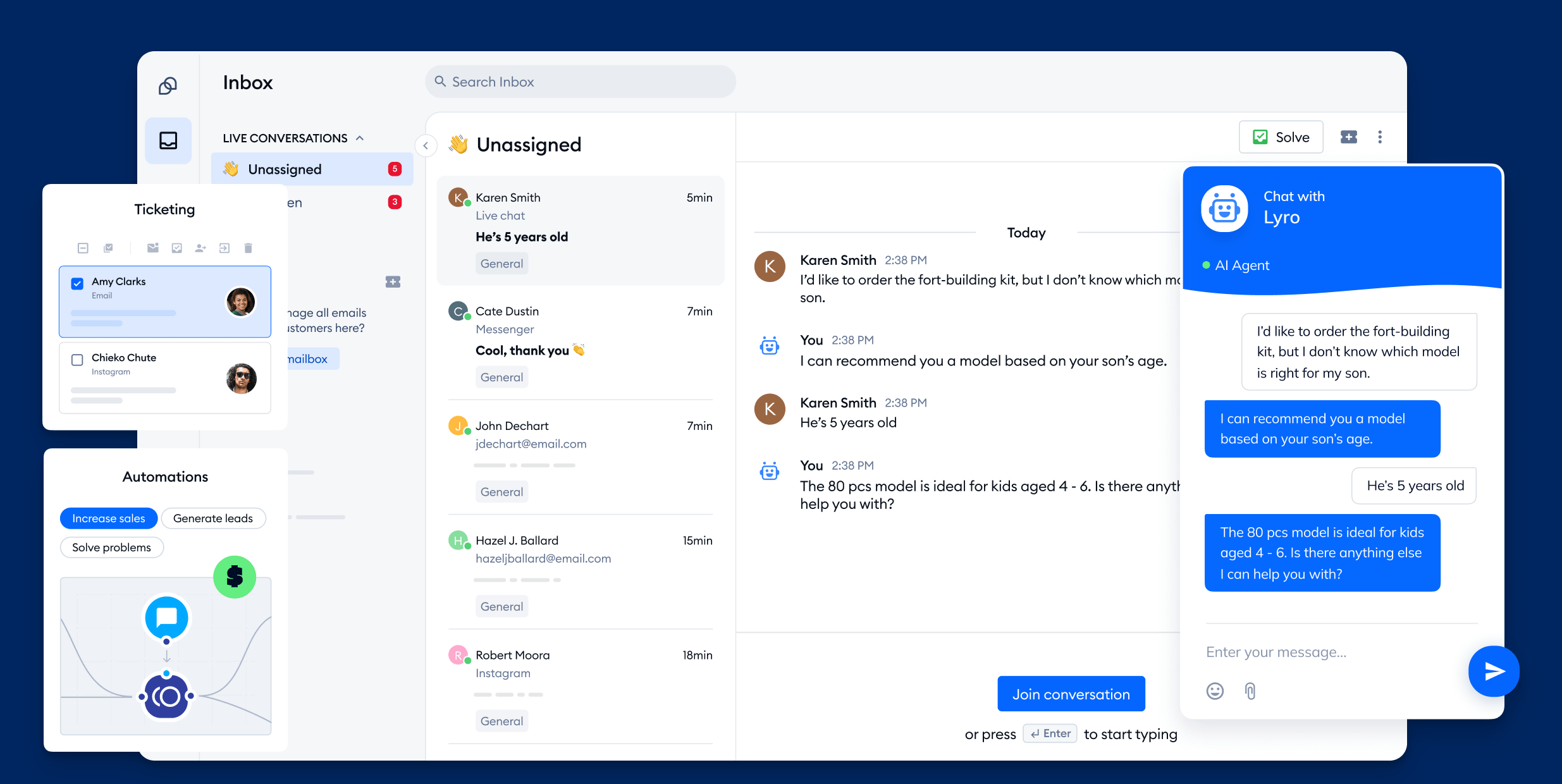
Tidio is a customer communication tool that blends live chat, chatbots, and email marketing into one platform. It’s especially suited for small to mid-sized businesses that want to combine support and marketing without a steep learning curve.
Top features
- Live chat widget: Add real-time chat to your site with customization options.
- AI chatbot builder: Automate common questions and lead capture.
- Email marketing tools: Send targeted campaigns directly from Tidio.
- Multichannel support: Manage Facebook Messenger, Instagram, and email conversations.
- Mobile app: Chat with customers on the go from iOS or Android.
How it’s better than HubSpot Service Hub: Tidio is more affordable and simpler, making it attractive for smaller businesses that don’t need HubSpot’s advanced CRM and ticketing features.
Pricing: Tidio's pricing starts at $29 per month for 100 billable conversations. AI features are not included and can be purchased as an add-on.
13. Intercom
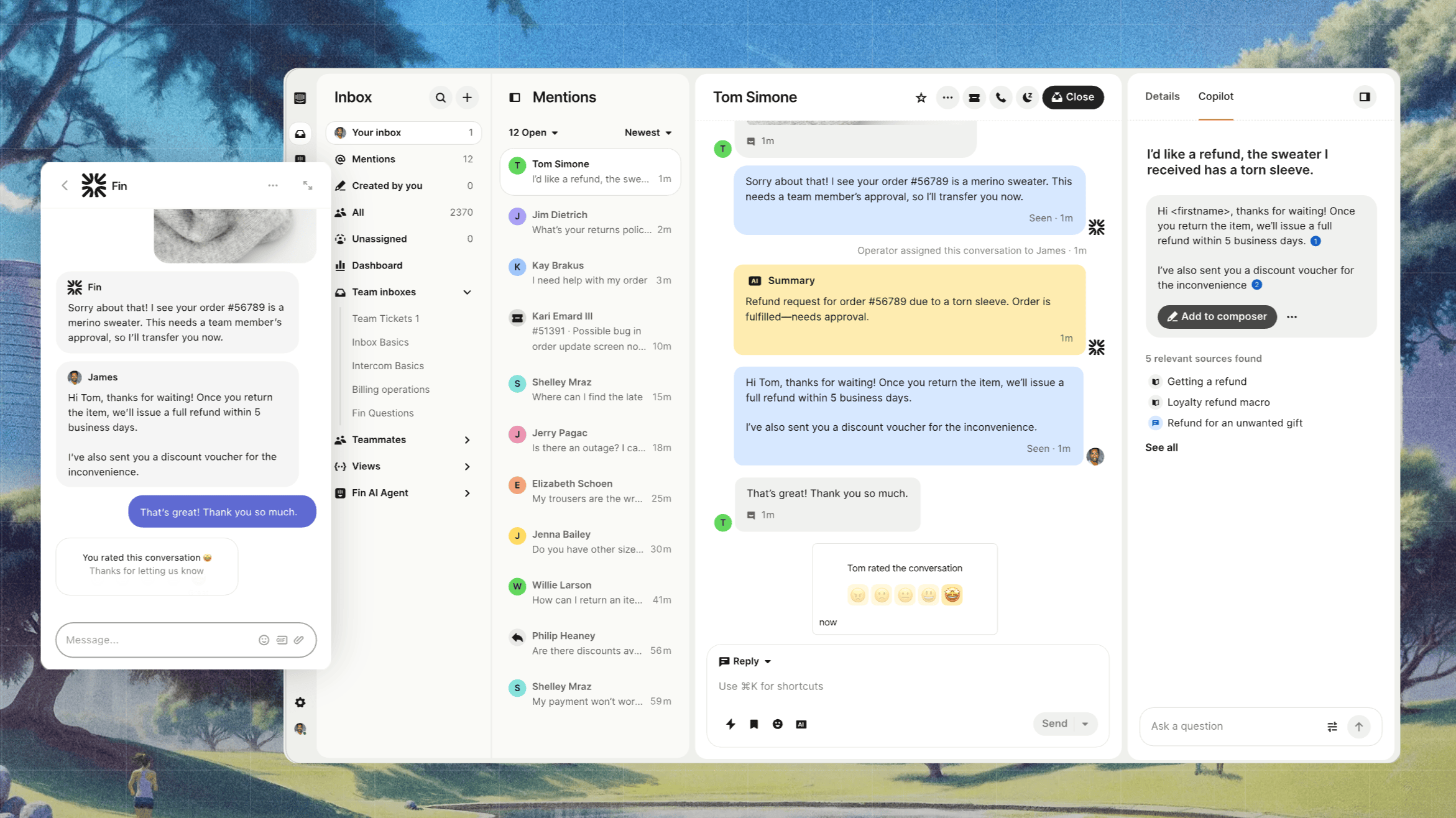
Intercom is a conversational support platform that combines live chat, AI bots, and in-app messaging. It’s a strong fit for SaaS companies and enterprises that want to engage customers in real time while providing personalized support. It's incredibly powerful but if you're not careful, your monthly Intercom bill can go sky high.
Top features
- Business Messenger: A customizable chat widget for websites and apps.
- AI chatbots: Automate responses to FAQs and route conversations to the right team.
- Product tours: Guide new users with step-by-step onboarding flows.
- Help desk tools: Manage conversations, SLAs, and customer queries in one inbox.
- Integration ecosystem: Connects with Salesforce, HubSpot CRM, Slack, and more.
How it’s better than HubSpot Service Hub: Intercom focuses more on real-time engagement and in-app support, while HubSpot Service Hub is centered around ticketing and CRM-driven workflows. For companies that need proactive communication inside their product, Intercom is often the better choice.
Pricing: Intercom pricing starts at $29 per seat per month.
Conclusion
Service Hub makes a lot of sense if you're already knee-deep in the HubSpot ecosystem and use it for contact management and marketing automation. However, if you want excellent customer support performance without the inflated HubSpot invoices, there are plenty of better options. Each of the alternatives above is better for your customer service operations for one reason or another.
Featurebase is a modern HubSpot Service Hub alternative with an affordable AI-powered live chat & help center. It comes with a mobile app, omnichannel support, custom automations, and much more. It's loved by thousands of companies like Lovable, Polymarket, and Raycast.
What's best is that it comes with a Free plan and unlimited free AI resolutions, so there's no downside to trying it out! 👇
✨ Start today and get the fastest AI-powered inbox & knowledge base →