How to Measure Customer Experience: Metrics & Methods
Learn how to measure customer experience with the metrics that matter, the methods to collect the data, and a simple way to turn scores into action.


On this page
Most teams can quote their NPS score. Far fewer can tell you what it actually means for churn, revenue, or the next thing they should fix.
That gap is the whole problem with measuring customer experience. A number on a dashboard is not the same as understanding how customers feel and what to do about it. In this guide, I'll cover the metrics worth tracking, how to collect the data behind them, and how to turn those scores into action. 👇
Key takeaways:
- Customer experience (CX) is the sum of every interaction a customer has with your brand. Measuring it means tracking both how customers feel and how your business actually performs.
- No single metric tells the full story. The core set is NPS, CSAT, CES, plus customer lifetime value, retention, churn, and response and resolution times.
- Relational metrics (like NPS) track long-term loyalty. Transactional metrics (like CSAT and CES) capture how a single interaction went. You need both.
- Surveys are only half the picture. Support ticket themes, sentiment analysis, and product usage fill in what customers never tell you directly.
- The value comes from closing the loop: segmenting the data, tying it to business outcomes, and fixing the friction you find.
- Featurebase✨ lets you run targeted NPS and CSAT surveys and collect feedback in one place, with a free plan to get started.
What does measuring customer experience actually mean?
Customer experience is the sum of every interaction a person has with your company, from the first ad they see to the support ticket they open two years later. It is not one moment. It is the whole journey, and how easy, helpful, and consistent that journey feels.
Measuring it means putting numbers on something that is fundamentally about feeling. That sounds contradictory, but it works because customer emotions show up in behavior: whether people renew, recommend you, or quietly leave.
A quick distinction that trips up a lot of teams:
- Customer experience is the entire relationship across every touchpoint and channel.
- Customer service is one part of that relationship - the help a customer gets when something goes wrong.
- Customer satisfaction is a snapshot of how happy someone is with a specific interaction or the product overall.
Measuring CX well means capturing all 3 layers, not just fielding a survey once a year and calling it a program.
Why measuring customer experience matters
If you do not measure customer experience, you are guessing. And the cost of guessing is rising, because customer experience is getting harder to deliver, not easier.
In the US, Forrester's 2025 Global Customer Experience Index found that 25% of brands saw their CX rankings decline for the year, while only 7% improved. Quality slipped across effectiveness, ease, and emotion. Standing still, in other words, means falling behind.
The stakes are high because customers do not give many second chances. PwC found that 32% of customers would walk away from a brand they love after just one bad experience. A single broken moment can undo years of goodwill.
Measured consistently, CX data does a few things for you:
- Early warning on churn: A dropping score in one segment shows you a problem before the cancellations start.
- A revenue link: Satisfied customers renew more often, spend more, and refer others, so CX metrics become a leading indicator for growth.
- Focus: Metrics point to exactly where the journey is breaking, so you fix the right thing instead of the loudest thing.
- Team alignment: Shared numbers give product, support, and success a common definition of "good".
The point is not the dashboard. It is catching friction while you can still do something about it.
The core customer experience metrics to track
There is no shortage of things you could measure. The trick is picking a handful that answer real questions. These are the customer experience metrics that consistently earn their place.
Net Promoter Score (NPS)
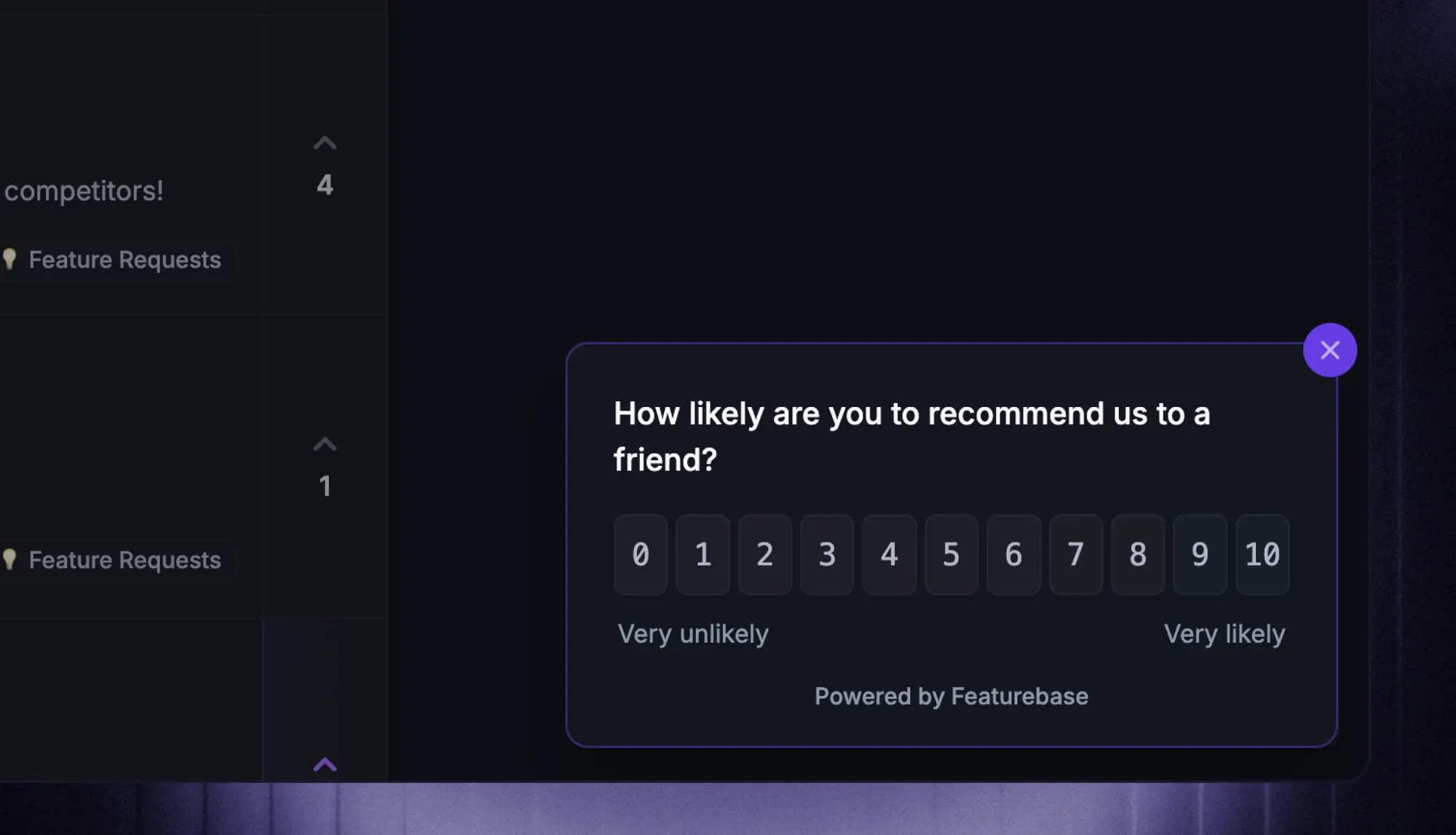
NPS measures loyalty. It comes from one question: "How likely are you to recommend us to a friend or colleague?" on a 0 to 10 scale. Respondents split into 3 groups:
- Promoters (9-10) - loyal fans likely to refer you
- Passives (7-8) - satisfied but not committed
- Detractors (0-6) - unhappy customers at risk of churning and warning others
You calculate it by subtracting the percentage of detractors from the percentage of promoters, giving a score from -100 to +100. NPS is a relational metric: it reflects overall sentiment about your brand, not one transaction. If you want the full breakdown, we have a guide on what NPS is and how to use it.
Customer Satisfaction Score (CSAT)
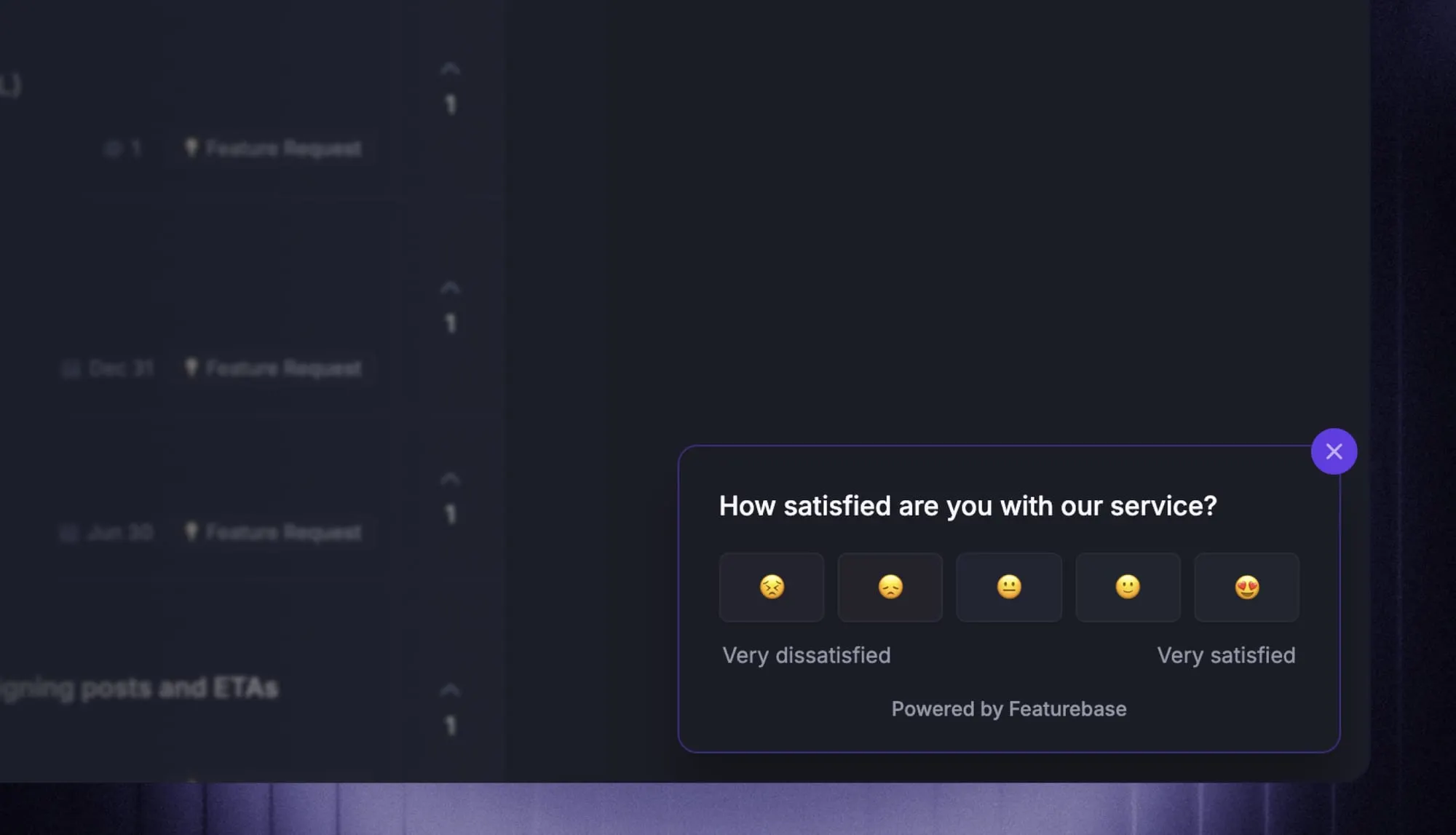
CSAT is the transactional counterpart to NPS. You ask "How satisfied were you with your recent [interaction]?" right after a specific touchpoint, usually on a 1 to 5 scale. The score is the percentage of respondents who picked the top ratings.
Because it is tied to a single moment, CSAT is perfect for spotting friction in real time. NPS tells you whether customers will stick with you through thick and thin. CSAT tells you if you solved their problem today. The two answer different questions, which is why NPS and CSAT work best together rather than as substitutes.
Customer Effort Score (CES)
CES measures how hard a customer had to work to get something done. The question is usually a variation of "How easy was it to resolve your issue?" Lower effort correlates strongly with loyalty - often more strongly than delight does, because customers rarely reward you for going above and beyond, but they punish you for making things hard.
CES shines when you are optimizing a specific process: onboarding, checkout, or a support flow. If NPS feels too blunt for your use case, it is worth looking at alternatives to NPS like CES that zoom in on effort.
Customer lifetime value, retention, and churn
These 3 are the hard-numbers backstop to your survey scores:
- Customer lifetime value (CLV): The total revenue you expect from a customer over the whole relationship. It tells you which segments are worth the most and where to invest.
- Retention rate: The percentage of customers you keep over a period. High retention is the clearest sign that the experience is working.
- Churn rate: The inverse - the percentage who leave. It is the unfiltered verdict on your CX, and tracking it by customer retention segment shows you where the leaks are.
Survey scores tell you how customers say they feel. These metrics tell you what they actually did.
Operational metrics (response time and resolution time)
Perception is shaped by speed, so 2 operational numbers matter:
- Average response time: How long customers wait for a first reply. Long waits breed frustration before an agent even engages.
- Average resolution time (ART): How long it takes to fully solve an issue. Shorter resolution means smoother experiences and more trust.
These are not CX metrics in the emotional sense, but they are the levers that move CSAT and CES, so they belong on the same dashboard.
How to actually measure customer experience
Knowing the metrics is one thing. Getting reliable data behind them is where most programs succeed or fall apart. You need a mix of methods.
Surveys at the right touchpoints
Surveys are the primary tool for NPS, CSAT, and CES, but timing is everything. Ask at the wrong moment and you get noise.
- Post-purchase or post-support: Trigger a CSAT or CES survey immediately, while the interaction is fresh.
- After onboarding: A CES survey after a key setup milestone surfaces friction that leads to early churn.
- On a schedule: Send NPS every quarter or six months to track relational sentiment over time.
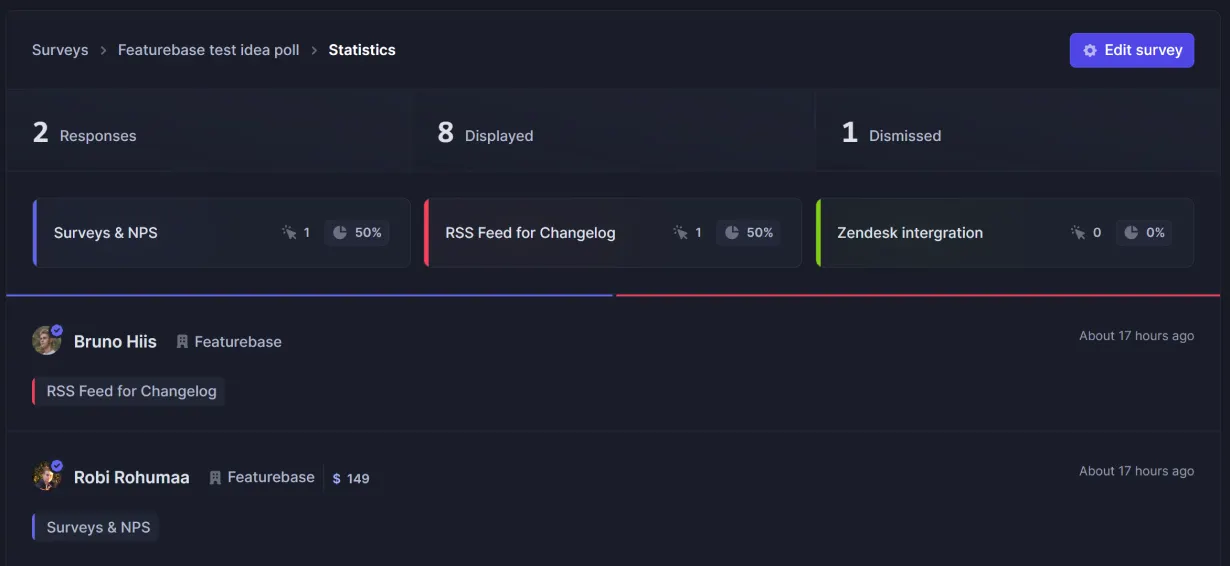
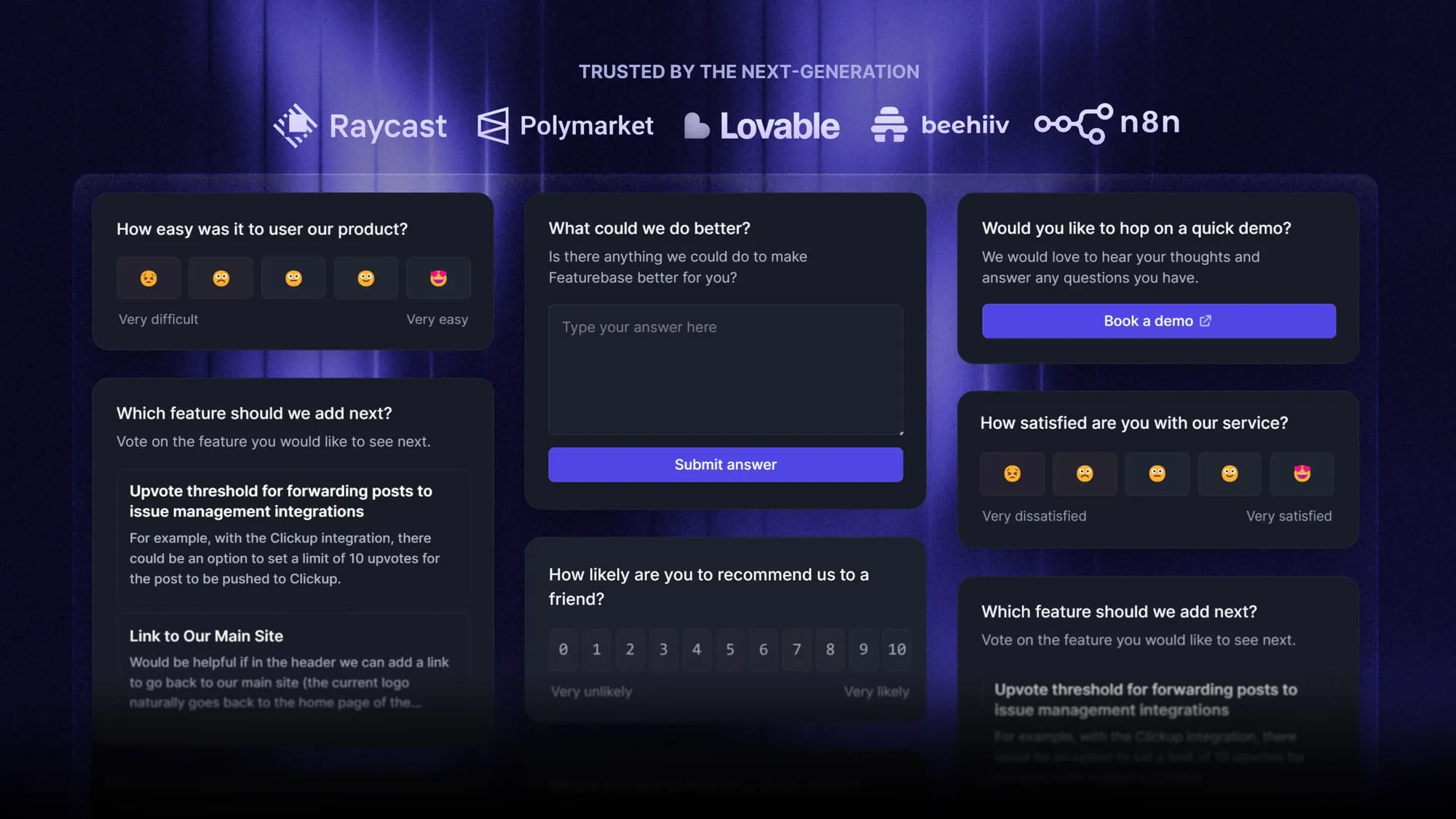
Keep surveys short, use plain language, and always leave room for one open-ended question - the comments explain the score. This is also where a dedicated tool helps you collect customer feedback without stitching together spreadsheets. With Featurebase, you can run targeted in-app NPS and CSAT surveys and pair them with a feedback forum, so a low score comes attached to the context behind it.
Indirect and operational feedback
Not every signal comes from a survey. Some of the most honest feedback is the kind customers never send you directly.
- Support ticket themes: Recurring complaints in your inbox point straight at broken features or policies.
- Online reviews and communities: G2, Trustpilot, and forums are where customers write the long-form truth.
- Product usage data: Where people drop off or stop using a feature is behavioral feedback that no survey captures.
Pulling these voice-of-customer signals together with your survey scores gives you a fuller picture than either source alone.
Sentiment and interaction analysis
Surveys reach only the customers who bother to respond. Sentiment analysis fills the rest of the gap by reading the emotional tone of support conversations, reviews, and social mentions at scale.
Modern tools categorize feedback as positive, neutral, or negative and track how that mix shifts over time. Layering in real-time customer feedback means you spot an emerging problem in days, not at the next quarterly review.
Turning customer experience metrics into action
Collecting scores is the easy part. The programs that actually improve CX are the ones that treat measurement as the start, not the finish.
Three habits separate a real program from a vanity dashboard:
- Segment before you conclude: An overall NPS of +40 can hide an NPS of -15 among customers in their first 60 days. Break the data down by persona, tenure, and journey stage to find where the experience actually breaks.
- Tie metrics to business outcomes: If customers who give a low CSAT after support are far more likely to churn within 90 days, you have a financial case for fixing support, not just a feeling.
- Close the loop: Follow up with detractors personally, and route recurring themes to the teams who can fix them. Closing the feedback loop is what shows customers their input mattered, which builds the trust the scores are measuring in the first place.
The goal is a cycle: measure, analyze the feedback, fix the root cause, then measure again to confirm it worked.
Measure customer experience with Featurebase
Featurebase is a modern feedback & support platform that helps product teams collect feedback through multi-step surveys, integrations, and a feedback portal, all in one place, to make better product decisions. It's loved by thousands of product teams from companies like Lovable, Raycast, and n8n. 💫
Top features:
- Surveys (NPS, CSAT, etc) – Create targeted no-code surveys to ask users anything and measure customer satisfaction.
- User targeting – Target specific user segments based on properties like plan, role, location, etc.
- Conditional multi-step surveys – Ask follow-up questions based on conditional logic and users' answers
- In-app widgets – Collect ideas, bug reports, and suggestions directly from your website or webapp with an interactive widgets
- Feedback forum – Public feedback forum where users can submit ideas and vote on features helping you know what customers want
- Prioritize by revenue – Link feedback with customer revenue, company size, and much more to better understand the impact of ideas
- Integrations – Connects with Slack, Linear, Jira, HubSpot, and more
- Plus, help center, product roadmaps, release notes, and customer surveys – all in one place
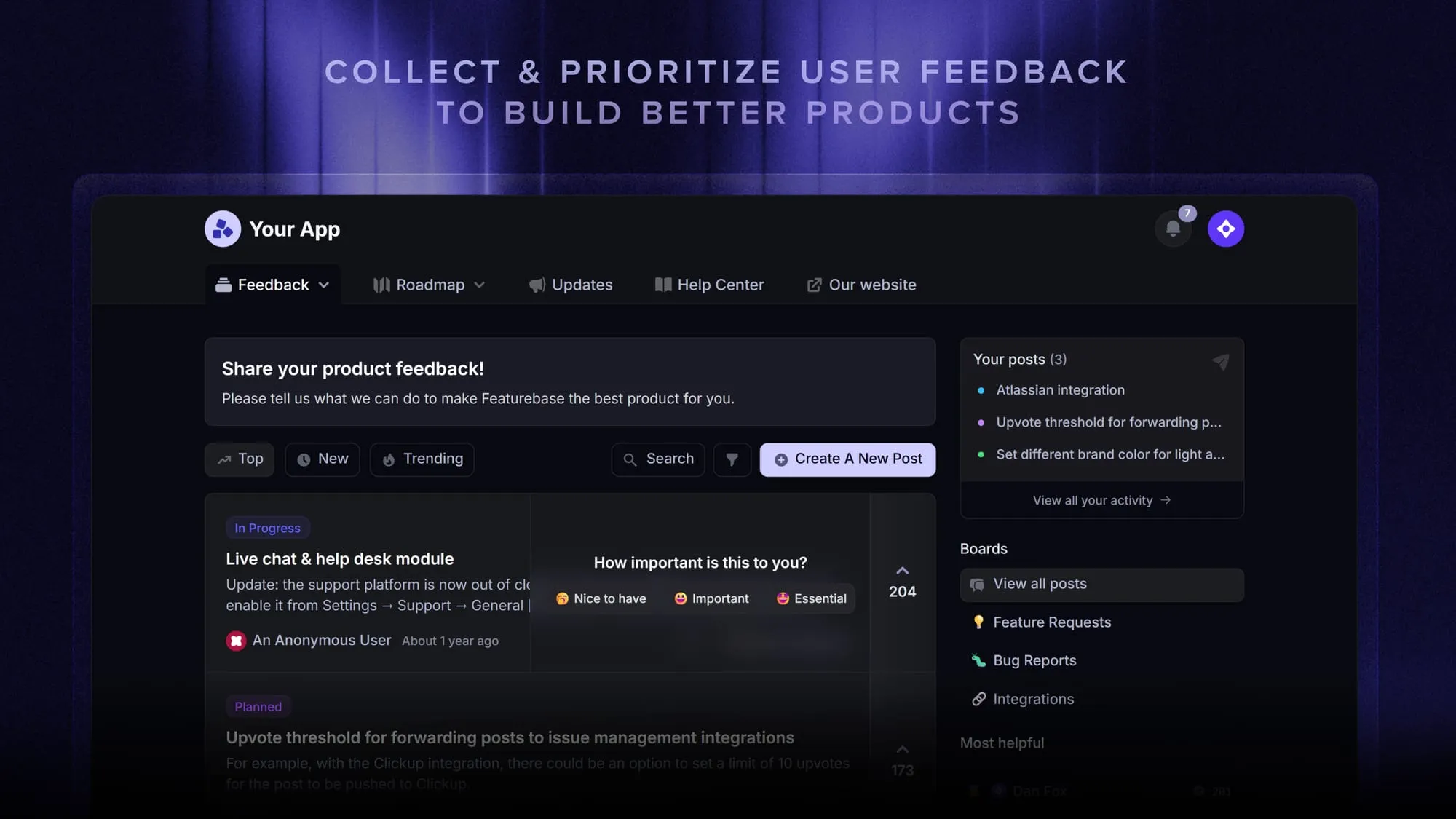
Pricing: Free plan available with unlimited survey responses and feedback. Paid plans start at $29/seat/mo.
Instead of having 4+ different tools, Featurebase enables you to replace all your customer-facing tools by bringing your feedback collection, product updates, support, and help center together in one place, helping you build products your users love.
Conclusion
Measuring customer experience is not about collecting the most metrics. It is about picking the few that answer real questions - NPS for loyalty, CSAT and CES for individual interactions, and retention and churn for the bottom-line verdict - then backing them with survey, behavioral, and sentiment data.
The teams that win are the ones that act on what they find, closing the loop instead of letting insights gather dust in a report.
Featurebase makes that measurement simple, letting you run NPS and CSAT surveys, collect feedback, and see the context behind every score in one place. There's a free plan with unlimited survey responses, so there's no downside to trying it and seeing what your customers are really telling you. 👇
Start running surveys & collecting feedback with Featurebase for free
FAQs
Customer experience is the sum of every interaction a customer has with your brand across the entire journey, from awareness to renewal. Customer satisfaction is narrower - it measures how happy someone is with a specific interaction or the product overall. Satisfaction is one input into experience, not the whole thing.
The best approach combines survey metrics with behavioral and operational data across the full journey. Surveys like NPS, CSAT, and CES capture how customers feel, while retention, churn, and usage data show what they actually do. Tracking both, then segmenting the results, gives you a far more accurate picture than any single score.
There is no universal answer - the right metrics depend on your goals. Most programs start with 3 to 5: NPS for loyalty, CSAT for interaction satisfaction, CES for effort, and churn for the bottom-line verdict. Add operational metrics like response and resolution time if support is central to your experience.
It depends on the metric. Transactional metrics like CSAT and CES should be triggered continuously, right after the relevant interaction. Relational metrics like NPS work better on a slower cadence, typically quarterly or twice a year, so you track genuine shifts in sentiment rather than noise.
You do not need an expensive platform to start. Pick one key touchpoint, send a simple CSAT or NPS survey with a free tool, and prove the value before investing more. Featurebase has a free plan with unlimited survey responses and feedback collection, which makes it easy to run your first program without a budget.
Yes. Support ticket themes, online reviews, sentiment analysis of conversations, and product usage data all reveal how customers feel without asking them directly. These indirect signals are especially valuable because they capture the many customers who never fill out a survey. The strongest programs blend indirect data with survey scores rather than relying on one.