Blog Customer ServiceWhat Is Customer Care? Definition & Best Practices
What Is Customer Care? Definition & Best Practices
Customer care is the emotional side of customer service. Learn what it means, how it differs from support, and how to measure and improve it.


✨ Automate your support with the fastest AI-enhanced Inbox today →
Imagine a mug you ordered arrives shattered in the box. You brace for the usual runaround: proof, photos, a dozen questions. Instead, the agent just apologizes, ships a replacement, and asks nothing.
That gap between what you dreaded and what you got is customer care. It's the difference between a company that closes tickets and one you actually want to stick with.
In this guide, I'll break down what customer care is, how it differs from customer service, and how to measure and improve it. 👇
Key takeaways:
- Customer care is the emotional layer on top of customer service. It's about making customers feel valued, not just resolving their tickets.
- It's proactive, service is reactive. Care anticipates needs, service responds to problems.
- The 4 C's are a useful framework: compassion, competence, convenience, and consistency.
- You can measure it with CSAT, CES, and NPS, paired with open-ended feedback for the "why" behind the score.
- AI and automation free up your team to spend more time on the high-empathy moments that machines can't handle.
- Featurebase✨ brings support, help center, feedback, and surveys into one platform so you can deliver and measure customer care in one place.
- Great care pays off: it drives loyalty, protects your reputation, and grows revenue.
What is customer care?
Customer care is how a company builds a positive emotional connection with its customers at every point they interact with the brand. It goes beyond fixing problems to make people feel genuinely looked after.
Where basic support answers the question, care pays attention to how the customer feels while you answer it. Think active listening, patience, personalization, and the occasional surprise-and-delight moment.
It's also less quantifiable than support. You can count resolved tickets, but you can't easily count the goodwill a kind, human interaction creates. That's what makes care both harder to track and more valuable when you get it right.
Customer care vs. customer service vs. customer experience
These three terms get used interchangeably, but they aren't the same thing:
- Customer service is the help you give customers before, during, and after a purchase. It's largely reactive, focused on answering questions and solving problems on the customer's preferred channel.
- Customer care is the emotional, proactive layer on top of service. It's about anticipating needs and making customers feel valued, not just assisted. (For the closely related distinction between service and support, see our guide on customer service vs. customer support.)
- Customer experience is the entire journey a customer has with your brand, from the first ad they see to every support conversation and product interaction after.
The simplest way to hold them apart: service and support solve the problem, care shapes how the customer feels about it, and experience is the sum of all of it.
Why customer care matters
Care isn't a soft nice-to-have. It directly affects retention, reputation, and revenue.
Every support interaction is a chance to build loyalty or lose it. When you treat customers like people instead of ticket numbers, they stay longer and spend more. Salesforce found that 88% of customers say good customer service makes them more likely to purchase again.
The flip side is real too. Unhappy customers talk, and increasingly they do it in public. The National Customer Rage Study found that 32% of complainants posted about their most serious problem on social media, more than double the share in 2020. One poorly handled moment can reach thousands of prospective buyers.
Good care reverses that dynamic. It turns a frustrated customer into a loyal advocate and a potential one-star review into a recommendation.
The 4 C's of customer care
A simple way to think about great care is the 4 C's. Each one covers a different piece of what customers actually want:
- Compassion - see a frustrated customer as a person to support, not a problem to close
- Competence - solve issues quickly and explain things clearly so customers feel in capable hands
- Convenience - make it easy to get help on the channel and at the time that suits the customer
- Consistency - deliver the same quality of care on every channel and with every rep
Nail all 4, and you cover both the practical side (competence, convenience) and the human side (compassion, consistency) of every interaction.
How to measure customer care
Care is harder to measure than support, but not impossible. The trick is to combine a score with an open-ended question so you learn the reason behind the number. Three metrics do most of the work, and they're worth tracking alongside your other customer service metrics.
Customer Satisfaction Score (CSAT)
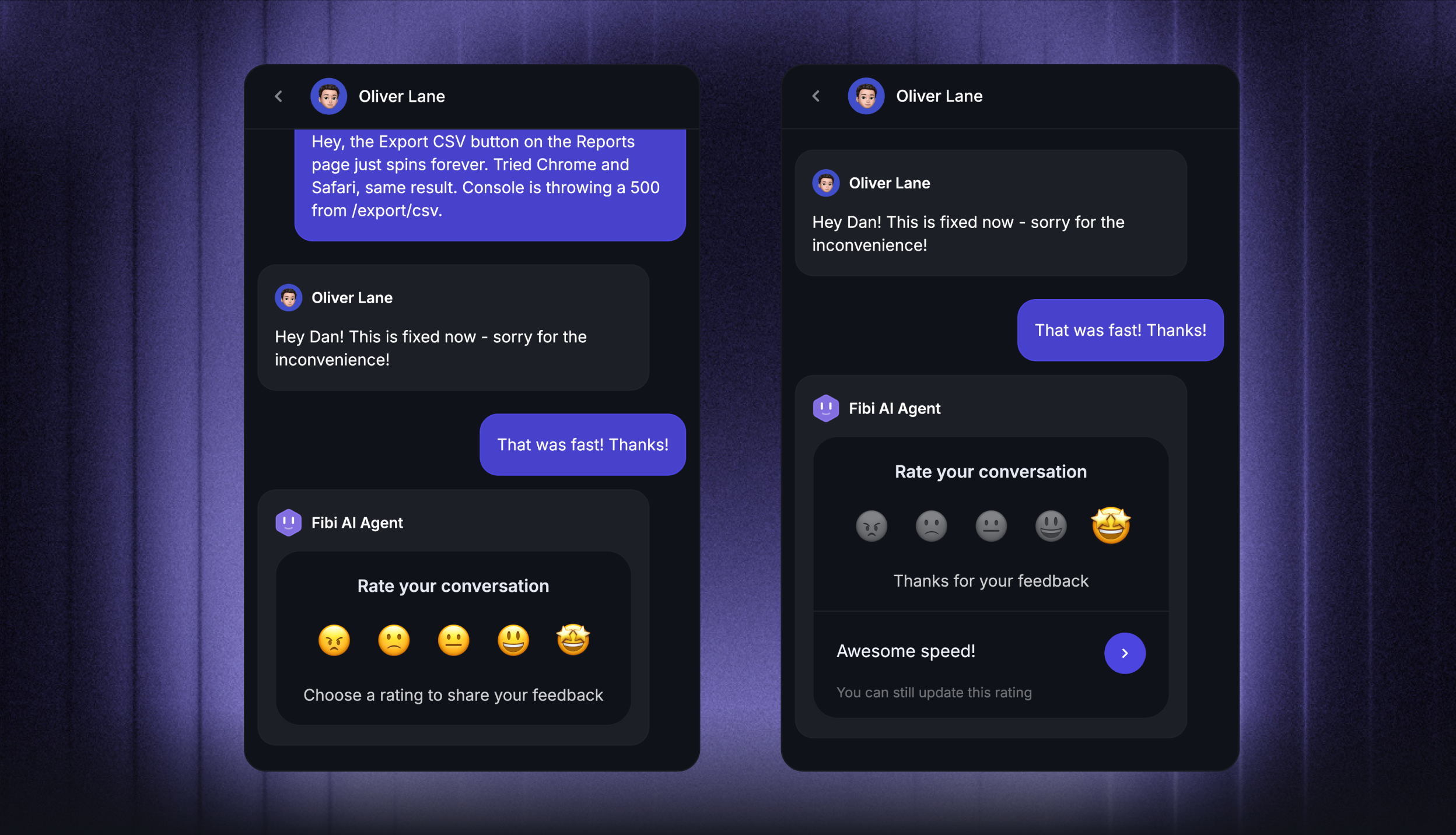
CSAT measures how happy a customer is with a specific interaction. You ask them to rate their experience, usually on a scale of 1 to 5, right after a support conversation ends.
The formula is straightforward:
CSAT = (Number of satisfied customers ÷ Total responses) × 100
Always pair it with a follow-up like "What's the main reason for your rating?" A low score tells you something's wrong, but the open text tells you what to fix.
Customer Effort Score (CES)
CES measures how easy it was for the customer to get what they needed. Since convenience is a core part of care, effort is one of the most telling signals you can track.
Ask "How easy was it to resolve your issue?" on a 1-to-5 scale after an interaction, then average the responses. A high CES means customers are getting help without jumping through hoops. A low one points you straight at the friction.
Net Promoter Score (NPS)
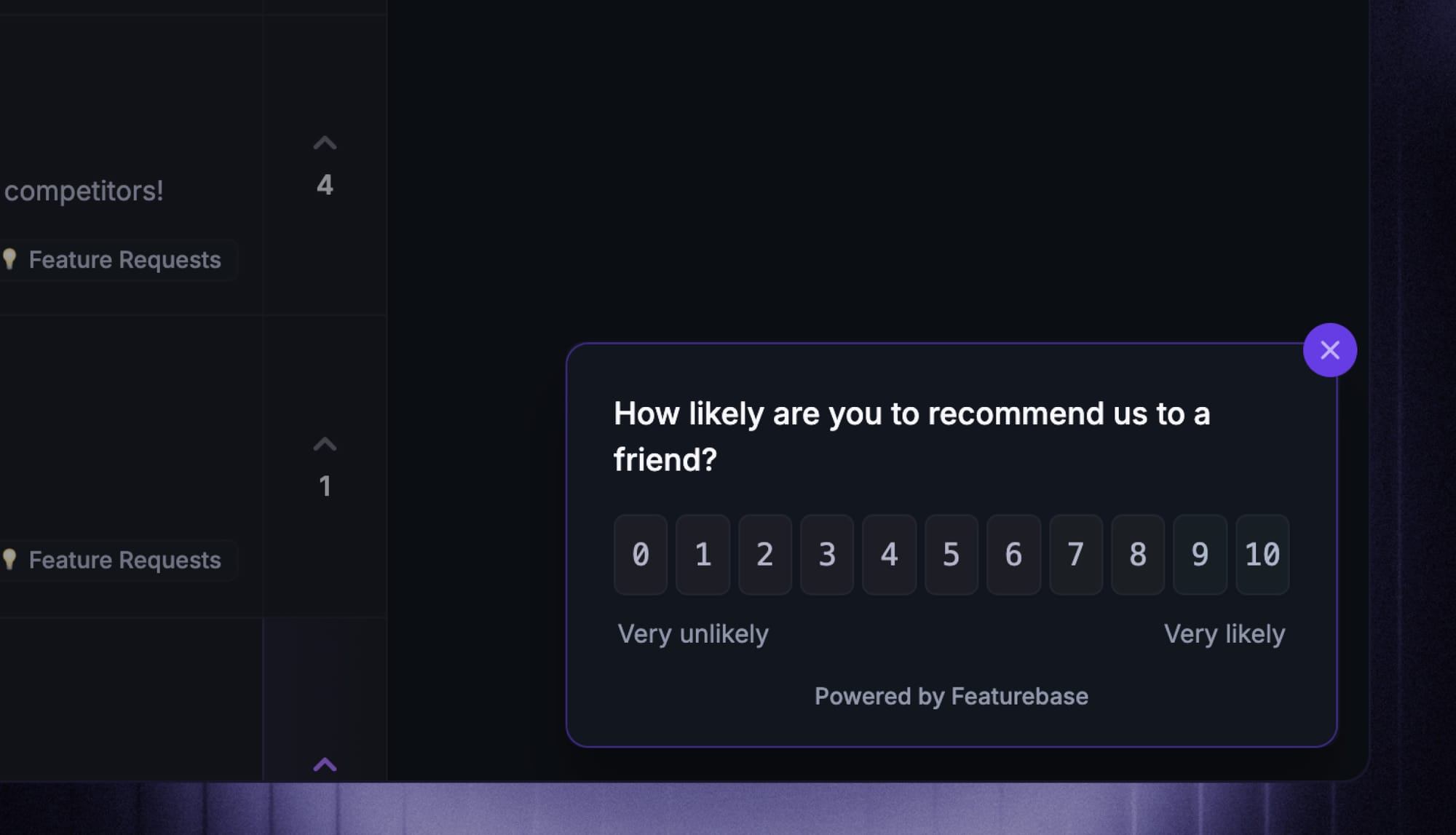
NPS measures loyalty by asking how likely a customer is to recommend you, on a scale of 0 to 10. It sorts people into three groups:
- Promoters score 9 or 10 and are your loyal advocates
- Passives score 7 or 8 and aren't counted in the final number
- Detractors score 0 to 6 and are at risk of churning
You calculate it by subtracting the percentage of detractors from the percentage of promoters. It's the best single gauge of whether your care is building the long-term loyalty you're after.
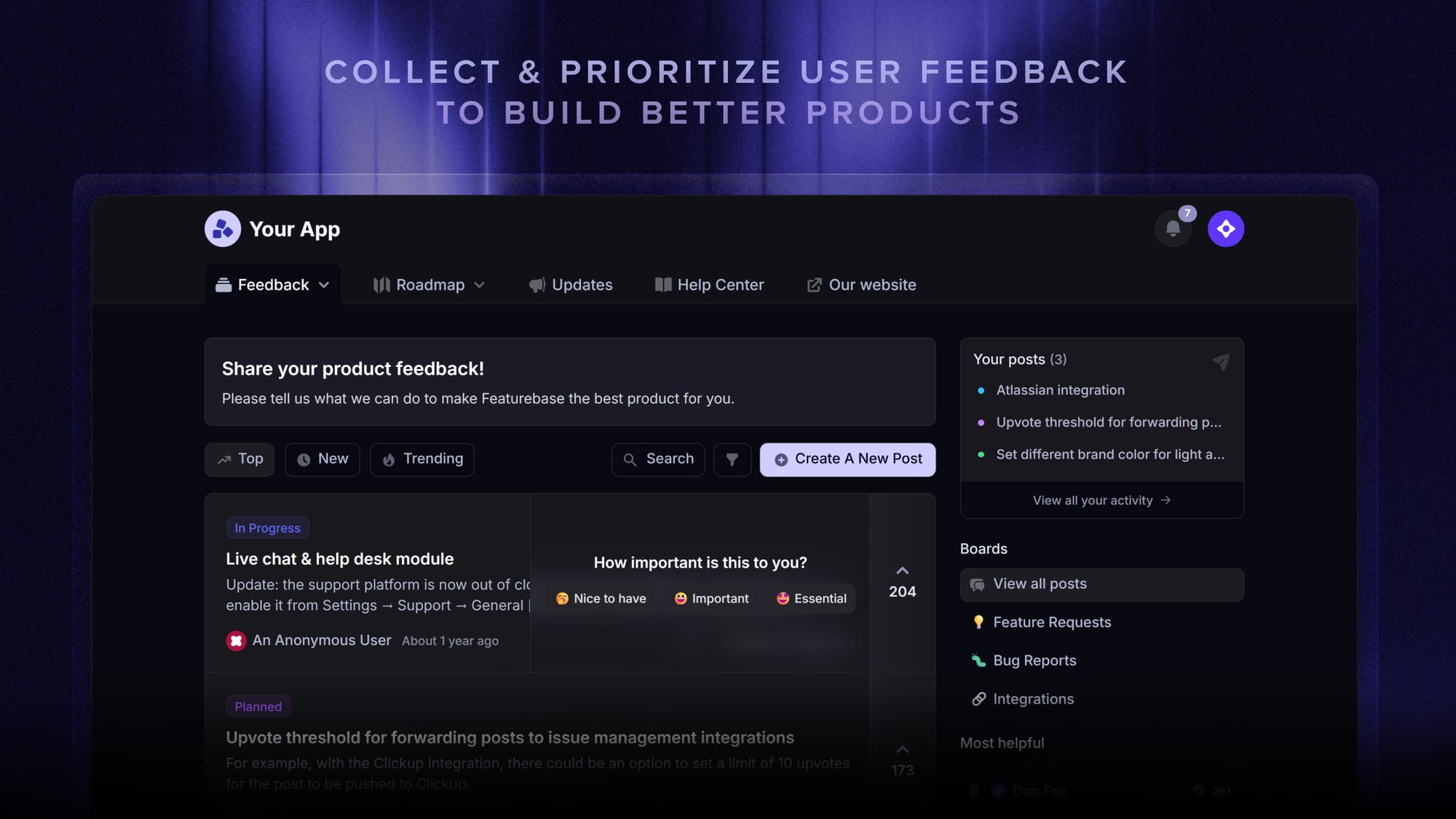
With Featurebase, you can run targeted NPS, CSAT, and CES surveys directly inside your product and capture the open-ended "why" alongside every score, so measuring care doesn't mean bolting on another tool.
How to improve your customer care
Once you know where you stand, here's how to raise the bar.
Train your team for empathy. Care depends on reps who can stay calm, listen, and make customers feel heard. Simple phrases like "I hear you" and "thank you for that feedback" validate the customer before you jump to a fix. These are learnable customer service skills, and they're worth investing in.
Lean on AI and automation. Modern AI can resolve routine questions end to end, which frees your team to spend real time on the emotional, complex cases that need a human. Customers are increasingly comfortable with this: Zendesk found consumer favorability toward AI in CX reached 67%, up 10 points year over year. Done right, automation improves care instead of cheapening it.
Make self-service easy. A well-built help center and FAQ let customers solve simple problems on their own, 24/7, without waiting in a queue. Strong self-service is convenience in action, one of the 4 C's.
Be proactive. Reach out before something becomes a problem, whether that's a delayed shipment or a known bug. Proactive support shows customers you're paying attention, which is the essence of care.
Act on feedback. Collect data across every channel, find the friction points, and actually fix them. Care isn't just kindness in the moment, it's removing the obstacles that made customers unhappy in the first place.
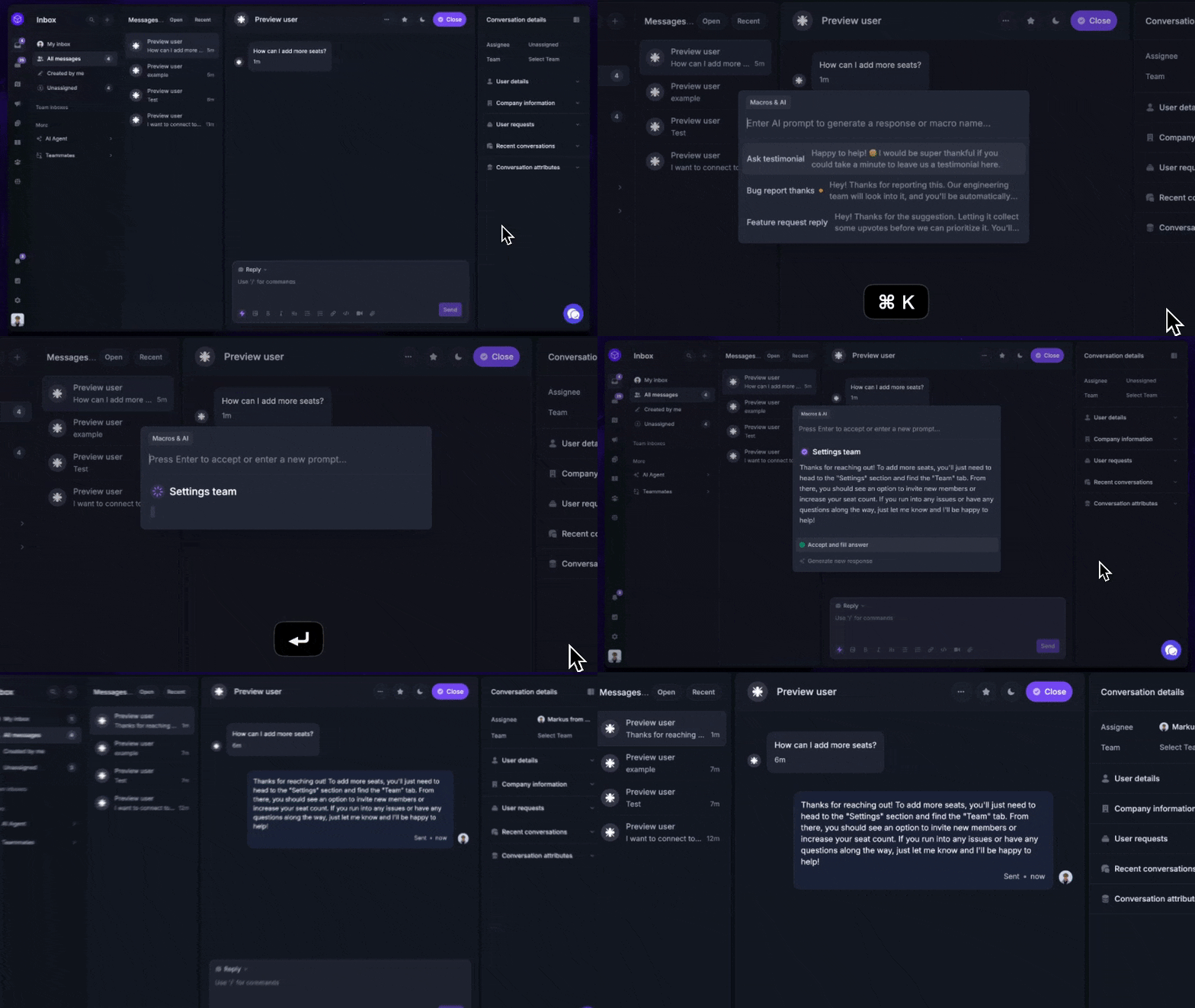
This is also where the right tooling helps. With Featurebase, you can manage live chat, email, and Slack from one omnichannel inbox and let its Fibi AI Agent resolve routine issues automatically, so your team has the time and context to handle the moments that call for a human touch.
3 customer care examples
Care sounds abstract until you see it. Here are 3 quick examples of what it looks like in practice:
- The condolence card. A customer canceled a pet food order and wrote that their pet had passed away. A few days later, the company sent flowers and a handwritten card. No interaction required, just empathy.
- The complaint that changed the product. A customer flagged hard-to-open packaging. Instead of a scripted apology, the company surveyed others, confirmed the issue was widespread, and redesigned the packaging. Sales went up, and the original complainer became a regular.
- The callback. A traveler got disconnected mid-call with an airline. Rather than making them wait in the queue again, the agent called them back. Respecting the customer's time is care too.
Notice that none of these are about a fancy feature. They're about paying attention and treating the customer like a person.
Deliver better customer care with Featurebase
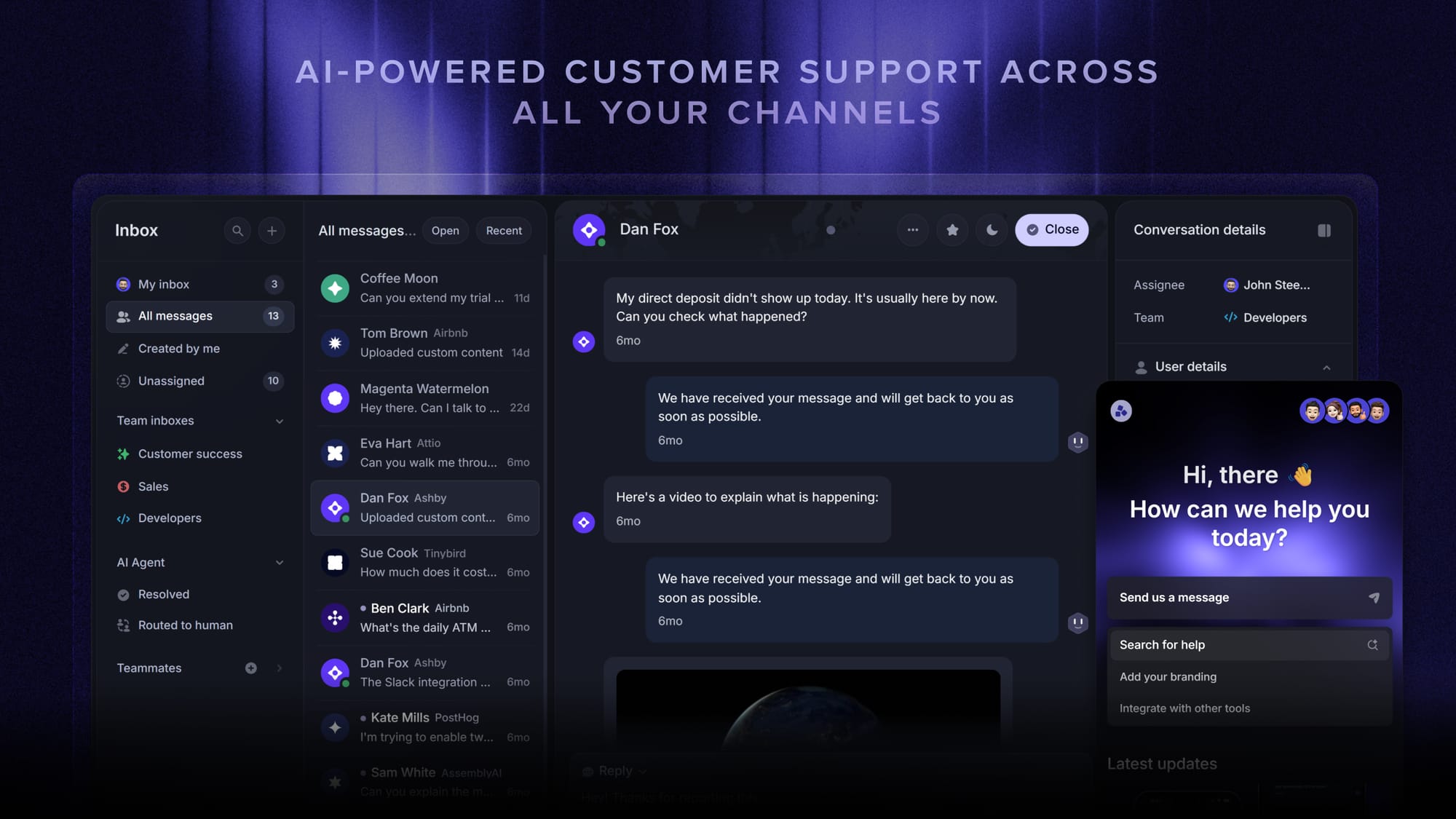
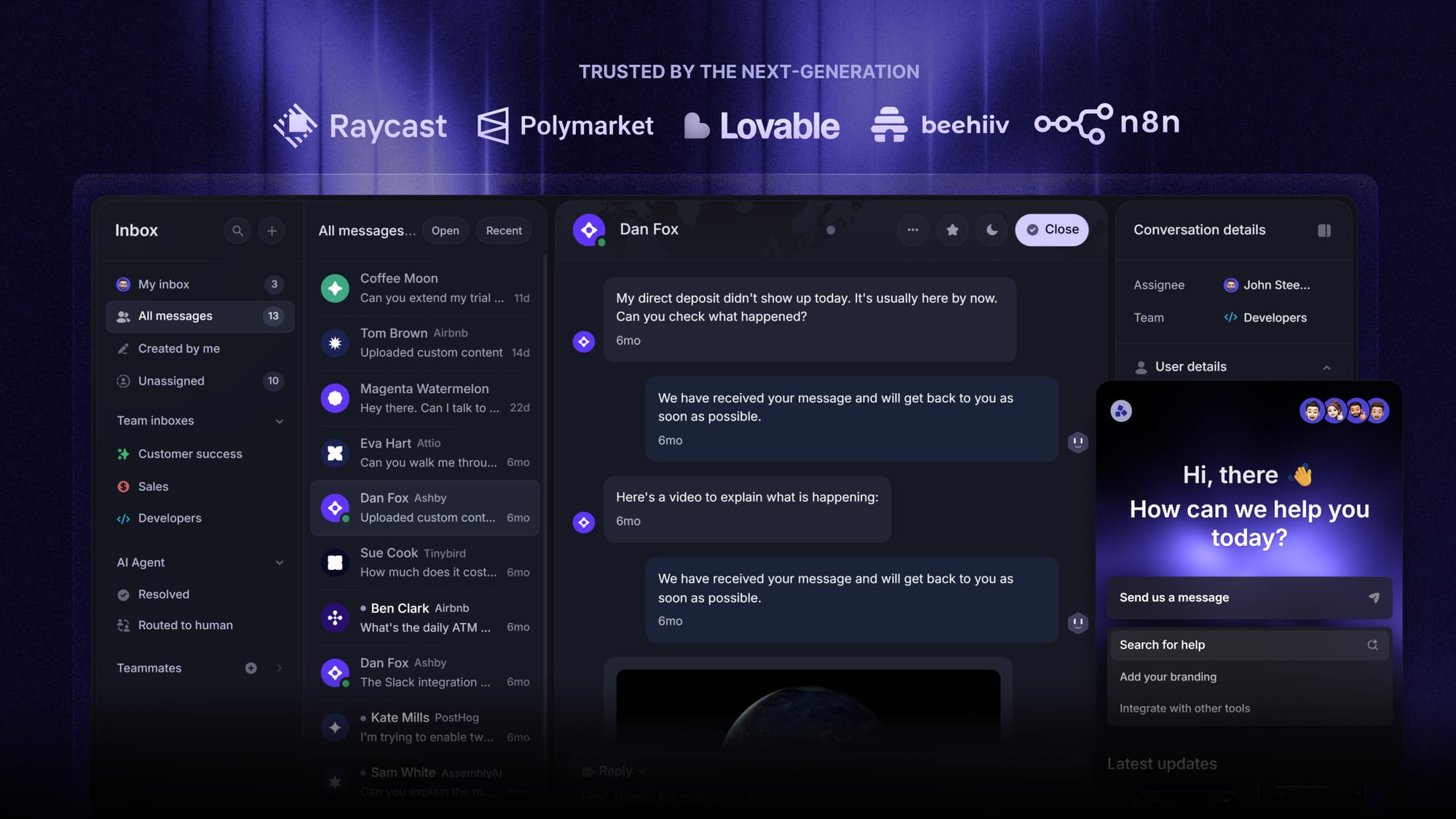
Featurebase is a modern AI customer support platform for product-led SaaS. It combines AI-powered support, a help center, and feedback management into one platform, so the tools you use to care for customers all live in the same place. It's loved by thousands of support teams from companies like Lovable, Raycast, and n8n. 💫
Top features:
- Omnichannel inbox – Manage live chat, email, and Slack conversations from one AI-powered view
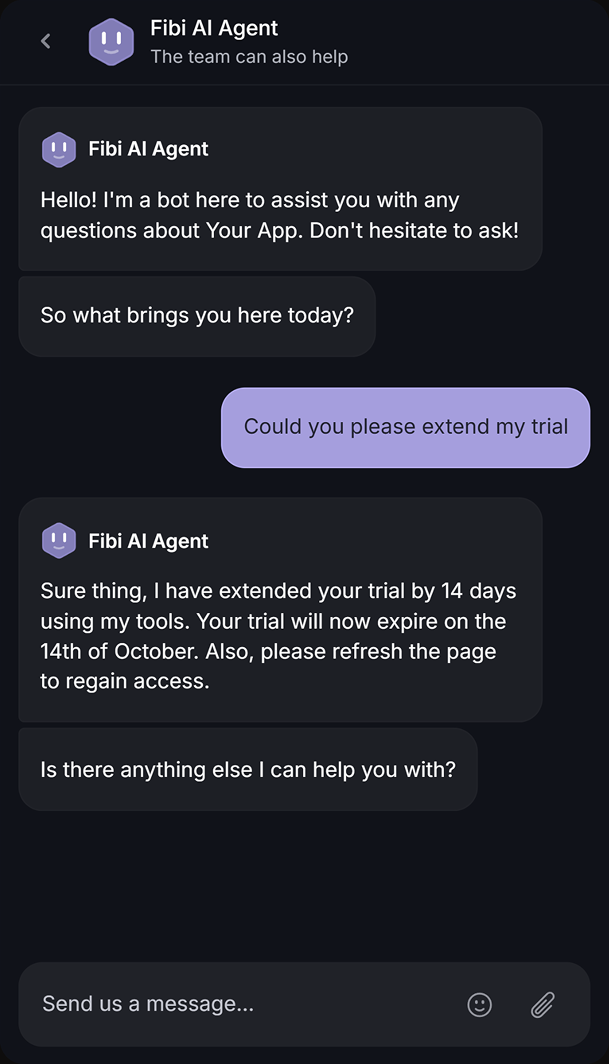
- Fibi AI Agent – Resolve routine customer issues on autopilot and run actions like trial extensions and refunds
- Help center with AI search – Provide instant, multilingual self-serve answers
- Surveys (NPS, CSAT, etc.) – Measure satisfaction and capture the reason behind every score
- Workflows & automations – Auto-assign tickets, route conversations, and collect customer data
- Feedback & roadmap tools – Collect requests and close the loop with product updates
- Integrations – Connects with Slack, Linear, Jira, HubSpot, and more
Pricing: Free plan available with unlimited conversations. Paid plans start at $29/seat/month with $0.49 per AI resolution.
Featurebase covers everything legacy support tools do, but with a modern, AI-first approach that gives your team back the time to focus on the human moments.
Conclusion
Customer care is what turns a transaction into a relationship. It's the empathy, attention, and consistency that make customers feel valued, and it pays you back in loyalty, reputation, and revenue.
Featurebase is a modern AI-powered support platform that brings your inbox, help center, feedback, and surveys together in one place. It helps you deliver great care on every channel and measure it with built-in NPS, CSAT, and CES surveys, so you always know how your customers really feel.
It comes with a Free plan and the onboarding takes minutes, so there's no downside to trying it. 👇
✨ Automate your support with the fastest AI-enhanced Inbox today →
FAQs
What is the difference between customer care and customer service?
Customer service focuses on resolving issues and answering questions, while customer care focuses on building an emotional connection and making customers feel valued. Service is largely reactive, care is proactive. Together they ensure customers feel both supported and cared for.
What is digital customer care?
Digital customer care is delivering that same emotional, proactive support across digital channels like live chat, email, social media, and self-service. The goal is the same as in-person care: make customers feel valued, just through the channels they actually use. It matters because most customers now start their support journey online rather than on the phone.
What does a customer care representative do?
A customer care representative is the main point of contact between a company and its customers. They answer questions, resolve complaints, process returns, and follow up to make sure customers are satisfied. The role blends technical product knowledge with people skills like empathy, patience, and active listening.
What is customer care automation?
Customer care automation uses AI and workflows to handle routine tasks, such as answering common questions, routing conversations, and sending follow-ups, without manual effort. Done well, it doesn't replace human care, it removes the repetitive work so agents can spend more time on complex, emotional cases. Tools like AI agents and automated help centers are common examples.
What is customer care outsourcing?
Customer care outsourcing is hiring an external provider to handle some or all of your customer interactions. It can lower costs and add coverage across time zones, but it also risks weaker brand alignment and less control over the customer relationship. Many companies outsource routine, high-volume queries while keeping sensitive or high-value interactions in-house.
What tools help you deliver better customer care?
The core toolkit usually includes a helpdesk or shared inbox, a knowledge base for self-service, and survey tools to measure satisfaction. Platforms like Featurebase combine support, a help center, feedback collection, and NPS/CSAT surveys in one place, so you can deliver care and track it without stitching together separate tools.