Blog Customer ServiceCustomer Experience in Banking: Strategies & Trends
Customer Experience in Banking: Strategies & Trends
Customer experience in banking is now the biggest differentiator banks have. Here's what it means, why it drives revenue and retention, and the strategies and trends shaping banking CX.


Bank products and rates look nearly identical from one institution to the next, so experience has quietly become the real battleground. And customers now judge their bank against the last great app they used, not the branch down the street.
This guide covers what customer experience in banking actually means, why it moves revenue and retention, and the concrete strategies and trends you can use to improve it 👇
Key takeaways:
- Customer experience (CX) in banking is the sum of every interaction a customer has with their bank, across both digital and human touchpoints.
- It has become the primary differentiator in a market where products, rates, and fees look nearly identical from one bank to the next.
- The payoff is measurable: better CX correlates directly with higher retention, loyalty, and revenue.
- Winning strategies center on journey mapping, personalization, omnichannel service, AI paired with a human safety net, self-service, and security.
- The biggest blockers are legacy systems, data silos, and customer expectations that keep rising.
- Featurebase✨ brings support, a help center, and feedback tools into one platform, so banks can improve and measure CX from a single place.
What is customer experience in banking?
Customer experience in banking is how customers feel about every interaction they have with a financial institution. It spans the whole journey, from opening an account and moving money to applying for a loan or getting help when something goes wrong.
It covers both digital and human touchpoints. The usability of a mobile app, the clarity of a statement, the wait time on a support call, and the warmth of a branch visit all shape the same overall impression.
Behind the scenes, managing that experience is an organization-wide effort. It means understanding what customers expect at each step, then using feedback, behavioral data, and journey mapping to remove friction and deliver consistently across every channel.
It is worth separating two terms that often get used interchangeably:
- Customer service is one touchpoint: the help a customer gets when they reach out with a question or problem.
- Customer experience is the whole relationship, from the first ad they see to the tenth year of being a customer.
Service is a big part of CX, but it is not the whole thing.
Why customer experience matters in banking
When every bank offers roughly the same products at roughly the same rates, the way customers feel becomes the deciding factor in whether they stay, leave, or recommend you.
The financial case is well documented. Satisfied banking customers are around 6 times more likely to say they will stay with their bank than dissatisfied ones, according to McKinsey. Retention like that compounds into higher lifetime value and lower acquisition costs.
The revenue link is just as direct. Forrester found that a 1-point improvement in a bank's CX Index score is worth roughly $123 million in incremental revenue for a large multichannel bank, and about $92 million for a direct bank.
Poor experiences cut the other way. A single frustrating interaction can send a customer to a competitor, and switching a current account is easier than it has ever been. In a low-friction market, a weak experience is an open invitation to leave.
What today's banking customers expect
Digital is now the default. Deloitte found that 84% of customers use online banking and 72% use mobile apps to reach their primary bank, across every age group.
The bar is set by the best apps people use, not by other banks. A few expectations show up again and again:
- Speed: Customers want instant answers and real-time updates, and many will pay more for the convenience of getting help fast.
- Consistency across channels: They expect to start something on a phone, continue on a desktop, and finish in a branch without repeating themselves.
- Personalization: Generic offers feel like noise. Recommendations that reflect a customer's actual behavior feel like a service.
- A human when it counts: For higher-stakes decisions like a mortgage or suspected fraud, customers still want to talk to a person, not a bot.
Meeting these expectations is what separates the banks customers stick with from the ones they tolerate.
Common challenges to improving banking CX
Banks want to deliver a better experience. The obstacles are usually structural rather than a lack of intent.
- Legacy systems: Core banking platforms are often decades old, expensive to change, and hard to connect to modern tools, which slows every improvement down.
- Data silos: Customer data is scattered across products and departments, so no single team sees the full picture, and customers end up repeating themselves.
- Security and trust: Every new digital channel is another surface to protect, and one breach or slow fraud response can undo years of goodwill.
- Rising expectations: The standard keeps moving as fintechs and neobanks ship polished experiences fast, forcing traditional banks to keep pace.
- Serving everyone: Banks have to delight digitally native customers without alienating older or less tech-comfortable ones.
Naming these constraints matters, because the strategies below only work when they account for them.
How to improve customer experience in banking
There is no single lever. The banks that do this well combine a handful of strategies that reinforce each other.
Map the journey and act on customer feedback
You cannot fix friction you cannot see. Start by mapping the full customer journey, from onboarding to support, and marking every point where customers get stuck, confused, or frustrated.
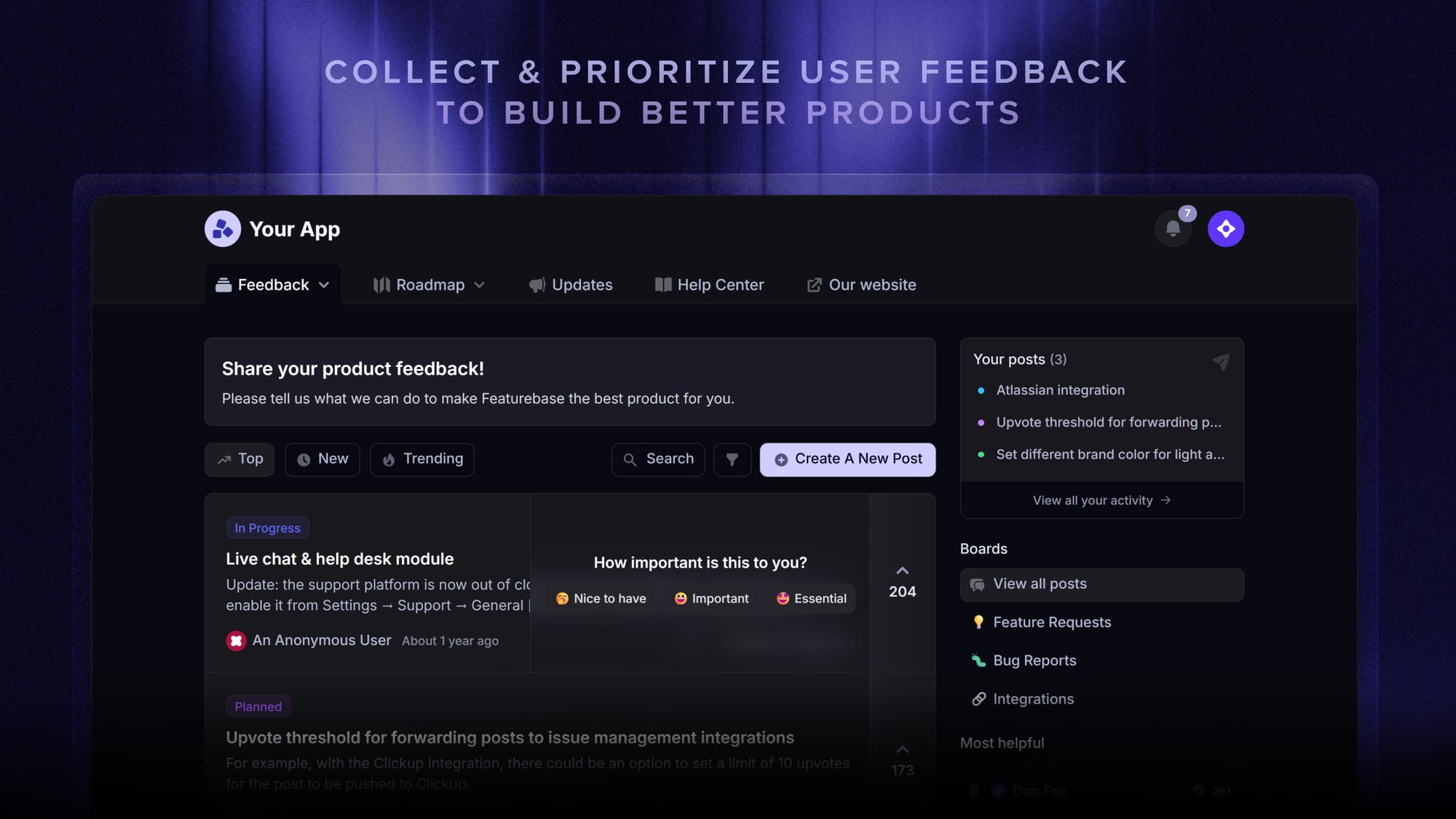
That map only stays accurate if you keep listening. Collect feedback continuously through surveys, in-app prompts, and support conversations, then feed it back into the journey. With Featurebase, banks can centralize customer feedback from multiple channels in one place and run targeted NPS and CSAT surveys to measure how customers actually feel at each step.
The goal is a loop: listen, prioritize, fix, then tell customers what changed. Closing that loop is what turns feedback into loyalty.
Personalize every interaction
Customers now expect their bank to know them. That means using transaction history and behavior to offer relevant products, timely advice, and proactive nudges instead of one-size-fits-all messaging.
Done well, personalized service looks like a savings suggestion that fits someone's actual goals, or a credit-limit nudge based on real spending. It is less about using a first name and more about making every interaction feel relevant.
Make the experience truly omnichannel
Customers move between the mobile app, the website, the call center, and the branch, and they expect the thread to follow them. Omnichannel means someone can apply for a loan on their phone and finish it in a branch without starting over.
The key is unifying customer data across channels so context travels with the customer. An omnichannel support setup removes the single most common source of frustration in banking: having to repeat the same story to three different people.
Use AI and automation, but keep the human touch
AI-powered support is transforming banking CX. It can route inquiries to the right place, answer common questions instantly, flag fraud in real time, and surface product recommendations before a customer even asks.
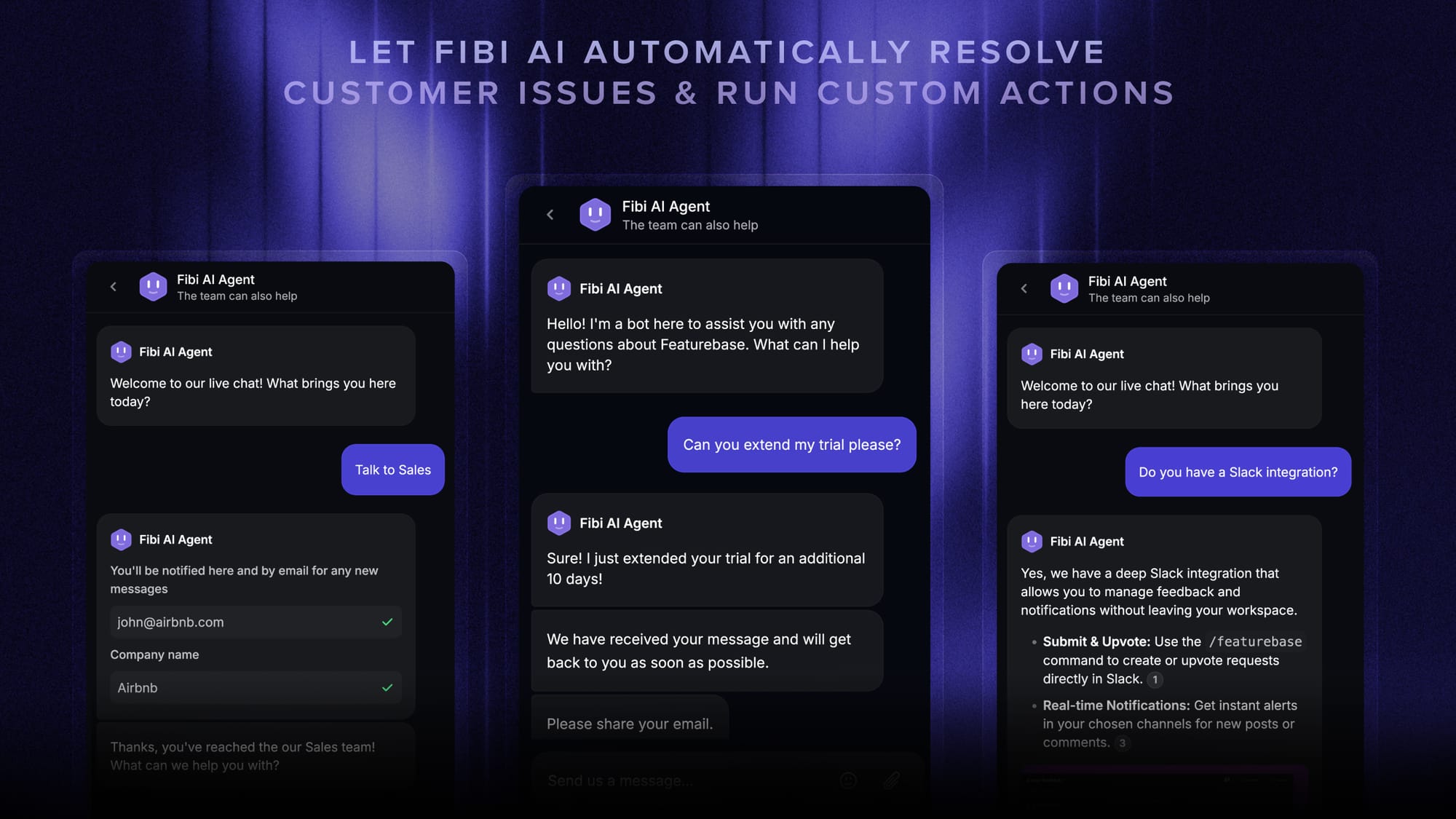
But AI is a complement, not a replacement. Most banking customers still want a person for higher-stakes conversations. The winning pattern is to let automation handle routine, repetitive tasks so human agents are free to focus on the moments that carry real weight.
Invest in self-service and a strong knowledge base
Most customers would rather solve a simple problem themselves than wait for an agent. A well-built knowledge base lets them reset a password, update details, or understand a fee in seconds, at any hour.
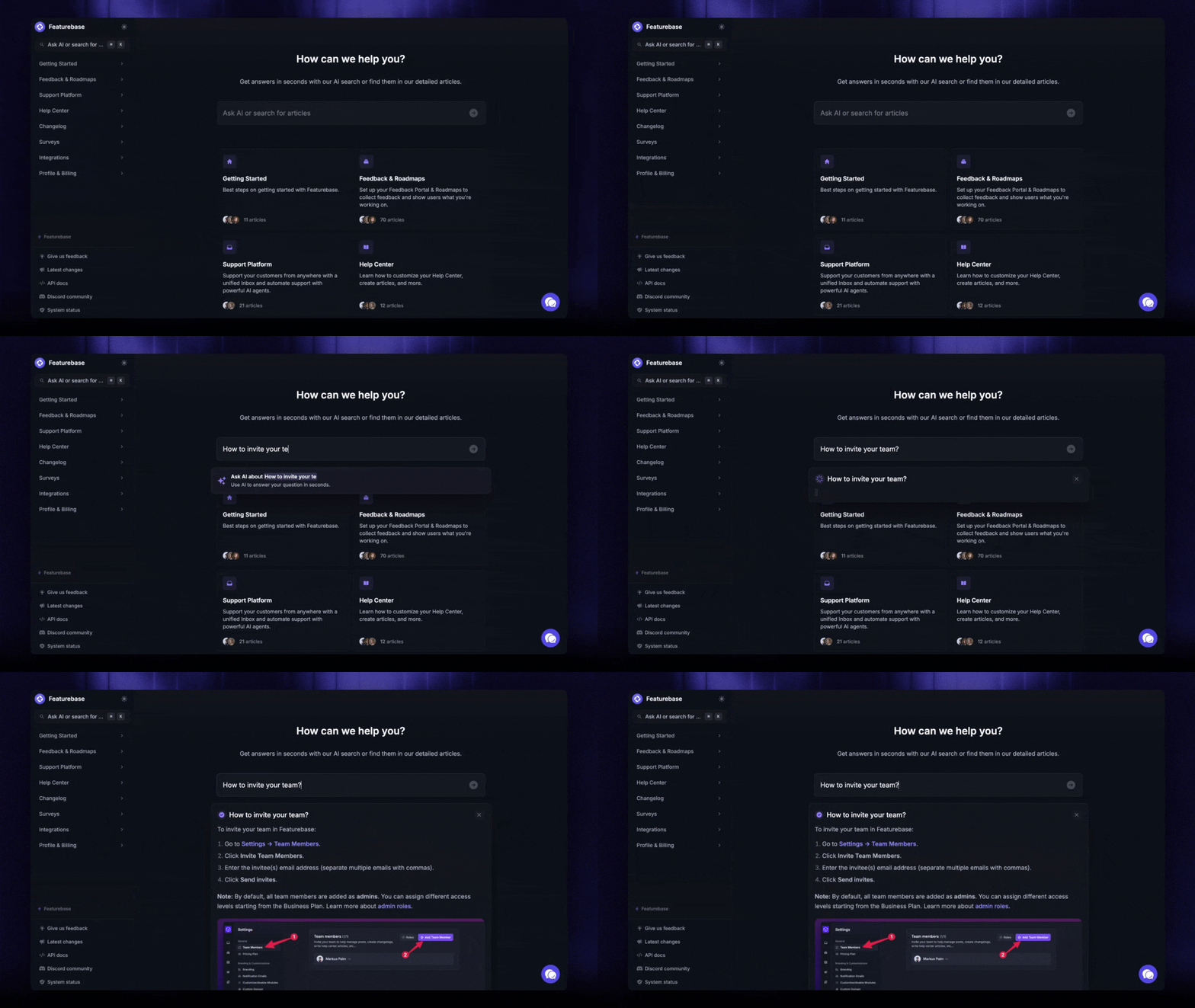
A modern help center with AI search can summarize answers directly in the search bar and serve them in a customer's own language, while an AI agent like Featurebase's Fibi resolves routine issues on autopilot. Strong self-service cuts wait times, reduces support costs, and gives customers the control they increasingly expect.
Build trust through security and transparency
In banking, trust is the product. Customers need to know their money and data are safe, and they need to feel it in every interaction.
Practical measures like multi-factor authentication, real-time fraud alerts, and clear communication about how data is used all reinforce that trust. Being transparent about a problem, and fast to resolve it, often builds more loyalty than never having the problem at all.
Banking customer experience trends to watch
The fundamentals above are stable, but a few shifts are actively reshaping how banks deliver on them.
- Proactive engagement: Banks are moving from reactive to proactive service, reaching out with relevant alerts and advice before a customer has to ask.
- Conversational experiences: Customers want to move a conversation from chat to phone to email without losing context, and expect help that does not interrupt what they are doing.
- Sentiment analysis: Beyond tracking what customers do, banks are analyzing how they feel, using interaction and sentiment data to spot friction that surveys miss.
- Financial wellness: Educational tools and personalized guidance are becoming a differentiator, especially with younger customers who want help budgeting and investing.
- AI-driven insights: Generative AI is turning routine transaction data into tailored advice at scale, which many customers now say they would switch banks to get.
None of these replace the basics. They raise the ceiling on what a great banking experience can be.
Where a unified platform helps
Most of the strategies above share a common enemy: fragmentation. Feedback lives in one tool, support in another, and the knowledge base in a third, so no one gets a clear view of the customer. Consolidating those functions is often what makes the rest of the work possible.
That is the gap Featurebase is built to close for product-led teams, including fintechs and digital banks. It brings a few of the pieces this guide touches on into one place:
- Support and self-service – An omnichannel inbox for live chat, email, and Slack, plus an AI help center that answers common questions instantly and in a customer's own language.
- Feedback and surveys – Centralized feedback collection with NPS and CSAT surveys, so you can measure how customers feel and close the loop when you act on it.
- AI with a human handoff – An AI agent that resolves routine issues on autopilot while routing higher-stakes conversations to a person.
There's a free plan, so it's straightforward to try the approach before committing to it.

Get the best CX tool
Automatically resolve 70% of customer requests & cut down manual support loads
Conclusion
Customer experience in banking is no longer a soft metric. It is the clearest path to retention, loyalty, and revenue in a market where nothing else sets banks apart. The banks that win map the journey, act on feedback, personalize interactions, unify their channels, and use AI to move faster without losing the human touch.
If your CX efforts are spread across disconnected tools, consolidating them is a good place to start. Featurebase pulls support, a help center, and feedback into one platform so you can improve and measure the experience without stitching five systems together.
There's a free plan, so it's easy to see whether the approach fits before committing 👇
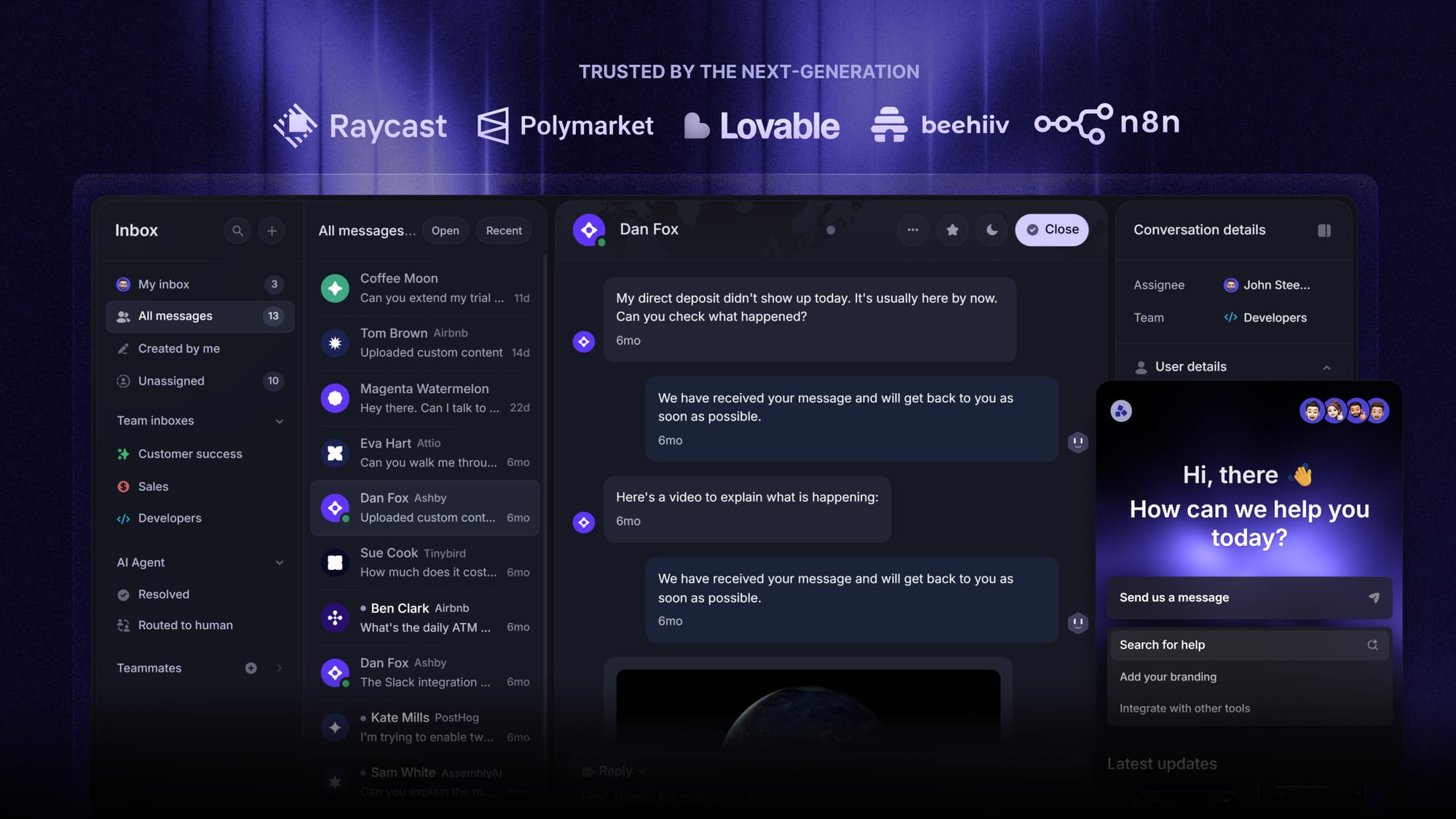
✨ Automate your support with the fastest AI-enhanced Inbox today →
FAQs
What is the difference between customer experience and customer service in banking?
Customer service is a single touchpoint: the help a customer receives when they contact the bank with a question or issue. Customer experience is the sum of every interaction across the entire relationship, from marketing and onboarding to daily transactions and support. Service is an important part of the experience, but the experience is much bigger than any one interaction.
How do banks measure customer experience?
Most banks use a mix of quantitative metrics like Net Promoter Score (NPS), Customer Satisfaction (CSAT), and Customer Effort Score (CES). These are increasingly paired with sentiment and interaction analytics that capture how customers feel, not just what they rate. Combining hard service metrics with emotional signals gives a fuller picture than any single score.
How can AI improve customer experience in banking?
AI improves banking CX by handling routine tasks so customers get faster answers and agents can focus on complex issues. It powers 24/7 self-service, routes inquiries to the right resource, detects fraud in real time, and personalizes recommendations based on behavior. The most effective approach keeps a human available for higher-stakes conversations rather than automating everything.
What are the biggest challenges to improving CX in banking?
The most common obstacles are legacy core systems that are slow and costly to change, data silos that fragment the customer view, and security demands that grow with every new digital channel. On top of that, customer expectations keep rising as fintechs raise the bar. Overcoming these usually requires modernizing infrastructure and unifying customer data before the experience work can fully land.
Why is customer experience so important for banks specifically?
Because banking products are largely commoditized, and switching has never been easier, experience is often the only meaningful differentiator left. Customers who feel valued stay longer, buy more products, and recommend the bank to others. That loyalty translates directly into revenue, which is why CX gains map so cleanly to financial performance in banking.
Which tools help banks collect and act on customer feedback?
Banks typically use a combination of survey tools, feedback portals, and sentiment analytics to gather and prioritize input. Platforms like Featurebase bring these together by centralizing feedback from multiple channels, running NPS and CSAT surveys, and helping teams close the loop by telling customers when their input led to a change. Consolidating voice-of-the-customer tools in one place makes it far easier to turn feedback into action.