Blog Customer Service10 Best AI Customer Support Software Tools in 2026
10 Best AI Customer Support Software Tools in 2026
Compare the best AI customer support software tools for 2026, with fresh pricing, AI billing models, and honest trade-offs to help you choose.


✨ Automate your support with the fastest AI-enhanced Inbox today →
AI customer support software promises to deflect tickets and slash response times. The catch in 2026: most tools now bill per AI resolution, so your bill climbs exactly as the AI gets better at its job, and plenty of "no-code" setups still take weeks to deploy.
So which tool actually fits your team, and what will it really cost once the AI is doing real work?
This guide ranks the 9 best AI customer support tools by who they fit, what they cost, and where each one breaks down. 👇
Key takeaways:
| Tool | Best for | Starting price | Free plan | Main trade-off |
|---|---|---|---|---|
| Featurebase✨ | Modern all-in-one support for product-led SaaS | $29/seat/mo + $0.29/AI resolution | Yes, unlimited conversations | Younger suite than legacy enterprise tools |
| Intercom (Fin) | A mature AI agent with high resolution rates | $19/seat/mo billed annually ($29 monthly) + $0.99 per Fin outcome | No (14-day trial) | Costs scale fast as Fin improves |
| Zendesk AI | Enterprise ticketing at high volume | $55/agent/mo (+$50 Copilot add-on) | No (trial) | Best AI sits behind higher tiers |
| Freshdesk | Affordable base helpdesk with add-on AI | $29/agent/mo (Freddy +$29) | Yes (limited) | Freddy AI replies to the first email only |
| CloudTalk | Phone-based, voice-first customer support | |||
| $25/seat/mo + AI Voice Agent from $99/mo | No (14-day trial) | Voice-first, not a chat or ticketing suite | ||
| Help Scout | Email-first SaaS support teams | $25/user/mo + $0.75/AI Answer | Yes (up to 5 users) | No native chatbot builder |
| Tidio (Lyro) | SMB live chat with bolt-on AI | $29/mo (Lyro billed separately) | Yes | Conversation caps push you to upgrade |
| Gorgias | Ecommerce and Shopify support | $50/mo + $0.90/AI resolution | No (trial) | AI is Shopify-only and double-billed |
| Ada | High-volume enterprise automation | Custom (~$30k+/year) | No | Long deployment, enterprise-only pricing |
| Crisp | Budget all-in-one for small teams | Free, paid from €45/mo | Yes (2 seats) | Gaps appear as you scale past ~50 staff |
| Quiq | Eneterprise agentic AI tool for large teams | Custom pricing | No | Expensive for basic AI support needs |
What is AI customer support software?
AI customer support software is any help desk, live chat, or chatbot platform that uses artificial intelligence to resolve, route, or speed up customer conversations. Instead of an agent typing every reply, the software reads your knowledge base and past tickets to answer customers directly, draft responses for agents, and handle the repetitive work that fills most support queues.
It's one slice of the broader customer service automation software category, which also covers routing, IVR, and workflow tools.
The shift is moving fast. Gartner predicts that by 2029, agentic AI will autonomously resolve 80% of common customer service issues without human intervention, cutting operational costs by 30%.
Under the "AI" label, most tools actually do a few distinct jobs:
- AI agents (full resolution): A customer-facing bot that answers questions end to end and only escalates when it can't help. This is where per-resolution billing usually applies.
- AI copilots (agent assist): A behind-the-scenes assistant that drafts replies, suggests articles, and surfaces context so human agents respond faster.
- Triage and routing: AI reads each incoming message, tags it, detects intent, and sends it to the right team or queue automatically.
- Summaries and QA: AI condenses long threads, writes handover notes, and scores conversations so managers can spot trends without reading every ticket.
The best platforms combine all four. The weaker ones do one well and bolt the rest on as paid add-ons.
What to look for in AI customer support software
The demos all look the same. The differences show up in production, once real volume hits and the invoice arrives. Here's what actually separates the tools:
- Channel coverage: Check that the AI works across every channel you use, not just website chat. Many tools resolve web-widget questions well but leave email, Slack, or social as a human-only job.
- Knowledge-base dependency: Every AI agent is only as good as the content it's trained on. Tools that can ingest past tickets, docs, and help articles outperform those limited to a single official help center.
- Accuracy and escalation: A confident wrong answer is worse than no answer. Look at how the tool handles uncertainty, hands off to humans, and keeps context across the conversation.
- Pricing model and total cost: Per-resolution pricing sounds cheap until your deflection rate climbs. Model the real monthly bill at your volume, including AI usage, add-ons, and seat counts, not just the headline price.
- Integrations: Your help desk should sync with the tools your team already lives in, like Slack, Linear, Jira, HubSpot, and your CRM, so AI can act on real customer data.
Customer expectations are already ahead of most stacks. In Zendesk's 2025 CX Trends report, 75% of CX leaders said they expect 80% of customer interactions to be resolved without human intervention within a few years.
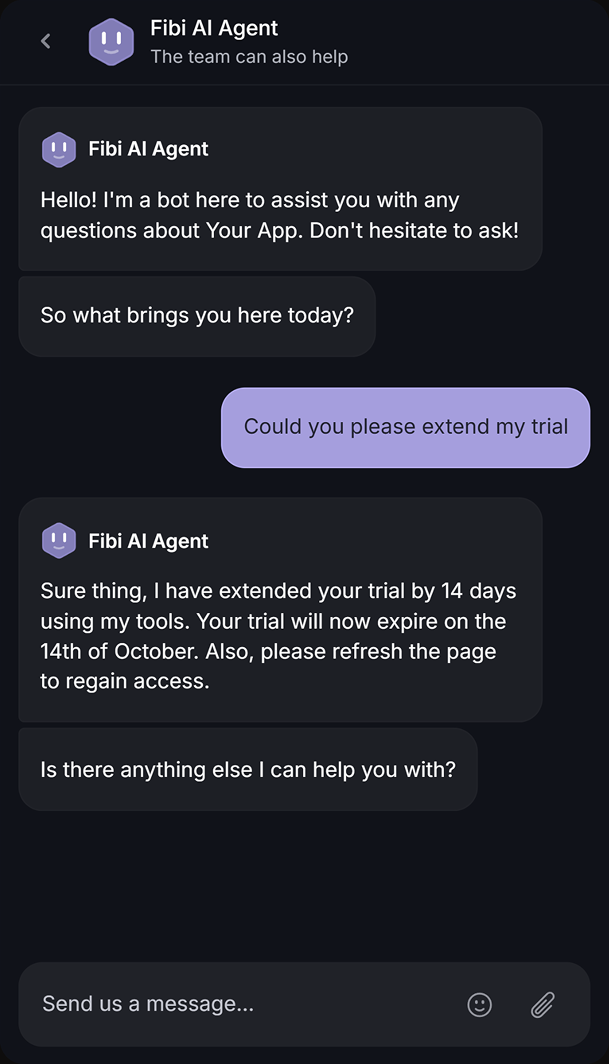
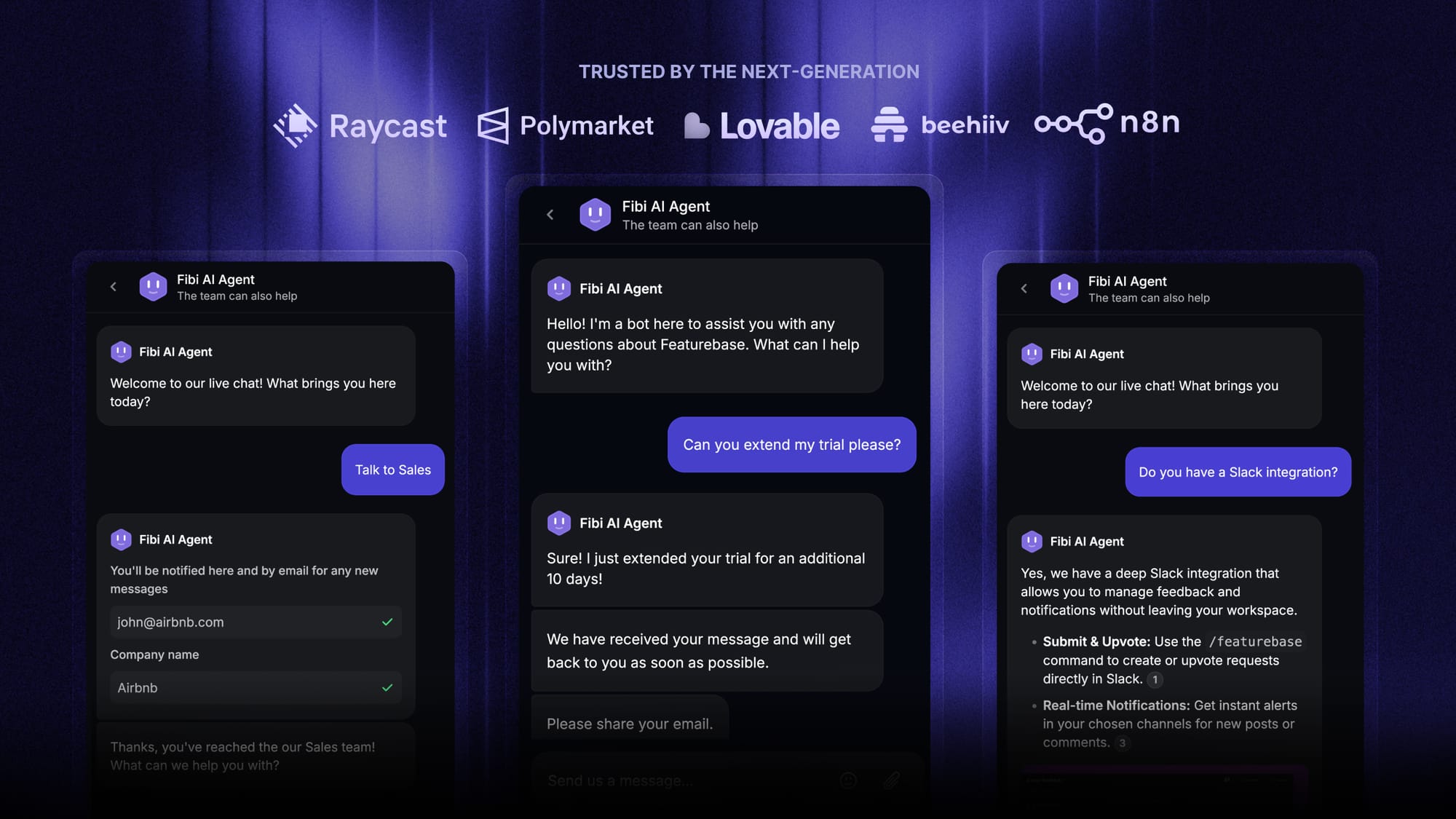
This is where an all-in-one platform like Featurebase earns its place. Its Fibi AI Agent resolves common issues on autopilot and can run real actions like extending a trial or issuing a refund, while its omnichannel inbox keeps email, live chat, and Slack conversations in one AI-powered view instead of scattered across tools.
The 11 best AI customer support software tools
Here are the 9 tools worth shortlisting in 2026, starting with the most modern all-in-one option and working through the established players.
1. Featurebase ✨
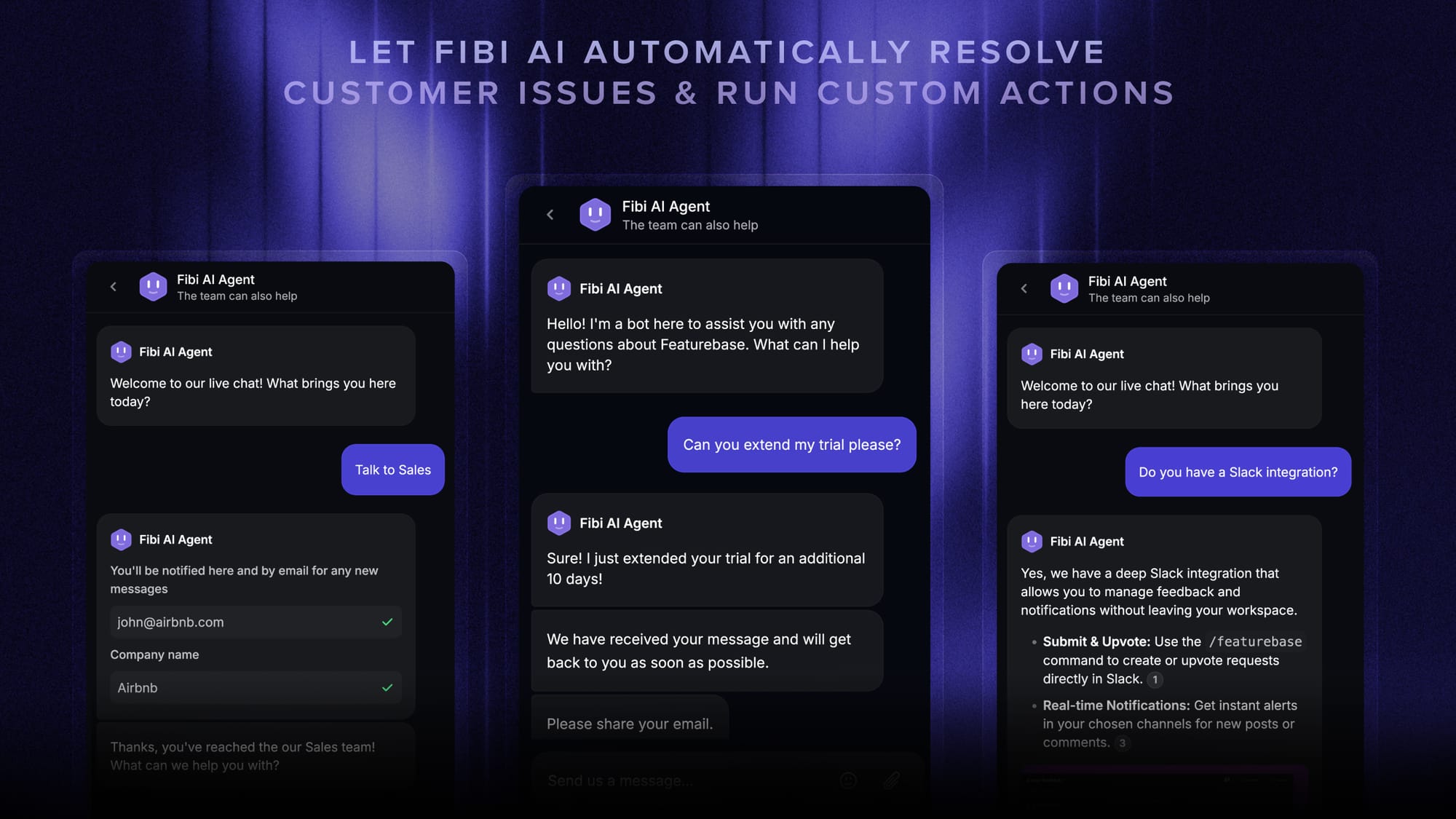
Featurebase is a modern AI customer support platform for product-led SaaS. It combines AI-powered support, help center, and feedback management into a single platform for startups that want all their customer-facing tools in one place. Featurebase is loved by thousands of support teams from companies like Lovable, Raycast, and n8n. 💫
Top features:
- Omnichannel inbox – Manage live chat, email, and Slack conversations from one AI-powered view
- Fibi AI Agent - Resolve customer issues on autopilot & run custom actions like trial extensions and refunds
- Help center with AI search – Provide instant, multilingual self-serve answers
- Workflows & automations – Auto-assign tickets, route conversations, collect customer data, and more
- AI Copilot – Help your agents answer customers faster with AI Copilot that uses your internal knowledge
- Multi-brand support – Manage multiple Help Centers and Live chats from a single workspace
- Automatic AI translations – Automatically translate all messages and help articles to your customers native language
- Service Level Agreements – Track SLAs to make sure your team responds to customers on time, every time
- Mobile app – Respond to customers, receive notifications, and unblock users on the go
- Feedback & roadmap tools – Collect feature requests and close the loop with updates
- Product updates – Publish release notes with a changelog page, in-app widget, and emails
- Integrations – Connects with Slack, Linear, Jira, HubSpot, and more
Pricing: Free plan available with unlimited conversations. Paid plans start at $29/seat/month with $0.29 per AI resolution.
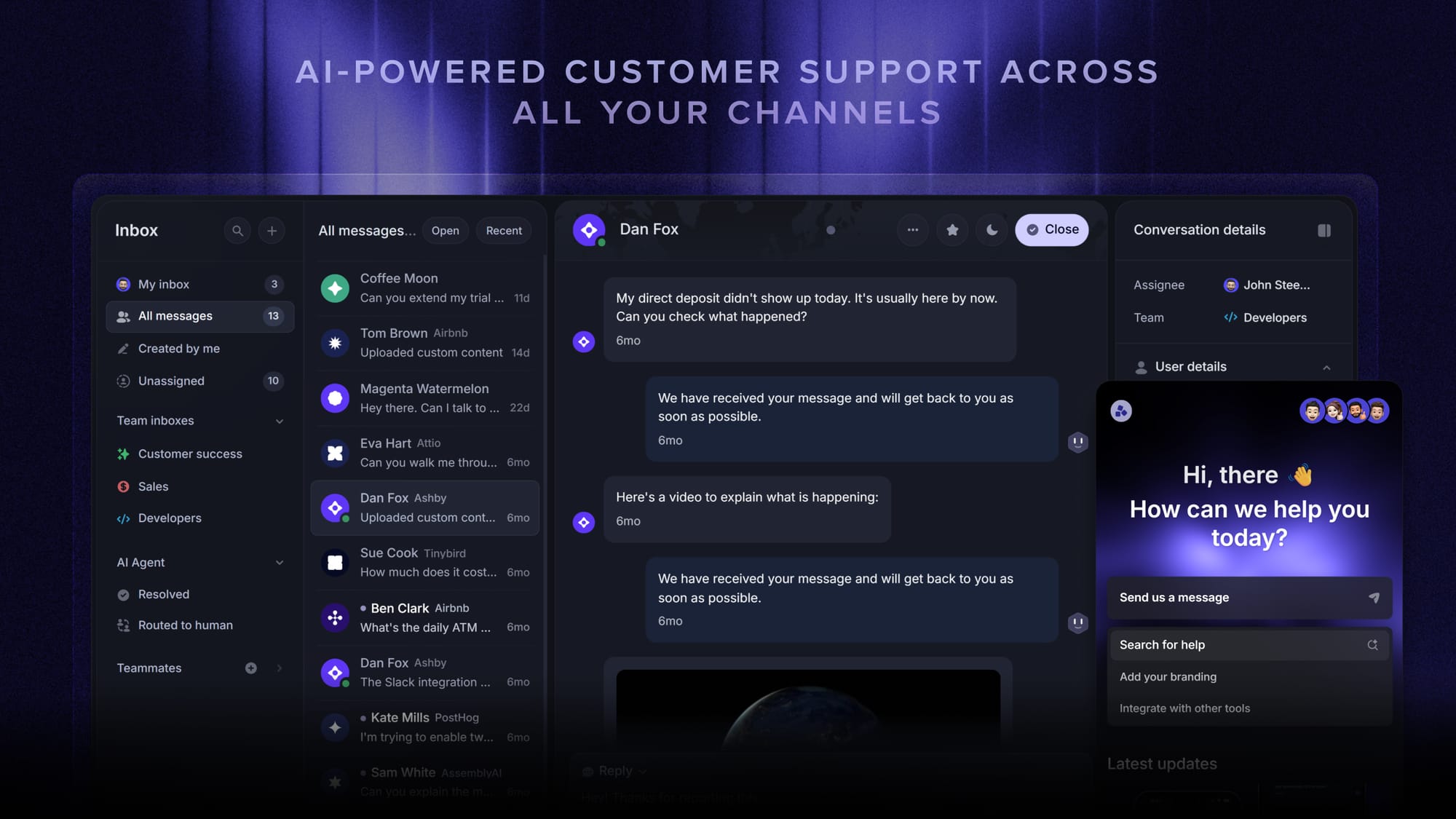
Featurebase covers all the basic support features that legacy platforms do, but with a much more modern approach. It comes with AI automations, a mobile app, and multiple channels (email, live chat, Slack, etc.).
✨ Automate your support with the fastest AI-enhanced Inbox today →
2. Intercom (Fin)
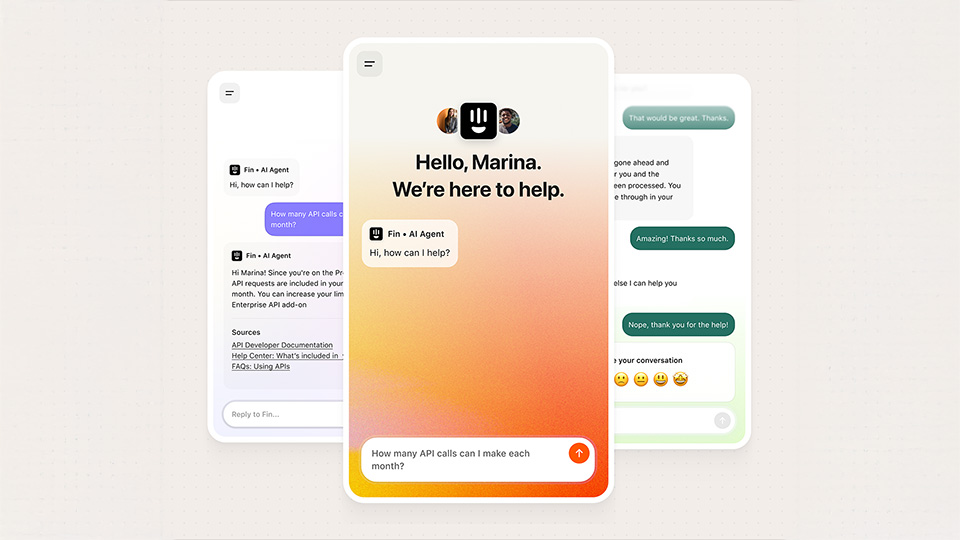
Intercom is the most established name in AI support, and its Fin AI Agent is the benchmark most teams compare against. Fin reads your help content to resolve customer questions automatically, and reviewers report strong results, with average resolution rates around 67% and some teams pushing past 90%.
Key features:
- Fin AI Agent for automated, conversation-level resolution
- Omnichannel inbox across chat, email, and social
- AI Copilot that drafts replies from your knowledge base
- Workflow builder and proactive messaging
- Deep reporting on resolution and deflection
Pricing: Intercom pricing starts at $19/seat/month for Essential billed annually ($29 billed monthly), plus $0.99 per Fin outcome. Advanced costs $85/seat/month and Expert costs $132/seat/month, billed annually.
The recurring complaint on G2 is cost. Because you pay per outcome, the bill rises exactly as Fin gets better, and reviewers frequently mention aggressive upselling and accuracy that depends heavily on a well-maintained knowledge base.
Best for: Scaling teams that want a proven AI agent and can absorb usage-based pricing.
3. Zendesk AI
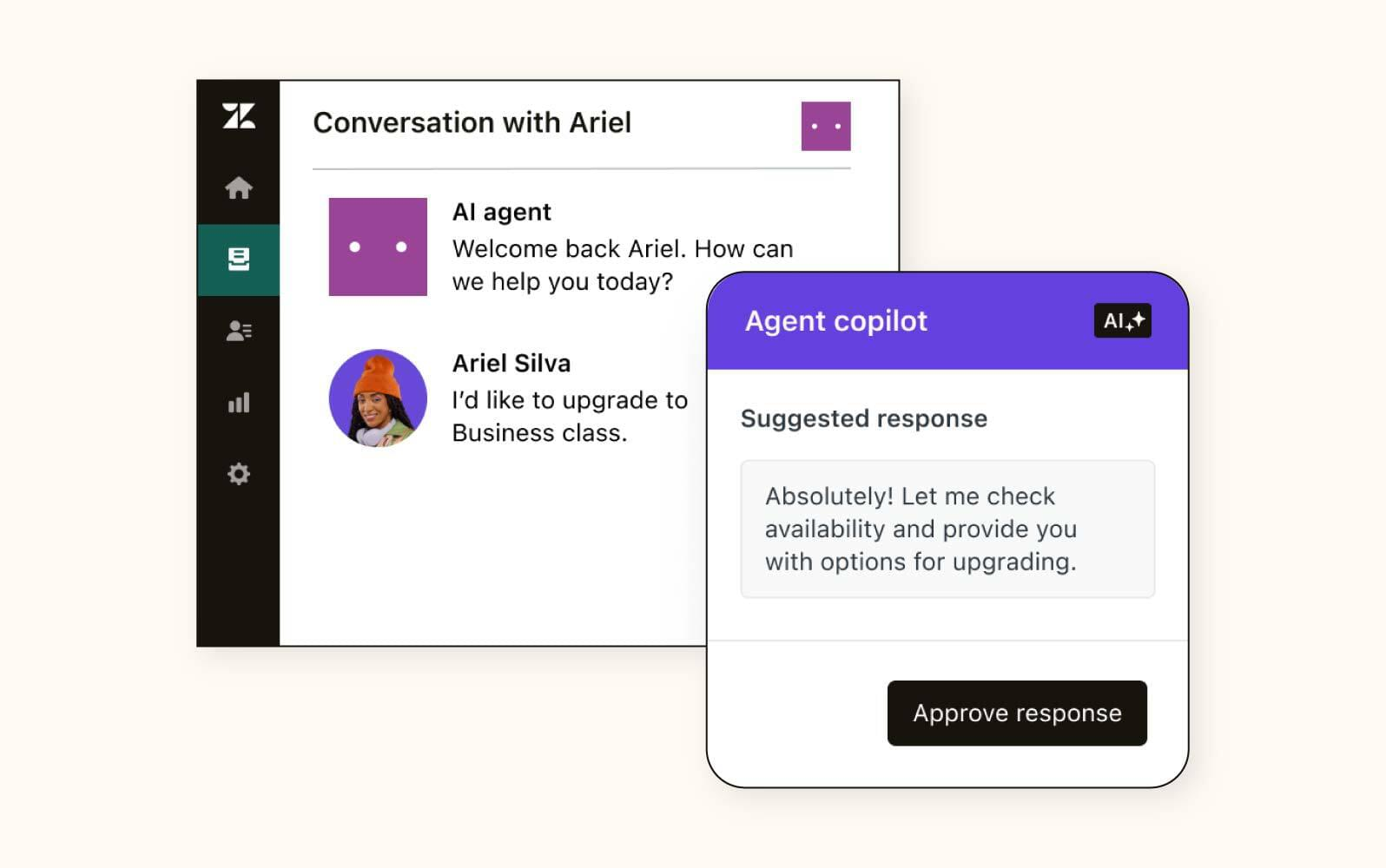
Zendesk is the default enterprise help desk, and its AI layer adds generative replies, automated resolutions, and agent copilots on top of mature ticketing. It's dependable at high volume and handles complex routing and macros well.
Key features:
- AI agents and generative replies built on your help center
- Industry-leading ticketing and omnichannel routing
- Copilot for agent assistance and macro suggestions
- Extensive reporting and analytics
- Large app marketplace and integrations
Pricing: Zendesk pricing starts at $55/agent/month (Suite Team, annual), with the AI Copilot add-on running an extra $50/agent/month.
G2 reviewers consistently flag that the strongest AI features sit behind higher tiers, that costs climb quickly as you add agents, and that the AI settings feel like a "black box" with a steep learning curve and slow setup cycles.
Best for: Larger support orgs that already run a real contact center and need depth over simplicity.
4. Freshdesk (Freddy AI)
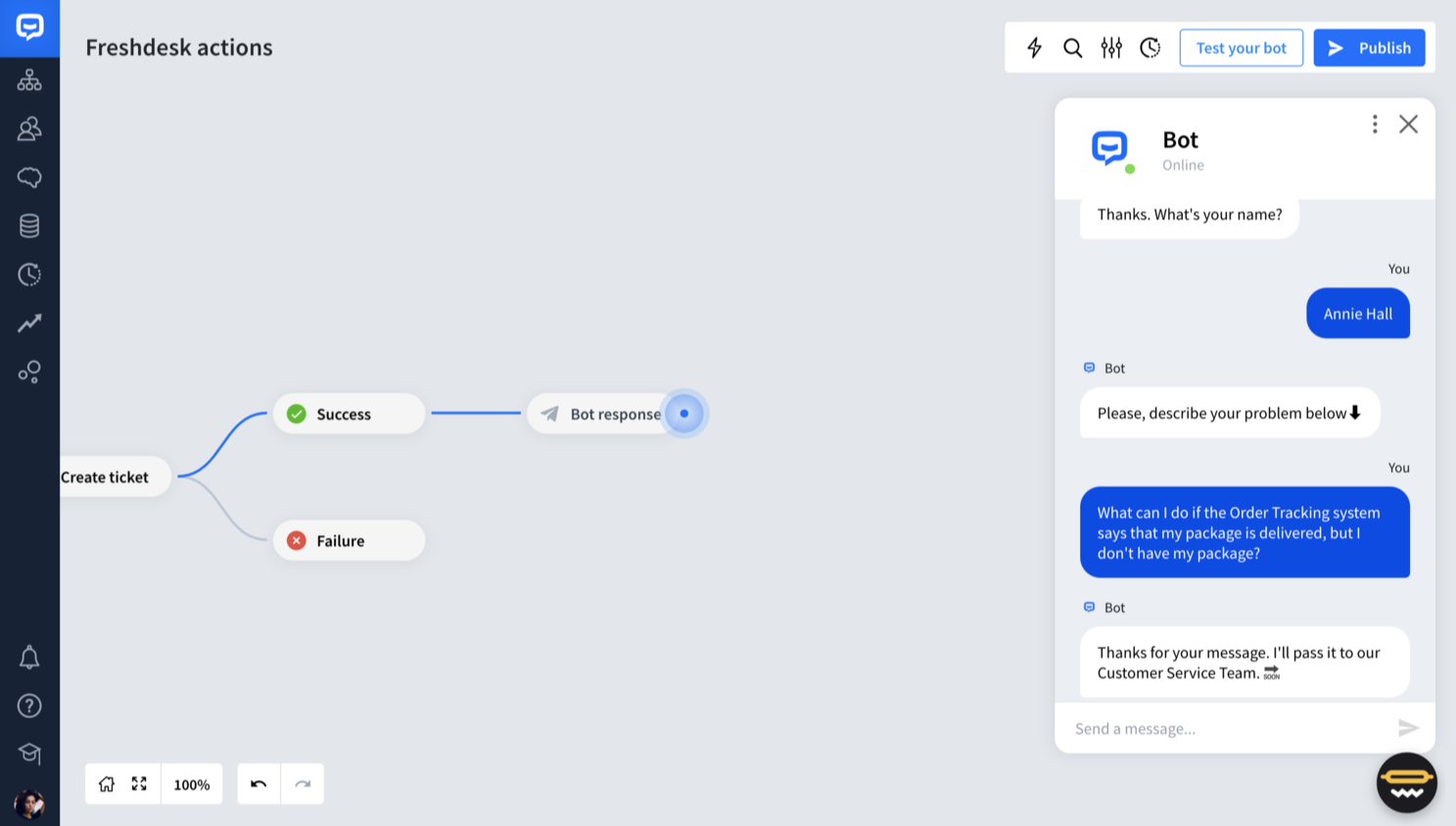
Freshdesk is a popular mid-market help desk, and its Freddy AI suite adds article suggestions, ticket triage, and an AI agent. Activation is smooth if you're already on Freshdesk, and teams report decent deflection from a well-stocked help center.
Key features:
- Freddy AI Agent for automated resolution
- Freddy Copilot for agent reply suggestions
- Ticket triage and smart routing
- Multichannel ticketing and automations
- Knowledge base and self-service portal
Pricing: Freshdesk pricing for the Omni plan starts at $29/agent/month (annual), with Freddy AI Copilot adding $29/agent/month and the AI Agent billed by session after the first 500.
The standout limitation reviewers raise is that Freddy AI only replies to the first email in a thread, so a follow-up still drops to a human. Users also note it needs manual training to be accurate, that workflows are rigid, and that Freshdesk's own support can be hard to reach.
Best for: Mid-sized teams that want an affordable base help desk and will pay extra for AI later.
5. Cloudtalk
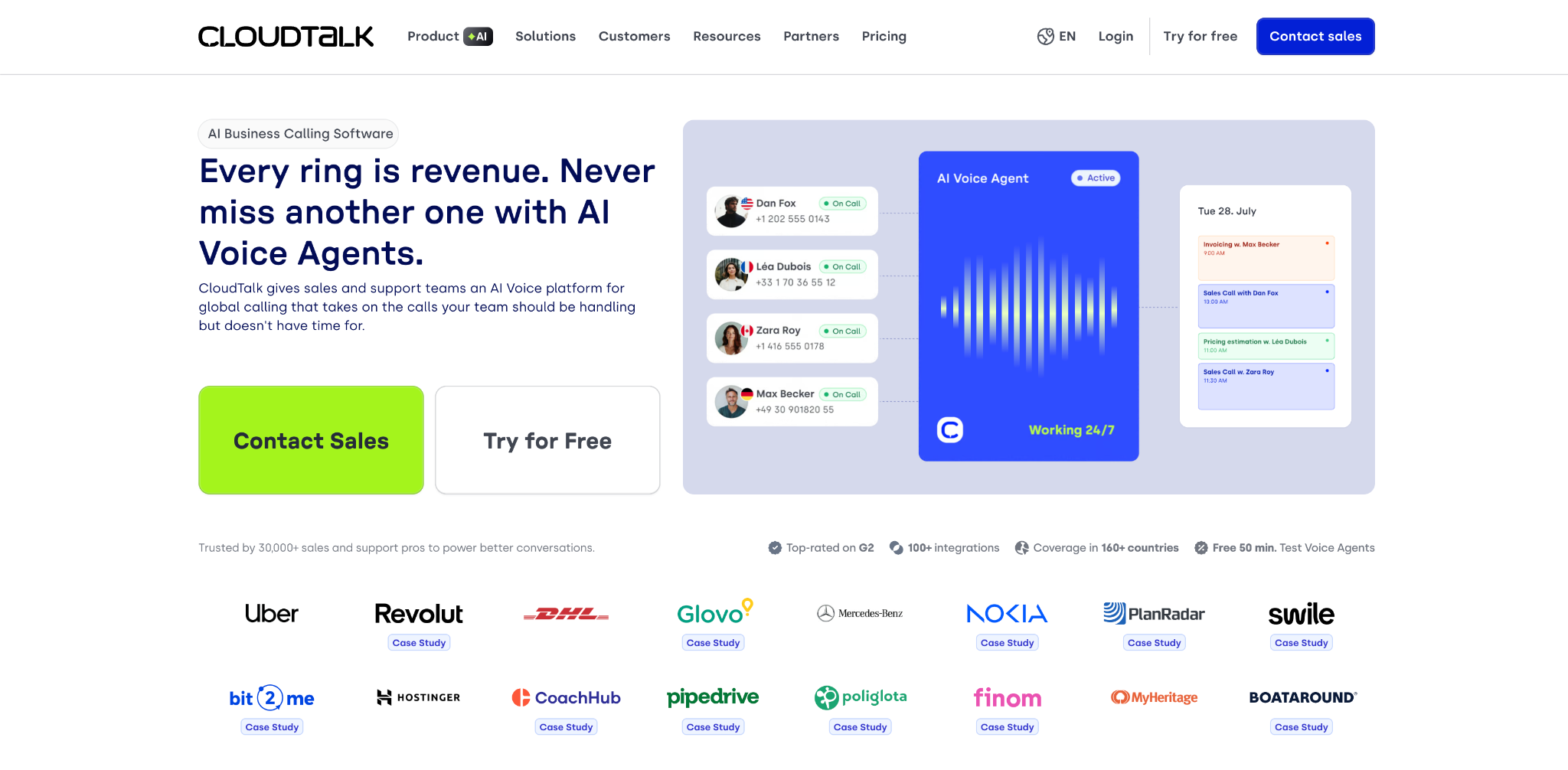
CloudTalk is a cloud call center and business phone system with built-in AI Voice Agents that resolve customer calls automatically, answering questions, routing, and booking, while its conversation intelligence documents every interaction. Unlike the chat-first tools on this list, CloudTalk is built for support that happens primarily over the phone.
Key features:
- 24/7 AI Voice Agents for automated call resolution in 60+ languages
- Inbound routing, IVR, and a visual call flow designer
- AI call summaries, smart notes, and multilingual transcription
- Call scoring and sentiment analysis
- CRM and helpdesk integrations (Zendesk, HubSpot, Salesforce, Pipedrive)
Pricing: CloudTalk starts at $25/seat/month (Starter, annual), with the AI Voice Agent billed as an add-on from $99/month for 200 minutes and scaling by call volume.
The main trade-off is that the AI Voice Agent bills by call minutes on top of a seat plan, so heavy volumes raise the real cost, and CloudTalk is voice and phone-first rather than a full chat or ticketing suite.
Best for: Support teams whose customers mostly call, and that want AI to answer, deflect, and document phone volume.
6. Help Scout
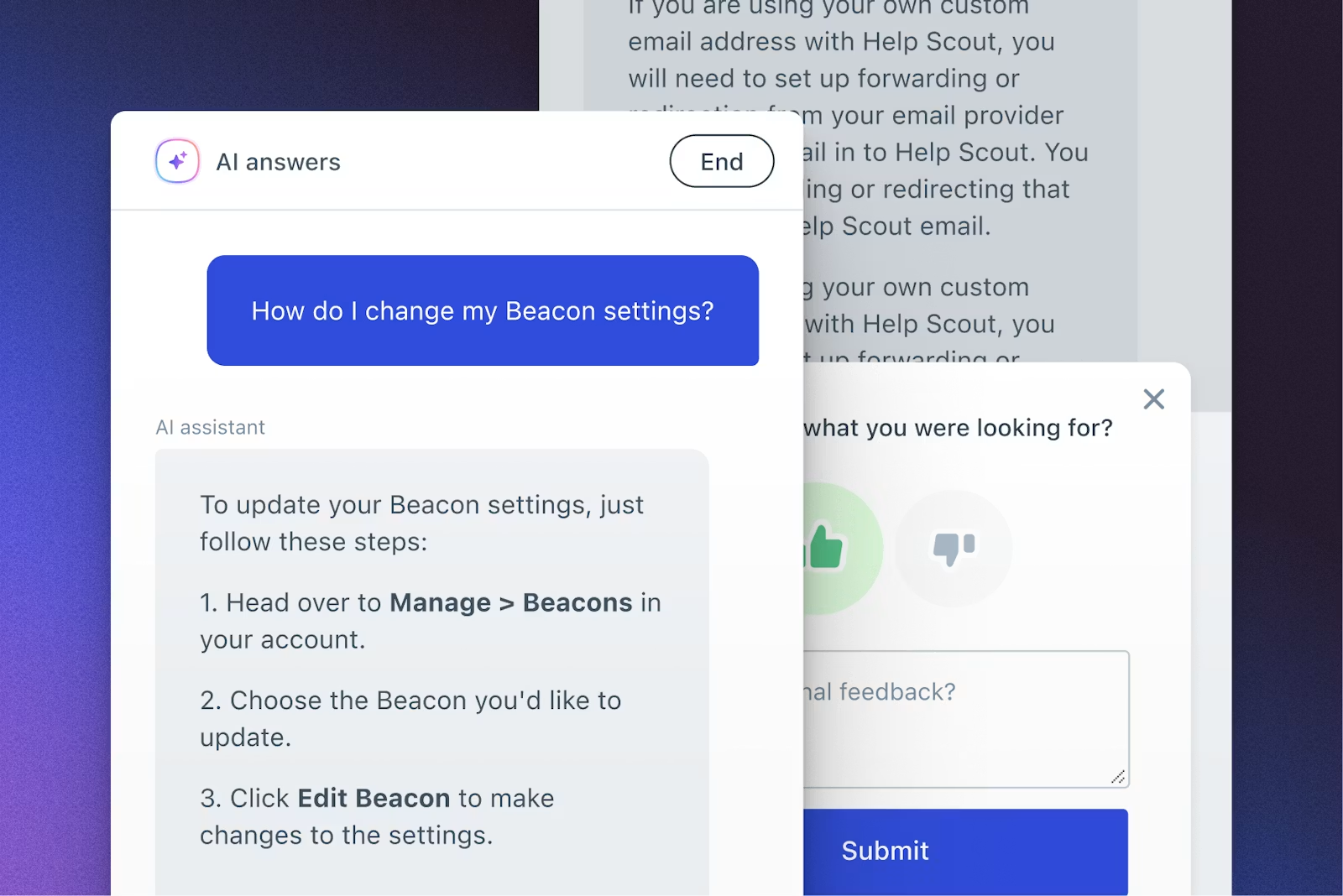
Help Scout is the favorite of email-first support teams that value a clean, human-feeling inbox. Its AI additions, like AI Answers and AI Assist, handle drafting and self-service without turning the product into a complex platform.
Key features:
- Shared inbox built for collaboration
- AI Answers for self-serve resolution
- AI Assist for summaries and reply drafting
- Built-in knowledge base (Docs)
- Strong HubSpot and app integrations
Pricing: Help Scout pricing starts at $25/user/month (Standard, annual), with AI Answers billed at $0.75 per resolution. A free plan covers up to 5 users.
The main gap reviewers note is the lack of a native no-code chatbot builder, plus limited multichannel automation and shallower reporting than enterprise tools. Some long-time users also dislike recent UI changes that buried once-simple actions.
Best for: Email-first SaaS and service teams that want simplicity over a sprawling feature set.
7. Tidio (Lyro)
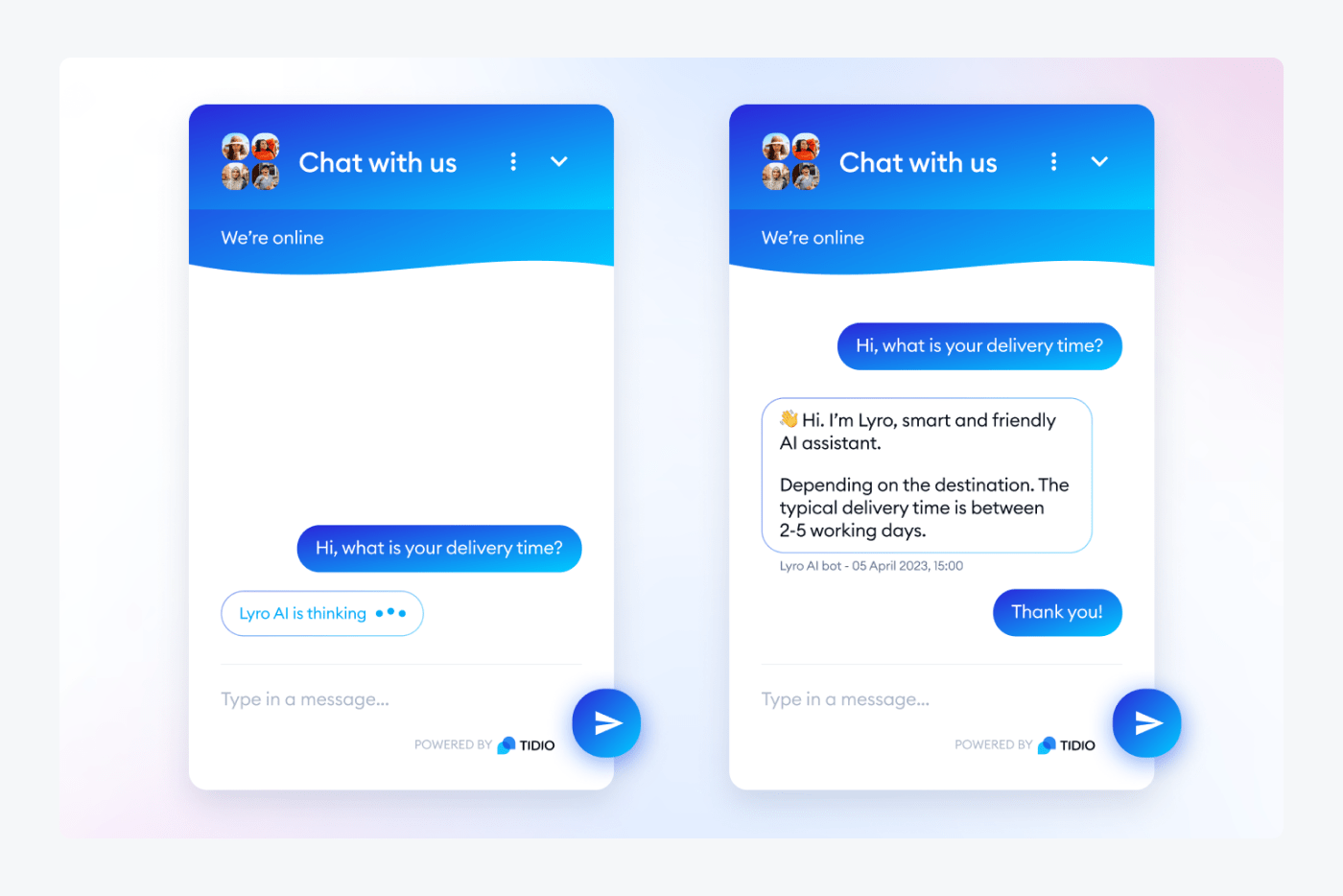
Tidio is a live chat and chatbot tool aimed at small businesses, and its Lyro AI agent is genuinely easy to switch on. Reviewers praise how fast it goes live and how well it controls hallucinations, with Lyro handling a large share of conversations once trained.
Key features:
- Lyro AI agent for automated chat resolution
- Live chat with fast setup
- Flows visual chatbot builder
- Ecommerce and helpdesk integrations
- Multichannel messaging
Pricing: Tidio pricing starts at $29/month for the Starter plan, but Lyro AI conversations are capped and billed separately through an add-on that starts around $39/month.
The most common complaint is pricing clarity. Conversation limits get hit faster than expected, Lyro stops responding once a daily cap is reached, and stacking the base plan with the Lyro and Flows add-ons can push real costs well past the advertised price.
Best for: SMBs and small ecommerce stores that want quick AI chat without a heavy rollout.
8. Gorgias
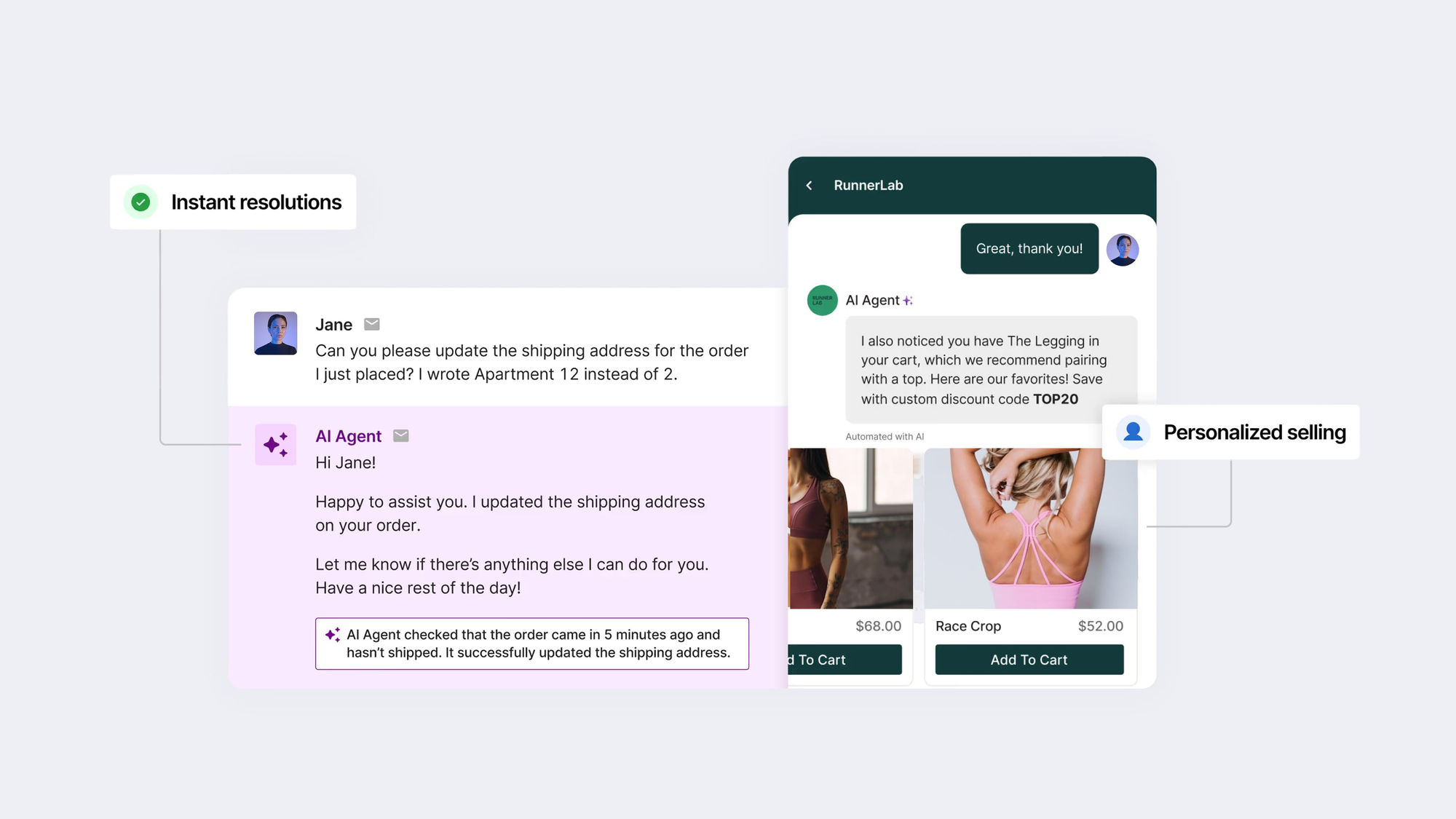
Gorgias is purpose-built for ecommerce support, with deep Shopify integration and an AI Agent that resolves order-related questions. For Shopify brands, the native context and macros make it very efficient.
Key features:
- AI Agent for ecommerce support resolution
- Native Shopify, and broader ecommerce, integration
- Ticket-volume-based help desk with unlimited seats
- Macros and automation rules
- Revenue and support analytics
Pricing: Gorgias pricing starts at $50/month (Basic, annual) and is billed by ticket volume, with the AI Agent charged at $0.90 per resolution on annual plans.
Two issues dominate G2 feedback. The AI Agent only works for Shopify, so other platforms get a help desk without the AI, and an AI resolution also counts as a billable ticket, so you pay twice on the same conversation. Reviewers also flag unpredictable overage charges during seasonal spikes.
Best for: Shopify-based ecommerce brands that want support tightly tied to orders.
9. Ada
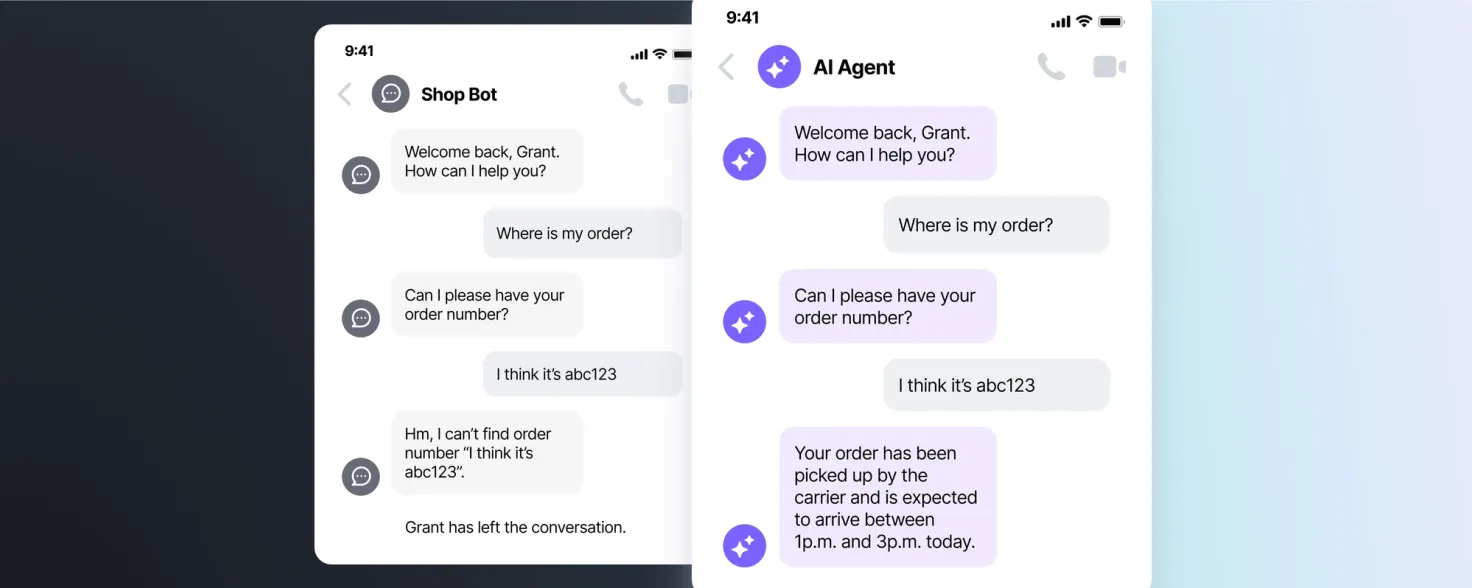
Ada is an enterprise-grade AI agent platform built for very high conversation volumes. Large CX teams report strong automation rates, often 70% to 83%, along with solid reporting and reusable playbooks.
Key features:
- Autonomous AI agent for large-scale resolution
- Playbooks for codifying support workflows
- Multilingual and omnichannel coverage
- Enterprise reporting and analytics
- Deep Zendesk and Salesforce integrations
Pricing: Ada pricing is quote-only, with public signals pointing to roughly $30,000/year as a starting point plus per-resolution charges, and median enterprise contracts around $70,000/year.
The trade-offs are scale and complexity. Reviewers report deployments of 8 to 16 weeks, a steep learning curve, and that Ada can struggle to ingest sources beyond your official help center. End users sometimes hit context loss and loops in longer conversations.
Best for: Large enterprises with 300k+ annual conversations and a dedicated CX team.
10. Crisp
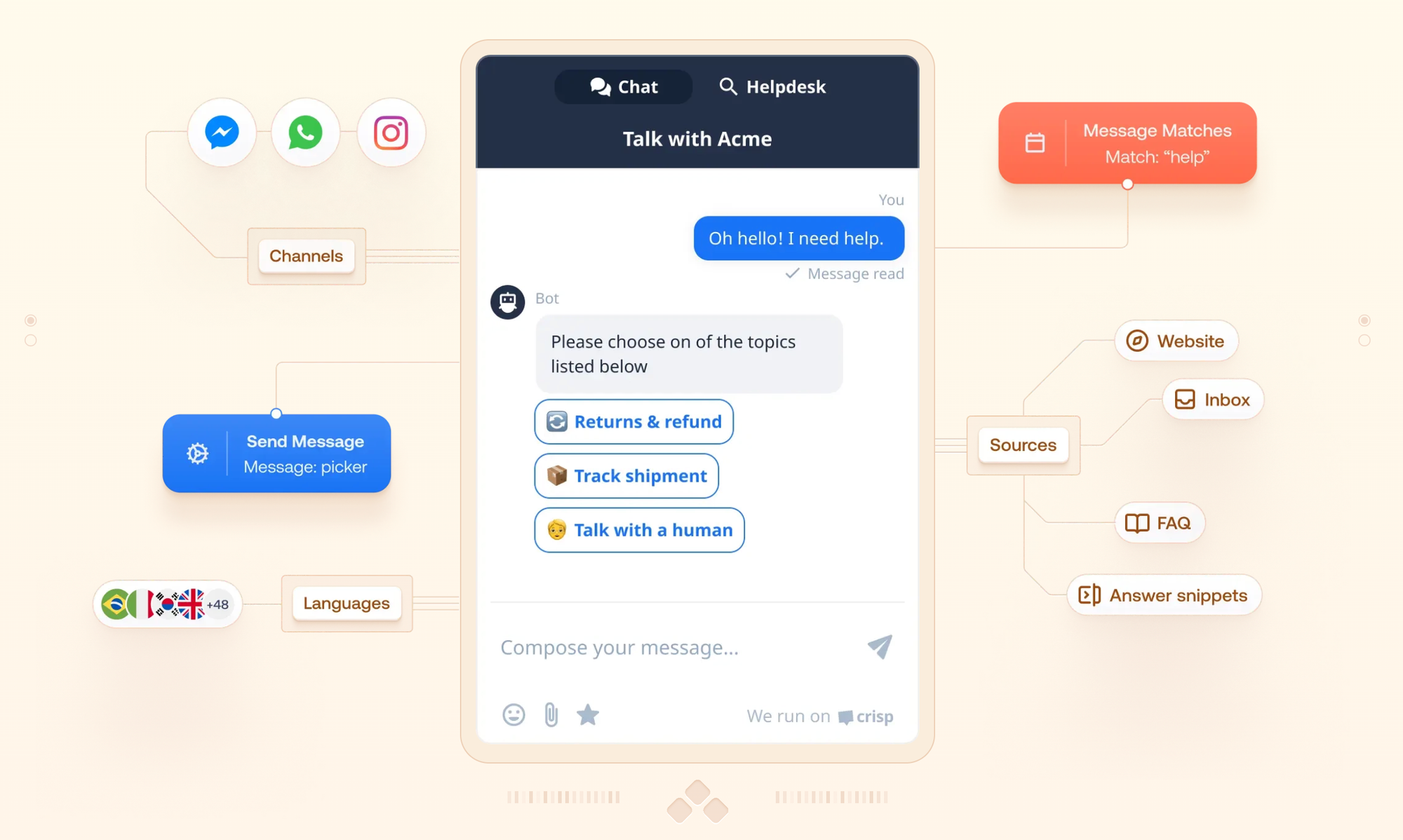
Crisp is a budget-friendly all-in-one messaging suite that small teams like for its simplicity and value. It bundles live chat, a shared inbox, a chatbot, and a knowledge base, and reviewers often describe it as a more affordable Intercom alternative.
Key features:
- AI chatbot trained on your knowledge base
- Shared inbox across chat, email, and social
- Knowledge base and help center
- Campaigns and basic CRM
- Workspace-based pricing
Pricing: Crisp pricing includes a free plan for 2 seats, with paid plans from €45/month (Mini) and unlimited AI usage only on the €295/month Plus plan.
The recurring concerns on G2 are reliability and scale. Reviewers cite unreliable new-message notifications, gaps in the free tier, advanced automation that isn't beginner-friendly, and shallow analytics. Satisfaction tends to slip as organizations grow past roughly 50 to 150 people.
Best for: Small teams on a tight budget that want one simple tool for chat and support.
11. Quiq
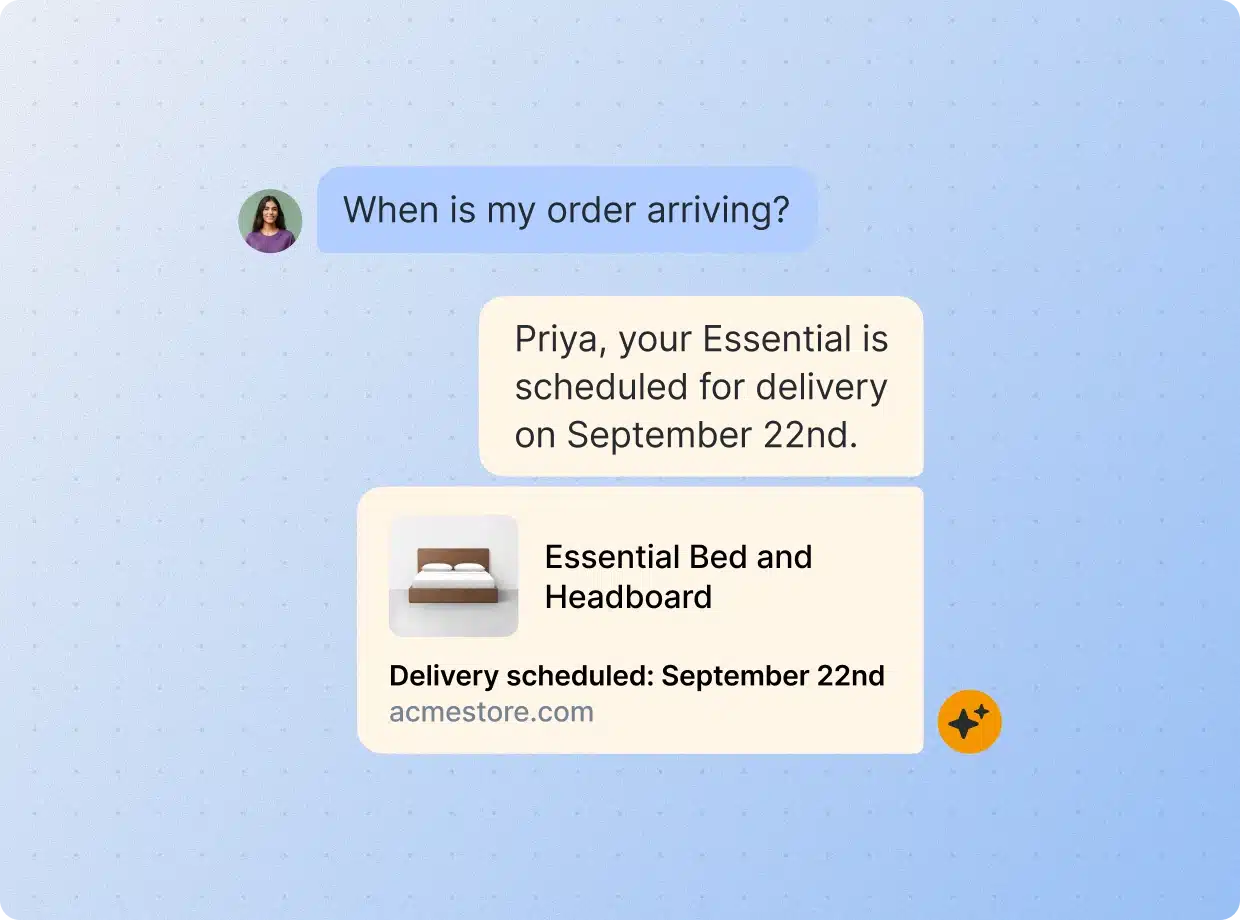
Quiq is an agentic customer journey platform built for enterprise support teams. Its AI Agents can answer customer questions and take actions such as processing returns, updating account information, and rebooking flights. When a human needs to step in, the conversation context carries over so customers do not have to explain the issue again.
Key features:
- AI Agents across voice, SMS, chat, WhatsApp, and other digital channels
- AI Assistants that give human agents response suggestions and contextual guidance
- Continuous conversation context across AI, human agents, and channels
- Guardrails, claim verification, and visibility into how AI makes decisions
- AI Conversation Analysts for automated quality management and custom support metrics
Pricing: Quiq uses custom enterprise pricing based on conversation volume, with additional charges for automated resolutions and premium capabilities.
Customer feedback is strongest around Quiq's customer support, platform flexibility, and messaging capabilities. The main complaints center on advanced reporting and analytics, along with occasional integration issues.
Best for: Enterprise CX teams that want AI to resolve customer issues while retaining control over workflows, brand standards, and human escalations.
How to choose the right AI support tool for your team
The shortlist gets shorter fast once you match a tool to your situation:
- Fast-growing SaaS teams: Pick a modern all-in-one like Featurebase or Intercom that pairs an AI agent with feedback and product surfaces, so you're not stitching five tools together.
- Enterprise and high-volume orgs: Zendesk and Ada are built for scale and deep routing, as long as you have the budget and a team to run them.
- Ecommerce brands: Gorgias wins for Shopify-native support, provided your AI volume justifies the per-resolution and ticket double-billing.
- Email-first or small teams: Help Scout and Crisp keep things simple and affordable without forcing you into a complex platform.
Whatever you shortlist, run the numbers at your real conversation volume. The cheapest headline price often becomes the most expensive bill once the AI is doing meaningful work.

Get the best AI customer support tool
Automatically resolve 70% of customer requests & cut down manual support loads
Conclusion
AI customer support software has moved from "nice to have" to the core of how modern teams scale. The tools differ less on whether they have AI and more on how they bill for it, how well it works beyond the website widget, and how much setup it takes to get there.
If you want a modern platform that brings AI support, a help center, and feedback together without the legacy bloat, Featurebase is built exactly for that. Its Fibi AI Agent resolves issues on autopilot, the omnichannel inbox unifies email, live chat, and Slack, and transparent $0.29-per-resolution pricing means your bill doesn't punish you for good deflection. 💫
There's a free plan with unlimited conversations and the onboarding is fast, so there's no downside to trying it. 👇
✨ Automate your support with the fastest AI-enhanced Inbox today →
FAQs
How much does AI customer support software cost?
It ranges widely. Entry plans start free or around $25 to $55 per seat each month, but the bigger variable is AI usage, which is usually billed per resolution at roughly $0.29 to $1.00 each. Enterprise platforms like Ada are quote-only and can run $30,000 or more per year. Always model the total at your real conversation volume, since per-resolution pricing rises as your deflection rate improves.
Can AI fully replace human support agents?
No, and most vendors don't claim it can. AI agents reliably resolve common, repetitive questions and deflect a large share of tickets, but they escalate complex, sensitive, or emotional issues to humans. The strongest setups use AI as a first line and a copilot for agents, keeping people available for the conversations that actually need judgment.
What should you look for in AI customer support software?
Focus on five things: channel coverage beyond website chat, how well the AI ingests your knowledge and past tickets, accuracy and escalation behavior, the true total cost at your volume, and integrations with the tools your team already uses. A clean demo tells you little. How the tool behaves under real load tells you everything.
How long does it take to implement AI customer support software?
It depends on the tier. SMB-focused tools like Tidio or Crisp can go live in hours to a few days, since the AI trains on your existing help content. Enterprise platforms are a different story, with Ada deployments commonly taking 8 to 16 weeks and needing a dedicated team to integrate and tune.
What's the difference between an AI agent and a rule-based chatbot?
A rule-based chatbot follows scripted decision trees, so it only handles the paths you build and breaks on anything unexpected. An AI agent uses large language models trained on your knowledge base to understand free-form questions and generate answers, so it can resolve queries you never explicitly scripted. AI agents are far more flexible, but their accuracy depends on the quality of the content behind them.
Is there a free AI customer support tool?
Yes, a few offer genuine free tiers. Featurebase has a free plan with unlimited conversations, and tools like Help Scout, Tidio, and Crisp offer free plans with limits on seats or AI usage. Free plans are great for testing, but check the caps on AI resolutions and channels before you commit, since that's where most free tiers stop short.