Blog Customer ServiceHow to Deal With Angry Customers: 12 Steps
How to Deal With Angry Customers: 12 Steps
Learn how to deal with angry customers with a calm, 12-step de-escalation process, the exact phrases to use, mistakes to avoid, and ways to protect your own headspace.


An angry customer usually isn't angry at you. They're a person with an unmet expectation who wants to be heard.
Handle that moment badly, and you can lose the customer, a chunk of their goodwill, and your own composure in a single conversation. Handle it well and you can turn them into one of your most loyal fans.
The good news is that dealing with angry customers is a skill, not a personality trait. Below is a calm, repeatable 12-step process, plus the exact phrases to use and the mistakes to avoid. 👇
Key takeaways
- Angry customers are almost always reacting to an unmet expectation, not to you personally.
- The fastest way to de-escalate is to let them vent, listen, and acknowledge how they feel before you jump to a fix.
- A sincere apology and clear ownership matter far more than proving who is technically "right."
- Every interaction should end with a concrete next step, a timeline, and a follow-up.
- Know the line between an angry customer and an abusive one, and how to exit politely when it's crossed.
- ✨ A modern support setup makes all of this easier: Featurebase gives you an omnichannel inbox, AI Copilot, and CSAT surveys so nothing slips through and reps reply with full context.
Why customers get angry
Before you can defuse anger, it helps to understand where it comes from. Anger is rarely random. It's what happens when a customer expected one thing and got another, and it matters to them.
Customer frustration is also more common than most teams assume. In the 2023 National Customer Rage Survey run by Customer Care Measurement & Consulting and the W. P. Carey School of Business at Arizona State University, 74% of customers reported a product or service problem in the past year, more than double the rate in 1976.
Most of that anger traces back to a handful of triggers:
- A broken product or service: something didn't work, arrived damaged, or failed at the worst possible moment.
- Slow or unhelpful support: long waits, being bounced between agents, or repeating the same story 5 times. You can see the patterns in these common customer complaints.
- Broken expectations: the marketing, pricing, or a previous promise set one expectation and reality didn't match it.
- Feeling ignored: the customer doesn't believe anyone is actually listening or taking them seriously.
- Something outside your control: a bad day, personal stress, or pressure from their own boss that spills into the conversation.
Knowing the trigger changes your response. A two-day outage that wiped their data is a very different conversation from a feature request that got declined. Match the weight of your response to the weight of the problem.
How to deal with angry customers in 12 steps
Here's the process I'd walk through with any customer who comes in hot. You won't always need all 12 steps, but they work in roughly this order.
1. Stay calm and don't take it personally
When someone is yelling or firing off angry messages, the instinct is to get defensive. Resist it. Matching their energy only escalates things.
Remind yourself that the customer is frustrated with a situation, not with you as a person. Keeping a level head is the single biggest lever you have. If you stay calm, there's a good chance they will start to as well.
2. Let them vent without interrupting
The first thing an angry customer wants is to get it all out. Let them. Cutting in with solutions or excuses before they've finished makes them feel unheard, which pours fuel on the fire.
Stay quiet, let them finish, and resist the urge to jump in. A few seconds of silence after they stop talking signals that you were actually listening, not just waiting for your turn.
3. Listen actively and look for the real problem
Venting is the surface. Your job is to find what's underneath it. Strong customer service skills come down to listening for the actual problem, not just the emotion around it.
Pay attention to the specific issue, when it started, and what they were trying to do. Often the thing they're shouting about isn't the root cause, and you can only fix what you correctly identify.
4. Acknowledge their feelings
Once they've finished, name what you're hearing. A simple "I can see why that's frustrating" tells them their reaction is valid and that you're on their side.
This is not the same as agreeing that everything is your fault. You're acknowledging the emotion, not accepting blame. That small distinction lets you validate the person while you work out the facts.
5. Apologize sincerely (even if it's not your fault)
Whether the complaint is technically fair or not is beside the point. If you want to keep the customer, apologize for the experience they've had.
Keep it genuine and specific. "I'm sorry you've been passed around 3 times to get this sorted" lands far better than a robotic "we apologize for any inconvenience." An empty apology is often worse than none at all.
6. Restate the issue so they feel heard
Summarize the problem back in your own words and ask them to confirm you've got it right. "So the payment went through twice and you need one of those charges reversed, is that right?"
This does two things. It proves you were listening, and it makes sure you're about to solve the actual problem instead of the wrong one.
7. Take ownership of the fix
Nothing deflates an angry customer faster than someone confidently taking charge. Avoid blaming another team, another agent, or the customer themselves.
Even if you didn't cause the issue, you can own the resolution. "Leave this with me, I'll get it sorted" is a powerful sentence. The customer stops fighting the company and starts working with you.
8. Offer a solution or clear options
Now move to the fix. If there's a clear answer, state it plainly and tell them exactly what you'll do next.
When the perfect outcome isn't possible, give them options rather than a flat no. Even a choice between two imperfect solutions restores a sense of control, and control is a lot of what an angry customer is really after.
9. Know when (and how) to say no
Sometimes the answer genuinely has to be no. A refund you can't give, a feature that isn't coming, a policy you can't bend.
Don't dodge it with "we'll look into it" if that isn't true. Explain the reason behind the decision and then pivot to what you can do. Honest boundaries, delivered with empathy, build more trust than vague promises you can't keep.
10. Set the next step and a timeline
Ambiguity keeps anger alive. Before the conversation ends, make sure the customer knows exactly what happens next and when.
Be specific. "I'll email you a confirmation by end of day tomorrow" beats "we'll be in touch." A clear timeline turns an open wound into a manageable wait.
11. Follow up after it's resolved
Handling an angry customer doesn't end when the chat closes. A short follow-up to check the fix actually worked shows you cared about the outcome, not just about ending the conversation.
This is where a lot of loyalty is won. Customers rarely expect a follow-up, so when one arrives, it stands out. Measuring satisfaction afterward with a quick CSAT survey also tells you whether the recovery genuinely worked.
12. Know when to end an abusive conversation
Angry is fine. Abusive is not. If a customer becomes threatening, uses slurs, or repeatedly attacks you personally, you're allowed to end the interaction.
Set the boundary calmly and once: "I want to help you, but I can't continue if the language stays like this." If it doesn't stop, disengage or escalate the ticket to a manager. Protecting your team is part of good service too.
What to say to an angry customer (and what to avoid)
The right customer service phrases can lower the temperature fast. The wrong ones can send it through the roof. Here are a few reliable openers.
Phrases that help:
- "I can see why that's frustrating, let's fix it together."
- "You're right, that shouldn't have happened. Let me make it right."
- "Help me understand exactly what happened so I can sort it out."
- "Leave this with me, I'll take care of it."
Phrases that make it worse:
- "Calm down." (Nobody in history has ever calmed down when told to.)
- "That's our policy." (A rule is not an answer to a human problem.)
- "You should have..." (Blaming the customer guarantees escalation.)
- "There's nothing I can do." (Even when true, this feels like a shrug.)
Notice the pattern. The helpful phrases acknowledge the person and move toward action. The harmful ones dismiss, blame, or dead-end the conversation.
Common mistakes that make angry customers angrier
Even with good intentions, a few habits quietly escalate things. These are the ones worth catching yourself on:
- Getting defensive: arguing back or justifying the company turns a complaint into a fight. Your goal is a solution, not a debate you win.
- Rushing to a fix: jumping to answers before the customer feels heard reads as dismissive, even when your solution is correct.
- Over-promising: telling an angry customer what they want to hear feels good in the moment and backfires hard when you can't deliver.
- Passing the buck: "that's not my department" abandons the customer at the exact moment they need someone to take charge.
- Letting it slip through the cracks: a promised follow-up that never comes is its own broken expectation, and it stings more the second time.
That last one carries real cost. The same National Customer Rage Survey estimated that businesses are risking around $887 billion in future revenue through poor complaint handling, up from $494 billion in 2020. A solid complaint management process is what keeps those interactions from quietly draining revenue.
How to keep your own cool
Absorbing other people's anger all day is draining, and you can't de-escalate anyone if you're rattled yourself. Looking after your own headspace is part of the job, not a luxury.
A few things that help between tough conversations:
- Breathe before you reply: a few slow breaths reset your nervous system so you respond instead of react.
- Take the micro-break: after a rough call, step away for 2 minutes before diving into the next one.
- Lean on your team: loop in a colleague or manager when a conversation is getting to you. Nobody should carry it alone.
- Reset the story: remind yourself it was about the situation, not about you. Leaving it there is what prevents customer service burnout from creeping in.
You'll handle the next angry customer far better if you've protected your own composure first.
Handle angry customers with the right support setup
Great de-escalation is mostly a people skill, but the right tools make it dramatically easier. Half the reason customers get angry is friction that a good support setup removes: repeating themselves, waiting too long, or falling through the cracks.
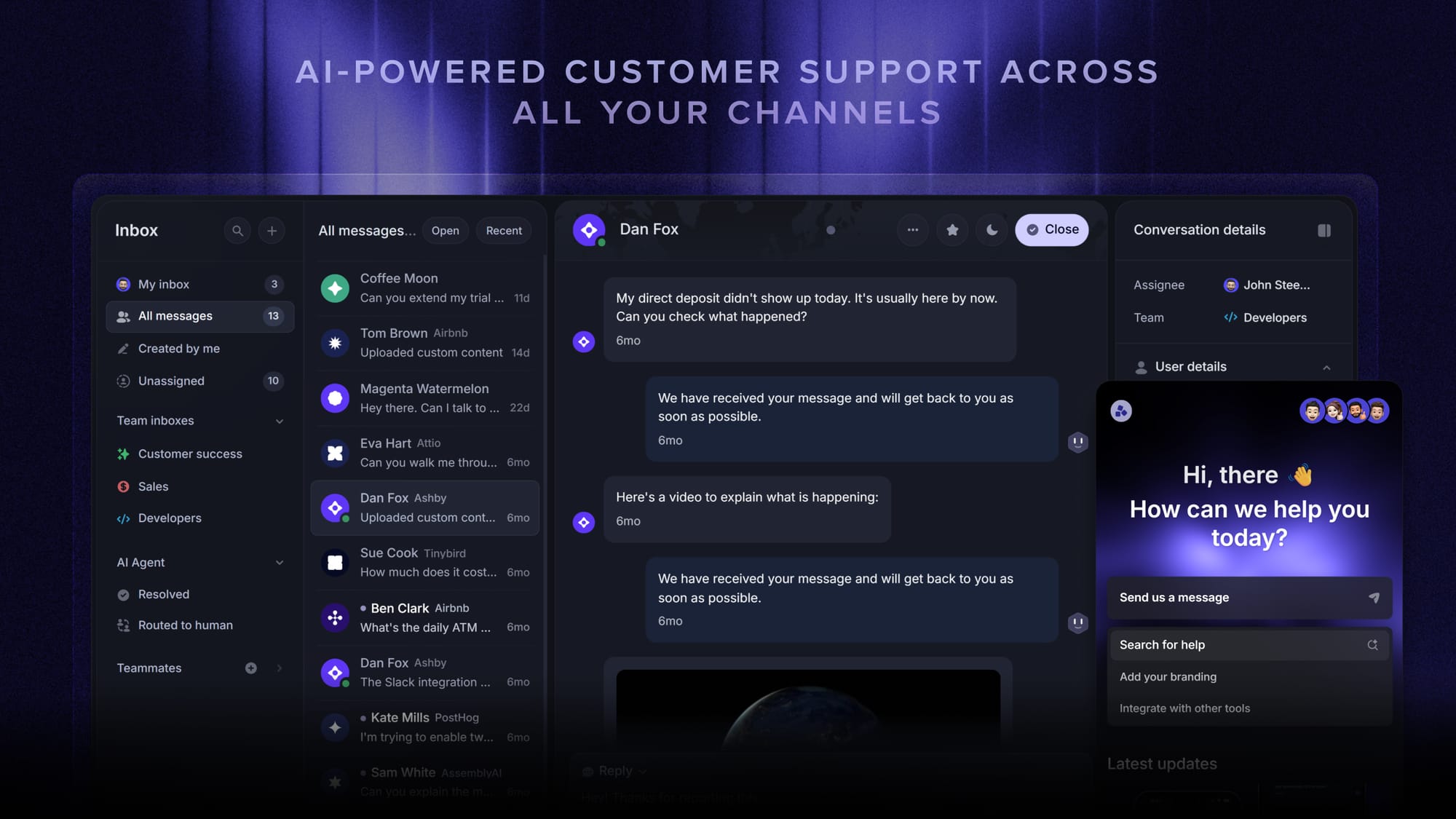
Featurebase is a modern AI customer support platform for product-led SaaS. It combines AI-powered support, a help center, and feedback management into a single platform for teams that want all their customer-facing tools in one place. It's loved by thousands of support teams from companies like Lovable, Raycast, and n8n. 💫
A few features that matter most when tensions run high:
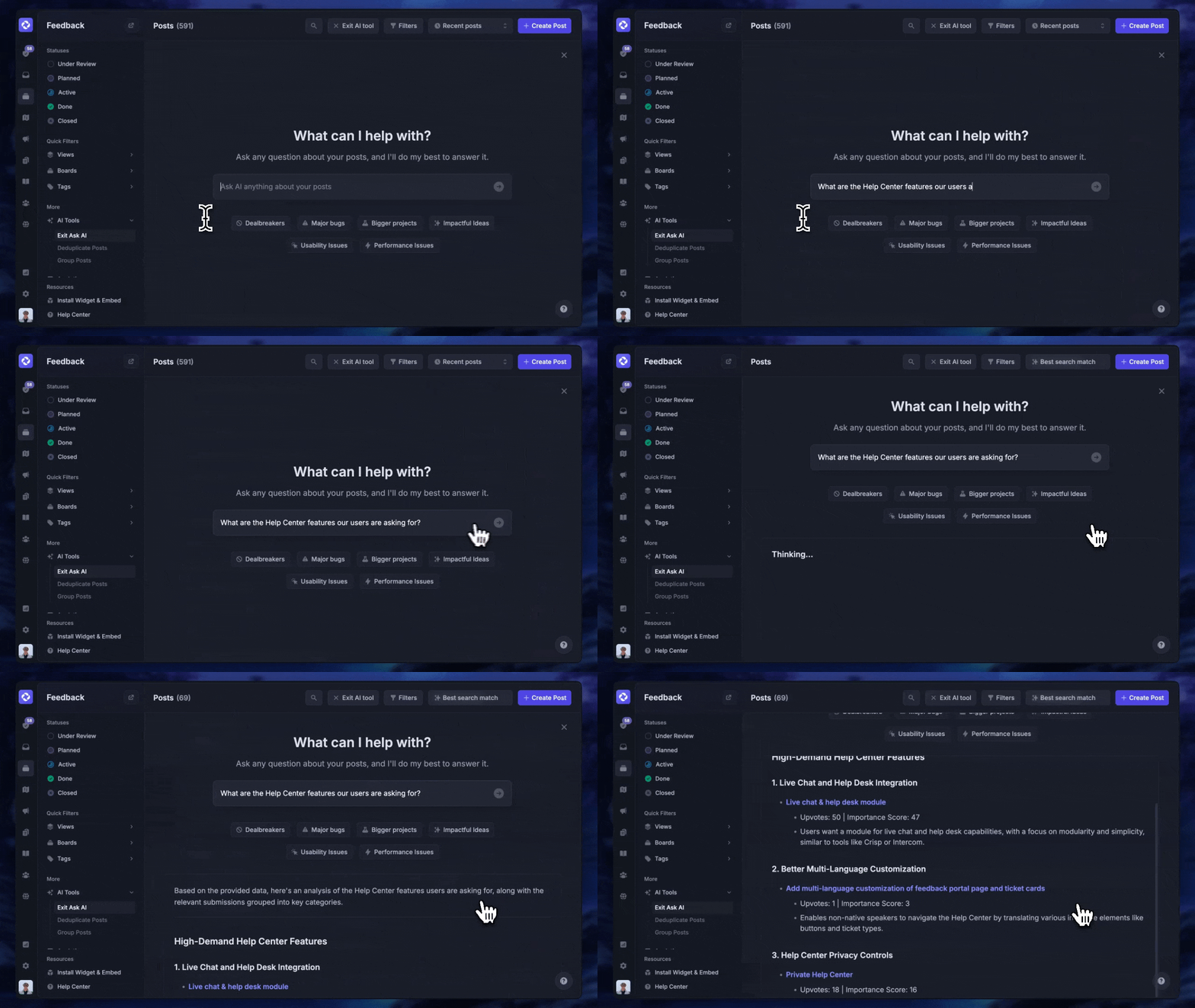
- Omnichannel inbox – Manage live chat, email, and Slack conversations in one AI-powered view, with full context so customers never have to repeat their story
- AI Copilot – Help agents draft calm, accurate replies fast using your internal knowledge
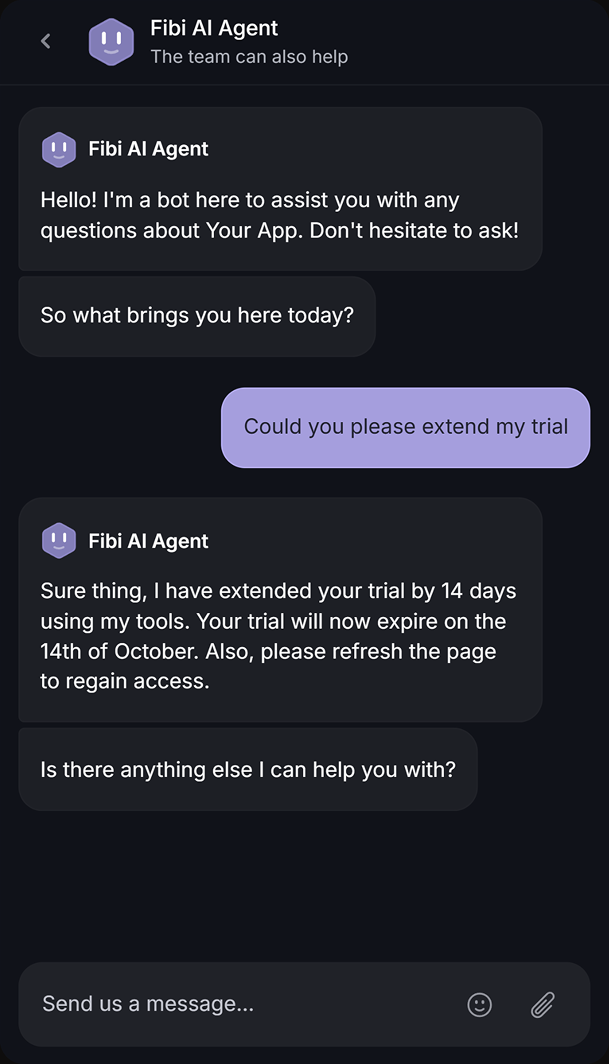
- Fibi AI Agent – Resolve common issues on autopilot and run actions like refunds and trial extensions before they ever become complaints
- Help center with AI search – Give customers instant, multilingual self-serve answers so fewer reach you already frustrated
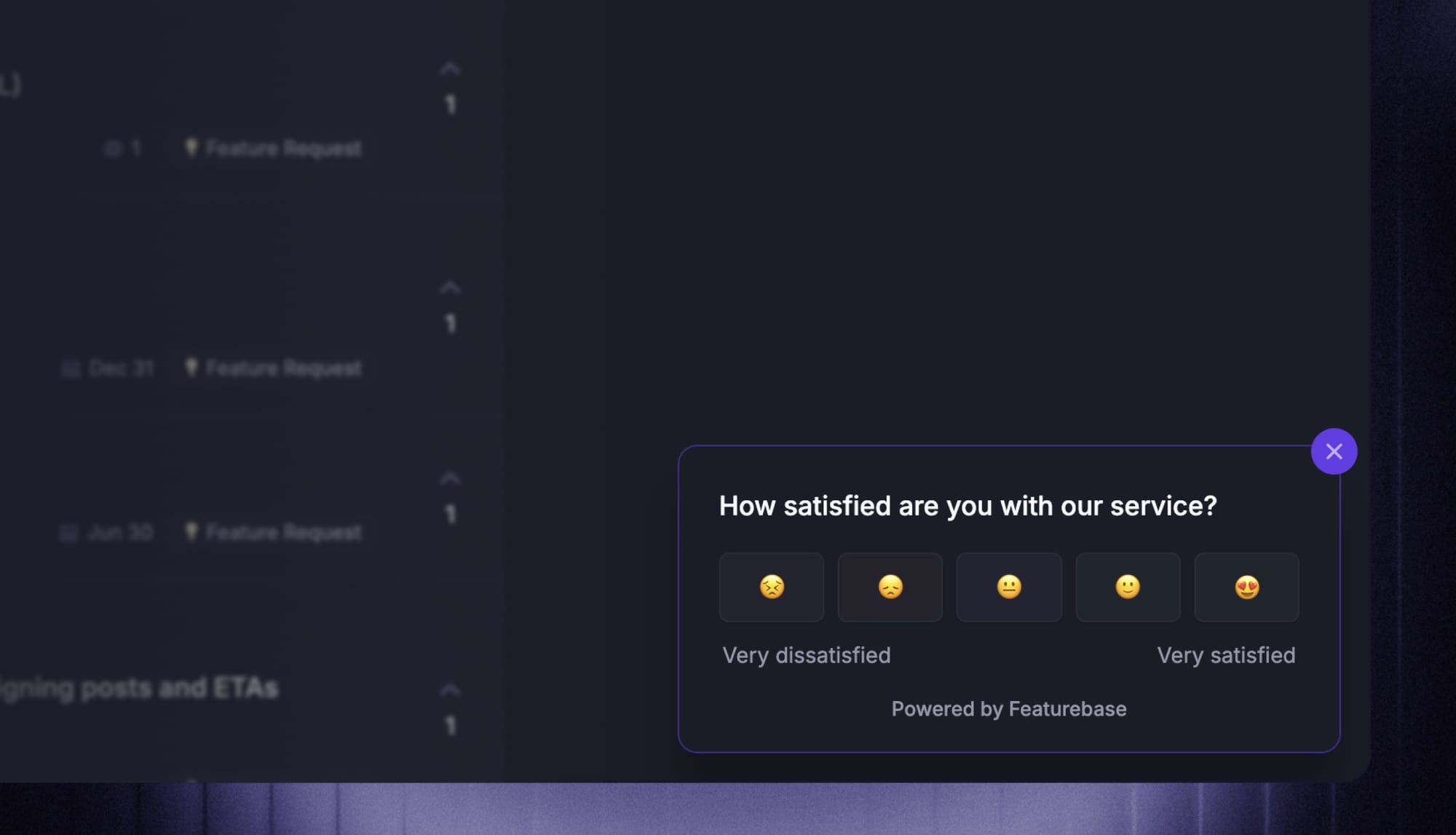
- CSAT & NPS surveys – Catch dips in satisfaction early, before they turn into angry messages
Pricing: Free plan available with unlimited conversations. Paid plans start at $29/seat/month with $0.49 per AI resolution.
Conclusion
Angry customers are inevitable, but lost customers aren't. Almost every heated interaction comes down to the same thing: a person who wants to feel heard and see their problem taken seriously. Stay calm, listen, acknowledge, own the fix, and follow up, and you'll defuse the vast majority of them.
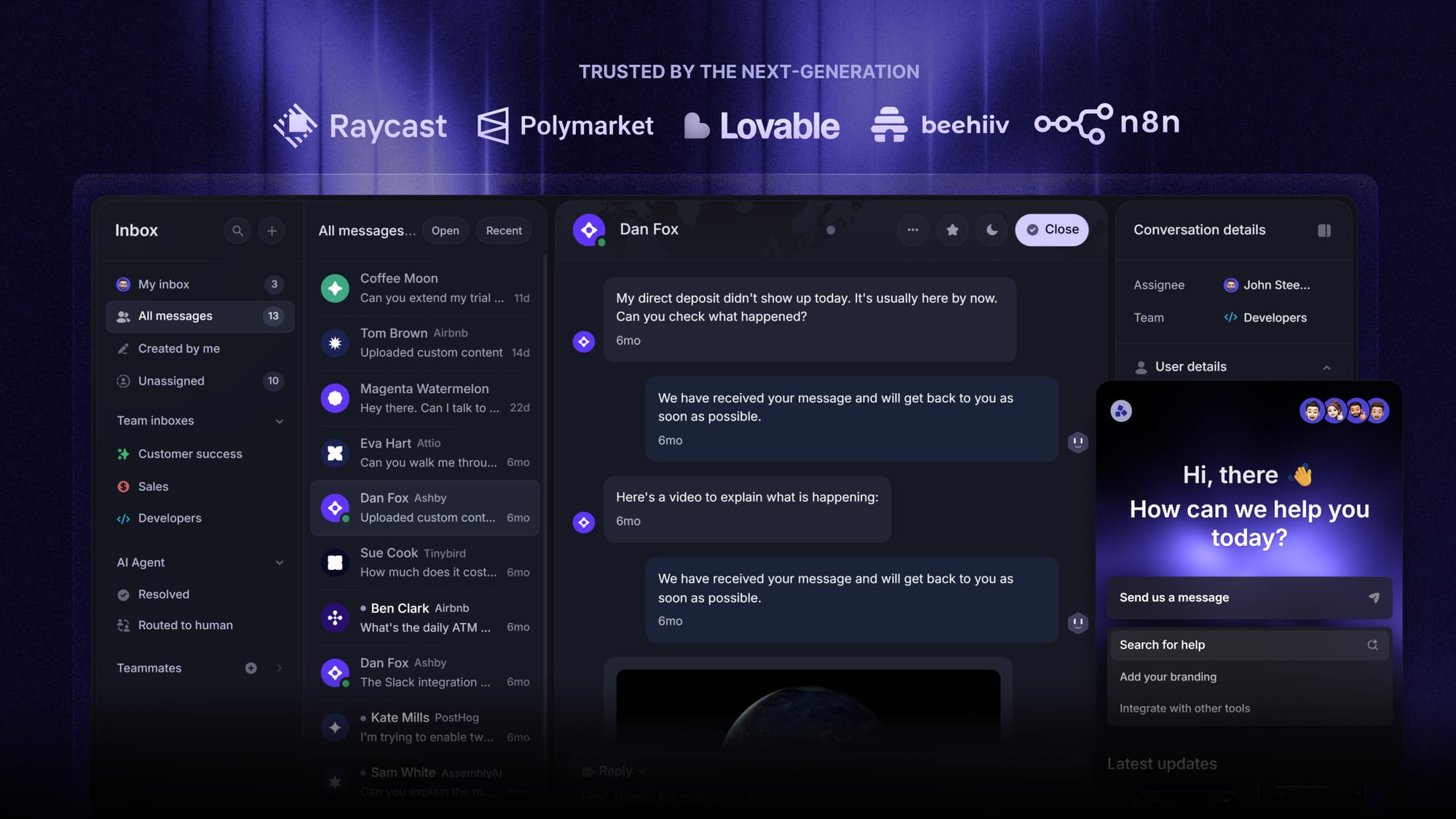
Featurebase is a modern AI-powered support platform that helps you handle those moments well. It brings your omnichannel inbox, AI Copilot, help center, and customer surveys together in one place so your team replies with full context, resolves issues faster, and catches frustration before it boils over.
It comes with affordable pricing and a Free plan, and the onboarding is quick with no credit card required, so there's no downside to trying it. 👇
✨ Automate your support with the fastest AI-enhanced Inbox today →
FAQs
What should you say to an angry customer?
Start by acknowledging their frustration before you try to fix anything, with something like "I can see why that's frustrating, let's sort it out together." Then ask a clarifying question so you understand the real problem. Openers that validate the person and move toward action work far better than defensive lines like "that's our policy."
How do you handle an angry customer face-to-face?
In person, your body language does half the work. Keep an open posture, maintain steady eye contact, and avoid crossing your arms or backing away, since those read as defensive. Lower your voice slightly and slow down, because people tend to mirror your tone. Give them physical space and let them finish speaking before you respond.
How do you deal with an angry customer over the phone?
On the phone you lose body language, so tone and pacing carry everything. Speak slowly and calmly, and use verbal signposts like "I'm still here, I'm looking into this now" so silence doesn't feel like you've disappeared. Never surprise them with a cold transfer or a long hold. Explain what you're doing and why before you do it.
How do you answer "how do you deal with angry customers?" in a job interview?
Use a real example and the STAR structure: the situation, the task, the action you took, and the result. Focus on staying calm, listening, empathizing, and resolving the issue rather than winning the argument. Interviewers are looking for composure and problem-solving, so a specific story beats generic theory. You can find more examples in our guide to customer service interview questions.
When should you end a conversation with an abusive customer?
There's a clear line between an angry customer and an abusive one. Anger directed at the problem is part of the job, but threats, slurs, or repeated personal attacks are not. Set the boundary calmly once, and if the behavior continues, it's reasonable to disengage or hand the conversation to a manager. Protecting your team's wellbeing is part of good service.
Can an angry customer become a loyal one?
Yes, and they often do. When you resolve a problem quickly and genuinely, customers can end up more loyal than those who never had an issue at all, a pattern known as the service recovery effect. The key is a real fix plus a follow-up that shows you cared about the outcome, not just closing the ticket.