Blog ComparisonsHelp Scout vs Intercom: 2026 Head-to-Head Comparison
Help Scout vs Intercom: 2026 Head-to-Head Comparison
Help Scout vs Intercom in 2026: how they compare on features, AI, and pricing - now that Intercom has rebranded to Fin and moved to outcome-based pricing. Here's which one fits your team.


✨ Looking for a modern & affordable alternative to Help Scout and Intercom? Check out Featurebase →
There are a lot of moving parts to providing exceptional customer service, but you won't get far without doing the basics well.
Help Scout and Intercom are two of the most popular tools for managing customer relationships. Help Scout is a shared inbox tool built around email, while Intercom positions itself as an omnichannel, AI-first suite for customer interactions - and as of 2026 it has rebranded to Fin at the company level.
So, which one should you choose and why? Today we compare Help Scout and Intercom on their features, integrations, pricing, and more, to help you find the right tool for boosting customer satisfaction. 👇
Quick overview
Here's a quick TL;DR comparison of Help Scout and Intercom before we get into the fine details:
| Help Scout | Intercom (Fin) | |
|---|---|---|
| Best for | SMBs & startups wanting a simple shared inbox | SaaS & ecommerce teams driving AI-first multi-channel engagement |
| Channels | Email, live chat (Beacon), WhatsApp, Instagram, Messenger, Docs | Live chat, email, WhatsApp, Facebook, Instagram, SMS, phone |
| AI & automation | AI Answers chatbot, AI drafts, workflows | Fin AI Agent (outcome-based), Copilot, advanced workflows |
| Pricing | From $25/user/mo (+ a Free plan) | From $19/seat/mo (annual) + Fin from $0.99/outcome |
| Ease of use | Extremely quick onboarding | More powerful but steeper learning curve |
| Integrations | 100+ | 450+ with stronger social messaging |
| Support | 24/6, highly rated | Mixed reviews, large community |
In short, Intercom can quickly become very pricey, while Help Scout can lack the necessary features for scalability.
If you're after a more powerful alternative, check out Featurebase. We're a modern and affordable alternative to Intercom and Help Scout, but we'll stay unbiased in this comparison, promise.
Help Scout vs Intercom: the feature set
Both tools have a substantial feature set to help your customer service team and make your customers delighted. These are the most important features you should know about.
1. Live chat
Help Scout includes live chat through its Beacon widget. Customers can start a conversation directly from your site or app, and the system will suggest relevant help articles before they connect with an agent. It’s reliable, integrates with their Docs knowledge base.
In practice, Help Scout chat is built for teams that want an on-site chat option but not 24/7 agent coverage – you must stay “online” in Beacon to accept chats.
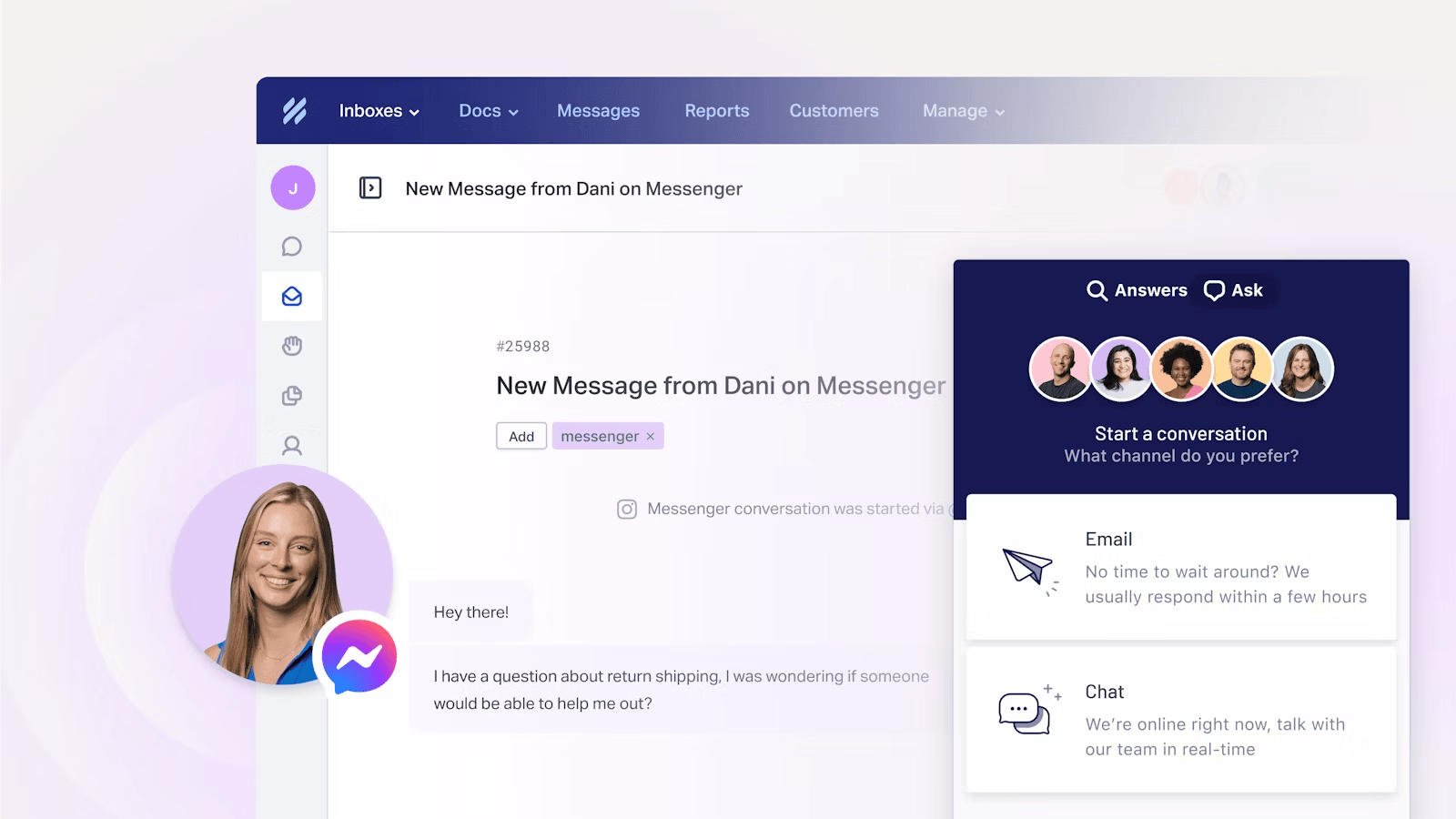
Intercom's live chat (the Messenger) is the heart of Intercom. It's extremely powerful and customizable: Intercom describes it as a "best-in-class Messenger" for real-time support.
Out of the box, it's polished, with in-app and on-site deployment, branding control, and seamless email fallbacks. You can handle multiple chats, bots, and automation rules. Intercom's chat auto-opens on specific pages, routes conversations to the right team, and even collects feedback within the chat.
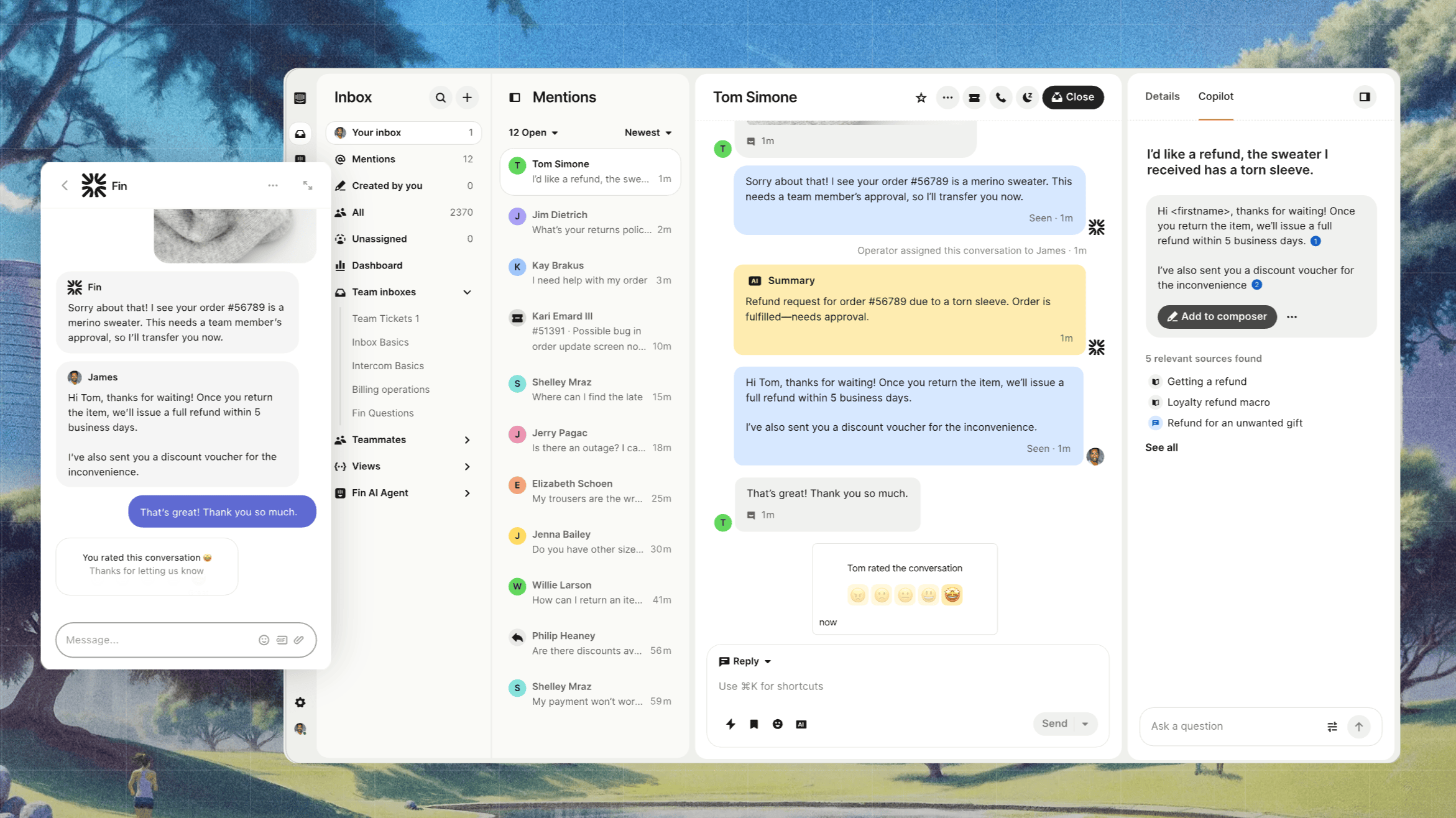
In short, if chat is your lifeline to customers, Intercom has it built for scale. It also offers more advanced features (like chatbots, round-robin assignment, and multibrand support on higher plans). However, all this power comes with complexity and cost, which we'll talk about in a moment.
2. Automation & AI
Help Scout keeps automation simple. Workflows can tag, assign, or close tickets automatically, and built-in AI tools can summarize long threads, translate messages, or draft replies. All of this is included in the base pricing, with no per-use fees.
Intercom takes automation to another level. Its Fin AI Agent can resolve common issues directly from your help center content, run multi-step qualification bots, and trigger outreach based on in-app behavior. Intercom has leaned so far into AI that in 2026 it rebranded at the company level to Fin, and it now prices the agent on an outcome basis: support resolutions and configured procedure handoffs cost $0.99 per outcome, rather than a flat per-seat fee for the AI. That's great when Fin does the work, but it also means your AI costs scale directly with volume, and advanced automation still sits behind higher-tier plans.
So, Help Scout is ideal if you want easy-to-use automation without worrying about add-on costs. Intercom is better if automation is core to your workflow and you want to blend customer support with proactive sales or marketing campaigns.
3. Help centers
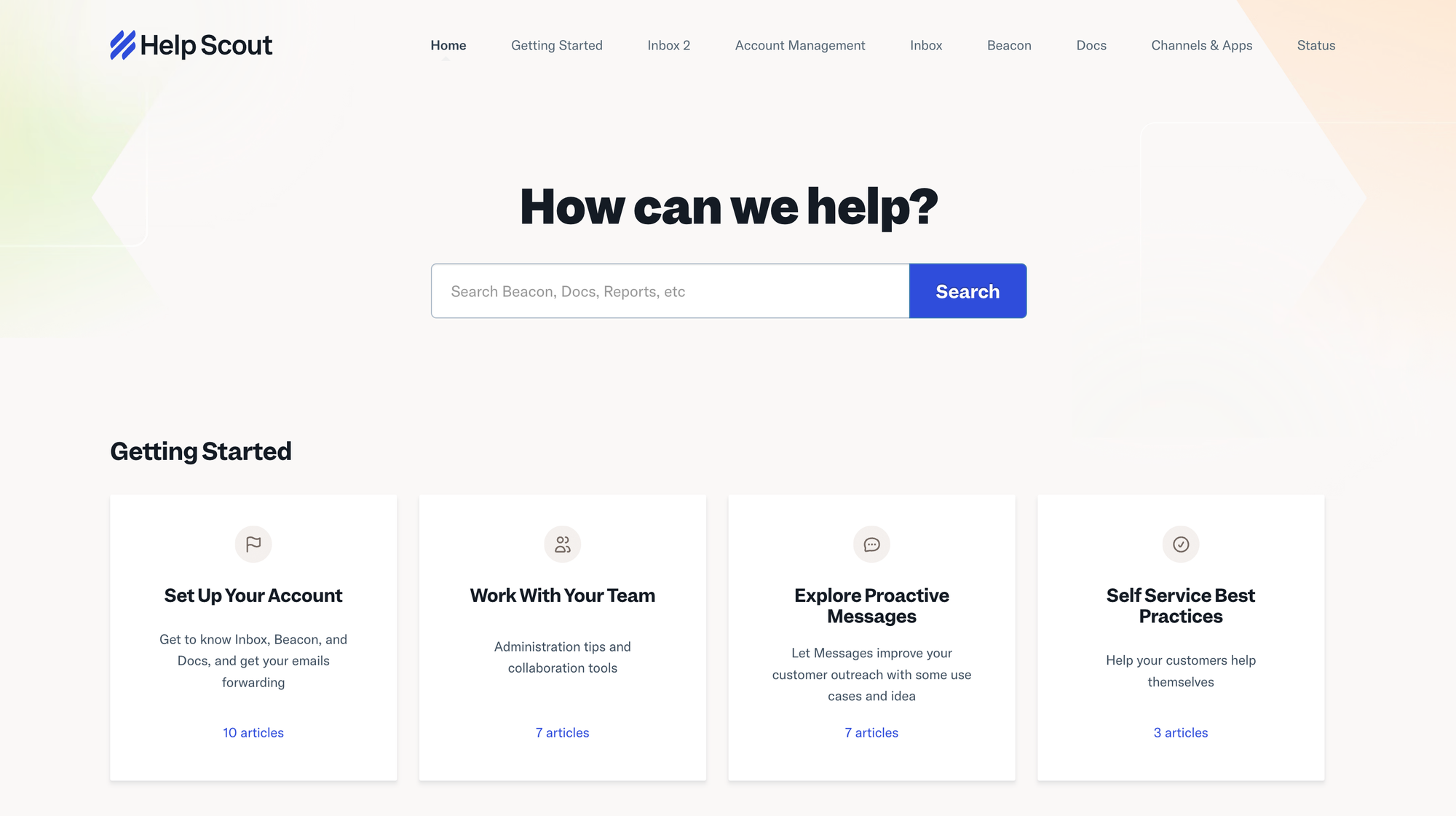
Help Scout’s “Docs” feature lets you create one or more branded knowledge bases. Your human agents can insert article links into replies, and Beacon automatically suggests relevant content before a customer opens a chat. Even the free plan includes a full public help center, making self-service, including NPS surveys, accessible from day one.
Intercom's help center can be public or private and supports multiple languages on higher tiers. Articles are fully integrated with Messenger, so customers can browse them without leaving the chat window. You can also use articles in onboarding flows or marketing campaigns.
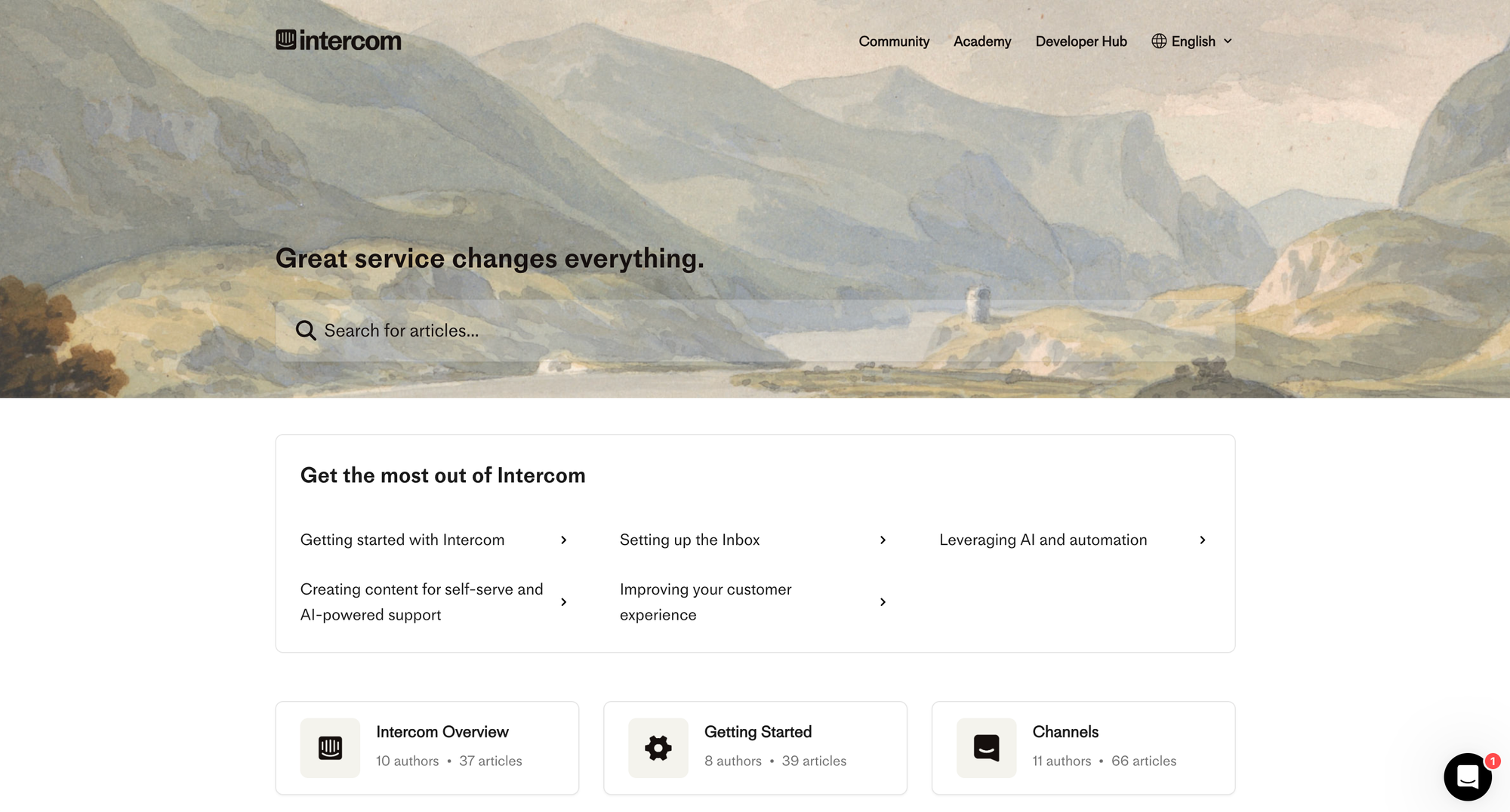
Help Scout is better if you want a straightforward help center that’s included in all plans and optimized for support deflection. Go with Intercom if you want your knowledge base to double as an onboarding and marketing tool.
4. Messaging & product tours
Help Scout’s Messages module allows you to display in-app banners, pop-ups, and surveys. It’s simple to use and effective for announcements or quick feedback requests, but it doesn’t include onboarding tours or multi-step walkthroughs.
Intercom offers a much broader outbound toolkit. For a $99/mo Proactive Support add-on, you can send targeted emails, in-app messages, push notifications, and even create no-code product tours. These can be tied into your live chat and automation rules for a coordinated onboarding or marketing strategy.
For outbound messaging, Help Scout suits teams that just need basic in-app communication for updates and surveys. Intercom is the better fit for companies that want to actively guide users through their product and drive adoption.
Integrations
Help Scout integrates with over 100 tools, including Shopify, Jira, Stripe, and Slack, and offers an open API for custom connections. It covers the main business systems most support teams rely on.
Intercom has more than 450 integrations, with strong coverage for social and mobile messaging, and it still edges ahead on native SMS and phone support. This makes it well-suited for teams that want to centralize every customer communication channel in one place.
Help Scout is enough if you rely mainly on standard SaaS tools for support. Intercom is better if you need native social messaging integrations and a broader integration ecosystem.
Ease of use
Help Scout’s setup is quick — you can be fully operational in under an hour. The interface is clean, minimal, and easy for new team members to pick up. Many companies choose it because seasonal or part-time agents can be trained in a single day.
Intercom is intuitive but has more moving parts. Initial setup is guided, but getting full value from its automation, targeting, and campaigns requires more time and a steeper learning curve.
Help Scout wins for fast adoption and minimal training. Intercom is better suited for teams willing to invest time in mastering a richer toolset.
Pricing
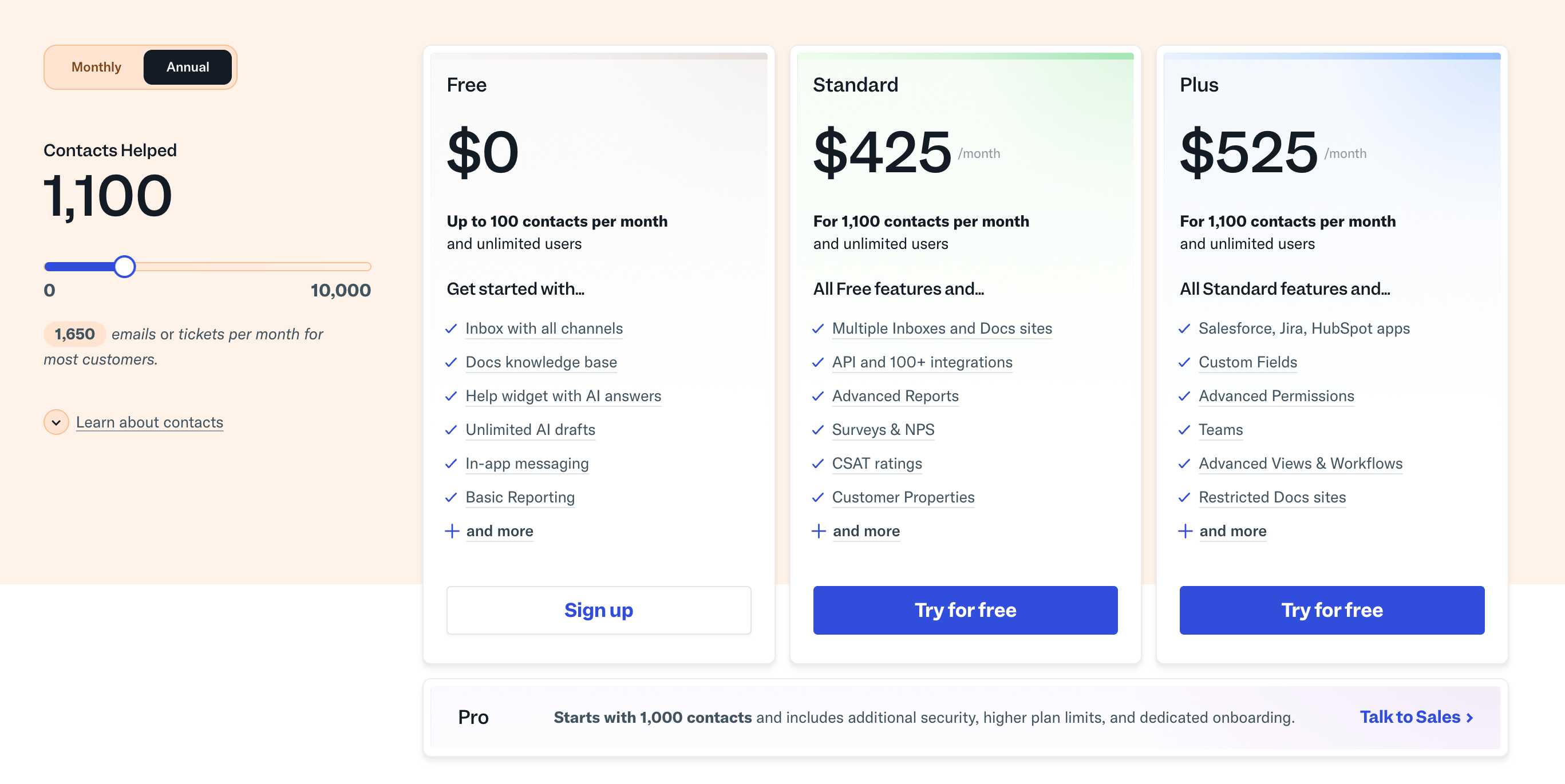
Help Scout's pricing is usage-based (by number of contacts helped) rather than per seat.
- Free Plan: $0 for up to 50 contacts per month (unlimited agents).
- Standard: $50/month (starts with 100 contacts; unlimited agents).
- Plus: $75/month (100 contacts; adds advanced permissions and integrations).
- Pro: Custom (for very high volume or enterprise needs).
All plans include unlimited admins, unlimited AI replies, and 24/6 support. Notably, no per-seat fees and AI features are included at no extra charge. You only pay more when you help more unique customers (the “contacts” model).
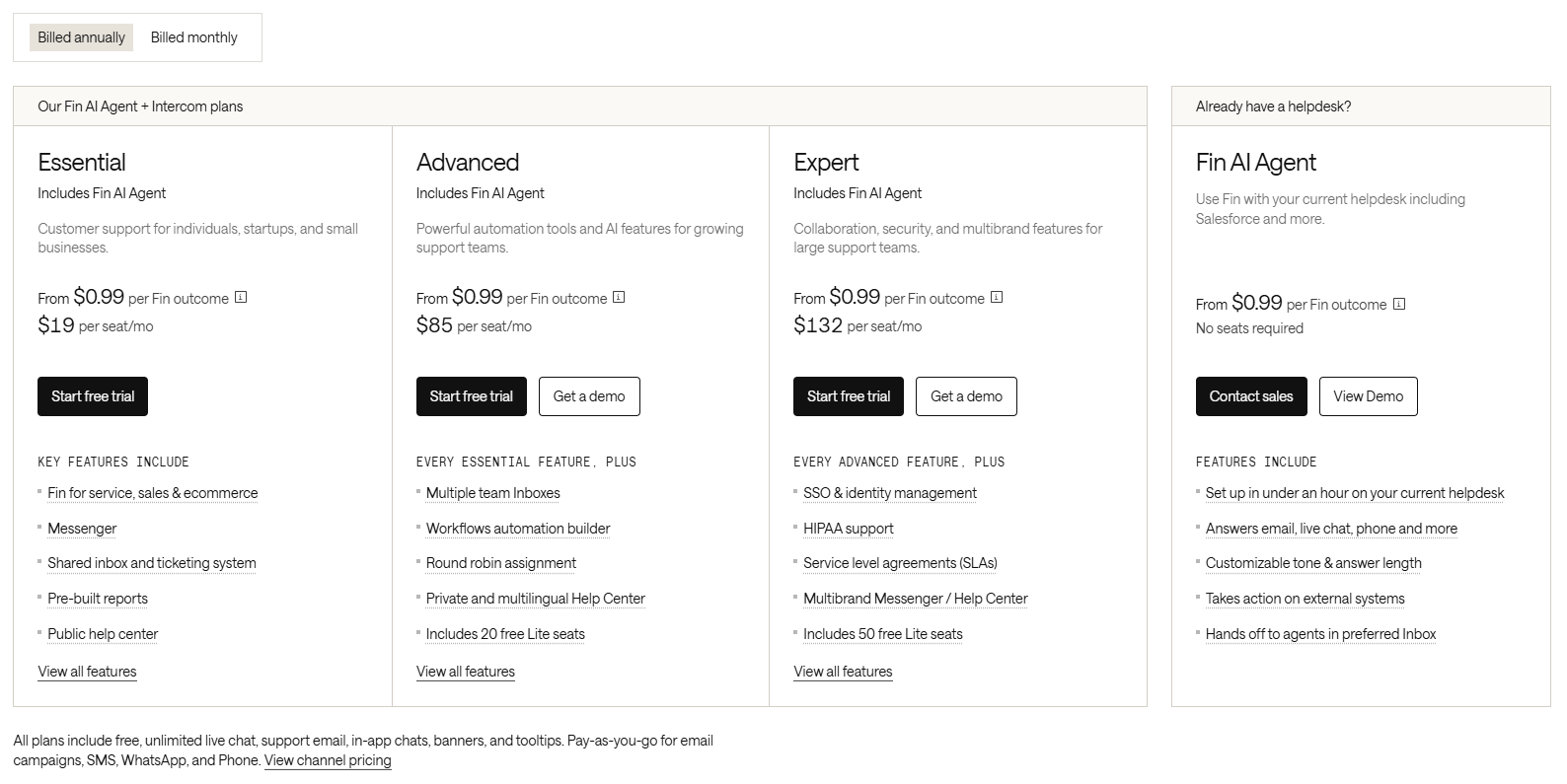
Intercom's pricing uses a seat-and-usage model, and it looks a little different in 2026. Intercom rebranded at the company level to Fin in May 2026, and in June 2026 Salesforce signed a definitive agreement to acquire the company for roughly $3.6 billion. The helpdesk itself is still sold as Intercom, and its plans stay seat-based:
- Essential: $19 per seat/month billed annually ($29 monthly). Includes the Messenger, shared inbox, ticketing, pre-built reports, and a public help center.
- Advanced: $85 per seat/month billed annually ($99 monthly). Adds multiple inboxes, the workflows builder, and a private multilingual help center.
- Expert: $132 per seat/month billed annually ($139 monthly). Adds SSO, HIPAA, SLAs, and multibrand messaging.
- Fin AI Agent: From $0.99 per outcome. Resolutions and configured procedure handoffs cost $0.99 each, as do disqualifications and self-serve routing. Sales qualifications cost $9.99 each. You can also run Fin standalone on top of another helpdesk (including Salesforce) from $0.99 per outcome, with a 50-outcome monthly minimum.
- Add-ons: Copilot at $29-$35 per agent/month, the Pro analytics add-on at $99/month, and Proactive Support Plus at $99/month.
That outcome-based model is the headline change. Instead of a flat monthly AI fee, Fin bills per outcome, including resolutions and configured procedure handoffs, so your AI cost tracks directly with volume. Intercom's own case studies put real-world Fin resolution rates around 42-50%, which is the number to plan around when you forecast a Fin bill (as of July 2026).
Intercom has a reputation for being expensive, particularly as seats or resolved conversations pile up, and reviewers frequently describe the billing as upsell-heavy and hard to predict. Between per-seat fees, per-outcome Fin charges, and add-ons, the bill can easily climb into thousands of dollars per month.
✨ Looking for a modern & affordable alternative to Help Scout and Intercom? Check out Featurebase →
Use case fit
Help Scout is built for small-to-mid-sized teams who want straightforward support tools without the learning curve or overhead of a large platform. It's best for teams that handle most of their customer conversations over email, with occasional live chat for quick resolutions.
Agencies, early-stage SaaS companies, and startups with lean support teams often choose Help Scout because it's easy to train on, scales with unlimited seats, and doesn't punish you for seasonal spikes in ticket volume.
Intercom is designed for growing SaaS and ecommerce companies that want to engage customers across multiple channels - live chat, email, social, and SMS - and actively guide them through the product experience. Its product tours, targeted in-app messages, and behavioral automation make it ideal for onboarding, upselling, and re-engaging users.
Many tech companies use Intercom not only for support but also as part of their sales and marketing stack. Its AI features are more advanced than most other platforms, and for teams that can afford it, the automation can significantly reduce manual workload.
In short: If you value simplicity, predictable pricing, and a personal touch, Help Scout is the safer choice. If you need a multi-purpose engagement machine and have the budget, Intercom is hard to beat.
Final verdict
If your support is primarily email-based with occasional live chat, Help Scout gives you everything you need in a clean, mostly affordable package. It's good for startups, agencies, and small teams that value simplicity and unlimited seats.
If you want a single platform for multi-channel support, onboarding, and customer engagement - and you're willing to invest in setup and higher costs - Intercom is unmatched in its flexibility and automation power.
In practice, small teams or those with tight budgets often start with Help Scout (or outgrow Zendesk into it), while product-led companies with growth teams lean toward Intercom.
However, there is a third option that combines the affordability of Help Scout with the power of Intercom. 👇
Featurebase: The better alternative to Intercom and Help Scout! ✨
If Help Scout is too basic and Intercom is too expensive, check out Featurebase, a modern support platform that blends the best of both worlds.
It’s loved by thousands of fast-growing teams from companies like Lovabale, Polymarket, and Instantly.
With pricing starting from just $29 per month flat + $0.29 per AI resolution, it costs a fraction of Intercom, Help Scout, and most other support platforms.
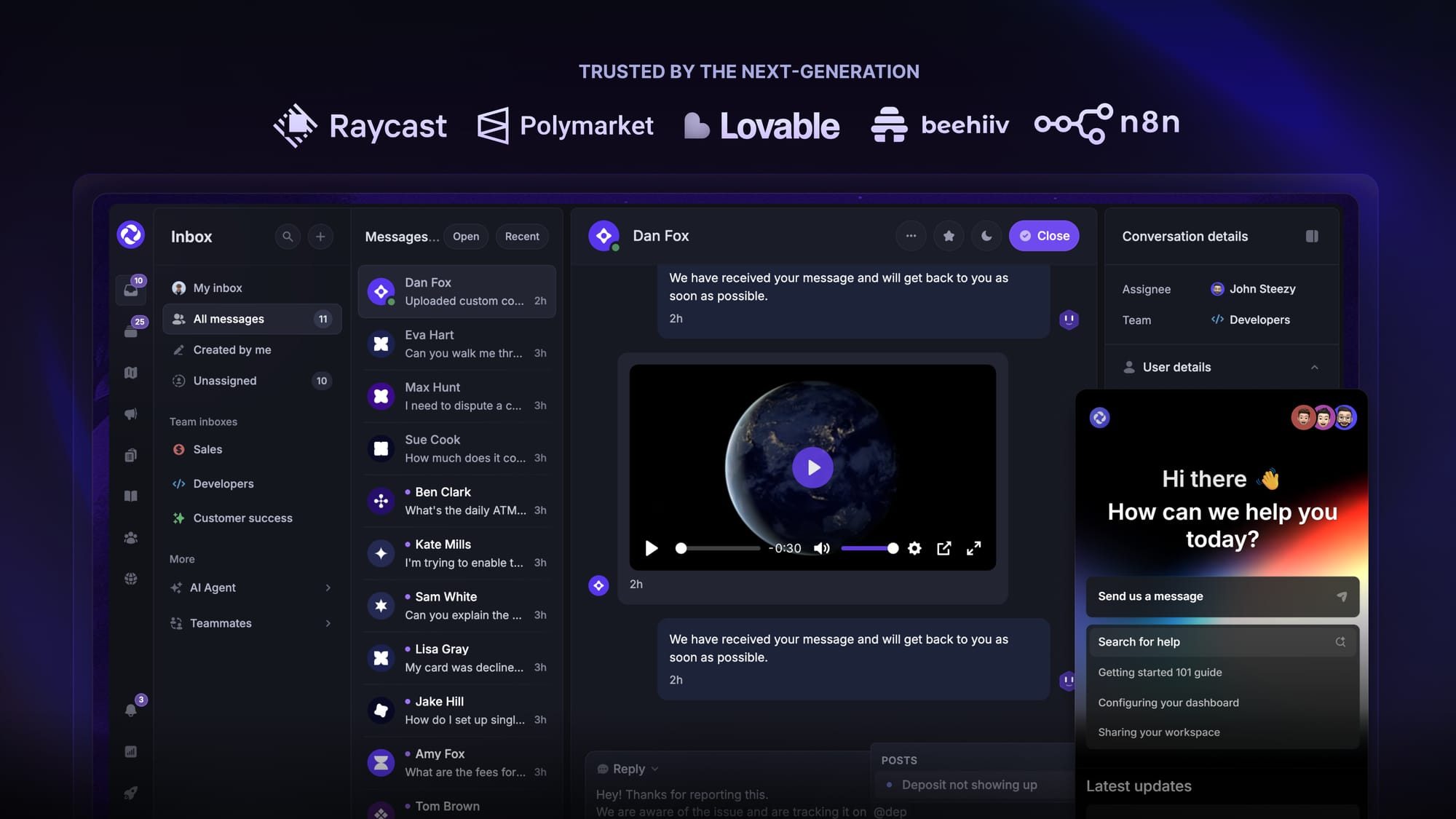
Some of the many Featurebase features include:
- Unified inbox – manage your live chat & email conversations in one place with your whole team
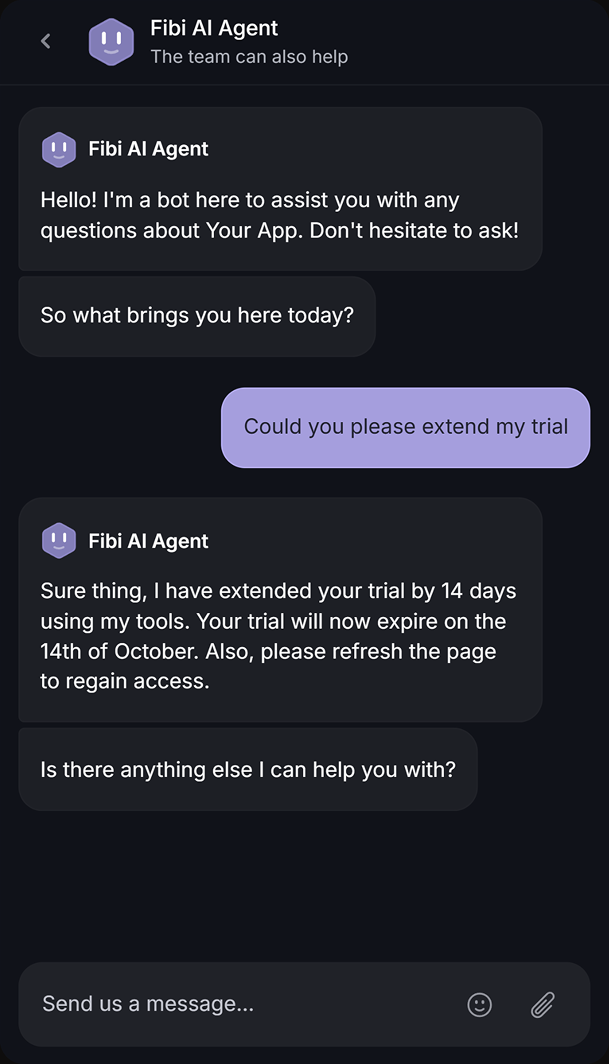
- AI agent & automations – fully automate your support with AI and endless custom workflows, like extending trials, offering discounts, qualifying leads, etc.
- Messenger widget – provide AI and human support from anywhere with a customizable in-app widget
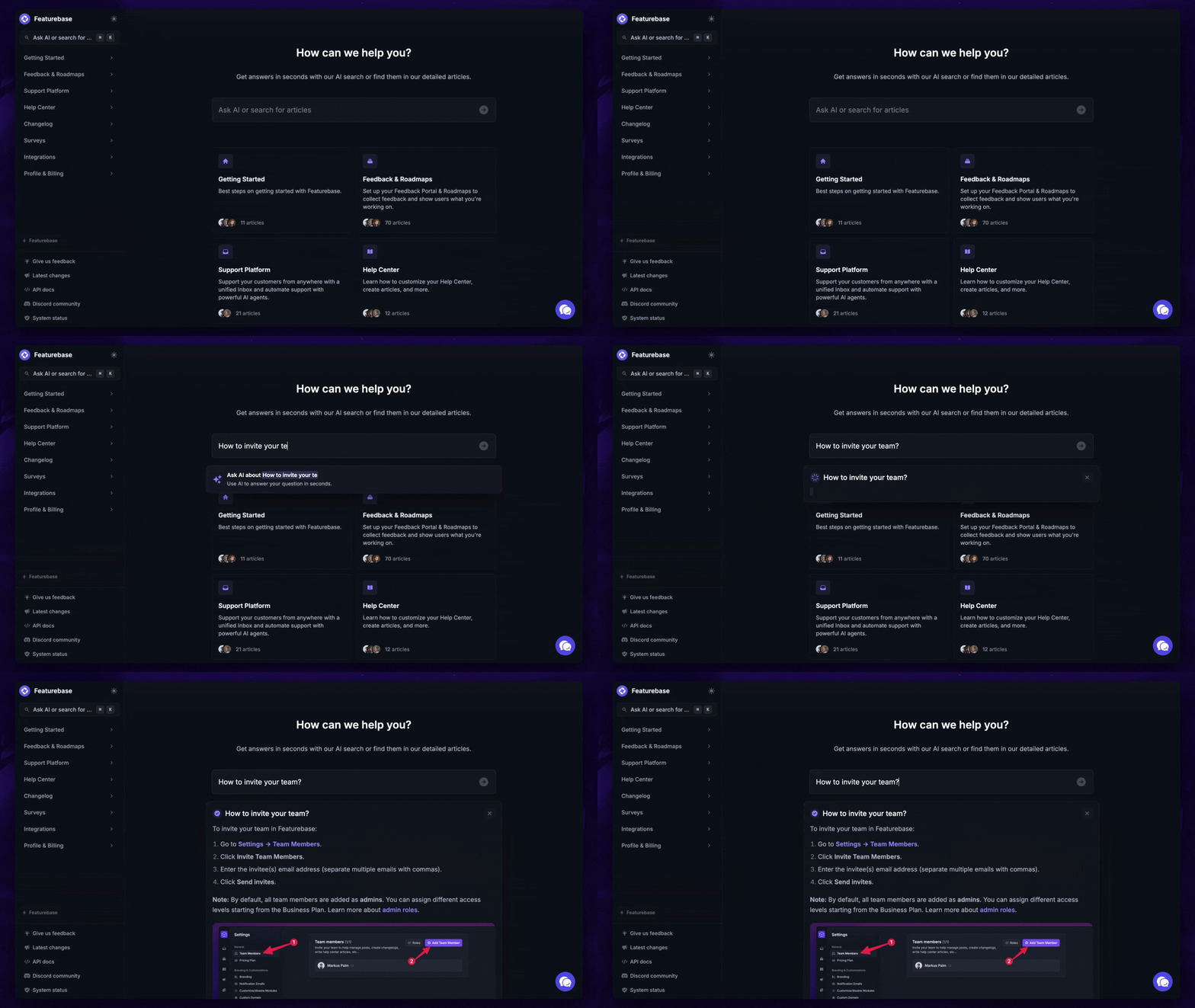
- Help Center – a branded knowledge base with instant AI answers
- Email support – Seamlessly provide support to your customers via email sync
- Native ticketing – Centralize & keep track of all customer requests in one place
- Multi-language & custom domain support – serve content in 40+ languages with your domain and branding
- Mobile app – respond to customers, receive notifications, and unblock users on the go
- Integrations – Slack, Linear, Jira, Discord, Hubspot, and many more
- Plus, feedback collection, product roadmaps, release notes, and customer surveys – all in one place
Long story short, Featurebase gives you all the powerful support capabilities of Help Scout and Intercom, but without the super expensive pricing. Don't just take our word for it. You can try Featurebase completely free and see for yourself.
The onboarding is quick and doesn't require a credit card. Plus, you can automatically import your Intercom knowledge base with one click - so there’s zero risk involved. 👇
✨ Automate your support with the fastest AI-enhanced Inbox today →
FAQs
What's the difference between Help Scout and Intercom?
Help Scout is an email-first shared inbox built for simplicity, while Intercom is an AI-first, omnichannel platform built around live chat and automation. Help Scout suits small and mid-sized teams that value quick onboarding and predictable costs. Intercom fits teams that want deep automation and are willing to manage more complexity and spend.
Is Intercom the same as Fin now?
Intercom rebranded at the company level to Fin in May 2026 to signal its focus on AI agents. The helpdesk product is still sold as Intercom, and Fin is the AI agent that lives inside it. So you may see both names used interchangeably.
How does Fin's outcome-based pricing work?
Fin bills resolutions, configured procedure handoffs, disqualifications, and self-serve routing at $0.99 per outcome. Sales qualifications cost $9.99. You're charged at most once per conversation, with no charge when Fin simply passes a conversation to your team without a billable outcome. Your AI spend scales with the number and type of outcomes.
Is Help Scout or Intercom more affordable?
Help Scout is generally cheaper and easier to forecast, since you mostly pay per user ($25 to $75 per seat per month) plus an optional $0.75 per AI resolution. Intercom combines per-seat fees ($19 to $132 per seat/month billed annually) with Fin usage from $0.99 per outcome and several add-ons, so bills can climb quickly at higher volume.
Which is easier to use, Help Scout or Intercom?
Help Scout is the easier of the two. Most teams are fully operational within an hour, and new agents can be trained in a day. Intercom is more powerful but has more moving parts, so getting full value from its automation and targeting takes more setup time.
Does Help Scout support WhatsApp?
Yes. Help Scout now handles WhatsApp, Instagram, and Facebook Messenger natively on its paid plans, alongside email and live chat. This closes a channel gap that used to be a clear reason to pick Intercom instead.
Is there a cheaper alternative to Help Scout and Intercom?
Yes. Featurebase is a modern support platform that combines an omnichannel inbox, an AI agent, a help center, and feedback tools in one place. Its Fibi AI Agent uses the same outcome-based model as Fin but charges $0.29 per resolution, and there's a free plan with unlimited conversations.
More comparisons: