Blog ComparisonsDrift vs Intercom: Detailed 2026 Comparison
Drift vs Intercom: Detailed 2026 Comparison
Drift or Intercom - which one actually fits your team? While both offer chat and automation, they serve very different goals and come with hefty price tags. In this post, we break down the key differences and show you if either is really worth it in 2025.


✨ Looking for a modern & powerful alternative to Drift and Intercom? Check out Featurebase →
For years, picking a conversational tool for your website came down to one of two camps: Drift or Intercom. They looked similar on the surface, but under the hood they were built for very different jobs.
That choice looks completely different in 2026. Drift is being wound down by its new owner, and Intercom has rebranded to Fin and rebuilt itself around AI. So if you're comparing these two today, you're really deciding between a product that's sunsetting and one that's mid-transformation.
This guide breaks down what each tool does, what changed this year, how pricing actually works now, and where a modern alternative fits in. 👇
Key takeaways:
| Intercom (Fin) | Drift | |
|---|---|---|
| Best for | AI-first customer support & product-led SaaS | Sales and ABM pipeline (now sunsetting) |
| AI agent | Fin, a resolution engine | Bionic Chatbots for lead qualification |
| Pricing | $19-$132 per seat/mo (annual) + Fin from $0.99/outcome | Quote-based, bundled into Salesloft |
| Free plan | No (14-day trial) | No |
| 2026 status | Rebranded to Fin, now AI-first | Being sunset by Clari + Salesloft |
In short, both legacy tools have gotten more expensive and more complicated, and one of them is on its way out. If you want the honest version of this comparison, keep reading.
Drift vs Intercom: The basics
If you're looking for tools to connect with customers, Drift and Intercom have been two of the most recognizable names for a decade, and for good reason. Both are well known, but they approach support, sales, and marketing from different angles.
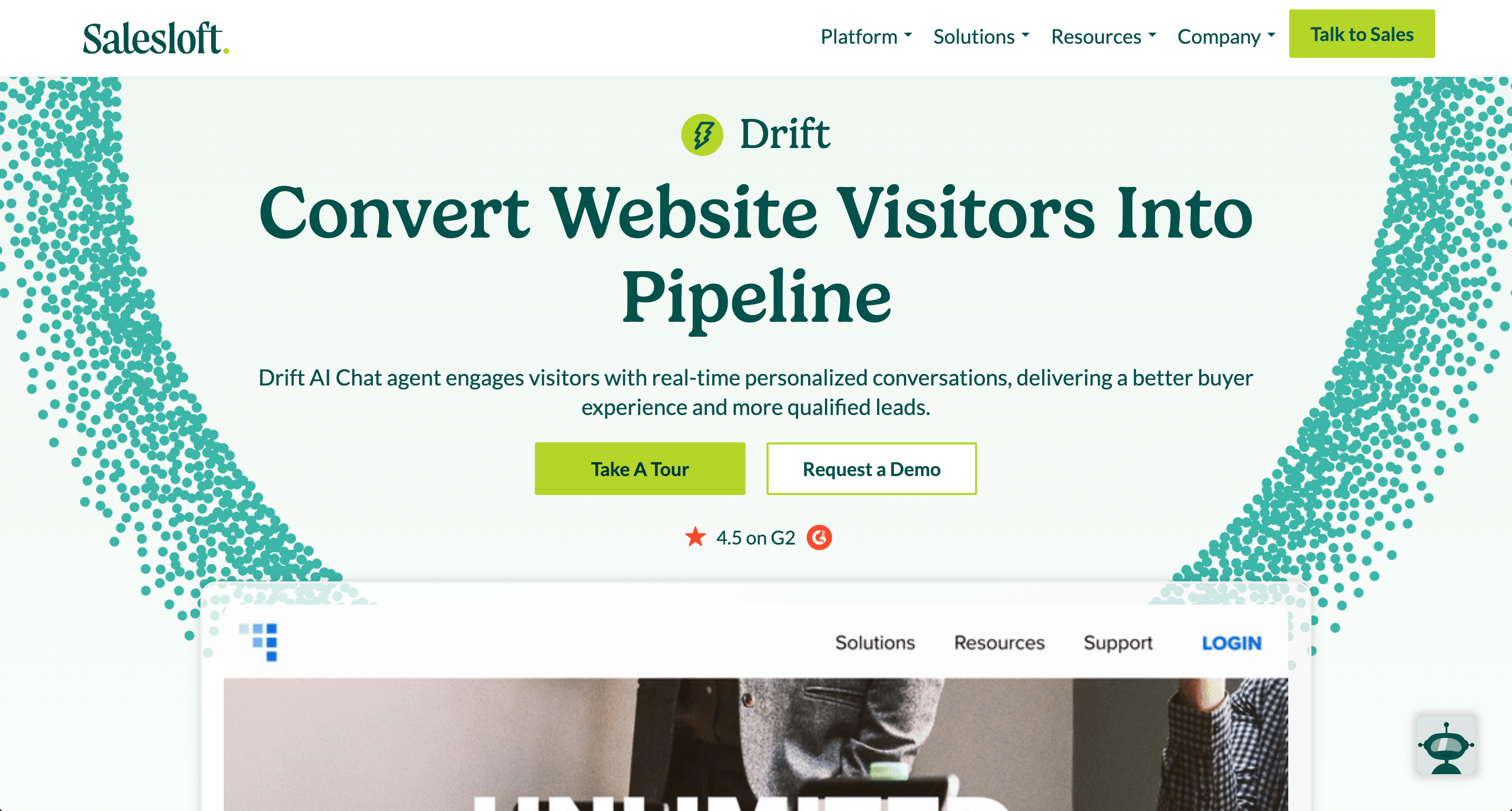
Drift built its reputation on conversational marketing, giving sales teams a way to talk to website visitors in real time and turn them into qualified leads. Intercom became a favorite for customer support and engagement, offering a mix of live chat, bots, and messaging that feels at home inside modern apps.
That difference in DNA still matters, but the two products are no longer on equal footing. Before comparing features, it's worth understanding what actually happened to each company this year.
What changed in 2026: Drift's sunset and Intercom's Fin pivot
The "Drift vs Intercom" matchup most people search for is based on a market that no longer exists. Both platforms went through major changes that reshape any real decision.
Drift is being sunset. Drift was acquired by Vista Equity Partners in 2021, then folded into Salesloft in 2024. In September 2025, an OAuth token breach in Drift's Salesforce integration exposed data from more than 700 organizations, including Cloudflare, Palo Alto Networks, and Zscaler. Then in March 2026, Clari + Salesloft announced Drift's gradual sunset and named 1mind as its exclusive AI successor. Drift's public pricing page is gone, and existing customers are being guided toward migration. In practice, Drift is no longer a tool you'd adopt today - it's one you'd move off of.
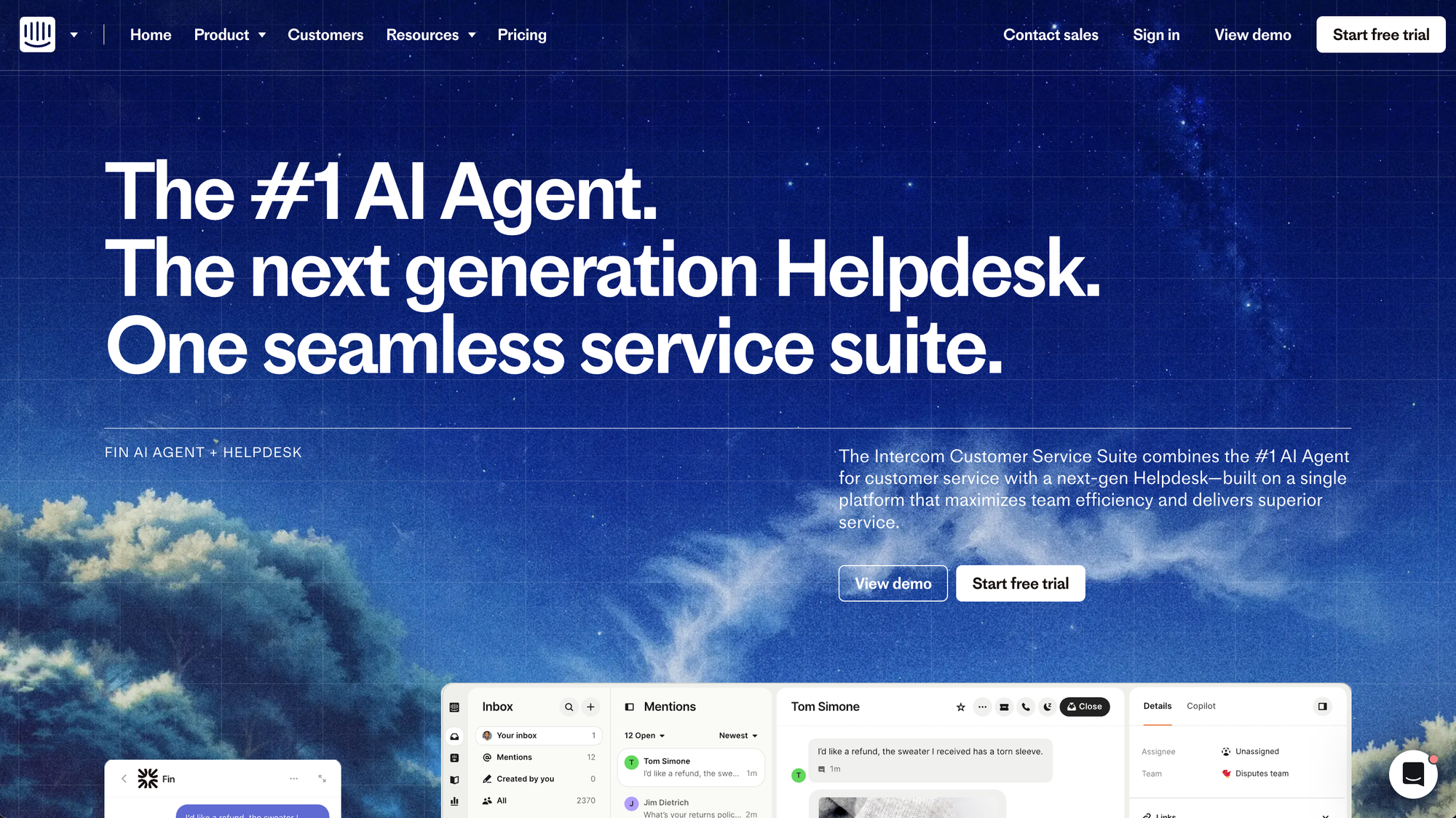
Intercom is now Fin, and Salesforce is buying it. In mid-2026 Intercom rebranded to Fin, named after the AI agent it launched back in 2023. Shortly after, Salesforce signed a definitive agreement to acquire Fin for roughly $3.6 billion to strengthen its agentic customer-service offering. The company restructured its entire product and pricing around Fin, its resolution engine. Intercom claims Fin can resolve up to half of common inquiries on its own, though real-world case studies tend to land between 42% and 50% (as of June 2026).
The takeaway: this is less a feature-by-feature bake-off and more a decision about which direction you want to bet on. The rest of this guide compares how the two products behave, with that context in mind.
Use cases
Drift and Intercom overlap in chat and automation, but teams use them very differently.
Drift was best for sales and marketing teams that wanted to start conversations early in the buying process. If your main goal was booking more demos and keeping your pipeline full, Drift's bots, playbooks, and CRM connections helped you focus on the leads that mattered most.
Intercom (Fin) shines once people are already inside your product. Support teams use it to manage tickets, offer live chat, and build knowledge bases. Product managers rely on it for onboarding flows and feature announcements. If your priority is improving customer retention and experience, Intercom tends to be the stronger pick.
Core features
Both tools offer chat, automation, and integrations, but their focus is very different.
Drift puts most of its energy into sales-driven conversations, while Intercom doubles down on supporting customers once they’re inside your product. Here’s how that plays out. 👇
Drift
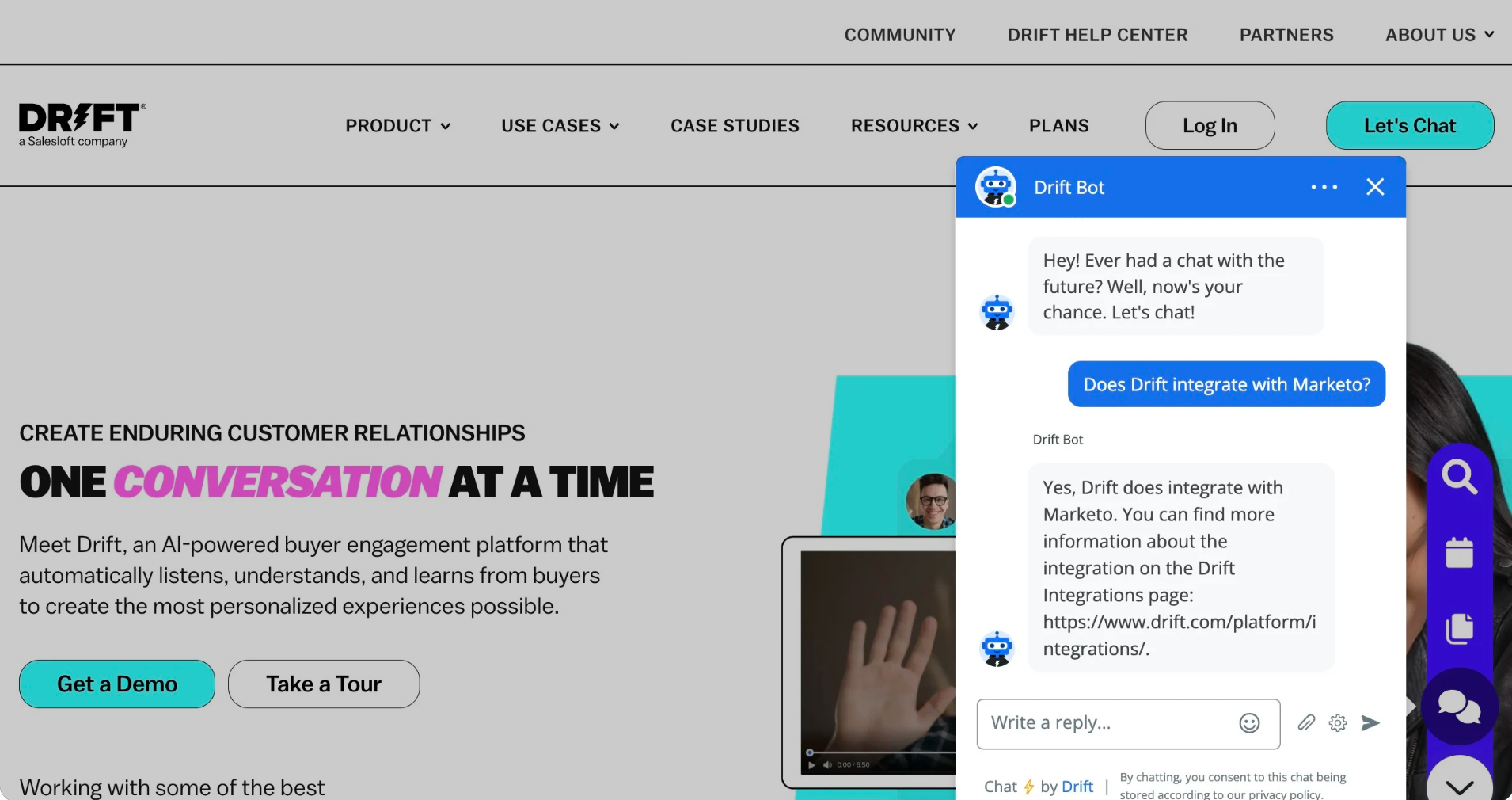
Drift was built to turn anonymous website visitors into warm leads. Its tools are tuned for sales and marketing teams who want conversations to happen fast, with fewer forms and less friction.
- Bionic Chatbots: AI bots trained on your brand content that hold open-ended conversations, qualify leads by buying intent, and route the right visitors to the right rep.
- Live chat for sales: Connect visitors with reps in real time to reduce the chance of losing a hot lead.
- Meetings and Drift Video: Book demos directly in the chat window and share recorded sales clips.
- Account-based targeting: Identify and engage high-value companies on your site instead of treating every visitor the same.
- CRM integrations: Sync with Salesforce and HubSpot so every conversation updates your pipeline.
Intercom
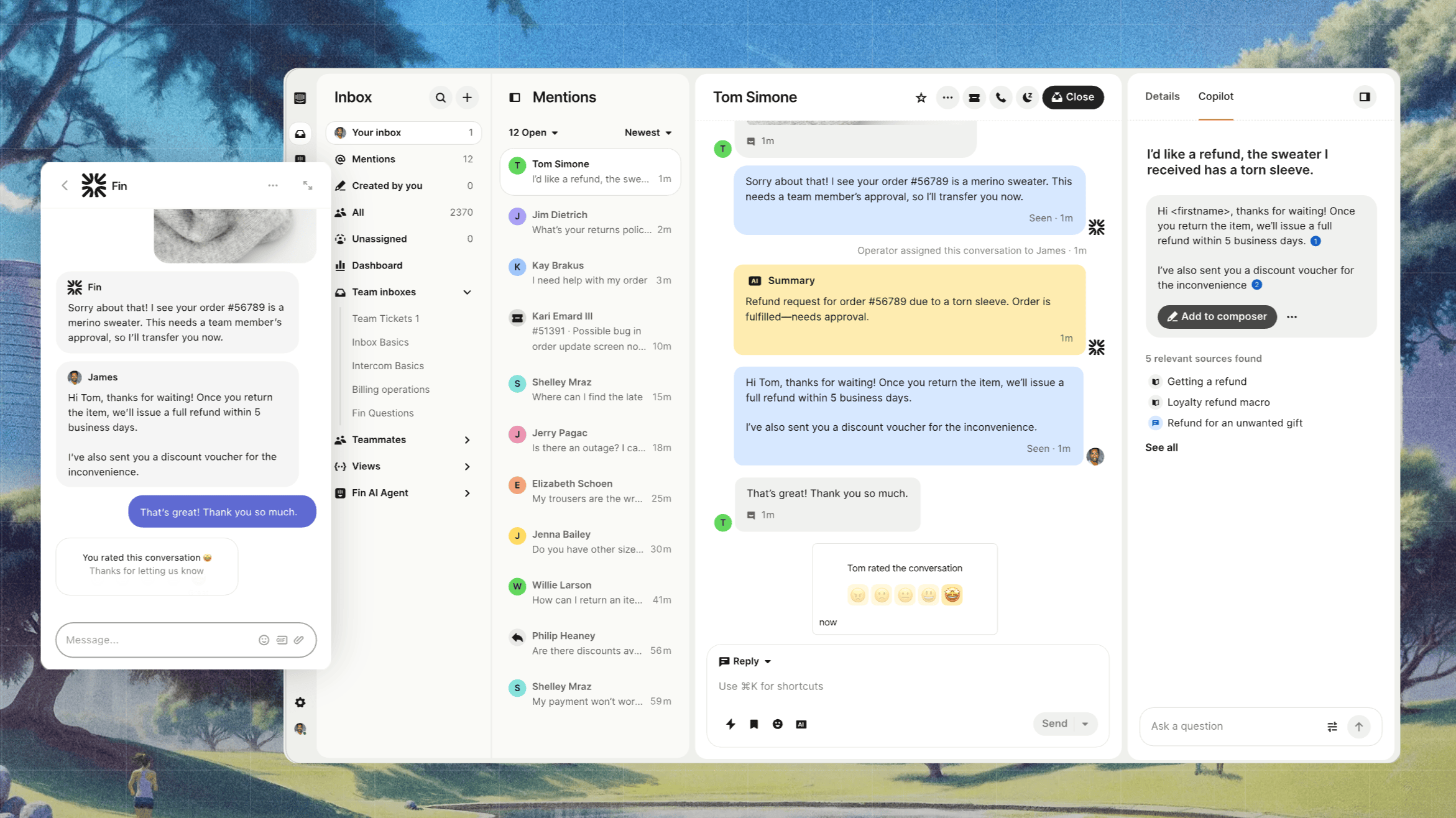
Intercom takes a broader view, helping businesses engage users across the entire customer journey. It's especially strong in support and product adoption, which is why SaaS companies lean on it for in-app experiences.
- Fin AI Agent: Resolves entire support conversations end-to-end using your help center and past conversations, not just article suggestions.
- Shared inbox and ticketing: Manage multichannel support in one unified view.
- Help center tools: Create a self-service knowledge base so customers can find answers without waiting for an agent.
- Automation workflows: Route conversations, suggest articles, and trigger responses for common issues.
- Product tours and onboarding: Guide new users through your app step by step to reduce churn.
Fin AI vs Drift AI: Resolution engine vs qualification engine
The AI comparison is where the difference between the two becomes most consequential, because their agents were built for opposite outcomes. Fin is a resolution engine. Drift's AI is a qualification engine.
Fin is designed to close support conversations without a human. It ingests your knowledge base, help articles, and historical conversations to generate autonomous answers, and a support manager can set guardrails for which topics it handles and when it escalates. Its weakness is nuance: Fin can struggle with complex, multi-step, or highly contextual questions, and it works best on straightforward inquiries. If your documentation is thin, resolution rates drop sharply.
Drift's Bionic Chatbots were built to parse a visitor's intent, ask qualifying questions, and route high-intent prospects to the right rep or booking flow. They were sophisticated at navigating sales handoffs but were never architected to autonomously resolve a billing dispute or walk a user through a technical process.
Conflating the two leads to bad decisions. A resolution engine and a qualification engine are not interchangeable, and if you want deeper coverage of the support side, our roundup of the best Intercom Fin alternatives digs into how the current crop of AI agents compare.
Ease of use and setup
Ease of use often decides whether teams fully adopt a tool or let it gather dust. Both Drift and Intercom are easy to navigate once running, but they're different when it comes to how much effort the setup takes.
Drift
Drift gives sales reps an intuitive, modern interface that makes live chat feel natural. Dashboards are clean and quick to grasp. The catch is set up. Building playbooks and connecting CRMs takes time, which means smaller teams may face a slower onboarding curve.
Intercom (Fin)
Intercom is accessible from day one with a clean interface that works well for support and product teams. Chat widgets and inboxes launch quickly without technical help. The trade-off is scope: its wide feature set can feel overwhelming, especially once you get into automation and advanced workflows.
Integrations and ecosystem
Drift and Intercom both connect to popular platforms, but the scope and focus are different.
Drift
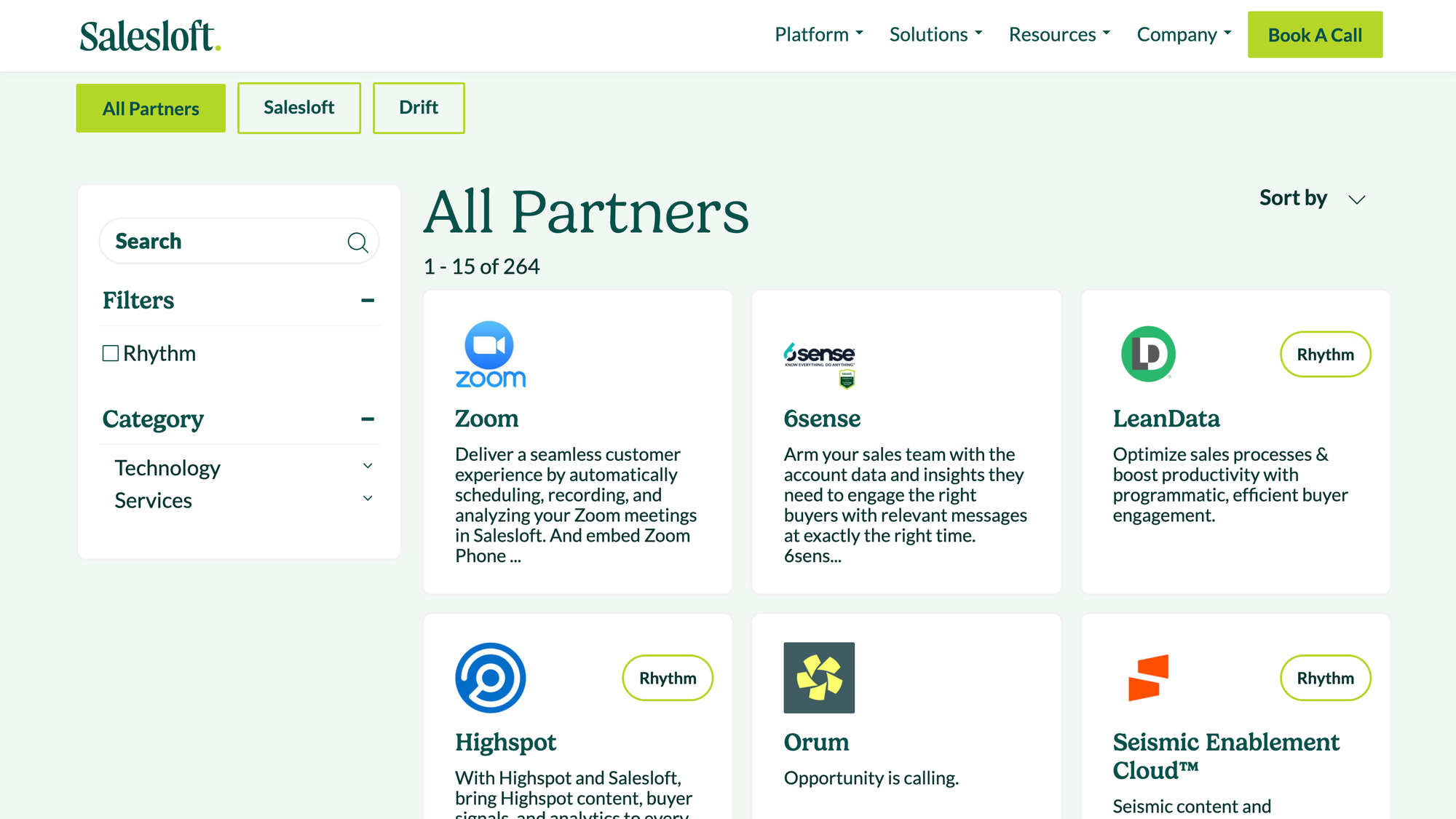
Drift offers around 50 integrations across CRM, marketing, analytics, and communication tools. The most valuable for sales teams are Salesforce, HubSpot, Slack, Google Analytics, and Zapier.
These connections make it easier to qualify leads and move them into your pipeline without manual data entry. Drift is more concentrated on sales technology, which makes it a straightforward fit for companies that already rely on CRM and marketing automation.
Intercom (Fin)
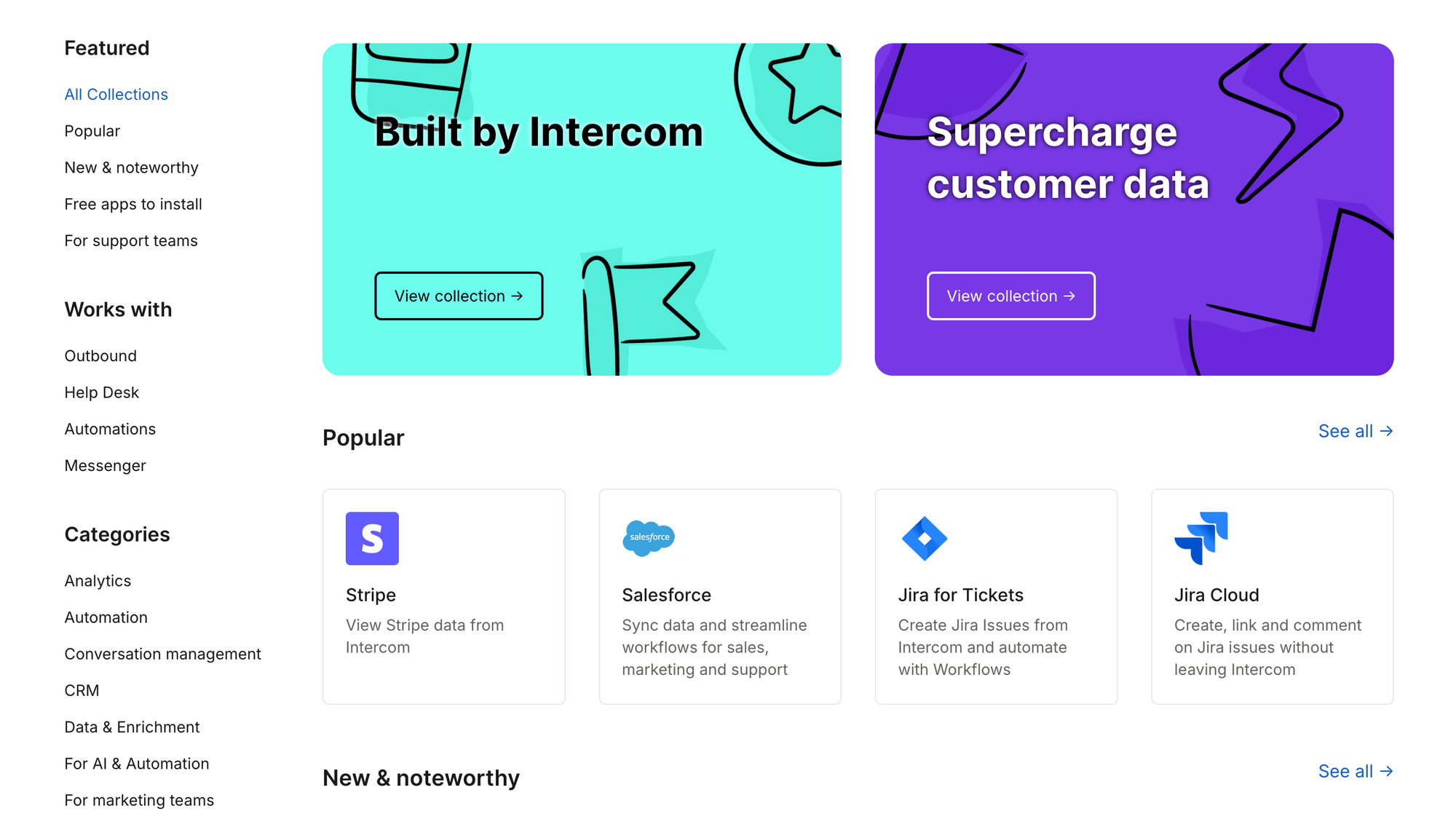
Intercom’s app marketplace goes much wider, with hundreds of integrations covering support, CRM, analytics, product management, and collaboration. Teams often use Salesforce, Zendesk, Slack, Microsoft Teams, WordPress, and Automate.io to connect with existing workflows.
This broad range gives support and product teams more freedom to handle different use cases inside Intercom's ticketing system without depending on outside tools.
Pricing plans
If you ask the average Intercom or Drift user about their first impression for either tool, they will probably tell you one thing: it's expensive. Let’s break down the actual costs of using Drift or Intercom in 2025. Both offer tiered plans, but their structure and add‑on models are quite different.
Drift
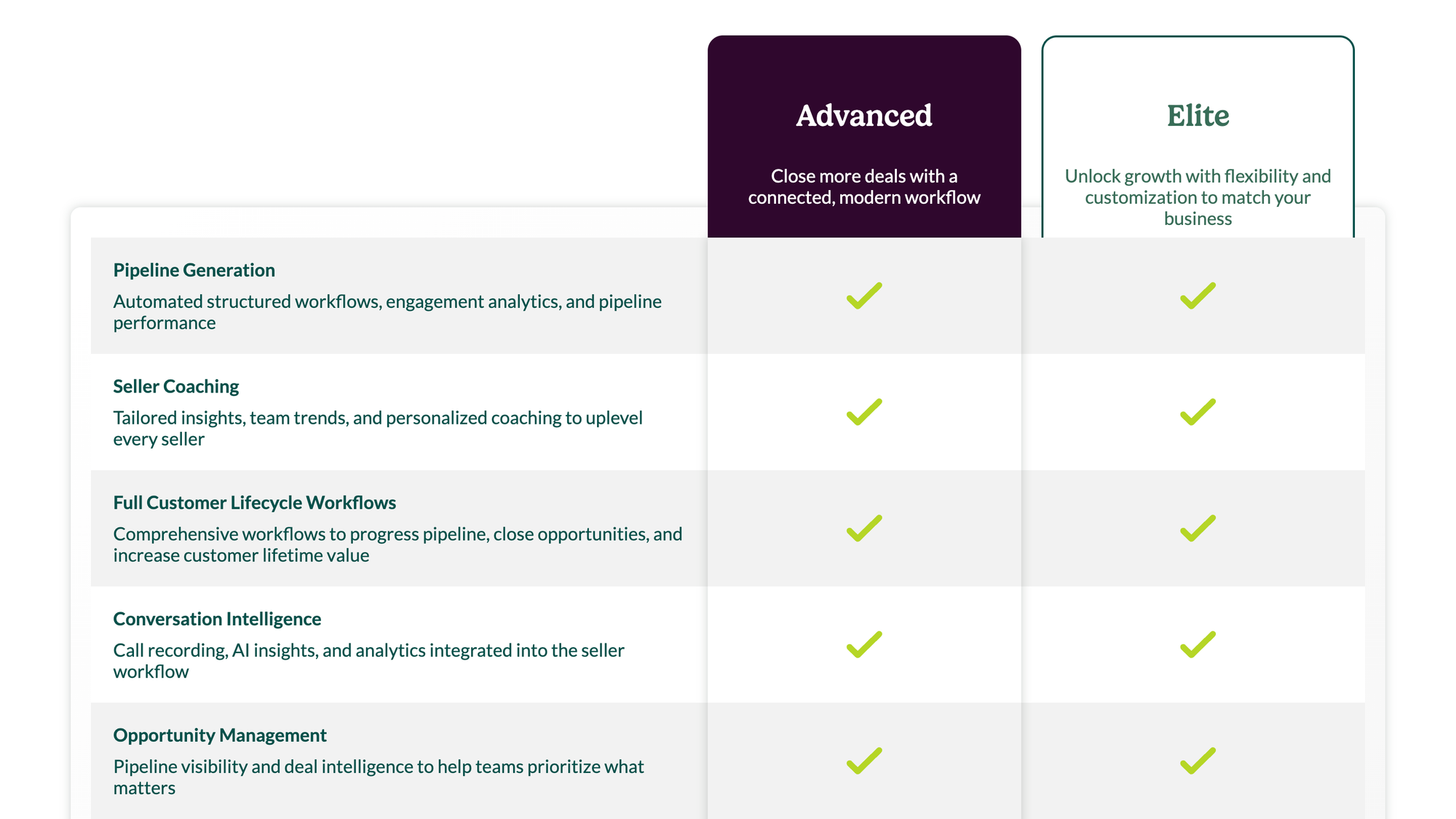
Drift's pricing is opaque and effectively frozen. Since the Salesloft acquisition, the public pricing page has been removed and quotes are entirely custom and bundle-oriented, designed to pull you into the wider Salesloft contract. Older reports cited a Premium plan starting around $2,500 per month, but that predates the acquisition and no longer reflects what you'd actually pay. There's no free plan, and trials run through sales. Given the product is being sunset, new adoption isn't really on the table.
Intercom
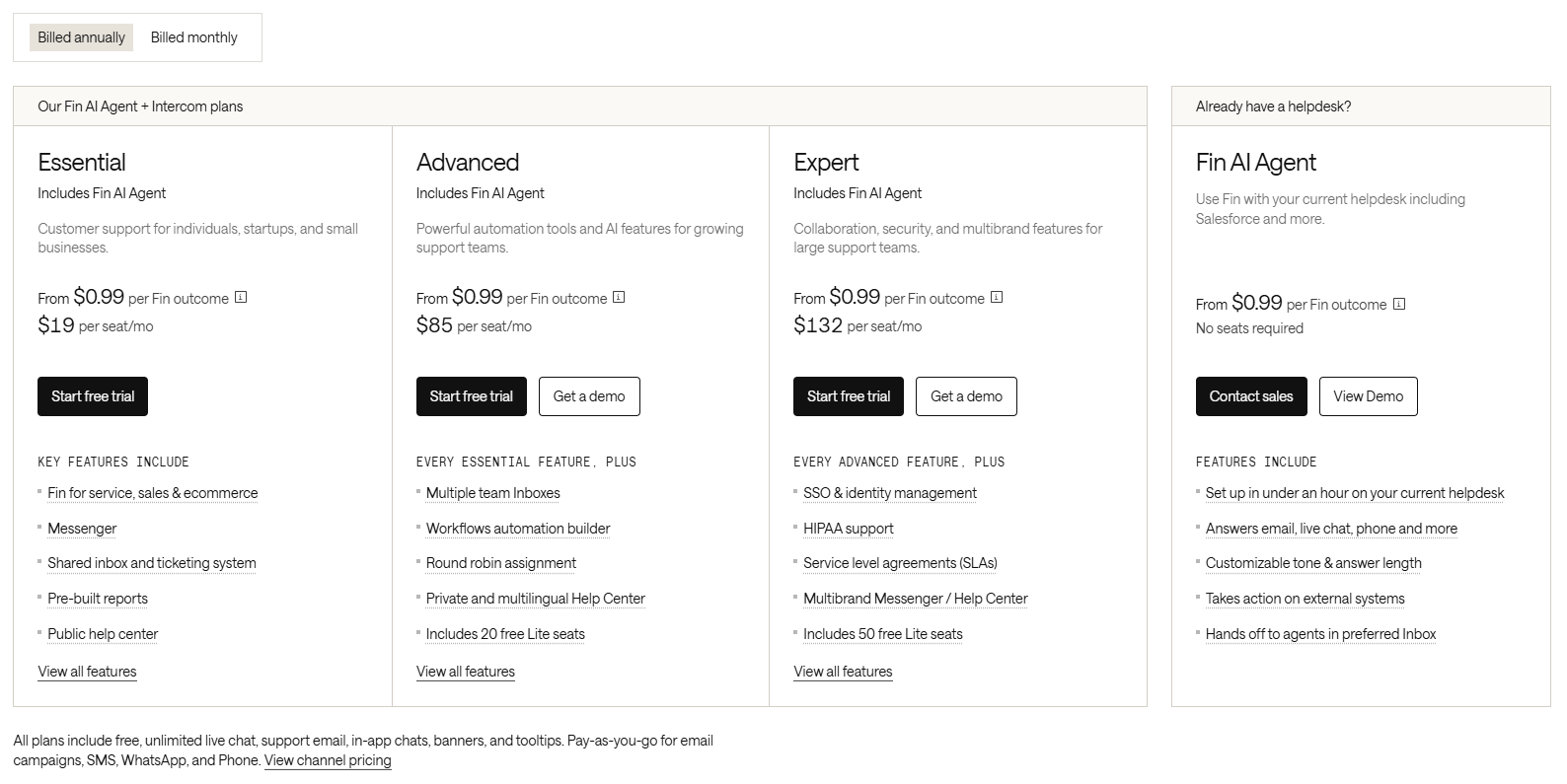
Intercom's pricing now has two parts: a per-seat plan and outcome-based AI usage on top.
- Essential: $19 per seat/mo (billed annually), including shared inbox, ticketing, Messenger, and a public help center.
- Advanced: $85 per seat/mo, adding workflow automation, multiple team inboxes, round-robin assignment, and 20 free Lite seats.
- Expert: $132 per seat/mo, adding SSO, HIPAA support, SLAs, multibrand Messenger, and 50 free Lite seats.
The bigger change is how AI is billed. Fin is now priced per outcome, not per seat and not simply per resolution:
- $0.99 per outcome, where an outcome is a resolution, a configured procedure handoff, a disqualification, or self-serve routing. Qualifications (matching a sales prospect) cost $9.99 each.
- You're charged at most once per conversation, and you only pay when Fin actually delivers a result.
- Fin also runs standalone on top of another helpdesk (Salesforce, HubSpot, and more) from $0.99 per outcome, with a 50-outcome monthly minimum ($49.50 at that rate) and no Intercom seat costs.
The nuance to watch is that a per-outcome price is not the same as a predictable monthly budget. The more conversations Fin handles, the more it can cost, so your bill scales with success rather than staying flat.
In short: Drift: Quote-based and bundled into Salesloft, historically starting around $2,500/mo, with the product now winding down. Intercom (Fin): $29-$132 per seat/mo plus $0.99 per Fin outcome, or standalone Fin from $49/mo on your existing helpdesk.
Customer support & service quality
Given that these are tools for customer support, their own service should be solid. That's generally true for both, though your experience can vary depending on your plan and when you reach out.
Drift
Drift positioned support around dedicated account management and onboarding assistance, with larger customers getting a success manager. Response quality skewed toward higher-tier plans, so smaller teams often felt a gap. Now that Drift is winding down, support is oriented around migration rather than new deployments.
Intercom (Fin)
Intercom is widely recognized for comprehensive support options, including live chat, email, and an in-depth knowledge base, backed by active community forums. Response times are generally quick, though some teams report slower turnaround during peak periods. Larger companies tend to value the onboarding and training resources that shorten the learning curve for complex setups.
Intercom vs Drift: User reviews
Both customer support solutions have been around for a while and there are plenty of reviews online to look at before purchasing.
Drift
As we recently covered in our article on Drift alternatives, Drift generally gets a lot of praise, but there are a few common themes when it comes to complaints. There are plenty of glitches in Drift when it comes to outbound messages, automation features, and other bits in the platform.
- "We are not able to view number of conversational landing page downloads or who clicked the download button which would be valuable for our team. Additionally, AI topics cannot be added to reusable blocks which would be helpful to more quickly duplicate the sometimes complicated AI conversation flow!" (G2 review)
The elephant in the room is Drift's pricing, which is reserved for those with deep pockets only.
- "Would probably be the cost per user. Wish it wasn't so expensive to add one person to chat. I think we'd see a bigger ROI if we were able to add more people to chat at a lower rate. We have several solutions and people specific to those solutions however it would be too expensive to pay for an account for all of them so we have people chatting that are not the experts." (G2 review)
Last but not least, one of the key differences between Intercom vs Drift is that the latter is not that easy to use out of the box.
- "Initial setup is not easy. I think Drift could improve a lot on that part. It was frustrating to find the option to change the default time your meetings were booked for, and the settings overall. There aren't so many chat in my market so i don't use the product too often unfortunately." (G2 review)
Intercom
Intercom offers a lot of value for money, and it's one of the best marketing automation tools in the market today, but it's not without its faults and there are plenty of reasons why users look for Intercom alternatives.
Fin is a huge selling point for Intercom's target audience, as it promises quick resolution and bills for outcomes, including resolutions and configured procedure handoffs. In reality, Fin is not always that accurate and can crash out with more complex queries.
- "Fin can struggle with complex, nuanced questions, occasionally providing inaccurate responses. This can lead to customer frustration, especially for those who prefer human support or have limited patience with AI agents. It works best for straightforward inquiries rather than issues requiring deep context or subjective judgment." (G2 review)
And the knowledge base functionality in Intercom is an excellent addition for self service support, but the AI doesn't offer duplication detection. Not a huge concern, but you may end up with an overloaded knowledge base.
- "Just a couple of things I don’t necessarily dislike, but see as areas for improvement. AI Duplication Detection: It would be helpful to have a feature that automatically identifies duplicate articles. This would assist us in keeping the knowledge base clean and well-organized. Fin's Handoff Experience: Fin often asks customers if they’d like to connect with a human agent, but doesn’t always follow through. I've noticed that there's a slight delay in assigning the chat to an agent, and if the customer types something during that window, Fin starts responding again—leading to frustration. If this behavior could be improved, it would really enhance the experience." (G2 review)
Intercom offers a huge variety of integrations, but they're not always built up to standard, as one user notes:
- "Native Hubspot integration is a bit so-so. Would be nice with a better out of the box integration. Escalation can be a bit tricky to get right, but it's getting better due to constant updates." (G2 review)
Who should use each tool
Drift is best for:
- Teams already committed to Salesloft that run an outbound-heavy, named-account ABM motion
- Sales teams focused on qualifying website visitors and booking demos fast
- Existing Drift customers who should now be actively planning a migration ahead of the sunset
Intercom (Fin) is best for:
- Support teams that need live chat, ticketing, and a knowledge base with an AI agent on top
- SaaS companies improving onboarding with product tours and in-app messages
- Teams comfortable with usage-based AI billing and the budgeting that comes with per-outcome pricing
Featurebase: a better alternative to Drift and Intercom! ✨
If Drift is too sales-focused and Intercom is too expensive, consider Featurebase, a modern support platform that blends the best of both worlds.
It’s loved by thousands of fast-growing GTM and support teams from companies like Lovabale, Polymarket, and Instantly.
With pricing starting from just $29 per user per month (+$.029 for every successful AI resolution), it costs a fraction of Intercom, Drift, and most other support platforms.
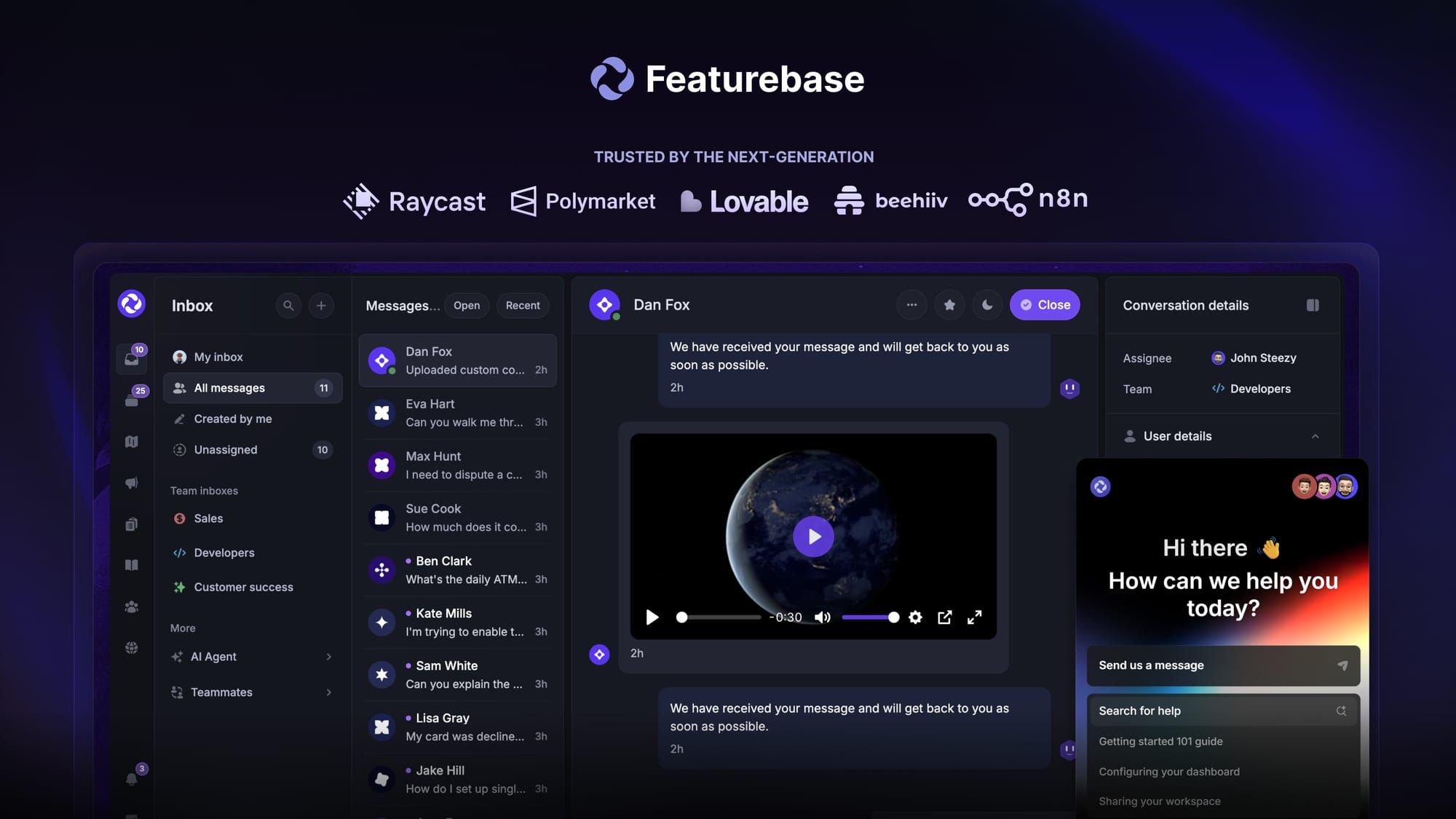
Some of the many Featurebase features include:
- Unified inbox – manage your live chat & email conversations in one place with your whole team
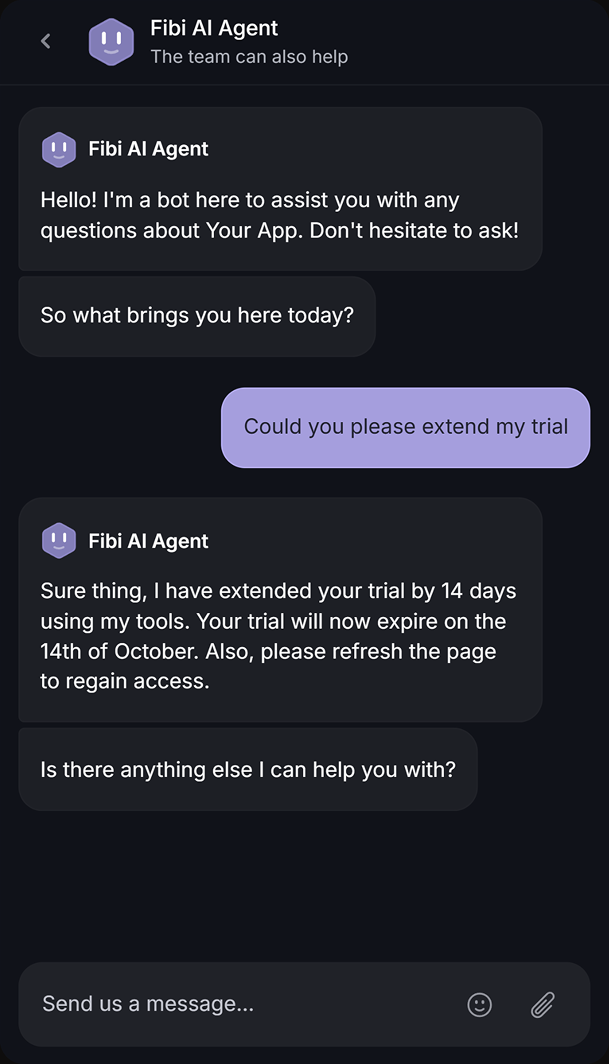
- AI agent & automations – fully automate your support with AI and endless custom workflows, like extending trials, offering discounts, qualifying leads, etc.
- Messenger widget – provide AI and human support from anywhere with a customizable in-app widget
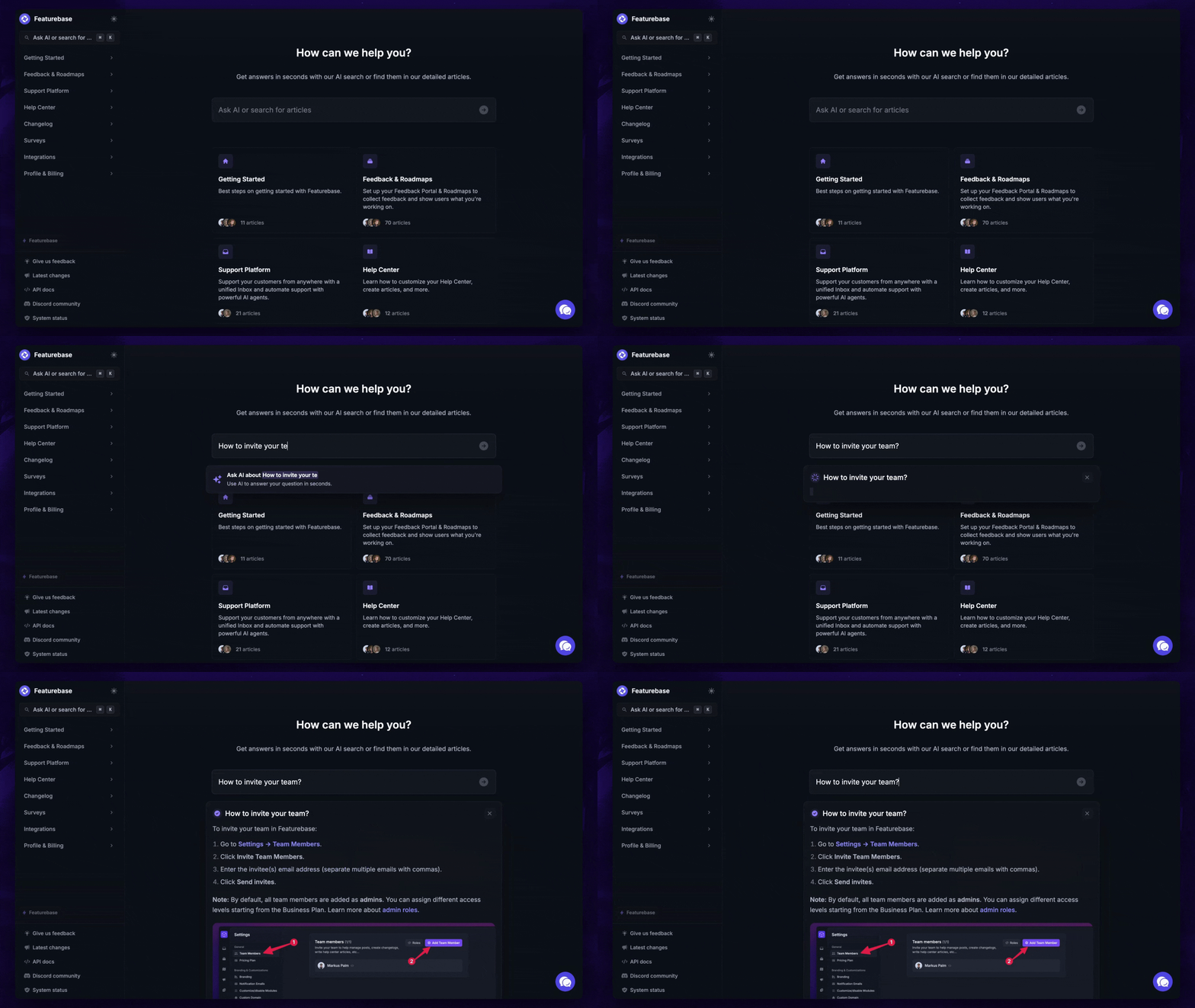
- Help Center – a branded knowledge base with instant AI answers
- Email support – Seamlessly provide support to your customers via email sync
- Native ticketing – centralize & keep track of all customer requests in one place
- Multi-language & custom domain support – serve content in 40+ languages with your domain and branding
- Mobile app – respond to customers, receive notifications, and unblock users on the go
- Integrations – Slack, Linear, Jira, Discord, Hubspot, and many more
- Plus, feedback collection, product roadmaps, release notes, and customer surveys – all in one place
Long story short, Featurebase gives you all the powerful support capabilities of Drift and Intercom, but without the super expensive pricing. Don't just take our word for it. You can try Featurebase completely free and see for yourself.
The onboarding is quick and doesn't require a credit card. Plus, you can automatically import your Intercom knowledge base - so there’s zero risk involved. 👇
✨ Automate your support with the fastest AI-enhanced Inbox today →
More comparisons:
- Best Drift alternatives
- Best Intercom alternatives
- Intercom vs Featurebase
- Intercom vs Zendesk
- Intercom vs Help Scout
- Intercom vs Tidio
- Intercom vs Front
- Intercom vs Crisp
- Intercom vs HubSpot
- Intercom vs Freshdesk
FAQs
Is Drift being discontinued?
Yes. In March 2026, Clari + Salesloft announced that Drift is being gradually sunset, and named 1mind as its exclusive AI successor. Existing customers are being guided toward migration, and Drift's public pricing page has been removed. If you're evaluating Drift for a new deployment, it's effectively off the table.
Is Intercom the same as Fin now?
More or less. Intercom rebranded to Fin in 2026, taking the name of the AI agent it launched in 2023. The underlying helpdesk and Messenger still exist, but the product and pricing are now centered on the Fin AI agent.
How much does Fin cost per resolution?
Fin starts at $0.99 per outcome for resolutions, configured procedure handoffs, disqualifications, and self-serve routing. Sales qualifications cost $9.99 each, with at most one outcome charge per conversation. Intercom seats cost $19-$132 per seat/month billed annually, or $29-$139 monthly. Standalone Fin on another helpdesk requires no Intercom seats and has a 50-outcome monthly minimum ($49.50 at the $0.99 rate).
Is Drift or Intercom better for sales?
Drift was built specifically for sales, with lead qualification, account-based marketing, and instant meeting scheduling, so historically it was the stronger pick for turning website traffic into booked demos. Intercom (Fin) can support sales workflows but is primarily a customer-support and product-engagement platform. The catch is that Drift is being sunset, so for a new purchase the practical choice is Intercom or a dedicated alternative.
What's a cheaper alternative to Drift and Intercom?
Featurebase is a common pick for teams that want support, help center, and feedback tools in one place without legacy pricing. It offers a free plan and paid plans from $29 per seat per month with $0.29 per AI resolution, and it lets you import your existing Intercom knowledge base to make switching low-risk.