Blog ComparisonsFreshdesk vs Intercom: Ticketing vs Live Chat in 2026
Freshdesk vs Intercom: Ticketing vs Live Chat in 2026
Torn between Freshdesk and Intercom? Both tools promise better support - but one's built for tickets, the other for chat. In this guide we compare their core differences - including Intercom's rebrand to Fin - to help you figure out which (if either) is the better fit in 2026.


✨ Looking for a modern & affordable alternative to Freshdesk and Intercom? Check out Featurebase →
Staying on top of customer interactions is the bare minimum for businesses in 2026. Your customers expect 24/7 availability, personalized support and the ability to troubleshoot their problems on their own before talking to an agent. And there's an entire industry of software that helps businesses do just that. The toss-up between Freshdesk and Intercom seems logical at first.
Both products offer multi channel support, automation capabilities and promise to increase customer satisfaction. But they are fundamentally different. Freshdesk is a ticket management software at its core, while Intercom revolves around live chat.
One more thing changed the picture in 2026: Intercom rebranded around its Fin AI Agent in May 2026, and Salesforce signed a deal to acquire the company for roughly $3.6 billion in June. We'll factor both into the comparison below. 👇
TL;DR: Freshdesk vs Intercom: which one is better for your business?
- Freshdesk is ticket-first with structured case management, SLAs, and reporting.
- Intercom is chat-first with real-time messaging, bots, and proactive in-app engagement, now positioned as the AI-first "Fin" platform.
- AI focus differs: Freshdesk uses AI (Freddy) to triage and speed up ticket workflows, while Intercom's Fin AI Agent resolves queries directly and is priced per outcome.
- Integrations: Freshdesk leans on plug-and-play productivity tools, Intercom focuses on embedding support in customer-facing apps.
- Ease of use: Freshdesk is simple to roll out but heavier at scale, Intercom is fast to start but more complex as features and costs grow.
- Pricing: Freshdesk is transparent and includes a free plan, Intercom mixes per-seat plans with usage-based Fin pricing that can climb fast.
In short, Intercom can quickly become very pricey, while Freshdesk can feel outdated and delayed with AI features.
And here's the quick side-by-side before we dig into each category (all pricing as of July 2026):
| Freshdesk | Intercom (Fin) | |
|---|---|---|
| Best for | Structured, multi-channel ticketing | Conversational, AI-first support |
| Core model | Ticket-first help desk | Chat-first messaging platform |
| Starting price | $19/agent/mo (Growth) | $29/seat/mo (Essential) |
| Free plan | Yes - free for 1-2 agents (6 months) | No free plan |
| AI agent | Freddy AI (triage, suggestions) | Fin AI Agent (end-to-end resolution) |
| AI pricing | Session packs ($49 per 100 sessions) | Outcome-based ($0.99 per Fin outcome) |
| Channels | Email, chat, phone, social, web forms | Chat, Messenger, email (phone/SMS as add-ons) |
| Mobile apps | iOS and Android | iOS and Android |
| Automation | Rules, SLAs, skills-based routing | Workflows, bot rules, AI routing |
| Analytics | Dashboards on every plan | Conversation reporting, deeper on higher tiers |
If you're after a more affordable alternative to both, check out Featurebase. We're a modern alternative to Intercom and Freshdesk - but we'll stay unbiased in this comparison, promise.
Intercom vs Freshdesk: Basic features
Before you start looking at Freshdesk and Intercom, you need to ask yourself: what do I really need and how do I communicate with my customers?
- Freshdesk is a full-fledged help desk tool that helps you manage support queries and tickets.
- Intercom's strength is conversational customer support and proactive customer engagement.
In other words, their basic features are fundamentally different.
Freshdesk
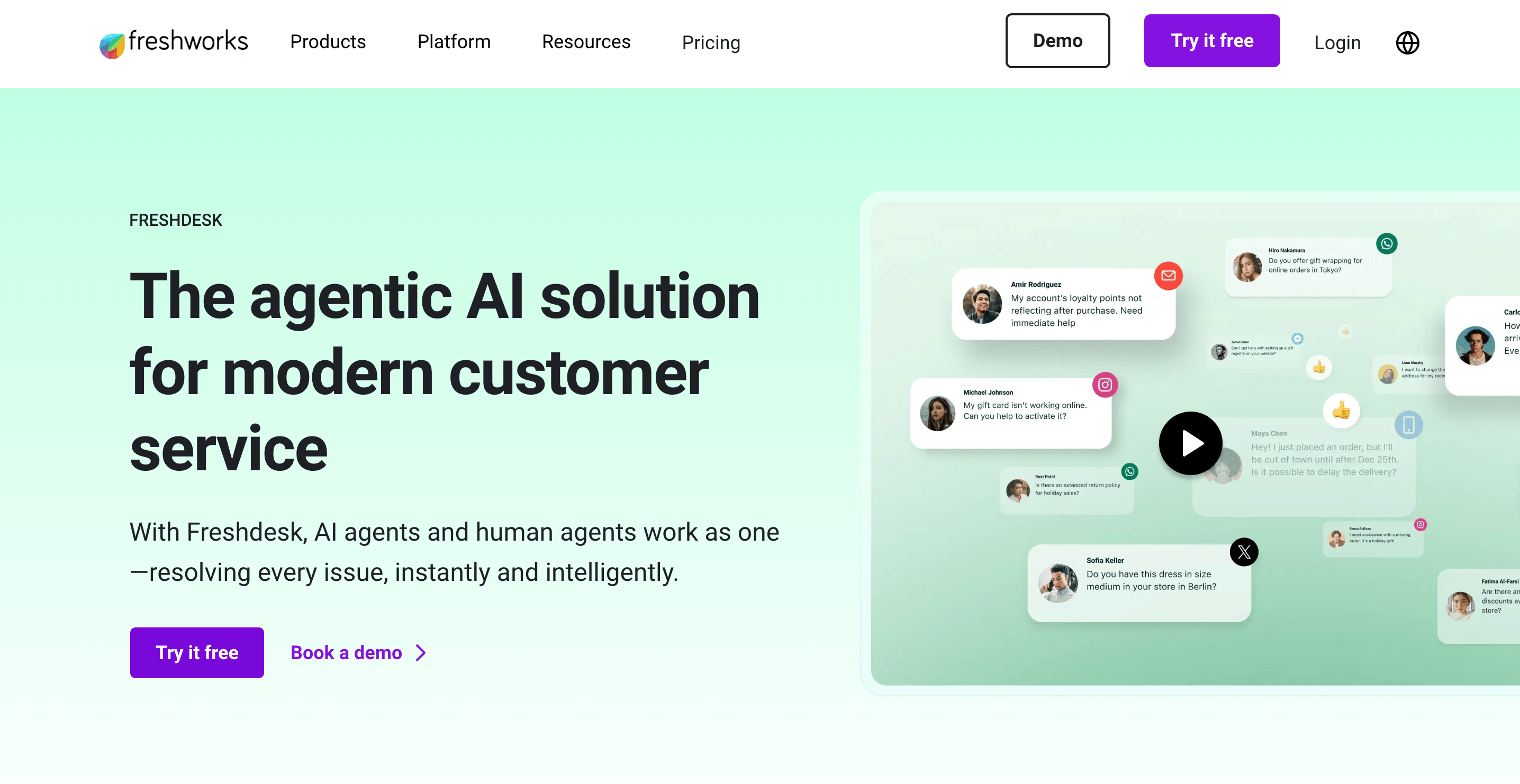
Freshdesk gives support teams a solid toolkit that covers traditional ticketing and more advanced service operations. Key strengths include:
- Automation and workflows: Custom rules, time-triggered actions, and SLA-based escalation paths keep teams on top of response times and urgent issues.
- Knowledge base: Branded help centers, FAQs, and community forums allow customers to self-serve, reducing ticket volume.
- Collaboration tools: Internal notes, parent-child ticketing, and team inboxes help agents work together without duplicating effort.
- Reporting and analytics: Dashboards give visibility into ticket volume trends, agent performance, SLA compliance, and customer satisfaction scores.
- Ticketing system: Centralizes requests from email, chat, phone, social, and web forms into one place. Tickets can be prioritized, assigned, and escalated with automation rules.
Intercom
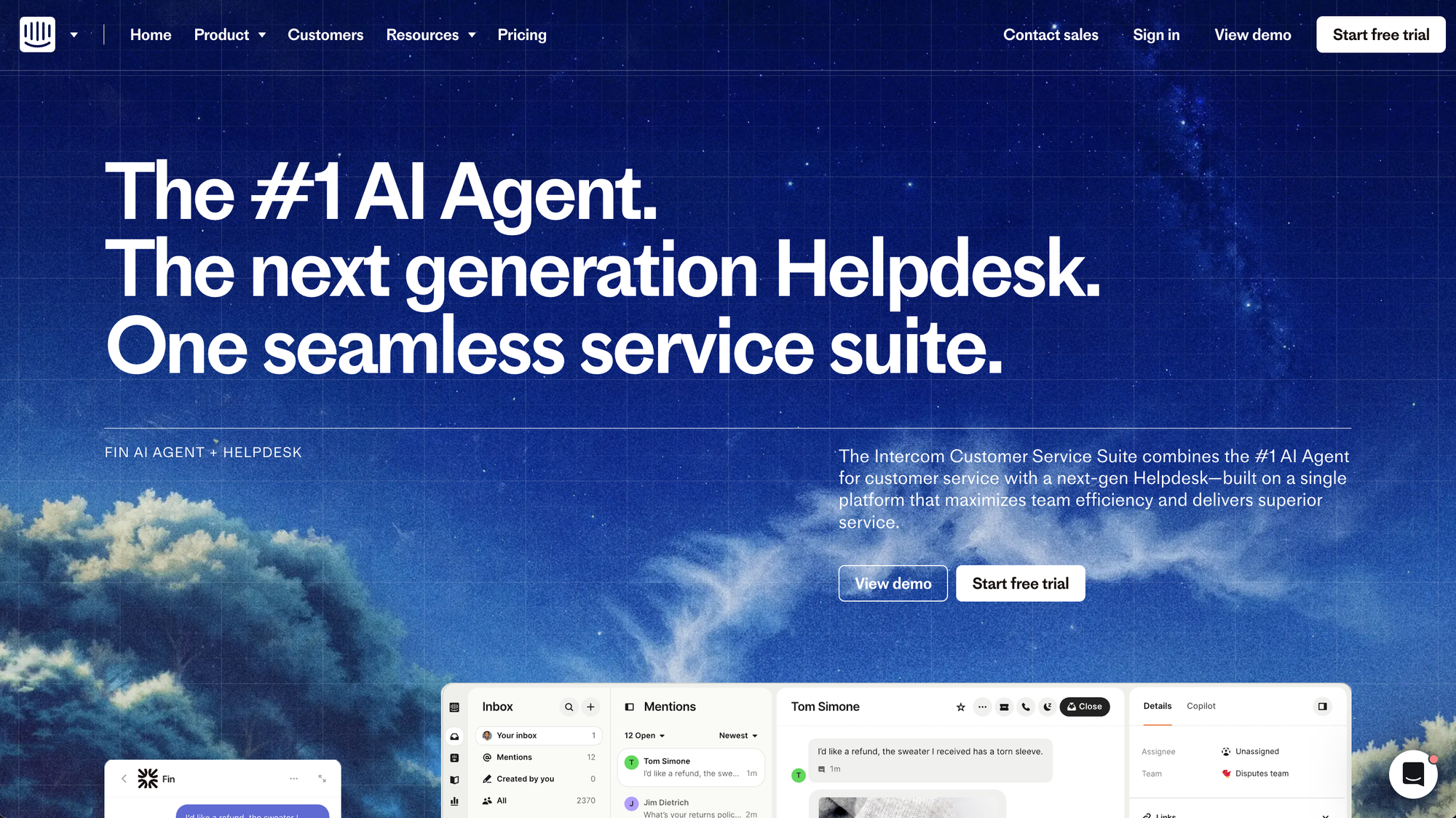
Intercom focuses on real-time messaging and customer engagement. Its feature set looks more like a blend of live chat, automation, and marketing tools across multiple channels. As of May 2026 the company rebranded around its AI agent, so you'll now see it marketed as "Fin," though the core Intercom inbox and Messenger remain.
- Messenger and live chat: In-app chat widgets, website chat, and mobile messaging keep conversations flowing where customers already are. This makes Intercom ideal for businesses that lean on conversational customer service and real-time support.
- Proactive outreach: Send targeted messages, announcements, and onboarding tours to users directly inside your app or website.
- Shared inbox: All customer messages flow into a team inbox with context on who the user is, their activity, and previous conversations.
- Help center and articles: Self-service libraries that can be surfaced automatically by bots during conversations.
- AI bots and automation: The Fin AI Agent handles routine questions, suggests responses, and deflects tickets before they reach an agent.
In the end, Freshdesk is a better option for companies that need structured ticketing, SLAs, and traditional help desk operations. Intercom is better if you want real-time conversations, AI-powered chatbots, and proactive engagement to keep customers engaged inside their product.
Once again, it's not really a valid comparison since both tools have unique features that solve specific pain points.
AI features
Both Freshdesk and Intercom are leaning heavily on AI in 2025, but they use it in very different ways. Freshdesk positions AI as a way to improve ticket management and agent efficiency, while Intercom puts AI at the center of conversational support with its AI agent.
Freshdesk
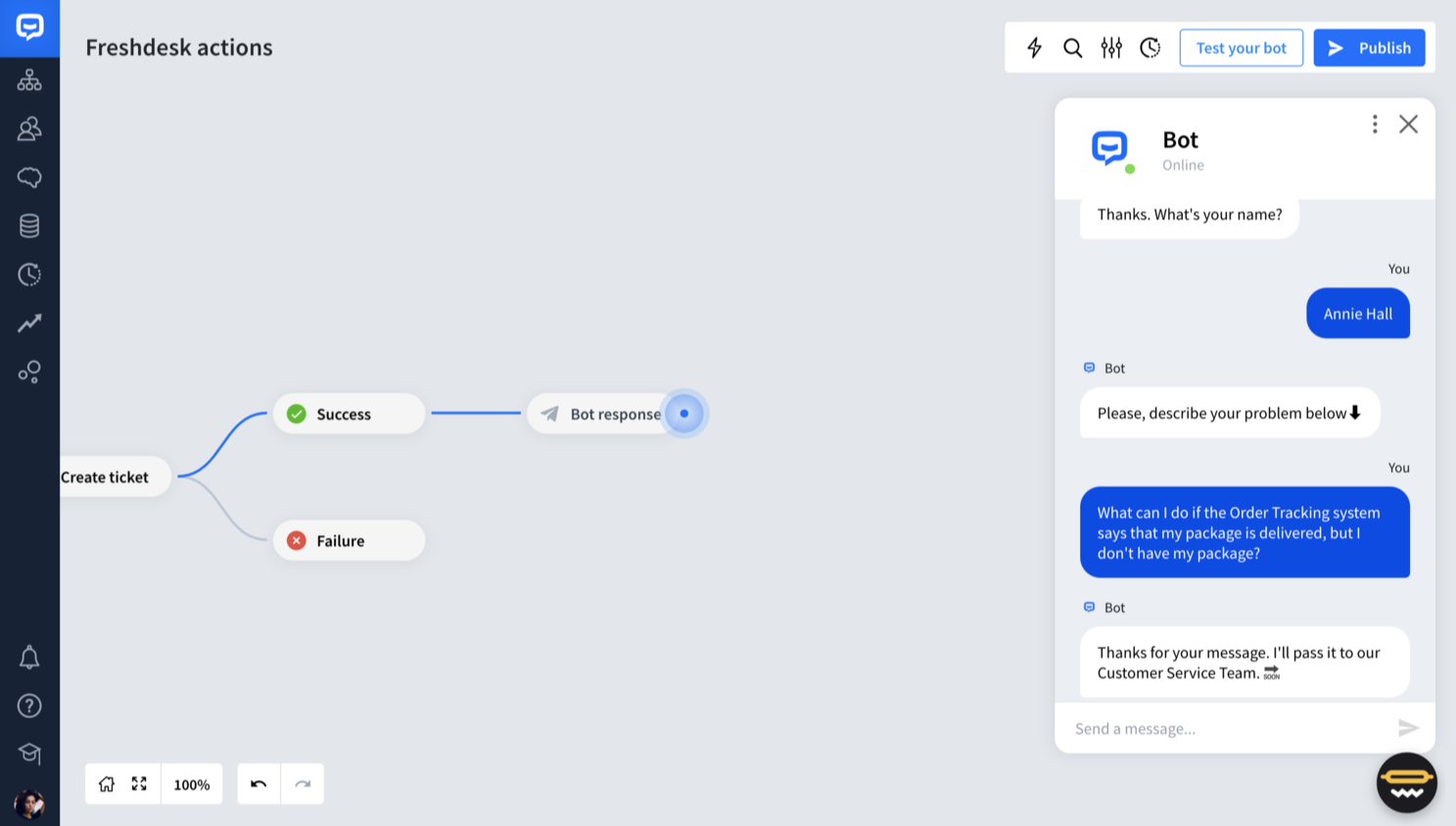
Freshdesk’s AI layer is branded as Freddy AI, which is focused on helping agents work faster and customers help themselves. Key elements include:
- Response suggestions: Agents get real-time reply recommendations based on past tickets and knowledge base content.
- Predictive analytics: Freddy highlights tickets likely to breach SLAs and suggests next-best actions to avoid delays.
- Customer self-service: Chatbots powered by Freddy handle simple queries, escalate complex ones, and point customers to relevant knowledge base articles.
- Performance insights: AI reviews agent interactions, identifies trends, and flags quality issues.
- AI-powered ticket triage: Incoming requests are categorized, prioritized, and routed to the right agents automatically.
Intercom
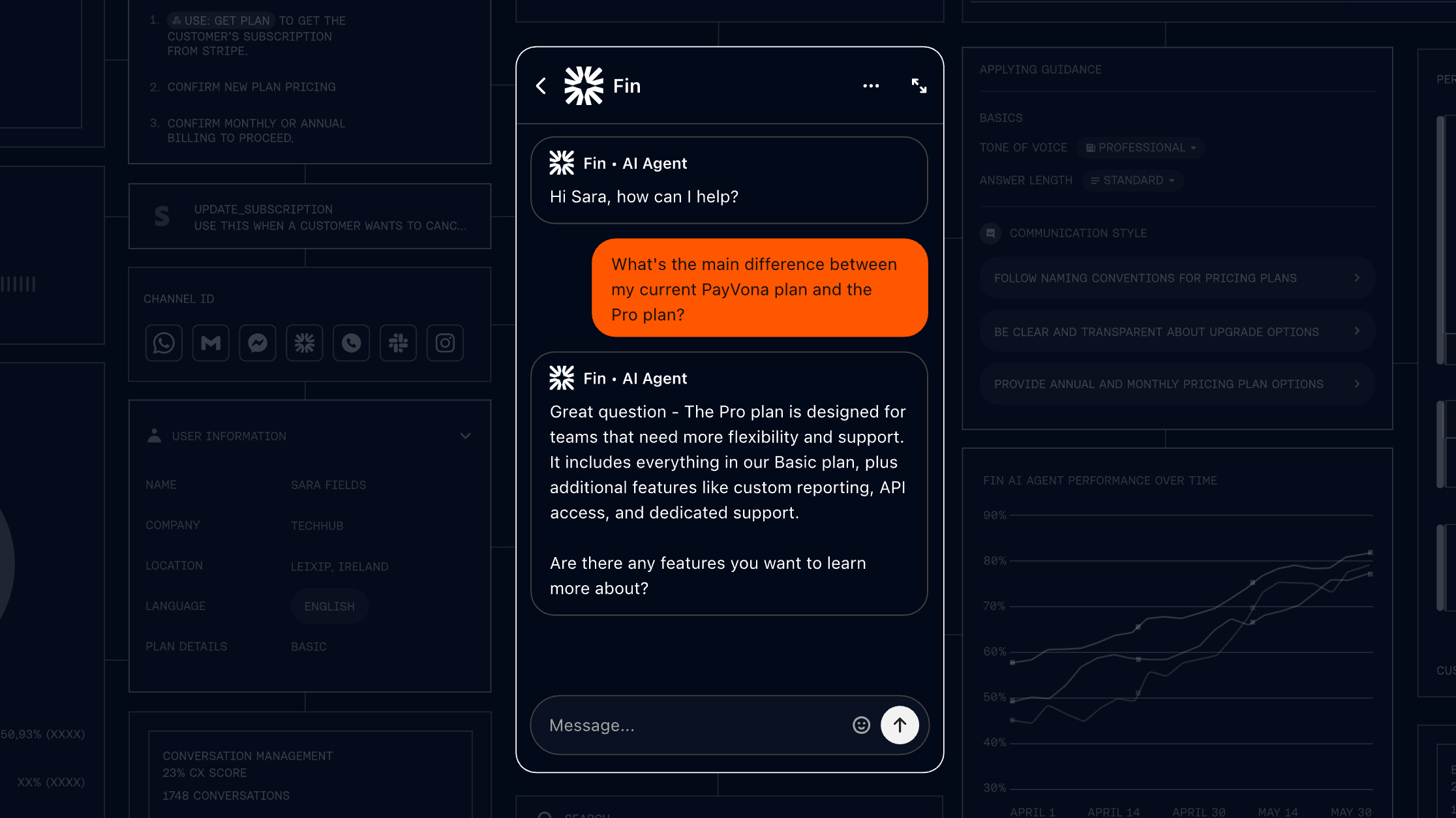
Intercom has made AI its centerpiece, with the Fin AI Agent and additional copilots shaping much of the platform's modern value. The rebrand to Fin in 2026 made this shift explicit, moving the product from a business messenger to an AI-first customer support platform.
- Fin AI Agent: A resolution bot that automatically answers repetitive questions and closes tickets, priced per outcome rather than per seat. It's one of the more capable AI support agents on the market today.
- AI-assisted routing: Detects intent and sentiment, then directs conversations to the right team or agent.
- Translation in inbox: Automatically translates conversations, helping agents support customers in multiple languages.
- Continuous learning: The AI improves over time as it pulls from the connected knowledge base and past interactions.
- AI Copilot: Drafts replies for agents, summarizes long customer conversations, and provides suggested responses.
One development worth weighing if you're evaluating Intercom today: in June 2026 Salesforce signed a definitive agreement to acquire the company (by then named Fin) for roughly $3.6 billion, with plans to fold Fin's customer-agent technology into its Agentforce platform. For existing customers it's business as usual for now, but buyers making a multi-year decision should factor in the roadmap uncertainty that comes with any acquisition of this size. G2 reviewers also flag that Fin can struggle with complex or nuanced queries and that resolution bots are gated to higher plans.
In conclusion: Comparing the two platforms side by side, their AI use is vastly different, much like its core feature set. Freshdesk's AI features help businesses improve ticket management and agent productivity. Intercom's Fin AI wants to remove humans from the equation and solve problems quickly and easily without agent involvement.
Integrations & customization options
In this area, Freshdesk and Intercom are actually similar in the sense that both have a large number of integrations and the intuitive UI makes customization easy. This is where the similarities end.
Freshdesk
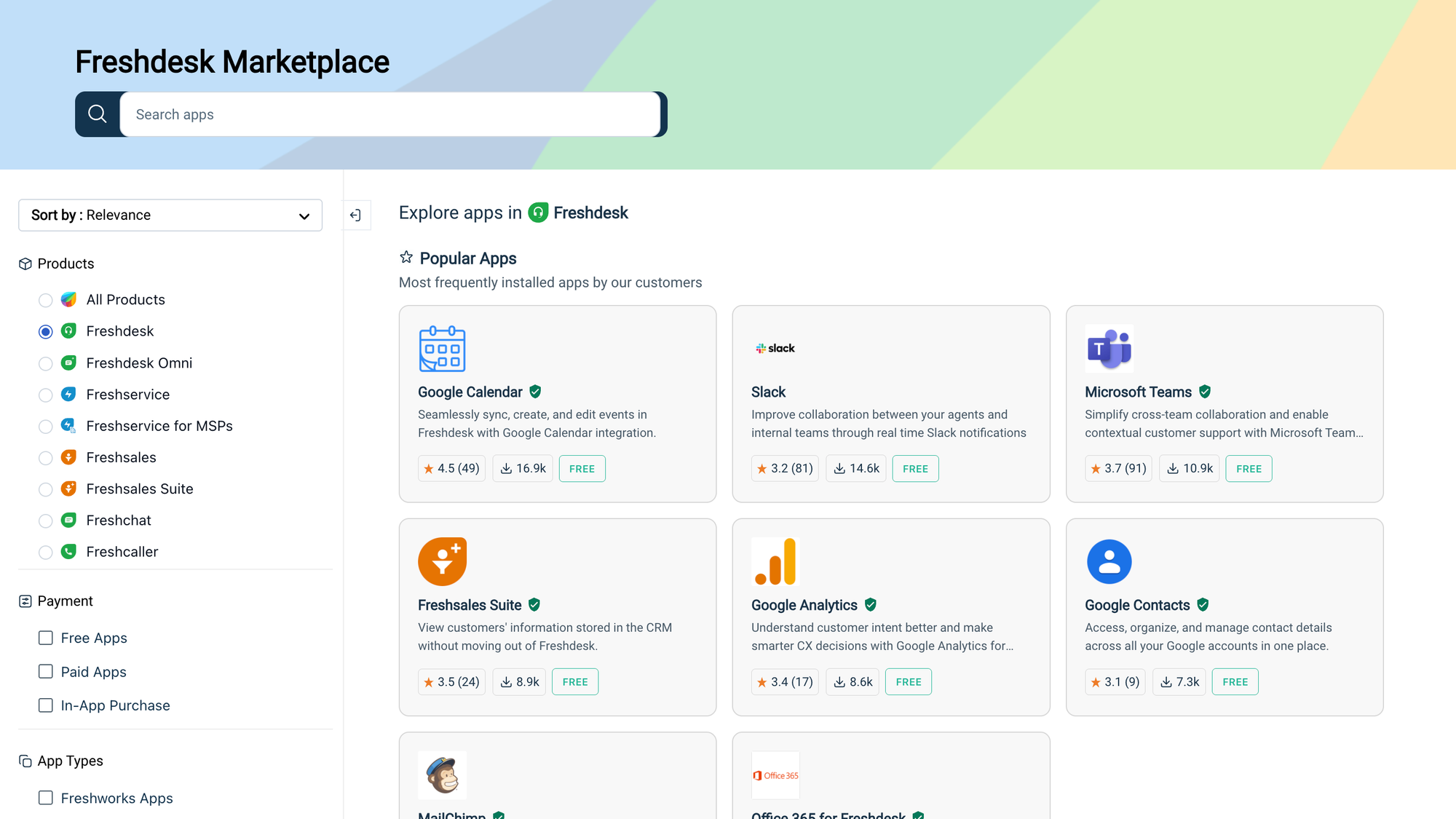
Freshdesk offers a broad marketplace of integrations that lean heavily toward productivity and business operations.
- Connects with CRMs like Salesforce, HubSpot, and Zoho.
- Links to collaboration tools such as Slack, Microsoft Teams, and Trello to automate repetitive tasks.
- Offers ecommerce integrations for platforms like Shopify and WooCommerce.
- Supports workflow customization through APIs, webhooks, and automations.
- Branding options include custom ticket forms, help center theming, and role-based access control.
The experience is built for companies that want to extend Freshdesk into their daily workflows without deep development work. In other words, you simply connect Freshdesk with the rest of your ecosystem in a plug-and-play fashion.
Intercom
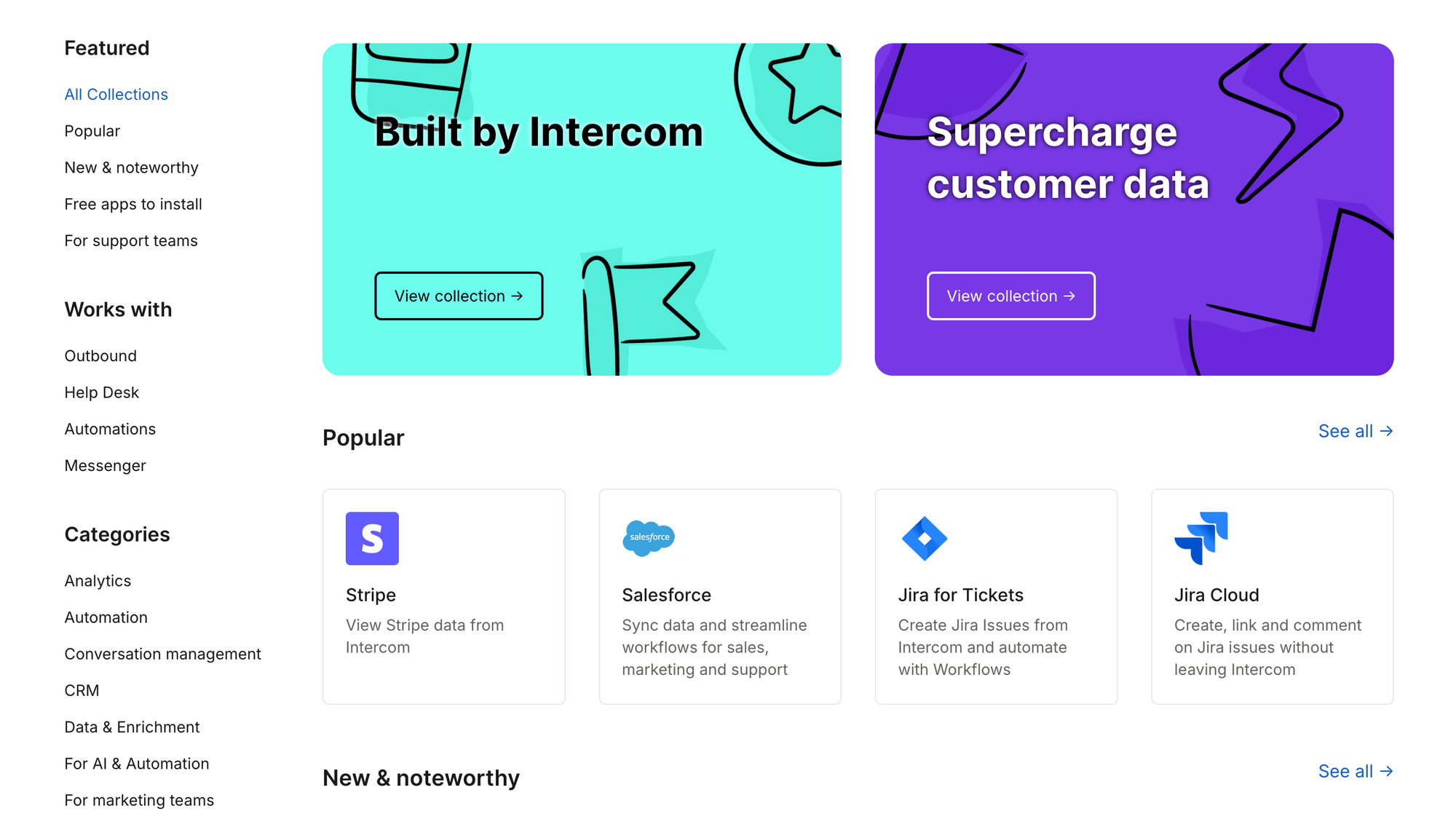
Intercom has fewer native integrations than Freshdesk. The ones that are offered are focused on growth and engagement.
- Direct integrations with Salesforce, HubSpot, and popular marketing automation tools.
- App Store featuring 400+ connectors across analytics, payments, scheduling, and more.
- Custom bots and Messenger apps that can be built directly into the chat interface.
- Developer platform with APIs, SDKs, and webhooks for embedding Intercom in apps.
- UI customization for the Messenger widget to fit a company's brand.
The focus is on embedding support directly into customer-facing products rather than only connecting back-office systems. It's much more hands-on and the integration process requires more time and dev involvement.
In conclusion: Freshdesk is great at plug-and-play business integrations that help teams manage tickets alongside everyday tools. Intercom is better for product and customer-facing customization, making it ideal for SaaS and ecommerce companies that want in-app engagement at the center of their support strategy.
Ease of use & support
Both Intercom and Freshdesk are very easy to get off the ground. Even without previous experience with ticketing or live chat tools, you can get both platforms running quickly. They're also similar in that once you add more features and users, you may struggle.
Freshdesk
Freshdesk is known for being easy to roll out. The interface is clean, with ticket views, automations, and SLAs ready to configure without much technical effort. Many small and mid-sized teams note that agents can get comfortable with the system in just a few days, solving even more complex needs and creating detailed reports.
Where it can get trickier is at scale. As more channels, workflows, and automations are added, the admin side can feel cluttered. Some reviews also mention occasional performance slowdowns when handling large ticket volumes.
On the support side, Freshdesk provides a solid knowledge base, 24/7 email support, and phone or chat support on higher-tier plans. Its community forum is active, but advanced troubleshooting usually requires a paid support plan.
Intercom
Intercom stands out for its modern design and quick learning curve. Teams can get live chat and automated bots up and running in hours rather than days. The agent inbox is intuitive, and many users say the Messenger widget feels natural for both staff and customers.
However, as features pile up, especially with bots, campaigns, and integrations, Intercom can become harder to manage. Pricing complexity also adds friction, since teams must monitor usage to avoid unexpected costs.
Support resources include an extensive help center, webinars, and live chat through Intercom itself. Premium support and onboarding assistance are reserved for higher-priced tiers, which can feel restrictive for smaller businesses.
In conclusion: It's a toss-up between the two options here. Freshdesk offers a straightforward setup and clear ticket-first interface, best for support teams wanting a quick start without surprises. Intercom is even faster to launch for conversational support, but the simplicity fades as you scale and rely on advanced features.
Pricing plans
If you like knowing what your next month's invoice is going to be, Freshdesk is a much better option. And with a free plan to boot, it's hard to say no. On the other hand, Intercom is affordable once you start, but your costs can skyrocket as you handle more customer issues.
Freshdesk pricing
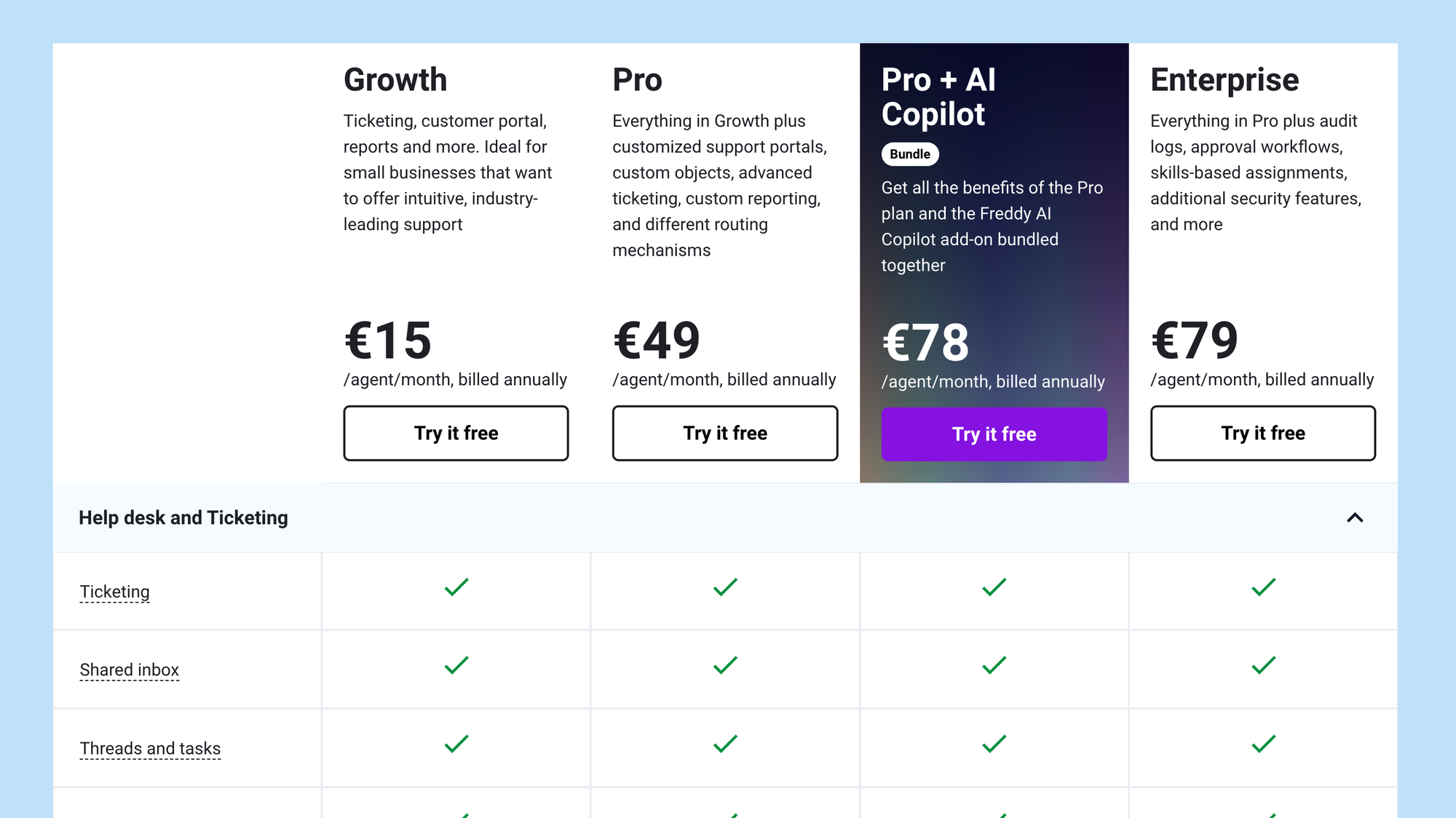
Freshdesk's pricing has one of the more flexible models in this category. There is a free plan for up two users and several paid plans to choose from.
- Free plan: Covers up to 10 agents, with email ticketing, a basic knowledge base, and ticket dispatch.
- Growth: $15 per agent/month (annual billing), adding automation, marketplace apps, and basic reporting.
- Pro: $49 per agent/month (annual billing), unlocking round-robin assignment, custom roles, multilingual support, and advanced analytics.
- Enterprise: $79 per agent/month (annual billing), with custom objects, audit logs, sandboxing, and AI features like Freddy insights.
Freshdesk also offers day passes for occasional agents, making it cost-efficient for part-time or seasonal support teams.
Intercom's pricing
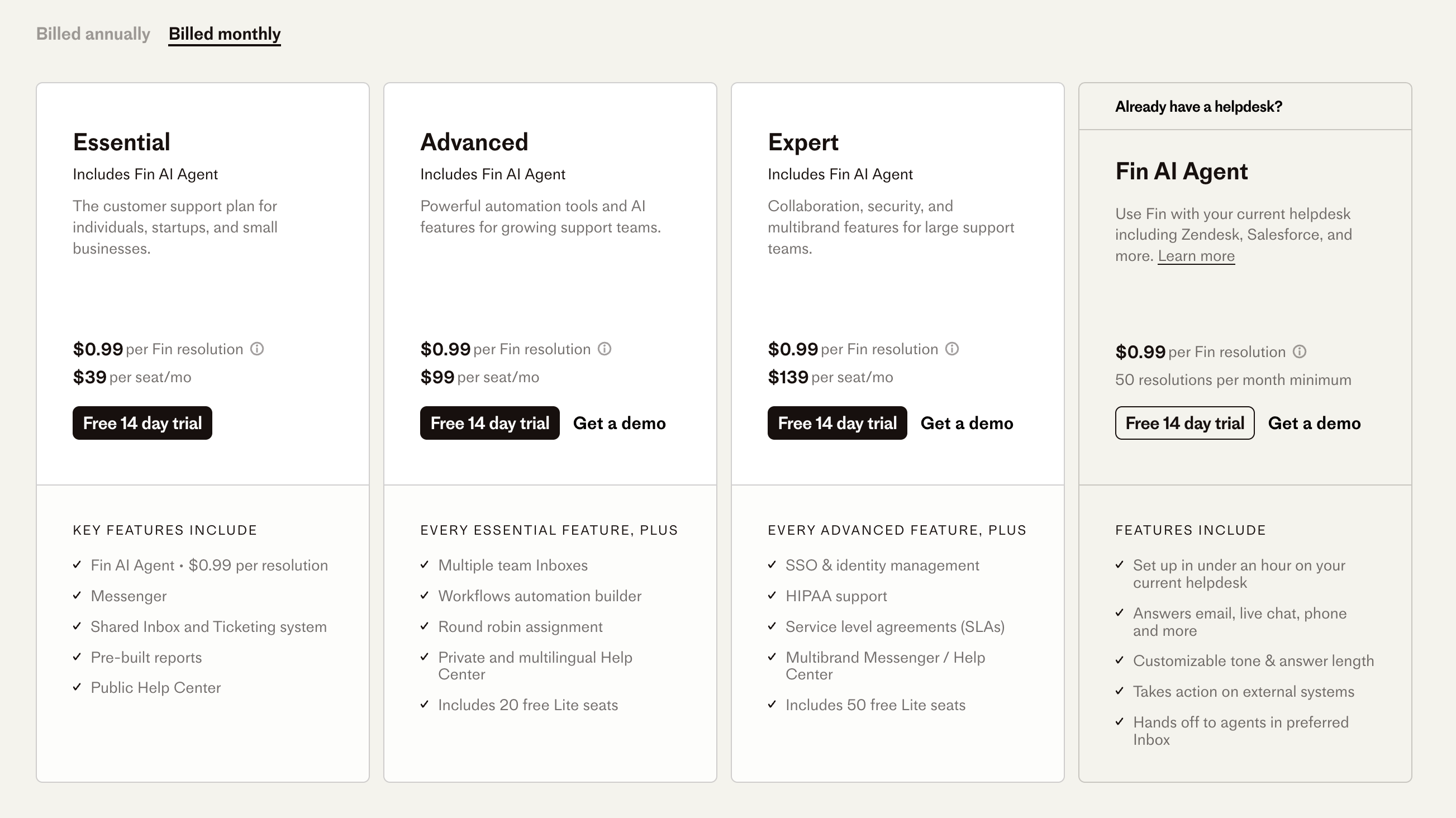
Intercom's pricing has a different approach, charging for both seats and usage.
- Essential: $29 per seat/month, covering the core inbox and Messenger features.
- Advanced: $85 per seat/month, adding advanced automations, rules, and reporting.
- Expert: $132 per seat/month, with more customization, routing, and analytics.
- Add-ons: AI resolutions ($0.99 per ticket), Proactive Support Plus, and extra messaging channels come at additional cost.
Intercom's move to outcome-based AI pricing is the big shift here. Instead of charging per seat for AI or per individual resolution, you pay $0.99 each time Fin actually delivers a result. It sounds clean, but there's a catch reviewers on G2 raise often: because the model bills on outcomes, your invoice grows precisely as Fin gets better at resolving conversations. Combined with per-seat plans and add-ons like Copilot ($29/agent/month) and Proactive Support Plus ($99/month), costs can be hard to predict.
In conclusion: Freshdesk has the advantage of transparent pricing and a free tier that lowers the barrier for growing businesses. Intercom can offer more powerful messaging and automation, but the usage-based pricing makes it harder to budget for in the long term. You can't compare enterprise plans since Intercom charges based on volume, but in general, Freshdesk is more affordable.
Freshdesk vs Intercom: final verdict
By now, you've probably figured out that these tools are completely different and the right choice depends on the kind of problem you want to solve in your business. Both are great choices, but for completely different audiences.
Get Freshdesk if…
- You want predictable pricing and a free plan to get started.
- Your team works best in a traditional ticketing system with clear SLAs.
- You need built-in automations, multilingual support, and advanced analytics at a lower price point.
- Occasional agents are part of your workflow and day passes make sense financially.
Get Intercom (Fin) if…
- You prioritize real-time, conversational support through live chat and bots.
- You want proactive messaging and engagement features, not just ticket management.
- Your budget can handle per-seat plans plus usage-based Fin pricing and potential add-ons.
- You're comfortable with the roadmap direction now that Salesforce is set to acquire the company.
Bottom line: Freshdesk is the safer choice for structured, budget-friendly ticket management, while Intercom shines if you're aiming for conversational, AI-driven engagement and are comfortable with variable costs and a pending acquisition.
But neither tool is ideal. Which is why you can...
Get a better alternative: Featurebase ✨
If Freshdesk is too old and inflexible but Intercom is too expensive, consider Featurebase, a modern support platform that blends the best of both worlds.
It’s loved by thousands of fast-growing support teams from companies like Lovabale, n8n, and Instantly.
With pricing starting from just $29 per user per month + $0.49 per AI resolution, it costs a fraction of Intercom, Freshdesk, and most other support platforms.
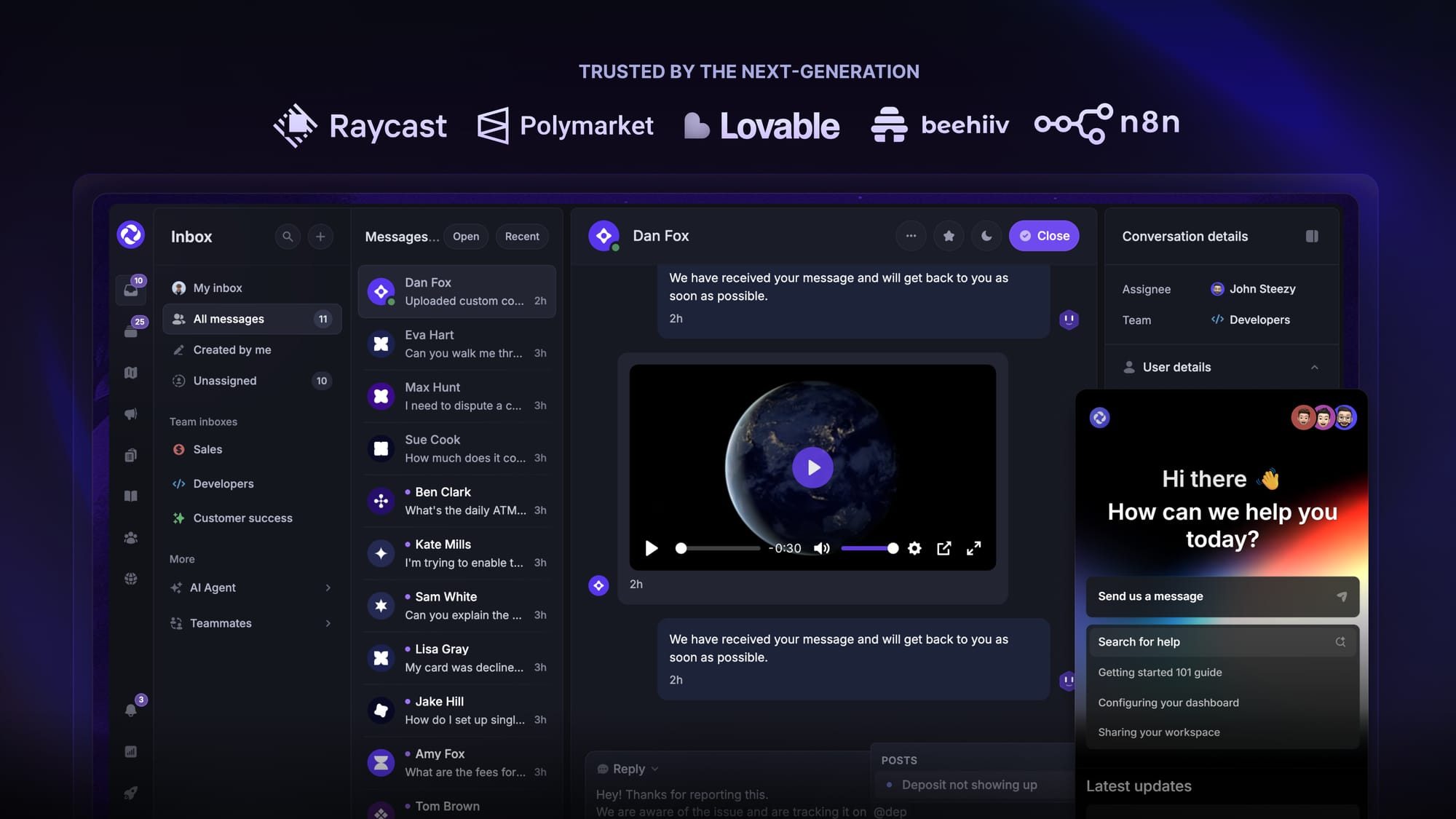
Some of the many Featurebase features include:
- Unified inbox – manage your live chat & email conversations in one place with your whole team
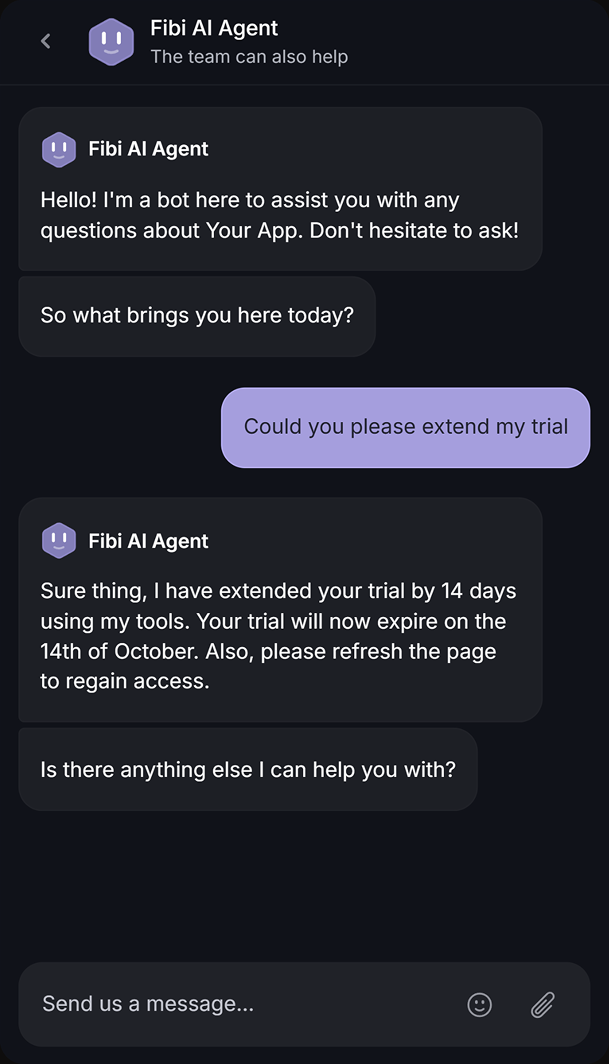
- AI agent & automations – fully automate your support with AI and endless custom workflows, like extending trials, offering discounts, qualifying leads, etc.
- Messenger widget – provide AI and human support from anywhere with a customizable in-app widget
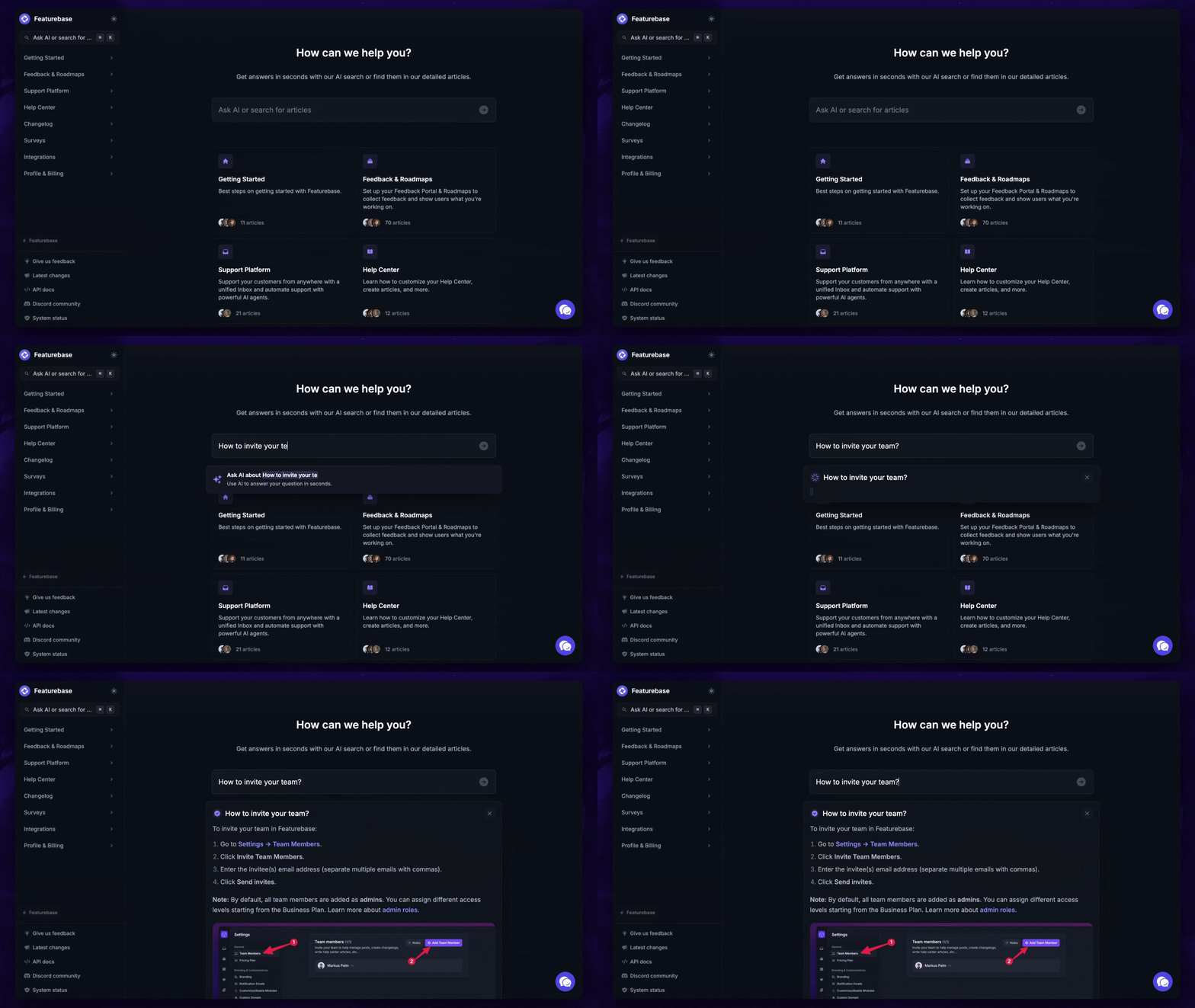
- Help Center – a branded knowledge base with instant AI answers
- Email support – seamlessly provide support to your customers via email sync
- Native ticketing – centralize & keep track of all customer requests in one place
- Multi-language & custom domain support – serve content in 40+ languages with your domain and branding
- Mobile app – respond to customers, receive notifications, and unblock users on the go
- Integrations – Slack, Linear, Jira, Discord, Hubspot, and many more
- Plus, feedback collection, product roadmaps, release notes, and customer surveys – all in one place
Long story short, Featurebase gives you all the powerful support capabilities of Freshdesk and Intercom, but without the super expensive pricing. Don't just take our word for it. You can try Featurebase completely free and see for yourself.
The onboarding is quick and doesn't require a credit card. Plus, you can automatically import your Intercom knowledge base - so there’s zero risk involved. 👇
✨ Automate your support with the fastest AI-enhanced Inbox today →
FAQs
Is Intercom the same as Fin now?
Yes. Intercom rebranded around its Fin AI Agent in May 2026, so the company and product are increasingly marketed as "Fin." The underlying Intercom inbox, Messenger, and help center still exist - the rebrand reflects the shift to an AI-first positioning rather than a completely new product.
What does Salesforce acquiring Intercom (Fin) mean for customers?
In June 2026 Salesforce signed a definitive agreement to acquire the company for roughly $3.6 billion, with plans to fold Fin's customer-agent technology into its Agentforce platform. In the short term nothing changes for existing users, but anyone making a multi-year commitment should weigh the usual roadmap and pricing uncertainty that follows a large acquisition.
Is Freshdesk cheaper than Intercom?
For most teams, yes. Freshdesk uses predictable per-agent pricing starting at $19/agent/month and includes a free program for 1-2 agents. Intercom combines per-seat plans (from $29/seat/month) with usage-based Fin pricing at $0.99 per outcome, so bills can climb as your support volume and AI resolutions grow.
Does Freshdesk or Intercom have a free plan?
Freshdesk offers a free program for 1-2 agents for the first 6 months, covering basic ticketing, a knowledge base, and reports. Intercom does not have a permanent free plan, though it offers a free trial and steep discounts for early-stage startups.
What's a cheaper alternative to Freshdesk and Intercom?
Featurebase is a modern option that blends Freshdesk-style ticketing with Intercom-style live chat and AI, starting at $29/seat/month plus $0.29 per AI resolution. It bundles an omnichannel inbox, AI agent, help center, and feedback tools in one platform, which keeps costs lower than paying for per-seat plans and usage-based AI separately.
More comparisons: