Top 7 Pylon Alternatives for Modern B2B Support (2026)
Pylon is great for managing support inside Slack or Teams - but it starts to feel limited fast. No mobile app, missing channels, and pricey AI add-ons make scaling a challenge. In this guide, we’ll explore the best Pylon alternatives in 2026.


On this page
Automate your support with the fastest AI-enhanced Inbox today
Pylon has become a popular choice for B2B teams that run support inside Slack and Microsoft Teams, and in July 2026 it went further by launching an agentic platform where AI agents investigate issues, gather context, and act before a human ever opens the ticket. It's genuinely capable now, so the old knock that Pylon "has no AI" no longer holds.
But capability inside the support desk is only half the story. Pylon turns support conversations into internal context for its agents, yet it doesn't own the customer-facing loop that turns that same signal into shipped product: public feedback boards, voting, a public roadmap, a changelog, and a help center that feeds your AI answers. If you want support and the product loop in one place, or simply broader channels at a more predictable price, it's worth looking around.
In this guide, we'll walk through the 7 best Pylon alternatives for modern B2B support in 2026. 👇
Key takeaways:
| Tool | Key features | Starting price | Starting cost (10 seats / mo) |
|---|---|---|---|
| ✨Featurebase | AI support (Fibi), help center, feedback boards, roadmap, and changelog in one | $29/user/month | $290/month (approx. for 10 seats) |
| Zendesk | Advanced AI agents, omnichannel support, analytics suite, workflow automation | $55/user/month (annual billing) | $550/month+ |
| Intercom | Fin AI bot, proactive messaging, unified inbox, in-app chat, help center | $19/seat/month (annual) + $0.99 per Fin outcome | $190/month billed annually + Fin usage |
| Freshdesk | Omnichannel ticketing, Freddy AI, workflow automations, multilingual support | $15/user/month (annual) | $150/month |
| Plain | Developer-focused API workflows, Slack & Microsoft Teams integration, customizable automation | $39/user/month (Launch plan) | $390/month |
| Help Scout | Shared inbox, Beacon live chat, Docs knowledge base, CSAT tracking | From $50/month (up to 100 contacts, unlimited seats) | $50+/month (volume-based) |
| Gorgias | Shopify & WooCommerce integration, AI macros, omnichannel eCommerce support | $10/month (up to 3 agents, 50 tickets) | $50-$60/month (300 tickets) |
But first, let's take a close look at Pylon itself to see why you should look for alternatives. 🤔
What is Pylon?
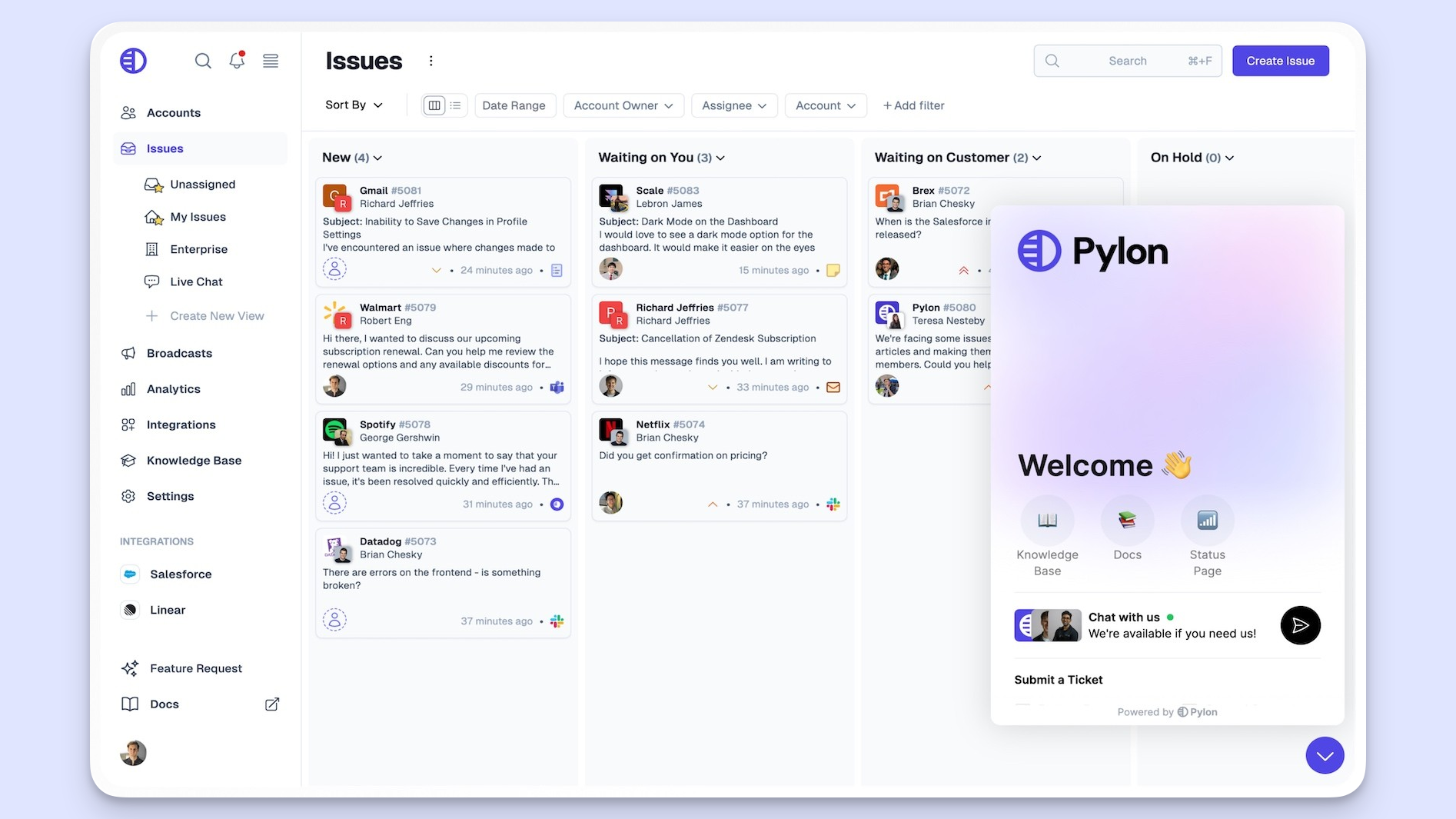
Pylon is a B2B customer support platform built for teams that manage support inside Slack and Microsoft Teams. It brings ticketing, a knowledge base, surveys, and a shared view of customer accounts into the tools your team already works in, which is what made it a fast favorite with startups and scaling support teams.
In July 2026, Pylon repositioned as an agentic support platform. Instead of agents working tickets one by one, you direct AI agents that investigate an issue the moment it arrives, pulling account history, checking connected systems, searching for related issues, and recommending a next step before a human opens it. Background agents can work several issues in parallel, and reusable "Skills" let you turn your team's best processes into instructions the agents run automatically.
Under the hood, Pylon organizes everything it connects into three context layers:
- Support Intelligence - past issues, prior resolutions, and recurring problems
- Account Intelligence - who the customer is, their goals, sentiment, and risks
- Product Intelligence - feature requests, bugs, product behavior, and usage
It has also broadened well past Slack, adding phone and SMS, WhatsApp, Discord, Telegram, email, and a chat widget.
So as of July 2026, Pylon is no longer light on automation or channels. Where it stops is the customer-facing product loop, which is exactly what sends many teams looking for an alternative. 🤔
Why look for a Pylon alternative?
Pylon's agentic platform is a real step up, but here are the main reasons B2B teams still look elsewhere:
- It doesn't close the customer loop: Pylon turns support signal into internal context for its agents, but it has no public feedback board, no voting, no public roadmap, and no changelog. The insight stays inside the support desk instead of becoming a visible loop your customers take part in.
- Feedback stays invisible to customers: Product Intelligence surfaces feature requests to agents, but customers can't see what's been requested, upvote it, follow a roadmap, or read release notes when it ships. Closing that loop is what drives retention and adoption.
- Sales-led pricing: Pylon is seat-based (Starter $59, Professional $89, Enterprise $139 per seat/month), billed annually only, with a 3-seat minimum and AI and Account Intelligence sold as separate add-ons. Most teams end up spending $5,000 to $10,000 a year, and there's no free plan or monthly billing to ease in.
- The agentic platform is new: The agentic experience launched in beta in July 2026, so parts of it are still maturing compared with tools that have shipped AI support and feedback for years.
- You may want one tool for support and product: If you'd rather not run a separate feedback, roadmap, and changelog stack alongside Pylon, a single platform that does support and the product loop can be simpler and cheaper.
If those sound familiar, here are the best Pylon alternatives that pair modern AI support with the feedback, roadmap, and changelog tools Pylon leaves out. 👇
Top 7 Pylon Alternatives for B2B Support in 2026
Based on what I found from reviews, pricing, and features, here’s a list of the best 7 Pylon alternatives worth considering:
1. Featurebase ✨
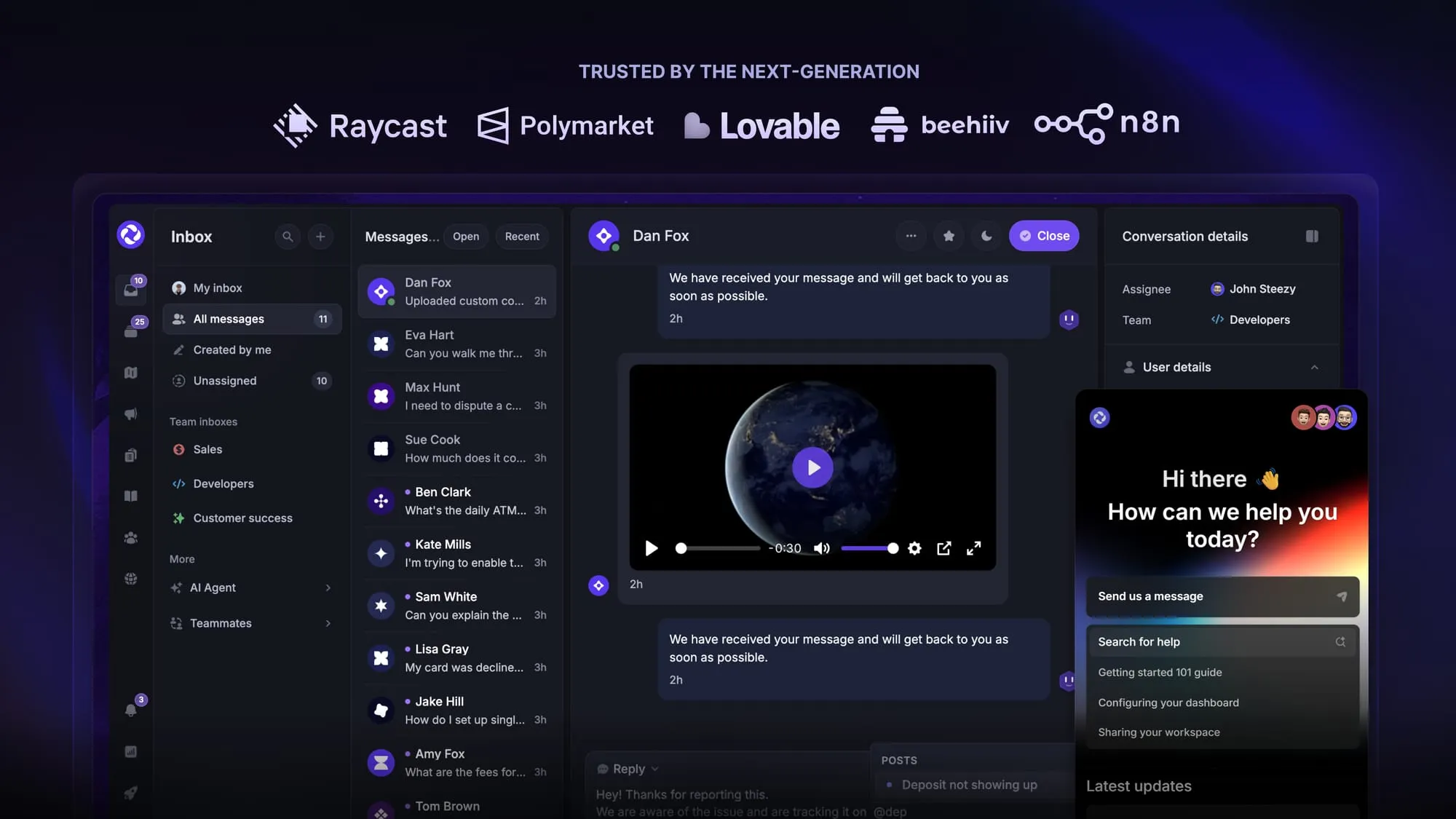
Featurebase is a modern, AI-powered Pylon alternative built for fast-growing SaaS and B2B companies. It combines live chat, ticketing, help center, feedback collection, and release notes into one unified platform. It's loved by thousands of support teams from companies like Lovable, Raycast, and n8n. 💫
Top features:
- Unified inbox – Manage chat, email, and Slack conversations from one AI-powered view
- AI agent & automations – Automate tasks like trial extensions, refunds, and lead qualification
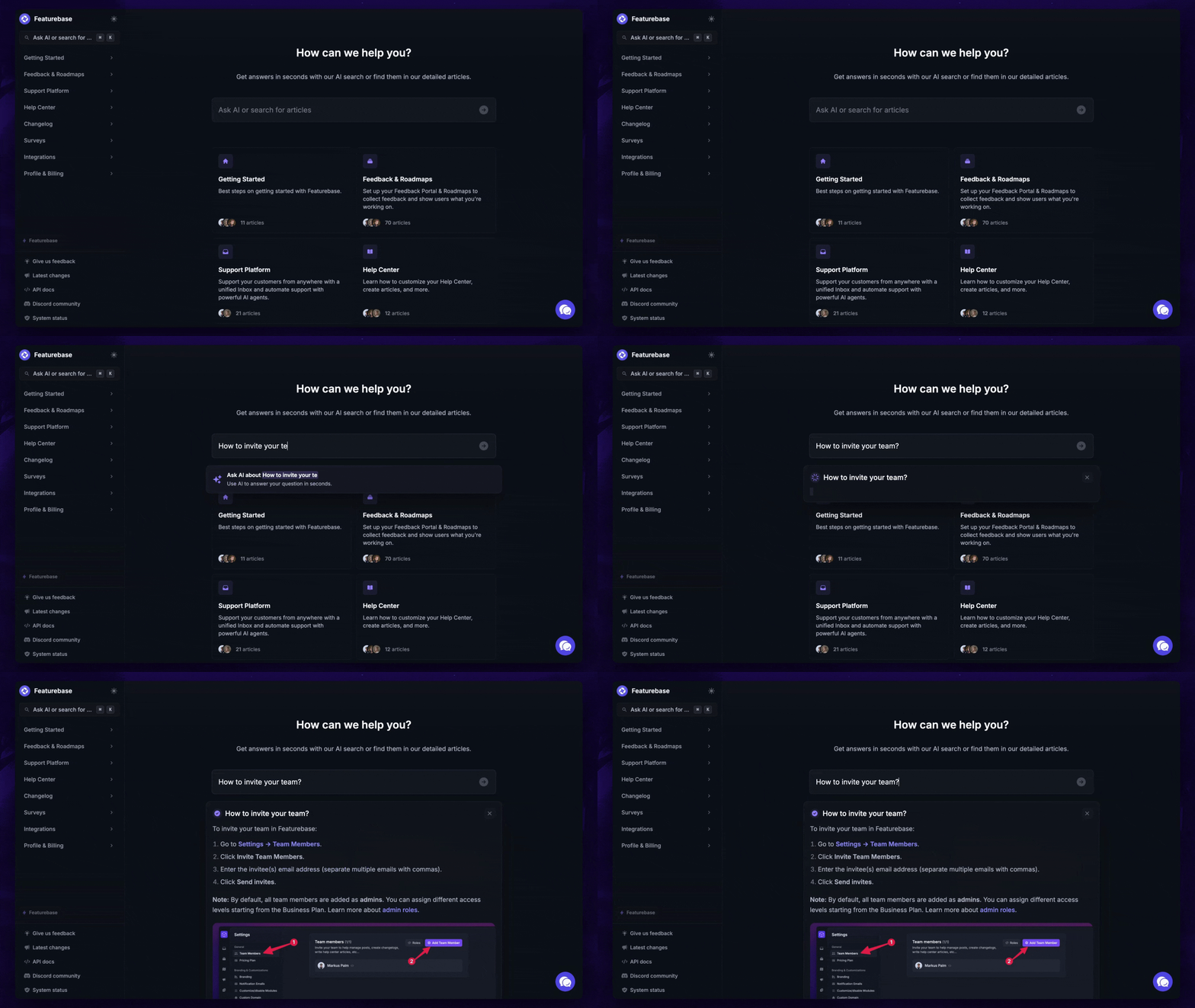
- Help center with AI search – Provide instant, multilingual self-serve answers
- Mobile app – Respond to customers, receive notifications, and unblock users on the go
- Messenger widget – Deliver AI and human support in-app or on your website
- Feedback & roadmap tools – Collect feature requests and close the loop with updates
- Changelog – Publish product updates with a changelog page, in-app widget, and emails
- Integrations – Connects with Slack, Linear, Jira, HubSpot, and more
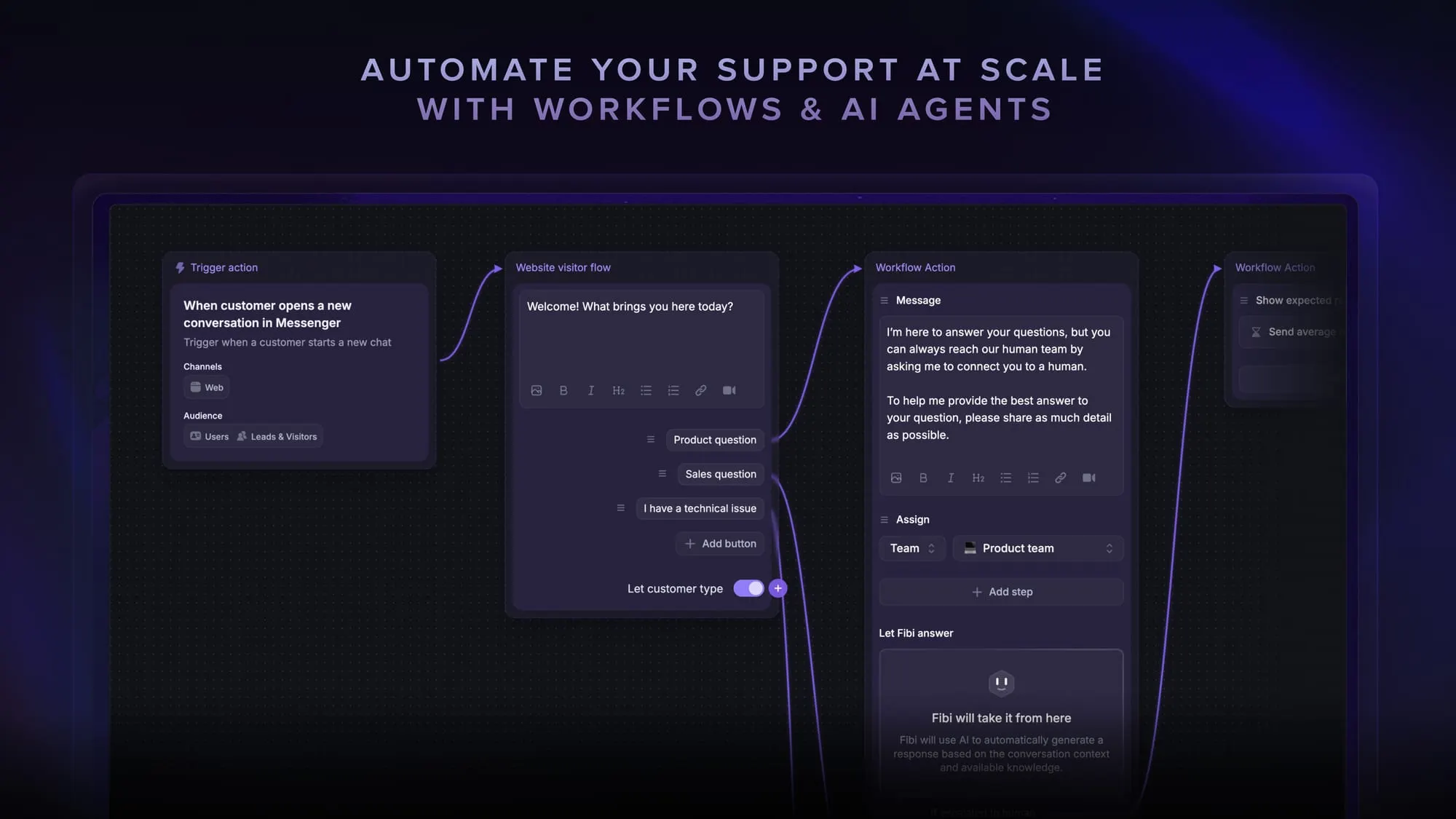
How it's better than Pylon: Pylon's agents turn support signal into internal context. Featurebase turns that same signal into a visible customer loop - feedback comes in, becomes a public roadmap item, ships, gets announced in the changelog, and flows back into the help center and Fibi's answers. You get modern AI support and the product loop in one tool, without a channel-limited plan or a sales-led contract.
Pricing: Free plan available with unlimited conversations. Paid plans start at $29/user/month plus $0.49 for every successful AI resolution. Onboarding is fast and doesn't require a credit card, so there's no downside to trying it. 👇
Automate your B2B support with the fastest AI-enchanced inbox today
2. Zendesk
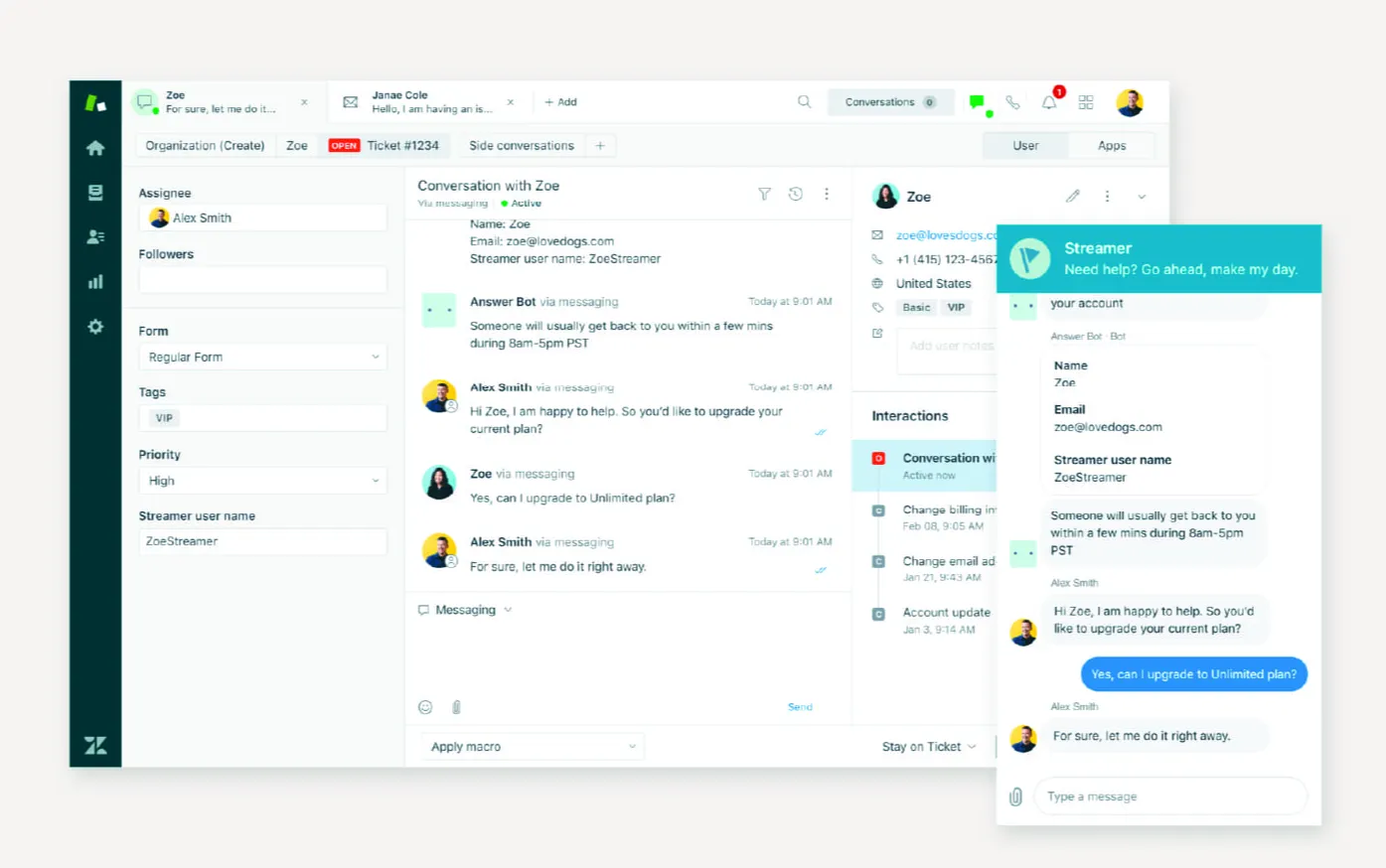
Zendesk is one of the most established customer support software platforms in the world, offering deep automation capabilities, AI assistance, and omnichannel support across email, voice, chat, and social.
Top features:
- AI Copilot and Advanced AI agents for replies and routing
- Omnichannel support with ticketing, chat, and phone support
- Detailed analytics dashboards via Explore
- SLAs, macros, and workflow automation
- Knowledge base for self-serve support
- Large integration ecosystem and multi-brand support
How it’s better than Pylon: Zendesk provides complete control and enterprise-grade reliability. It’s ideal if you’ve outgrown Slack and Microsoft Teams ticketing and need complex workflows, reporting tools, and advanced AI.
Pricing: Zendesk's pricing starts at $55/agent/month (annual) for Suite Team, with advanced features like Copilot and AI add-ons often doubling total costs.
3. Intercom
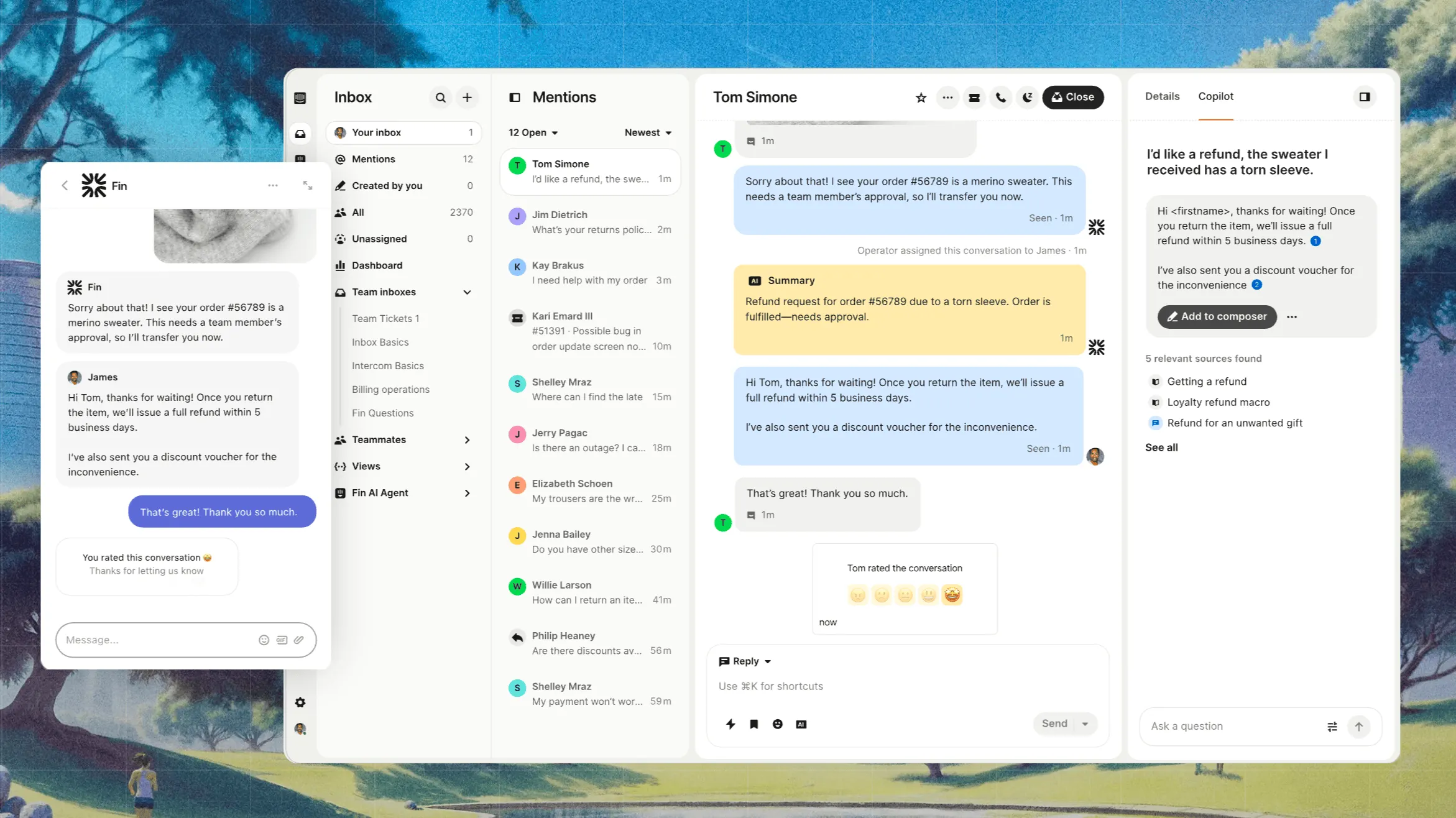
Intercom (now rebranded as Fin, after its AI agent) is built for teams that prioritize real-time, conversational customer support. It blends proactive messaging, a help center, and its Fin AI agent into one sleek, customer engagement platform. In June 2026 Salesforce agreed to acquire the company for around $3.6 billion, a deal that's signed but not yet closed as of July 2026, so its roadmap and pricing are worth watching if you're signing a long contract.
Top features:
- Fin AI Agent - Resolves customer queries end-to-end across chat, email, WhatsApp, SMS, and phone.
- AI Copilot - Helps support agents write faster and more accurate replies.
- Proactive messaging - Send targeted in-app or email messages based on customer behavior.
- Unified inbox - Handle multi-channel support across chat, email, and social seamlessly.
How it's better than Pylon: Intercom brings AI-driven live chat and proactive messaging, areas Pylon is less focused on. It's built for customer-facing interactions and proactive campaigns rather than internal-only communication.
Pricing: Intercom's pricing starts at $19/seat/month for Essential billed annually ($29 billed monthly), plus $0.99 per Fin outcome. Advanced costs $85/seat/month and Expert costs $132/seat/month, billed annually. Usage-based AI fees can raise the real cost significantly.
4. Freshdesk
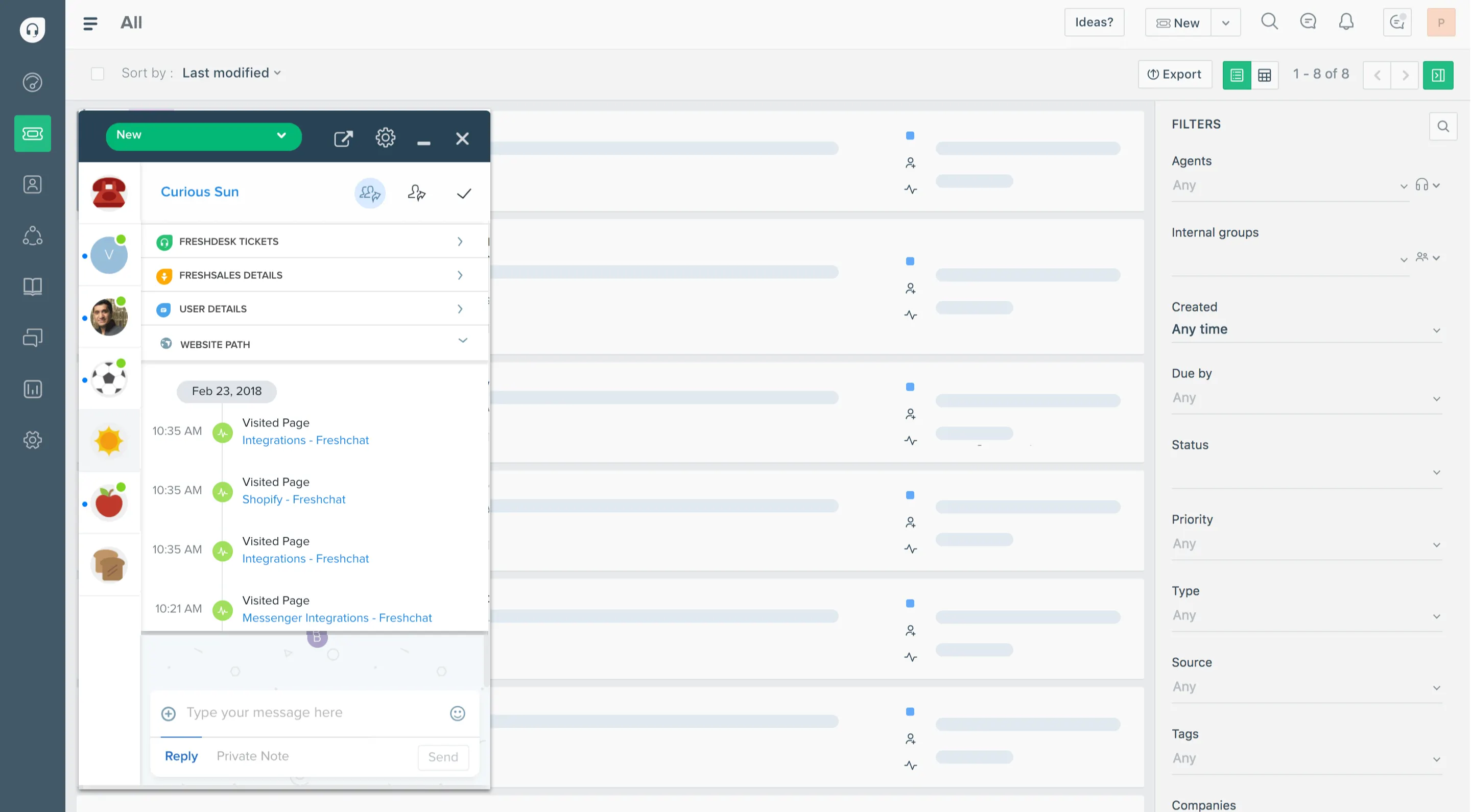
Freshdesk is one of the best Pylon alternatives for support teams that want full omnichannel support with a user-friendly interface. It offers AI tools under the Freddy AI brand for automation, triage, and analytics powered by machine learning.
Top features:
- Omnichannel ticketing (email, chat, phone, and social)
- Freddy AI for ticket summaries, customer satisfaction analysis, and sentiment detection
- Workflow automations and SLA management
- Multilingual support knowledge base and self-service portals
How it’s better than Pylon: Freshdesk gives you multichannel support and built-in voice support that Pylon lacks. It’s simple enough for small teams yet powerful enough for mid-sized businesses needing scalable automation features.
Pricing: Freshdesk's pricing comes with a Free plan. Paid plans start at $15 per user month, Pro at $49, and Enterprise at $79.
5. Plain
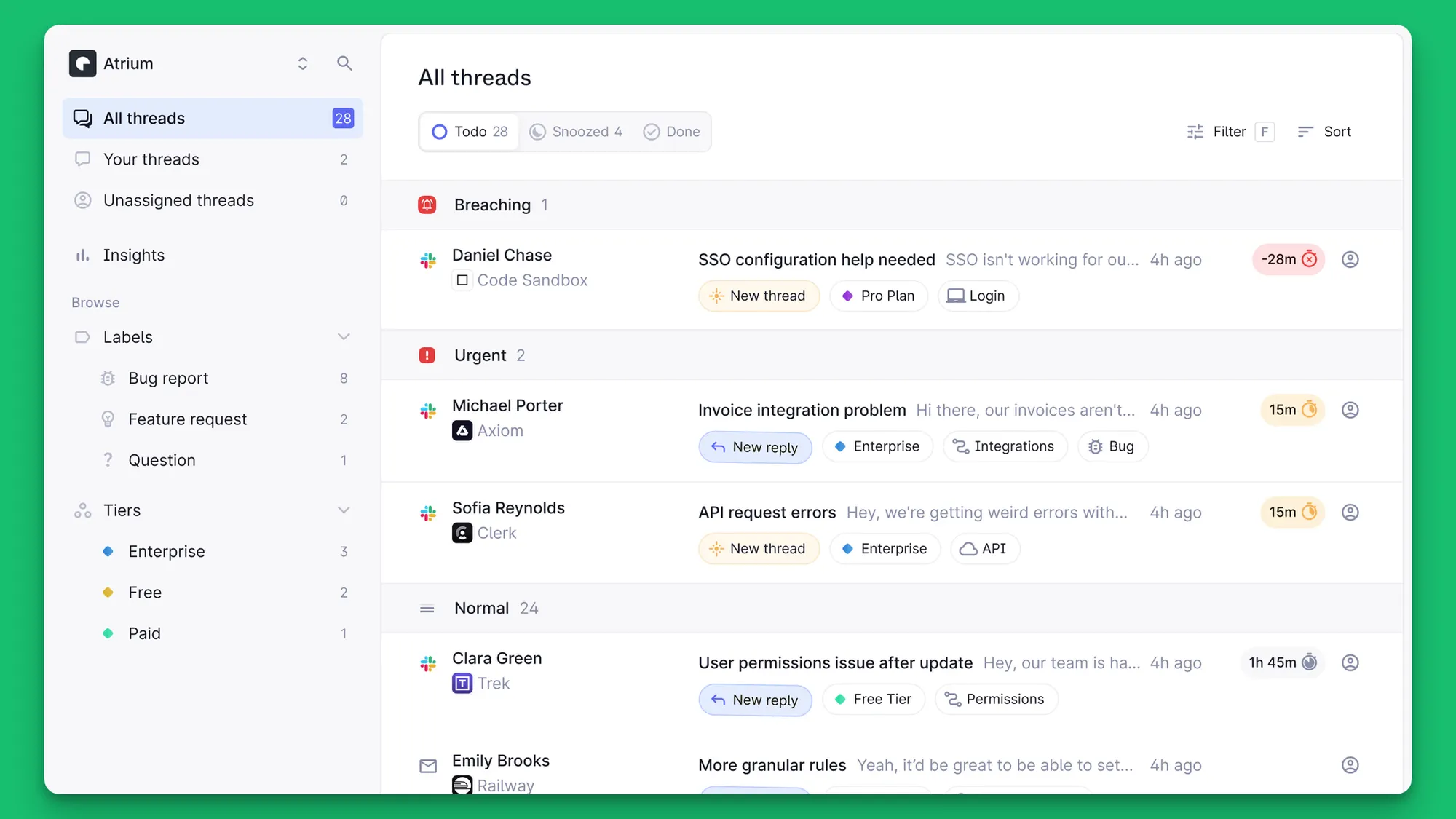
Plain is a lightweight, developer-focused alternative to Pylon. It offers clean APIs, Slack and Microsoft Teams integration, and automation-first workflows - perfect for technical B2B teams that prefer flexibility over flashy UIs.
Top features:
- API-first ticket management with customizable workflows
- Slack notifications and commands for instant updates
- Custom actions for automating internal tools like Jira or Notion
- Fast, minimal interface designed for engineers and small teams
How it's better than Pylon: While Pylon locks you into its own environment, Plain gives full flexibility through APIs and third-party tools. It's ideal for technical support teams building custom automation capabilities.
Pricing: Plain's pricing starts at $39 per user/month (Launch plan) and $89 per user/month (Grow plan). The entry tier doesn't include the Help Center or advanced automations.
6. Help Scout
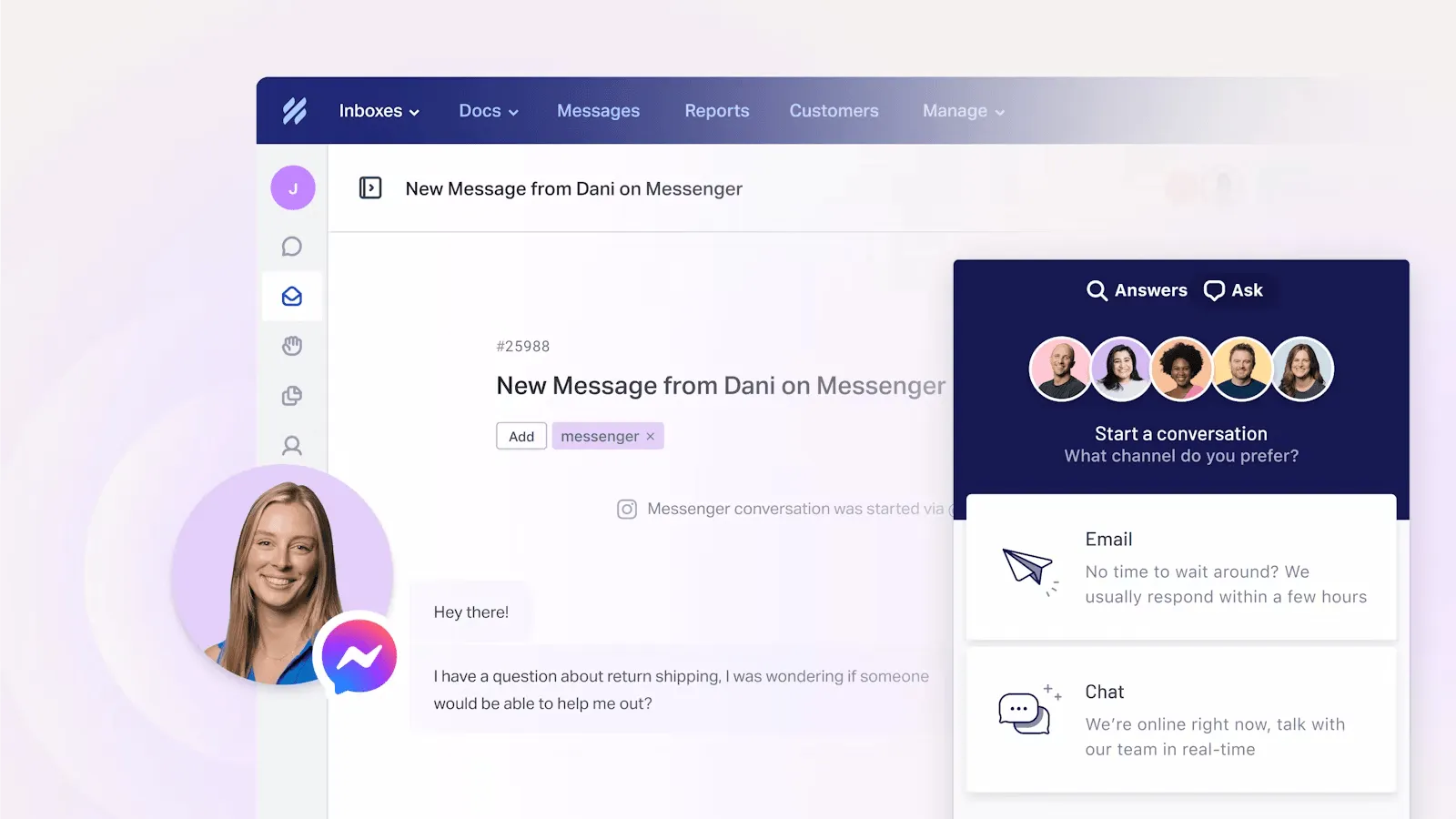
Help Scout focuses on simplicity and personal communication, combining shared inboxes, live chat, and docs into one tool that feels like email — but smarter.
Top features:
- Shared inbox with collision detection and internal notes for team collaboration
- Beacon widget for live chat and self-service options
- Docs knowledge base with search analytics
- CSAT and happiness reports to track agent performance
How it’s better than Pylon: Help Scout trades complexity for clarity. Unlike Pylon’s Slack-heavy model, it gives support teams an email-first workflow while still offering live chat and a customer portal for better customer satisfaction.
Pricing: Pricing is contact-based, starting at $50/month for up to 100 contacts helped, with unlimited seats and built-in AI features.
7. Gorgias
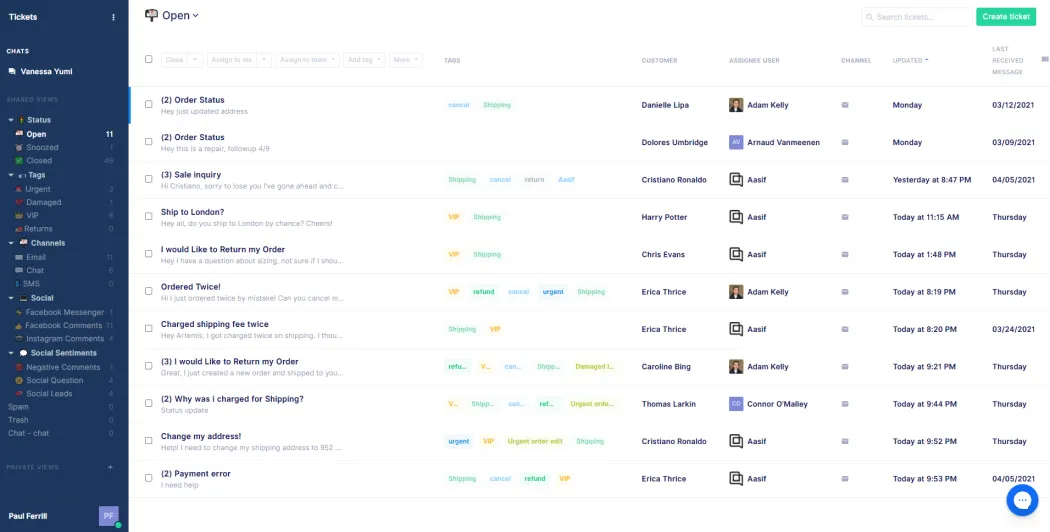
Gorgias is the best Pylon alternative for eCommerce and post-sales support. It connects directly with Shopify, WooCommerce, and BigCommerce, letting support reps manage tickets, refunds, and orders without leaving the helpdesk.
Top features:
- Deep Shopify integration for refunds and order edits
- AI macros and sentiment-based routing
- Revenue attribution and customer experience tracking
- Omnichannel support via chat, email, and social messaging channels
How it’s better than Pylon: Pylon is built for internal B2B support, while Gorgias is purpose-built for eCommerce. If you’re handling customer queries and order management, Gorgias gives you much deeper automation features and reporting tools.
Pricing: Starts at $10 per user month (50 tickets), scaling to higher tiers for automation and analytics.
Final verdict
Pylon is a strong, now genuinely agentic support platform for teams that live inside Slack and Teams. But it's built to make your support desk smarter, not to turn support into shipped product. The moment you want feedback, a public roadmap, and a changelog alongside your inbox, you're back to bolting on extra tools.
Featurebase stands out as the best overall Pylon alternative because it closes that loop in one place. AI support and a help center handle the conversation, feedback boards and voting capture what customers want, public roadmaps show what's coming, and the changelog announces what shipped - then it all feeds back into the help center and Fibi's answers. You get Pylon's core support job plus the product loop it leaves out, at a flat, transparent price. 💫
What's best is that it comes with a Free plan and 1-click import from other tools, so there's no downside to trying it out. 👇
Automate your B2B support with the fastest AI-enchanced inbox today
FAQs
It depends on what you need. If you want modern AI support plus the customer-facing product loop - feedback boards, a public roadmap, and a changelog - in one place, Featurebase is the strongest fit. If you only need a traditional omnichannel helpdesk, Zendesk or Freshdesk are safer bets, and Gorgias is best for eCommerce support.
In July 2026 Pylon launched an agentic platform where support teams direct AI agents instead of working every ticket by hand. The agents investigate an issue as soon as it arrives, pulling account context, checking connected systems, and searching for related issues, while background agents handle several issues at once. Reusable "Skills" let teams turn their best processes into instructions the agents run automatically.
Pylon's plans start at $59/seat/month (Starter), rising to $89 (Professional) and $139 (Enterprise), billed annually only with a 3-seat minimum. AI and Account Intelligence are separate add-ons, so once they're included most teams spend between $5,000 and $10,000 a year. There's no free plan, free trial, or monthly billing. You can see a full breakdown in our Pylon pricing guide.
Yes. Pylon started as a Slack and Microsoft Teams tool, but it now also supports phone and SMS, WhatsApp, Discord, Telegram, email, and a chat widget. Channel coverage is no longer a reason to switch on its own, so the bigger gap for most teams is the customer-facing feedback and roadmap loop.
Pylon surfaces feature requests and bugs internally as Product Intelligence so its agents have context, but it has no public feedback board, no voting, no public roadmap, and no changelog. Customers can't see what's been requested or follow what's shipping. If closing that loop matters, you'll want a tool built around it.


