Blog Customer Service9 Best AI Customer Service Agents for Support in 2026
9 Best AI Customer Service Agents for Support in 2026
Compare 10 top AI customer service agents for 2026 across pricing, automation, integrations, handoff quality, and the teams each platform fits best.


✨ Automate your support with the fastest AI-enhanced Inbox today →
An AI customer service agent can answer questions, take actions, and hand off complex cases without forcing your team to rebuild its support stack. I compared the strongest options across resolution depth, human handoff, integrations, pricing, and setup effort so you can see which platform fits your ticket volume, channels, and technical resources. 👇
Short answer:
- Featurebase is the strongest all-around choice for product-led SaaS teams because it combines an AI agent, inbox, help center, workflows, feedback, roadmap, and changelog in one workspace.
- Fin is the best fit when you want a specialized AI agent without replacing your current helpdesk.
- Zendesk and Salesforce stand out for large service operations already committed to their ecosystems.
Key takeaways
| Tool | Pricing model | Starting cost | Best for | Main trade-off |
|---|---|---|---|---|
| Featurebase | Free plan, then per-seat and per-resolution pricing | $0 | Product-led SaaS teams | Fibi AI requires the Growth plan |
| Fin | Outcome-based usage with a minimum monthly commitment | $0.99 per outcome; minimum commitment applies (e.g. 50 outcomes/month) | Teams adding a capable AI agent to their current helpdesk | Usage can become expensive at high volume |
| Zendesk AI | Per-agent subscription plus automated resolutions | $19/agent/month, billed yearly | Established support teams that want an integrated suite | Add-ons and resolution usage increase total cost |
| Aissist | Usage-metered, no platform fee or monthly minimum | Capped at $0.60 per resolution | SMB and mid-market teams resolving tickets on their existing helpdesk | Runs as a third-party layer, and usage billing takes modelling |
| Ada | Conversation-based or resolution-based contract | Custom pricing | Enterprises that prioritize governance and predictable volume pricing | No public starting price |
| Salesforce Agentforce | Flex Credits, conversations, or user licensing | $500 per 100,000 Flex Credits | Salesforce-centric service organizations | Requires strong Salesforce and data expertise |
| Decagon | Per-conversation or per-resolution contract | Custom pricing | Enterprises automating complex, action-heavy service flows | No public starting price or self-serve plan |
| Gorgias | Helpdesk plan plus AI-resolved interactions | $250/month for the AI Agent add-on | Shopify and ecommerce support teams | Best value is concentrated in ecommerce workflows |
| Tidio Lyro | Monthly AI conversation allowance | $32.50/month for 50 Lyro conversations | Small teams that want a fast AI launch | Ticketing and enterprise controls are less deep |
| Kore.ai | Session-based automation and seat-based contact center pricing | Custom pricing | Large contact centers with complex channel and governance needs | Advanced deployments have a steep learning curve |
What is an AI customer service agent?
An AI customer service agent is software that answers support questions and completes tasks using an approved knowledge base and connected tools. Unlike a traditional chatbot, it can handle multi-step requests, take actions such as checking an order, and hand complex cases to a human with the context intact.
Most platforms now support some version of the same operating loop:
- The agent identifies the customer's intent and relevant context.
- It searches an approved knowledge base and connected systems.
- It generates an answer or takes a permitted action.
- It checks whether the request is resolved.
- It hands the case to a person when confidence, policy, or complexity requires it.
An effective AI agent platform makes each step visible and controllable. Your team should be able to inspect sources, test answers, limit actions, review failed conversations, and change escalation rules without waiting for a major engineering project.
How I evaluated the AI customer service agents
I compared each platform against the practical requirements that determine whether an AI deployment survives contact with real customers. Product breadth mattered, but I weighted reliable operations more heavily than a long feature list.
- Resolution depth: Can the agent do more than repeat an article? I looked for multi-step reasoning, data retrieval, and actions that complete a request.
- Knowledge quality: The platform should ingest trusted content, respect source boundaries, and reveal gaps that cause weak answers.
- Human handoff: Escalations should preserve the transcript, customer context, intent, and work already completed by the AI.
- Channels: I considered chat, email, messaging, social, and voice where relevant. Omnichannel support matters when customers switch channels during one issue.
- Automation: Strong products combine generative answers with deterministic workflows, routing, approvals, and guardrails.
- Governance: Permissions, testing, auditability, privacy controls, and AI governance become essential as agents gain access to account data and business actions.
- Integrations: I looked at how well each product connects with helpdesks, CRMs, ecommerce platforms, and internal systems.
- Reporting: Teams need resolution quality, escalation reasons, cost, customer satisfaction, and knowledge-gap data, not just a headline automation rate.
- Pricing clarity: I used official pricing available in September 2026. When a vendor did not publish a dollar amount, I marked it as custom pricing rather than estimating.
The upside is still significant. McKinsey estimated that applying generative AI to customer care could create productivity value equal to 30% to 45% of current function costs. That result still depends on accurate knowledge, safe actions, clear ownership, and continuous review.
9 best AI customer service agents
These 9 options cover complete support suites, standalone AI layers, ecommerce tools, and enterprise contact center platforms.
1. Featurebase ✨
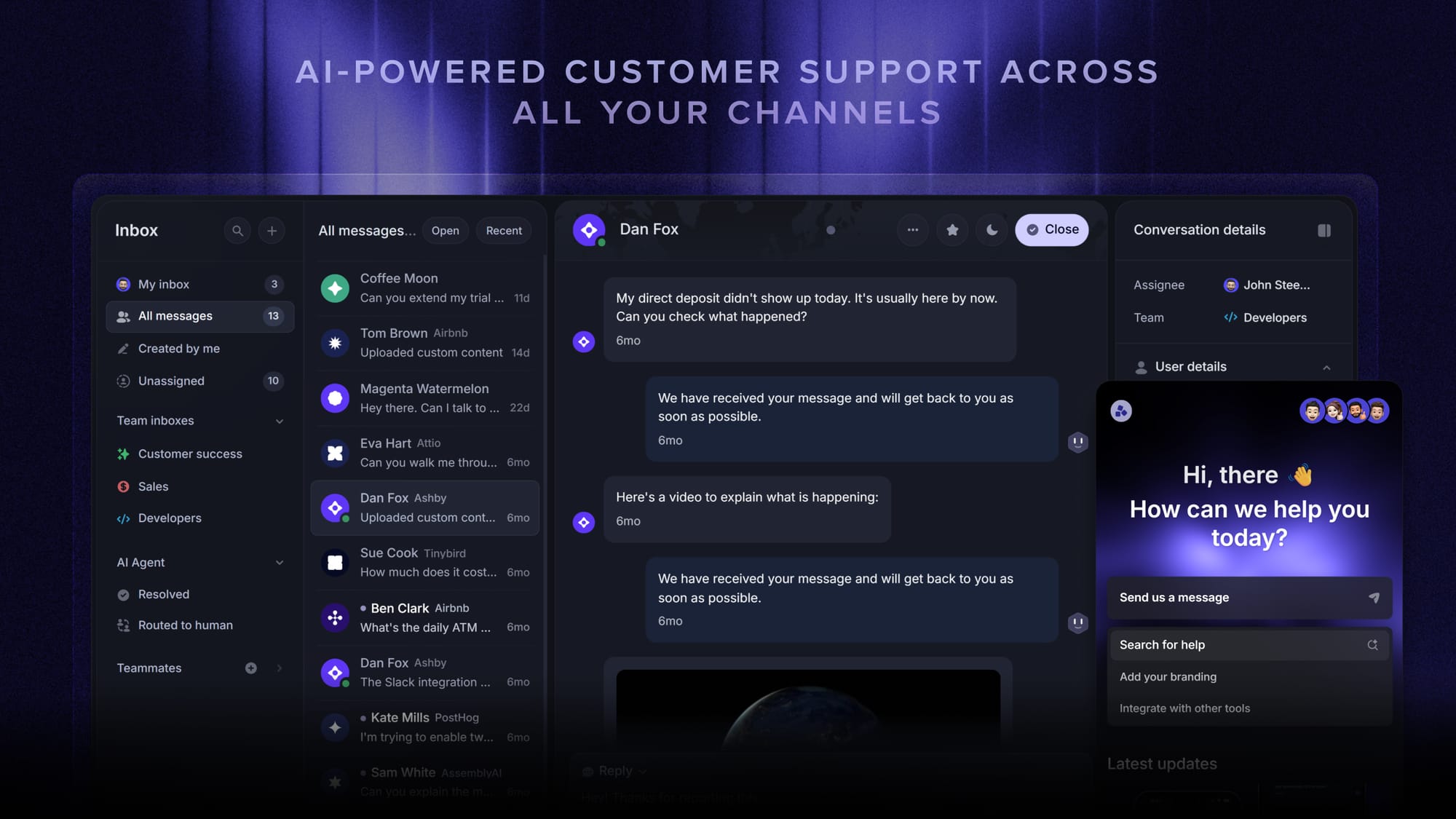
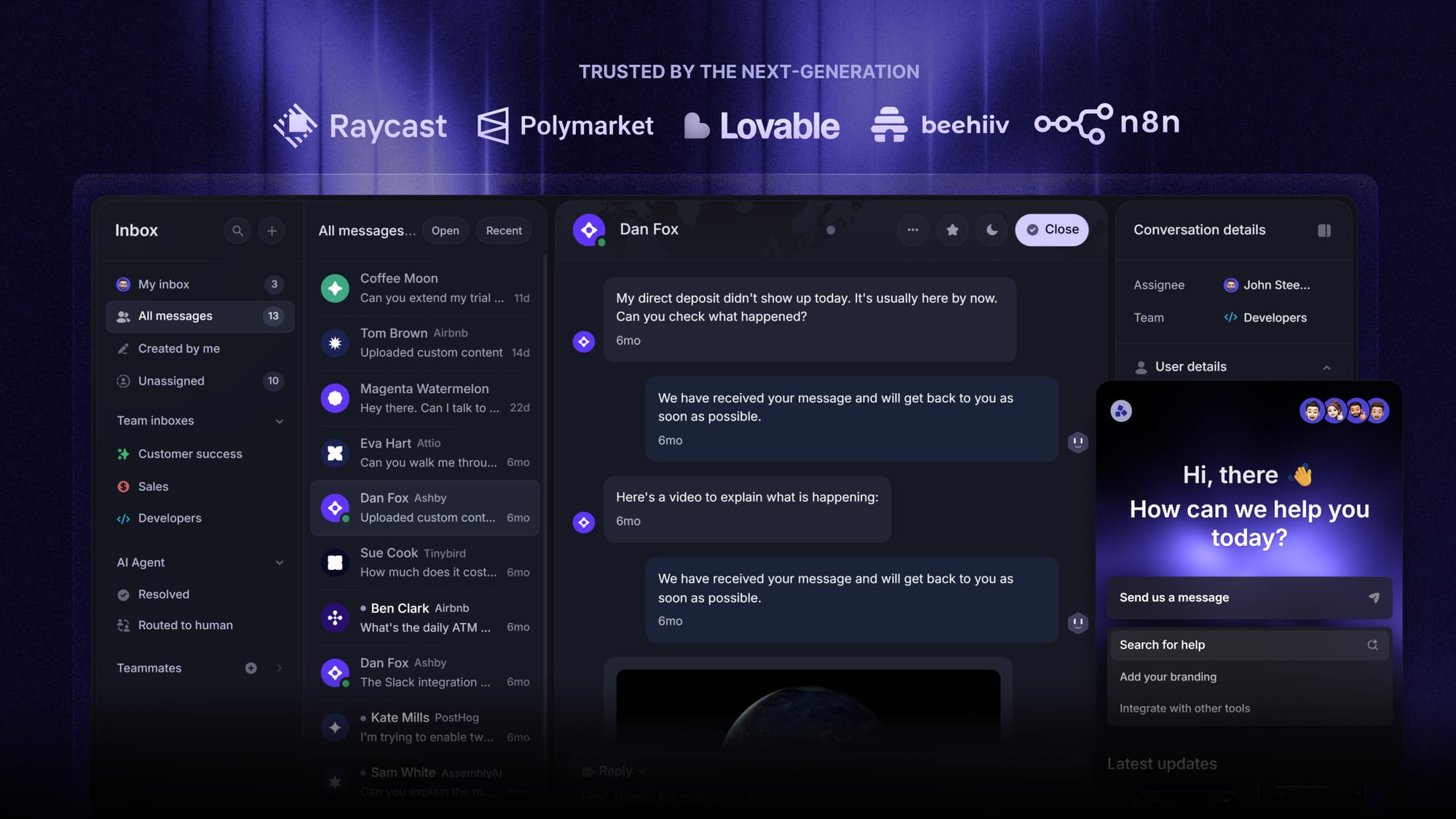
Featurebase is a modern AI customer support platform for product-led SaaS. It combines AI-powered support, a help center, and feedback management into one platform for startups that want all their customer-facing tools in one place. It is used by support teams at companies such as Lovable, Raycast, and n8n. 💫
Best for: Product-led SaaS teams that want to automate support without separating customer conversations from feedback and product work.
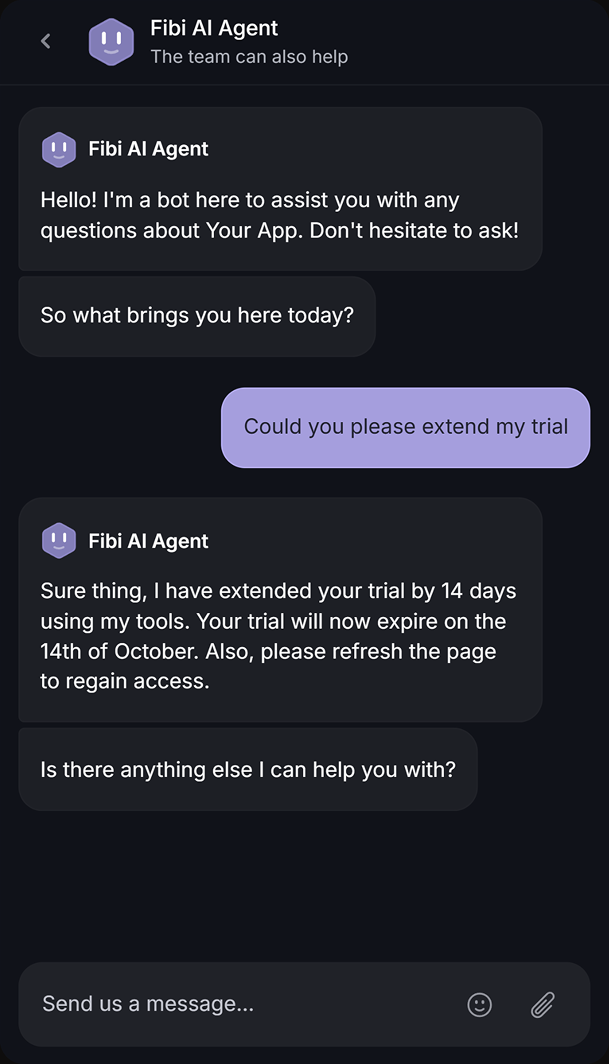
Why it stands out: Fibi can answer questions from connected support content and run custom actions such as extending a trial or offering a discount. When it cannot finish a request, Featurebase can route the conversation to a teammate with the previous context attached.
Top features:
- Omnichannel inbox – Manage live chat and email conversations from one AI-powered view
- Fibi AI Agent – Resolve customer issues on autopilot and run custom actions such as trial extensions and discounts
- Help center with AI search – Provide instant, multilingual self-serve answers
- Workflows & automations – Auto-assign tickets, route conversations, collect customer data, and more
- AI Copilot – Help agents answer customers faster using internal knowledge
- Multi-brand support – Manage multiple help centers and live chats from one workspace
- Automatic AI translations – Translate messages and help articles into each customer's native language
- Service level agreements – Track SLAs so your team responds to customers on time
- Mobile app – Respond to customers, receive notifications, and unblock users on the go
- Feedback & roadmap tools – Collect feature requests and close the loop with updates
- Product updates – Publish release notes through a changelog page, in-app widget, and emails
- Integrations – Connect with Slack, Linear, Jira, HubSpot, and more
The combination is especially useful for SaaS support. A recurring question can become a feature request, the team can publish progress on a roadmap, and a changelog update can close the communication loop. Agents do not have to copy the same customer context between disconnected tools.
Main trade-offs: Fibi is available on paid plans, so the Free plan is best for testing Featurebase's inbox, live chat, ticketing, and mobile workflow before enabling AI. Some advanced operations, including workflows, SLAs, and multi-brand features, require higher tiers.
Pricing: Featurebase has a Free plan with one seat and unlimited support conversations. The Growth plan starts at $29 per seat per month when billed yearly, and Fibi costs $0.49 per successful AI resolution.
2. Fin
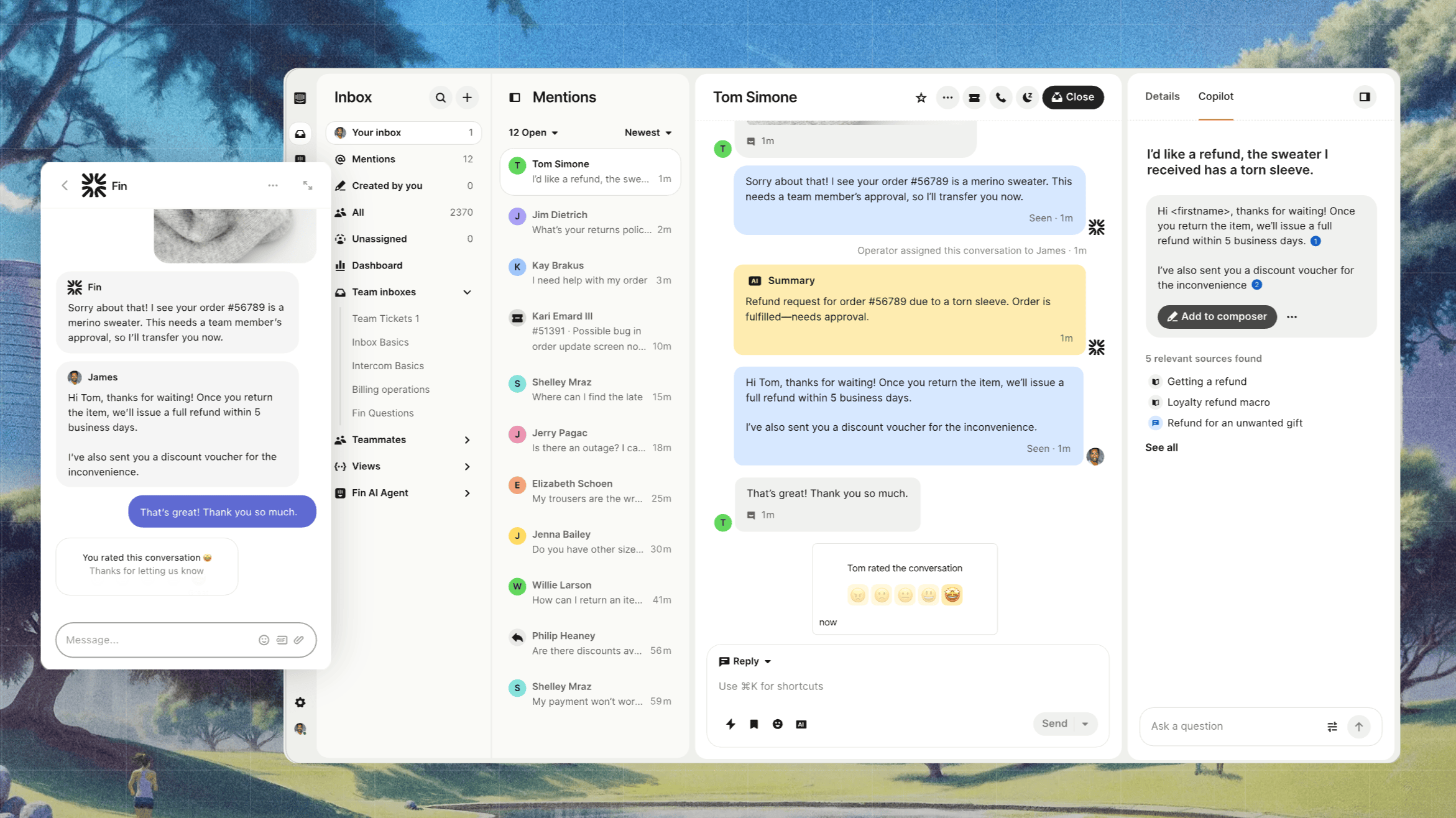
Fin is a specialized AI customer service agent from Intercom that can run on Intercom or connect to another helpdesk. This makes it attractive for a team that likes its current inbox but wants to add a mature AI resolution layer across chat, email, SMS, WhatsApp, social, and other channels.
Best for: Support organizations that want a high-capability AI agent while keeping an existing helpdesk such as Salesforce, HubSpot, Freshworks, or Gorgias.
Key capabilities:
- Answers questions from approved knowledge sources
- Executes procedures and multi-step support processes
- Works across digital channels and custom integrations
- Hands conversations to human agents or workflows
- Includes usage controls, alerts, and performance reporting
- Offers optional quality analysis and Copilot capabilities
Main trade-offs: Connector setup and knowledge structure can become complex in a large environment. Teams also need to forecast outcome volume carefully because a successful automation program can generate a substantial usage bill. The platform is more focused on customer experience than on linking support directly with product discovery.
Pricing: Fin costs $0.99 per outcome, including resolutions and procedure handoffs. On a supported existing helpdesk, no Intercom seats or setup, integration, or platform fees are required; a minimum monthly commitment applies (e.g. 50 outcomes). With Intercom’s helpdesk, Essential starts at $19/seat/month billed annually ($29 billed monthly). Advanced costs $85/seat/month and Expert costs $132/seat/month, billed annually.
3. Zendesk AI
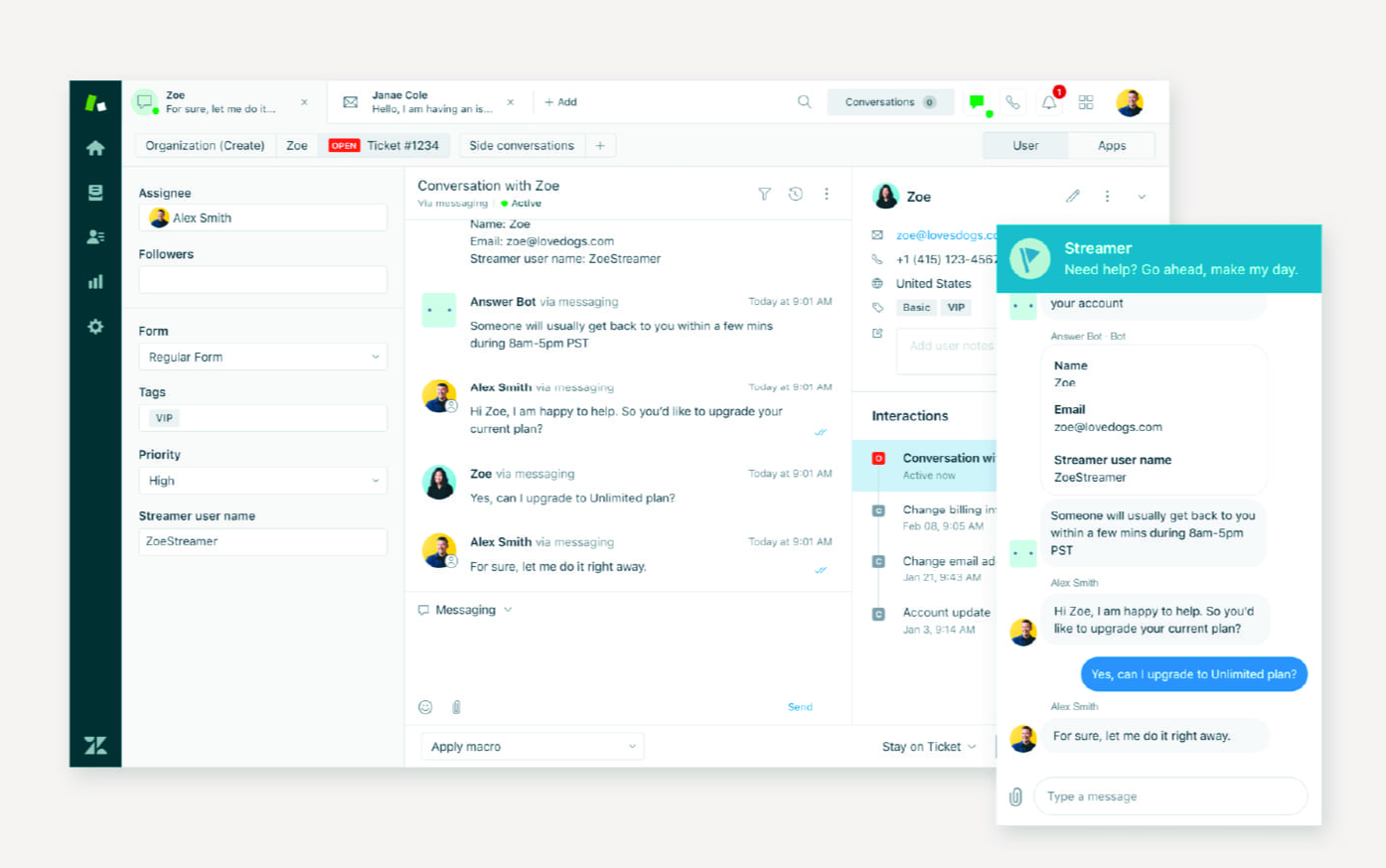
Zendesk AI brings automated ticket resolution into one of the most established customer support platforms. It combines AI agents with ticketing, knowledge management, omnichannel routing, messaging, voice, analytics, and a large integration ecosystem.
Best for: Mid-market and enterprise teams that already use Zendesk or want a conventional helpdesk with AI built into the same operating environment.
Key capabilities:
- AI agents across Suite and Support plans
- Knowledge-connected answers in more than 80 languages
- Multi-step actions through a low-code action builder
- Omnichannel routing and agent workspace
- Reporting for automated resolutions and support operations
- Optional Copilot, workforce engagement, and contact center products
Main trade-offs: That breadth creates complexity. Customization and administration can have a steep learning curve, while Copilot, contact center features, and other add-ons raise the effective price. Teams should calculate subscription seats and automated resolution usage together instead of comparing only the headline plan fee.
Pricing: Support Team starts at $19 per agent per month when billed yearly, while Suite Team starts at $55. AI agents are included in Suite and Support plans, with usage billed through automated resolutions. Copilot costs an additional $50 per agent per month when billed yearly.
4. Aissist
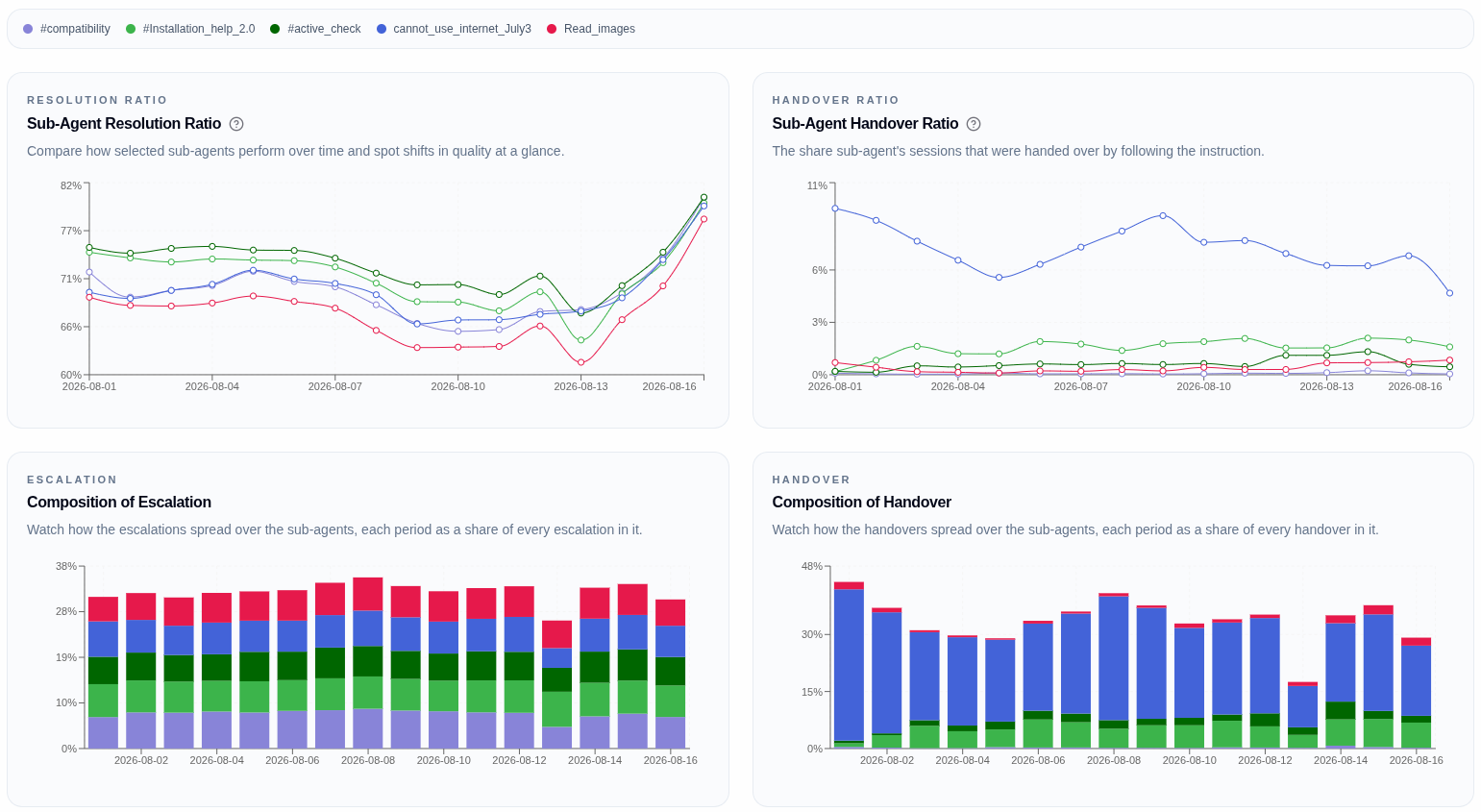
Aissist is an Agentic AI Agent that resolves customer support and sales conversations end to end inside your existing helpdesk, and turns every conversation into real-time insight on customers, products, agents and operations.
Best for: SMB and mid-market teams that want AI resolving real tickets on the helpdesk they already run, with published reliability and a cost they can forecast, without a migration or an in-house AI specialist.
Key capabilities:
- Handles complex, multi-step procedures end to end, keeping all systems updated
- Measured AI error rate below 1%
- Real-time insights across consumers, products and agents
- Easy to start and maintain with provided AI tools
Main trade-offs: Third-party solution alongside your helpdesk. Usage-based billing takes modelling, though capped per resolution.
Pricing: Usage-metered, capped at $0.60 per resolution, with no platform fee, monthly minimum, or handoff charges.
5. Ada
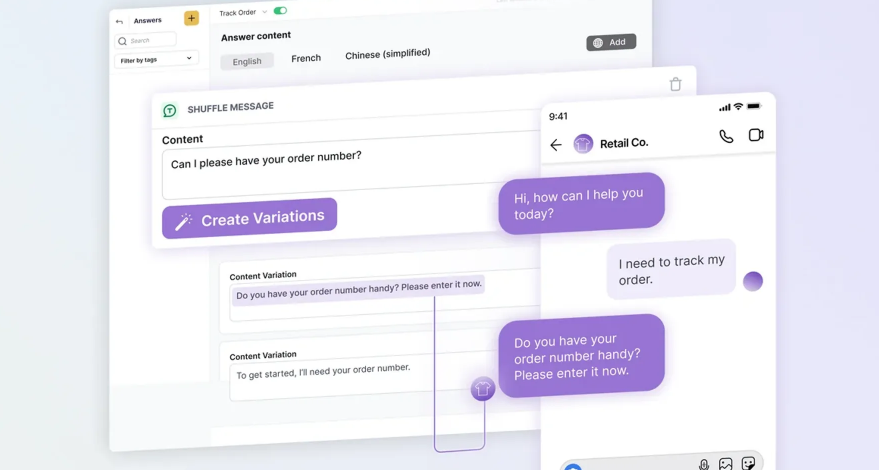
Ada is an enterprise AI customer service platform built around automated conversations, cross-channel deployment, and a structured operating model for governing AI. It is a good match for organizations that need dedicated teams to manage knowledge, quality, risk, and continuous improvement at scale.
Best for: Enterprises with high conversation volumes, formal AI governance requirements, and enough operational capacity to manage a strategic automation program.
Key capabilities:
- No-code tools for building and managing AI experiences
- Support across messaging and voice channels
- Connections to customer data and business systems
- Personalization using customer context
- Testing, measurement, and continuous optimization
- Governance practices supported by Ada's enterprise operating model
Main trade-offs: Ada does not publish a standard starting price, so teams must enter a sales process before they can compare total cost. Its enterprise focus may also be more process than a small support team needs. Buyers should define expected conversation volume, channels, services, and implementation scope before requesting a quote.
Pricing: Custom pricing. Most customers use conversation-based pricing, while a resolution-based option is available for specific enterprise requirements.
6. Salesforce Agentforce
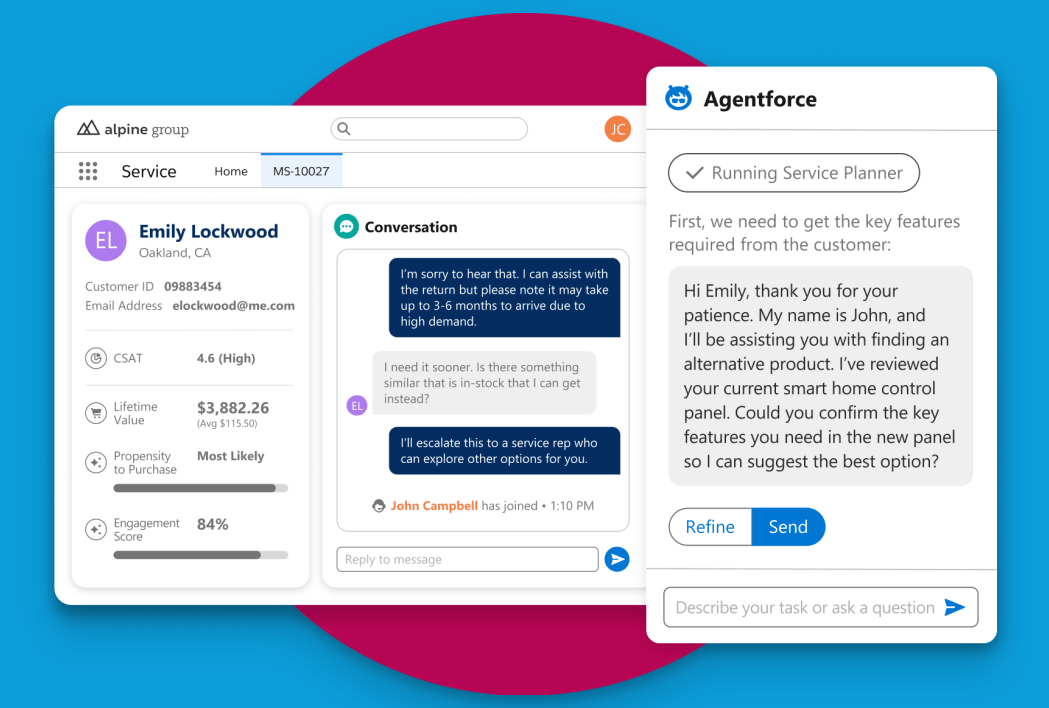
Salesforce Agentforce is an AI agent platform for organizations that already keep customer records, service cases, workflows, and business logic inside Salesforce. Its main strength is the ability to combine conversational service with CRM data and Salesforce automation.
Best for: Large service organizations that are committed to Salesforce and want agents to work across CRM records, cases, knowledge, and Flow-based processes.
Key capabilities:
- Agent building with prompts, topics, actions, and guardrails
- Native access to Salesforce data and service workflows
- Customer-facing agents across digital and voice use cases
- Actions that update records or invoke business processes
- Usage tracking through Digital Wallet
- Consumption and per-user licensing options
Main trade-offs: The platform's value depends on the quality of the Salesforce implementation beneath it. Fragmented data, unclear permissions, and brittle flows will limit the AI agent too. Setup may require Salesforce administrators, data specialists, service leaders, and developers, which puts it beyond the practical reach of many smaller teams.
Pricing: Flex Credits cost $500 per 100,000 credits, and a standard Agentforce action uses 20 credits, equal to $0.10 per action. Conversation pricing is $2 per conversation. Salesforce Foundations includes an entry option at no additional cost for eligible customers, while employee licenses and Agentforce editions use separate pricing.
7. Decagon
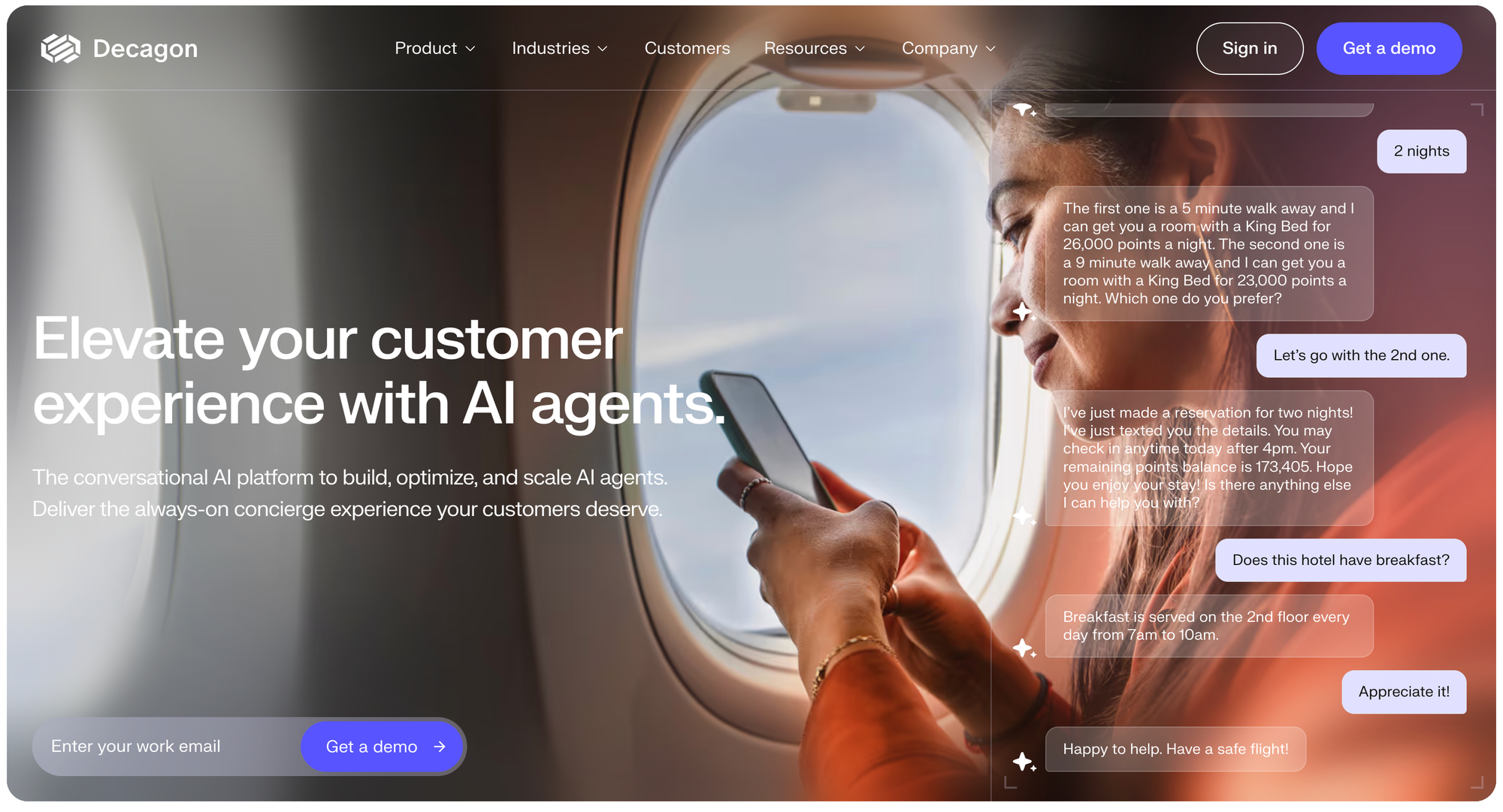
Decagon provides enterprise AI agents for customer experience teams that want to automate complicated requests and take actions across internal systems. Its product is positioned around high-touch deployment, continuous improvement, and operational control rather than a self-serve chatbot builder.
Best for: Digital businesses with large support volumes and complex workflows that justify a tailored enterprise implementation.
Key capabilities:
- Conversational agents for chat, email, and voice experiences
- Multi-step reasoning and actions across connected systems
- Personalized responses using customer and account context
- Testing, monitoring, and conversation review
- Human escalation for requests outside agent policy or confidence
- Enterprise implementation and optimization support
Main trade-offs: There is no public self-serve price or entry plan, which makes early cost comparison difficult. The implementation model is best suited to organizations that can commit stakeholders, engineering access, clean data, and time for ongoing optimization. Public review data is also thinner than it is for long-established helpdesk vendors.
Pricing: Custom pricing. Decagon supports per-conversation and per-resolution contracts, with volume and deployment details handled through sales.
8. Gorgias
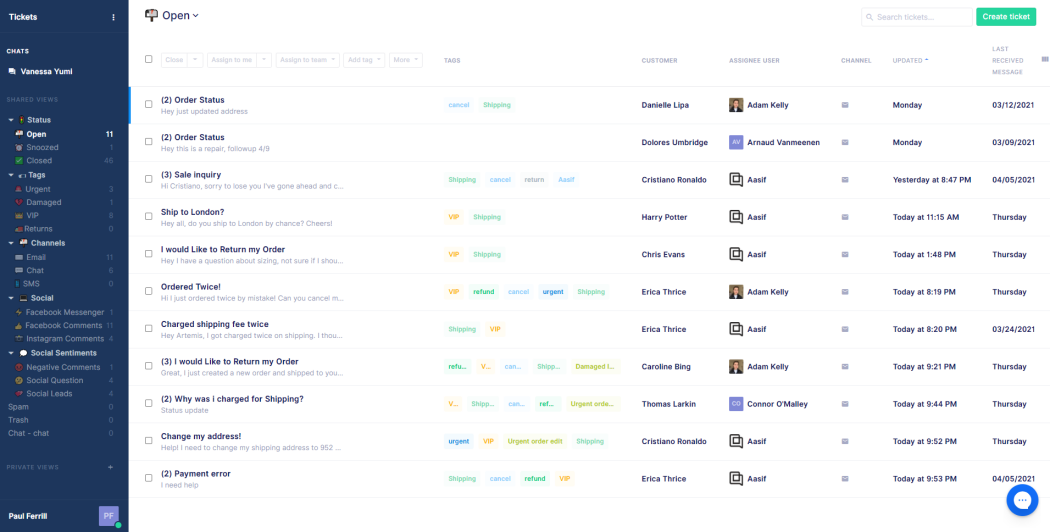
Gorgias offers a helpdesk and AI Agent designed specifically for ecommerce. Its Shopify focus allows the agent to handle common retail requests such as order status, returns, shipping questions, and product recommendations using store and customer data.
Best for: Shopify merchants and ecommerce support teams that want automation tied closely to order and shopping workflows.
Key capabilities:
- AI answers across email, chat, and SMS
- Ecommerce actions for orders, returns, and customer requests
- Product recommendations and shopping assistance
- Tone customization, multilingual support, and image understanding
- Centralized support channels and ecommerce integrations
- Reporting for automation and resolved interactions
Main trade-offs: Teams outside ecommerce will get less value from its specialized workflows and integrations. AI quality still depends on careful training and store knowledge, and reported issues include incorrect answers, reporting limits, and the effort required to tune automation. Costs also include both the helpdesk plan and AI Agent usage.
Pricing: The AI Agent add-on starts at $250 per month. Most plans price AI-resolved interactions at $0.90 each with annual billing or $1 each with monthly billing. The underlying Gorgias helpdesk is priced separately by ticket volume.
9. Tidio Lyro
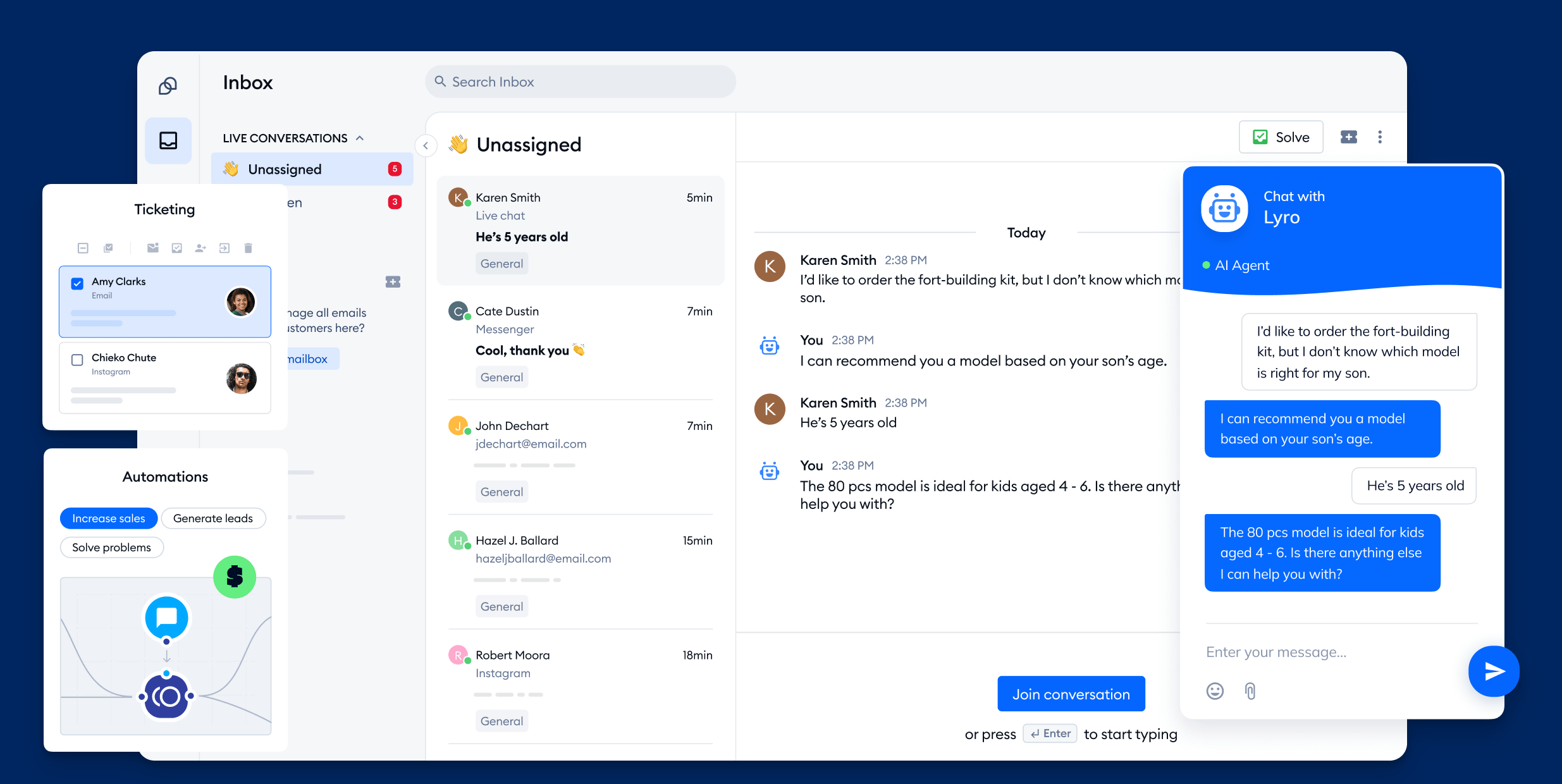
Lyro is Tidio's AI customer service agent for small and growing businesses that want to launch quickly. It can run with Tidio's own live chat and helpdesk or connect to another support platform, making it one of the more approachable standalone options in this comparison.
Best for: Small support and ecommerce teams that value a simple setup, low entry price, and fast time to first automated answer.
Key capabilities:
- Answers based on imported support content
- Human handoff when the AI cannot resolve a request
- Custom communication style and agent name
- Product recommendations for ecommerce use cases
- Standalone deployment with third-party helpdesks
- Analytics and monitoring on paid plans
Main trade-offs: Lyro has less depth than enterprise contact center platforms in voice, governance, and complicated outbound workflows. Its value depends heavily on a clean and complete knowledge base. Tidio's modular pricing can also become harder to compare when a team combines Lyro, human conversations, and Flows.
Pricing: Lyro starts at $32.50 per month for 50 AI conversations. New accounts include 50 one-off Lyro conversations for testing, while larger allowances and managed plans cost more.
10. Kore.ai
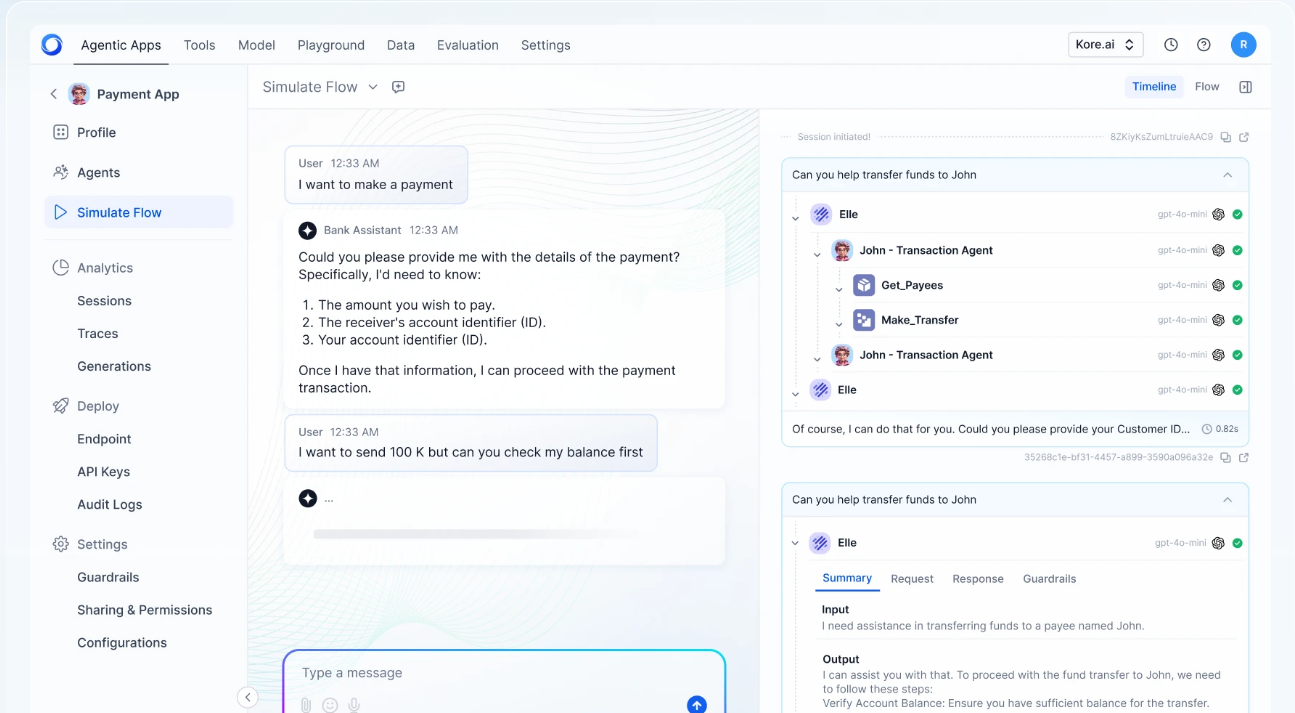
Kore.ai is an enterprise conversational and agentic AI platform with products for customer automation, agent assistance, search, and contact center operations. It offers more infrastructure and configuration depth than most teams need, but that depth suits global organizations with complex channels, systems, and governance.
Best for: Large enterprises and contact centers that need configurable automation, agent assistance, voice, and formal control across many service use cases.
Key capabilities:
- No-code and low-code tools for building conversational experiences
- Automation across digital and voice channels
- Search AI and knowledge-grounded answers
- Agent assistance within contact center workflows
- Integrations with enterprise systems and channel providers
- Analytics, testing, security, and governance controls
Main trade-offs: Advanced projects carry a steep learning curve. Users often need stronger technical support for complex configuration, and outdated documentation or product changes can slow implementation. Large deployments should validate latency, channel behavior, and integration reliability under realistic load before launch.
Pricing: Custom pricing. Automation AI is billed by 15-minute conversation sessions, while Contact Center AI and Agent AI use named or concurrent agent seats. Essential, Advanced, and Enterprise plans are available, but public dollar amounts are not listed.
How to choose an AI customer service agent
Start with the operating model you want, not with a vendor demo. A product that answers a curated set of questions in a sandbox may still fail when it meets account-specific requests, old documentation, angry customers, and inconsistent business rules.
Decide whether you need a platform or an AI layer
A complete support platform gives the AI agent, human inbox, knowledge base, workflows, and reporting one shared source of context. This is usually the cleanest route for teams replacing fragmented tools. Featurebase, Zendesk, Gorgias, Tidio, and Kore.ai can cover different versions of that broader requirement.
An AI layer is a better fit when the current helpdesk works well and migration would create unnecessary risk. Fin, Ada, Decagon, and Lyro can sit alongside existing service systems, though the integration depth and deployment model vary.
Test complete resolutions, not answer quality alone
Create a representative evaluation set from real support conversations. Include simple questions, ambiguous requests, angry messages, account-specific cases, policy exceptions, multilingual tickets, and prompts that should always reach a human.
Then score the full outcome. Check whether the agent understood the intent, selected the right source, asked for missing information, took the correct action, respected its boundaries, and handed off cleanly. A fluent answer is not valuable if it leaves the customer with more work.
Inspect the human handoff
Every AI agent will escalate some requests. The customer experience depends on whether the human receives the transcript, summary, identified intent, customer record, sources used, and actions already attempted.
Also test whether customers can request a person directly. Handoff rules should respond to risk, sentiment, customer tier, topic, and agent confidence without trapping someone in a loop.
Model the total cost at several automation rates
AI pricing mixes seats, conversations, resolutions, outcomes, actions, sessions, add-ons, and minimum commitments. Build a simple model for current volume, expected growth, and low, target, and high automation rates.
Ask each vendor exactly what triggers a billable event. Confirm whether a follow-up reopens the charge, whether a workflow handoff counts as an outcome, what happens when a human joins, and which platform fees sit underneath usage. Better automation can increase a usage-based bill, so cost per satisfactory resolution is more useful than the cheapest published entry price. Crescendo AI pricing combines a fixed monthly fee with resolution charges.
Review knowledge and governance ownership
Name the people who will approve sources, review failed conversations, update workflows, and monitor policy. AI governance is ongoing operational work, not a checkbox completed at launch.
Your platform should make that work manageable. Look for versioning, test environments, permissions, audit trails, content-gap reporting, usage limits, and a clear way to disable an unsafe action quickly.
Run a controlled pilot with measurable goals
Choose two or three high-volume intents with stable policies and good documentation. Define a baseline for resolution time, human handling time, customer satisfaction, repeat contacts, and cost per resolution before the pilot starts.
Review transcripts weekly and separate knowledge failures from reasoning, integration, and policy failures. Expand only when the agent performs consistently and your human team trusts the handoff. The best launch is narrow enough to learn quickly but real enough to expose operational problems.
Conclusion
The right AI customer service agent should improve customer experience while giving your team more control over knowledge, actions, and escalation. Fin is compelling as a specialized layer for an existing helpdesk, Zendesk and Salesforce fit mature enterprise ecosystems, Gorgias is purpose-built for ecommerce, and Ada, Decagon, Tidio, and Kore.ai serve distinct combinations of scale and complexity.
For product-led SaaS teams, Featurebase offers the most complete balance of AI resolution, human support, workflows, and product context in one platform. You can start with the Free plan to test the inbox, live chat, ticketing, and mobile app, then add Fibi from the Growth plan when you are ready to automate real support volume. 👇
✨ Automate your support with the fastest AI-enhanced Inbox today →
FAQs
How do AI customer service agents work?
AI customer service agents interpret a request, retrieve approved information, and choose an answer or action. Strong platforms combine a language model with a knowledge layer, business tools, rules, and escalation paths. The agent should pass the full conversation and relevant context to a human when it cannot resolve the issue safely.
Which AI agent is safest for customer service?
There is no universally safest vendor because safety depends on the use case, data, configuration, and ongoing oversight. Look for grounded answers, granular permissions, action approvals, audit logs, testing tools, privacy controls, and reliable human handoff. A narrow agent with strong guardrails is safer than a broad deployment with unclear ownership.
How should teams measure AI agent performance?
Track satisfactory resolution rate, escalation rate, repeat contact, customer satisfaction, handling time, cost per resolution, and the reasons conversations fail. Review transcripts alongside aggregate dashboards because a high containment number can hide abandoned or incorrect conversations. Compare results with a pre-launch baseline and report performance by intent.
Can AI agents work with an existing helpdesk?
Yes. Many agents connect to an existing helpdesk and pass escalations into its queues, while full platforms replace the helpdesk and share context natively. Featurebase is useful when you want the AI agent, inbox, knowledge base, workflows, and product feedback in one workspace, while standalone tools are better when migration is not practical.
How do I launch an AI agent for customer service?
Start with a small set of frequent, well-documented requests and define the actions the AI may take. Test the agent on real historical conversations, set clear escalation rules, and pilot it with limited traffic. Review failures frequently before expanding to more intents, channels, or account actions.
Will AI replace human customer service agents?
AI will absorb more repetitive answers, triage, data retrieval, and routine actions, but human agents remain essential for judgment, empathy, exceptions, and complex problem-solving. The role is likely to shift toward handling higher-value cases and improving the systems that automate simpler work. Teams should design AI and human support as one service operation rather than competing channels.