Blog Customer ServiceSalesforce Alternatives: 10 Best Tools for 2026
Salesforce Alternatives: 10 Best Tools for 2026
Looking for a Salesforce alternative for customer support? Compare the 10 best Salesforce Service Cloud alternatives for 2026 by features, pricing, and fit.


✨Psst... Looking for a modern & affordable alternative to Salesforce Service Cloud? Check out Featurebase →
Salesforce is the default for big customer operations, but for support teams it often feels like overkill. Service Cloud is powerful, yet it's expensive, slow to change without a developer, and built for enterprise-scale workflows most teams never use.
If you're escaping the customer support side of Salesforce, the right replacement is a modern support platform, not another sprawling CRM. Below are the 10 best Salesforce Service Cloud alternatives for 2026, compared on features, pricing, and who each one fits. 👇
Key takeaways:
| Tool | Best for | Starting price | Free plan | Main trade-off |
|---|---|---|---|---|
| Featurebase✨ | Modern SaaS teams that want support and feedback in one | Free, then $29/seat/mo | Yes | Newer than the legacy enterprise suites |
| Zendesk | Large teams needing omnichannel support at scale | $19/agent/mo (Suite from $55) | No (trial) | Pricing climbs fast, key features gated to higher tiers |
| Intercom | AI-first conversational support | $29/seat/mo + $0.99/Fin resolution | No (trial) | Costs get unpredictable as AI usage grows |
| Freshdesk | An affordable, well-rounded helpdesk | Free, then $15/agent/mo | Yes | Reporting and automation hit a ceiling |
| HubSpot Service Hub | Teams that want support attached to a CRM | Free (2 users), then $15/seat/mo | Yes | Ticketing feels secondary, and Pro jumps to $90 |
| Zoho Desk | Budget support inside the Zoho stack | Free (3 agents), then $7/agent/mo | Yes | Dated interface, basic AI, learning curve |
| Help Scout | Simple email-first support for SMBs | $25/user/mo | Limited free | Light on automation, channels, and reporting |
| Gorgias | Ecommerce and Shopify support | $10/mo (50 tickets) | No (trial) | Ticket-based pricing spikes in peak season |
| Microsoft Dynamics 365 Customer Service | Enterprise teams in the Microsoft ecosystem | $50/user/mo | No | Complex, usually needs consultants to deploy |
| Front | Shared-inbox collaboration across teams | $25/seat/mo | No (trial) | Expensive per seat, limited SLA depth |
What is Salesforce Service Cloud?
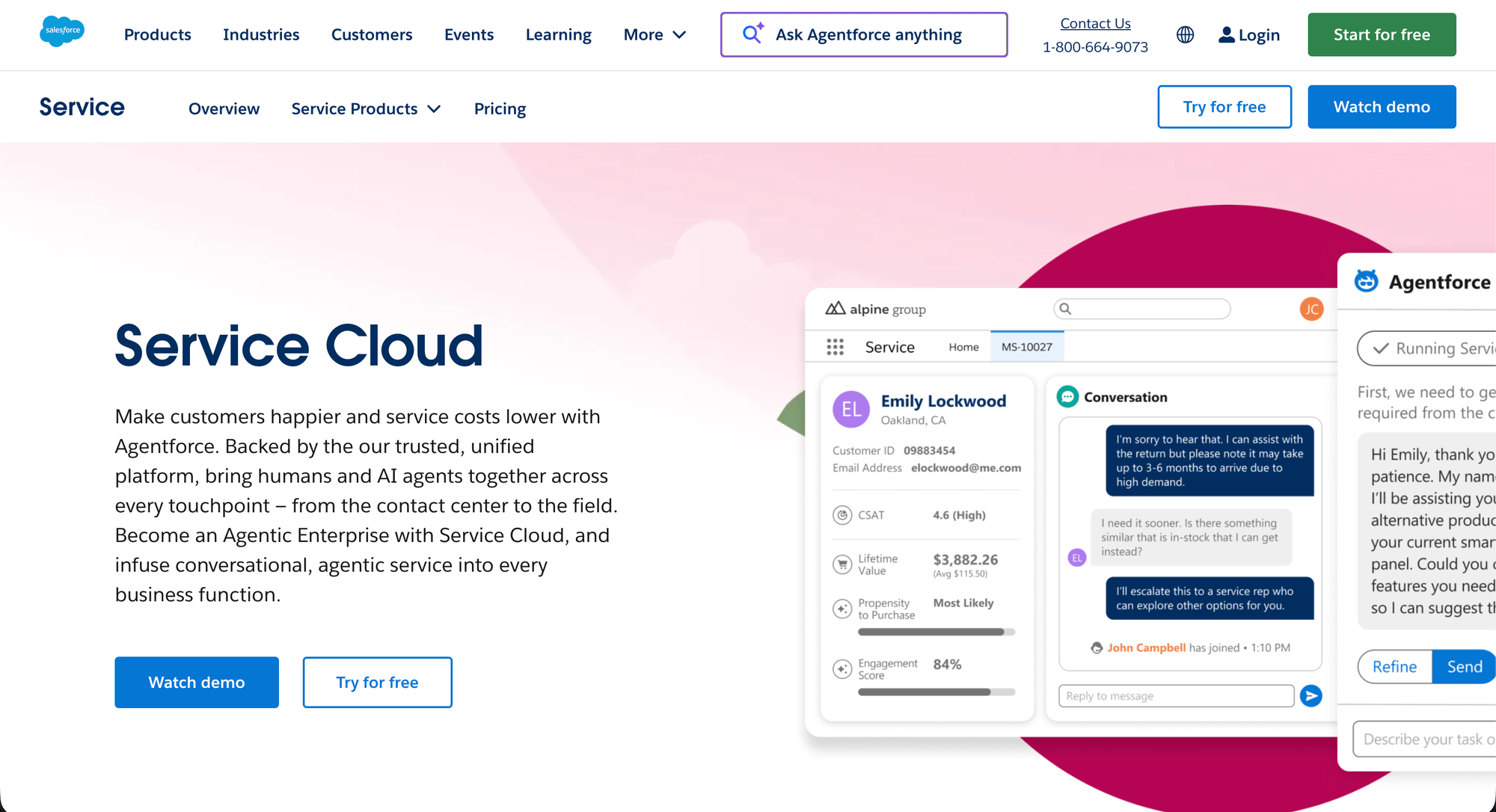
Salesforce Service Cloud is the customer service product inside the wider Salesforce platform. It handles case management, omnichannel routing, SLAs, a knowledge base, and AI through Agentforce, all sitting on top of Salesforce's CRM data model.
That depth is the appeal for large enterprises. It's also the problem for everyone else. Service Cloud is one module in a suite that also includes Sales Cloud, Marketing Cloud, and more, and the support experience is built around the same heavy configuration the rest of Salesforce is known for.
When people search for "Salesforce alternatives" with support in mind, they're usually not looking to replace their entire CRM. They want a lighter, faster, cheaper way to run customer support without the Service Cloud baggage. 🤔
Why look for a Salesforce Service Cloud alternative?
Salesforce earns its reputation, but the same things that make it powerful at enterprise scale make it painful for most support teams.
It gets expensive fast
Service Cloud's per-agent pricing is only the starting point. Add AI, extra storage, premium support, and the integrations you actually need, and the real cost can run well above the sticker price. For growing teams, the total cost of ownership rarely matches the advertised number.
There's a steep learning curve
Salesforce is famously complex. Onboarding agents takes time, admins need training, and getting the platform to fit your workflows is a project, not an afternoon. Smaller teams often pay for capability they never fully use.
Customization needs a developer
Adapting Service Cloud usually means custom configuration, and that often means hiring a Salesforce consultant or keeping a developer on call. Every workflow change becomes a ticket of its own, which slows support teams down instead of speeding them up.
It's heavy for support-first teams
Service Cloud was built around sales workflows, so support, success, and retention teams end up bending an enterprise CRM to do a job a dedicated support tool does better. A modern platform like Featurebase lets you run live chat, email, and Slack support from one AI-powered inbox and collect product feedback in the same place, without the configuration overhead. That's the gap most of the tools below are built to fill.
What to look for in a Salesforce alternative
Not every support tool is a true Service Cloud replacement. When you're comparing options, weigh these 5 things:
- Ease of use: You should be able to onboard agents and adjust workflows without a developer or a consultant.
- AI and automation: Look for AI that resolves tickets, drafts replies, and routes conversations, not just a chatbot bolted on top.
- Omnichannel support: Email, live chat, and social or Slack conversations should live in one inbox, not separate tools.
- Integrations: The platform should connect to your existing stack out of the box, so you're not paying to build connectors.
- Transparent pricing: Watch for per-seat costs that balloon with add-ons, AI fees, and minimum-seat requirements.
Keep those in mind as you read through the list. Here are the 10 best Salesforce alternatives for support teams in 2026.
The 10 best Salesforce alternatives for 2026
1. Featurebase ✨
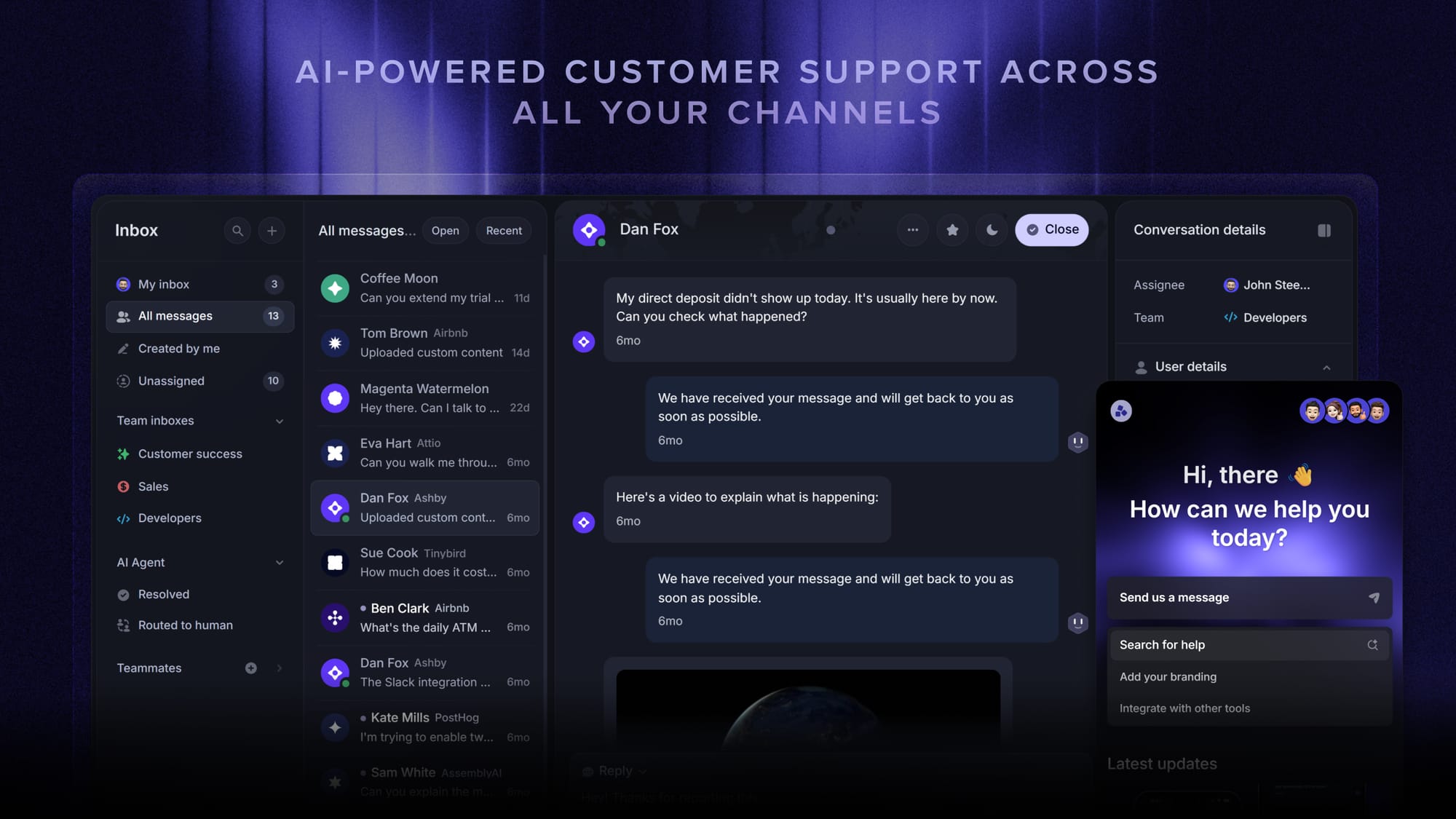
Featurebase is a modern AI customer support platform for product-led SaaS. It combines AI-powered support, help center, and feedback management into a single platform for startups that want all their customer-facing tools in one place. Featurebase is loved by thousands of support teams from companies like Lovable, Raycast, and n8n. 💫
Top features:
- Omnichannel inbox – Manage live chat, email, and Slack conversations from one AI-powered view
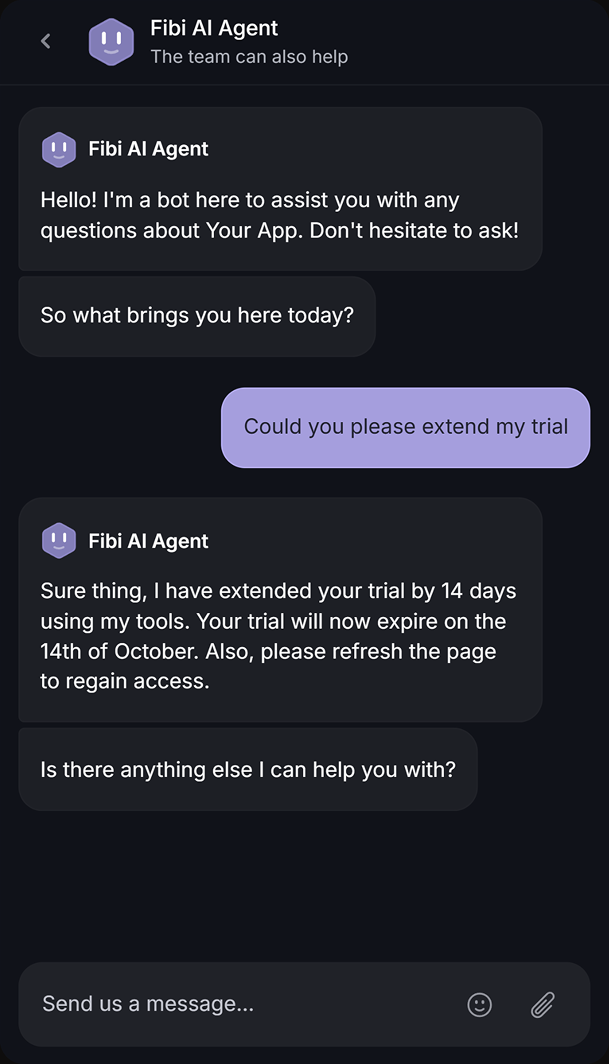
- Fibi AI Agent – Resolve customer issues on autopilot & run custom actions like trial extensions and refunds
- Help center with AI search – Provide instant, multilingual self-serve answers
- Workflows & automations – Auto-assign tickets, route conversations, collect customer data, and more
- AI Copilot – Help your agents answer customers faster with AI Copilot that uses your internal knowledge
- Multi-brand support – Manage multiple Help Centers and Live chats from a single workspace
- Automatic AI translations – Automatically translate all messages and help articles to your customers native language
- Service Level Agreements – Track SLAs to make sure your team responds to customers on time, every time
- Feedback & roadmap tools – Collect feature requests and close the loop with updates
- Integrations – Connects with Slack, Linear, Jira, HubSpot, and more
Pricing: Free plan available with unlimited conversations. Paid plans start at $29/seat/month with $0.29 per AI resolution.
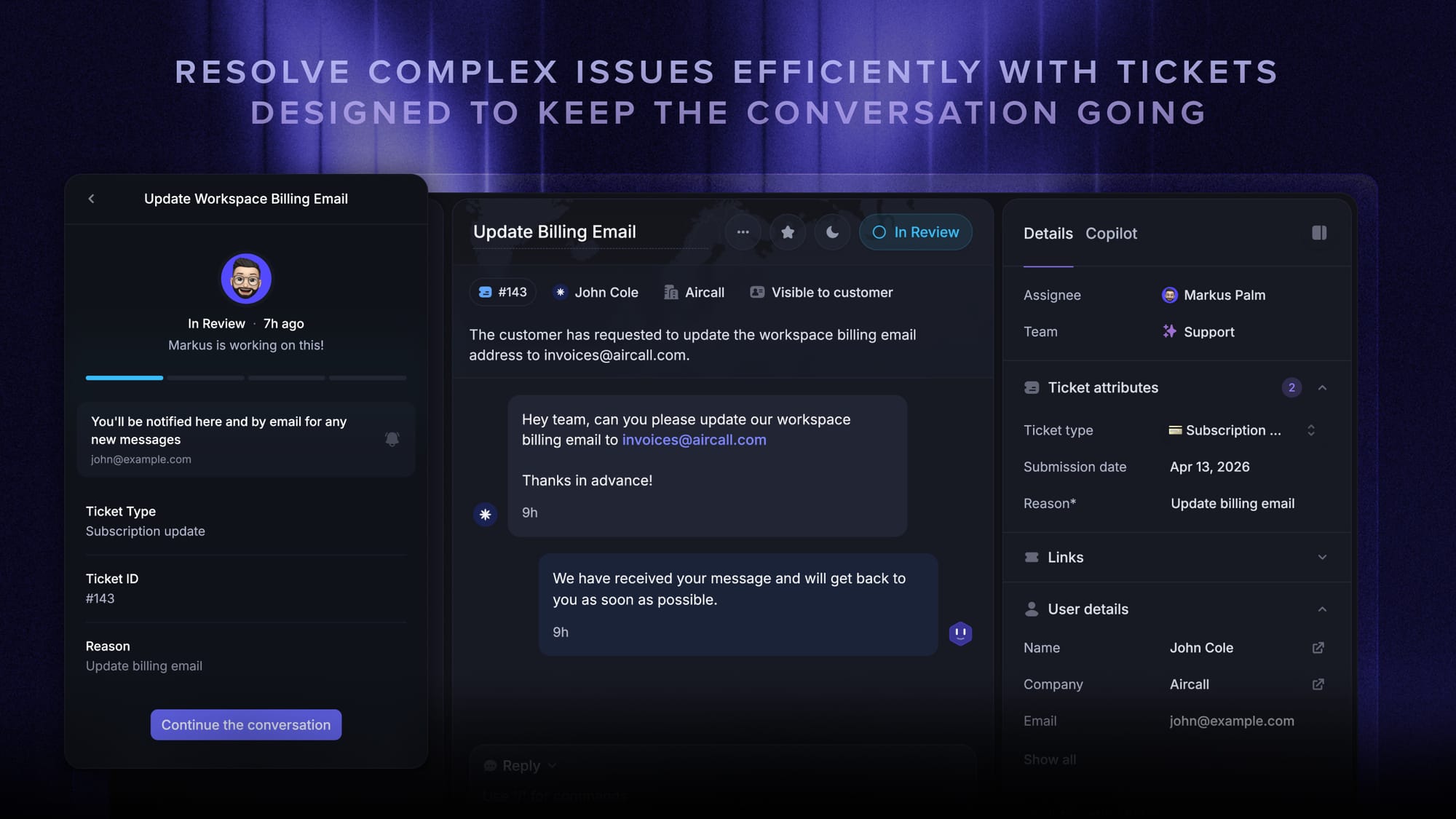
Featurebase covers all the basic support features that legacy platforms do, but with a much more modern approach. It comes with AI automations, a mobile app, and multiple channels (email, live chat, Slack, etc.).
✨ Automate your support with the fastest AI-enhanced Inbox today →
2. Zendesk
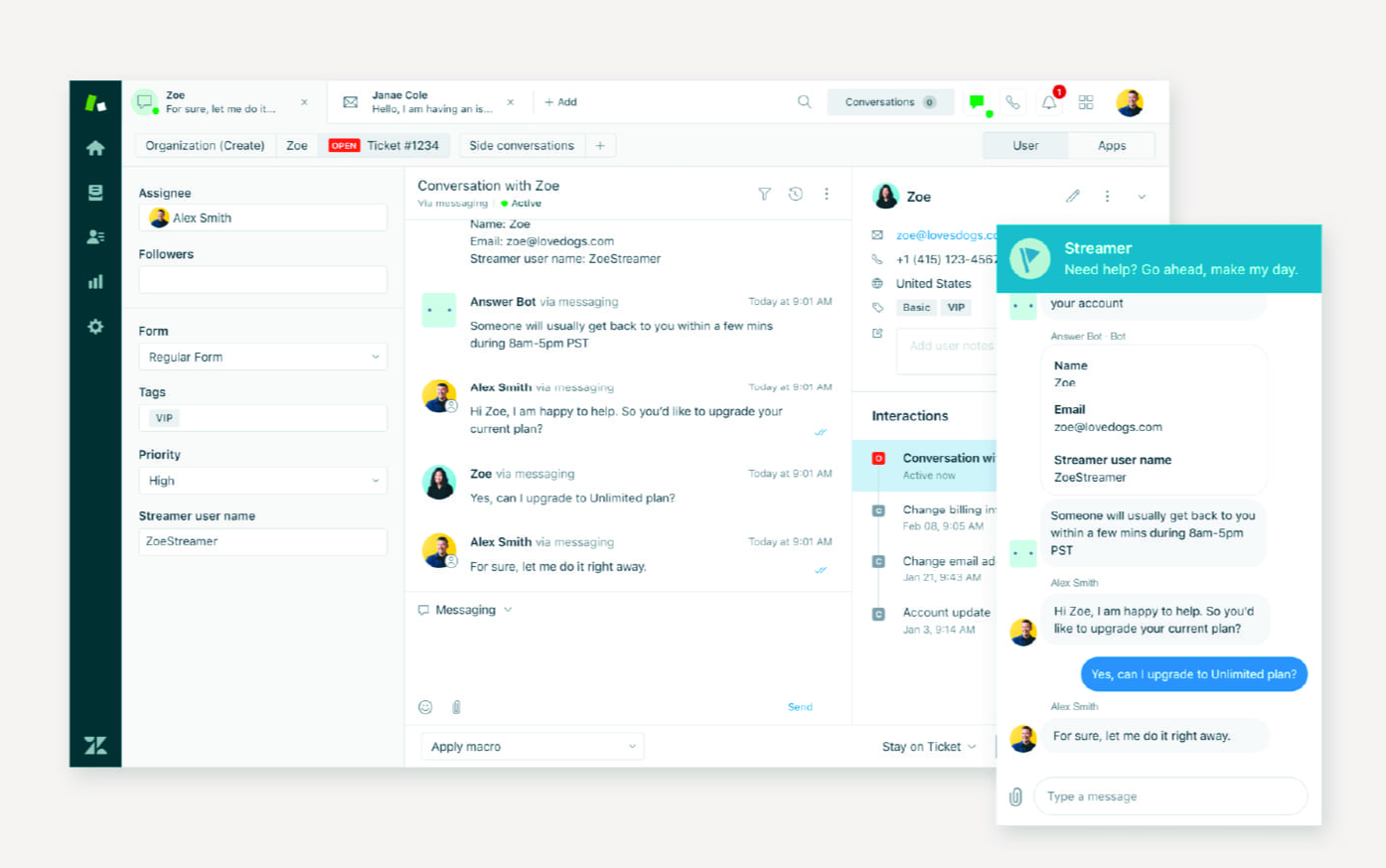
Zendesk is the best-known name in customer support software and the closest like-for-like swap for Service Cloud. It's an omnichannel platform built for high-volume teams that need ticketing, routing, and reporting at scale.
Key features:
- Omnichannel ticketing across email, chat, phone, and social
- AI agents and automation for high-ticket volumes
- A customizable help center and self-service portal
- Reporting dashboards and workflow automation
Why it's a Salesforce Service Cloud alternative: Zendesk delivers comparable enterprise-grade support depth, but it's quicker to set up and more focused on support specifically rather than sitting on top of a full CRM.
The trade-offs show up in cost and gating. Zendesk pricing starts at $19/agent/month for the Support Team plan, but the full Suite begins at $55/agent/month and climbs to $169 for Enterprise. G2 reviewers consistently flag the pricing as one of the hardest to budget against, with capable reporting and automation locked behind higher tiers and costs rising quickly as you add agents.
3. Intercom
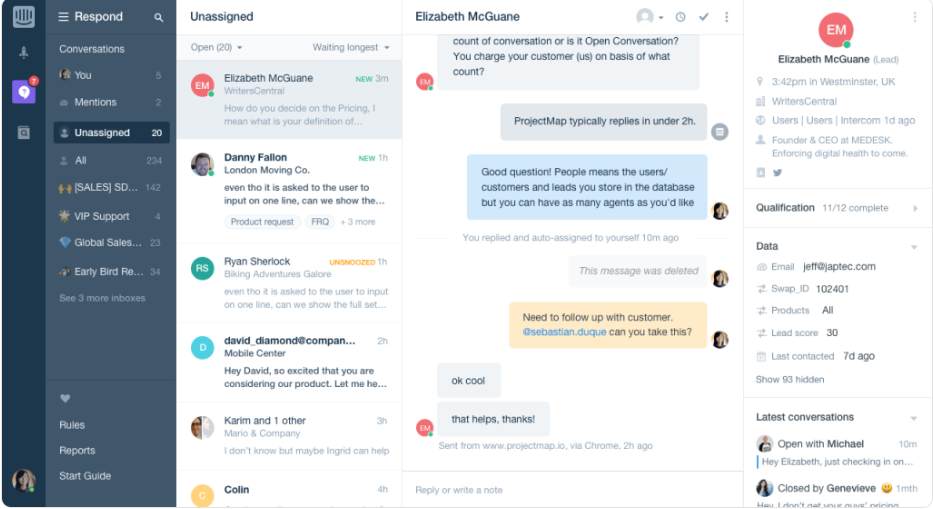
Intercom is an AI-first support and messaging platform best known for its Fin AI agent. It's a strong fit for SaaS teams that want conversational, in-product support backed by automation.
Key features:
- Fin AI agent that resolves conversations autonomously
- A modern messenger for in-app and web chat
- Help center and self-serve content
- Custom bots and automated workflows
Why it's a Salesforce Service Cloud alternative: Intercom is far more modern and AI-led than Service Cloud, and it's much faster to adopt for product-led teams.
The catch is cost predictability. Intercom pricing starts at $29/seat/month (annual) on the Essential plan, but Fin charges $0.99 per resolution on top of seat fees, and add-ons like Copilot are billed separately. G2 reviewers commonly note that real spend ends up well above the base price and that the platform can feel overwhelming for smaller operations.
4. Freshdesk
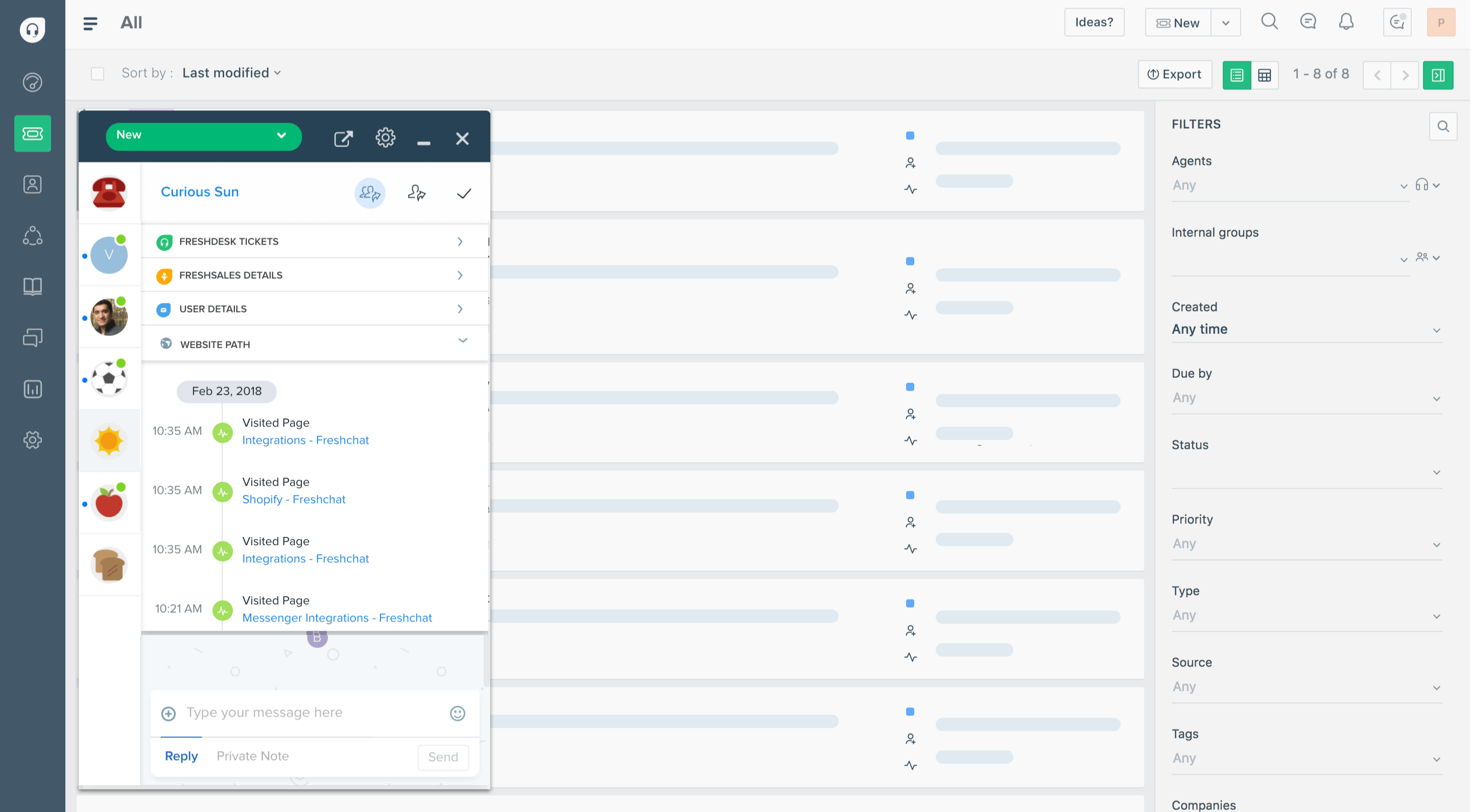
Freshdesk by Freshworks is an affordable, well-rounded helpdesk that's popular with SMB and mid-market support teams. It centralizes multichannel tickets and offers a generous entry point.
Key features:
- Multichannel ticketing across email, chat, phone, and social
- A free-forever plan for small teams
- Automation and SLA management
- A knowledge base and self-service portal
Why it's a Salesforce Service Cloud alternative: Freshdesk gives you most of the core support capabilities Service Cloud does at a fraction of the price and complexity.
Freshdesk pricing includes a free plan, with paid tiers starting at $15/agent/month (Growth), $49 for Pro, and $79 for Enterprise on annual billing. Freddy AI is an added consumption-based cost. A recurring theme in G2 feedback is that native reporting hits a ceiling quickly and that advanced automation and customization can get complex without technical help.
5. HubSpot Service Hub
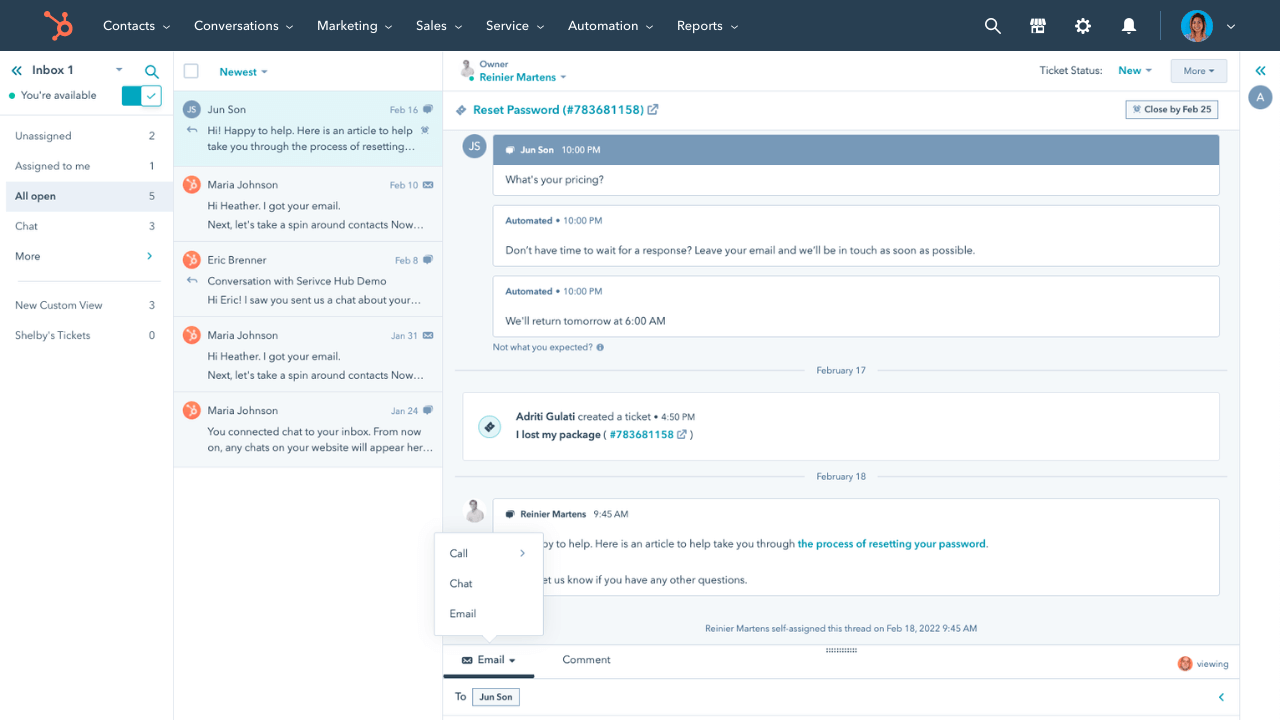
HubSpot Service Hub is the customer service product inside HubSpot's wider CRM platform. It's a natural pick for teams that want support tickets to live alongside marketing and sales data.
Key features:
- Ticketing and shared inbox tied to the HubSpot CRM
- Knowledge base and customer portal
- AI chatbots and live chat
- Feedback surveys and reporting
Why it's a Salesforce Service Cloud alternative: like Service Cloud, HubSpot connects support to a full CRM, but it's significantly easier to use and quicker to deploy.
HubSpot pricing offers a free plan for up to 2 users, with Service Hub Starter from $15/seat/month. The jump to Professional is steep at $90/seat/month plus a one-time onboarding fee. G2 reviewers often find the ticketing side cumbersome compared to dedicated helpdesks and note the interface can feel cluttered as you add tools.
6. Zoho Desk
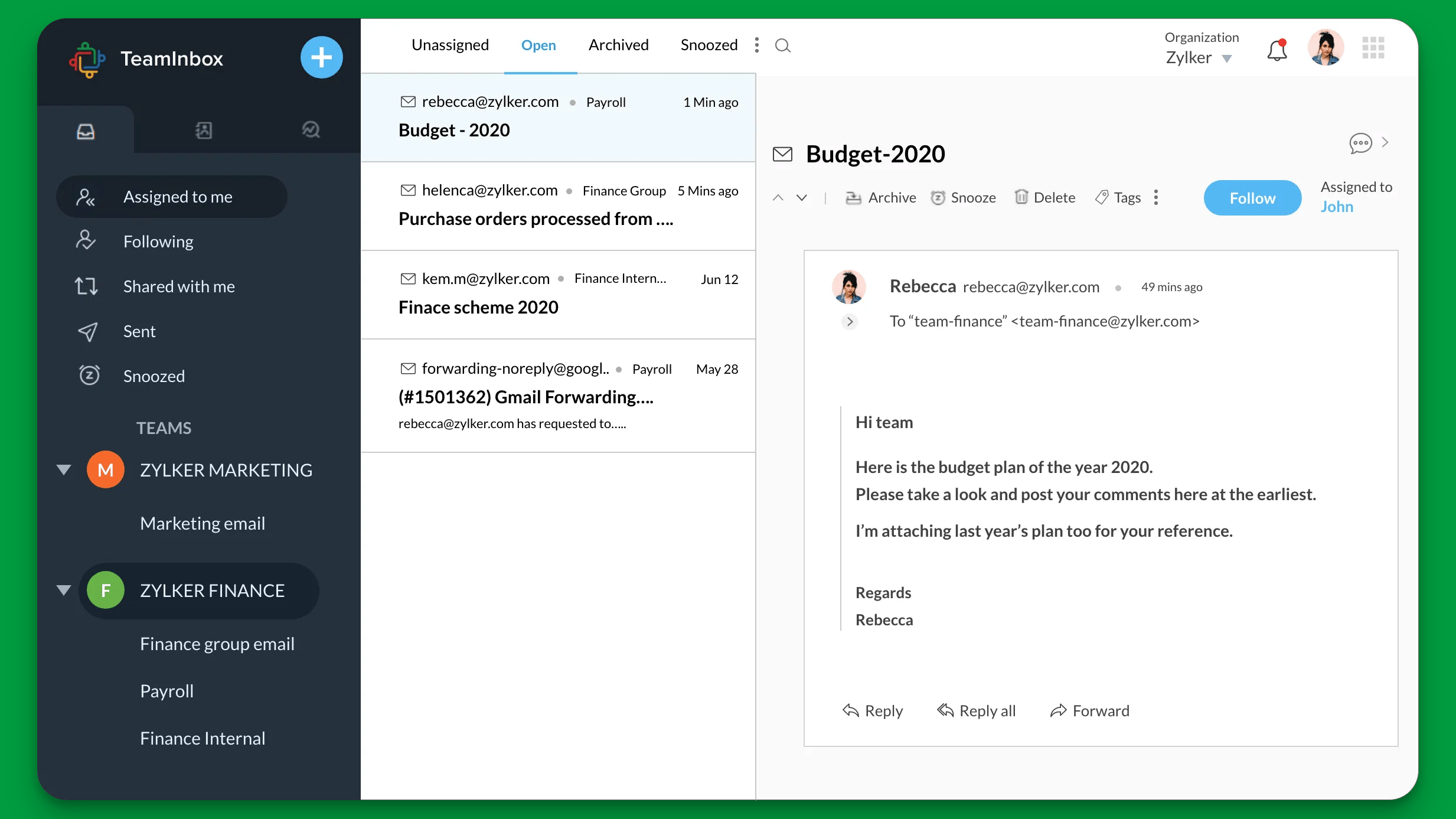
Zoho Desk is a budget-friendly helpdesk that shines for teams already in the Zoho ecosystem. It covers the support essentials at one of the lowest entry prices on this list.
Key features:
- Multichannel ticketing with email, chat, and social
- A free plan for up to 3 agents
- SLAs, automation, and a knowledge base
- Tight integration with the rest of the Zoho suite
Why it's a Salesforce Service Cloud alternative: Zoho Desk delivers structured ticketing and automation at a fraction of Service Cloud's cost.
Zoho Desk pricing starts with a free tier, then runs $7/agent/month (Express), $14 (Standard), $23 (Professional), and $40 (Enterprise) annually. G2 reviewers commonly point to a dated interface, a steeper-than-expected learning curve, and a primitive AI offering, with deeper analytics gated to higher plans.
7. Help Scout
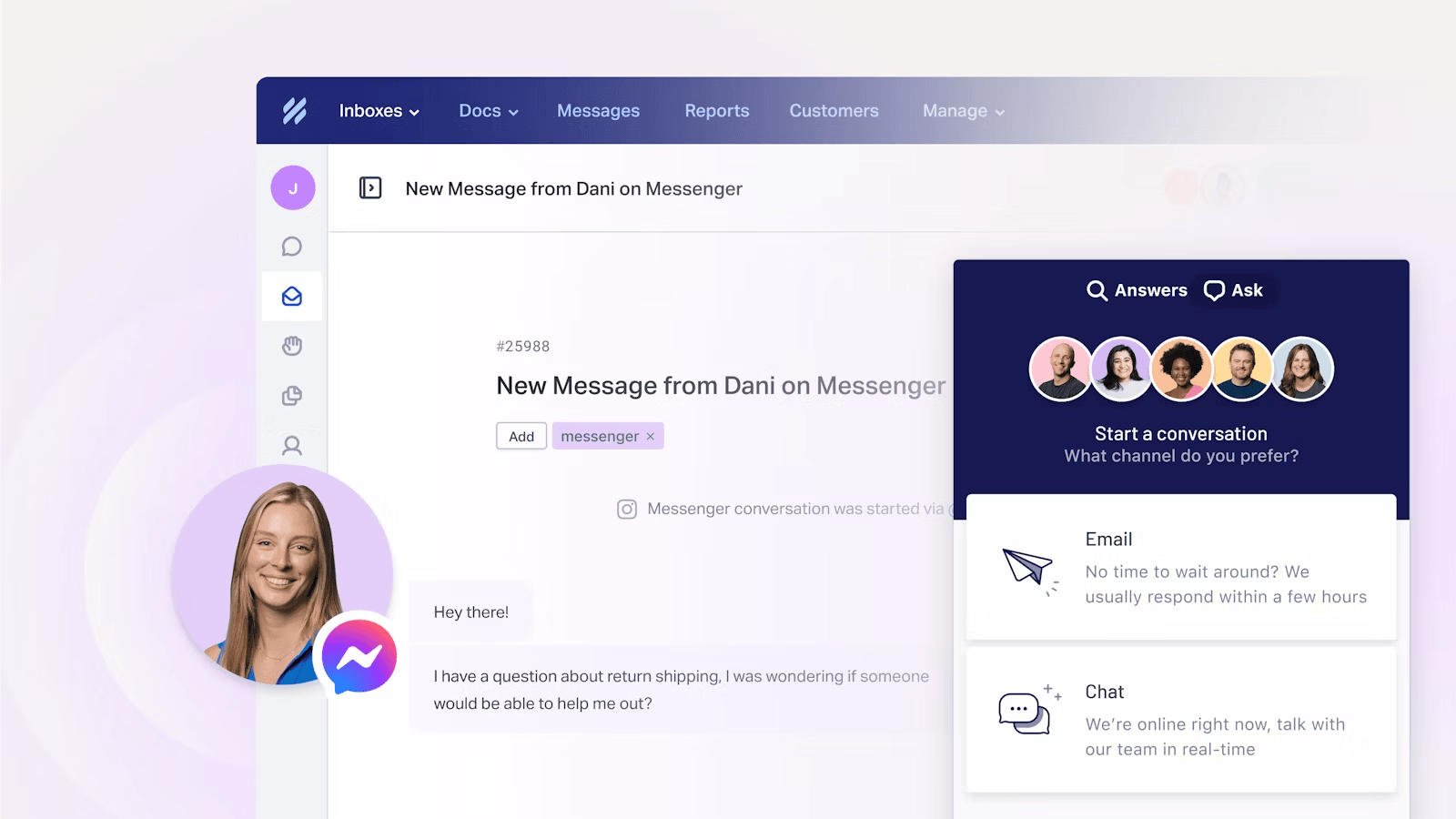
Help Scout is a clean, email-first support tool built for small teams that value simplicity. It's the antithesis of Salesforce: minimal setup, intuitive interface, fast to learn.
Key features:
- Shared inboxes for team collaboration
- A Docs knowledge base for self-service
- The Beacon widget for live chat and help content
- AI Assist and AI Summarize for faster replies
Why it's a Salesforce Service Cloud alternative: for teams that find Service Cloud overwhelming, Help Scout offers a genuinely simple alternative that agents can use on day one.
Help Scout pricing runs $25/user/month (Standard), $45 (Plus), and $75 (Pro), with a very limited free plan. Users on G2 report that simplicity comes at a cost: automation is light, it lacks native channels like WhatsApp and voice, and reporting stays basic as volume grows.
8. Gorgias
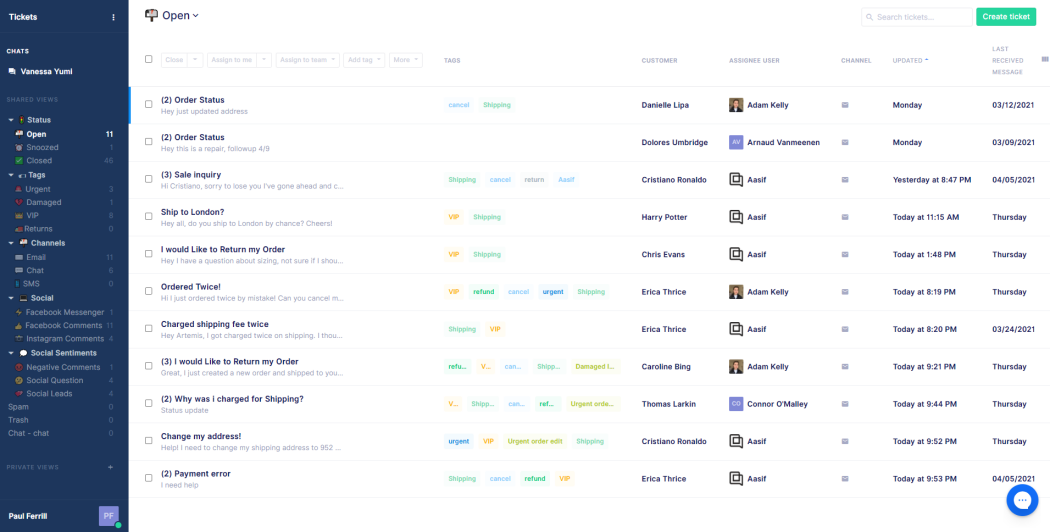
Gorgias is a support platform built specifically for ecommerce, with deep Shopify integration. If you run a store rather than a SaaS product, it's a far better fit than a general-purpose CRM.
Key features:
- Multichannel ticketing across email, chat, and social
- Native Shopify, WooCommerce, and ecommerce integrations
- Automation templates and intelligent routing
- Unlimited agent seats on every paid plan
Why it's a Salesforce Service Cloud alternative: Gorgias is purpose-built for online retail support, where Service Cloud is generic and over-engineered.
Gorgias pricing is ticket-based rather than per-agent: Starter is $10/month for 50 tickets, Basic $50 for 300, Pro $360 for 2,000, and Advanced $900 for 5,000. A recurring theme in G2 feedback is that overage charges and per-conversation AI fees spike during seasonal peaks, and that customization can feel rigid.
9. Microsoft Dynamics 365 Customer Service
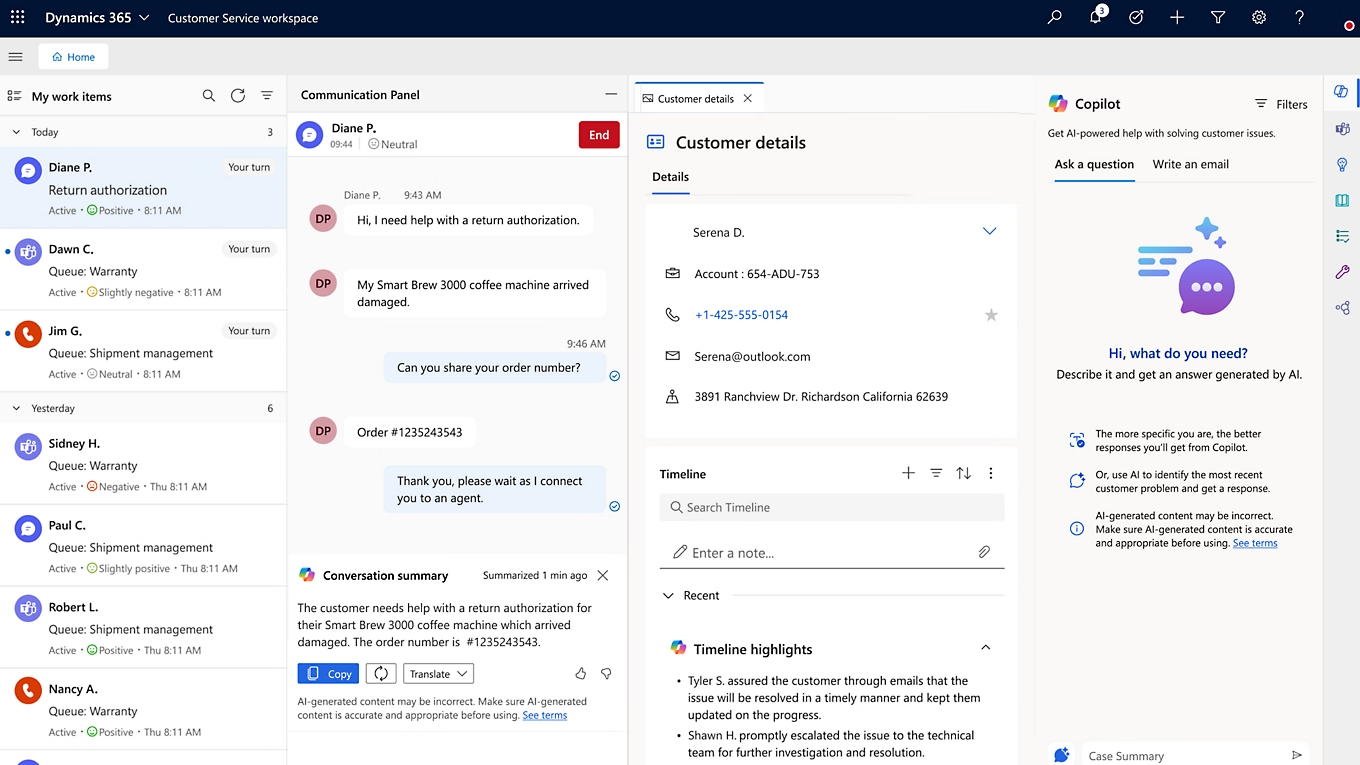
Microsoft Dynamics 365 Customer Service is an enterprise-grade support solution that fits teams already invested in the Microsoft ecosystem. It integrates tightly with Teams, Office, and the Power Platform and can be adapted to existing support workflows through Dynamics 365 Customer Service implementation.
Key features:
- Case management and omnichannel support
- AI insights and copilots through the Microsoft stack
- Workflow automation and customizable dashboards
- Deep integration with Teams, Office, and Power BI
Why it's a Salesforce Service Cloud alternative: Dynamics is the most direct enterprise rival to Service Cloud, especially for organizations standardized on Microsoft.
Pricing starts at $50/user/month for the Professional tier and $105 for Enterprise on annual billing. The trade-offs mirror Salesforce's: G2 reviewers point to a steep learning curve, significant implementation and licensing costs, and a frequent need for skilled consultants or partners to set it up.
10. Front
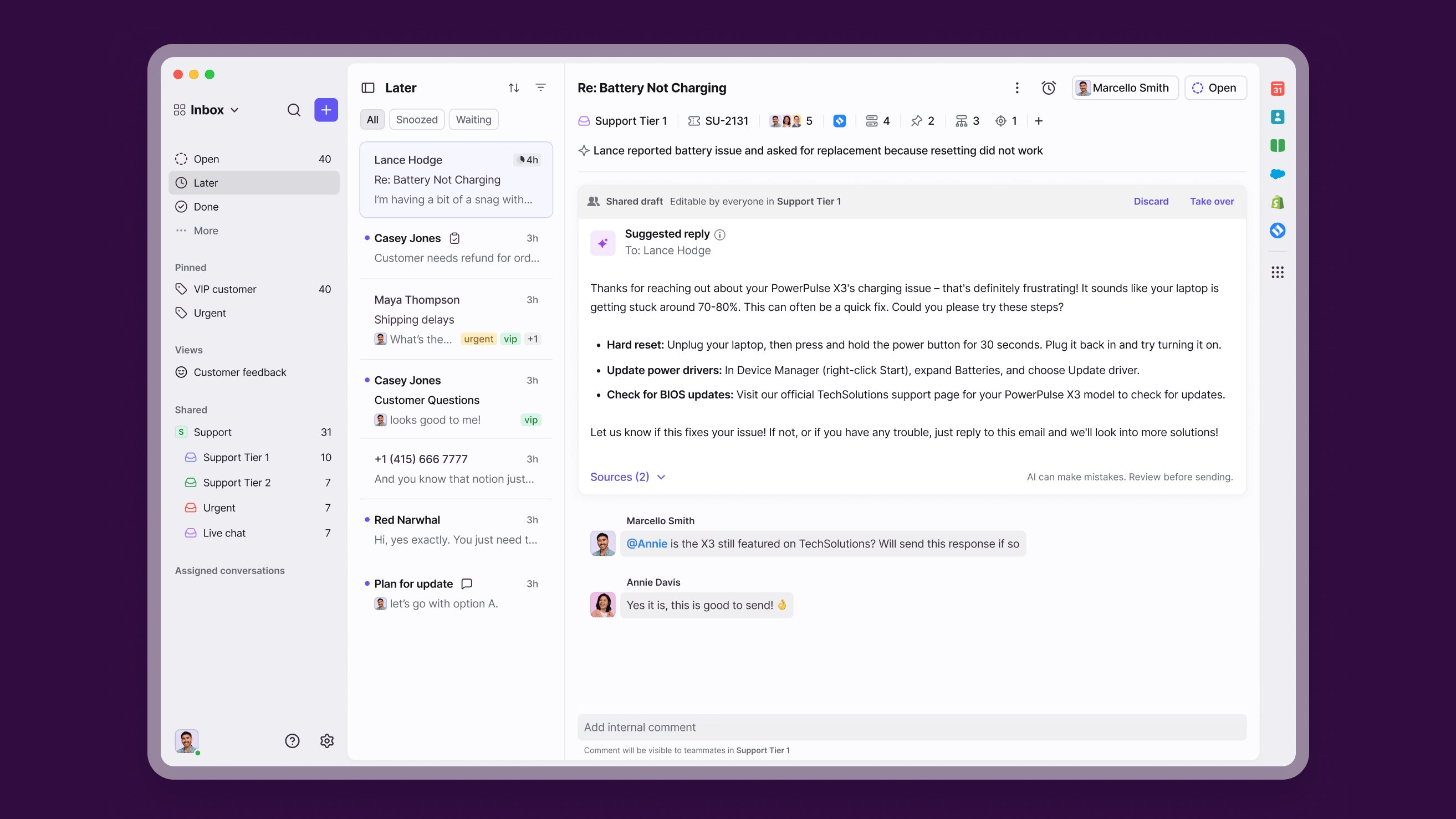
Front is a shared-inbox platform that blends email, collaboration, and support. It's a strong fit for teams that handle a lot of relationship-based, conversational support.
Key features:
- Shared inboxes with internal commenting and @mentions
- Omnichannel messaging across email, chat, and SMS
- Workflow rules and automation
- Strong search and collaboration features
Why it's a Salesforce Service Cloud alternative: Front is lighter and more collaborative than Service Cloud, and it's built around how teams actually work in a shared inbox.
Front pricing starts at $25/seat/month (Starter, single channel), $65 (Professional), and $105 (Enterprise) on annual billing, with AI features sold as add-ons. Users on G2 consistently flag the high per-seat cost as a hurdle for smaller teams and note that SLA depth and advanced rules are limited.
Conclusion
There's no single Salesforce replacement, because "Salesforce" means different things to different teams. If you're escaping the customer support side of the suite, the best move is a dedicated, modern support platform rather than another heavy CRM.
Featurebase is the strongest choice for fast-growing SaaS teams that want to leave Service Cloud's cost and complexity behind. It brings an AI-powered omnichannel inbox, a help center, feedback collection, and product updates together in one place, so you can run support and listen to customers without stitching together a handful of separate tools or paying for capability you'll never use. 💫
It comes with a free plan and onboarding is fast, so there's no downside to trying it. 👇
✨ Automate your support with the fastest AI-enhanced Inbox today →
FAQs
What are the main disadvantages of Salesforce?
The most common complaints are cost, complexity, and a steep learning curve. Salesforce's total cost of ownership often runs well above the advertised per-user price once you add storage, premium support, AI, and integrations. It also typically requires admin training and a developer or consultant to customize, which slows smaller teams down.
Are there free Salesforce alternatives?
Yes. Several strong support tools offer free plans, including Freshdesk, Zoho Desk (up to 3 agents), HubSpot Service Hub (up to 2 users), and Featurebase, which includes unlimited conversations on its free plan. Free tiers are usually limited in features and scale, so most growing teams eventually move to a paid plan.
How much do Salesforce alternatives cost?
Most support-focused alternatives start between $7 and $55 per agent or seat per month. Budget options like Zoho Desk start around $7/agent/month, mid-range tools like Freshdesk and Featurebase start at $15 to $29, and enterprise platforms like Zendesk Suite and Dynamics 365 run $50 or more per user. Watch for AI fees and add-ons, which can raise the real total significantly.
Can you migrate off Salesforce easily?
Migrating is very doable with planning. Most teams export their Salesforce data to CSV, clean it up, and import it into the new platform, and many alternatives offer guided or free migration support. The bigger effort is rebuilding workflows and retraining the team, so a clean data audit and a pilot import before the full switch are worth the time.
What's the best Salesforce alternative for customer support teams?
For support, success, and CX teams, a dedicated support platform beats a general CRM. Featurebase is a strong pick for product-led SaaS teams because it combines an AI-powered omnichannel inbox, a help center, and feedback collection in one tool, while Zendesk suits large teams needing deep omnichannel scale and Freshdesk fits budget-conscious teams.
Who are Salesforce's main competitors?
On the customer support side, Salesforce Service Cloud's main competitors include Zendesk, Intercom, Freshdesk, HubSpot Service Hub, and Microsoft Dynamics 365 Customer Service. Newer, SaaS-focused platforms like Featurebase also compete by combining support with feedback and product updates in a single tool.