Blog Customer ServiceAverage Handle Time: Formula, Benchmarks & How to Reduce It
Average Handle Time: Formula, Benchmarks & How to Reduce It
Average handle time (AHT) measures how long support interactions take. Here's the formula, industry benchmarks, and 7 ways to reduce AHT without hurting CSAT.


✨ Automate your support with the fastest AI-enhanced Inbox today →
Average handle time is one of the most-tracked support metrics, and one of the most misused. Everyone wants it lower, but shave seconds the wrong way and you just create repeat contacts and frustrated customers.
The metric only helps when you understand what it actually measures and what a healthy number looks like for your team. So this guide covers what AHT is, how to calculate it, what "good" looks like by industry, and 7 practical ways to bring it down without sacrificing quality. 👇
Key takeaways:
- Average handle time (AHT) is the average time it takes to fully handle one customer interaction, from the first hello to the last bit of after-call work.
- The formula is simple: (total talk time + total hold time + total after-call work) ÷ number of interactions.
- The rough cross-industry benchmark sits around 6 minutes, but a "good" AHT varies widely by sector, channel, and how complex your conversations are.
- Lower is not automatically better. Chasing a low AHT in isolation tends to hurt first contact resolution and customer satisfaction.
- The biggest levers for reducing AHT are self-service, smarter routing, better agent enablement, and automating repetitive work.
- Featurebase✨ combines an AI-powered inbox, help center, and AI agent so teams can cut handle time without cutting corners.
What is average handle time (AHT)?
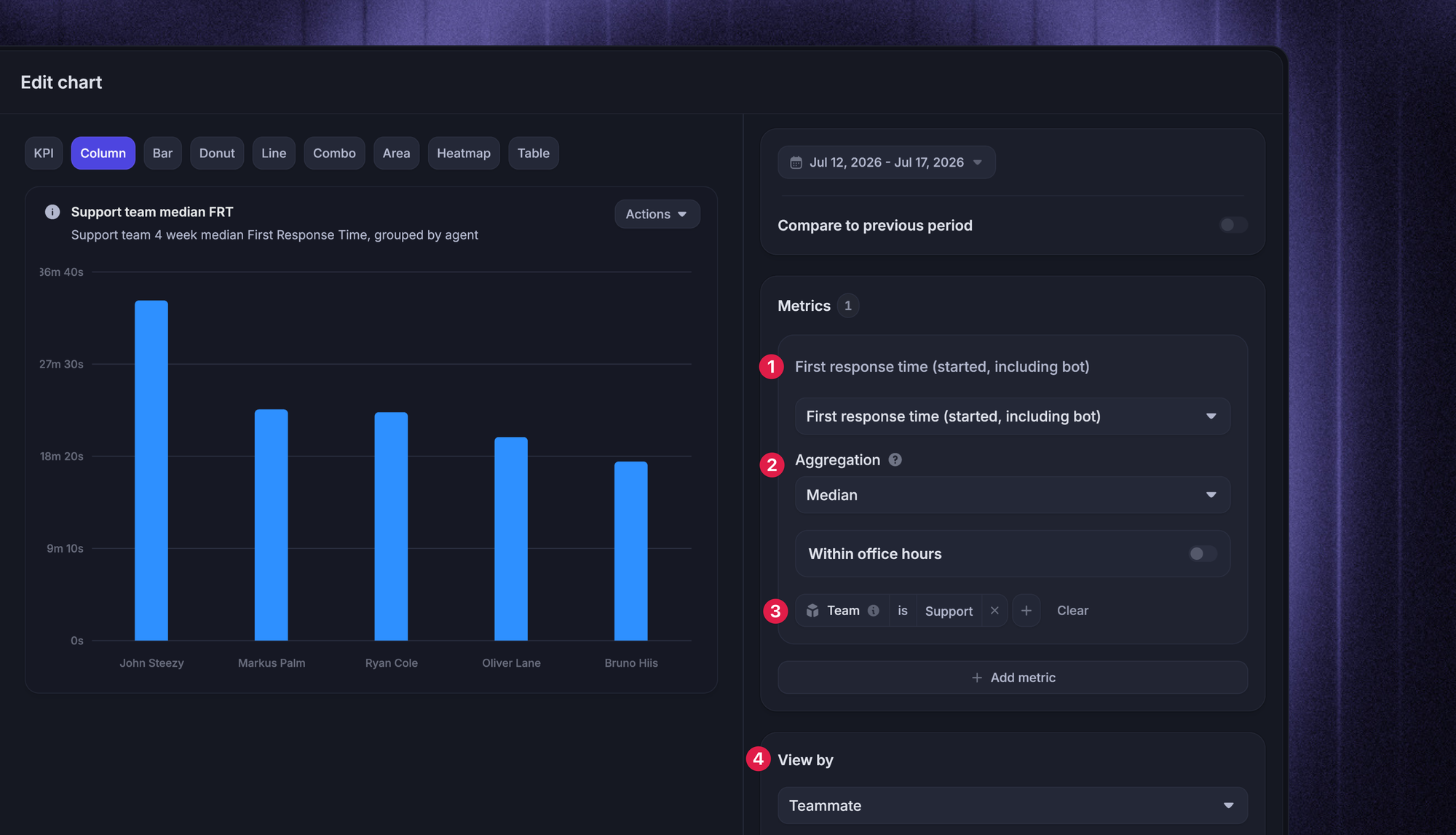
Average handle time is the average duration of a complete customer interaction, measured from the moment it starts to the moment the agent finishes every task tied to it. It is one of the core customer service metrics contact centers use to gauge efficiency and plan staffing.
Crucially, AHT is not just how long an agent spends talking. It includes the full lifecycle of the interaction: the conversation itself, any time the customer spends on hold, and the wrap-up work the agent does afterward, like logging notes or updating a record.
Although AHT started as a call center metric, it now applies across every channel. You can measure handle time for phone calls, live chat sessions, and email threads - the components shift a little per channel, but the idea is the same: how long does it take, on average, to resolve one customer's issue end-to-end?
How to calculate average handle time
The AHT formula adds up the three parts of an interaction and divides by the number of interactions handled:
AHT = (Total talk time + Total hold time + Total after-call work) ÷ Total number of interactions
To calculate it, pick a time period (a day, a week, a month), pull the total talk, hold, and after-call work time for every interaction in that window, add them together, and divide by the number of interactions.
The three components of AHT
Every handle time number is built from the same three ingredients, and each one is a different place to look when the number climbs:
- Talk time: The time the agent and customer spend actively communicating during the interaction. This is the core of the conversation, not the hold or wrap-up time around it.
- Hold time: The time the customer spends waiting while the agent looks something up, consults a colleague, or processes a request mid-interaction.
- After-call work (ACW): The wrap-up time after the conversation ends - logging notes, updating the CRM, sending a follow-up email, or tagging the ticket. It is easy to forget, but it is part of handle time.
A worked example
Say your team handled 500 calls last week with these totals:
Total talk time: 2,500 minutes Total hold time: 500 minutes Total after-call work: 500 minutes
AHT = (2,500 + 500 + 500) ÷ 500 = 7 minutes per interaction
That 7-minute figure is your average. On its own it means very little, which is why the next question matters: is 7 minutes good?
What is a good average handle time?
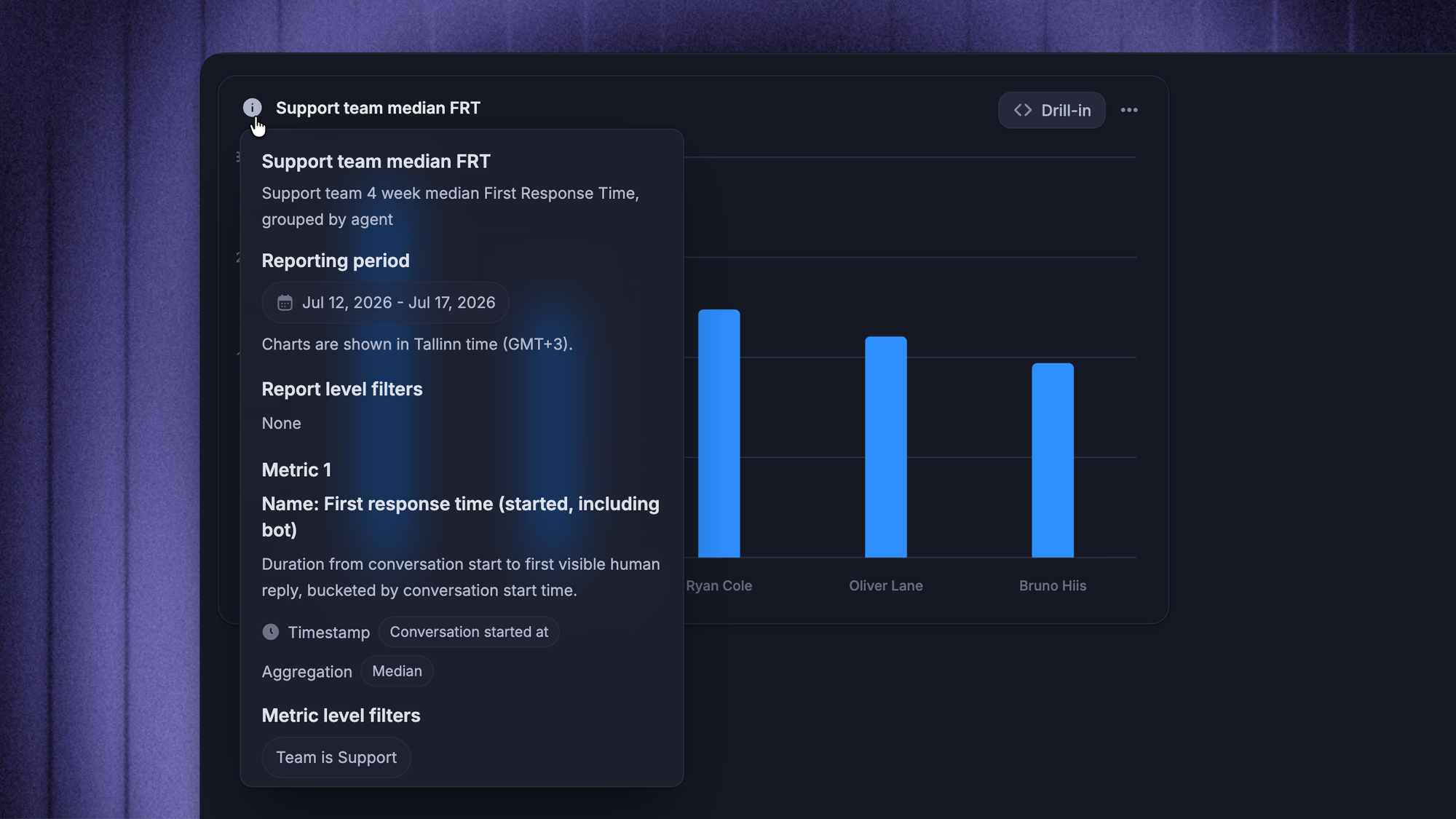
There is no single "correct" average handle time. The often-quoted cross-industry benchmark lands around 6 minutes, but that number hides enormous variation. A good AHT depends on your industry, the complexity of your conversations, your channel mix, and any compliance steps your agents have to work through.
As a rough guide, handle time tends to break down by sector like this:
- Retail and ecommerce: Often 3 to 5 minutes, because questions are frequently simple (order status, returns, sizing).
- Financial services: Around 4 to 6 minutes, with verification and compliance workflows adding time.
- Healthcare: Roughly 6 to 7 minutes on average, stretching to 8 to 10 for complex cases like referral coordination or clinical triage.
- Technical and SaaS support: Commonly 7 to 10 minutes, since issues are harder to diagnose and resolve in one pass.
The takeaway is not to obsess over a universal target. Benchmark against your own past performance and against teams handling similar conversations, then decide what "good" means for the kind of support you provide.
Why average handle time matters (and where it misleads)
AHT is popular for a reason. It ties directly to operational cost: the longer each interaction takes, the more agents you need to handle the same volume. That makes it a key input for workforce management, staffing forecasts, and capacity planning, which is why it sits on almost every list of support KPIs.
But AHT is dangerous as a standalone target. Push it too hard and agents start rushing customers, skipping steps, or transferring conversations just to end them faster. That drives down first contact resolution and pushes customers to contact you again, which quietly raises your total cost instead of lowering it.
That is why the strongest teams treat AHT as one metric in a set, not the goal itself. The industry benchmark for first call resolution sits around 70% and customer satisfaction around 78%, according to SQM Group's call center KPI standards. The aim is the handle time that maximizes resolution and satisfaction, not the lowest one you can force.
How to reduce average handle time
The goal is to remove friction that makes interactions longer than they need to be, not to make agents talk faster. Here are 7 strategies that lower AHT while protecting quality:
- Invest in self-service: When customers can answer their own simple questions, agents are freed up to spend their time on the interactions that genuinely need a human. A well-maintained customer self-service experience deflects the repetitive, low-complexity contacts that would otherwise pad your averages.
- Route customers correctly the first time: Getting a customer to the right agent or department on the first try eliminates transfers and repeated explanations. Smart routing paired with solid ticket handling means fewer conversations bounce around before they get resolved.
- Give agents knowledge at their fingertips: Most hold time comes from agents hunting for information. A well-organized internal knowledge base, and an AI assistant that surfaces the right answer mid-conversation, cuts that search time dramatically.
- Automate after-call work: Wrap-up is a hidden chunk of handle time. Using customer service automation to auto-log details, summarize conversations, and update records lets agents move to the next customer faster.
- Build reusable templates and macros: Saved replies and canned responses for common questions cut the time agents spend typing the same thing over and over, especially in chat and email support.
- Coach with real call reviews: Agents with high handle time often benefit from studying how top performers resolve the same issues quickly. Regular reviews turn those techniques into shared habits.
- Deflect repetitive questions with AI: AI support tools can resolve common, repeatable issues automatically, so your team only handles the conversations that actually require human judgment.
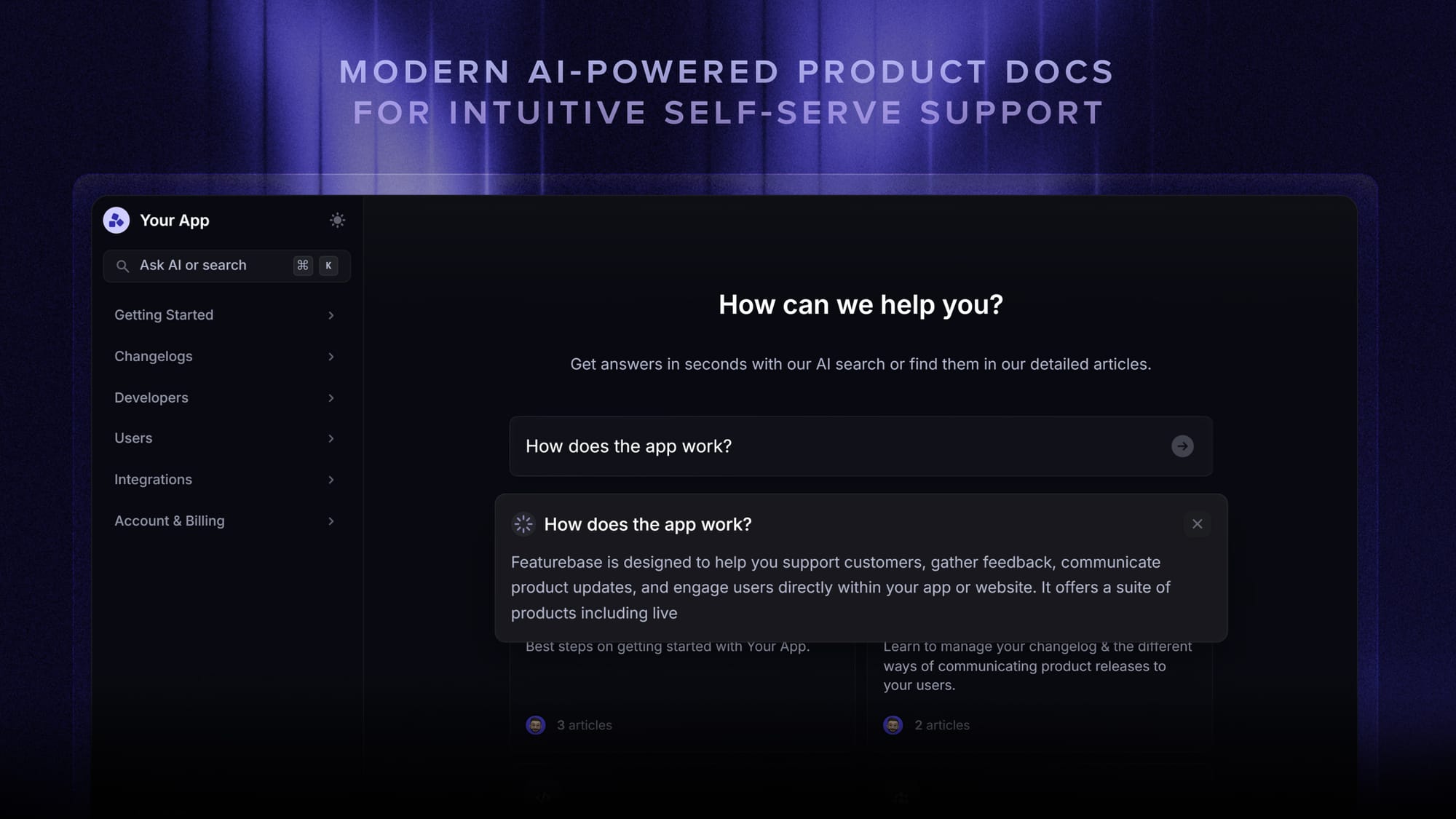
A modern support platform makes several of these levers easier at once. With Featurebase, you can pair an AI-powered help center that deflects simple questions with an AI Copilot that surfaces internal knowledge to agents mid-conversation, so less time goes to searching and manual wrap-up.
Cut handle time with a modern support platform: Featurebase
Most of what pushes handle time up - agents hunting for answers, repetitive tickets, manual wrap-up - comes down to fragmented tools and missing automation.
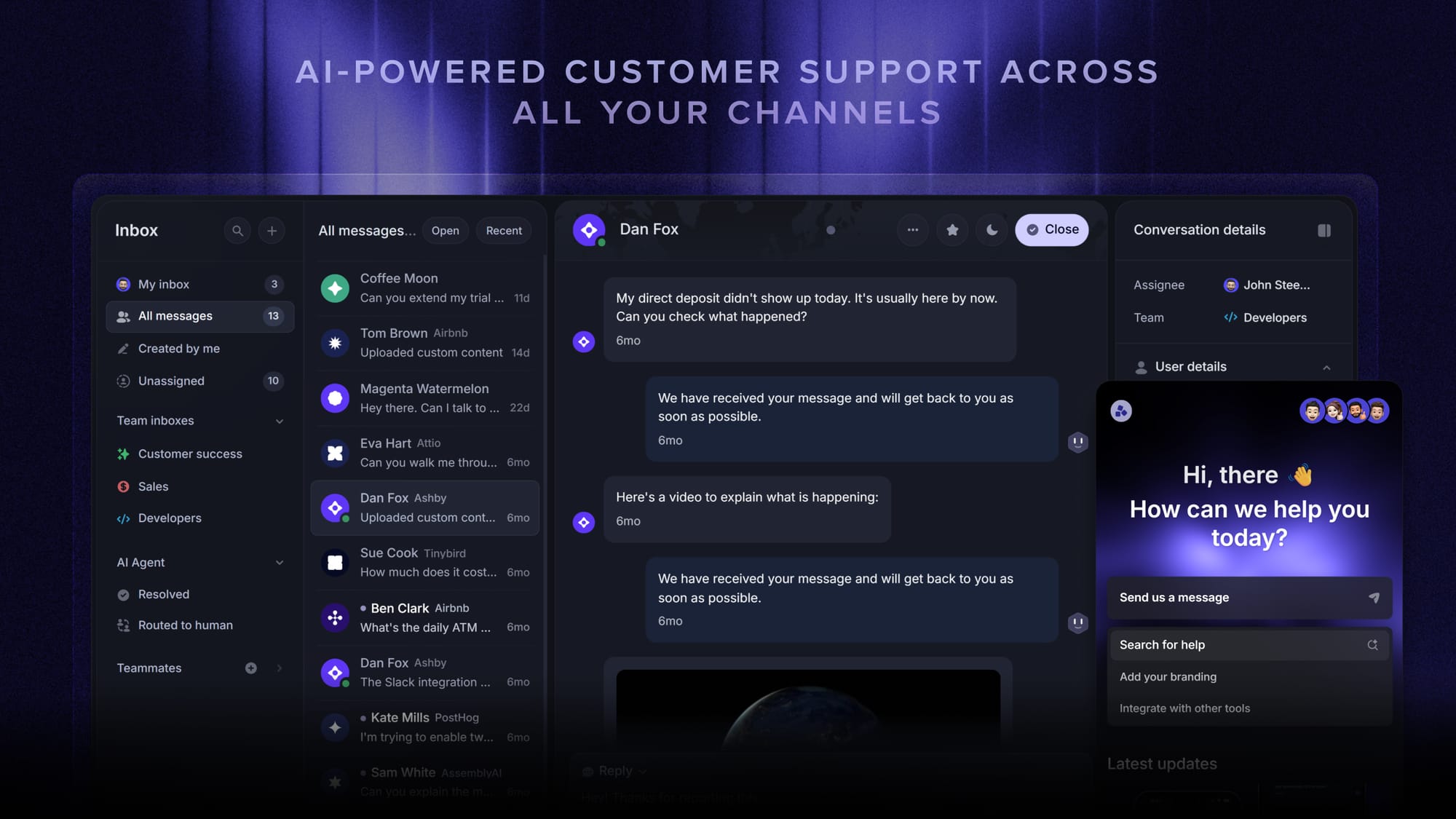
Featurebase is a modern AI customer support platform for product-led SaaS that pulls support, help center, and feedback into one place, so those time sinks disappear. It is trusted by support teams at companies like Lovable, Raycast, and n8n. 💫
A few things map directly to lower handle time:
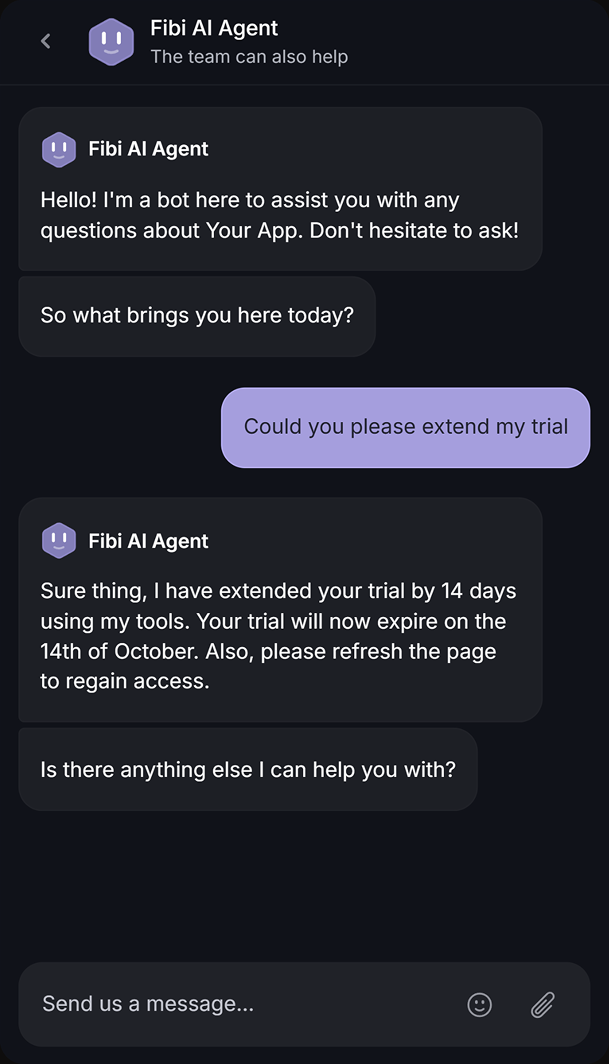
- Fibi AI Agent deflects the repetitive, low-complexity questions entirely, so agents only pick up conversations that actually need them.
- AI Copilot surfaces the right answer from your internal knowledge mid-conversation, which cuts the hold time agents spend searching.
- Help center with AI search gives customers instant, multilingual self-serve answers before they ever open a ticket.
- Workflows and automations handle assignment, routing, and after-call data capture, trimming the wrap-up work that quietly inflates AHT.
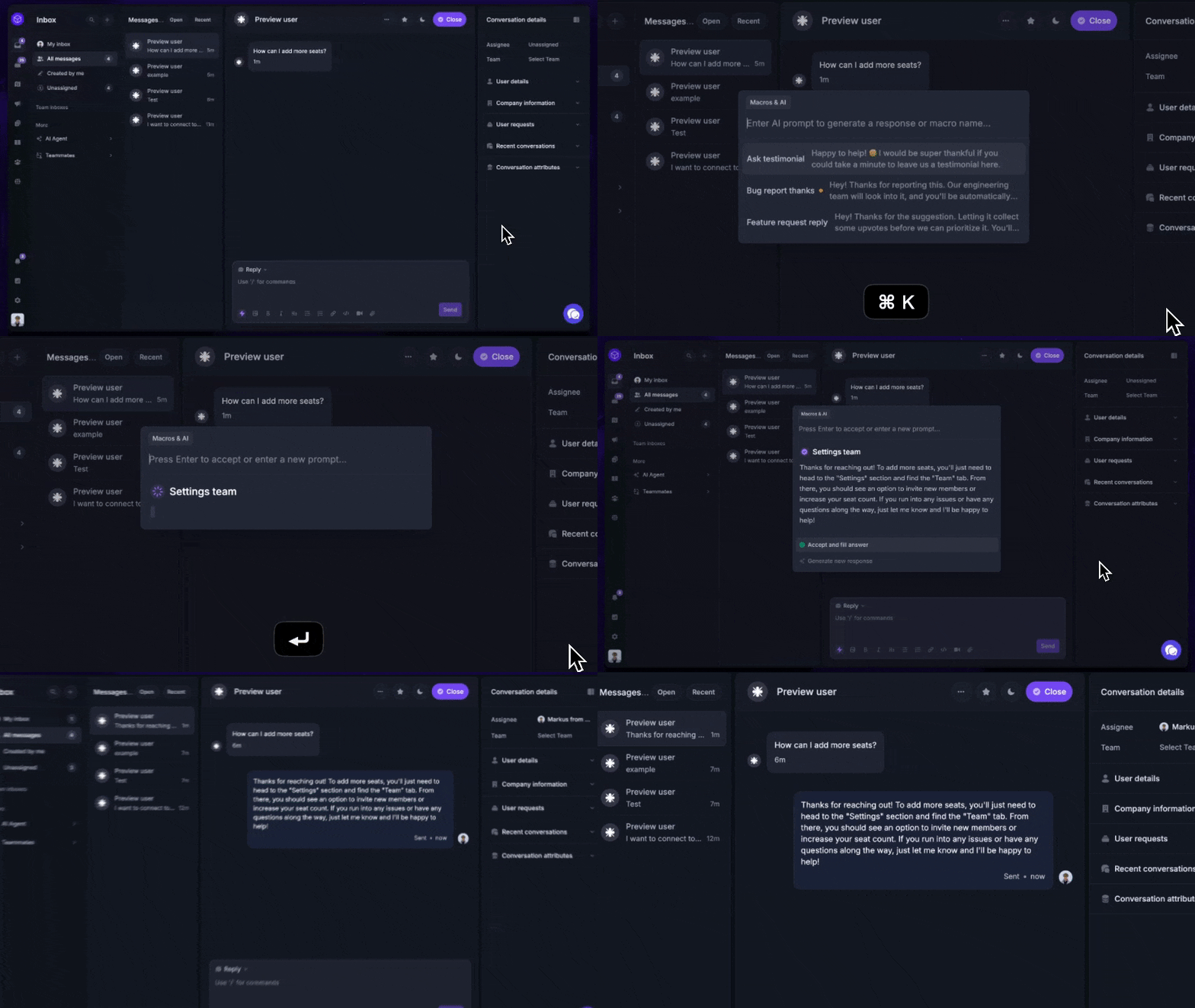
It all runs from one omnichannel inbox for live chat, email, and Slack, with a mobile app and integrations for Slack, Linear, Jira, and HubSpot. There is a free plan with unlimited conversations, and paid plans start at $29/seat/month with $0.49 per AI resolution.
Conclusion
Average handle time is a useful gauge of how efficiently your team resolves customer issues, as long as you remember what it can and cannot tell you. Calculate it correctly, benchmark it against similar teams and your own history, and improve it by removing friction rather than rushing conversations.
Featurebase brings your inbox, help center, AI agent, and automations into one modern platform, so you can lower handle time and keep first contact resolution and satisfaction high at the same time. Instead of stitching together five different tools, your team works from a single view that is built to make good support fast.
There is a free plan with unlimited conversations and the onboarding takes minutes, so there is no downside to trying it. 👇
✨ Automate your support with the fastest AI-enhanced Inbox today →
FAQs
Is a lower average handle time always better?
No. A very low AHT often means agents are rushing customers, skipping steps, or transferring conversations to end them faster, which hurts resolution and satisfaction. The goal is the handle time that resolves the issue properly on the first try, not the shortest one possible. Track it alongside first contact resolution and CSAT to see the full picture.
What's the difference between average handle time and average talk time?
Talk time is only the portion of an interaction where the agent and customer are actively communicating. Average handle time is broader: it includes talk time plus hold time plus after-call work. A team can have short talk time but high AHT if agents spend a lot of time on hold or on wrap-up tasks.
How is average handle time different from first contact resolution?
AHT measures how long an interaction takes, while first contact resolution (FCR) measures whether the issue was fully solved in a single interaction. They work best together: a low AHT with a low FCR usually signals rushed conversations and repeat contacts, whereas a healthy balance of both means you are resolving issues quickly and completely.
Does average handle time apply to chat and email support?
Yes. AHT started in call centers but applies to any channel, including omnichannel support across chat and email. The components adapt per channel - for chat, "hold time" becomes the gaps between replies, and for email it reflects the total time spent composing and researching a response - but the core idea of measuring end-to-end handling time stays the same.
How often should you review average handle time?
Trend AHT continuously rather than checking it once in a while. Most teams review it weekly or monthly alongside their other support metrics, and watch for sudden spikes that can point to a new product issue, a knowledge gap, or a training need. The trend over time is far more useful than any single day's number.
What tools help reduce average handle time?
The most effective tools remove friction from interactions: a searchable knowledge base for self-service, smart routing to avoid transfers, saved replies for common questions, and AI that handles repetitive work. Featurebase brings these together with an AI-powered inbox, an AI Copilot that surfaces internal knowledge to agents, and an AI agent that resolves common issues automatically.