8 Best Forethought Alternatives for AI Support in 2026
Compare 8 Forethought alternatives for AI customer support. Explore pricing, workflows, integrations, and trade-offs to find the right fit for your team.


On this page
Automate your support with the fastest AI-enhanced Inbox today
Looking for Forethought alternatives because your support bill is hard to forecast or your team needs a different way to automate customer service?
The tricky part is comparing tools that charge for different things. A resolution, a session, and a handled ticket can produce very different bills.
In this guide, I'll compare 8 options by their pricing, workflows, and helpdesk fit so you can build a useful shortlist. 👇
Key takeaways
| Tool | Best for | Starting cost | Billing unit | Main trade-off |
|---|---|---|---|---|
| Featurebase | Support, knowledge, and feedback together | $29/seat/mo annually + $0.49/AI resolution | Seat + resolution | Fibi requires a paid plan |
| Fin by Intercom | AI on your existing helpdesk | $0.99/support outcome, 50/mo minimum on external helpdesks | Outcome | Some configured handoffs are billable |
| Ada | Multilingual, omnichannel automation | Custom quote | Conversation or resolution | No public starting rate |
| Decagon | Custom workflows and testing | Custom quote | Conversation or resolution | Requires a scoped implementation |
| Sierra | Brand-aligned customer experiences | Custom quote | Outcome | Define chargeable outcomes in the contract |
| Freshdesk Omni with Freddy AI | Native AI in Freshworks | $29/agent/mo annually + $49/100 additional sessions | Seat + session | Sessions aren't successful resolutions |
| eesel AI | Gradual rollout in your current helpdesk | $299/mo for 500 credits | Credit | Handled tickets consume credits regardless of resolution |
| Gorgias | Shopify and ecommerce support | $40/mo with AI on Starter | Ticket allowance + automated interaction | Starter excludes Actions |
Prices are in USD. The Freshdesk Omni plan includes 500 one-time complimentary sessions. Fin's external-helpdesk price excludes your existing helpdesk subscription. Gorgias' Starter bundle includes 50 tickets and 30 automated interactions.
What does Forethought offer, and why compare alternatives?
Forethought is an AI customer support platform with agents for answering customers, assisting teammates, routing tickets, identifying knowledge gaps, and reviewing conversation quality. It supports custom actions and channels including chat, email, and voice, with availability depending on the plan.
Zendesk completed its acquisition of Forethought in March 2026. Forethought still supports other customer service platforms, so the acquisition doesn't automatically mean you must move your helpdesk.
Forethought pricing requires a quote. Its commercial model combines platform access, outcome-based charges, and optional add-ons. That can work for a tailored deployment, but makes comparing your likely bill harder before a sales conversation.
There are 3 practical reasons to evaluate Forethought competitors:
- You want clearer costs: Published rates make it easier to model usage, although you still need to check what each vendor counts and charges for.
- Your support operation needs a different setup: You might want AI inside your current helpdesk, or a platform that brings support, knowledge, and feedback together.
- You need a better fit for specific work: Order changes, subscription questions, voice conversations, and product troubleshooting require different integrations and controls.
Start by listing the Forethought capabilities you actually use. Replacing its customer-facing agent is a different project from replacing ticket routing, agent assistance, and quality assurance together. Keep that scope consistent when comparing quotes.
The 8 best Forethought alternatives
These tools cover different support setups. I've compared their published capabilities and pricing, with particular attention to what the AI can do, where it works, and what can increase the bill.
1. Featurebase
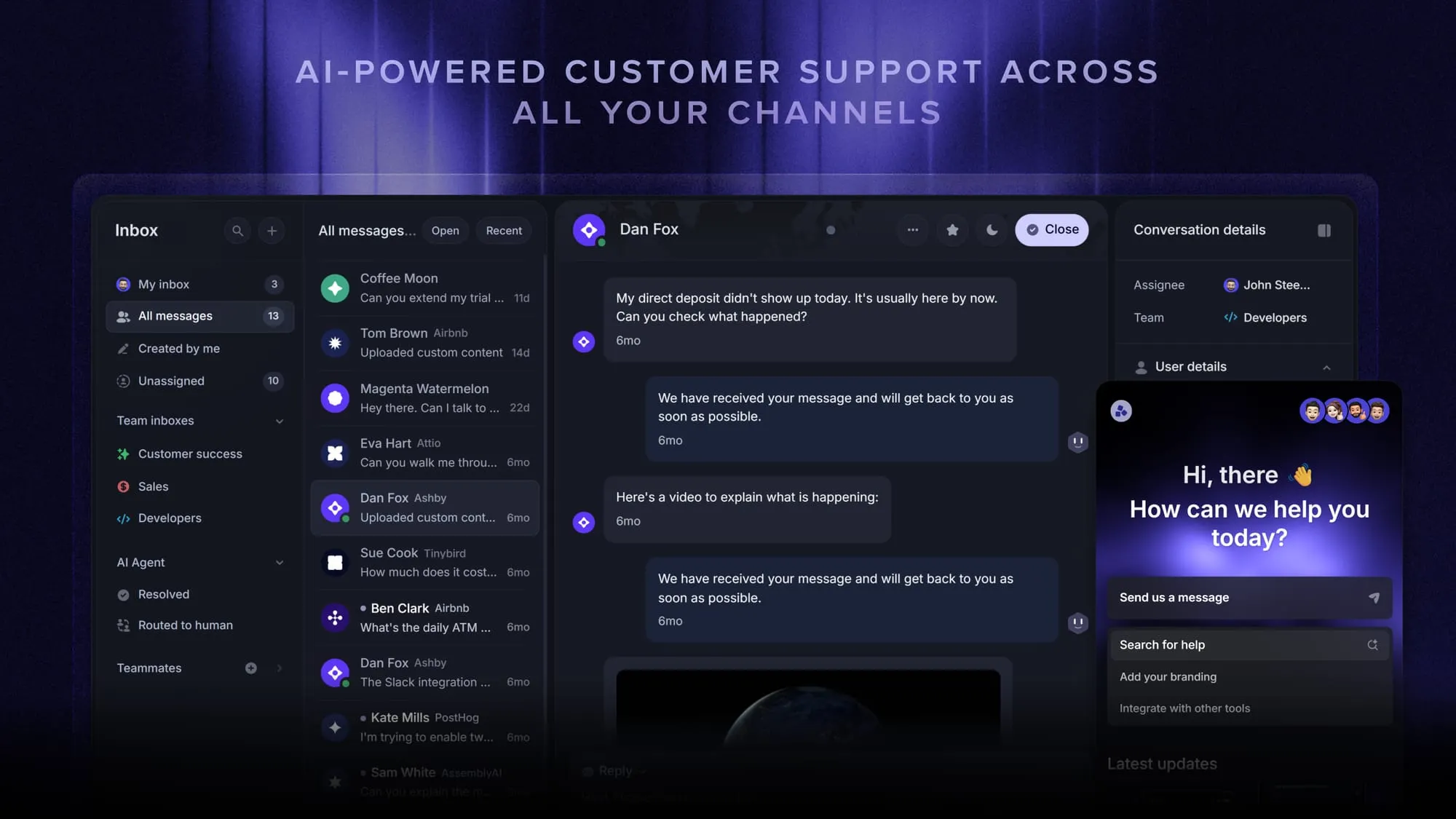
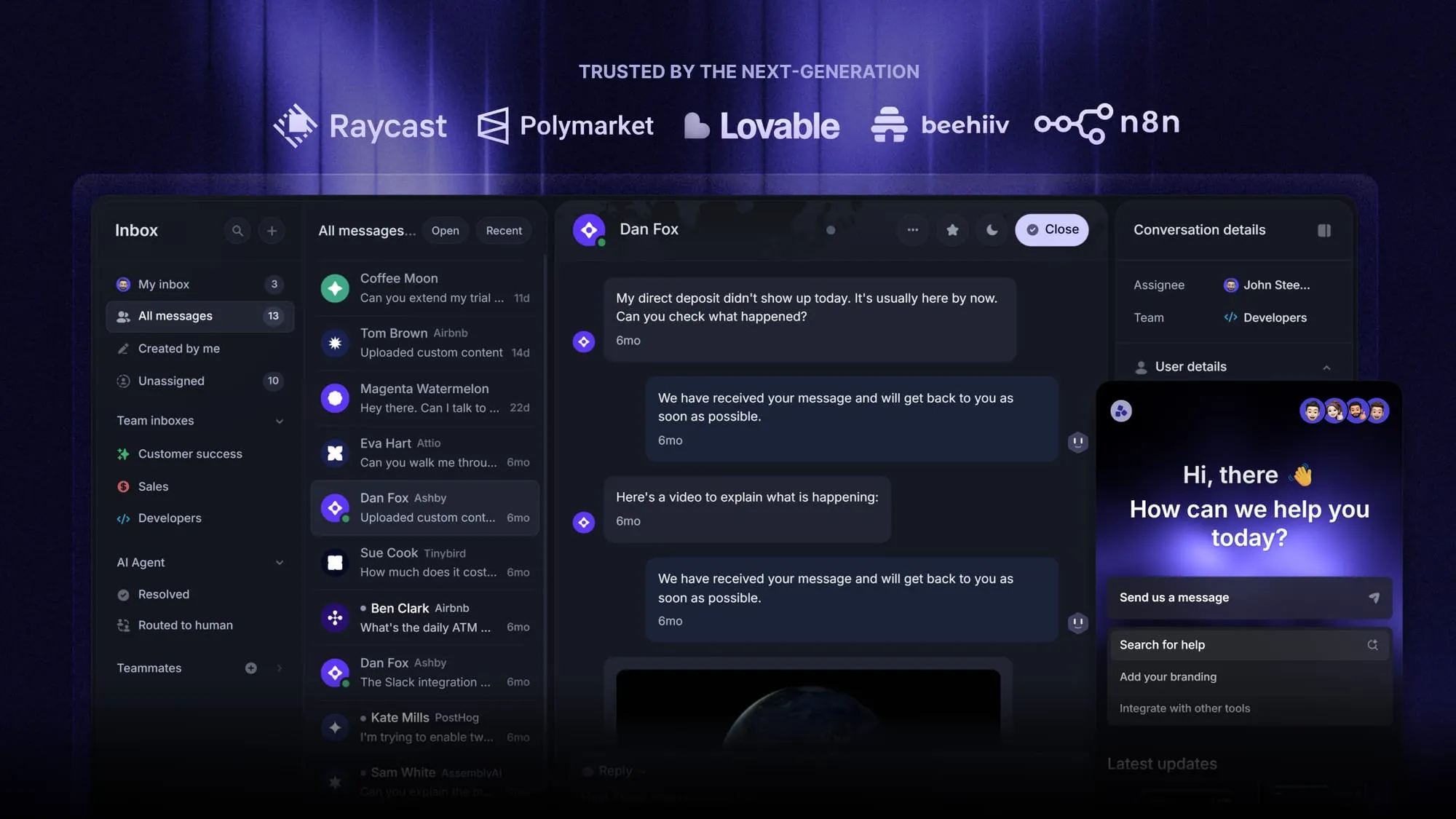
Featurebase is a modern Forethought alternative for AI customer support in product-led SaaS. It combines AI-powered support, help center, and feedback management into a single platform for startups that want all their customer-facing tools in one place. Featurebase is loved by thousands of support teams from companies like Lovable, Raycast, and n8n. 💫
It's especially useful when your customer base is growing faster than your support team and customer conversations are disconnected from product feedback. Support agents can capture feature requests while helping customers, and the product team can follow those requests through to updates.
Top features:
- Omnichannel inbox – Manage live chat, email, and Slack conversations from one AI-powered view
- Fibi AI Agent - Resolve customer issues on autopilot & run custom actions like trial extensions and refunds
- Help center with AI search – Provide instant, multilingual self-serve answers
- Workflows & automations – Auto-assign tickets, route conversations, collect customer data, and more
- AI Copilot – Help your agents answer customers faster with AI Copilot that uses your internal knowledge
- Multi-brand support – Manage multiple Help Centers and Live chats from a single workspace
- Automatic AI translations – Automatically translate all messages and help articles to your customers' native language
- Service Level Agreements – Track SLAs to make sure your team responds to customers on time, every time
- Mobile app – Respond to customers, receive notifications, and unblock users on the go
- Feedback & roadmap tools – Collect feature requests and close the loop with updates
- Product updates – Publish release notes with a changelog page, in-app widget, and emails
- Integrations – Connects with Slack, Linear, Jira, HubSpot, and more
Why consider it over Forethought: Featurebase brings the AI agent, human support inbox, help center, and product feedback into the same workspace. For example, Fibi can answer a product question from your knowledge sources or run a configured trial extension, while your team handles conversations that need a person.
This is a broader platform decision than replacing an AI agent attached to another helpdesk. It's a strong fit when consolidation is part of the goal. A phone-first contact center or a store that needs deep order-management workflows should prioritize a specialist option.
Pricing: $29/seat/mo annually + $0.49/AI resolution. The Growth plan is $37/seat/month on monthly billing. A Free plan includes unlimited conversations, but Fibi requires a paid plan.
The feature list spans multiple plans. Workflows and SLAs start on Professional, while multibrand support is on Enterprise. AI Copilot includes limited usage, with unlimited usage available separately.
You can test paid features with a 10-day free trial. 👇
Explore Featurebase's AI-powered support platform
2. Fin by Intercom
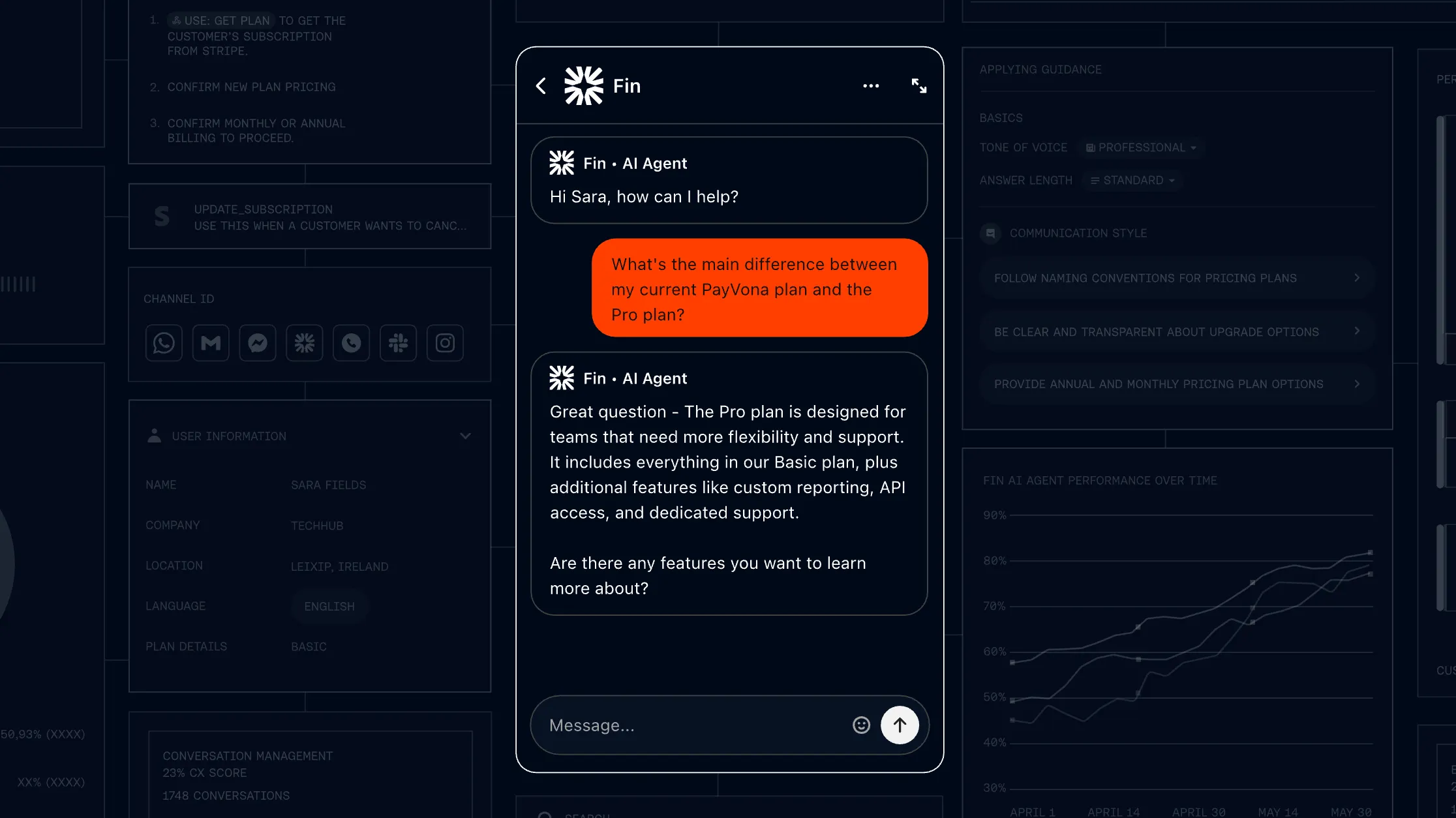
Fin by Intercom is worth considering when you want to keep your existing helpdesk while changing the AI handling customer conversations. You can also use Fin with Intercom's own support platform.
Its appeal is the combination of knowledge-based answers, connected data, and Procedures for more involved requests. Human handoffs can return to the inbox your team already uses.
Top features
- Knowledge sources, guidance, and multilingual support
- Procedures and data connectors for taking actions
- Simulations and regression tests before deployment
- Human handoffs within supported helpdesk integrations
Why consider it over Forethought: Fin publishes its support outcome rate and supports an external-helpdesk deployment. That gives you a way to compare AI usage costs while keeping your current human support setup.
The main catch is the definition of an outcome. A successfully completed Procedure that you configured to end in a human handoff can be billable. Don't assume every charged outcome means the AI solved the entire issue independently.
Fin pricing: $0.99/support outcome, 50/mo minimum on external helpdesks. That route has no additional Fin seat, setup, integration, or platform fees, but your existing helpdesk subscription remains. Using Intercom's helpdesk adds seat charges, and Fin Voice has custom pricing.
3. Ada
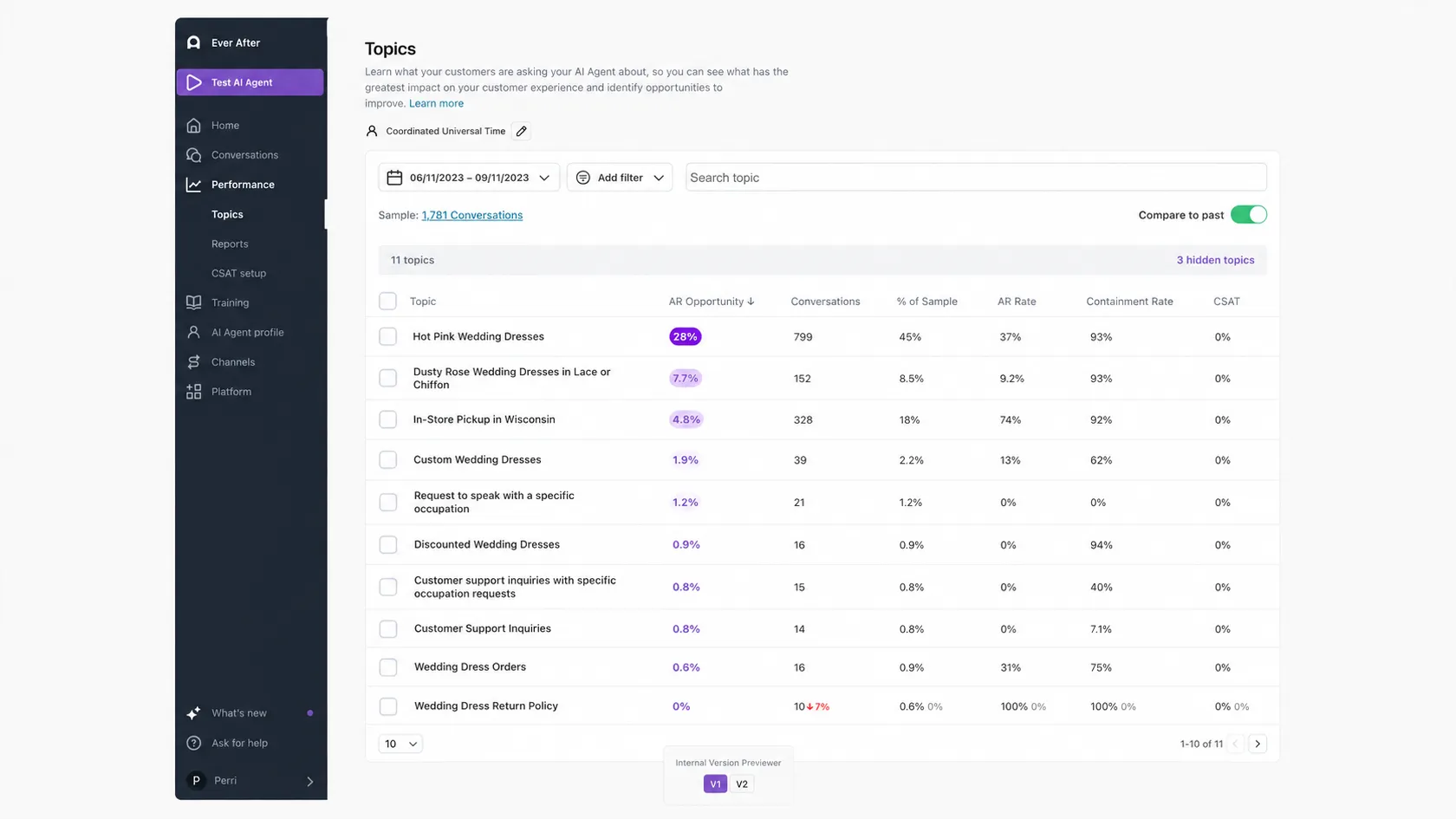
Ada suits organizations building multilingual AI customer service across voice, messaging, and email. Its platform combines a shared reasoning engine with tools for managing agent behavior and improving performance.
Playbooks turn support procedures into multi-step workflows. The agent can retrieve information, apply business rules, and act through connected systems instead of stopping after a knowledge base answer.
Top features
- Shared customer context across supported channels
- Playbooks for workflows that require several steps
- Coaching and simulations to improve agent behavior
- APIs, code tools, and MCP tools for connected actions
Why consider it over Forethought: Ada is a strong candidate when you want consistent policies across multiple languages and channels, with a team responsible for operating and improving the AI.
That operating work matters. Knowledge maintenance, integration design, and exception handling still need owners. G2 feedback includes concerns about integration complexity and reporting, so include those areas in your evaluation rather than focusing only on a polished demo.
Ada pricing: Custom quote. Ada primarily offers conversation-based pricing and also offers resolution-based arrangements. Its public platform page doesn't publish a numeric starting rate, so ask for both the billing definition and the full commercial scope.
4. Decagon
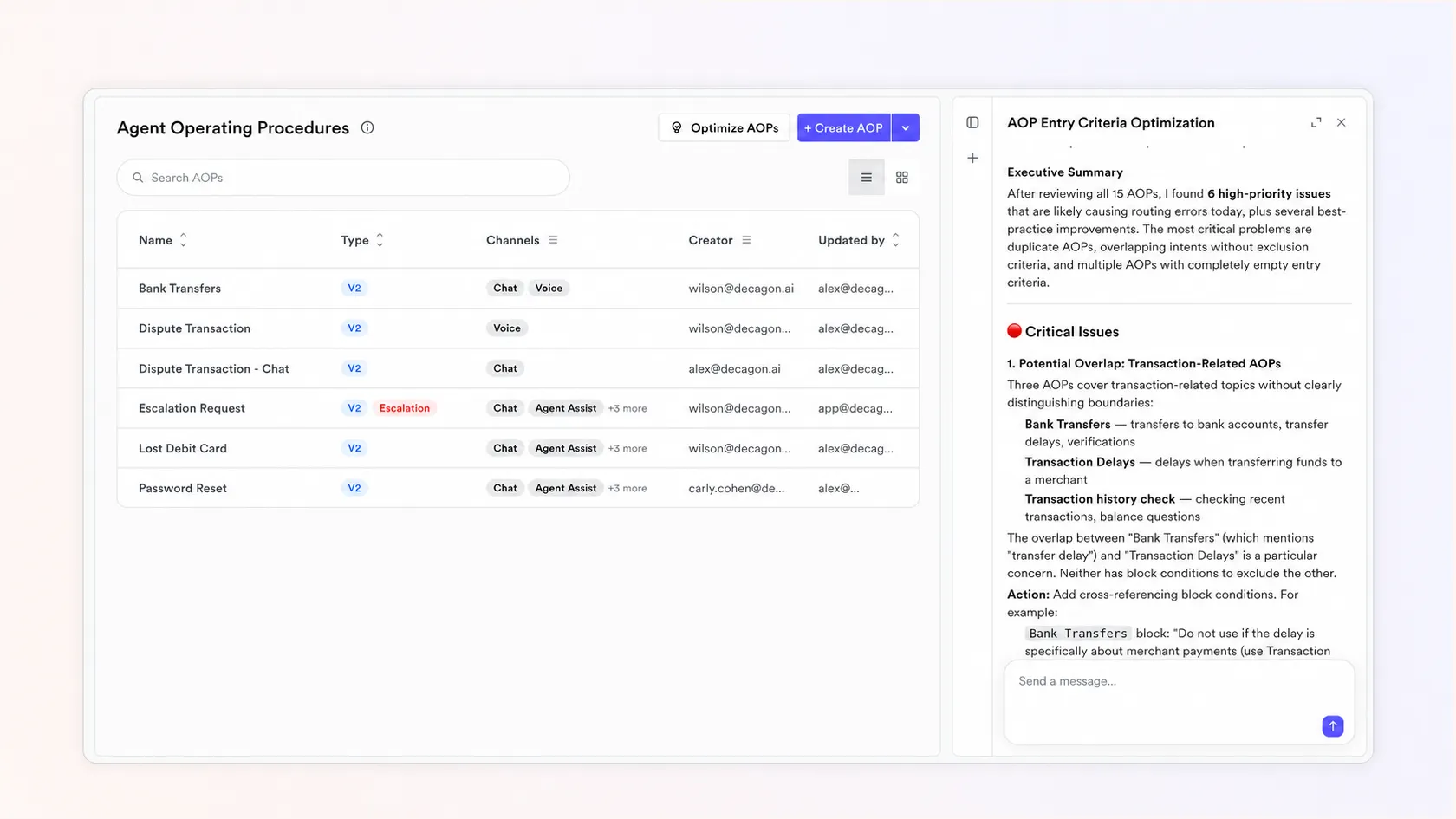
Decagon is an option for teams building AI agents around custom customer-service workflows. Its Agent Operating Procedures, or AOPs, let teams describe agent behavior in natural language.
The platform also emphasizes testing and visibility into agent decisions. That's useful when the right response depends on several systems or rules that change over time.
Top features
- Natural-language procedures for defining workflows
- Chat, email, and voice support
- Testing, observability, and experimentation tools
- Analytics for understanding customer conversations
Why consider it over Forethought: Put Decagon on your shortlist when improving and testing complex workflows is a major part of the job. For a subscription request, for example, evaluate how the agent checks eligibility, applies the correct policy, and handles an exception.
The trade-off is the work required to connect those systems and validate the behavior. Natural-language instructions can make iteration easier, but they don't remove the need for reliable data, permissions, and testing.
Decagon pricing: Custom quote. Decagon's published pricing explanation describes per-conversation and per-resolution options, without a public numeric rate. Confirm the current model, minimum commitment, and implementation scope in your proposal.
5. Sierra
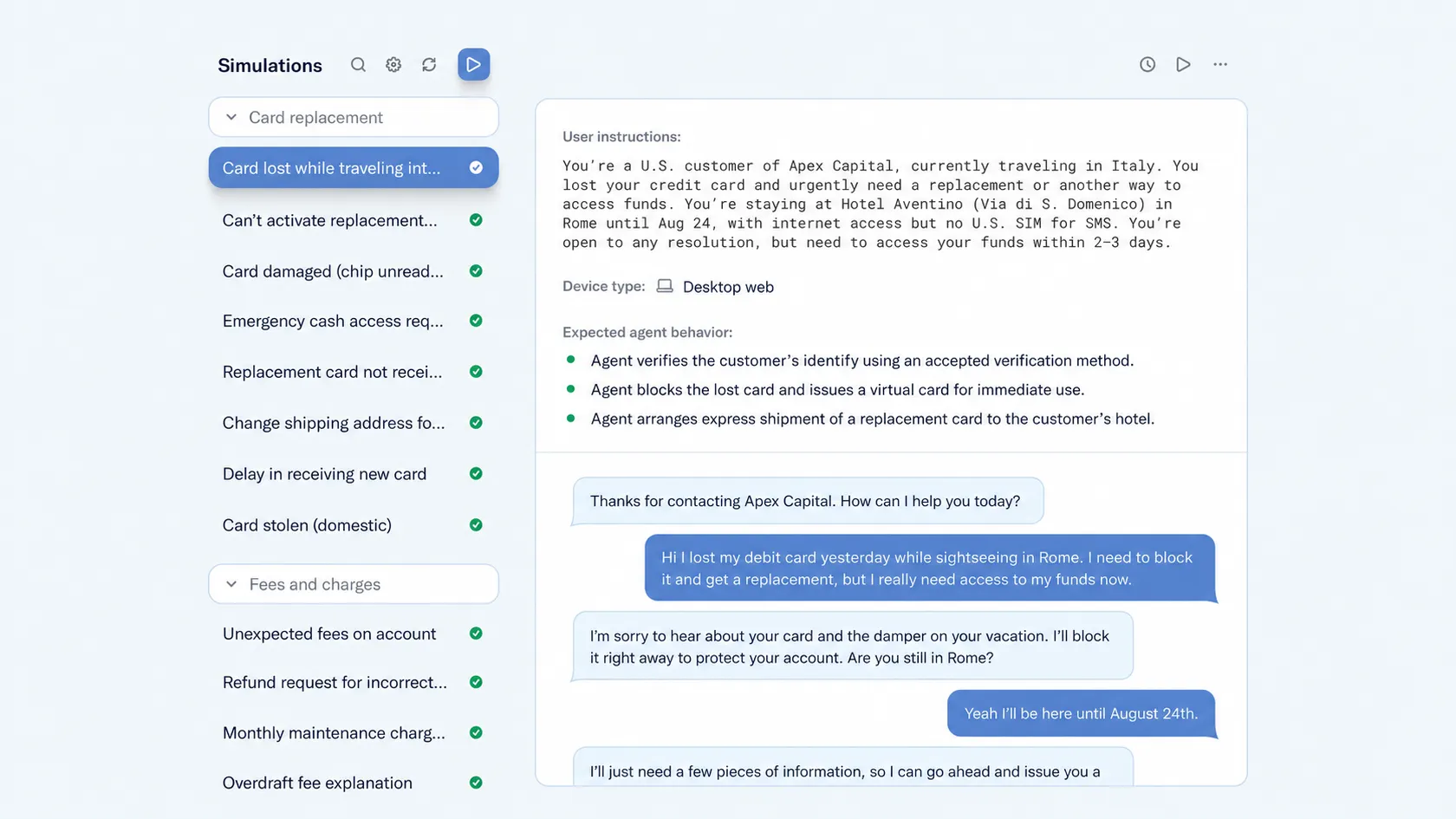
Sierra focuses on AI agents that handle customer requests while maintaining a consistent brand experience. It combines the platform with an agent-development partnership, making implementation support part of its appeal.
Its agents connect to business systems to complete tasks, with tools for testing, monitoring, and understanding their behavior.
Top features
- Customer conversations across voice, chat, email, and WhatsApp
- Connections to systems such as CRMs and order-management platforms
- Controls for tone, policies, and agent behavior
- Testing, monitoring, and performance insights
Why consider it over Forethought: Sierra fits evaluations where the quality of the whole customer interaction matters as much as answering the initial question. That can include conversations involving several steps, changing context, and a handoff when human judgment is needed.
Check how much your team can change independently after launch. Retrieved G2 feedback raises questions about deeper reporting and edge-case customization. Use the demo to test your reporting requirements and a policy update your team might make regularly.
Sierra pricing: Custom quote with outcome-based pricing. Sierra doesn't publish a numeric starting rate on its product page. Agree on what constitutes a chargeable outcome and how failed actions, reopened issues, and handoffs are treated.
6. Freshdesk Omni with Freddy AI
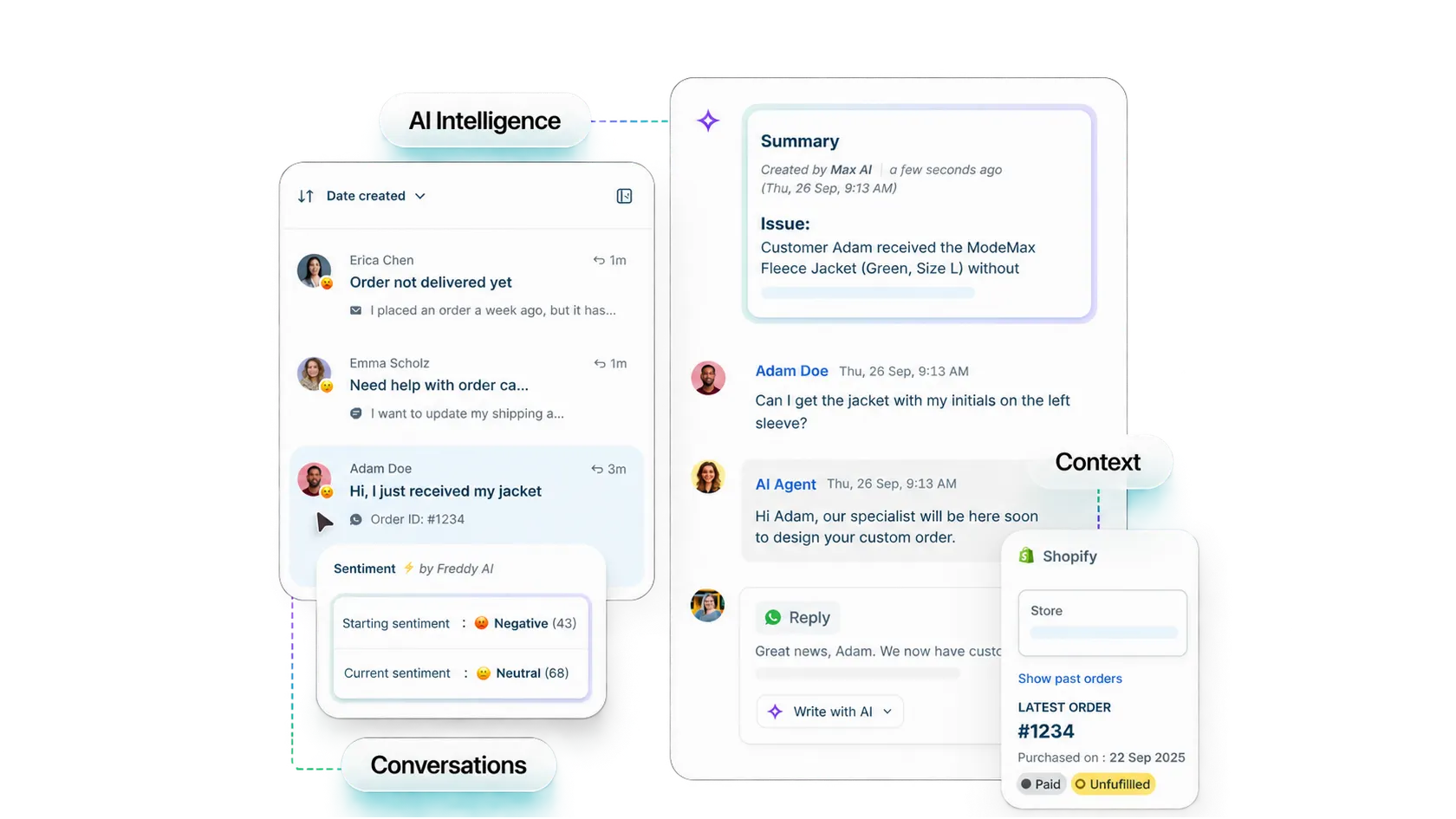
Freshdesk Omni is a practical option if your team already works in Freshworks or wants its helpdesk and AI in the same environment. Freddy AI Agent handles customer-facing automation, while Freddy AI Copilot assists human agents.
The broader platform brings conversations, ticketing, knowledge, and routing together. Evaluate the Omni package specifically, since Freshdesk's other products and editions have different prices and channel coverage.
Top features
- Omnichannel support and ticketing
- Customer portal and knowledge base
- Freddy AI Agent for customer conversations
- Routing, reporting, and collaboration features by plan
Why consider it over Forethought: Keeping automation close to the helpdesk can simplify the systems your team manages. It is especially relevant when you already use Freshworks and don't need a separate AI vendor across several helpdesks.
Watch the billing unit. A Freddy session covers interactions within a 24-hour window, so usage isn't tied exclusively to successfully resolved issues. Previewing an agent also consumes sessions.
Freshdesk Omni pricing: $29/agent/mo annually + $49/100 additional sessions. The first 500 sessions are a one-time allowance. Unused purchased sessions expire at the billing-cycle boundary, and packs renew unless adjusted. Copilot and certain action-related usage are additional charges.
7. eesel AI
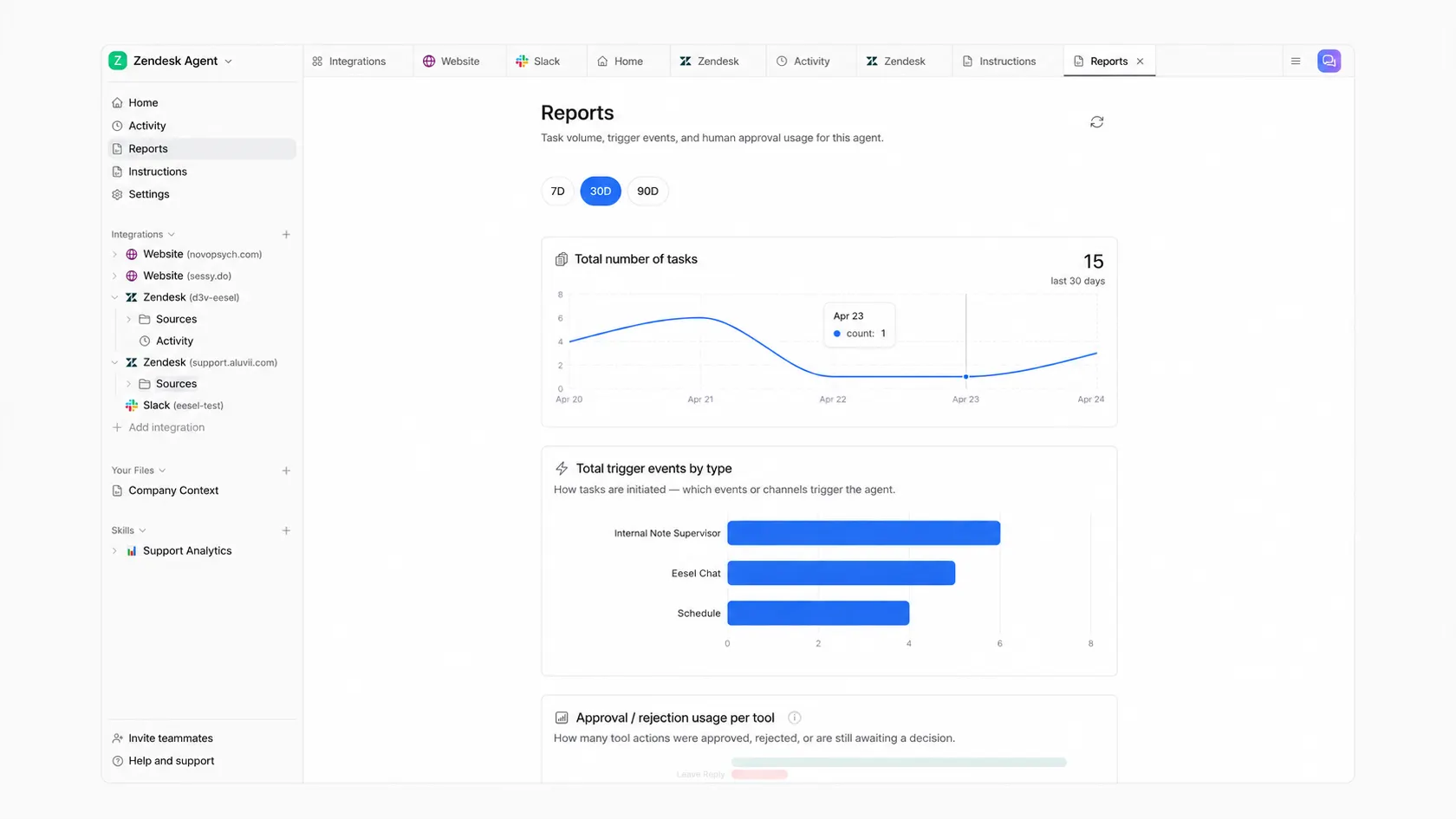
eesel AI is useful when you want to test automation inside your current helpdesk before allowing it to answer customers independently. It learns from support content and historical tickets, and can start by preparing drafts for your team to review.
Its simulation tools help you see which ticket categories are ready for automation and where the agent still needs better information.
Top features
- Integrations with helpdesks including Zendesk, Freshdesk, and Intercom
- Draft replies, ticket triage, and escalation handling
- Simulations using past tickets
- Knowledge-gap detection and draft help articles
Why consider it over Forethought: eesel offers a supervised starting point and published monthly credit packages. You can review its work before expanding autonomy, which is useful when your team wants direct evidence from its own conversations.
The trade-off is that credits measure work performed, not just successful resolutions. Other tasks can also use the same allowance, so check how support tickets, internal questions, and reports affect your budget.
eesel AI pricing: $299/mo for 500 credits. A handled ticket or chat uses 1 credit regardless of the number of replies. Unused credits don't roll over. Agents pause when credits run out unless you enable capped overage at $0.80/credit. A free trial includes 100 credits.
8. Gorgias
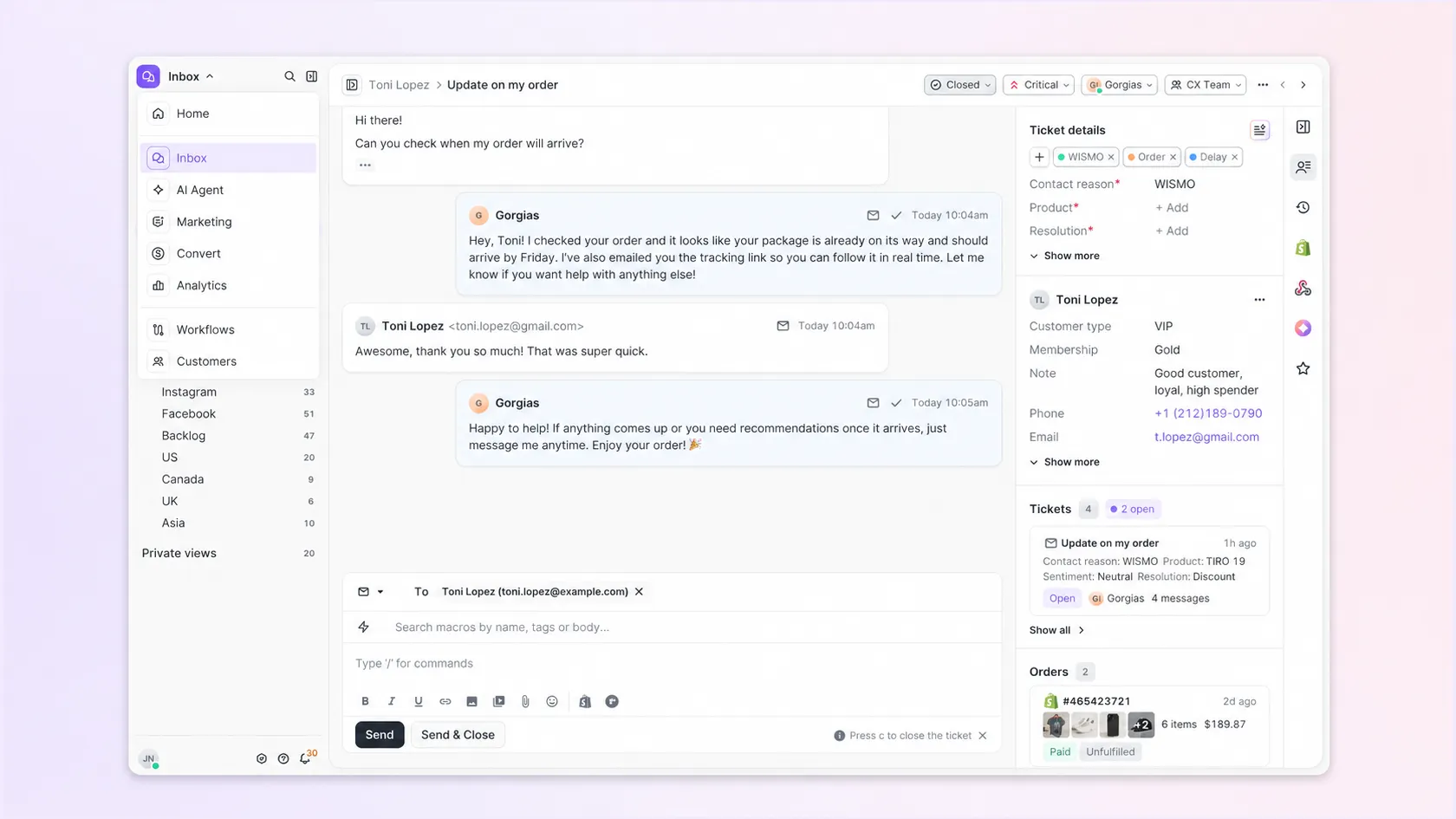
Gorgias is customer service software built around ecommerce. It combines a helpdesk with AI Agent and commerce integrations, making it particularly relevant when customer requests depend on orders, deliveries, returns, and product information.
For a Shopify store, that context can matter more than a long list of general-purpose AI features. The right agent needs access to the correct order and the ability to follow your store's policies.
Top features
- Ecommerce integrations, including Shopify
- Shared support across email, chat, and social channels
- AI answers grounded in product and store information
- Order-related actions on eligible plans
Why consider it over Forethought: Gorgias is a specialist choice when the workflow starts with an order rather than a software account. Test your most common commerce requests, including cases where the agent must decline an action or hand the conversation to a person.
Plan restrictions matter. Starter excludes Actions, so the lowest AI-inclusive price isn't the right budget for every refund or order-change workflow.
Gorgias pricing: $40/mo with AI on Starter. Monthly billing includes 50 tickets and 30 automated interactions. Extra tickets cost $0.40 each, and automated interactions beyond the allowance cost $1.50 each. The $10/month helpdesk-only option excludes that AI bundle.
How to choose a Forethought alternative
Pick 2 or 3 customer support automation tools that match your setup, then evaluate them against the same requests. A useful pilot should reveal what your team will need to operate the tool after the demo ends.
- Test representative conversations: Include straightforward questions, ambiguous requests, missing information, and cases that should reach a human. Testing only FAQ answers won't tell you how the agent handles difficult work.
- Check the result in the connected system: If the agent says it updated an account or issued a refund, verify that the correct change happened. A confident reply isn't proof of a completed action.
- Review human handoffs: Check that the teammate receives the conversation history, relevant customer information, and a clear explanation of what the AI already tried.
- Separate ticket deflection from resolution: Track whether customers received useful answers and whether issues reopened. A conversation ending without a handoff doesn't always establish that the customer achieved their goal.
- Assign ongoing ownership: Decide who maintains knowledge, approves workflow changes, and reviews failures. Include that person's time when comparing the tools.
Billing definitions deserve the same attention. For example, Fibi can count a resolution when the customer confirms success or leaves without asking for further help. If the customer reopens the conversation as unresolved, the charge is removed. Your evaluation should distinguish vendor billing rules from your own quality measures.
Also check what happens when a dependency fails. If your billing system is unavailable, a safe escalation is more useful than an agent promising a change it couldn't make. Include these failure cases before expanding the rollout.
Conclusion
The best Forethought alternative depends on what you're changing. Fin and eesel suit existing-helpdesk evaluations, Ada, Decagon, and Sierra merit consideration for complex AI workflows, and Gorgias focuses on ecommerce.
Featurebase is a strong choice when you want AI-powered support, a help center, and product feedback together. It helps software teams automate customer requests while keeping human support and product conversations connected.
There's a Free plan for getting started and a 10-day trial for paid features, including the AI capabilities you'll want to evaluate. 👇
Bring AI support and customer feedback together with Featurebase
FAQs
Ask each vendor to price the same expected workload and show the full first-year cost. Include seats, AI usage, minimum commitments, implementation, and the tools you'll retain. Request a second estimate for a busier month so overage charges and usage limits are visible before signing.
Yes, if the alternative supports your existing platform and the capabilities you need. Validate the integration beyond its logo: test conversation ownership, ticket fields, attachments, and how human agents take over. You may still need to rebuild AI-specific instructions and workflows even when your helpdesk stays the same.
The timeline depends on your knowledge sources, integrations, workflow complexity, and review requirements. Connecting a helpdesk is only the first milestone, followed by validating answers and actions before exposing customers to them. Ask for a migration plan with acceptance criteria and a fallback if the pilot underperforms.
Historical tickets can help identify common requests and test responses, but they aren't a universal requirement for every product or feature. Some agents can begin with help articles, website content, and documented policies. Ask which data is required for your particular deployment and whether old conversations are used for knowledge, evaluation, or model training.
Yes, when the product supports the necessary action and has permission to use the connected system. Confirm that your selected plan includes it and that identity checks, policy limits, and approval requirements match your process. Start with low-risk actions and review the audit trail before expanding access.
The acquisition alone isn't a reason to migrate. Review your renewal terms, required integrations, product commitments, and current service quality with the vendor. Compare alternatives if those no longer meet your needs, and include the cost of rebuilding and validating your workflows in the decision.


