AI Chatbot Pricing: Plans, Usage Costs, and Hidden Fees
Compare AI chatbot pricing models, current plan costs, usage fees, and hidden expenses. Use 3 budget examples to estimate what your team will actually pay.


On this page
Explore AI support with clear seat and usage pricing
AI chatbot pricing gets confusing when one platform charges per seat, another sells message credits, and a third bills for resolved conversations.
I'll break down the main pricing models, show what popular platforms charge, and walk through 3 budget examples so you can estimate the complete bill. 👇
Key takeaways
- Compare the complete cost: Include subscriptions, AI usage, required add-ons, and maintenance.
- Check the billing unit: Messages, conversations, and resolutions aren't interchangeable.
- Read the billing terms: Annual rates require an annual commitment. Trial allowances may not renew.
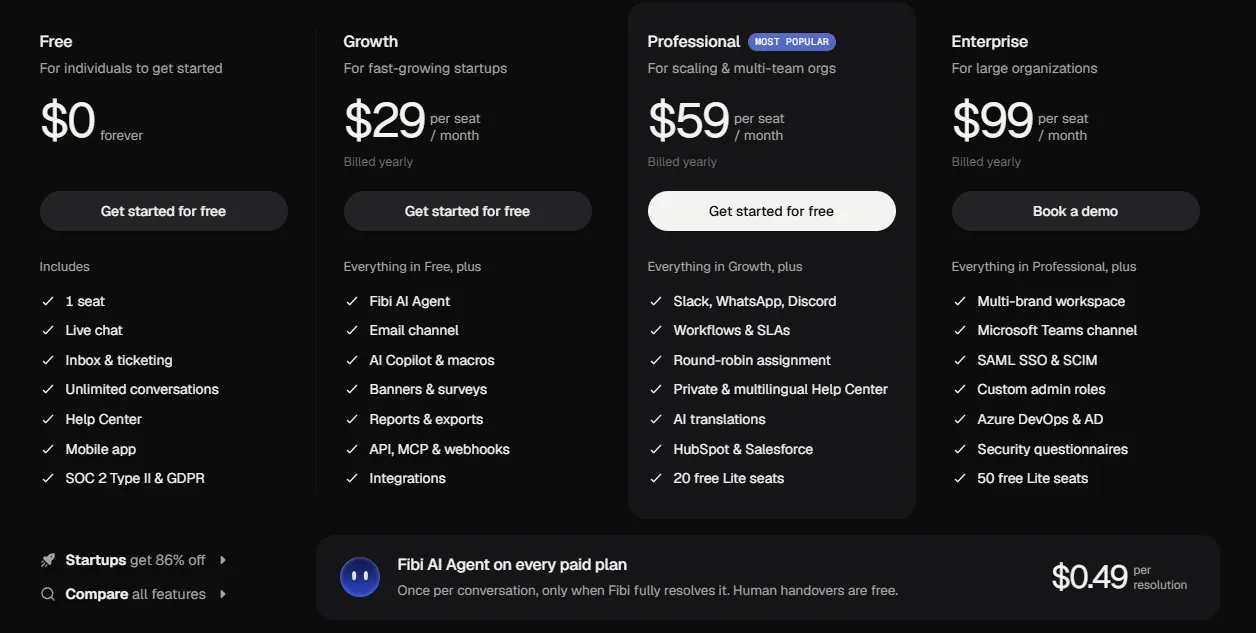
- ✨ Featurebase combines support, a help center, and feedback management. Fibi AI Agent costs $0.49 per resolution on paid plans, plus seat charges.
How much does an AI chatbot cost?
Entry plans from Chatbase and SiteGPT cost $40 and $59 per month, respectively, on monthly billing. These prices include specific usage allowances, so your actual AI chatbot cost depends on workload and required features.
For example, Chatbase Hobby includes 700 monthly message credits. SiteGPT Starter includes a model-dependent message allowance. Neither starting price guarantees enough capacity for your support queue.
Separate chatbot software pricing into:
- Subscription costs: Platform access, features, and any paid human seats.
- Usage charges: Billable AI activity beyond included allowances.
- Operating costs: Setup, integrations, content maintenance, and human support.
Enterprise and custom chatbot pricing needs a separate quote when public plans don't cover your requirements.
Prices checked November 10, 2026, in USD. Annual prices below are monthly equivalents. Calculations exclude taxes, negotiated discounts, and unstated add-ons.

How AI chatbot pricing models work
These 6 pricing models can overlap. A helpdesk might charge for seats while billing AI usage separately.
Monthly subscriptions with included usage
You pay a fixed subscription for features and a usage allowance.
SiteGPT Starter costs $59/month billed monthly, or $39/month billed annually. It includes up to 4,000 GPT-4.1-mini messages or 400 GPT-4.1 messages, with a mix between those limits.
Check which model the headline allowance assumes. Also confirm what happens when you reach the limit: additional purchases, a plan upgrade, or paused service.
This structure works well for budgeting when your usage stays comfortably within the allowance.
Per-seat pricing
Per-seat plans charge for the people accessing the platform.
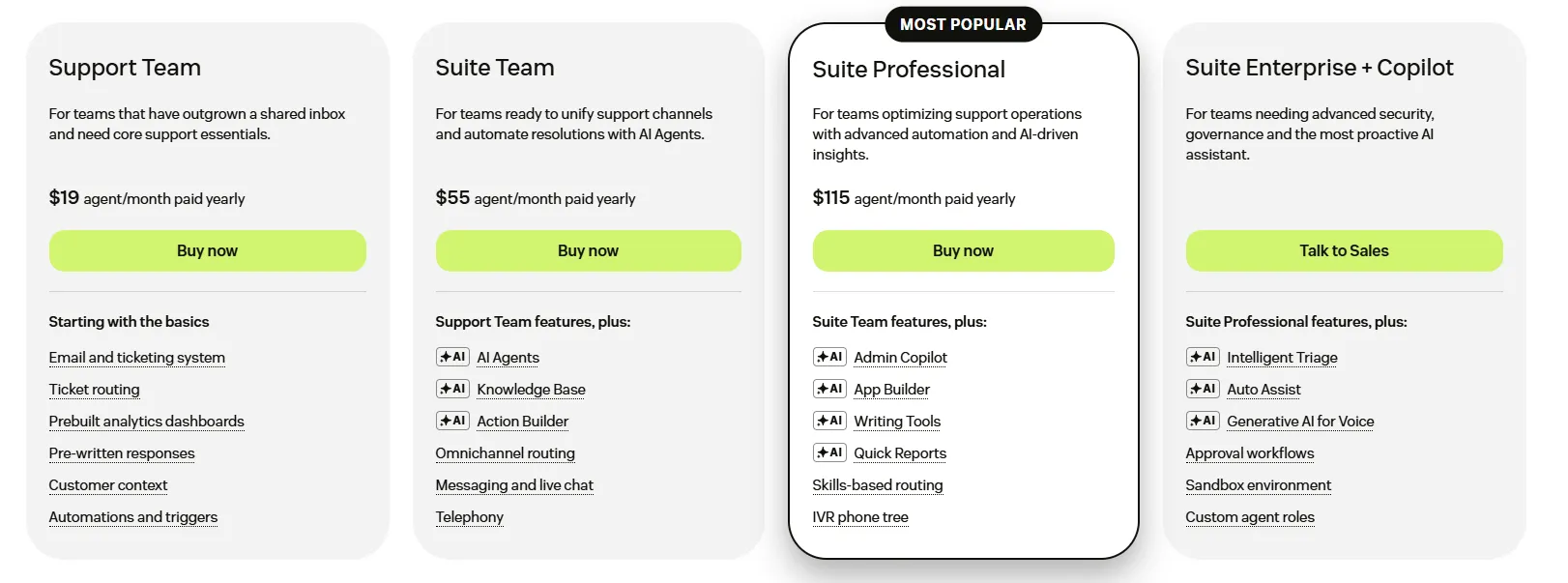
Zendesk Suite Team, for example, costs $55 per agent/month paid yearly. That's the helpdesk subscription, not a complete quote for unrestricted AI automation.
Count everyone who needs access, including supervisors and occasional collaborators. Check whether restricted seats can cover some roles.
Then compare equivalent subscriptions. A full support platform and a chatbot add-on may cover very different parts of your workflow.
Per-conversation pricing
Conversation-based pricing charges for interactions, which can be billable even when the customer later needs a person.
Tidio's Lyro starts at $32.50/month billed annually for 50 AI conversations. A conversation counts when Lyro responds at least once. Additional replies within it don't each count as another conversation.
Tidio separates AI usage from human-agent conversation allowances. Its initial 50 free Lyro conversations are a one-time allocation.
Before budgeting, check how the vendor treats returning customers and reopened conversations.
Per-resolution and outcome pricing
These models charge when an interaction meets the vendor's definition of success.
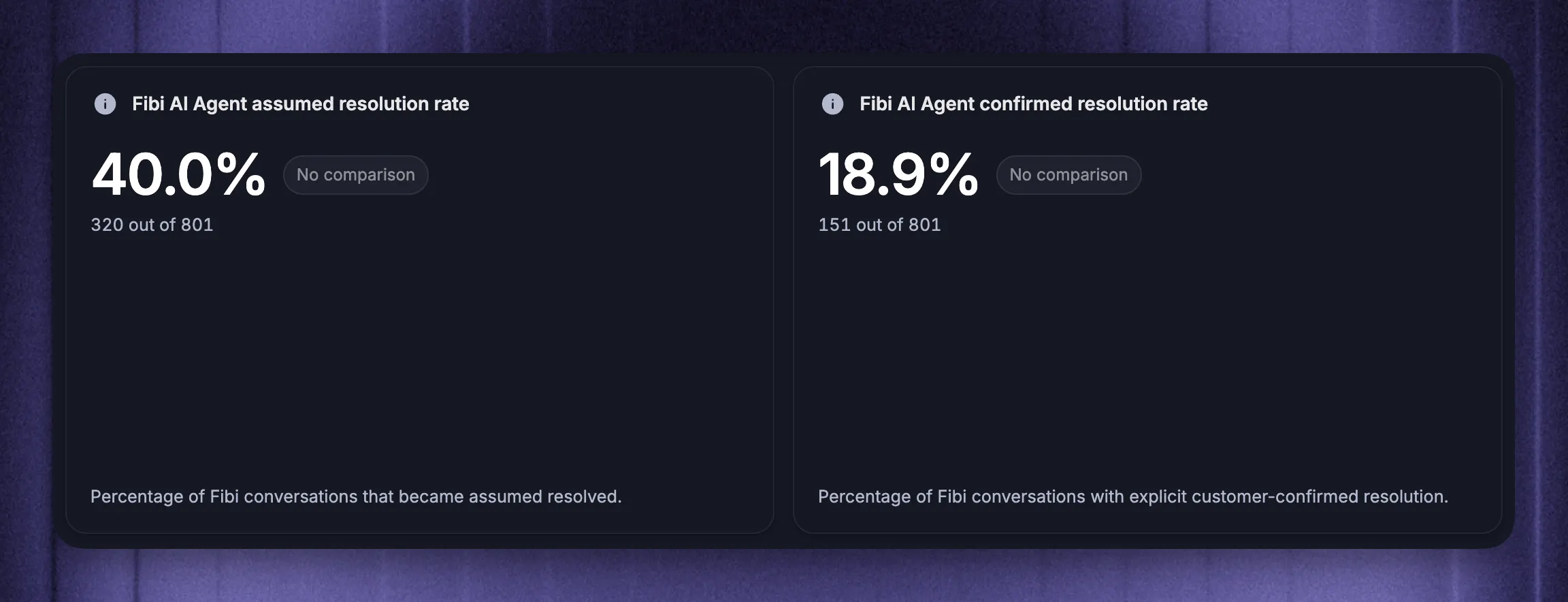
Featurebase's Fibi AI Agent costs $0.49 per resolution, plus paid seats. A resolution follows an actual answer when the customer confirms it helped or leaves without requesting further assistance. The Growth plan costs $37 per seat/month billed monthly, or $29 billed annually.
Intercom's Fin costs $0.99 per support outcome, with a 50-outcome monthly minimum when used with another helpdesk. That helpdesk's subscription remains separate.
Fin also counts successful configured Procedures that end in a human or workflow handoff. Read the outcome definition before assuming every charge represents fully automated support.
Message and credit-based pricing
These plans provide a pool of credits consumed by AI activity.
Chatbase Basic costs $150/month billed monthly, or $120 billed annually, with 4,000 monthly message credits. Auto-recharge costs $40 per 1,000 credits.

Credits aren't customer conversations. A conversation can contain multiple responses, and consumption depends on the platform's rules.
Measure actual credits per conversation during a pilot. Automatic top-ups can preserve availability during spikes, but they also mean the subscription isn't a spending ceiling.
Token-based API pricing
If you build with a chatbot API, the model provider may charge for tokens processed. Rates can distinguish input text from generated output.
The API bill excludes much of the work required to operate the chatbot. Budget for hosting, knowledge retrieval, integrations, monitoring, and human handoff.
Measure the complete implementation, including retries and longer conversations. A cheap model call doesn't establish that a custom chatbot will cost less to run than a managed platform.
How to calculate your monthly chatbot bill
Start with expected support conversations, required seats, and measured AI usage. Website traffic alone won't tell you how much billable activity to expect.
Monthly software cost = platform fees + paid seats + billable AI usage + add-ons and overages
Avoid counting seats or usage twice when they're already included. Add implementation and maintenance separately when estimating total operating cost.
The following scenarios use hypothetical workloads, not performance benchmarks. Each illustrates a different buying situation.
1. A new support workspace
Assume 1 Featurebase Growth seat on monthly billing and 500 AI conversations. If 50% become billable resolutions, you pay for 250 resolutions.
$37 + (250 × $0.49) = $159.50/month
This covers the seat and Fibi usage, excluding optional add-ons and your team's labor. Annual billing reduces the seat component to $29/month equivalent, with an annual commitment.
2. A chatbot added to an existing helpdesk
Assume your workload consumes 5,000 Chatbase credits monthly. Basic includes 4,000, leaving 1,000 to purchase through auto-recharge.
$150 + $40 = $190/month
That's the chatbot cost. Keep your existing helpdesk subscription in the budget.
Start from measured credit consumption instead of assuming a fixed number of credits per customer conversation.
3. Outcome-based AI for an existing support team
Assume 10 Zendesk Suite Team agents at the annual rate of $55 per agent/month. Add Fin with 4,000 AI conversations, of which 50% produce billable support outcomes.
Helpdesk: 10 × $55 = $550/month equivalent
Fin: 2,000 × $0.99 = $1,980/month
Combined: $2,530/month equivalent
The helpdesk component represents a $6,600 annual subscription commitment. If you're already paying for those seats, the modeled additional AI expense is $1,980 for the month.
These examples have different workloads and product scopes, so their totals shouldn't be used as a cheapest-to-most-expensive ranking.
What increases the cost beyond your subscription?
The starting plan may cover your usage while missing a feature your workflow requires. Check these costs before committing:
- Higher-tier features: Required integrations, permissions, or reporting can determine the minimum usable plan.
- Implementation: Content cleanup, system connections, and testing take time even when installation is simple.
- Ongoing maintenance: Someone must keep answers accurate as products and policies change. Assign ownership for maintaining the knowledge base.
- Human escalation: Confirm the chatbot passes context to agents and can route the escalation correctly.
- Overages and extras: Credit recharges, branding removal, extra storage, and additional bots may increase the invoice.
- Contract terms: Check minimum spending, annual payment requirements, and the rate after introductory discounts expire.
For an enterprise quote, request costs at both expected and peak usage. Ask what happens to unused committed capacity, too.
How much does it cost to build an AI chatbot?
AI chatbot development cost depends on scope. Answering public documentation requires less integration work than authenticating customers and changing account details.
Build a cost estimate around:
- Development: The interface, knowledge retrieval, business integrations, and chatbot development tools.
- Testing: Answer quality, failure cases, permissions, and escalation behavior.
- Operations: Model usage, hosting, monitoring, and ongoing maintenance.
Use internal labor costs or supplier quotes for the actual requirements. Include the cost of supporting customers while development is underway.
Building deserves consideration when existing tools can't support an essential workflow and your team can maintain the system. Buying is easier to justify when AI chatbot platforms already cover the work.
Compare both options over the same period, with the same requirements. An API estimate and a complete support subscription aren't equivalent budgets.
How to choose a pricing model for your support workflow
I would shortlist tools using 4 steps:
- Define the workload: Choose the request types and channels the chatbot should handle.
- Confirm the required plan: Include essential integrations, permissions, and human handoff.
- Run a representative pilot: Test difficult questions as well as easy FAQs. Measure billable usage and the human work left over.
- Forecast normal and peak months: Apply actual allowances, minimums, and overage rules.
Subscription allowances suit predictable usage. Conversation pricing can simplify budgeting when message counts vary. Outcome pricing requires confidence in the vendor's success definition, while credits and tokens require closer consumption tracking.
Review answer quality and repeat contacts alongside cost. A billable resolution doesn't automatically prove that a customer received a useful answer.
Time saved can improve response times or free agents for other work. Count it as a cash saving only when an expense actually changes.
Conclusion
Compare AI chatbot pricing using your workload, required features, and total operating cost. Test the billing units before committing, and budget for the work that remains after automation.
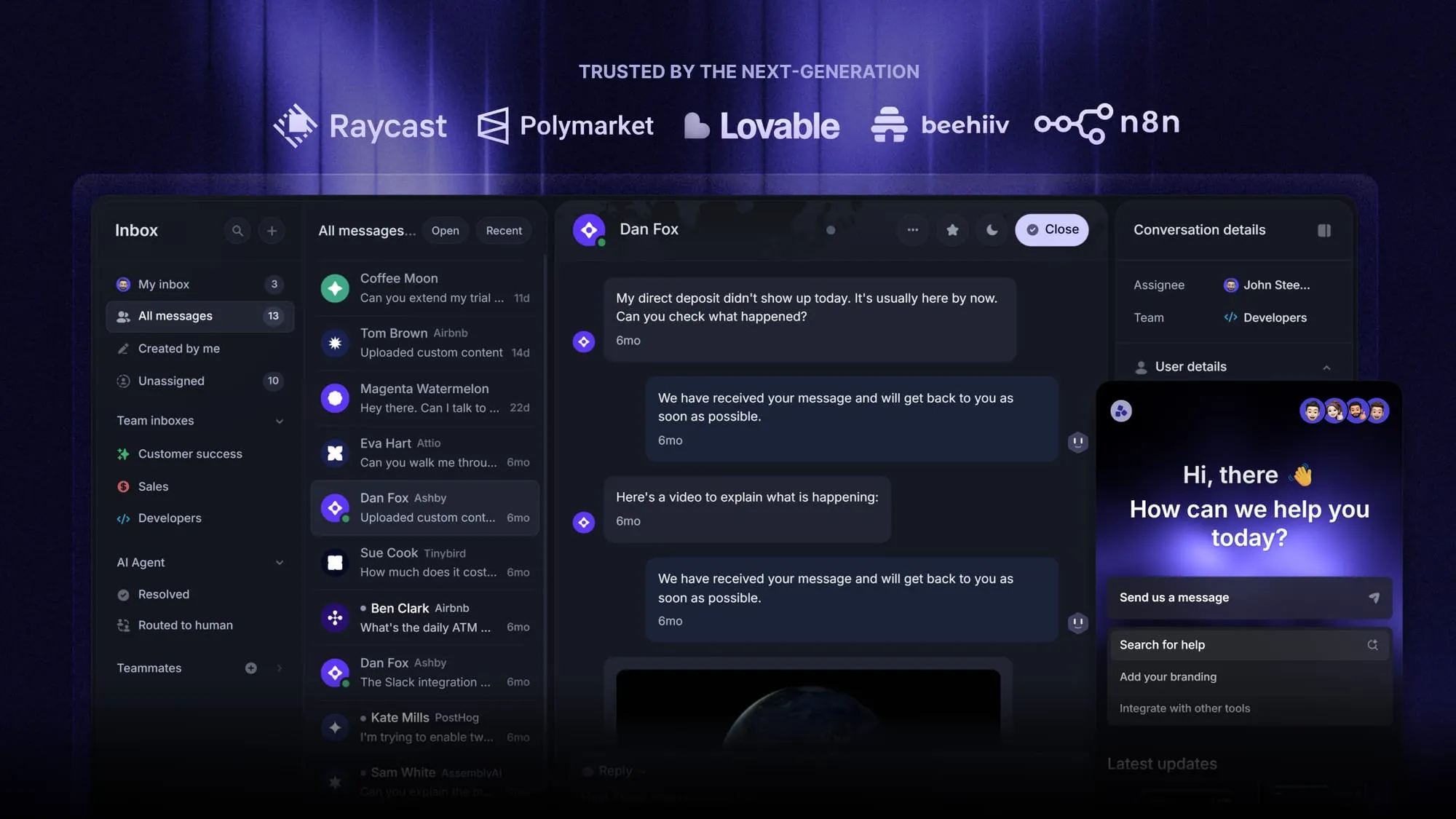
Featurebase combines AI-powered customer support, a help center, and feedback management for software teams that want their customer-facing tools in one place.
The Free plan covers core support and feedback tools. Fibi AI Agent requires a paid plan, with a 10-day free trial available for new customers. 👇
Bring your support and AI automation together with Featurebase
FAQs
Entry examples include Chatbase Hobby at $40/month and SiteGPT Starter at $59/month on monthly billing. Your complete budget may also include helpdesk seats, additional usage, and implementation.
Free plans and trials can support testing, but check whether the AI allowance renews. A platform may offer free live chat while reserving AI automation for paid plans.
The vendor defines it, sometimes using customer confirmation or an inferred successful answer. Ask for examples showing how silence, reopened conversations, and requests for human help affect billing.
Some charge for each human agent, while others include a fixed number of members. Check whether supervisors need full seats and distinguish human access from allocations for AI bots.
Buying can cost less to launch when existing software meets your needs. Building may suit unique requirements, but include ongoing engineering ownership in the comparison.
Usage charges can rise while seat counts stay unchanged. Check conversation volume, credit recharges, added features, and expired discounts against the previous invoice.


