Blog Customer FeedbackWhat Are Data-Driven Insights and How to Find Them
What Are Data-Driven Insights and How to Find Them
Data-driven insights turn raw numbers into decisions. Here's what they are, the 4 types of analytics, real examples, and how to find insights that change what you ship.

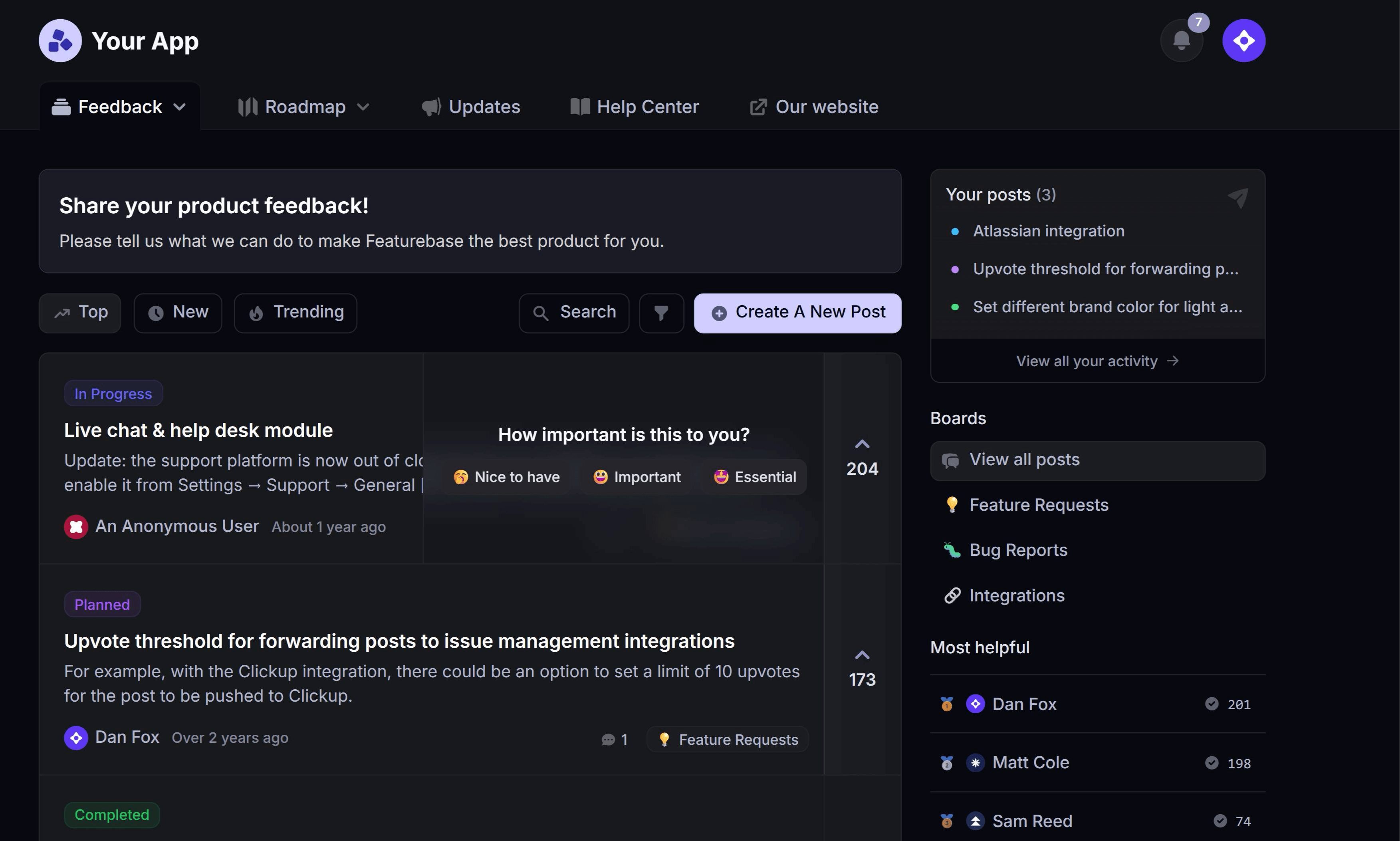

✨ Start collecting & managing data through feedback with Featurebase for free →
Most teams aren't short on data. They're short on decisions.
Dashboards pile up, reports get emailed around, and somehow the roadmap still gets decided by whoever argued hardest in the meeting. Data-driven insights are what close that gap - the difference between knowing your numbers and actually doing something with them.
In this guide, I'll break down what a data-driven insight really is, the 4 types of analytics behind them, and a simple process for finding insights that change what you build next. 👇
Key takeaways
- Data-driven insights are conclusions pulled from analyzing real data that you can actually act on, not just numbers sitting on a dashboard.
- There's a clear ladder from data to information to insight - raw facts become context, then context becomes a decision.
- Analytics comes in 4 types: descriptive, diagnostic, predictive, and prescriptive. Each one answers a different question.
- The best insights are specific, tied to a decision, and backed by a source you trust.
- Customer feedback is one of the most underused data sources for product teams - it's qualitative data you can quantify and act on.
- Featurebase✨ helps you turn customer feedback into data-driven insights with AI summarization, revenue-based prioritization, and built-in surveys.
What are data-driven insights?
A data-driven insight is a conclusion you reach by analyzing data that then tells you what to do next.
That last part matters. A number on its own isn't an insight. "Churn was 4% last month" is a fact. "Churn doubled among users who never connected an integration, so onboarding needs an integration step" is an insight, because it points at a decision.
Put simply, data-driven insights are the meaning you pull out of raw data to guide real business decisions. People call them data-driven business insights or data-driven customer insights depending on where the data comes from, but the idea is the same: let evidence, not gut feel, steer the call.
Data, information, and insights: what's the difference?
These three words get used interchangeably, but they sit on a ladder, and skipping a rung is where teams get stuck:
- Data is the raw material - individual facts with no context. A single support ticket, one NPS score, a row in your analytics.
- Information is data with context - organized, grouped, and summarized so it means something. "CSAT dropped 8 points this quarter" is information.
- Insight is information plus a "so what" - the pattern that tells you why it happened and what to do. "CSAT dropped because response times slipped on weekends, so we need weekend coverage" is an insight.
Dashboards are great at the first two rungs. The jump to insight is the human part, and it's where most of the value hides.
The 4 types of data analytics
Every insight comes from one of 4 kinds of analysis. They build on each other, from "what happened" all the way to "what should we do":
- Descriptive analytics: what happened? It summarizes past data into reports and dashboards, like last month's signups or this week's ticket volume.
- Diagnostic analytics: why did it happen? It digs into the data to find causes, like signups dropping because a campaign ended.
- Predictive analytics: what's likely to happen? It uses patterns and history to forecast outcomes, like spotting which accounts show early churn signals.
- Prescriptive analytics: what should we do? It recommends an action based on the forecast, like reaching out to at-risk accounts with a check-in.
Most teams live in descriptive analytics and never climb higher. Real data-driven insights usually start at the diagnostic rung and above.
Why data-driven insights matter
The case for data-driven decision making is simple: teams that decide with evidence make fewer expensive mistakes.
Gut feel is fast, but it leans toward the loudest voice and the most recent memory. Data-driven insights replace "I think users want this" with "here's what users actually do." That shows up everywhere. Data-driven marketing insights tell you which channels convert, product insights tell you which features get used, and customer insights tell you why people stay or leave.
The payoff isn't just accuracy. Shared data gives teams a common reference point, so debates end with evidence instead of seniority. And once you can see patterns early, you can act on opportunities before your competitors do.

Turn feedback into products your users love
Centralize feedback, identify product opportunities, and build the right features
How to turn raw data into insights
Finding an insight isn't magic. It's a repeatable loop. Here's the 5-step version I'd hand a new PM:
- Start with a question: don't open a dashboard and wait for inspiration. Ask something specific like "why did trial-to-paid drop in June?" A clear question keeps you from drowning in metrics.
- Gather the right data: pull the data that actually answers the question, from product analytics, surveys, support tickets, and customer feedback. More data isn't better, relevant data is.
- Clean and organize it: remove duplicates, fill gaps, and get everything in one place so you're comparing like with like. Messy data produces confident, wrong answers.
- Analyze for patterns: look for trends, spikes, and correlations. This is where you move from "what happened" to "why," and where customer feedback analysis often surfaces the real story behind the numbers.
- Decide and act: translate the pattern into a decision, ship the change, then measure whether it moved. An insight you don't act on is just trivia.
This loop never really ends. Each action creates new data, which raises new questions.
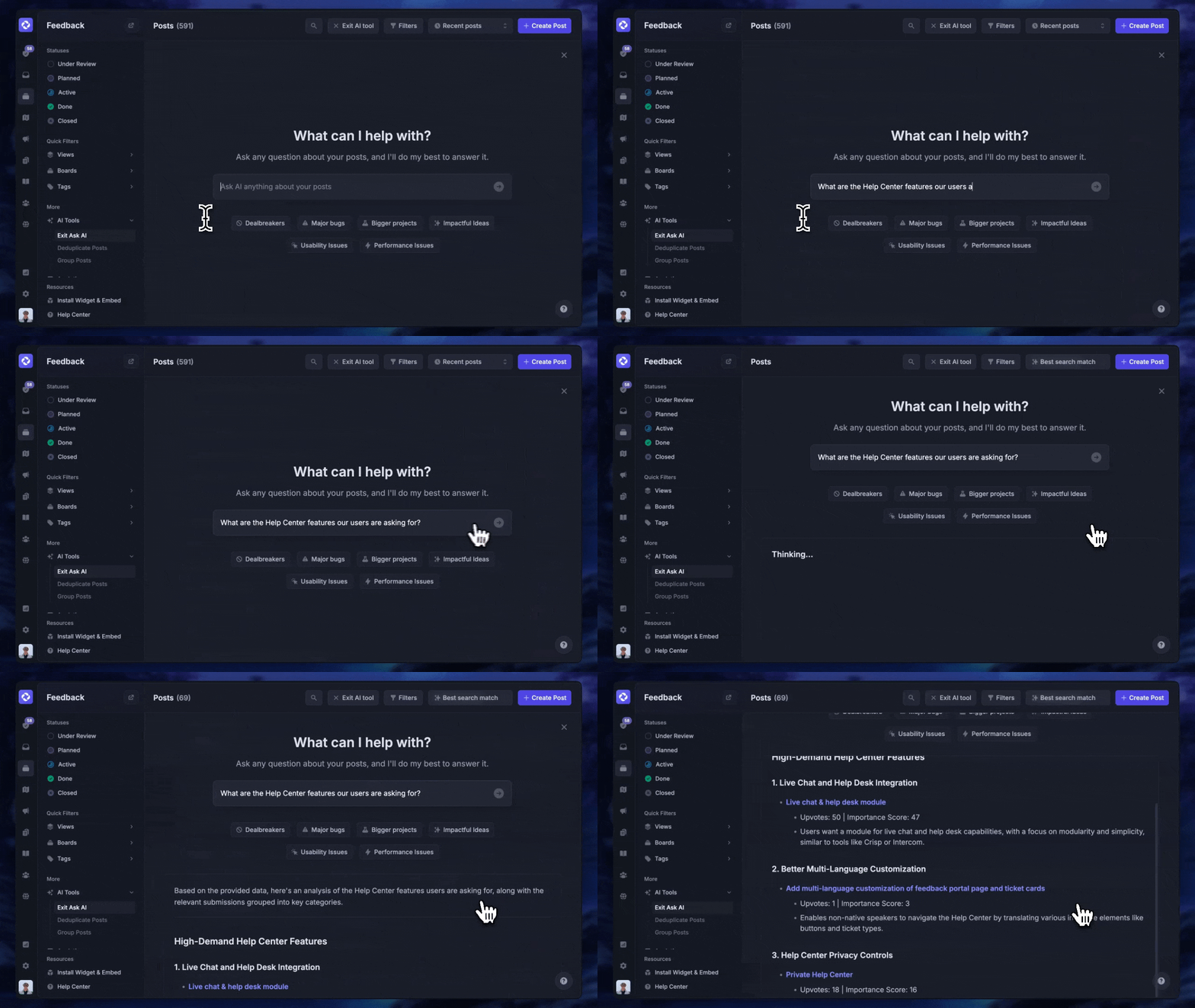
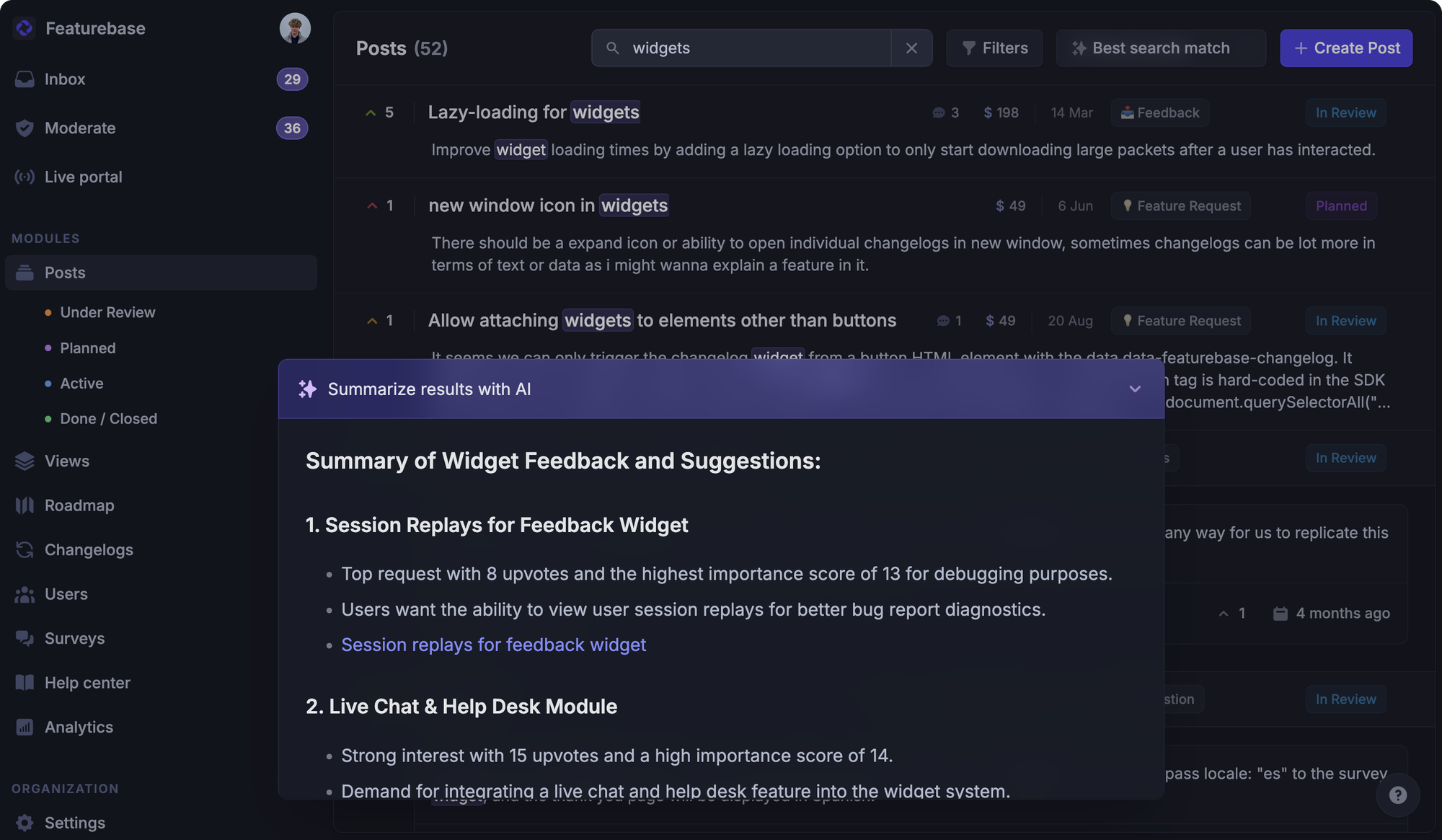
When a lot of your data is qualitative, like open-ended feedback and feature requests, the analyze step gets slow. This is where AI-driven data insights help. With Featurebase you can ask AI questions across all your user feedback and get a summarized answer in seconds, so you can spot the biggest dealbreakers without reading every post by hand.
Finance teams managing recurring revenue also rely on billing software to automate invoicing, subscriptions, and revenue operations, ensuring financial data remains accurate and actionable.
4 examples of data-driven insights
Abstract definitions only go so far. Here's what data-driven insights look like in the wild:
- Churn: an analytics dip shows that users who skip onboarding step 3 churn at twice the rate. The insight: make step 3 easier or unavoidable.
- Pricing: sales-call notes reveal that mid-market prospects keep stalling on one missing feature. The insight: that feature is a revenue blocker, not a nice-to-have.
- Support: ticket tags show 30% of contacts are about one confusing screen. The insight: fix the screen and deflect a third of your volume.
- Product: feature requests, weighted by the revenue of the customers asking, point to a different priority than raw vote counts do. The insight: build for impact, not just popularity.
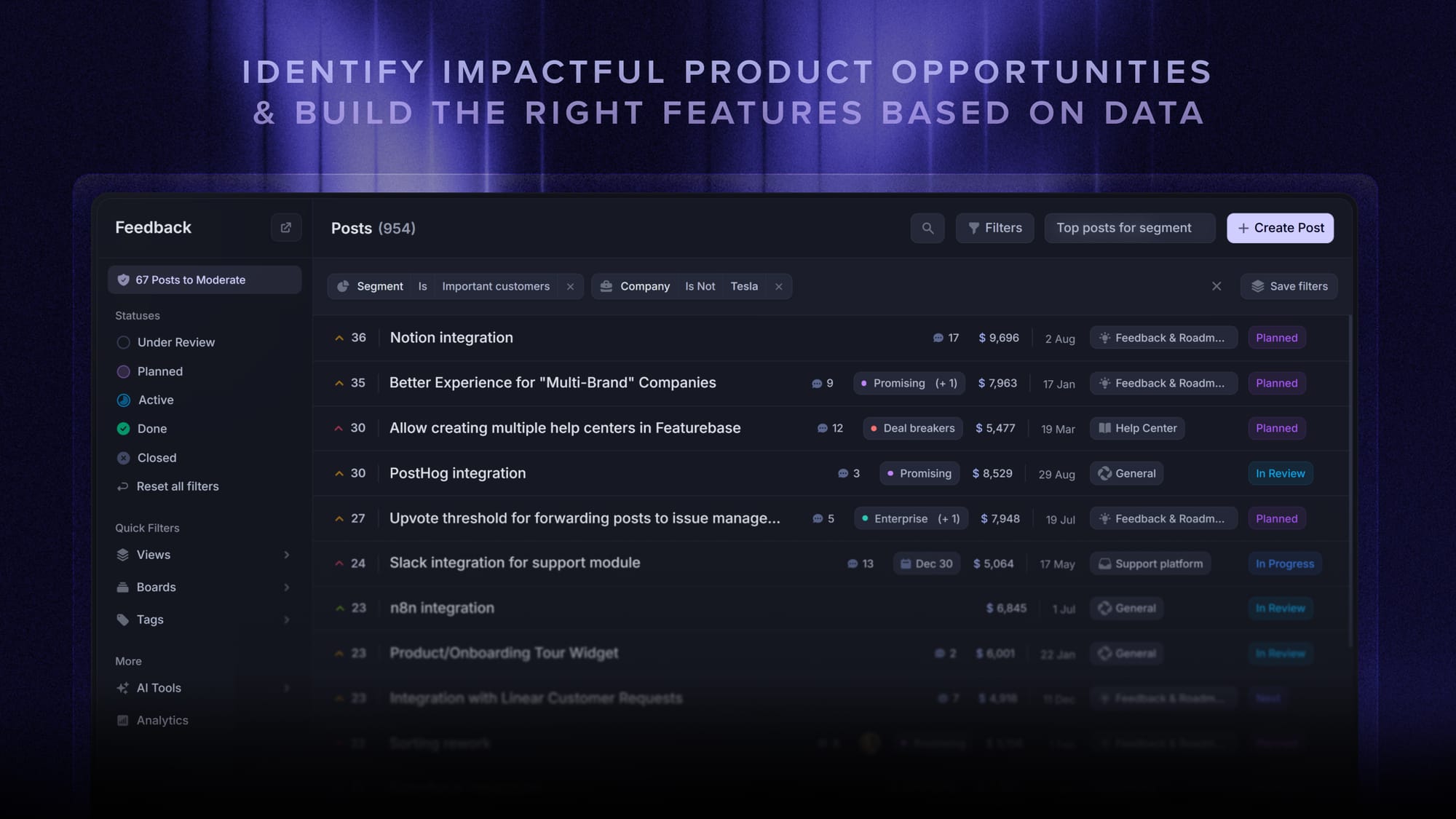
That last one is easy to get wrong when you rank by upvotes alone. In Featurebase, you can prioritize feedback by the revenue of the customers who requested it, so two enterprise accounts can outweigh a louder crowd of free users. It's a much clearer signal of what to build next.
Common mistakes that kill good insights
Even data-driven teams trip over the same few things:
- Chasing vanity metrics: page views and raw signups feel good but rarely tie to a decision. Track numbers you'd actually act on.
- Confusing correlation with causation: two things moving together doesn't mean one caused the other. Diagnostic analysis exists for a reason.
- Collecting data you never use: dashboards nobody opens are just clutter. Start from the question, not the metric.
- Ignoring qualitative data: numbers tell you what's happening; qualitative data like customer feedback tells you why. Skipping it leaves half the picture on the table.
Turn customer feedback into data-driven insights with Featurebase
Not every data-driven insight comes from a BI dashboard. For product teams, some of the richest data is the feedback your users are already giving you. It's just qualitative, scattered, and hard to quantify. That's the gap Featurebase closes. 👇
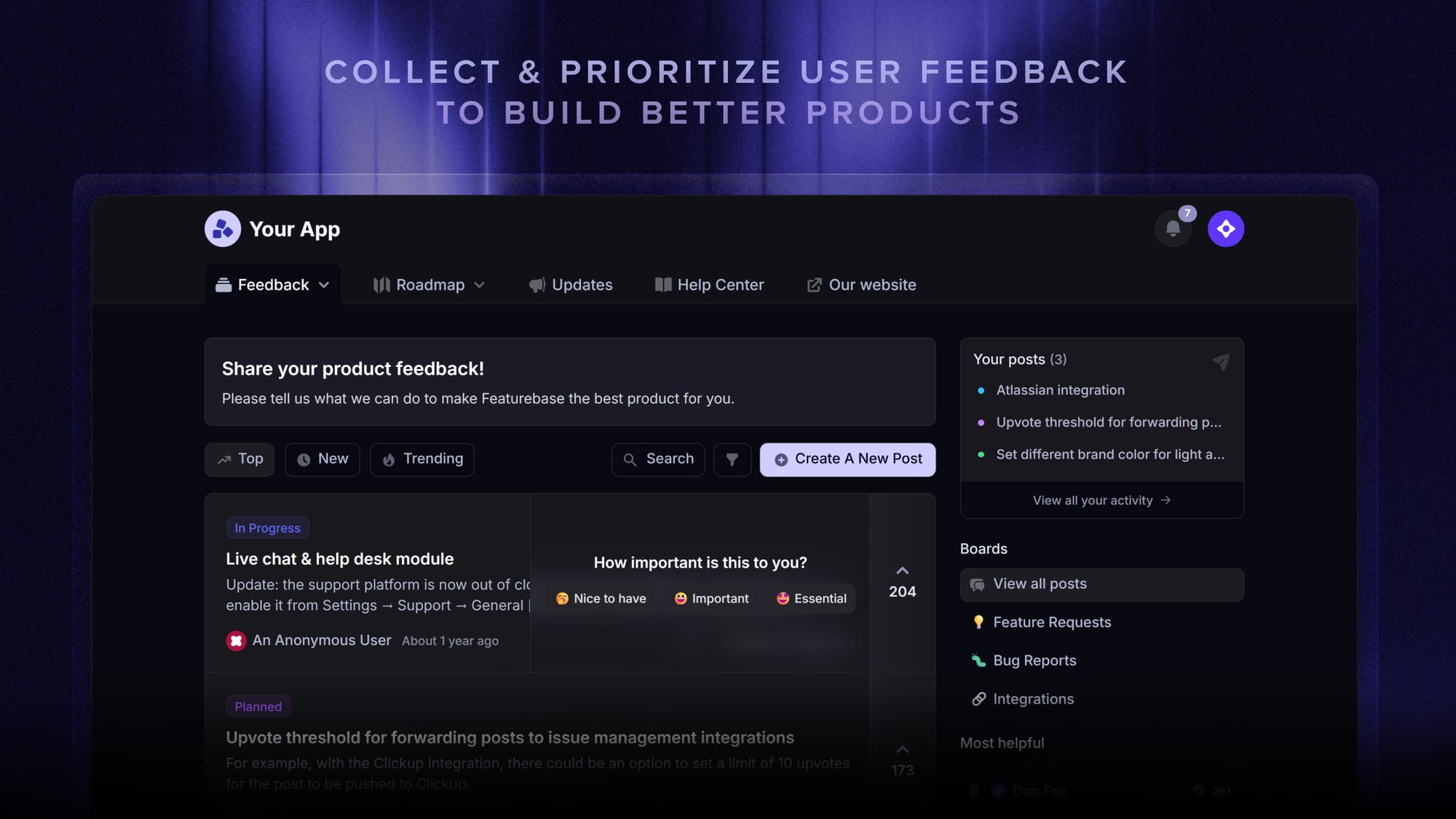
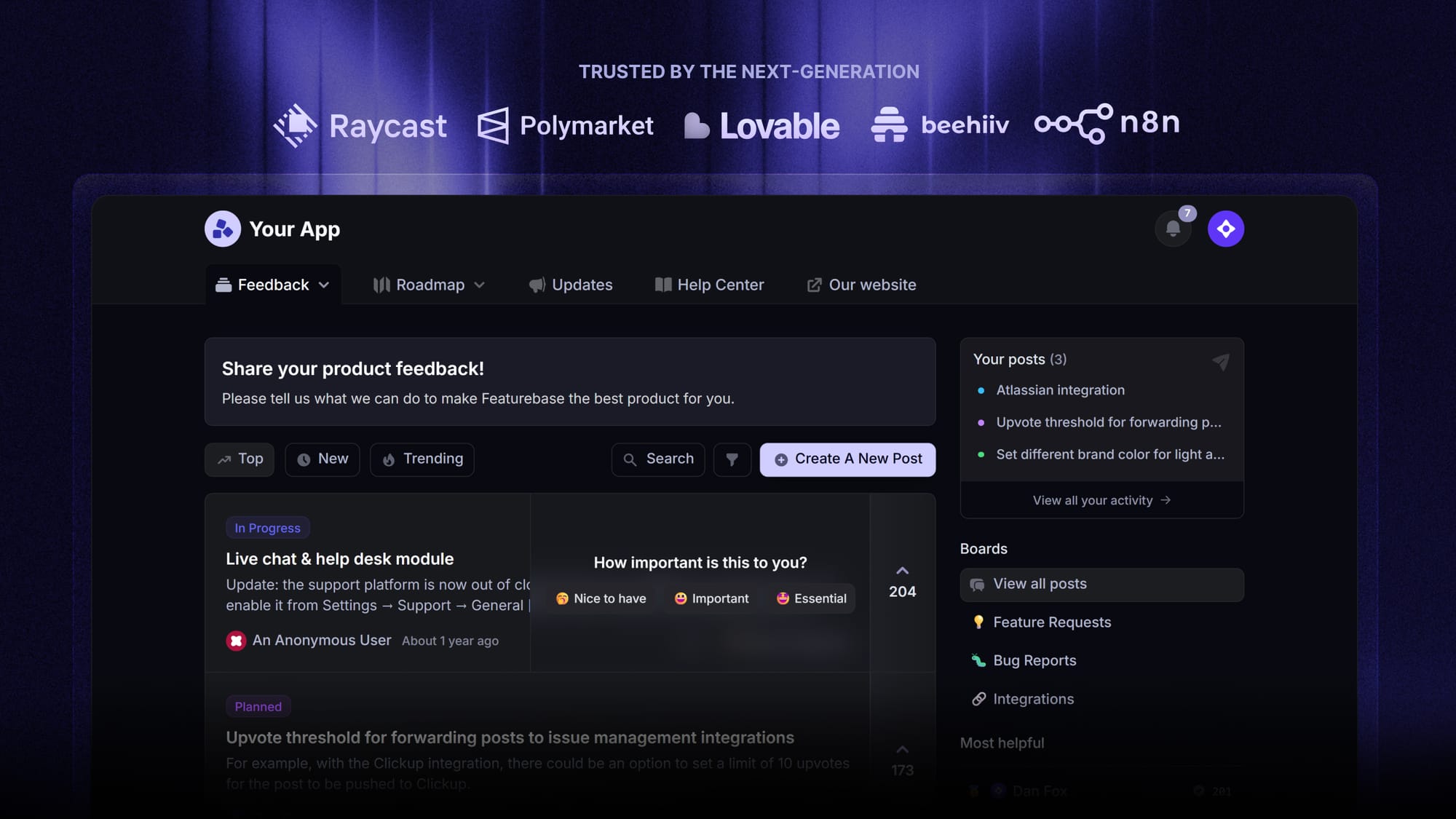
Featurebase is a modern feedback & support platform that helps product teams collect feedback, prioritize features, build roadmaps, and announce product updates, all in one place. It's loved by thousands of product teams from companies like Lovable, Raycast, and n8n. 💫
Top features:
- Feedback forum – Public feedback forum where users can submit ideas and vote on features, helping you know what customers want
- In-app widgets – Embed feedback, changelog, and help center widgets directly in your product
- Prioritize by revenue – Link feedback with customer revenue, company size, and much more to better understand the impact of ideas
- AI feedback categorization – Automatically group large volumes of feedback into product areas, projects, or themes with AI
- Automated email updates – Automatically notify users when their requested features are implemented
- Roadmaps – Create internal & public product roadmaps to keep users informed and build engagement
- Product updates – Publish release notes with a changelog page, in-app widget, and emails
- Surveys (NPS, CSAT, etc) – Create targeted surveys to ask users anything and measure customer satisfaction
- Automatic AI translations – Automatically translate all feedback and comments to your customers and teammates native languages
- Integrations – Connects with Slack, Linear, Jira, HubSpot, and more
Pricing: Free plan available with unlimited feedback collection. Paid plans start at $29/seat/mo.
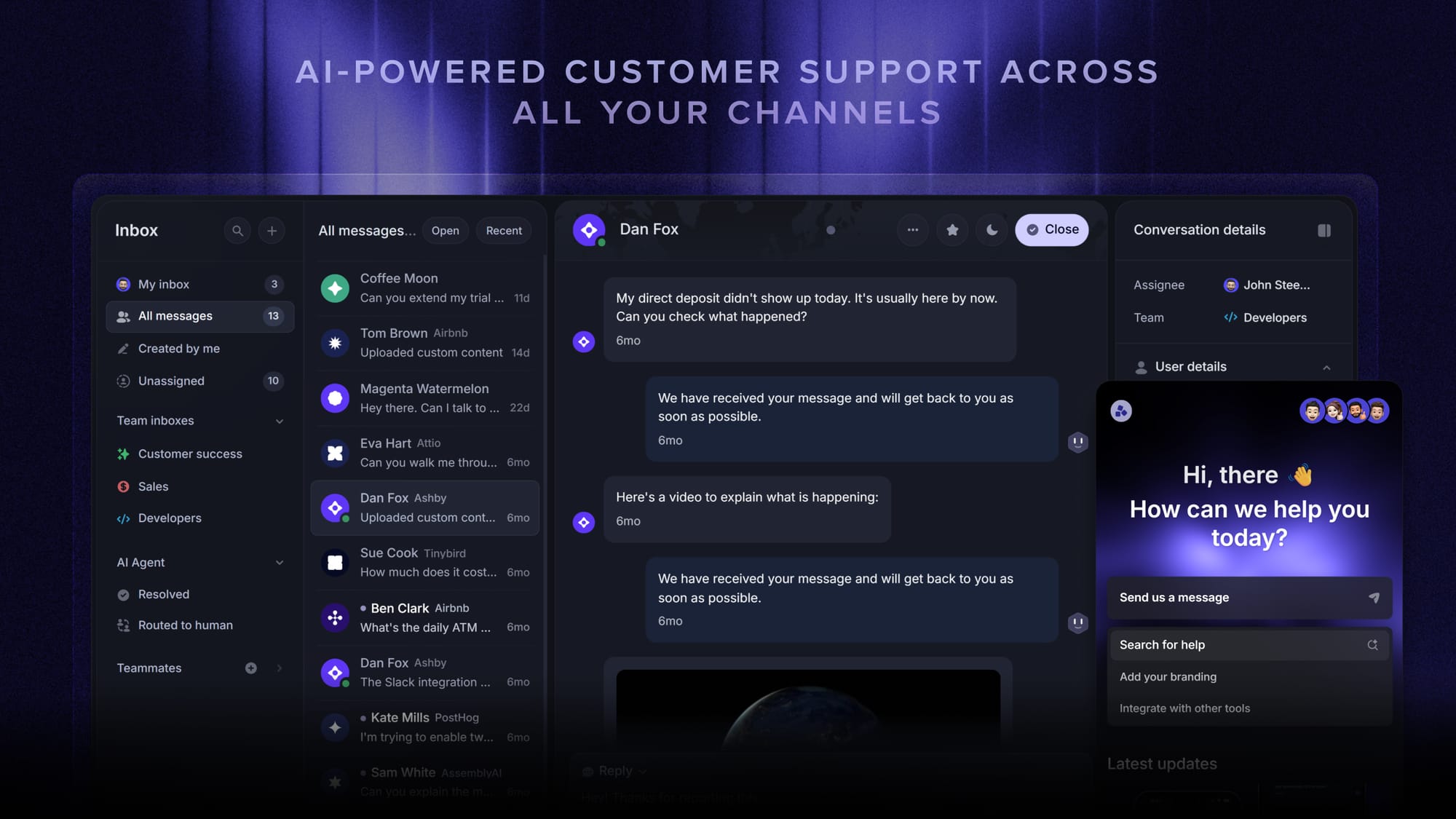
Instead of having 4+ different tools, Featurebase enables you to replace all your customer-facing tools by bringing your feedback collection, product updates, support, and help center together in one place, helping you build products your users love.
Conclusion
Data-driven insights aren't about collecting more data. They're about asking better questions and turning the answers into decisions you can act on. Get the data to information to insight ladder right, climb past descriptive analytics, and always tie the insight back to a choice.
Featurebase is a modern feedback tool that helps you collect all your product feedback in one place with a feedback forum, surveys, in-app widgets, and integrations. You can then turn that feedback into data-driven insights by analyzing it with AI and prioritizing ideas based on customer revenue and company size, so you build what actually matters.
It comes with a Free plan and quick onboarding that doesn't need a credit card, so there's no downside to trying it. 👇
✨ Start collecting & managing feedback with Featurebase for free →
FAQs
What's the difference between data-driven and data-informed decision-making?
Data-driven means the data leads the decision - the numbers point one way and you follow. Data-informed means the data is one input alongside experience, context, and judgment. Most healthy teams are data-informed: they take the insight seriously but still apply human sense, especially when the data is thin or the stakes are high.
What tools do you need to generate data-driven insights?
You need three layers: a data source (product analytics, surveys, support tickets, customer feedback), an analysis layer to spot patterns, and a place to act on what you find. Small teams can start with a spreadsheet and one analytics tool. For turning customer feedback into insights specifically, Featurebase centralizes feedback and uses AI to summarize and categorize it, so you're not analyzing everything by hand.
How do you present data-driven insights to stakeholders?
Lead with the decision, not the chart. Open with the "so what" ("we should add weekend support coverage"), then show the one or two data points that back it up. Keep visuals simple, cut the metrics that don't change the recommendation, and end with the action you want them to approve.
What skills do you need to turn data into insights?
Less coding than people expect. The core skills are asking sharp questions, basic data literacy like reading charts and spotting bad comparisons, and enough business context to know which patterns matter. Curiosity and a bit of healthy skepticism beat advanced statistics for most day-to-day product and marketing decisions.
How can small teams get data-driven insights on a budget?
Start with the data you already have. Your product analytics, support tickets, and customer feedback hold most of the answers, and many tools offer free tiers. Pick one clear question, dig into those existing sources, and act on what you find before you invest in a bigger data stack.
Is being data-driven the same as being insight-driven?
They're related but not identical. Being data-driven means you collect and reference data. Being insight-driven means you actually extract the "why" and change what you do because of it. Plenty of companies have dashboards but aren't insight-driven, because the data just sits there without ever turning into a decision.