Blog Product ManagementTop 12 Product Roadmap Tools for SaaS Companies in 2026
Top 12 Product Roadmap Tools for SaaS Companies in 2026
The best free and paid product roadmap tools to help you communicate product changes to your customer base.

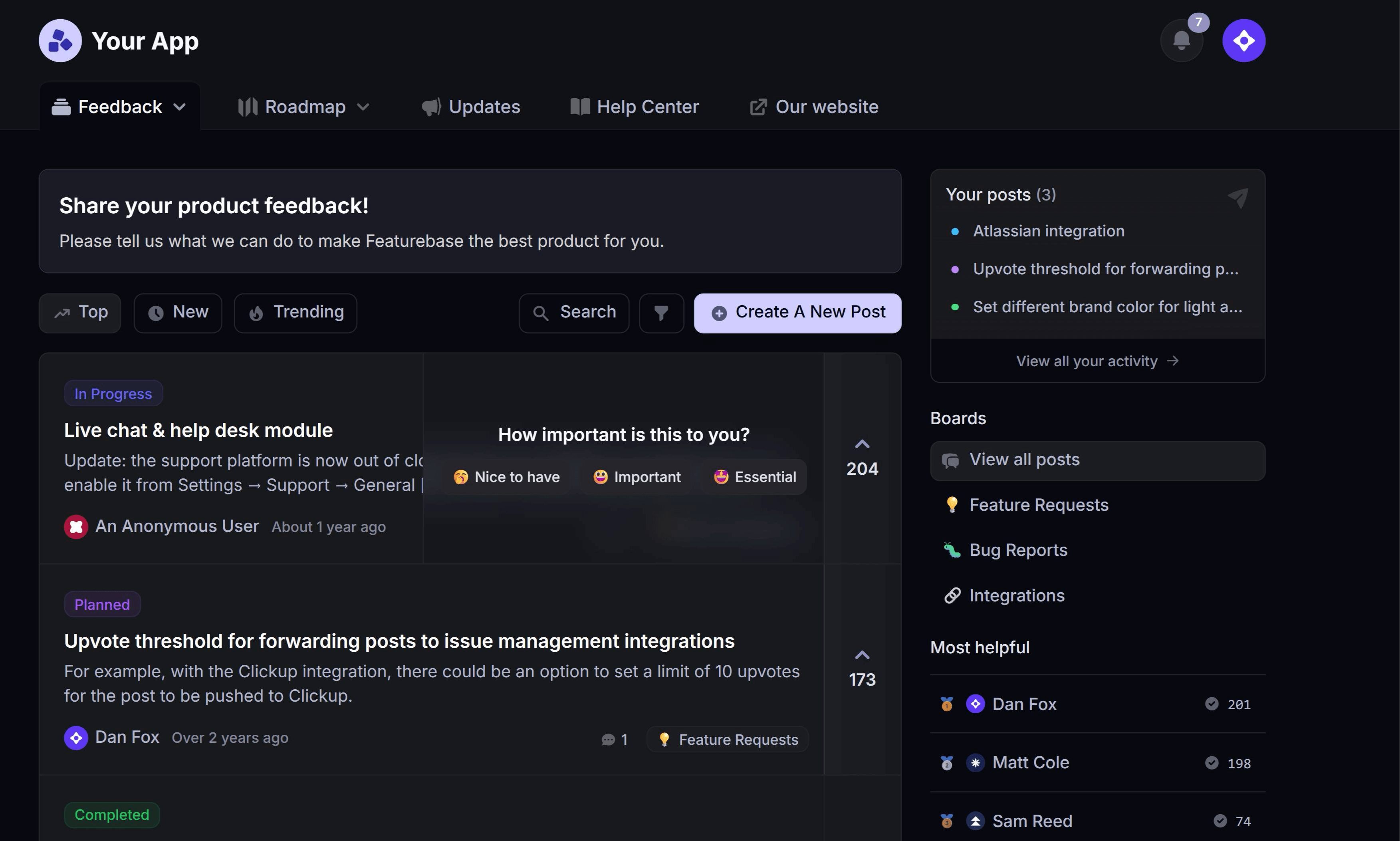

Imagine having a live stream service that works 24/7, telling your customers what you’re about to build. That’s what roadmaps are meant to be: an always-on communication channel between product teams and the people who rely on the product.
But clarity doesn’t happen automatically. In a PMI global study, 35% of executives said the biggest barrier to reinvention is a disconnect between planning and execution, and the same research found only half of projects meet a modern definition of success (delivering value that exceeds the effort and expense, as perceived by stakeholders).
That’s why great product roadmap software can make your job as a product manager much easier. But how do you pick one if you’ve never used such a platform before?
Today, we help you pick the right roadmap tool for your needs. 👇
TL;DR: the best product roadmap tools to check out in 2026
- ✨Featurebase - Best modern all-in-one product roadmap + feedback + changelog platform (public + private roadmaps)
- Monday Dev - Best for end-to-end product workflow (roadmap + execution in one system)
- Aha! Roadmaps - Best for strategy-first roadmapping and business alignment
- Jira Product Discovery - Best for agile teams that want roadmaps tightly connected to engineering delivery
- Asana - Best for cross-functional roadmap planning with strong collaboration
- Productboard - Best for customer-driven roadmaps (insights → prioritization → roadmap)
- Trello - Best for small teams that want lightweight, visual planning (Kanban-first)
- ClickUp - Best for highly customizable roadmapping views in an all-in-one workspace
- Smartsheet - Best for spreadsheet-style roadmap planning + reporting (ops/PMO-friendly)
- Wrike - Best for enterprise-grade work management + governance with roadmap visibility
- Notion - Best lightweight “build-your-own” roadmaps embedded in docs + databases
- Miro - Best for visual roadmaps and collaborative planning workshops (whiteboard-first)
Top features to look for in product roadmap tools
Product roadmap tools don't exist in isolation. They need to connect with your customer feedback platform, so you can easily prioritize ideas, track progress, and tie everything together in one place. Ultimately, they should communicate your product strategy and help customers see where you're headed.
These are the most essential features your roadmap tool should have. 👇
1. Customizable roadmap views
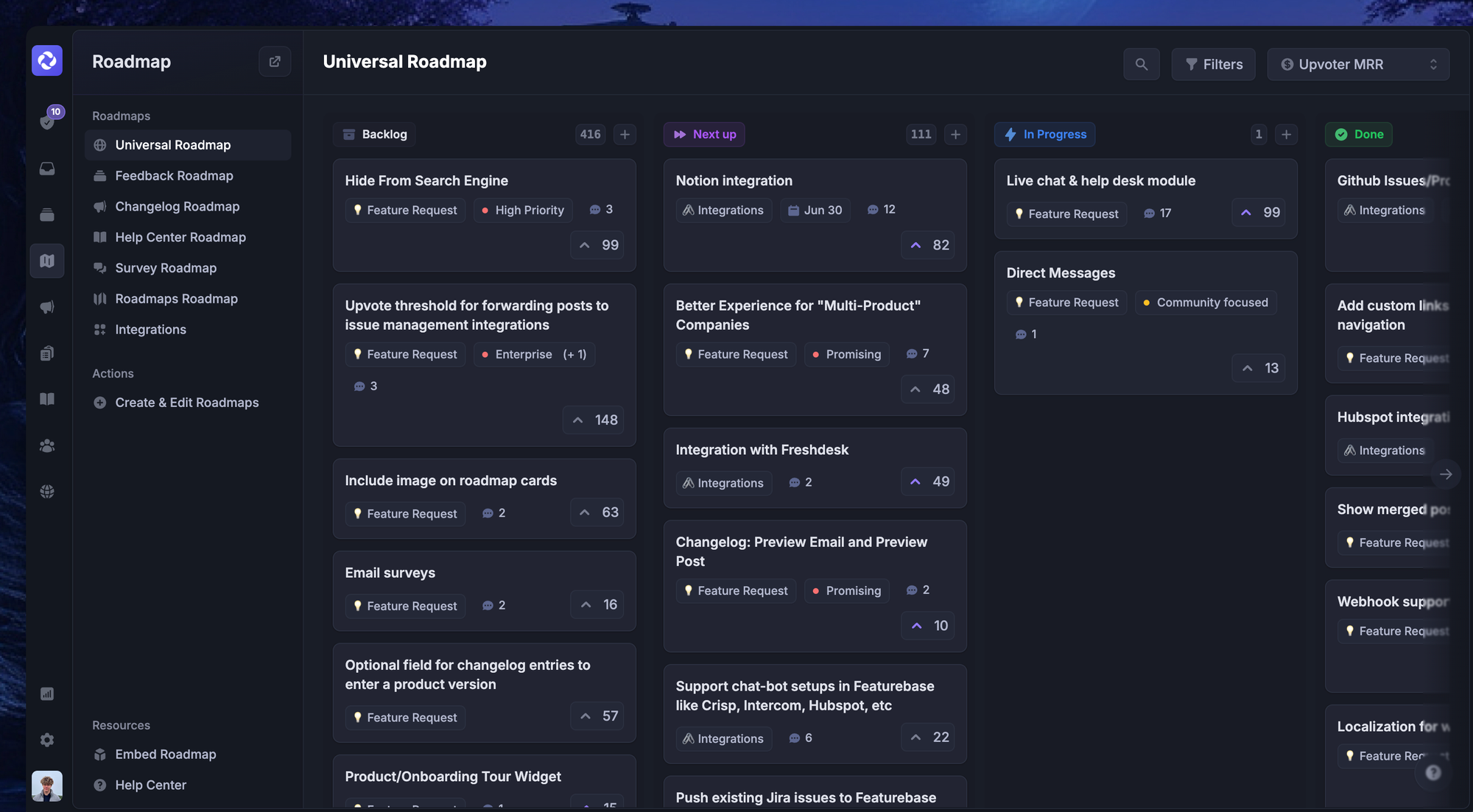
The roadmap tool should support a variety of views: Kanban, timeline, Gantt charts, or lists. This allows teams (and your customers) to visualize a roadmap clearly based on their preferences.
For example, a Kanban view is the most convenient for a quick overview of upcoming releases, while a timeline is excellent for putting things into perspective in terms of deadlines.
2. Drag and drop editor
For efficient project planning, the roadmap tool should be easy to use. A drag and drop editor allows your product team to move around items, prioritize on the go, change color schemes, fonts, design elements and much more. 🫳
3. Customer feedback integration
The ideal roadmapping tool is A) a part of a larger customer feedback management tool or B) integrates with one.
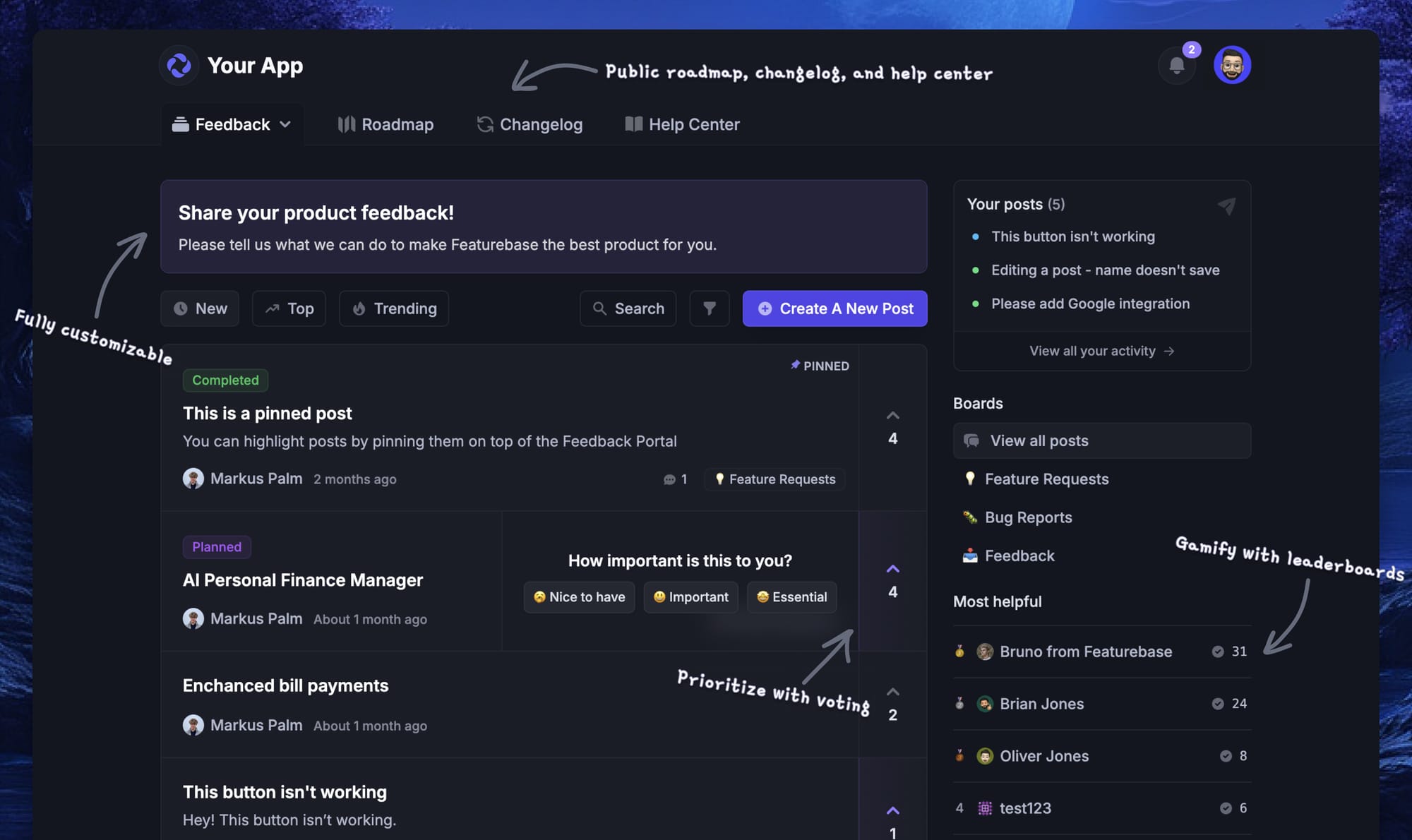
For example, when customers submit feature requests, you should be able to review them, put them up for voting, and only then decide whether they are worth moving to a proper roadmap.
Some of the tools we'll mention have great integrations, while others, like Featurebase, have roadmaps as part of a larger customer feedback management engine.
✨ Start managing your roadmap & collecting feedback with Featurebase for free →
4. Prioritization frameworks
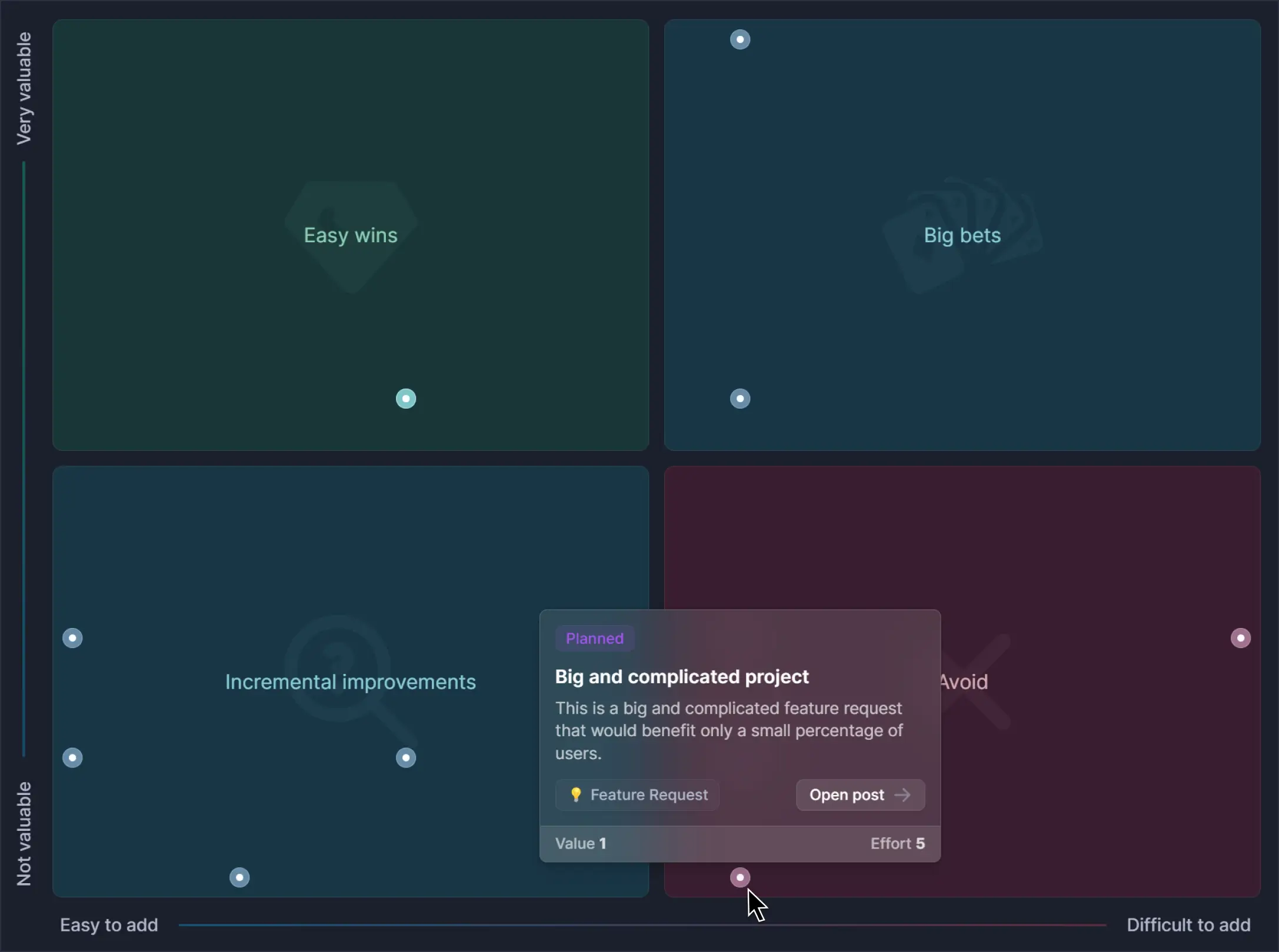
For great roadmap planning, make sure your tool supports different prioritization frameworks, such as RICE, MoSCoW, and Weighted Scoring. This makes it easy to prioritize ideas and decide which features have the highest impact on your product strategy, mission, and vision.
5. Dependency management
Roadmap items don't exist in isolation, and in most cases, every action is tied to something else in your development efforts. Dependencies let you determine which product ideas are related to each other, so you can easily spot roadblocks and communicate priorities in your team.
6. Collaborative features
Product teams should be able to create roadmaps built for more users, either your internal teams or customers. Within roadmaps, users should be able to leave comments, talk to each other, and vote on roadmap items.
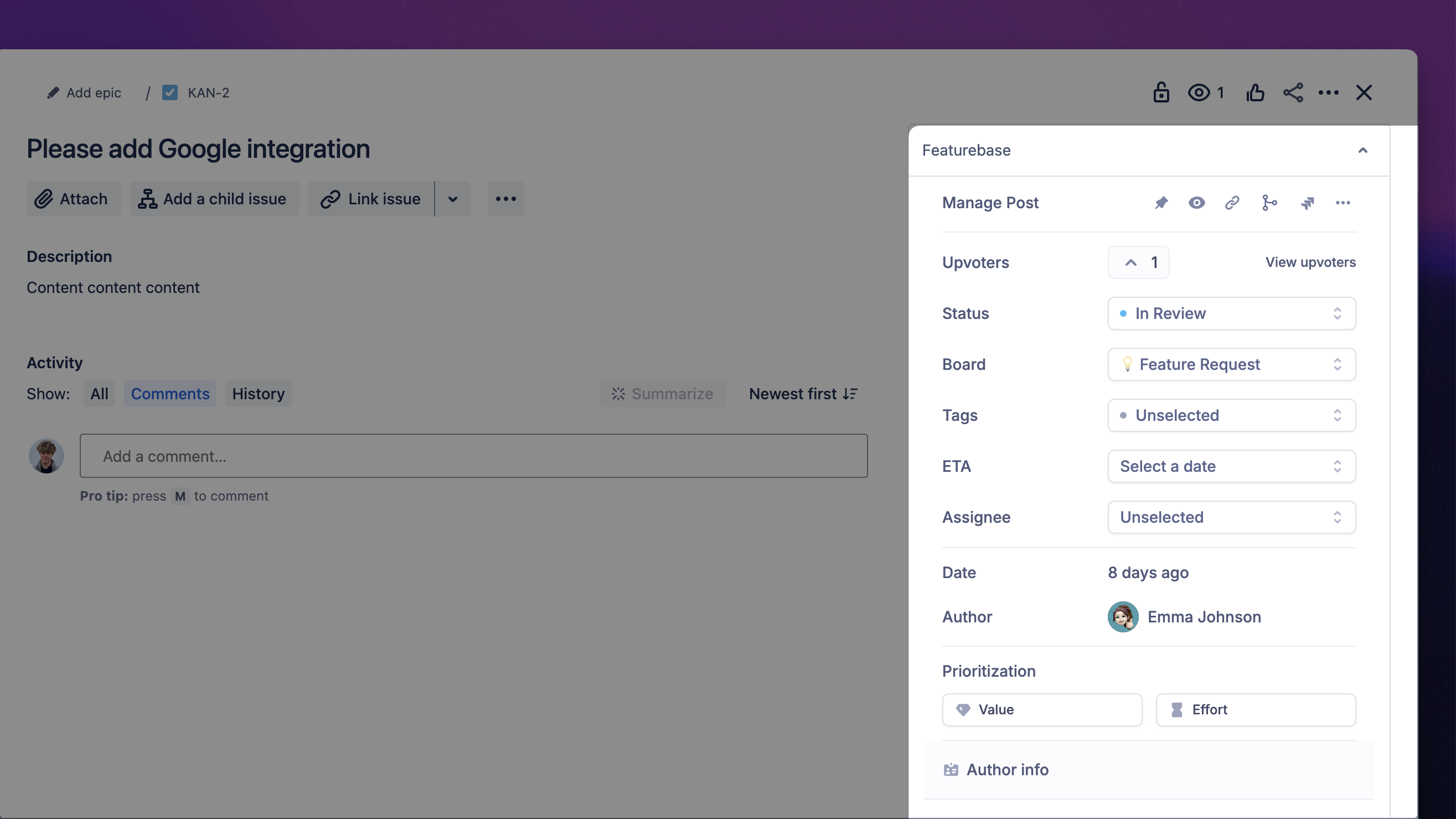
7. Integrations with communication and project management software
Your next roadmap tool should integrate with your favorite feedback platform, project management tool such as Jira, communication app, product portfolio management app and other tools in your tech stack. For example, you could get a Slack notification every time someone leaves a comment on an item in your roadmap.
8. Custom branding
If you're building internal roadmaps, design and branding probably aren't very high on your priority list. However, if you want to add that roadmap to your website, you'll need an extensive range of branding options.
Look for tools that let you change the colors, fonts, logos and the overall look and feel of the roadmap so that it fits into your website. Ideally, the tool should have the option to edit the code.
9. Public and private roadmaps
You can have more than one roadmap. One for your product teams, one for internal stakeholders, one for your customers... All with different levels of access. The ideal product roadmapping tool should allow you to create private and public roadmaps and give access to only a certain number of users.

The best product roadmap tools in 2026
Ready to build strategic roadmaps that inform, delight and make your product management efforts easier? these are some of the top choices in the market today.
1. Featurebase ✨
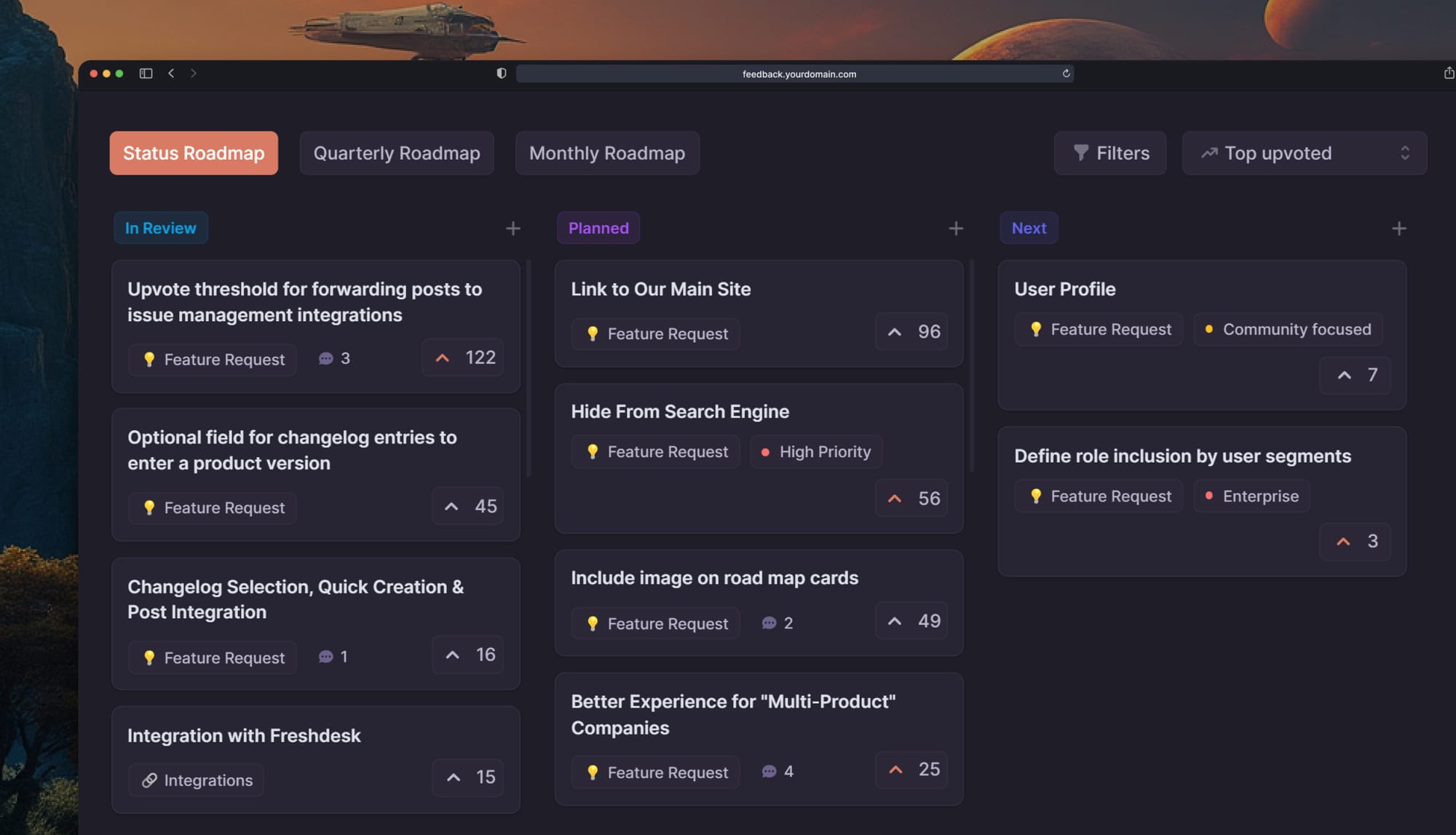
Featurebase is a modern product management platform for roadmapping. It also helps you collect and prioritize feedback, run surveys, release product updates, and build a Help Center—all in one place to build products users love. It’s loved by thousands of product, marketing, and support teams from companies like Lovable, Polymarket, and Raycast. 💫
Top features:
- Roadmaps – create internal or public roadmaps to manage your development process
- Feedback portal – Create a public feedback portal to allow users to submit ideas and vote
- Automated email updates – Notify all upvoted users when their requested ideas are implemented
- Sync customer data – Connect your product ideas with user data to associate feedback with specific customers
- Prioritize by revenue – See the real revenue potential behind new feature ideas and projects
- Changelogs – Notify users of product updates via emails and a dedicated changelog page
- In-app widgets – Embed feedback widgets directly into your app, making it easy for users to share suggestions
- Surveys – Create targeted surveys with NPS, text, multiple-choice, or emoji responses
- Help Center – Provide intuitive self-serve help to your users and reduce support loads
- Integrations – Connect with Jira, Linear, Slack, and Intercom, among many other tools
- Plus, translations into 40+ languages, SSO, AI analysis, custom domains, API, and much more
Best for: Companies of all sizes looking for a complete, user-focused solution to manage product roadmaps and customer feedback.
Pricing: Featurebase has a Free plan that allows you to collect unlimited feedback, create a help center, use roadmaps, and more. The paid plans start at just $29 per user per month and you can try them out with a 10-day free trial. 👇
✨ Start managing your roadmap & collecting feedback with Featurebase for free →
2. Monday Dev
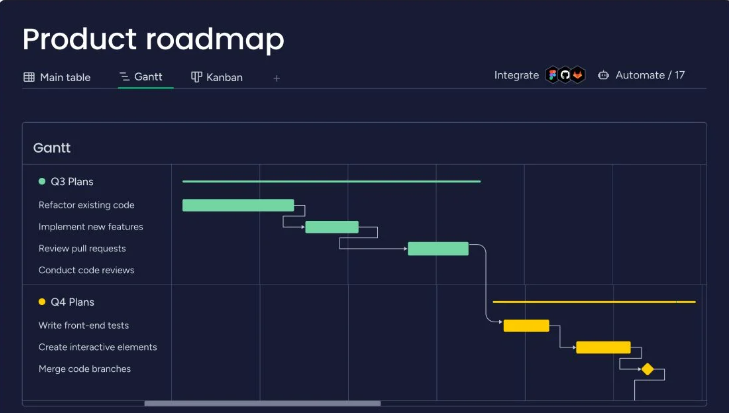
Monday Dev (monday.com) is project management software that many product managers use as roadmap software because it connects roadmap planning with execution. It helps product teams manage new projects, visualize work in a timeline view/Gantt chart, and keep stakeholders aligned as the team ships. If you want a roadmap and task management tool, monday dev is a strong option.
Top features:
- Roadmap planning – Plan releases and initiatives across product roadmapping workflows
- Timeline view / Gantt chart – Visualize roadmaps and track progress across time
- Task management – Assign work and coordinate other team members
- Project planning – Organize project information across teams and workflows
- Integrations – Connect your roadmap software to the rest of your tech stack
Best for: Product teams that want a project management tool with roadmapping features to keep everyone on the same page.
Pricing: Paid plans start at $9/user/month.
3. Aha! Roadmaps

Aha! Roadmaps is a comprehensive product roadmap software built for product strategy and business alignment. It’s ideal when you need to communicate the big picture, map initiatives to goals, and keep internal teams and stakeholders aligned through structured roadmap planning. For organizations with complex planning needs, Aha! is a roadmapping tool that supports strategic roadmaps at scale.
Top features:
- Product strategy – Connect roadmaps to goals and the product vision
- Roadmap planning – Plan initiatives and product features across teams
- Different layouts – Multiple roadmap views to communicate priorities to stakeholders
- Roadmap template – Templates to standardize planning across teams
- Integrations – Connect to delivery and collaboration tools in your tech stack
Best for: Teams that want a strategy-first roadmapping tool to create strategic roadmaps and communicate priorities.
Pricing: Starts at $59/user/month (billed annually) for the Starter plan (Enterprise is custom).
4. Jira Product Discovery (Atlassian)
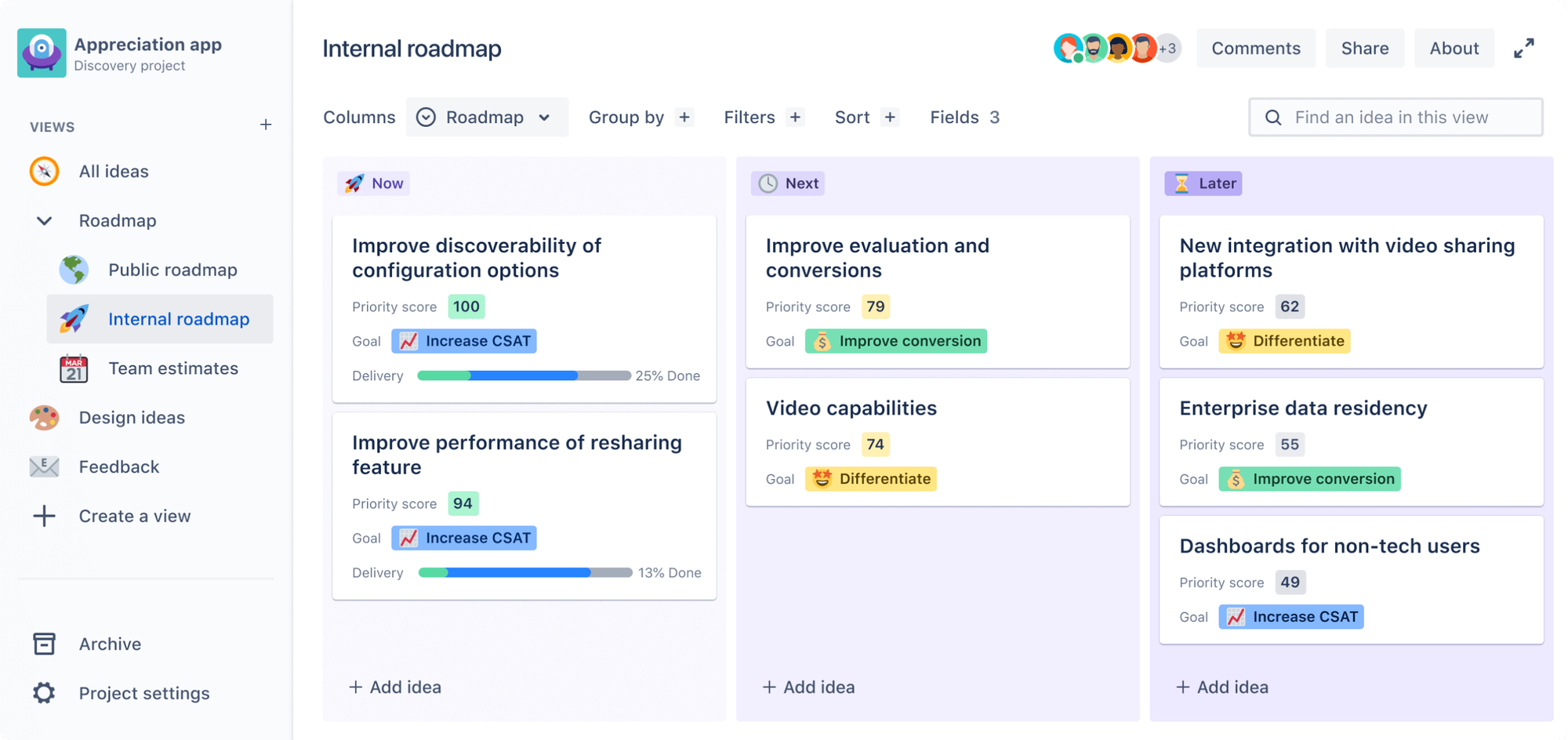
Jira Product Discovery is a widely used project management tool for agile teams, and many teams build roadmap software workflows on top of it because delivery lives there. If your product roadmap needs to stay tightly connected to the product backlog, issues, and releases, Jira Product Discovery makes it easier to track progress and keep the team aligned. It’s especially useful for agile development environments where product roadmapping and delivery need to stay on the same page.
Top features:
- Agile teams – Backlogs, sprints, and delivery workflows for development efforts
- Track progress – Status, releases, and reporting tied directly to execution
- Product backlog – Keep roadmap planning connected to the backlog and priorities
- Project management – Coordinate work across projects and internal teams
- Integrations – Works across a broad tech stack
Best for: Product teams in agile development that want roadmap planning tightly tied to execution and the product backlog.
Pricing: A free plan is available (up to 10 users), and paid plans scale by tier; current Standard/Premium per-user pricing is tracked here.
5. Asana

Asana is a popular choice for cross-functional roadmap planning because it helps teams coordinate initiatives across product, engineering, marketing, and ops. It’s less about deep product discovery and more about ensuring everyone understands what’s happening, when, and who owns what. If you want roadmapping features inside a project management tool, especially for cross-functional work - Asana is a dependable right roadmap tool alternative.
Top features:
- Cross-functional planning – Coordinate initiatives across functions
- Timeline planning – Track work over time (plan-dependent)
- Goals alignment – Connect roadmap work to goals (plan-dependent)
- Collaboration – Comments, assignments, shared visibility
- Integrations – Works with common product and dev stacks
Best for: Cross-functional orgs that want roadmap planning + coordination in one place.
Pricing: Starter is $10.99/user/month (billed annually), and Advanced is $24.99/user/month (billed annually) (Enterprise is custom).
6. Productboard
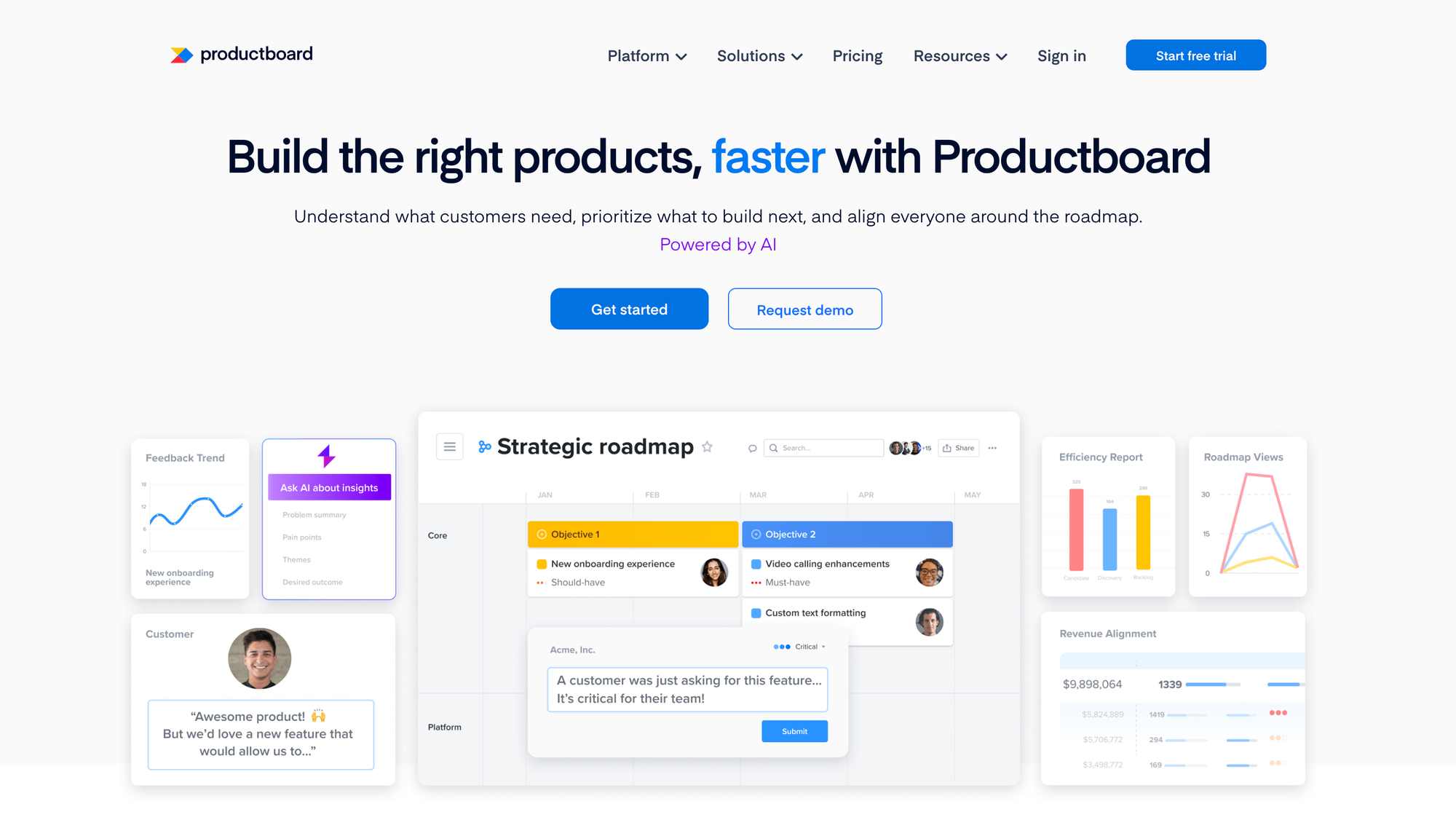
Productboard is a product roadmap tool built to help product teams turn customer feedback into clear roadmap decisions. It helps you centralize product feedback, extract customer insights, and prioritize ideas based on impact, so your product roadmap reflects real demand. If your product managers want a customer-driven product strategy workflow, Productboard is a strong roadmapping tool.
Top features:
- Customer feedback – Centralize feedback and feature requests in one place.
- Customer insights – Link insights to product ideas and product features.
- Prioritize ideas – Scoring frameworks to decide what goes on the roadmap.
- Product roadmap – Roadmaps tailored for different stakeholders.
- Integrations – Connect to Jira and other tools in your tech stack.
Best for: Product teams that want to use customer insights and customer feedback to prioritize ideas and build better roadmaps.
Pricing: Productboard says pricing is tailored to company size and stage. (Some reputable breakdowns peg paid plans starting around $19 per maker/month.)
7. Trello
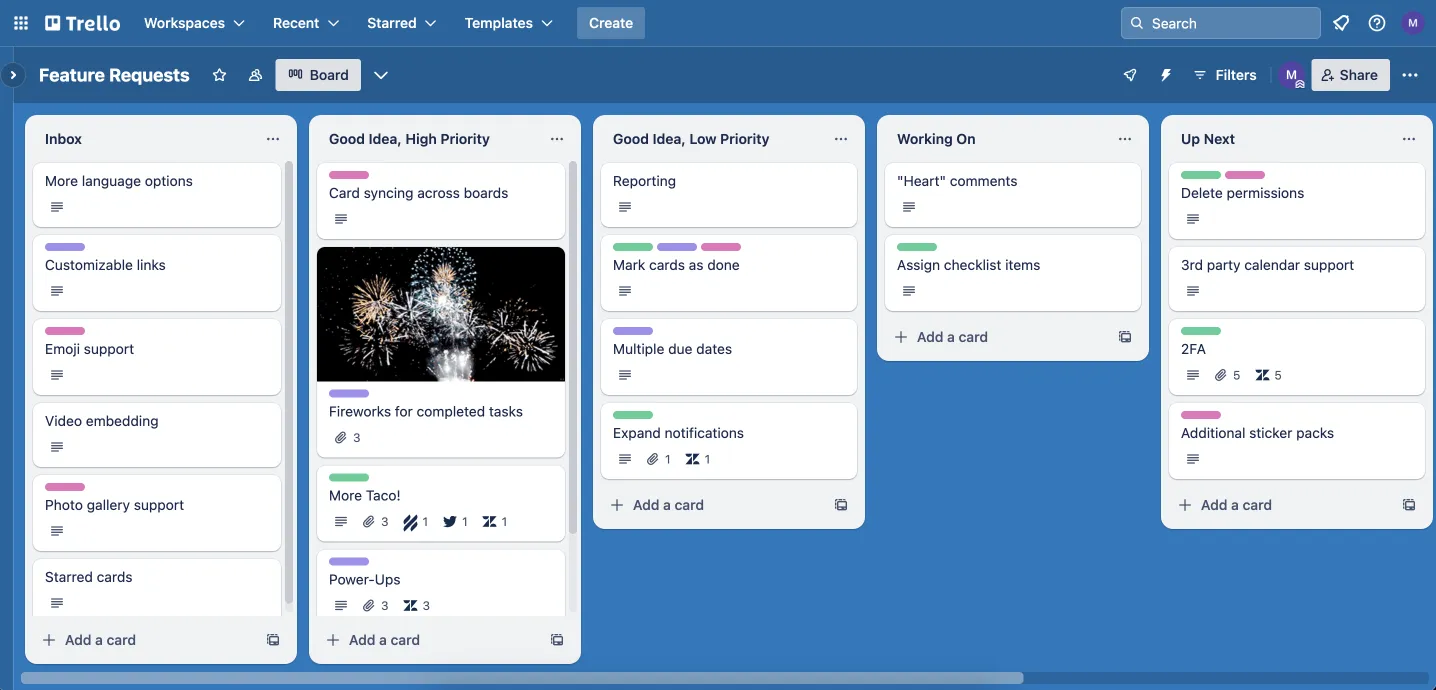
Trello is a lightweight project management tool that product teams often use as a simple roadmap tool when they don’t need dedicated product roadmap software. It’s great for task management and visual planning, and it works well when your roadmap is essentially a prioritized workflow you can share with internal teams. If you want something easy to adopt that helps track progress without being time-consuming, Trello can work.
Top features:
- Task management – Simple boards, lists, and cards for planning work
- Track progress – Move work through stages to show progress clearly
- Timeline view – Add a time-based planning layer (plan-dependent)
- Integrations – Extend with Power-Ups across your tech stack
- Project management – Lightweight project planning for smaller teams
Best for: Small product teams that want a simple project management tool for roadmap planning and tracking progress.
Pricing: Trello Standard is $5/user/month.
8. ClickUp
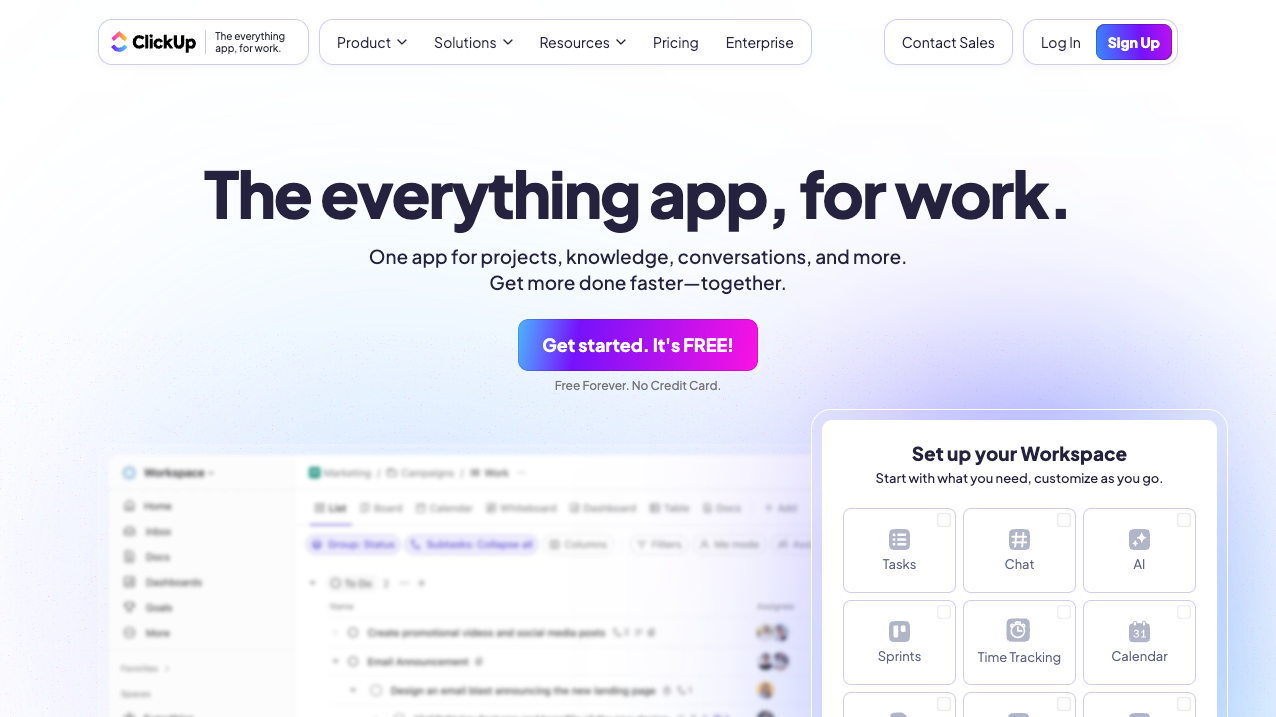
ClickUp is an all-in-one project management software that teams often use as roadmap software because it’s highly customizable. It supports different layouts (lists, boards, timelines), which makes it easy to build a product roadmap, manage task management, and keep stakeholders aligned. If your team wants one tool for project planning, docs, and roadmapping features, ClickUp is worth a look.
Top features:
- Roadmapping features – Flexible views to build and share roadmaps
- Task management – Assign work, owners, and timelines
- Timeline view/Gantt chart – Visual planning for roadmap planning
- Project planning – Centralize project information and workflows
- Integrations – Connect with other tools in your tech stack
Best for: Product teams that want flexible roadmap software that also handles project management and task management.
Pricing: Free plan available. Paid plans commonly start at $7/user/month (billed annually) for Unlimited and $12/user/month (billed annually) for Business (Enterprise is custom).
9. Smartsheet

Smartsheet is a structured project management tool that’s great when your roadmap needs reporting, structure, and operational visibility. It’s often used to manage project planning across multiple initiatives, track progress at scale, and create stakeholder-ready views and dashboards. If your org prefers spreadsheet-like workflows but needs stronger roadmap planning and governance, Smartsheet is a good fit.
Top features:
- Project planning – Spreadsheet-style planning for new projects and initiatives
- Track progress – Dashboards and rollups for stakeholders
- Roadmap template – Templates to standardize product roadmaps
- Project management – Governance-friendly workflows for larger teams
- Integrations – Works across your tech stack
Best for: Teams that want structured project management software for roadmap planning and tracking progress across stakeholders.
Pricing: Pro starts at $9/user/month and Business starts at $19/user/month (Enterprise is custom).
10. Wrike

Wrike is built for organizations that need more structure and governance in their project management. It’s a solid option when your product roadmapping has many stakeholders and you need consistent workflows to track progress across teams and initiatives. If you need roadmap software that supports project management at scale, Wrike is a reliable choice.
Top features:
- Project management – Structured workflows for cross-team coordination
- Track progress – Reporting and visibility for stakeholders
- Project planning – Plan new projects and manage dependencies
- Task management – Clear ownership and accountability
- Integrations – Fits into a wide tech stack
Best for: Larger product teams that need project management software for roadmap planning, governance, and stakeholder visibility.
Pricing: Wrike's pricing is per-user/month: $10/user/month (Team) and $25/user/month (Business), with higher tiers available on custom terms.
11. Notion
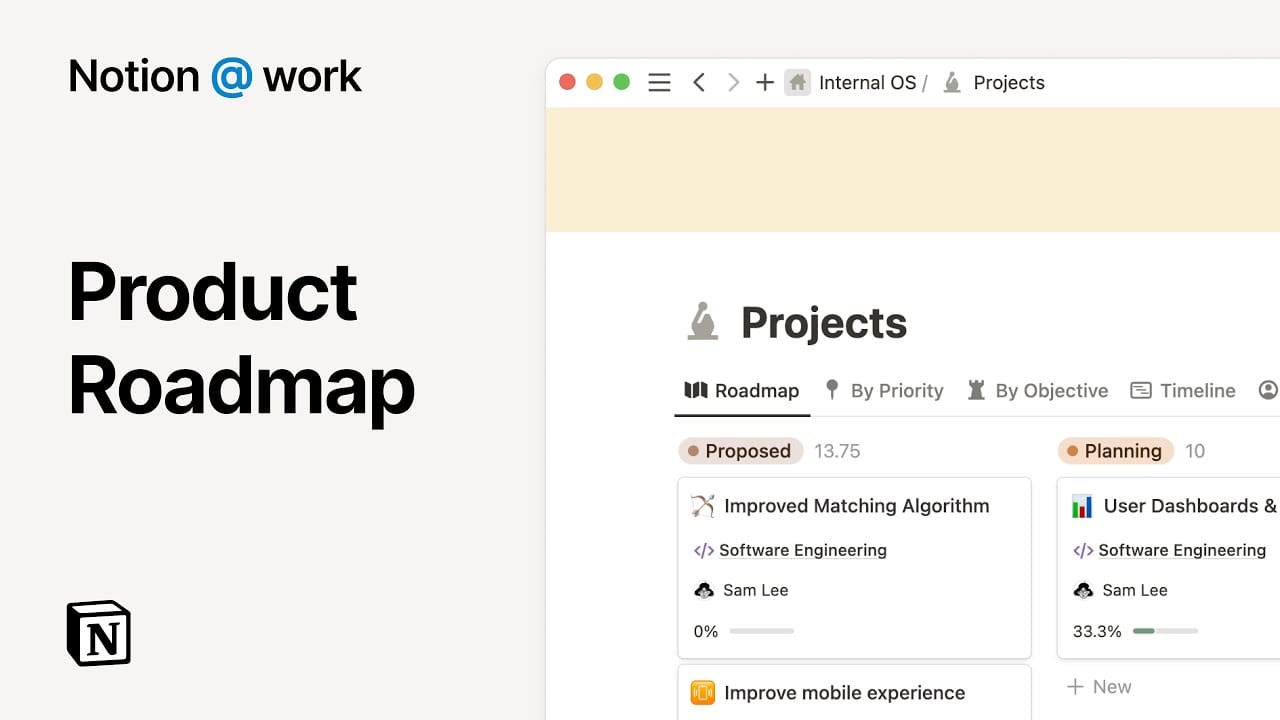
Notion is a popular option for teams that want a lightweight product roadmap tool inside their docs and planning hub. It’s not traditional product roadmap software and more like a flexible system where you can create a product roadmap using databases, a roadmap template, and different layouts. If your product team wants to keep roadmap planning next to specs and product strategy, Notion is great.
Top features:
- Roadmap template – Templates to get your product roadmap started fast
- Different layouts – Views like board and timeline view from the same database
- Product strategy – Keep product vision, notes, and roadmaps together
- Product ideas – Track product ideas and feature requests in one workspace
- Sharing roadmaps – Share roadmaps with internal teams and stakeholders
Best for: Startups and small product teams that want a lightweight roadmapping tool connected to docs and product strategy.
Pricing: Notion offers Free/Plus/Business/Enterprise tiers. A reputable breakdown lists Plus at $10/user/month (billed annually) and Business at $20/user/month (billed annually) (Enterprise is custom).
12. Miro

Miro is a collaborative roadmapping tool that shines when you need visual planning and alignment. It’s great for roadmap planning sessions, mapping the big picture, and using sticky notes and templates to organize product ideas before they turn into a formal product roadmap. If your process involves workshops to communicate priorities and build buy-in with stakeholders, Miro is a strong roadmap tool.
Top features:
- Roadmap template – Visual templates for product roadmap planning
- Sticky notes – Capture ideas quickly and organize product ideas
- Different layouts – Flexible canvases to communicate the big picture
- Collaboration – Align internal teams and stakeholders in real time
- Integrations – Connect with other tools in your tech stack
Best for: Product teams that use workshops to capture ideas, align stakeholders, and communicate priorities through visual roadmaps.
Pricing: Miro has Free/Starter/Business/Enterprise tiers. A reputable pricing guide lists Starter at $8/user/month (billed annually) and Business at $20/user/month (billed annually) (Enterprise is custom).
Conclusion
Roadmaps are the most effective way to show customers what awaits them in your product. More importantly, product roadmaps have become the norm, and if you don't have one, you might actually put off some potential customers. If they don't know what the future holds, they may be hesitant to spent money with you now.
Featurebase is one of the best modern product management platforms. Besides roadmaps, it helps you collect and prioritize product feedback, run surveys, release product updates, and build a Help Center—all in one place to build products users love.
Featurebase comes with a Free Plan that allows unlimited posts. You can automatically migrate over from other tools in seconds, so there's no downside to trying it. 👇
✨ Start managing your roadmap & collecting feedback with Featurebase for free →