Tidio vs Zendesk: Customer Service Software Comparison (2026)
Torn between Tidio’s simplicity and Zendesk’s power? One is easy to set up but limited as you grow, while the other can handle anything but at a steep cost. In this guide, we break down which trade-offs actually matter for your team.


On this page
Looking for a modern & affordable alternative to Tidio and Zendesk? Check out Featurebase
Choosing between Tidio and Zendesk is challenging because any decision you make will be a compromise.
Tidio is cheaper, easier to set up, and comes with great customer support. Zendesk feels enterprise and can be customized to just about anything, but this comes with a high price tag and complexity.
So, which ticketing system is the better choice for everyone, from your support agents to your customers, all the way to your finance team that foots the bill?
Let's compare Tidio and Zendesk, side by side. 👇
TL;DR Tidio vs Zendesk: what you should know
- Tidio is easier to set up, with a clean interface and fast onboarding that is great for small businesses and online stores.
- Zendesk is more powerful, offering advanced automation, detailed analytics, and true omnichannel support, including voice.
- Tidio has capable chatbots and e-commerce integrations, which makes it popular with Shopify and WooCommerce users.
- Zendesk has over 1,000 integrations and great customization options, but this comes with a higher cost and complexity.
- Tidio’s support is straightforward, while Zendesk offers extensive training and community resources for larger teams. For smaller teams, support is not that great.
- Pricing is vastly different: Tidio has a free plan and low entry costs but charges by conversation volume, while Zendesk charges per agent and becomes expensive at scale.
In short, Zendesk can quickly become very pricey, while Tidio can feel outdated and miss powerful features like a help center.
If you're after a more modern alternative, check out Featurebase (👋 that's us). We're a powerful alternative to Zendesk and Tidio - but we’ll stay unbiased in this comparison, promise.
Tidio and Zendesk: The basics
Tidio
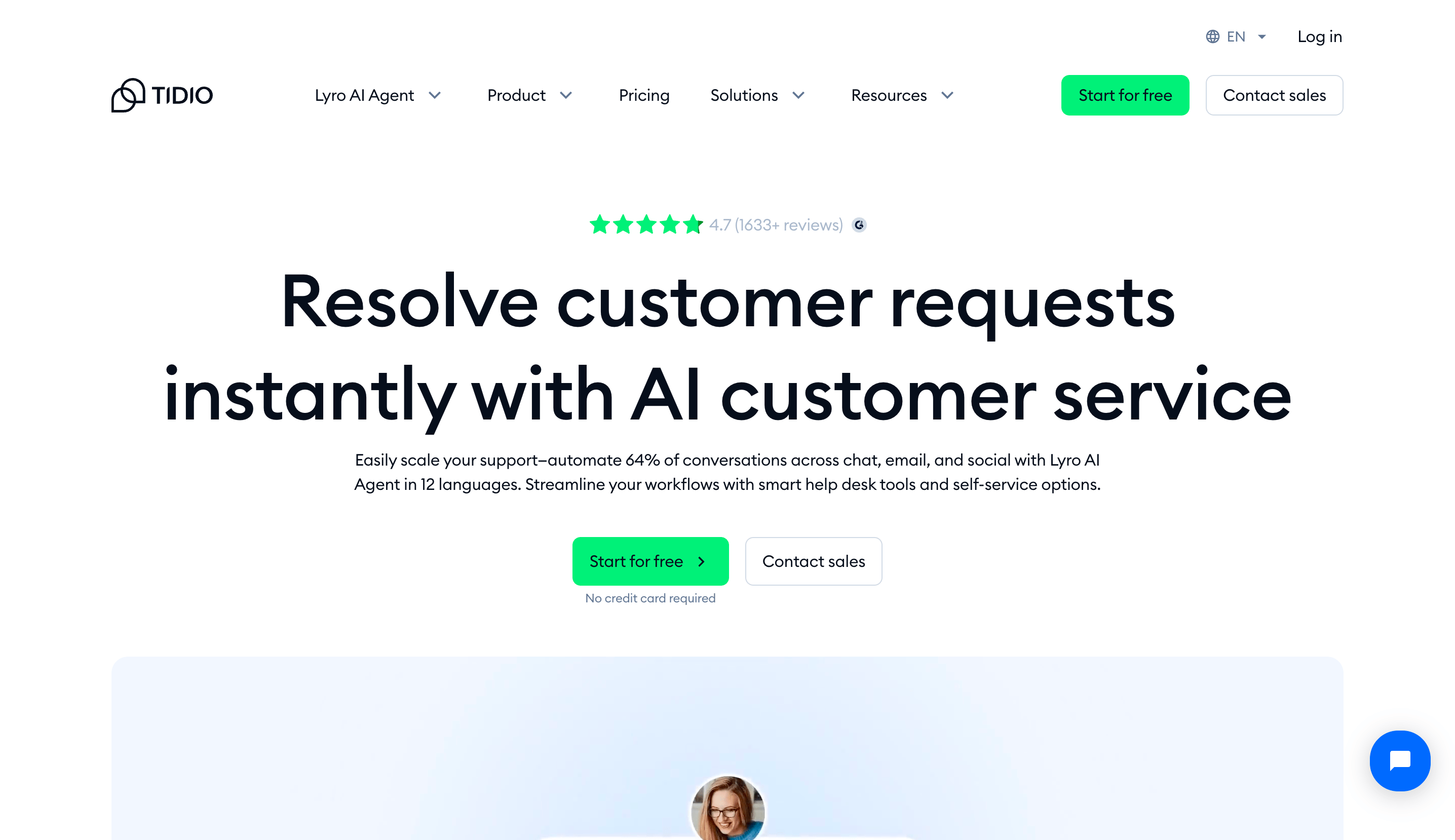
Tidio is a customer support platform that combines live chat, chatbots, and email management into one inbox. Founded in 2013 in Poland, it made a strong presence among small businesses and e-commerce stores that want to engage visitors in real time without time-consuming setup.
Tidio is especially popular with Shopify, WooCommerce, and Wix users because of its native integrations and chatbot templates tailored for online sales.
While it doesn’t have the biggest enterprise clients, it’s used by tens of thousands of small to mid-sized businesses worldwide who need quick, conversational support tools.
Zendesk
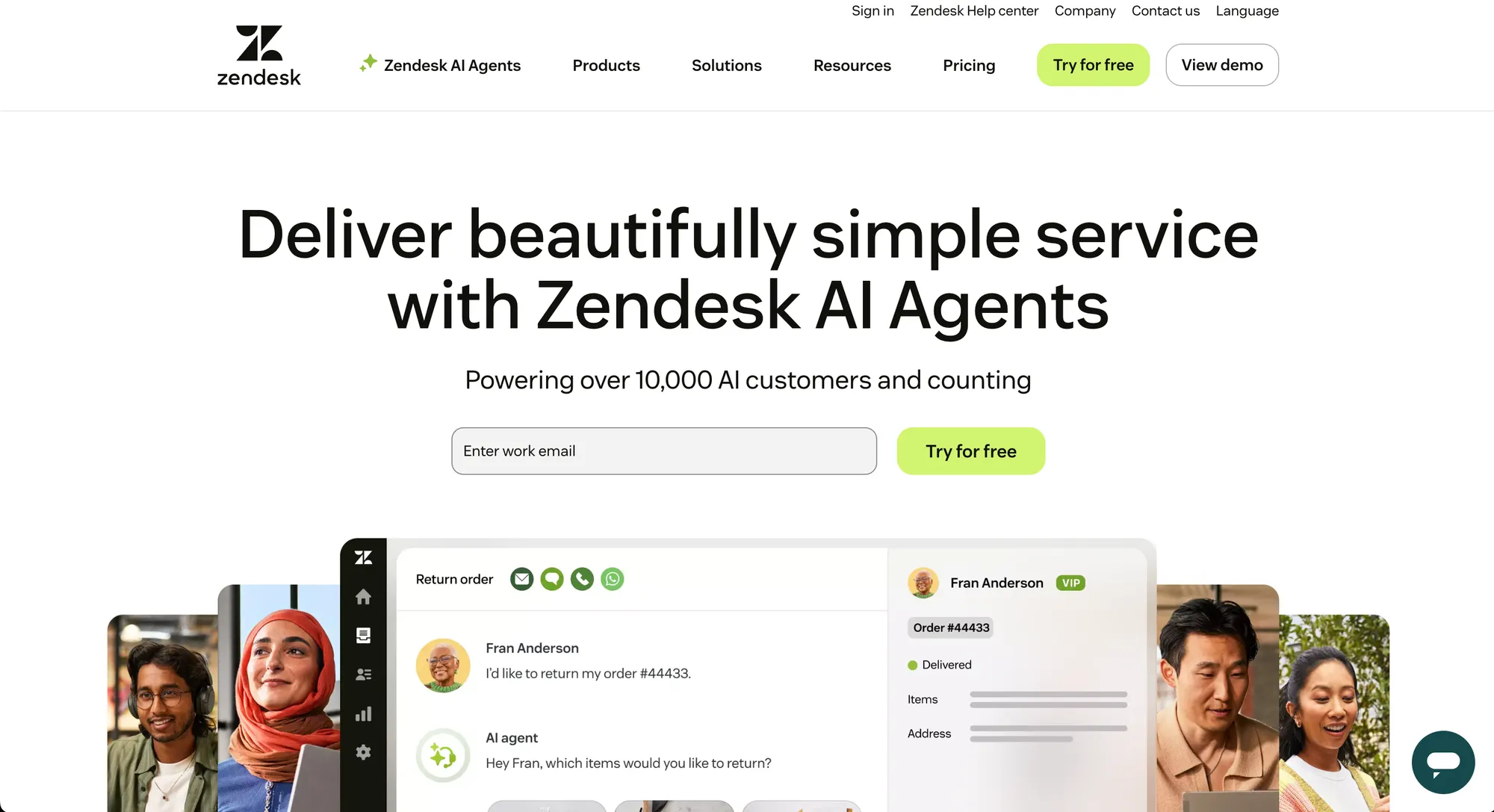
Zendesk, on the other hand, is one of the most established names in the help desk industry. Launched in 2007 in Copenhagen, it has since become the enterprise standard for customer service. Its customer list includes Shopify, Uber, Slack, Airbnb, and Tesco, among others.
Zendesk is built for organizations that want to handle high ticket volumes, multiple support channels, and complex workflows, making it a go-to choice for larger companies with global operations.
Core customer support software features
While pricing plays a key role in choosing the right support tool, it's the feature set that really makes for effective and responsive customer support.
Tidio
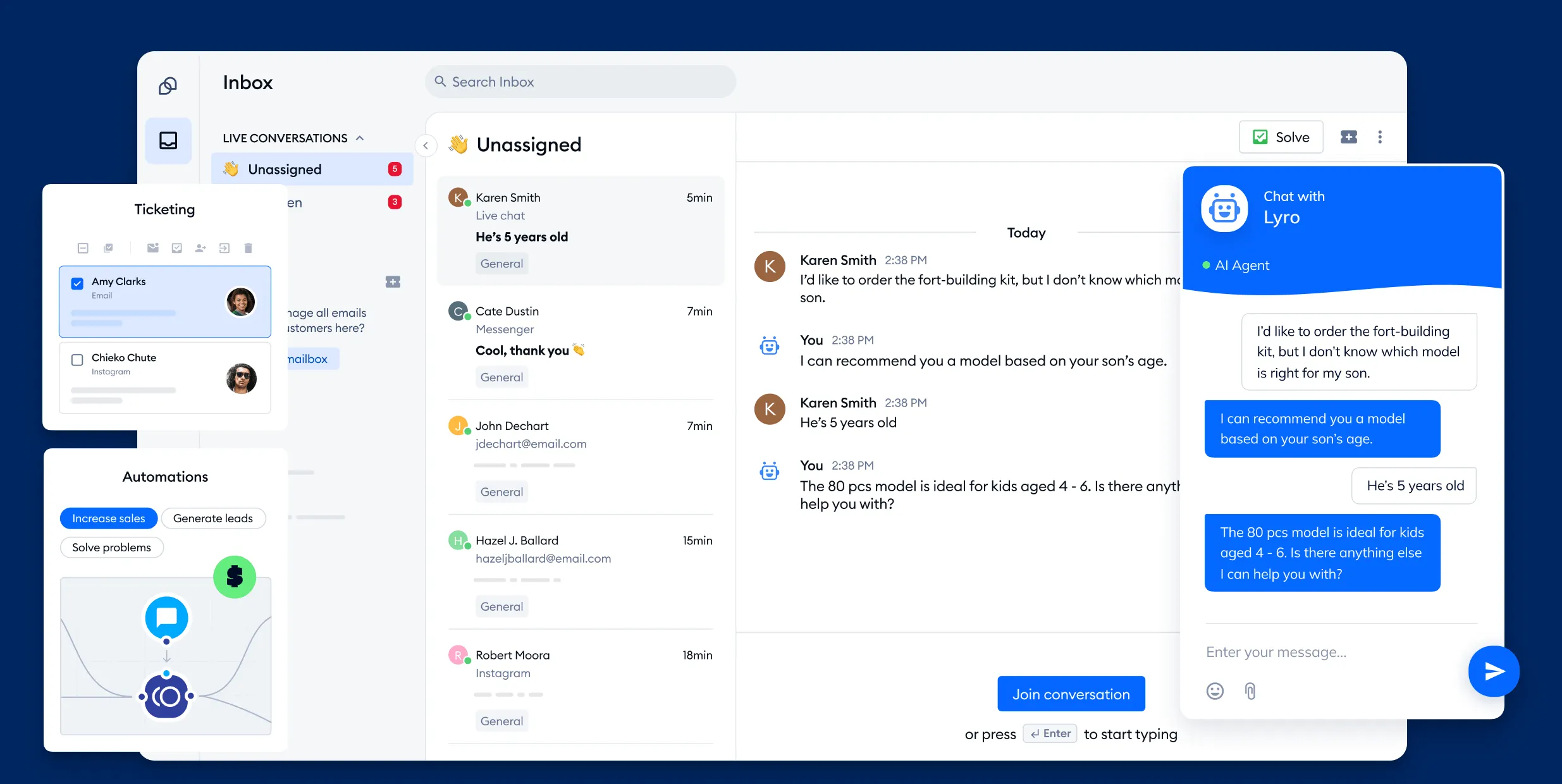
Tidio is best known as a live chat and chatbot platform, with customer support built around real-time engagement. The platform combines chat, email, and social messages into a single inbox so agents can see every interaction in one place.
Chatbots are the standout feature. They can answer common questions, qualify leads, and handle routine requests automatically, saving agents from repetitive work. Tidio also supports AI reply suggestions and automated flows to make responses faster and more consistent.
For customers who prefer to solve problems on their own, Tidio includes a lightweight knowledge base where articles can be shared directly in chat. This helps reduce support tickets and gives users quick answers without waiting for an agent.
Analytics in Tidio are simple but practical, covering conversation counts, response times, and agent activity. The system also offers integrations with e-commerce platforms like Shopify and WooCommerce, making it popular among online stores.
Zendesk
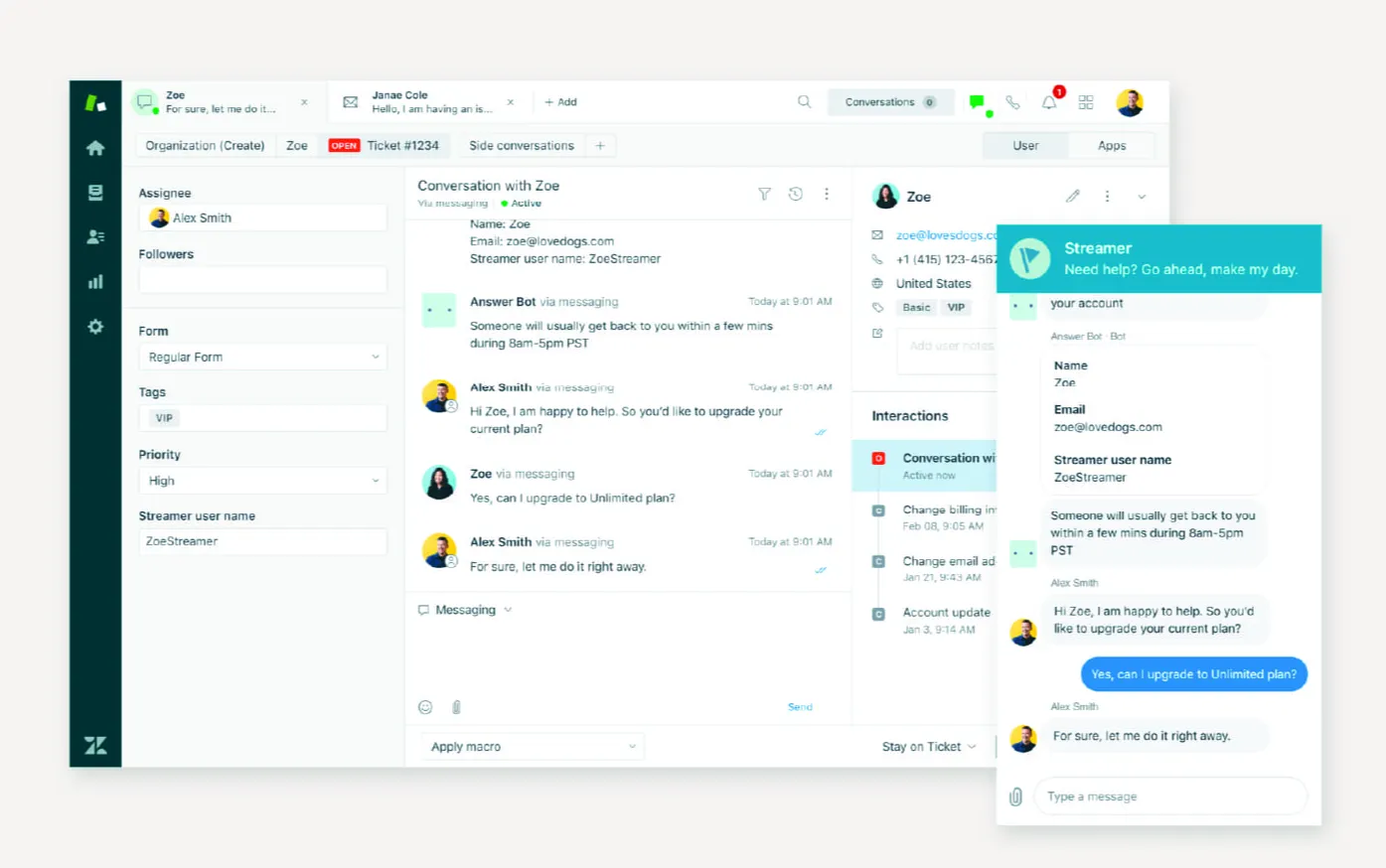
Zendesk offers a full help desk and omnichannel support system. Agents manage requests and customer data from email, chat, phone, social media, and messaging apps, all inside a unified workspace. Unlike Tidio, Zendesk includes voice support as a core feature, which is essential for larger support teams.
Zendesk's automation and AI features are more advanced, with routing based on ticket priority, agent workload, and customer history. Zendesk’s AI can also summarize tickets, suggest responses, and predict intent, helping teams handle volume at scale.
Zendesk’s knowledge base and help center tools are more powerful than Tidio’s. These apps support multilingual content, community forums, and article suggestions directly within tickets. This makes it easier to deflect common questions while still offering human support when needed.
Zendesk also has powerful reporting and analytics. It offers customizable dashboards, SLA tracking, agent performance metrics, and customer satisfaction scores. For enterprises, these insights can be critical for improving service quality.
Finally, Zendesk’s marketplace of integrations is extensive, with more than a thousand apps covering CRM, analytics, project management, and collaboration tools. This makes it much easier to connect Zendesk with the rest of a company’s tech stack.
Integrations and customizations
Tidio
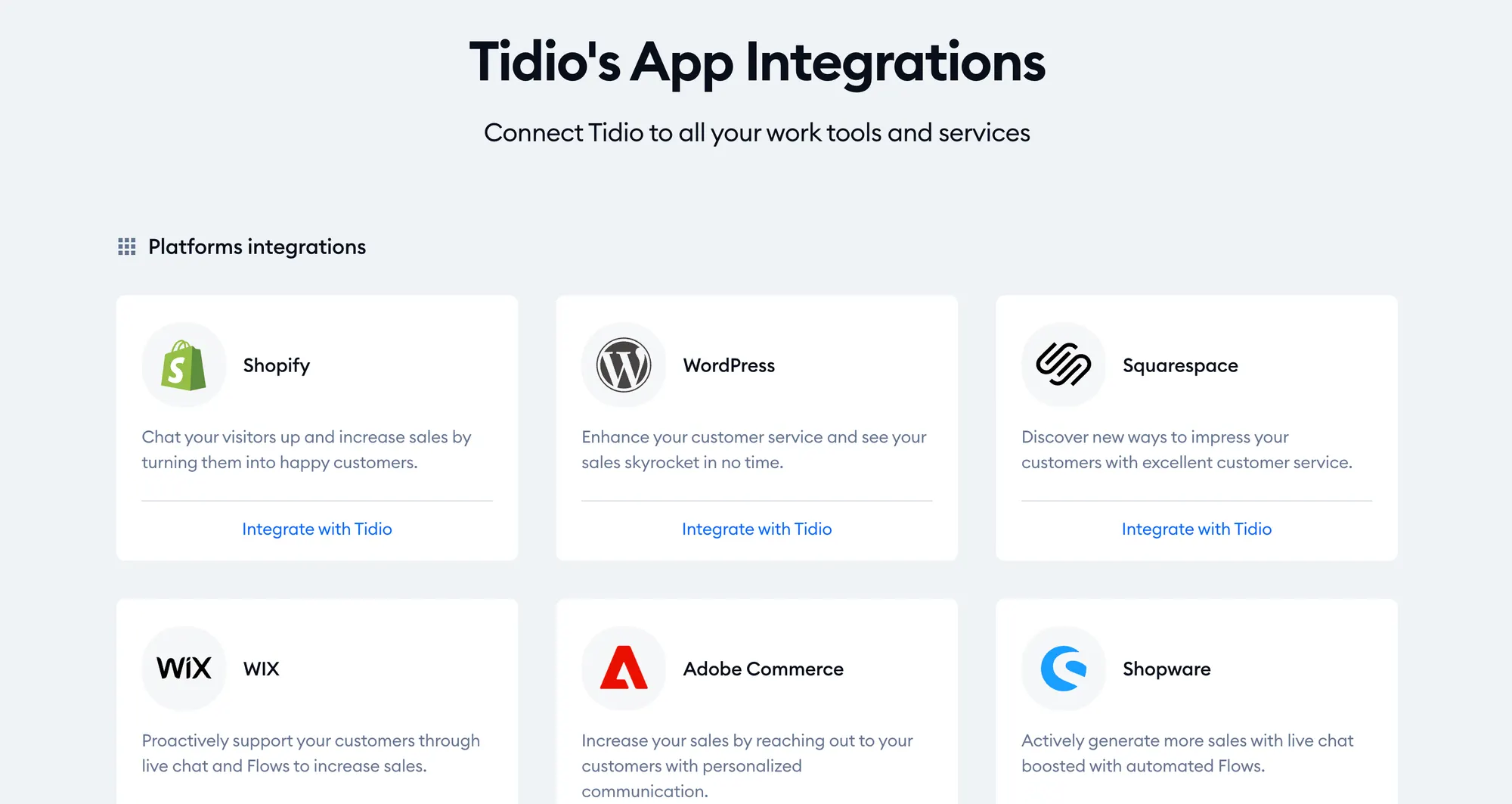
Tidio focuses on plug-and-play integrations with e-commerce and communication platforms. It connects directly with Shopify, WooCommerce, WordPress, and Wix, which is why it’s so popular among online stores. On the communication side, it links with Facebook Messenger, Instagram, and email, keeping conversations in one place.
Customization is straightforward but limited compared to Zendesk. You can brand the chat widget with your colors and logo, set up automated chat flows, and use pre-built templates for FAQs or lead capture. For deeper custom work, Tidio offers API access, but most small teams stick with the ready-made options.
Zendesk
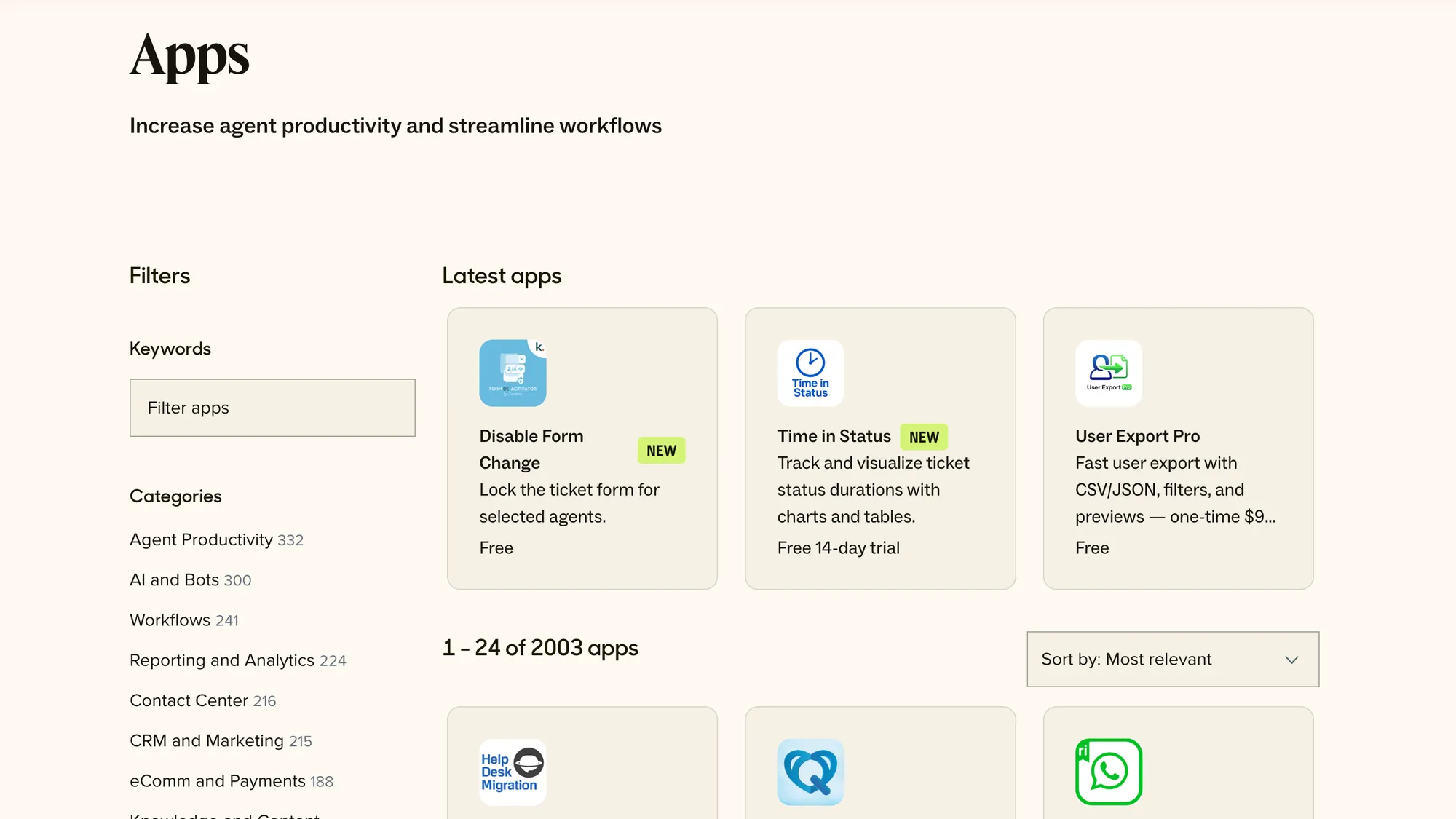
Zendesk is built for heavy customization and a much wider integration network. Its marketplace has over 1,000 apps, covering CRMs, analytics platforms, project management tools, and e-commerce. This makes it easier for larger companies to slot Zendesk into an existing tech stack.
On the customization side, Zendesk allows granular roles and permissions, conditional fields, and workflow automation that can match complex business rules. Developers can also build custom apps with the Zendesk API and webhooks, extending the platform far beyond its default settings.
In short, Tidio gives you quick, easy integrations with e-commerce and communication platforms plus some light branding. Zendesk offers enterprise-level flexibility with its vast marketplace and deeper customization options, but it also takes more effort to configure.
Ease of use and available support
Tidio
Tidio is known for its straightforward and easy setup, which is why it's a common choice for businesses that are getting their first customer service software.
Most teams can have live chat and chatbots running in under an hour without technical help. The dashboard is clean and minimal, so agents can quickly see active conversations, pending requests, and past interactions. Smaller teams, especially e-commerce businesses, often point out that training new staff takes very little time.
That simplicity comes with some trade-offs, though. Tidio has fewer options for advanced workflow design or multi-team setups. As your support operation grows, you may notice that the interface starts to feel limited compared to more complex tools.
On the support side, Tidio offers a knowledge base with clear guides and tutorials that cover setup, automation flows, and integrations with platforms like Shopify. Customers on higher-tier plans also get access to email and live chat support from Tidio’s team. The resources are practical, but the ecosystem is smaller, so you won’t find the same level of peer discussion or third-party training.
Zendesk
On the other hand, Zendesk provides far more functionality, which makes the learning curve steeper. If you want something simple to manage support requests, Zendesk is not a safe bet, especially if you have never used a similar tool before.
Admins need time to configure roles, workflows, and custom fields to get the system running smoothly. Once everything is in place, the agent workspace is efficient, giving staff one place to handle requests across channels. Larger teams often invest in structured onboarding to make the most of the platform.
Where Zendesk stands out is in the support resources it provides. There’s an extensive community forum with thousands of active users, detailed product documentation, and live webinars.
For companies that want formal training, Zendesk University offers courses and certification programs that help agents and admins build confidence. Higher-tier customers can also access premium support with faster response times and dedicated account managers.
In short, Tidio wins on ease of use, giving smaller teams a tool they can master quickly without a long onboarding process. On the other hand, Zendesk requires more effort to learn, but it backs that up with one of the most extensive support ecosystems in the industry, making it a stronger option for enterprises that want structured guidance and long-term scalability.
Pricing plans
Tidio
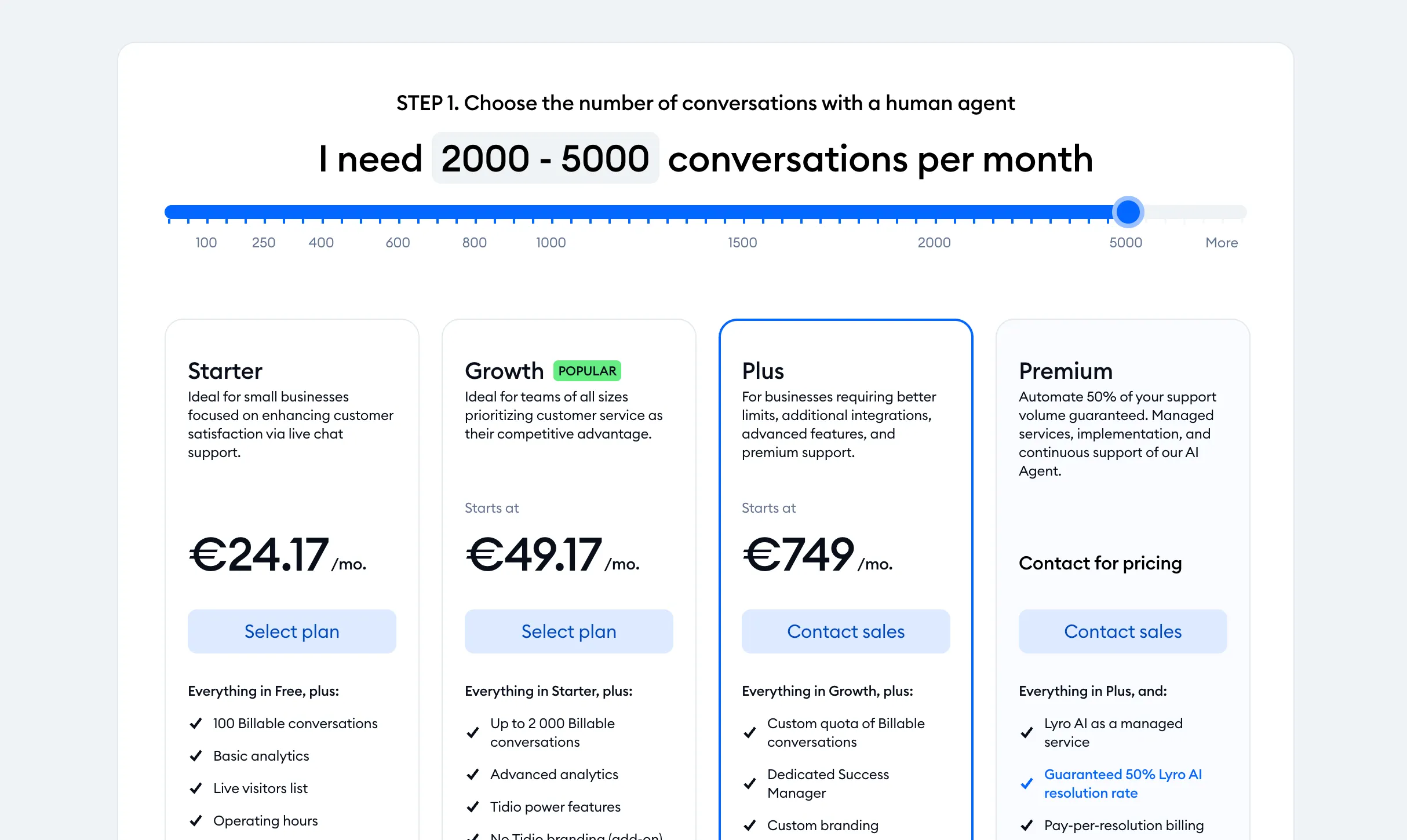
Tidio's pricing comes with a free plan that covers live chat and basic chatbot functionality. Paid tiers are based on the number of customer interactions you have and the added features.
The Starter plan costs $24 per month and includes 100 billable conversations.
The Growth plan is around $49 per month, with higher limits and more advanced analytics. For larger companies, Tidio offers Plus and Premium tiers with custom pricing that include higher usage limits, branding options, and priority support.
Zendesk
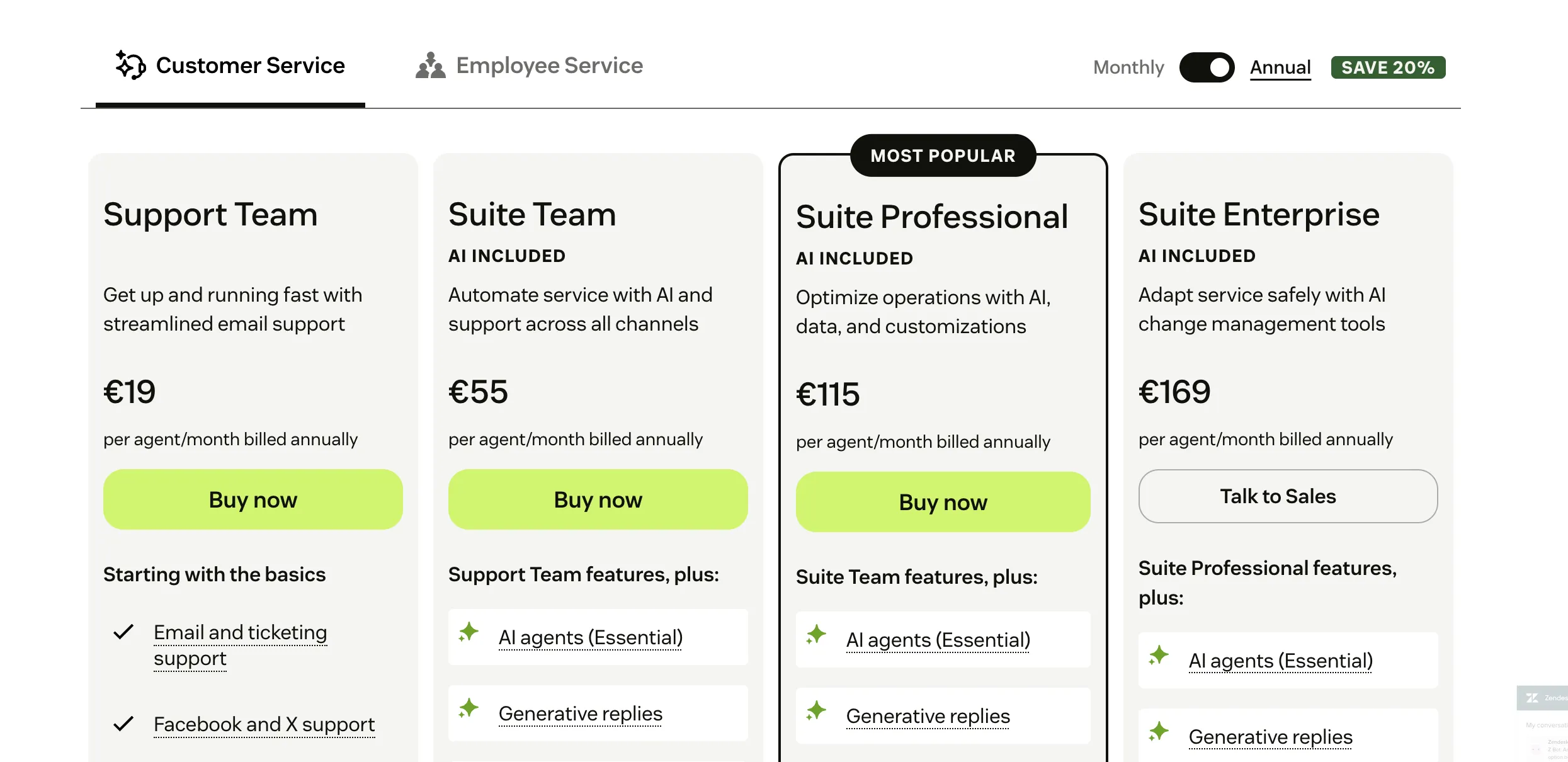
Zendesk's pricing works differently, charging per agent per month.
Its Support plan starts at $19 per agent on annual billing, with higher Support tiers at $55 per agent and up.
The Suite plans, which bundle multiple channels, begin at $55 per agent per month and can go as high as $169 per agent at the top end. Some enterprise options are custom-priced depending on scale and requirements.
In short, Tidio is attractive for smaller teams that want a low entry cost or even free access, but expenses can rise quickly if your volume of conversations grows. Zendesk may seem affordable at first for a very small team, but costs multiply quickly as you add agents.
✨ Looking for more modern and affordable alternative? Check out Featurebase →
User reviews
Tidio
At the moment of writing, Tidio has a 4.7/5 rating on G2 with over 1,800 reviews, the overwhelming majority praising the product.
However, the criticisms paint the real picture of what Tidio is all about as a tool. For example, one user highlighted the following:
- "I really like using Tidio, but it would be even better with more integrations (like CRMs, marketing tools, and payment platforms) and greater customizability in chatbot flows and design." (G2 review)
Another user notes that while the customer experience with Tidio can be good, the agents handling customer queries can run into issues across platforms:
- "I dislike the unreliability of notifications, as they don't consistently come through on my phone, watch, and computer. It's frustrating not knowing if it's an issue on my end or with the service itself. Additionally, I find that the AI features Tidio has released haven't been as useful for us. With the variety of items we sell, the AI suggestions are often inaccurate. This means we can't rely on these features as much as we'd like." (G2 review)
Along those lines, you'll see comments about Tidio's AI tool which seems to be subpar compared to major competitors like Zendesk and Intercom. Someone else had the same feeling:
- "What holds me back a bit is the pricing. Compared to some alternatives, it feels like the cost is on the higher side, especially when you need more advanced features. Also, while the AI options are promising, they are currently still quite basic, and sometimes the bots struggle with more complex or nuanced queries. I'd love to see faster improvements in that area to make the AI assistance feel more natural and reliable." (G2 review)
Speaking of which, we have a detailed comparison of Tidio vs Intercom too.
Zendesk
On the other hand, Zendesk has a G2 rating of 4.3/5 with over 6,500 reviews at the time of writing. Unlike Tidio, there is a colorful mix of 3s and 4s bundled in with high ratings. It's undoubtedly a great multi-channel support tool, but it's not perfect.
One of the most common complaints is the complexity of the tool and the amount of time it takes for the initial setup:
- "Zendesk works really well overall, but getting everything set up the way it is wanted can take some time. Customizing workflows and SLA's isn't always straightforward, and reporting tools could be a bit easier to use. That said, once it is all in place it runs smoothly and makes life a lot easier." (G2 review)
Cost is a major issue for most reviewers, small businesses in particular:
- "The cost can be challenging for small businesses, especially to access advanced features. Additionally, it takes some time to master the interface and set everything up optimally. The support in Italian is generally responsive, but it would be helpful to have more native speakers available in real-time." (G2 review)
Perhaps most worryingly, Zendesk's own customer support is not very good. Customer requests and complaints can take quite a long time to resolve, and phone support is an afterthought since email is their preferred channel:
- "There are a few things which I dislike and the first one is the slow or unhelpful customer support. I have had 2-3 bad experiences with customer support while using Zendesk.Apart from this ,I think that Zendesk relies too much on emails for communication which makes its services a little neglected." (G2 review)
Final verdict
Choosing between Tidio and Zendesk depends less on features alone and more on the type of team you’re running.
Tidio is built with small businesses and online stores in mind. It’s quick to set up, easy to use, and comes with chatbot tools that help teams manage conversations without needing dozens of agents. The trade-off is that it doesn’t have the same depth of reporting, advanced workflows, or enterprise integrations that bigger companies often expect.
Zendesk is built for organizations that want a platform they can grow into for years. It supports voice, social, chat, and email at scale, backed by advanced analytics and a huge ecosystem of seamless integrations. While it takes longer to configure and comes at a higher price, it’s trusted by some of the world’s biggest brands precisely because it can handle heavy ticket volumes and complex operations.
Get Tidio if…
- You run a small to mid-sized business or an e-commerce store
- You want a fast setup and a user-friendly interface
- You need chatbots to cover repetitive questions without hiring more staff
- You prefer predictable, lower entry costs over enterprise pricing
Get Zendesk if…
- You manage a larger team with multiple agents and higher ticket volumes
- You need advanced automation, SLAs, and complex workflow management
- You want full omnichannel support, including voice and social media
- You value access to extensive integrations, analytics, and training resources
But as we mentioned several times by now, both tools force you to make compromises, one way or another. However, there is a way to have your cake and eat it too. 👇
Try Featurebase, the better alternative to Zendesk and Tidio! ✨
If Tidio is too limited but Zendesk is too expensive, consider Featurebase, a modern support platform that blends the best of both worlds.
It’s loved by thousands of fast-growing support teams from companies like Lovabale, n8n, and Instantly.
Pricing starts from just $29 per user per month + $0.29 per AI resolution. In other words, Featurebase costs a fraction of Zendesk, Tidio, and most other support platforms.
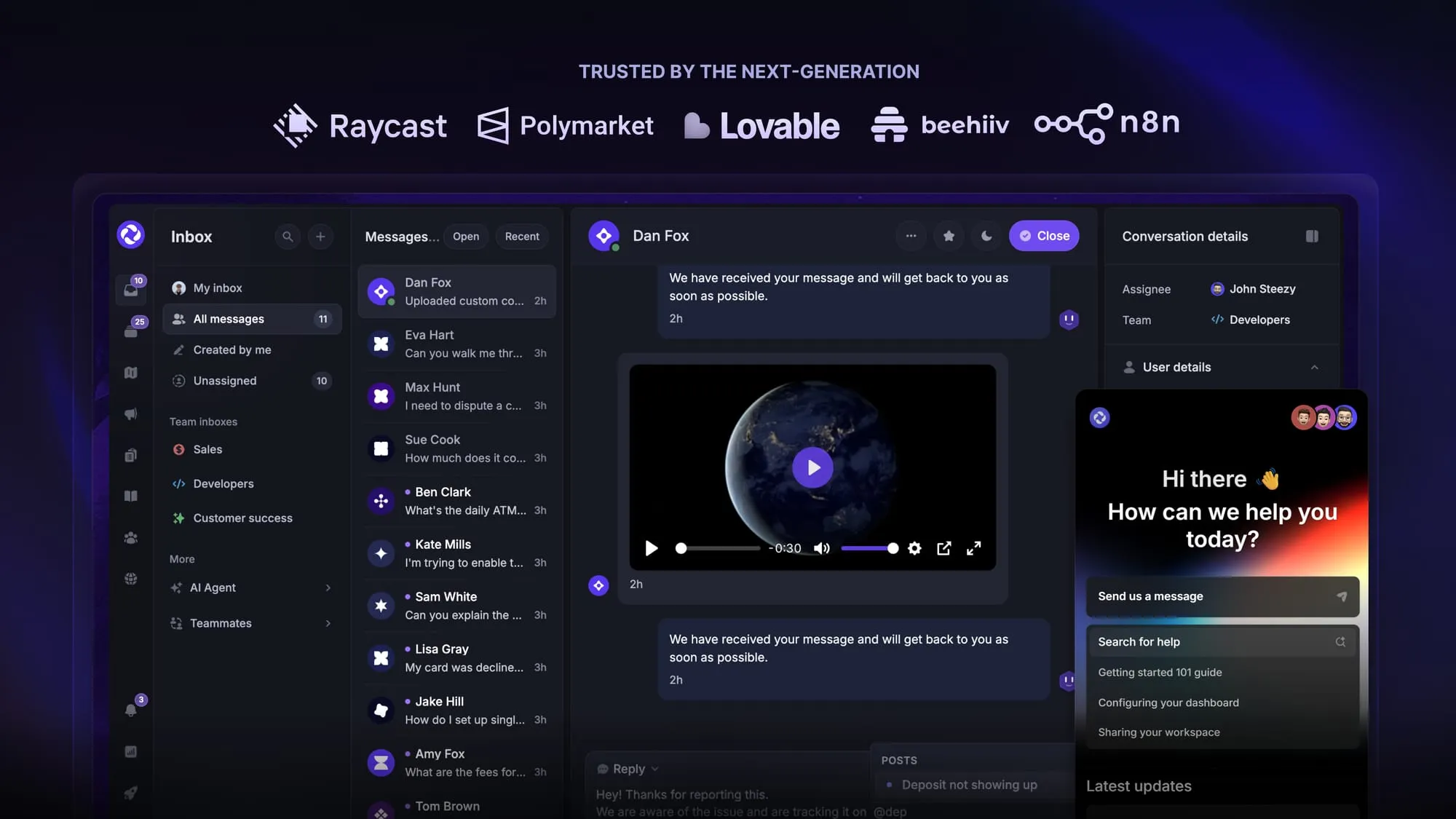
Some of the many Featurebase features include:
- Unified inbox – manage your live chat & email conversations in one place with your whole team
- AI agent & automations – fully automate your support with AI and endless custom workflows, like extending trials, offering discounts, qualifying leads, etc.
- Messenger widget – provide AI and human support from anywhere with a customizable in-app widget
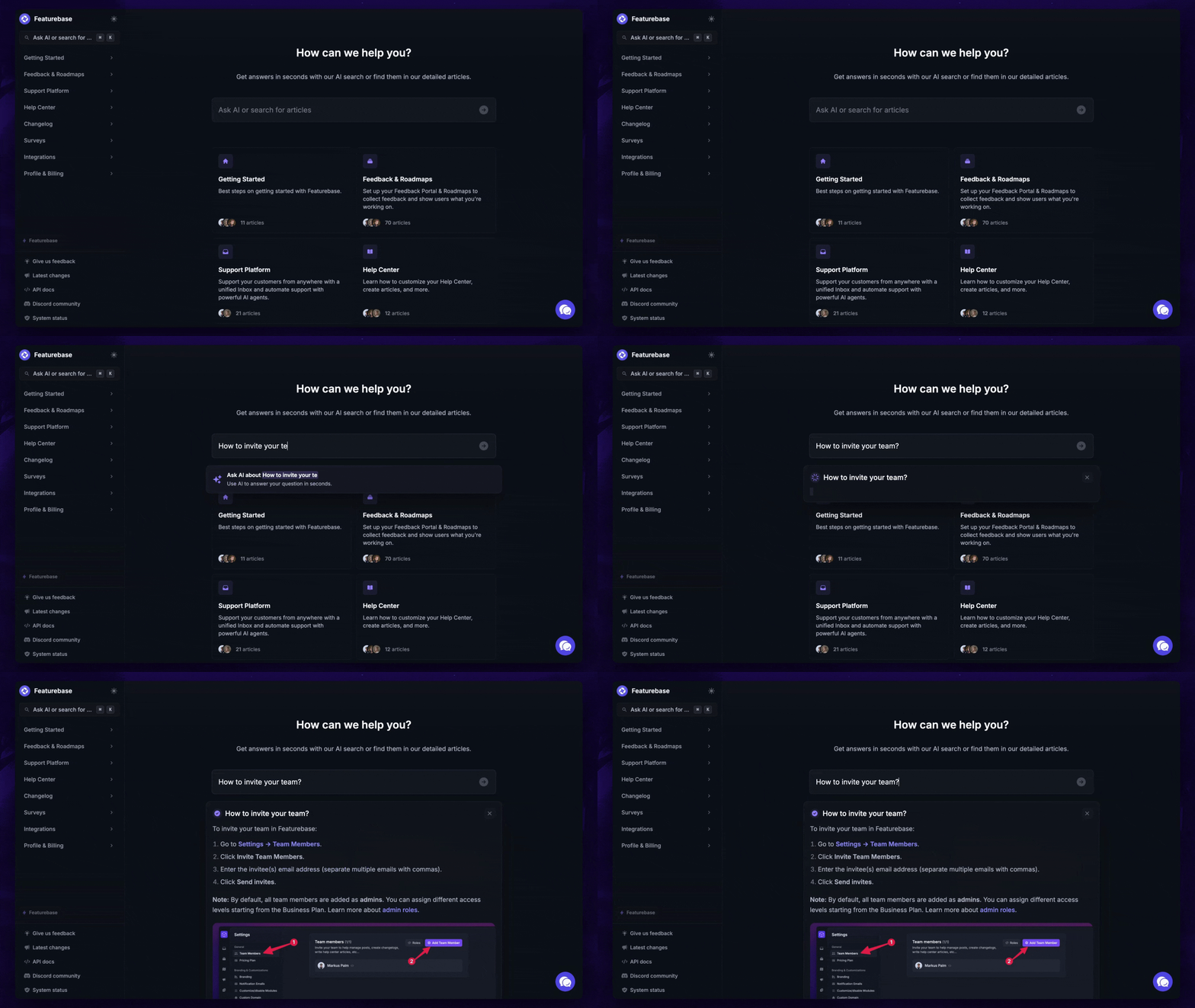
- Help Center – a branded knowledge base with instant AI answers
- Email support – seamlessly provide support to your customers via email sync
- Native ticketing – centralize & keep track of all customer requests in one place
- Multi-language & custom domain support – serve content in 40+ languages with your domain and branding
- Mobile app – respond to customers, receive notifications, and unblock users on the go
- Integrations – Slack, Linear, Jira, Discord, Hubspot, and many more
- Plus, feedback collection, product roadmaps, release notes, and customer surveys – all in one place
Long story short, Featurebase gives you all the powerful support capabilities of Tidio and Zendesk, but without the super expensive pricing. Don't just take our word for it. You can try Featurebase completely free and see for yourself.
The onboarding is quick and doesn't require a credit card. Plus, you can automatically import your Zendesk knowledge base - so there’s zero risk involved. 👇
Automate your support with the fastest AI-enhanced Inbox today
More comparisons:
- Zendesk Review
- Best Tidio alternatives
- Tidio vs Featurebase
- Tidio vs Intercom
- Best Zendesk alternatives
- Zendesk vs Featurebase
- Zendesk vs Intercom
- Zendesk vs HubSpot
- Zendesk vs Help Scout
- Zendesk vs Jira
- Zendesk vs Crisp
- Zendesk vs Freshdesk
- Zendesk vs Happyfox
- Zendesk vs Zoho
- Zendesk vs Kayako
- Zendesk vs Freshdesk vs Zoho