Zendesk vs Gorgias: Customer Service Software Showdown
Trying to find the best tool to manage your customer support? Zendesk vs Gorgias is a battle of completely different tools and here's how they compare.


On this page
- Short overview
- Zendesk and Gorgias at a glance
- Key customer support platform features
- The ease of use
- Pricing plans compared
- AI features comparison
- Gorgias vs Zendesk: integrations
- Which one is the right customer support platform for your business?
- Try Featurebase - the modern alternative to Zendesk and Gorgias
Looking for a modern & affordable alternative to Zendesk and Gorgias? Check out Featurebase
Zendesk and Gorgias may seem like two disparate customer support software choices. Zendesk is a ticketing system with tons of customization options for different customer support processes. Gorgias is heavily focused on integrating customer support in popular e-commerce platforms.
However, there is a significant overlap between the two. You can use Gorgias and Zendesk to provide excellent customer support with AI features and automation.
The problem is that the solution is pretty easy if you need a ticketing system or an ecommerce support tool. But what if you don't belong in either group and want to provide multi-channel support to your customers?
Here's our honest comparison of Zendesk vs Gorgias in 2026. 👇
Short overview
- Zendesk is a mature, customizable ticketing system built for structured, multi-channel support that can scale from small teams to large enterprises.
- Gorgias is ecommerce-first, organizing support around orders, carts, and purchase data instead of traditional ticket workflows.
- Zendesk wins on breadth of features and integrations, especially if you need CRM connections, workforce tools, and advanced customization.
- Gorgias wins on speed and simplicity for online stores, with deep Shopify integration and revenue tied reporting built in.
- Zendesk pricing is predictable at the base level, but AI gets expensive fast, especially with Advanced AI add-ons charged per resolution.
- Gorgias pricing is volume-based and bundle-driven, meaning you pay per ticket and must purchase AI interactions in bulk.
- If you are neither enterprise support nor ecommerce focused, a lighter option like Featurebase with lower AI resolution costs may be a better fit.
Zendesk and Gorgias at a glance
Zendesk
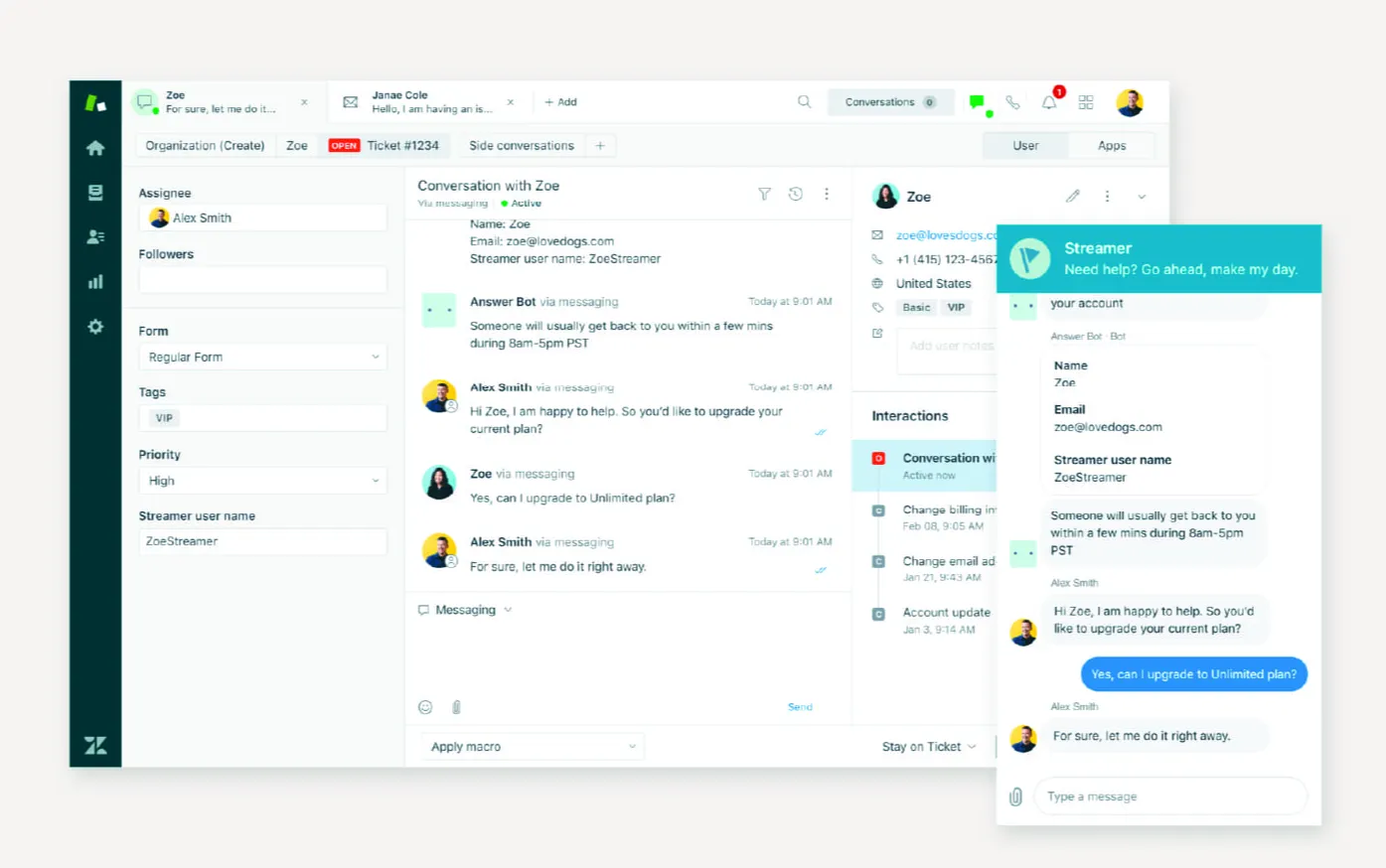
Zendesk has been a staple in customer support software since 2007. It started as a ticketing system and has grown into a full support suite that handles email, chat, voice, social messaging, help center tech, automation, and analytics. It is built for teams that need structured workflows, reporting depth, and a platform that can scale from a handful of agents to hundreds.
Zendesk's strong sides are versatility and having a mature system that can be infinitely customized. There is a large integration ecosystem and robust admin controls, which make it a go-to for businesses that want a proven, expandable support platform.
Gorgias
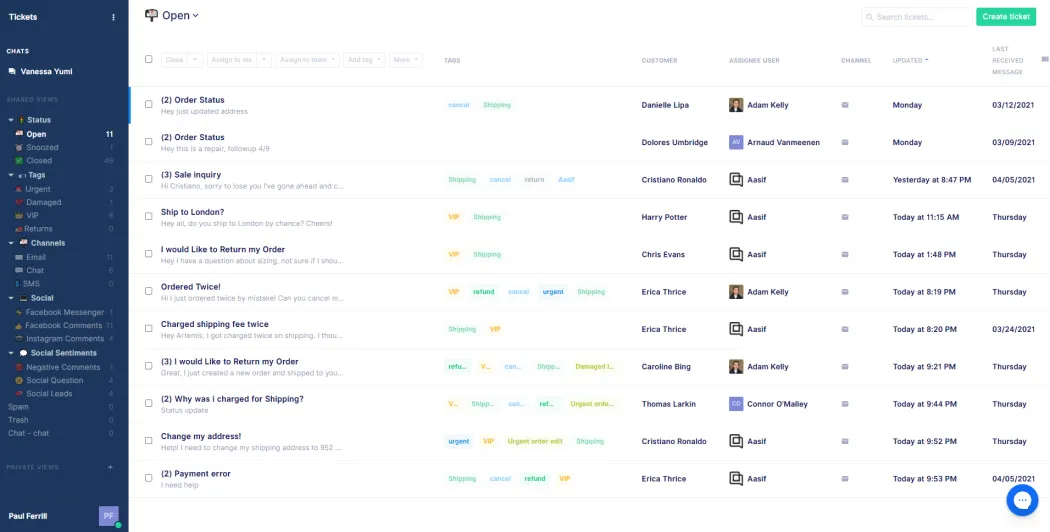
Gorgias launched later with a different mission: make support easier for ecommerce brands. It organizes support around orders, carts, and customer purchases. Gorgias pulls context from your ecommerce stack, allowing agents to see purchase history, shipping status, and customer tags alongside the conversation.
The strong focus on ecommerce leads many users to look at Gorgias alternatives.
Customers love Gorgias because of its speed and simplicity for online stores. Templates, macros, and ecommerce automations are built around common retailer workflows. The interface is simple and focused, which helps small to mid-sized teams respond faster without heavy setup, leading to improved customer satisfaction.
Key customer support platform features
Zendesk is built for operational control
Zendesk is built for operational control and a wide choice of customization options. The platform delivers a wide range of capabilities designed to support structured support operations across channels.
- Omnichannel ticketing: email, chat, phone support, messaging apps, and social channels all flow into a unified queue of support tickets.
- Custom routing and rules: assign and prioritize conversations based on customer segment, language, product line, or custom attributes.
- Macros and automation rules: automated replies, status changes, and workflow triggers reduce repetitive work for agents.
- Help center and self-service: built-in knowledge base with search, article management, and analytics for deflecting common issues.
- Workforce tools and reporting: forecasting, agent performance tracking, and QA tools help administrators manage large teams.
- AI-enhanced assistance: intent classification, reply suggestions, and bot-driven automation expand support capabilities at higher tiers.
Zendesk's feature set is broad and designed for complex support needs that grow over time. However, so much complexity can be an obstacle for someone who just wants to set up a ticketing system and start having conversations. This is one of the many reasons users look at Zendesk alternatives.
Gorgias is optimized for ecommerce support
Gorgias is optimized for ecommerce support use cases with contextual data from commerce platforms front and center.
- Order and customer context in the inbox: agents see purchase history, shipping status, customer lifetime value, and tags directly in the conversation view.
- Ecommerce focused macros and automations: predefined templates and rules handle common store tasks like refunds, shipping updates, and discount issuance.
- Integrated messaging channels: email, social, and live chat, including Instagram and Facebook Messenger, all sit in the same workspace.
- Rules triggered by commerce events: you can automate actions based on order status changes or customer behaviour from the ecommerce platform.
- Analytics tied to revenue metrics: reporting that includes orders, refunds, and customer value alongside support metrics.
- App ecosystem tailored to stores: pre-built connections to tools like Shopify, Klaviyo, and other ecommerce services reduce custom integration work.
Gorgias's strengths are context and simplicity for store support teams, with a clear focus on workflows that matter most to ecommerce brands.
The ease of use
Zendesk
Zendesk's interface is structured and familiar to anyone who has used traditional help desks. Agents can learn the basics quickly and start handling tickets across channels without much confusion. Standard workflows feel logical once set up, and the workspace is consistent across email, chat, and social channels.
Where ease of use gets challenged is when you start adding complexity. Multi-channel routing rules, custom fields, triggers, and advanced automations can make the admin side dense.
"I noticed that the main downside is that some of the advanced settings can be hard to find and take time to learn. Also, if you want to add extra features or more users, the cost can start to get expensive for a smaller business. I also experience that sometimes reporting tools feel a bit limited unless you upgrade." – G2 review
Setting up reporting, workforce tools, and AI features often requires deliberate planning and time. For day-to-day agents, the system feels solid and predictable. For admins building out advanced use cases, expect a steeper learning curve.
Gorgias
Gorgias functions as a dedicated ecommerce help desk platform. The interface is clean and focused on conversations rather than complex ticket workflows. Because it pulls order and customer data directly from ecommerce platforms, agents can see relevant context without switching views, which cuts down on cognitive load.
Most templates, macros, and automations are designed around common ecommerce tasks like refunding an order, updating shipping, or tagging VIP customers. This means setup is fast, and agents spend less time training and more time responding. For smaller teams that do not need heavy customization, Gorgias feels easier to adopt out of the box.
Pricing plans compared
When it comes to pricing, there are two completely different philosophies. Zendesk has a small number of plans with logical tiers + AI resolutions, which you need to inquire about. Gorgias pricing feels like solving a riddle.
Zendesk pricing starts at $19 per agent per month
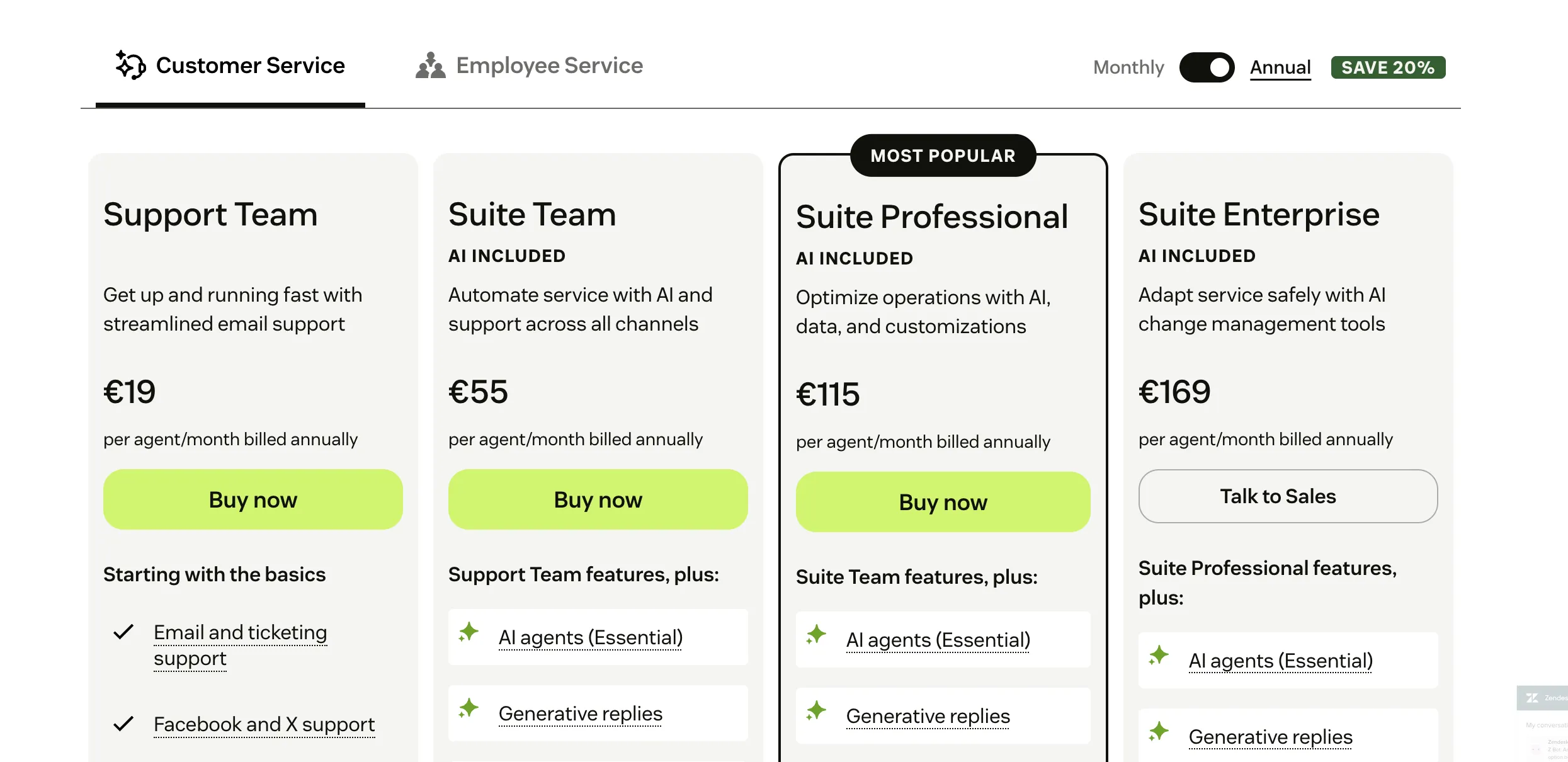
Zendesk pricing has one of the most affordable entry-level tiers in the industry. $19 gives your support agents all the tools they need to handle customer queries from different channels and keep track of all that in a unified dashboard.
To provide a better customer experience, you might want to add AI to the mix, which will require bumping up the price to $55 per agent per month for the Suite Team plan. These AI agents can resolve about 30% of queries on their own, as Zendesk states, which is not exactly spectacular.
To lift more weight off the shoulders of your support team, you can purchase the Advanced AI add-on which resolves about 80% of customer issues on its own. You pay per successful resolution and pricing is not publicly available, but our research shows that it's very similar to Intercom's Fin.
In short, there is a fixed monthly fee that you can predict + AI resolution fees that depend on how many customers you help with AI through Zendesk.
There is a free trial available and purchasing plans annually will get you a 20% discount.
Gorgias pricing depends on ticket volume and starts at $10/month
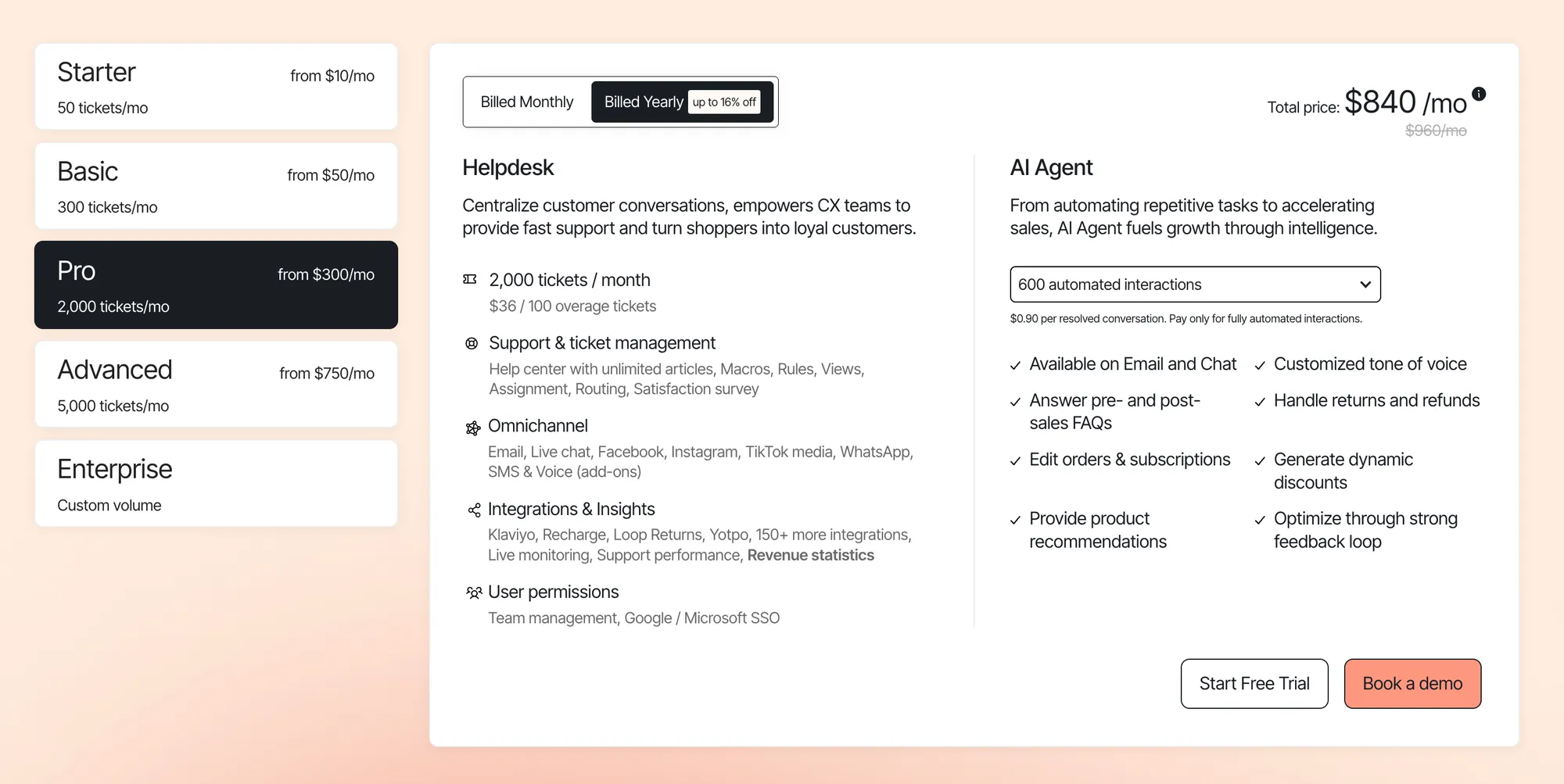
If you're thinking that $10 per month for Starter is suspiciously low for an AI chatbot tool (with unlimited users!), you're right. This is a hook to get started with Gorgias, and it only gets you 50 tickets.
So, it's not resolved conversations but tickets, which basically means you're billed every time someone starts a conversation with you. Most businesses could end up going through 50 conversations in a day or two.
Here's how Gorgias pricing works out:
Other plans are priced as follows:
- Basic: $50/month, 300 tickets
- Pro: $300/month, 2,000 tickets
- Advanced: $750/month, 5,000 tickets
- Enterprise: custom volume
AI chatbots cost extra, and you can purchase them for $1 per resolution. There's only one problem: you can't pay as you go and get billed for as many as you use. Instead, you can purchase them in bulk, with the minimum number being 30 AI interactions in the Starter plan.
As you upgrade your plan, the minimum number of interactions grows, but the cost slightly decreases. For example, the Advanced plan mandates a minimum of 530 interactions per month at $0.90 each.
In short: Gorgias pricing is very complicated and you're forced to buy AI resolutions in bundles. If you're not sure about the volume you have or how well AI can help you, this can quickly turn into an expensive experiment.
AI features comparison
Zendesk
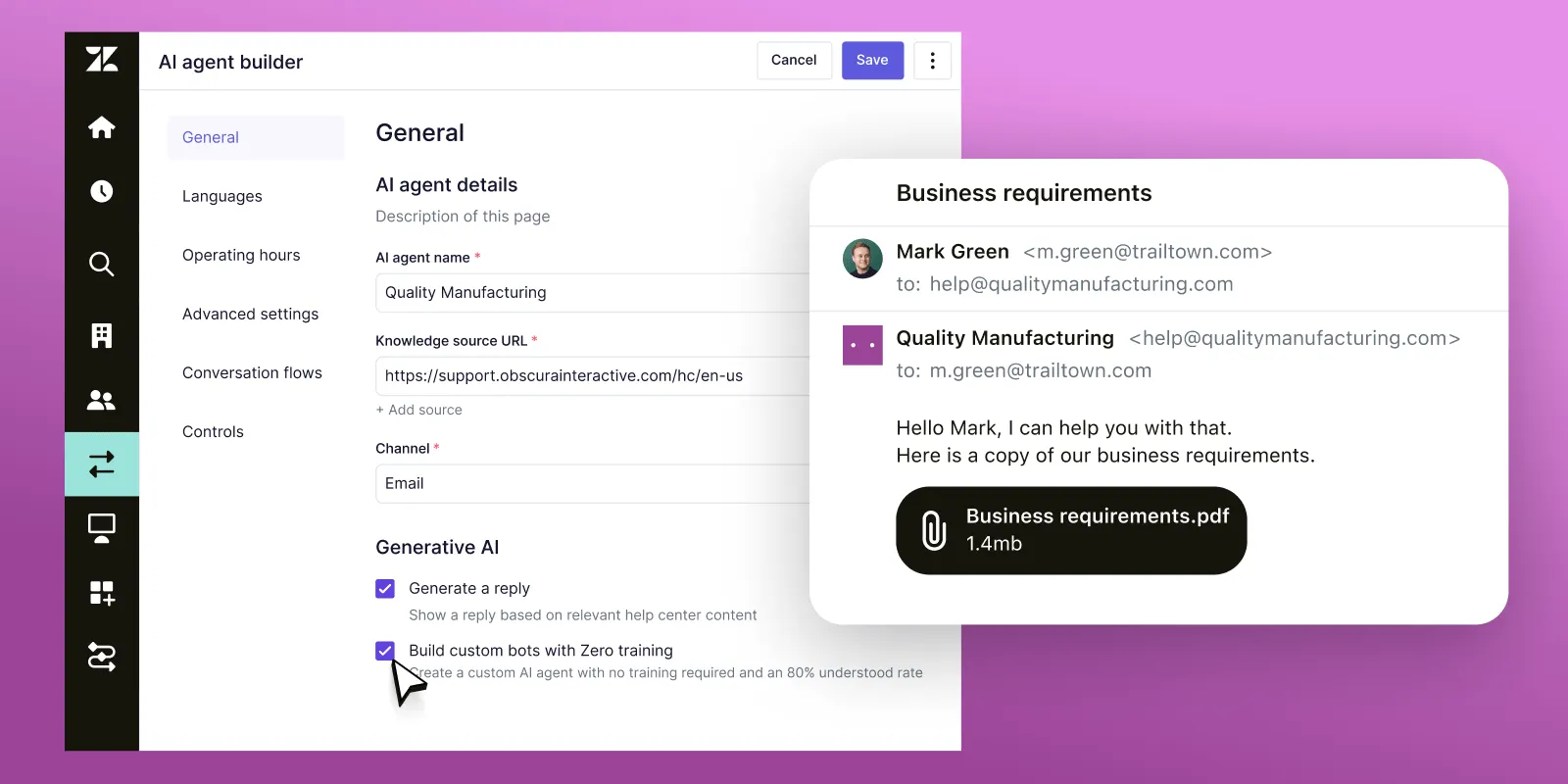
Zendesk applies AI across multiple parts of the support process. It is not a single feature you turn on, but a set of capabilities that help both agents and customers.
- AI agents for customer support: bots can answer common questions, pull answers from your help center, handle simple tasks, and escalate when needed.
- Automatic classification and intent tagging: incoming conversations are labeled based on language patterns to improve routing and prioritization.
- Suggested replies and summaries: agents get draft responses and condensed conversation summaries to reduce handling time.
- Generative procedures: guided flows can walk customers through steps like troubleshooting or account setup.
- Orchestration and integration: advanced plans let you connect AI to systems and backend logic for more complex actions.
Zendesk's AI capabilities are wide, but serious automation typically appears at higher plan levels and often involves add-ons or usage-based pricing.
Gorgias
Gorgias focuses on practical automation for common store support tasks. Its AI is tied closely to conversation context and commerce data.
- AI-powered reply suggestions: the system can draft responses that reference order details, shipping info, and customer tags.
- Rule-based automation driven by AI signals: AI can identify intent and route or tag messages accordingly.
- Commerce-aware bot automation: bots can handle simple tasks like order status inquiries or return questions using data pulled from the store platform.
- Escalation triggers: when the AI detects complexity or customer frustration, it hands the conversation to a human agent.
Gorgias's AI is pragmatic, aimed at reducing repetitive ecommerce queries and giving agents context-rich suggestions without extensive setup. However, users note that getting the AI to work requires quite a bit of setting up:
"The AI Agent is powerful, but the training and knowledge base configuration can be complex. There are a lot of rule nuances and automation layers that require careful setup, and the learning curve can be steep when optimizing for more advanced use cases. More streamlined documentation or clearer guardrails around rule logic would improve the experience." – G2 review
Gorgias vs Zendesk: integrations
When it comes to integrations, Zendesk is simply the superior tool on all fronts. However, if your specific business is in ecommerce, that might not be true.
Zendesk
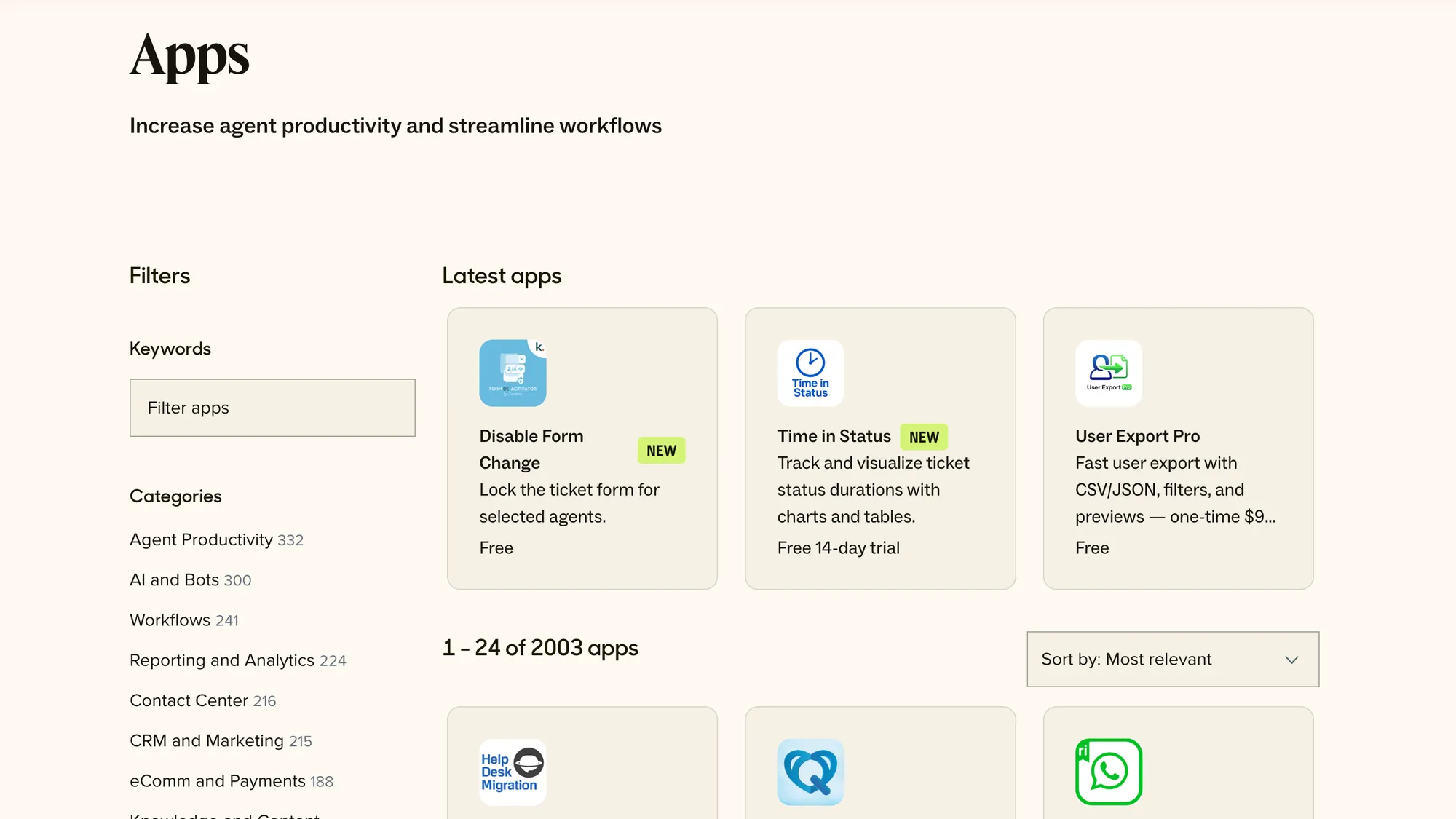
Zendesk has one of the widest integration ecosystems in customer support. Whether you need commerce platforms, CRM tools, communication channels, or internal systems, there is usually a connector available.
- Multiple channel support: email, social apps, live chat, voice, SMS, and third-party messaging tools plug into the Zendesk ticketing system so agents can work from one workspace.
- CRM and backend systems: integrations with tools like Salesforce, Microsoft Dynamics, HubSpot, and custom APIs let you pull in customer data from across your stack.
- Ecommerce integrations: platforms like Shopify, BigCommerce, and Magento connect to Zendesk so orders, customer tags, and purchase data appear in tickets. This gives agents more context without manual lookups.
- App marketplace: hundreds of pre-built apps extend features for reporting, automation, billing, surveys, and more to addapt to customer preferences.
- Tools integrate with internal workflows: project management, bug tracking, and knowledge base tools can all be tied in so that support, product, and engineering teams share the same data flows.
Zendesk's strength is the breadth of connections available, which makes it viable for businesses with diverse systems and channel needs.
Gorgias
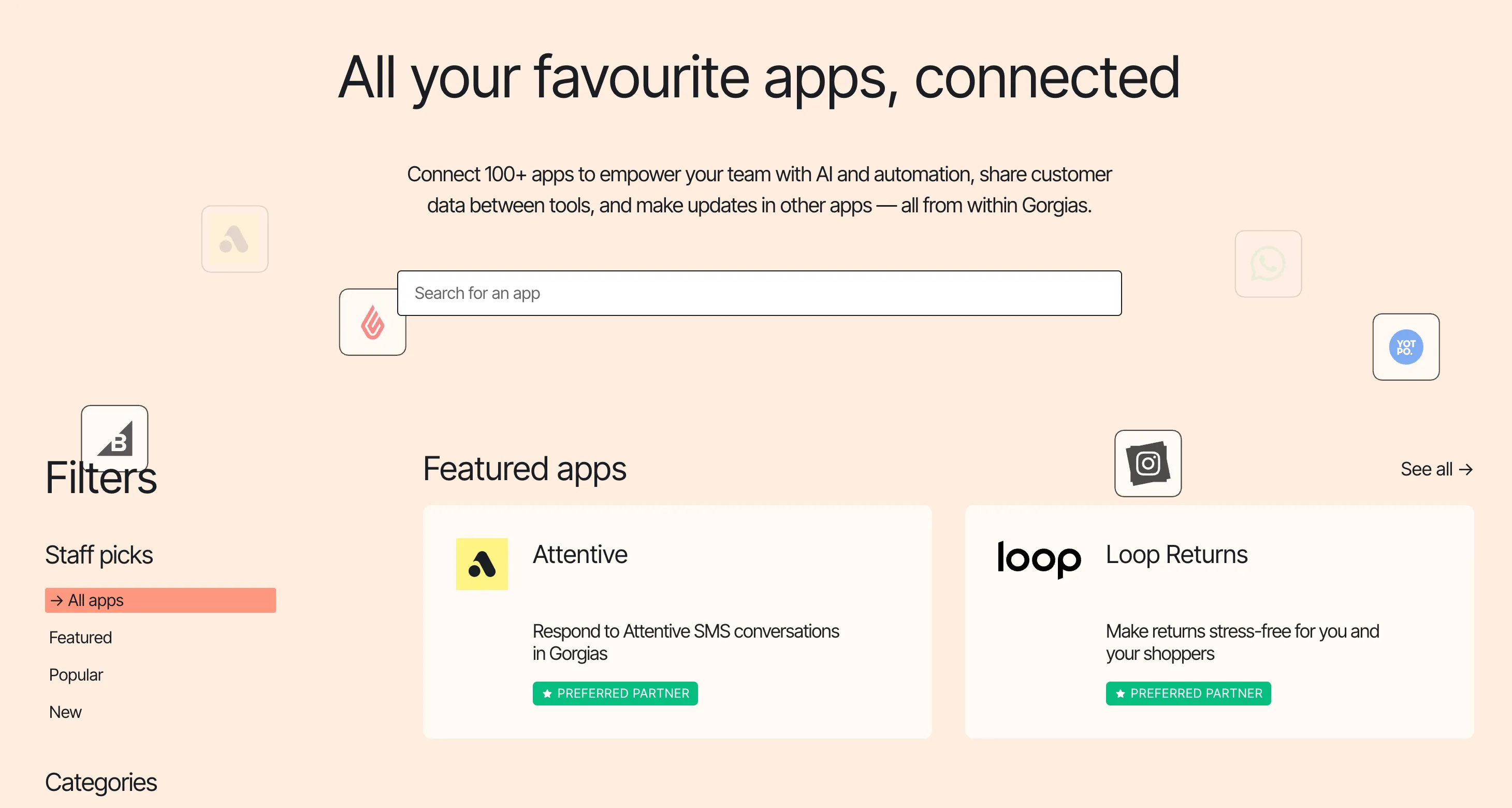
Gorgias emphasizes deep integrations that are tailored to e-commerce operations, especially where customer information and commerce events are concerned.
Deep Shopify integration: Gorgias pulls order details, customer lifetime value, shipping status, and cart data directly into the support inbox so agents see everything without context switching.
- Multiple ecommerce platforms: beyond Shopify, Gorgias connects to platforms like BigCommerce and other commerce tools that keep order and product data linked to conversations.
- Messaging and communication channels: email, Facebook, Instagram, and live chat all feed into the same workspace with commerce context attached.
- Customer information unified: order history, tags, segments, and revenue-related data stay alongside support threads so replies can reference specifics without extra lookups.
- Ecommerce ecosystem tools: connections with tools like Klaviyo, loyalty platforms, and review engines help automate customer workflows and tie support into marketing and retention efforts.
Gorgias's approach is focused and ecommerce-first. The integrations are not as broad as Zendesk's, but where they do exist, they bring commerce data directly into your support operations without heavy configuration.
Which one is the right customer support platform for your business?
Picking between Zendesk and Gorgias comes down to the type of support you need and how your team works day to day.
Get Zendesk if:
- You need a comprehensive support system that scales beyond ecommerce
- Structured reporting and workforce tools matter to you
- Your team handles high volumes across email, chat, phone, and social channels
- You want a mature marketplace of integrations and third-party apps
- Your support workflows will grow in complexity over time
Get Gorgias if:
- Your business is ecommerce first, and you want commerce context front and center
- You want an inbox that shows order history and customer data without switching tools
- You need macros and automations built around store actions like refunds and shipping updates
- Simplicity and speed of setup are important for your support team
- You prefer revenue-tied reporting with support metrics pulled from your store data
Both platforms are capable, but there are plenty of businesses that fall in neither category. Zendesk may be too complex (and expensive), and Gorgias is too focused on ecommerce. In those situations, there's a better option. 👇
Try Featurebase - the modern alternative to Zendesk and Gorgias
If you don't need enterprise-grade ticketing and you're not running an ecommerce store, then neither Zendesk nor Gorgias will really work for you. Zendesk may be too complicated, and Gorgias' deep integration with Shopify won't matter much.
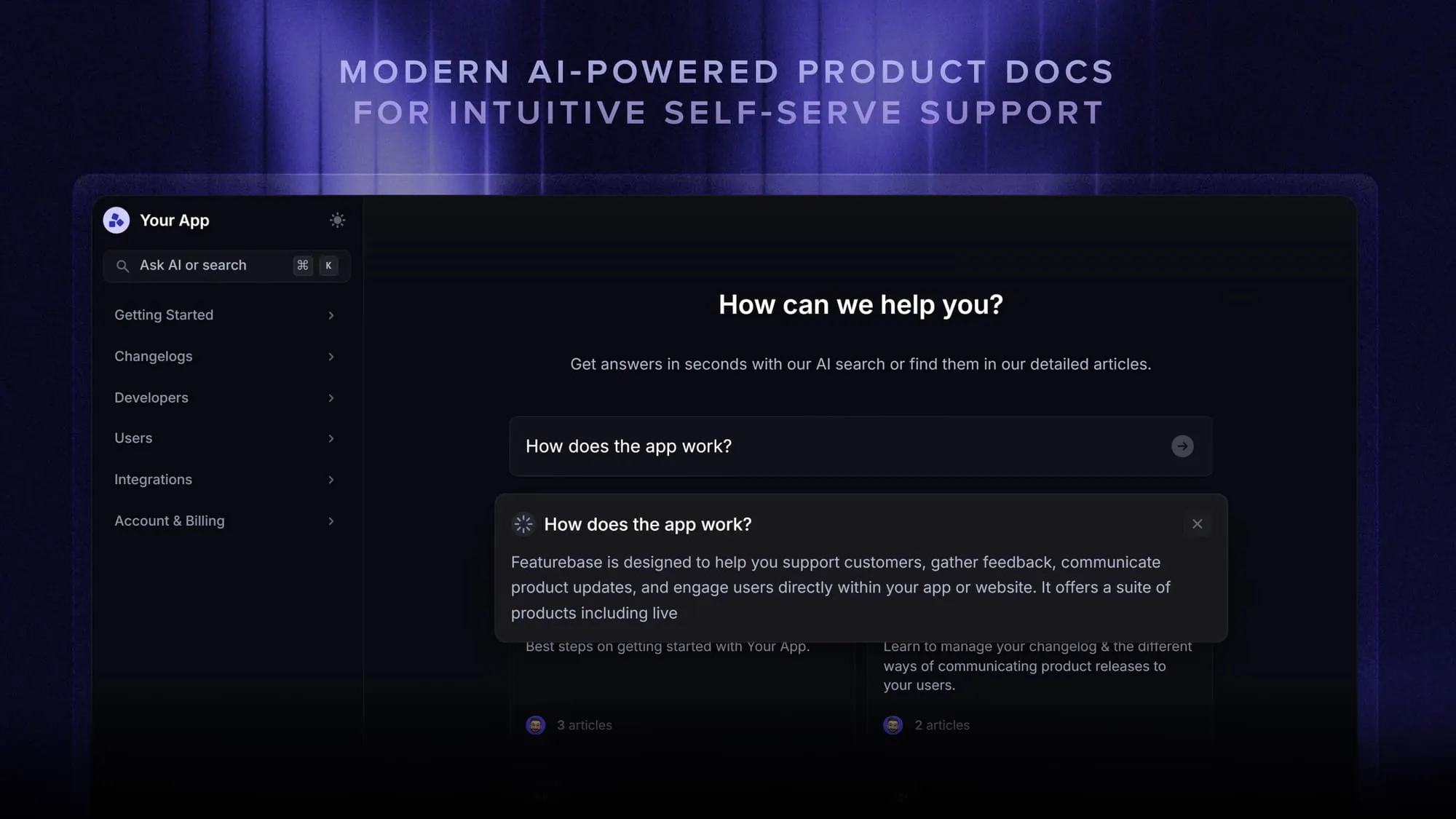
Featurebase is a modern AI customer support platform for product-led SaaS (👋 that's us). It combines an AI-powered omnichannel inbox, help center, and feedback management into a single platform, so your team gets the essentials of Zendesk-style ticketing without the add-on creep or Gorgias-style per-ticket billing. It's loved by thousands of support teams at companies like Lovable, Raycast, and n8n. 💫
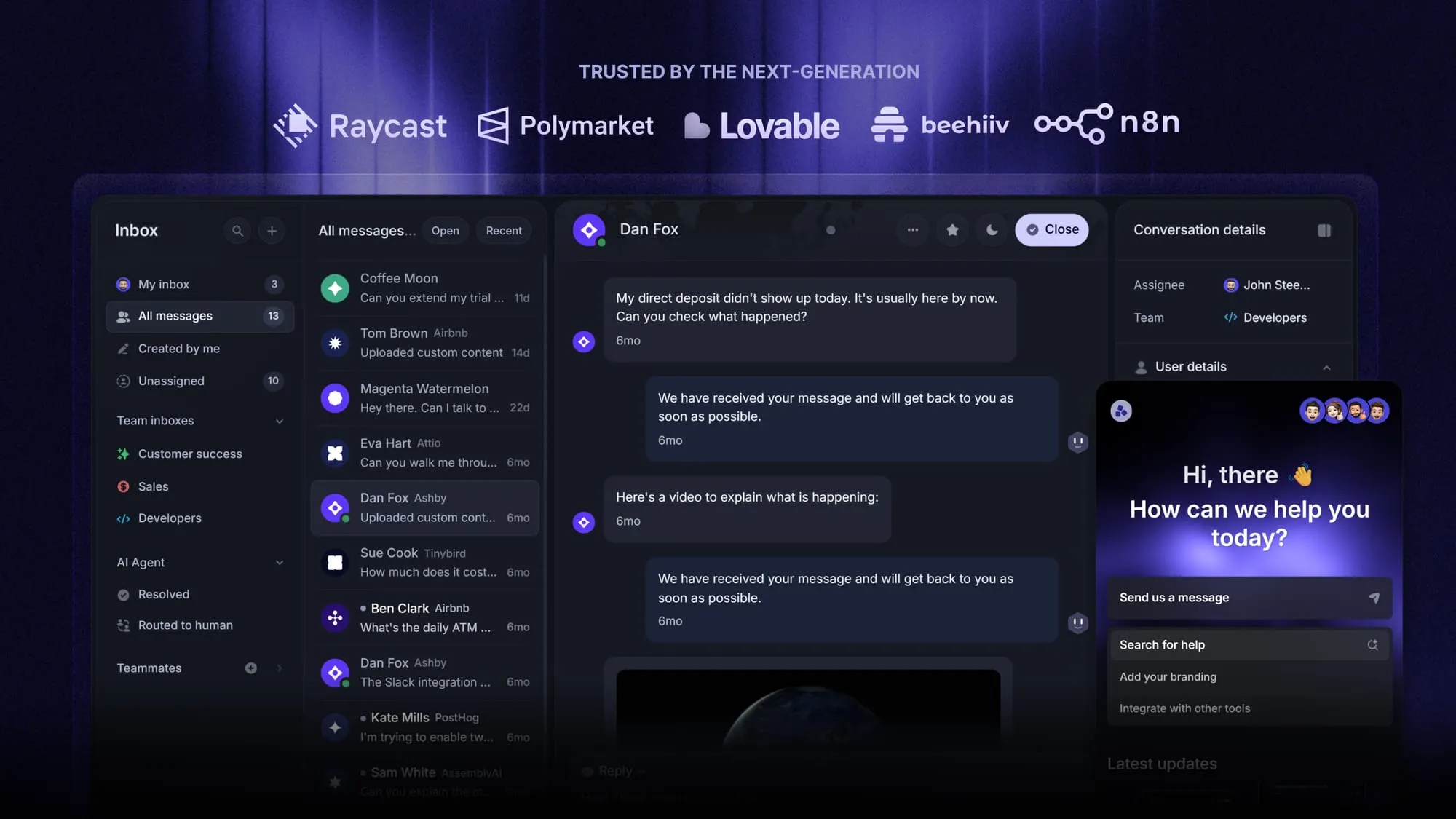
Top features:
- Omnichannel inbox – Manage live chat, email, and Slack conversations from one AI-powered view
- Fibi AI Agent – Resolve customer issues on autopilot & run custom actions like trial extensions and refunds
- Help center with AI search – Provide instant, multilingual self-serve answers trained on your content
- Workflows & automations – Auto-assign tickets, route conversations, collect customer data, and more
- AI Copilot – Help your agents answer customers faster with AI Copilot that uses your internal knowledge
- Service Level Agreements – Track SLAs to make sure your team responds to customers on time, every time
- Feedback & roadmap tools – Collect feature requests and close the loop with updates
- Integrations – Connects with Slack, Linear, Jira, HubSpot, and more
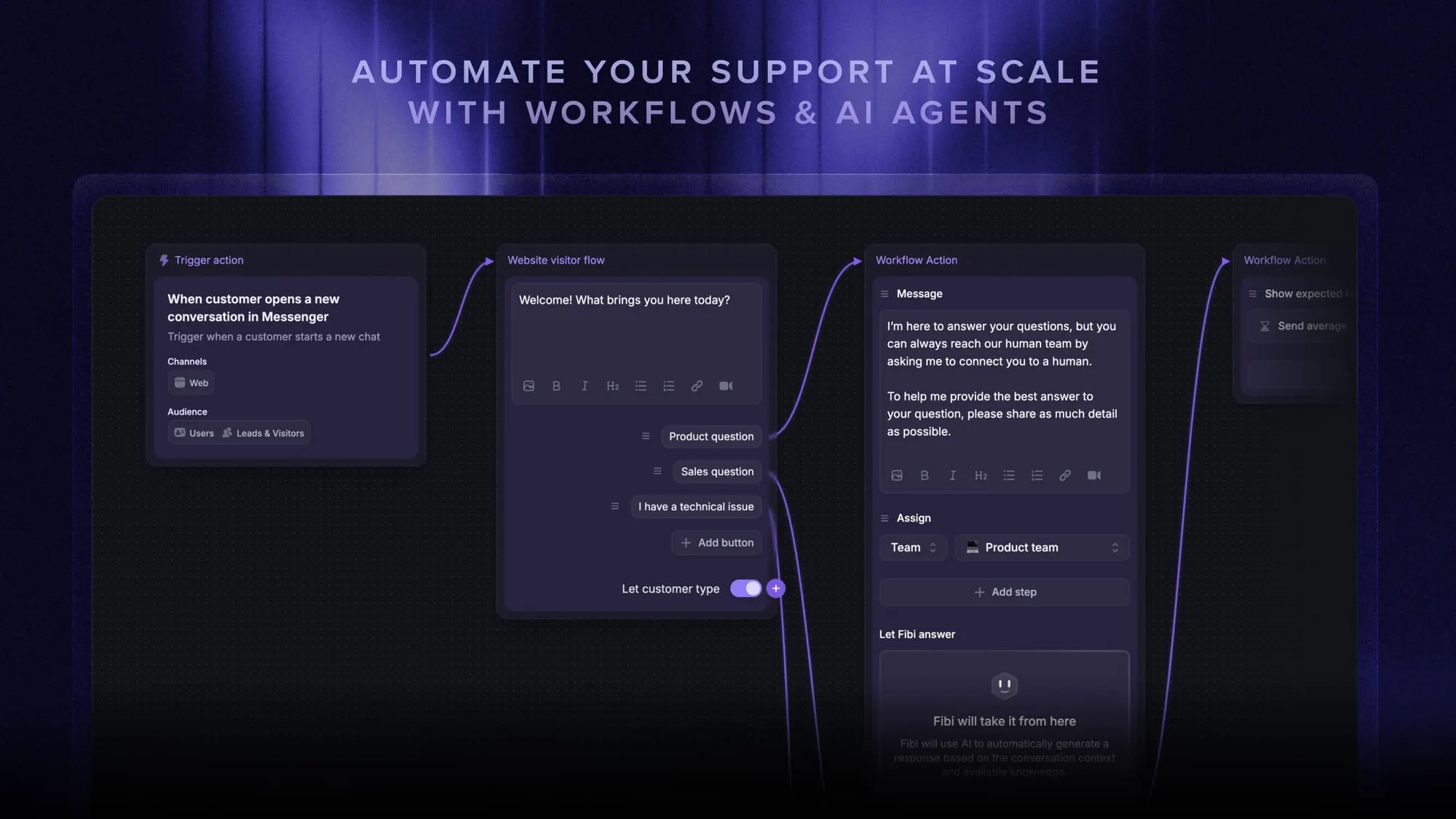
Pricing: Free plan available with unlimited conversations. Paid plans start at $29/seat/month with $0.29 per AI resolution (the lowest AI resolution cost in the industry and a fraction of what Zendesk and Gorgias charge).
Unlike Zendesk and Gorgias, Featurebase has a Free plan you can try first. Setup takes minutes and doesn't require a credit card, so there's no downside to trying it. 👇
Switch from Zendesk & Gorgias to get the fastest AI-powered support platform
More reading:
- Best Zendesk alternatives
- Best Gorgias alternatives
- Zendesk vs Featurebase
- Gorgias vs Featurebase
- Zendesk vs Intercom
- Zendesk vs HubSpot
- Zendesk vs Help Scout
- Zendesk vs Jira
- Zendesk vs Crisp
- Zendesk vs Freshdesk
- Zendesk vs Salesforce
- Zendesk vs Zoho
- Zendesk vs Kayako
- Zendesk vs Tidio
- Zendesk vs Freshdesk vs Zoho